
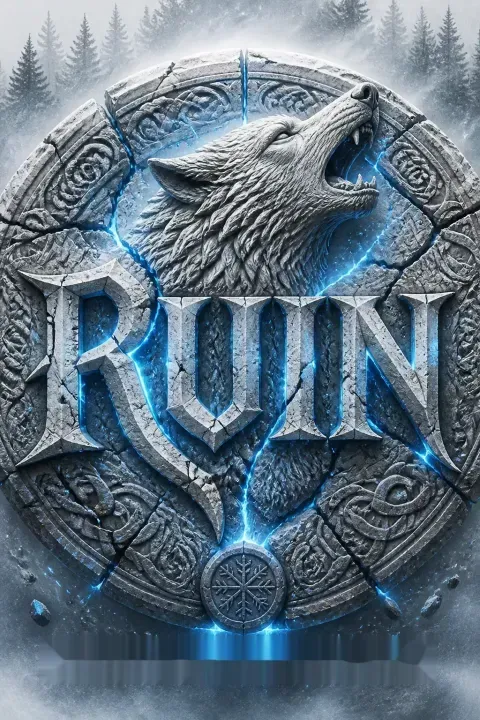


Plot Summary
South, to a Queen's Aid
Corban1 wakes beside the cairn of his murdered mother, the aftermath of the Kadoshim ambush still thick in the air. Meical2 presses him to ride directly to the fabled fortress of Drassil, but Corban1's conscience rebels. He swore an oath to Edana,9 the fugitive Queen of Ardan, and he will not abandon her.
He proposes a compromise: march south together until the river Afren, then decide. Meical,2 though visibly frustrated, accepts. The warband, an uneasy coalition of Jehar warriors, Benothi giants, and rescued villagers, mounts up. As Corban1 swings onto Shield's back, his sister Cywen5 and the crow Craf watch, and Storm14 lopes ahead. The decision sets their course for the entire novel.
Corban's refusal to be a passive instrument of prophecy establishes his moral core: he will not sacrifice personal loyalty for abstract destiny. This choice immediately puts him at odds with Meical's strategic mind and foreshadows the eventual revelation that the prophecy itself is a fabrication. The scene also concretizes the theme of oaths and their burden, as every subsequent battle and loss traces back to this single decision made over a mother's grave.
The King Bows to Asroth
In the corpse-strewn halls of Murias, Calidus3 discards the last shreds of pretense. He tells Nathair4 that good and evil are just names, that Elyon is no more righteous than Asroth, and that Nathair4 can still be an emperor if he just shifts his allegiance. Nathair,4 shattered by the discovery that he was never the Bright Star, flails between fury and despair before kneeling.
Calidus3 cuts his palm, mingling blood with dark sorcery. Asroth himself appears in Nathair4's mind, a terrifying black-winged presence that scours his soul for any hidden defiance. When Nathair4 rises, his eyes are hollow but his purpose is fixed: he is now the Black Sun, bound to a master he once would have died to oppose.
This is the novel's dark inversion of a hero's call. Nathair's tragedy lies in his narcissism; he cannot bear to be ordinary, so he accepts a monstrous identity rather than face his guilt. Calidus's argument that history is written by the victors is a seductive poison that lets Nathair rationalize every crime. The blood oath introduces a supernatural dimension to his corruption, making it more than mere political expediency.
The Marsh Alliance
After landing on the Ardan coast, Edana9 confronts Roisin, the mother of the boy-king Lorcan. Pointing out that they share a common enemy in Rhin, she offers a new deal: Roisin will help Edana9 reclaim Ardan, and Edana9 will later fight for Lorcan's throne in Domhain. They cut their palms and seal the oath.
Guided by Camlin10 and the child Meg, they navigate treacherous marshlands to the hidden camp of Dun Crin, where they reunite with Pendathran, Edana9's old battlechief. The reunion is joyful but charged; Pendathran's weary survivors need leadership, and Edana9 must transform from exiled princess to war queen before their fragile hope evaporates.
Edana's political acumen and growing resolve shine here. She recognizes that Roisin's self-interest is a more reliable bond than affection, and she uses it deftly. The blood oath both unites them and plants the seeds of future betrayal, reflecting the novel's cynical view of political alliances. The marsh journey, with its hidden dangers and constant threat of discovery, mirrors Edana's internal passage from shelter into the brutal wilderness of rule.
The Old Wolf Unchained
Amid the rioting in Jerolin, Maquin6 seizes his chance, dragging Fidele,7 the queen regent, into the forest. Hunted by Lykos's Vin Thalun, they survive on stolen food and Maquin6's lethal skills. When a party of seven warriors corners them, Maquin6 kills them all, taking wounds that Fidele7 must staunch.
Their roles reverse: she who was helpless becomes his protector. They reach Ripa, only to find it besieged by Lykos. In a desperate dash to the gates, Maquin6 carves a crimson path through the enemy but collapses from a gut wound. Krelis's men drag him inside as Fidele7 screams his name.
The Maquin-Fidele arc is the novel's most intimate portrait of redemption. Maquin, reduced to a thing of hatred and survival, rediscovers his humanity through Fidele's trust. Her transformation from passive victim to active rescuer parallels his own. Their journey strips away social roles and reveals a core of mutual dependence that blossoms into love, providing a counterpoint to the political machinations elsewhere.
A Wall of Mist and Iron
Corban1's scouts report that Rhin's warband blocks the road south, and Calidus3's Kadoshim are closing from the north. Rather than run, Corban1 decides to fight. Brina and Ethlinn chant over the river, summoning a dense, rolling mist that swallows the Jehar and giants as they advance. When the fog lifts, the enemy stares into a wall of curved swords and war-hammers.
The clash is brief and brutal. Corban,1 mounted on Shield with Storm14 beside him, hacks through the center. Within hours, three hundred of Rhin's soldiers lie dead. Corban1 orders the survivors' sword hands broken rather than executed, then strips the field of supplies and presses south with renewed momentum.
This battle establishes Corban's tactical creativity and his insistence on a moral code even in war. The mist conjured by Brina foreshadows her dangerous exploration of the giant book's darker spells. The victory also demonstrates the raw effectiveness of the Jehar-Benothi alliance, a force that, man for man, is unmatched. Yet the threat from behind adds a constant pressure, compressing time and forcing harder choices.
A Faithful Sword Shattered
Veradis11 rides to meet Nathair4 near Uthandun, eager to celebrate the capture of the cauldron. Instead, he finds a haunted, distant king. In private, Nathair4 reveals that Calidus3 is Kadoshim and that his own oath now belongs to Asroth. He speaks of history as lies, of the victor's right to name good and evil.
Veradis11 feels the ground dissolve beneath him. Every battle he fought, every friend he buried, was for a cause that never existed. He staggers away, numb and raging. Later, at the council of Mikil, he watches Nathair4 butcher old Belo without hesitation, and the last thread of loyalty snaps.
Veradis is the novel's moral compass, a man of genuine faith and courage who discovers his virtues have been exploited. His crisis is existential: if one's entire life's work is built on a lie, what is left? Nathair's intellectual sophistry about the subjectivity of morality serves as a warning about charismatic leaders who reframe evil as pragmatism. Veradis's eventual turn toward resistance is the novel's answer to nihilism: action based on personal conviction, not divine decree.
Tukul's Last Howl
Tukul13's mounted column crests the hill and sees Gramm's hold wreathed in flames, gates smashed by Jotun bears. With a battle cry, he leads a charge uphill into the enemy. He leaps from his saddle onto a bear, axes it in the skull, and with Coralen's aid kills its giant rider.
A second bear falls to his sword, but Ildaer's war-hammer catches him in the chest, hurling him against the feast-hall doors. Gar8 reaches his father as the light fades. They exchange a final gaze, and Tukul13 whispers his blessing before sliding into death. Gar8's grief erupts into a killing frenzy, driving Ildaer and his bears back into the forest.
Tukul's death is the novel's purest expression of heroic sacrifice. He dies not for a prophecy but for friends, for his son, and for the joy of battle. His passing transfers the mantle of Jehar leadership to Gar, completing a cycle of loss and inheritance. The image of Gar standing over his father's body, face twisted with sorrow and rage, is the emotional fulcrum of the entire Gramm's hold sequence.
Beneath the Great Tree
After sixteen days in the ancient tunnels, the warband emerges into the cavernous hall of Drassil, built around a tree trunk as wide as a fortress. The ten Jehar guardians who waited here for years kneel before Corban.1 He walks to Skald's throne, where the first giant king's skeleton lies pinned by a sacred spear.
That night, Farrell and Dath present an arm-ring of dark iron and silver, forged for their leader. Meical2 drives Corban1's sword into the stone floor and asks if he will bind himself to his people. Corban1 swears the oath, his voice cracking, and the hall explodes with cheers. The lost refugees, slaves, and warriors have found a home.
This is the symbolic coronation that the earlier prophecies demanded, but its power is derived from mutual consent, not divine decree. The arm-ring, forged by friends, represents a compact built on shared suffering. The setting of Drassil, with its monstrous tree and the cadaver of a murdered king, layers the moment with history and warning: this fortress has fallen before. The oath seals a fragile hope that will soon be tested to destruction.
Jael's Treacherous Duel
Jael, having cut his way through Forn, appears before Drassil's walls and offers a champion's duel to spare bloodshed. Corban1 accepts, facing Sumur, who is possessed by the demon Belial. The combat is savage and prolonged; Corban1 is overmatched in strength and speed, his body accumulating wounds, but he refuses to break.
He blinds Sumur with a flick of dirt, then spins and severs the Kadoshim's head in a shower of black blood. As the cheers rise, Jael sends his mounted warriors to murder Corban.1 Corban1 sprints, leaps onto Shield's back mid-gallop, and the gates of Drassil burst open. The defenders, led by Balur and Gar,8 sweep the field. By dusk, over seven hundred of Jael's men have surrendered.
The duel is a masterclass in endurance over dominance. Corban wins not through superior skill but through grit, improvisation, and a refusal to accept death. The subsequent betrayal by Jael, and Corban's miraculous escape on Shield, reinforce his legendary status among the people. The mercy shown to the prisoners, urged by the boy-king Haelan, introduces a political maturity to Corban's leadership, transforming victory into a potential expansion of his coalition.
Death in the Reeds
In the marshes, Camlin10 and Braith engage in a deadly game of traps and arrows. Braith captures Camlin,10 but the child Meg creates a distraction, and Camlin10 puts three arrows into his old chief's chest before hacking off his head. Simultaneously, Evnis12's assault on Dun Crin collapses in flames.
After the battle, Evnis12 meets Vonn among the reeds, pleading for his son to return. When Vonn refuses, Evnis12 raises a knife, but an arrow, perhaps Camlin10 's, punches through his heart. He dies in the mud, his schemes undone. Vonn stares down at his father's body, expression unreadable.
These parallel deaths close out the novel's most personal conflicts. Braith and Camlin were once brothers in crime; their fatal duel illustrates how old loyalties corrode under the acids of ideology and survival. Evnis's end is more tragic: his love for Vonn was genuine, but it was so twisted by ambition that he could not accept his son's moral independence. Vonn's refusal to take his father's hand is a quiet act of profound integrity.
Fidele's Accusation
Summoned before Nathair4 at Brikan, Fidele7 endures her son4's cold dismissal of her rape as grief-madness. When she can no longer stay silent, she rises and points at Calidus,3 calling him Kadoshim, a servant of Asroth. The chamber freezes. Nathair4 flinches, but Calidus3's burned face betrays only contempt.
Nathair,4 after a visible internal struggle, orders his mother7 taken away, calling her words proof of her derangement. Veradis11 watches, and the last tether of his loyalty to Nathair4 withers. Fidele7 is dragged out, but her accusation hangs in the air like a curse.
This scene dramatizes the ultimate betrayal: a son choosing a lie over his mother. Fidele's courage in speaking truth to power, even when she knows it will cost her everything, establishes her as the novel's moral witness. Nathair's inability to meet her eyes reveals the shame that still festers beneath his obedience to Calidus. For Veradis, watching, it is the moment his private doubts crystallize into public action.
Blood in the Rowan-Meet
At the peace tent, Lykos whispers a taunt to Fidele,7 and Maquin6 explodes. In the chaos, Lamar is knocked onto Veradis11's drawn sword, dying in his son's arms. As grief swallows the tent, Ektor, the sickly scholar, reveals himself as Calidus3's mole.
He stabs Alben, kills Peritus, and flees through the canvas. The survivors are thrown into cells. The rowan-meet, designed to prevent civil war, has instead shattered the rebellion, exposed a viper in the heart of Ripa, and left Veradis11 clutching his father's corpse, his world in ruins.
This sequence is a cascade of unintended consequences. Veradis's accidental patricide mirrors the novel's theme of good men made instruments of evil through circumstance. Ektor's betrayal, rooted in a lifetime of feeling undervalued, is a chilling portrait of resentment curdling into absolute malice. The collapse of the truce eliminates any middle ground; every character must now choose a side with no illusions about the cost.
The Giant's Bargain
In the grey Otherworld, Uthas kneels before Asroth's throne, surrounded by winged Kadoshim. The Demon-Lord regards him with casual menace. Uthas offers the last known locations of Nemain's necklace, buried in the catacombs of Dun Carreg, and the starstone cup, lost in the marshes near Dun Taras.
In return, he demands that when Asroth triumphs, the sundered giant clans will be reunified under his rule, with the great tree of Drassil as his seat. Asroth smiles and seals the pact with their mingled blood before dismissing him. Uthas wakes with a cold resolve, knowing his betrayal of his kin is now absolute.
Uthas's bargain epitomizes the Faustian logic of selling one's soul for glory. He rationalizes his actions as service to his clan, but the encounter reveals his true motivation: personal greatness. Asroth's casual acceptance of the deal underscores the demon lord's contempt for mortal ambition; Uthas is a tool, not a partner. The scene also sets the clock ticking on the retrieval of the Treasures.
The Prophecy Unmasked
In the vast silence of Drassil's hall, Meical2 finds Corban1 alone. His face is a map of agony. He confesses that there is no Bright Star, no divine prophecy. He wrote it himself, millennia ago, whispering the verses into the dreams of giants to set a trap for Asroth.
The prophecy was bait, designed to give the enemy a predictable path to follow. Every death, every sacrifice, was fuel for a strategy. Meical2 weeps, saying he has come to love Corban1 and cannot lie any longer. Corban1 staggers, vomits, and then turns his back, walking into the tunnel with Storm,14 unable to look at the Ben-Elim.
This revelation reframes the entire series. If the prophecy is a lie, then the meaning of every heroic act must be found in the act itself, not in some cosmic plan. Corban's devastation is existential, but his refusal to strike Meical dead shows a restraint born of understanding. The novel argues that meaning is a human construct, and that courage and love are real even if the gods are silent. This is the philosophical climax of the book.
The Tunnels Betray Us
Without warning, the southern trapdoor explodes upwards, and Nathair4's colossal draig lunges into the great hall, black-scaled and screaming. Behind it pour hundreds of Kadoshim and Vin Thalun pirates, cutting down the unprepared defenders. Meical,2 Gar,8 and Coralen form a desperate ring around the breach, their swords a whirlwind of death, but the enemy numbers are endless.
Calidus3 strides out, his charred face twisted in triumph. Then the eagle-guard of Tenebral march from the tunnel in their shield wall, an unstoppable block of iron and discipline that steadily pushes the ring apart. Balur One-Eye goes down, the starstone axe torn from his hands.
The fall of Drassil is engineered through the very defenses that gave the warband safety. The tunnels, once a blessing, become a curse, illustrating how over-reliance on a single strategy invites catastrophe. The appearance of Veradis's shield wall, turned against its own people, is a bitter irony. The scene is a masterful escalation of chaos, tracking the battle from multiple vantage points to convey the sheer horror of the onslaught.
The Axe Falls
Dragged by three Kadoshim, Meical2 is forced to his knees before Calidus.3 The high captain demands Corban1's location, but Meical2 only laughs, calling him a force of nature. Calidus3's lip curls. He orders Legion to take Meical2's head. The black axe, reclaimed from Balur's corpse, swings down and severs the Ben-Elim2's neck with a wet crack.
His white-winged spirit erupts from the body, filling the hall with a shriek of rage and grief before dissipating into the tormented air. Cywen,5 bound and helpless, screams. Calidus3 turns to her and smiles, promising that she will tell him where her brother1 hides, one way or another.
Meical's execution is the symbolic death of the old order. The manipulator becomes the sacrifice, killed by the very axe his schemes brought to this moment. There is a grim narrative justice in his end, yet it evokes pity because he had, in his final hours, achieved a genuine redemption through honesty. For Cywen, the moment is a baptism of terror that will either shatter her or ignite a new purpose.
Storm's Last Howl
Fleeing the ruin of Drassil, Corban1 and Storm14 are run down by Ildaer and his bear-riders in the deep forest. Storm,14 already pierced by a spear, launches herself at a charging bear, tearing its throat even as a giant's hammer snaps her ribs. She collapses, and Corban,1 his knee shattered, drags himself to her side.
He pulls the spear from her chest and presses his hands to the wound, but the blood won't stop. Storm14 lifts her head, licks his face, and lays her muzzle on his shoulder with a rattling sigh. Her final howl echoes through the trees as giants haul Corban1 away. He hears the silence that follows.
This is the novel's emotional nadir, a moment of pure, unadorned loss. Storm has been Corban's shadow since the first pages of the series, the living emblem of his bond with nature and loyalty. Her death strips him of his last protector and companion, leaving him utterly vulnerable. The image of Corban clutching her body as he is dragged off is a visual crucifixion that signals the complete annihilation of his world.
A Cup of Bitter Wine
After the failed assault on Dun Crin, Rafe sits alone by the marsh and pries open the locked box he dragged from a bog months ago. Inside is a heavy dark cup, veined with pale streaks and inscribed with giant runes. Curious, he pours wine into it and drinks. A flood of golden warmth surges through him, intensifying into ecstasy and then blinding agony.
Every fiber of his body convulses. He screams and collapses, the cup rolling from his numbing fingers into the grass. He does not know that he has just drunk from one of the Seven Treasures, the starstone cup, and that its power has left a mark deeper than any blade.
This seemingly peripheral scene is a loaded Chekhov's gun. The cup, a Treasure lost for centuries, has fallen into the hands of a minor character whose accidental consumption of its power will have transformative, and likely catastrophic, consequences. Rafe's experience suggests the Treasures are not merely keys but vessels of a volatile, dangerous power that can destroy as easily as it can empower, setting the stage for future devastation.
Analysis
"Ruin" is a novel about the collapse of faith and the construction of meaning in its absence. The central revelation, that the prophecy of the Bright Star was a fabrication, reframes every preceding heroic act as a choice rather than a destiny. The book argues, through Corban1's stubborn persistence after learning the truth, that courage and love are not dependent on divine validation. Meaning is made, not found.
Psychologically, the characters map a spectrum of responses to moral crisis. Veradis11's existential collapse, Nathair4's willful self-deception, and Meical2's tortured redemption each explore how individuals confront the void when their foundational beliefs are stripped away. The novel suggests that character, not creed, determines one's path.
The title "Ruin" operates on multiple levels: the literal ruins of Murias, Dun Crin, and Drassil; the ruined lives of its many dead; and the ruin of the idealistic vision that launched this war. The final sequence, with Corban1 helpless and Storm14 dead, is a descent into absolute loss that sets up the final volume's themes of resurrection or final annihilation.
Politically, the novel examines how charismatic leaders weaponize identity and history. Calidus3's argument that history is written by the victors is seductive because it contains a kernel of truth, but it is used to justify atrocity. The alliance of kings at Mikil demonstrates how quickly a council of equals can become a tyranny when one member is backed by supernatural enforcement. "Ruin" posits that the only antidote to such corruption is the stubborn, personal integrity of individuals who refuse to bend.
Review Summary
Ruin is the third book in John Gwynne's The Faithful and the Fallen series. Readers praise its epic battles, character development, and emotional impact. Many consider it the best installment yet, with intense action scenes and heartbreaking moments. The book expands on the world-building and explores themes of loyalty, friendship, and the nature of good and evil. Reviewers appreciate Gwynne's skill in crafting complex characters and unpredictable plot twists. The ending leaves readers eagerly anticipating the final book in the series.
People Also Read


Characters
Corban ben Thannon
The Reluctant Bright StarA young blacksmith's son turned warrior and leader. Orphaned by the war, he is driven by loyalty to his friends and a stubborn sense of justice. He struggles with the weight of being hailed as Elyon's champion, yet when he learns the prophecy is a fabrication, he chooses to lead anyway, finding meaning in the bonds he forges rather than divine decree. His defining traits are endurance, compassion, and an almost suicidal refusal to abandon those he loves. His arc moves from follower to king, and from believer to a man who must create his own purpose in a world without gods.
Meical
The Deceiving AngelHigh captain of the Ben-Elim, clothed in human flesh to prepare the world for the God-War. He conceived and wrote the false prophecy, believing the ends of defeating Asroth justified the means of manipulating an entire race. Over his years among mortals, he develops a cold respect and then a genuine love for Corban1, which ultimately compels him to confess his deception. His execution at Calidus3's hands is both a punishment for his hubris and a redemption through truth. He embodies the danger of utilitarian thinking and the possibility of change through intimacy.
Calidus
Asroth's High CaptainThe primary antagonist, a Kadoshim spirit in human form. Cunning, patient, and utterly ruthless, he has spent centuries laying the groundwork for Asroth's invasion. His silver hair and grandfatherly demeanor mask a predator's instinct. After being burned by Veradis11, his physical body is horrifically scarred, mirroring his inner corruption. He treats all others as pawns, from Nathair4 to the Kadoshim themselves, and his rage at setbacks is terrifying in its intensity. Yet he is capable of cold strategy, and his final victory at Drassil demonstrates his ability to exploit every weakness.
Nathair
The Fallen KingKing of Tenebral, once idealistic and beloved, now the Black Sun of prophecy. His journey is a tragedy of narcissism: believing himself chosen, he cannot accept that he was merely an instrument of Calidus3's schemes. Given the choice between guilt and a new chosenness, he embraces Asroth, rationalizing evil as pragmatism. He still loves his mother7 and friend Veradis11, but his obedience to Calidus3 overrides every bond. His eyes hold a permanent haunted quality, as if some part of his soul still screams against his actions, but he has silenced it.
Cywen
The Striking ShadowCorban1's fierce younger sister, captured and used as bait by Nathair4. Freed during the battle of Murias, she struggles to find her place in the warband. She becomes Brina's apprentice, learning both healing and forbidden lore from the giant book. Her skill with throwing knives makes her deadly in a fight. The death of both parents has left her with a simmering rage that she channels into competence. Her discovery of Brina's dark spells and her capture by Calidus3 at Drassil position her at the center of the story's next phase.
Maquin
The Old Wolf RedeemedA former elite warrior of Isiltir's Gadrai, enslaved and thrown into the Vin Thalun fighting pits. Known as the Old Wolf, he became a legendary killer driven by vengeance against Jael and Lykos. His escape with Fidele7 and their subsequent journey through the wilderness awakens his buried humanity. He falls in love with her, a feeling that both terrifies and sustains him. His capture and torture by Lykos nearly breaks him, but his spirit endures. He is lethal grace in combat, yet his loyalty and capacity for tenderness are what define him.
Fidele
The Queen AccursedMother of Nathair4 and former Queen Regent of Tenebral. Controlled by Lykos's sorcery for months, she was forced into marriage and made to condemn her own people. When the spell breaks, she reclaims her agency with fierce determination. Her testimony against Calidus3 and Lykos, though dismissed, reveals her courage. Her relationship with Maquin6, built on mutual survival and respect, heals both of them. She is politically shrewd and emotionally resilient, and her confrontation with Nathair4, where she names his master, is one of the novel's bravest acts.
Garisan
The Jehar LordSon of Tukul13, raised as Corban1's guardian and stablemaster, secretly a Jehar warrior of immense skill. Stoic and disciplined, he reveals emotion only to those closest to him. After his father13's death, he becomes Lord of the Jehar, winning his position in a duel. His grief is a quiet, relentless fire that fuels his combat. He is Corban1's most trusted friend and protector, and his loyalty is absolute, even when the prophecy that defined his life is revealed as false. His sword is a part of his being, an extension of his soul.
Edana
The Marsh QueenFugitive Queen of Ardan, daughter of the murdered King Brenin. Her journey from frightened princess to steely leader is one of the novel's key arcs. She negotiates alliances with questionable allies, fights her own battles, and learns to execute traitors without flinching. Her time in the swamps of Dun Crin strips away her noble softness and replaces it with a practical ruthlessness. She inspires fierce loyalty in Camlin10 and Halion, and even earns the respect of the dour Pendathran. Her refusal to back down before Evnis12 or Roisin proves her mettle.
Camlin
The Brigand Turned ShieldmanOnce an outlaw of the Darkwood, now Edana9's most lethal protector. A master archer and woodsman, he is cynical, pragmatic, and utterly without pretense. He kills Braith, his old chief, in a personal duel that closes a long chapter of betrayal. Despite his grim exterior, he forms genuine bonds with Edana9 and the child Meg, and these connections pull him further from his life of banditry. He sees the world in shades of gray but has chosen his shade, and he will stand in it until the end. His resourcefulness is matched only by his stubborn refusal to die.
Veradis
The Broken SwordNathair4's brilliant first-sword and general, inventor of the shield wall that has conquered much of the Banished Lands. A man of deep faith and loyalty, his entire identity shatters when he learns Nathair4 serves Asroth. His accidental killing of his own father and the revelation of his brother Ektor's treason push him to the brink. He attempts to assassinate Calidus3 and fails, but escapes. His arc is the novel's moral center: the journey from blind obedience to agonized responsibility. He embodies the cost of truth and the loneliness of integrity.
Evnis
The Poisoned RegentThe treacherous counselor who betrayed King Brenin and now rules Ardan under Queen Rhin. He is cunning, patient, and driven by a decades-old oath to Asroth's cause. His love for his son Vonn is the one genuine emotion left in him, but it has been twisted into a possessive need for control. His death at the hands of his own son, or by Camlin10's arrow, is a fitting end to a life of manipulation. He represents the tragedy of a man who chose power over love and could never turn back.
Tukul
The Jehar PatriarchLord of the Jehar, father of Gar8, and a legendary warrior of unwavering faith. He led the Hundred from Telassar in search of the Bright Star. His joy in battle is infectious, and his wisdom tempers Corban1's youth. He dies heroically defending Gramm's hold, killing two giant bears before Ildaer's hammer fells him. His final moments with his son8 are a passing of spirit as much as title. His death is the novel's most heroic sacrifice, a man who lived and died for the bonds he believed in.
Storm
The White WolvenCorban1's wolven companion since she was a pup, bonded to him by a primal loyalty. She is enormous, white-furred, and ferocious in battle, yet gentle with those Corban1 loves. She has saved his life countless times. Her intelligence is near-human, and her presence is a constant comfort to him. Her season with Buddai results in a litter of cubs, a small promise of continuity. Her death at the end, pierced by a giant's spear and broken by a bear, is the novel's most devastating loss. She is more than a pet; she is part of Corban1's soul.
Plot Devices
The Seven Treasures
Keys to Asroth's prisonArtifacts forged from the starstone that fell from the sky millennia ago. Together, they can open a gateway between the Otherworld and the world of flesh, allowing Asroth and his Kadoshim to cross over in their true, terrifying forms. The Treasures include the cauldron, the starstone axe, the spear of Skald, Nemain's necklace, the starstone cup, the torc, and a knife. Their locations are scattered and largely lost. Calidus3 already possesses the cauldron and relentlessly hunts the others. The prophecy's injunction that they must never again be brought together is a lie Meical2 invented to bait Asroth. Their power is ambiguous, capable of both creation and horrific destruction.
The False Prophecy
A manipulative script for warComposed by Meical2 and planted into the dreams of giants, the prophecy of the Bright Star and the Black Sun was designed to give Asroth's forces a predictable path. It names champions, events, and signs, all fabricated to corral the enemy into a position of vulnerability. Meical2 confesses this to Corban1, revealing that there is no divine plan, only a strategic deception. The revelation shatters Corban1's sense of purpose but also liberates him from the tyranny of fate. The prophecy's power derived entirely from belief, and its unmasking leaves the characters to build meaning from their own choices.
Kadoshim Possession
Demons made fleshThe Kadoshim are spirits of Asroth's fallen angels that can possess human hosts when the barrier between worlds weakens. In Murias, they poured through a crack in the cauldron's gateway, swarming into the bodies of the Jehar warriors. The possessed become immensely strong, near-impossible to kill except by beheading. They gradually learn to control their host's memories and combat skills, making them terrifying opponents. Calidus3 leads a thousand of them, using the bodies of the finest Jehar warriors as vessels. Their presence turns battles into supernatural nightmares, and their hunger for flesh adds a cannibalistic horror to their menace.
The Drassil Tunnels
Secret passages to the fortressA network of ancient underground tunnels radiating from Drassil for leagues beneath Forn Forest. Hidden by powerful glamours, they can only be seen by those who have already walked them. The warband uses them to travel safely and to launch surprise attacks. However, the tunnels also make the fortress vulnerable. A half-breed traitor named Trigg reveals their existence to Calidus3, who uses them to launch his catastrophic invasion. The tunnels thus become a double-edged sword: a blessing that delivers the warband to Drassil and a curse that allows the enemy to bypass the walls entirely.
The Starstone Cup
A Treasure lost and foundOne of the Seven Treasures, lost in the marshes near Dun Taras centuries ago. It is discovered by Rafe, the young huntsman, inside a locked box he pulled from a bog. Unaware of its significance, he drinks from it and is overwhelmed by a surge of ecstasy and agony that leaves him unconscious. The cup's power is not yet fully understood, but its accidental activation suggests that the Treasures are not merely keys but vessels of transformative, potentially lethal energy. Its discovery by a minor character promises to have far-reaching consequences in the unfolding war.
The Faithful and the Fallen Series


About the Author
Other books by John Gwynne



Download PDF
Download EPUB
.epub digital book format is ideal for reading ebooks on phones, tablets, and e-readers.








































