


Plot Summary
Prologue
Queen Taifa15 stood at the bow of her beached warship and watched her people die on the white sands of an alien shore. The Chosen, fleeing extinction by the Cull on their homeland of Osonte, had followed dragons across an uncrossable ocean only to find the Xiddeen waiting with spears and strange gifts. Her champion and lover, Tsiory, begged her to retreat to the ships.
She refused. When Tsiory fell in battle, Taifa15 merged her soul with a dragon and burned the beach and forests to ash, killing thousands. She sacrificed members of her Hex to maintain control, emerging from the slaughter to discover she carried Tsiory's child. She vowed to become a monster if that was what survival demanded, and the Omehi claimed the peninsula as their own.
The prologue enshrines the founding trauma of the Omehi people: they are simultaneously refugees and genocidal conquerors. Taifa's impossible choice, use forbidden dragon-fire and risk attracting the Cull, or watch her people be massacred, establishes the brutal calculus that defines every subsequent generation. Her pregnancy with Tsiory's child transforms personal grief into dynastic stakes. The imagery of burning bodies on white sand creates a visual scar that the novel's caste system and endless war attempt to justify. This is a civilization built on a corpse, and the prologue asks whether any nation founded in such violence can ever know peace without first confronting the truth of its origins.
The Raid Burns Daba
A Xiddeen war party scales the cliffs and attacks the hamlet of Daba. Tau's1 father Aren12 leads the Ihagu militia to defend it, but Tau,1 fearing his father will die, rushes to the Onai keep to beg his friend Jabari9 for reinforcements.
Jabari's9 older brother Lekan13 refuses to send the keep guard, so Jabari9 forces their hand by marching to Daba himself, compelling the guards to follow. In the burning hamlet, Tau1 stabs a hedena woman through the chest and watches her die. The savagery of combat, severed fingers, crushed skulls, and choking ash overwhelms him.
When the military arrives with an Enraged Ingonyama and a dragon, the Xiddeen retreat, but not before capturing a Gifted woman named Nsia. An enervation blast grazes Tau,1 yanking his soul into Isihogo where a demon nearly reaches him before his father12 pulls him clear.
This battle teaches Tau that his training was a game. The hedena woman's death, unexpected because she failed to dodge, shatters his belief in the choreographed violence of the practice circle. His first exposure to Isihogo plants a seed: the demon realm is real, its terrors are visceral, and the Gifted wield access to it as a weapon. The capture of Nsia and the death of another Gifted to demon-death introduce the terrible economy of power in this world: every dragon called costs a life. Tau's father pulling him from Isihogo becomes the foundational act of protection that the rest of the novel will avenge.
Lekan's Hunger, Aren's Lie
Lekan13 Onai, the umbusi's cruel eldest son, attempts to force himself on Anya, a young handmaiden and daughter of Nkiru, Aren's12 second-in-command. Nkiru discovers them and strikes Lekan.13 By law, attacking a Noble means execution for the offender's entire family.
Desperate to save Nkiru, Anya, and their infant child, Aren12 fabricates a story before the gathered crowd: Anya seduced an unknown man, and Nkiru, in shame, attacked without knowing it was Lekan.13 Aren12 pleads for banishment instead of death. Jabari9 supports the lie, and Lekan,13 ego soothed, agrees.
The family is exiled from Kerem. Days later, Ekon's patrol finds their bodies, including the baby, thrown from a cliff. Lekan13 had them murdered anyway. Aren12 weeps silently, unable to seek justice against a Noble without condemning his own family to execution.
This sequence crystallizes the caste system's absolute corruption. Lekan's predation, his ability to destroy an entire family without consequence, and Aren's powerlessness despite being the fief's military leader, all demonstrate that Lessers are property, not people. Aren's lie is a brilliant act of rhetorical jiujitsu, using Lekan's vanity to protect the family, but it cannot stop the knife in the dark. The murdered infant is the novel's most damning image: the system kills the innocent without discrimination. Aren's silent tears, a warrior broken not by combat but by the impossibility of justice, become the emotional inheritance Tau carries into his own vengeance.
Blood on the Testing Sands
At Jabari's9 Indlovu testing, Tau1 is ordered to warm up with Kagiso Okafor, a pudgy, incompetent Noble. Kagiso attacks with a sharpened blade, and Tau,1 defending himself, breaks the man's nose. Guardian Councillor Abasi Odili6 witnesses the humiliation and declares that if a Common can best a Noble, the entire southern testing is invalid.
He orders his protégé, Kellan Okar,5 to fight Tau.1 Aren12 steps into the circle, invoking his military status to take his son's place. Kellan,5 under Odili's6 orders to kill, methodically dismantles Aren,12 cutting his sword hand off at the wrist to claim he has taken everything that made the man a warrior.
Then Odili's6 Body, the Ingonyama Dejen Olujimi, drives his black dragon-scale sword through Aren's12 chest. Tau1 watches his father die in the dirt, covered in his blood, and swears an oath to kill them all.
Aren's death is the novel's inciting trauma, and its specific details matter. Kellan did not want to kill, he tried to find a loophole through maiming, but the system Odili represents devours such moral nuance. Odili's calculus is pure caste logic: a Lesser's life is worth less than a Noble's pride. The dragon-scale sword that kills Aren is the same material used for guardian weapons, making the murder symbolic as well as literal: the Omehi's most sacred martial traditions are wielded to enforce an unjust hierarchy. Tau's oath, sworn while still spattered with his father's blood, transforms him from a reluctant fighter into a vessel of retribution whose entire existence will now be shaped by this single traumatic moment.
Lekan's Skull Meets Stone
Banished from Kerem but determined to see his father's killers dead, Tau1 sneaks into the Onai keep on a stormy night. He climbs to Lekan's13 chambers, intending only to deliver a threat: he will become Ihashe, gain military status, and one day challenge Lekan13 to a blood-duel.
But Lekan13 wakes, slashes Tau's1 face from nose to cheek with a dagger, and a desperate struggle erupts. They wrestle on the floor, knocking over a jug of olu. Lekan's13 greater weight nearly crushes Tau,1 but Tau1 slams the Noble's head against the adobe wall repeatedly. The back of Lekan's13 skull collapses. He is dead.
A keep guard named Ochieng, whom Aren12 once helped, discovers the scene. Instead of raising an alarm, Ochieng stages the death as a fall down the stairs, spits on Lekan's13 corpse for Anya and her murdered family, and tells Tau1 to run. Tau1 flees Kerem with a weeping wound across his face and three names on his lips: Kellan,5 Dejen, Abasi.6
Tau's first intentional kill is also his most ambiguous. He did not come to murder Lekan, only to terrorize him, but the confrontation spiraled beyond control. The scar Lekan carves into his face becomes Tau's external marker of trauma, a visible wound that announces his transformation to everyone he meets. Ochieng's choice, covering for Tau out of loyalty to Aren and hatred for Lekan, reveals that the Noble caste's cruelty has seeded resentment even among those sworn to protect them. The staged accident is a precarious fiction, and Tau's flight into the night begins his journey from reluctant fighter to the deadliest weapon the Omehi have ever produced.
The Giant and the Broken Wrist
In Kigambe, Tau1 enters the Ihashe testing with a festering face wound, dirty clothes, and an empty stomach. He wins his early matches through cunning, including one where he deliberately takes a head strike to get his opponent disqualified. Then he draws Uduak,8 a Low Common built like a mountain who has crushed every opponent.
Uduak's8 great sword batters Tau1 across the circle, breaking his wrist and kicking him senseless. But at the two-hundred count, Tau1 is still standing, still trying to fight. Jayyed Ayim,3 a legendary umqondisi and former adviser to the Guardian Council, watches in disbelief.
He has the match declared a draw against all precedent. Tau1 wakes in the barracks to learn he has been accepted into Jayyed's3 handpicked scale, the only initiate who did not win ten matches or survive to the third day. Uduak,8 ordered to keep Tau1 alive, glares at him with barely restrained fury.
The testing sequence establishes the novel's central thesis about merit versus birth. Tau wins not through talent but through sheer refusal to accept defeat, a quality Jayyed recognizes as rarer and more valuable than physical gifts. The draw is narratively crucial: Tau does not beat Uduak, he survives him, and that survival is itself a victory in a system designed to weed out the weak. Jayyed's intervention, burning political capital to claim an unremarkable Low Common, hints at his larger agenda: he is searching not for the strongest fighters, but for those with the will to transcend their limitations entirely.
Two Swords from One
Under Jayyed's3 methods, wooden swords replace bronze and sparring reaches full combat speed. Tau1 struggles, losing most matches while his broken wrist heals, but trains obsessively. During a late-night session with Oyibo, Tau's1 wooden sword snaps in half on a shield edge.
With no time to grab another, he fights on with the broken blade in one hand and a fresh sword in the other. The improvised dual-wielding overwhelms Oyibo, who cannot track two attacking weapons simultaneously. Tau1 develops the technique, finding that his off hand, trained through months of compensating for his injury, is now as deadly as his dominant hand ever was.
In a formal challenge against Uduak,8 Tau's1 twin blades smash the giant to his knees, cracking his shield in two and nearly caving in his skull before Jayyed3 stops the match. Tau1 sees Kellan's5 face on Uduak8 and realizes the demon inside him nearly killed a sword brother.
Dual-wielding is a beautiful metaphor for Tau's psychological state: he has become a divided man, one hand wielding the disciplined training of his father's tradition, the other driven by the chaotic fury of his trauma. The accidental discovery, a snapped sword forcing adaptation, mirrors how trauma forces survivors to develop coping mechanisms they never planned. When Tau sees Kellan's face superimposed on Uduak, the novel reveals the cost of his transformation: he is losing the ability to distinguish friend from enemy, justice from bloodlust. Jayyed's intervention, stopping the match before Tau commits murder, is the last restraint on a man becoming a weapon.
Oyibo's Unanswered Mercy
Scale Jayyed3 faces Indlovu in the Crags, the first time Lessers have competed against Nobles with an Enervator present in decades. Tau1 leads a small unit against the Gifted, and after the enervation wave passes, he fights two Indlovu simultaneously.
Oyibo, the boyish initiate who idolizes Tau,1 tackles one of the Nobles to save him. On the ground, Oyibo calls for the Goddess's mercy, the ritual surrender that ends all combat. The Indlovu ignores it and smashes his blade through Oyibo's helmet and skull. Tau1 freezes, then attacks the murderer.
He beats the Noble past surrender, past consciousness, breaking his arm and leg, mangling his face. Uduak8 stops the killing blow, warning that they will hang Tau1 for murder. Scale Jayyed3 wins the skirmish, but Oyibo is dead, and Tau1 has learned that the rules protecting mercy are fictions Nobles can ignore at will.
Oyibo's murder is the novel's most direct indictment of the caste system's violence. The ritual surrender, meant to be sacred, is revealed as a tool of convenience rather than principle: the Indlovu kills because he can, because no one will truly punish him. Tau's berserk response is both justified and horrifying. He becomes what he hates, a man who ignores mercy calls, because the system has taught him that only power commands respect. Uduak's intervention, saving Tau from himself, is the first act of genuine brotherhood between them, and it marks the moment Tau's sword brothers begin to understand the demon driving him.
Dying in the Demon Realm
In Citadel City after the skirmish, Tau1 finds Zuri2 waiting in their secret circle. She is a full Gifted now, training at the citadel. He asks her to teach him how to resist enervation, and she reluctantly explains that everyone can enter Isihogo, the demon prison.
She guides his soul into the underworld, where his golden spirit-light immediately attracts predators. Zuri,2 shrouded in darkness, flees as a fanged demon and a skittering horror attack. Tau1 draws his swords and fights, refusing to exhale and escape. The demons tear him open, feast on his entrails, crush his spine, and rip his face apart.
He dies screaming and wakes on the ground of the circle, body whole but psyche shattered. Zuri2 slaps him, furious and terrified. He has learned that pain in Isihogo does not kill the body, but the experience can break the mind. He vows to return anyway.
This is the moment Tau chooses his path: he will trade his sanity for power. The demon attack is described with unflinching body horror because Tau's training method is self-harm of the most extreme kind. He is not learning to fight demons, he is learning to endure being killed by them, understanding that time in Isihogo passes fifty times slower than in the real world. Zuri's terror is the voice of healthy self-preservation that Tau must silence within himself. Her slap is maternal, the anger of someone watching a loved one self-destruct, and it creates the central tension of their relationship: she wants him whole, but he is determined to break himself into something sharper.
Kellan's Blade, Jayyed's Secret
Reeling from Oyibo's death, Tau1 attacks three Indlovu harassing him while he meets Zuri.2 Kellan Okar5 arrives and the duel Tau1 has dreamed of becomes real. Kellan5 is faster, stronger, and far more skilled. He cuts Tau1 repeatedly with a sharpened blade while Tau's1 practice swords cannot touch him.
Zuri2 enervates Kellan5 mid-fight, and Tau1 nearly kills the incapacitated Noble before Jayyed3 drags him away. During the panicked flight from Citadel City, Jayyed3 reveals the truth: his scale is composed of cross- caste warriors, the offspring of Nobles and Lessers.
He believes the war is being lost and that cross-castes are the Omehi's only hope. Tau,1 a pure Lesser, was never part of the plan. Jayyed3 admits he cannot overcome a Greater Noble like Kellan,5 and Tau,1 enraged by this betrayal of his mentor's ideals, challenges Jayyed3 to a duel at dawn.
Jayyed's confession reframes the entire narrative. The meritocratic rhetoric about effort and training was always a partial truth: his scale succeeds because its members share Noble blood. Tau is the exception, and Jayyed never believed he could match a true Noble. This is devastating because it confirms Tau's deepest fear: the system may be rigged beyond any individual's ability to overcome it. Yet Jayyed's larger project, creating a new caste to save his people, is visionary and tragic. He sees the cost of rigid hierarchy but cannot fully believe in the equality he preaches. The dawn duel is Tau's attempt to force his mentor to witness what pure determination can achieve.
Nights of a Thousand Deaths
Tau1 and Jayyed3 duel to a draw: Tau's1 blade would have pierced Jayyed's3 heart, but Jayyed's3 sword would have gutted him simultaneously. Frustrated that even his best cannot decisively beat a fifty-cycle-old man, Tau1 abandons sleep. Every night he sits in the practice yard, closes his eyes, and lets his soul slip to Isihogo.
The demons come in packs. They tear his limbs, crush his bones, devour his organs. He dies dozens of times each night, each death a full combat experience spanning fifty breaths in fifty real-world heartbeats.
His scale notices the changes: Tau1 moves faster than thought, reads attacks before they begin, fights with the instinct of a man who has battled for lifetimes. But he also stops shaving, stops bathing, flinches at shadows, and sees demons standing in daylight where his friends should be. He tells no one what he does.
Tau's Isihogo training is the novel's most radical concept: a form of time-dilation through repeated trauma. He is not gifted, he cannot shroud himself or draw power safely, so he transforms the demon realm into a hyperbolic training chamber where the cost of admission is being murdered. The body horror of these deaths is not gratuitous, it quantifies Tau's sacrifice. Each skill he gains is purchased with agony. The erosion of his sanity, seeing demons everywhere, parallels the psychological damage of actual combat veterans. He is becoming the greatest fighter in Omehi history, but the question the novel poses is whether the man who emerges from this crucible will still be human enough to matter.
The Peace We Cannot Have
Following Odili6 into the Crags, Tau1 witnesses a clandestine meeting between the Omehi leadership and Warlord Achak14 of the Xiddeen. Champion Abshir Okar and KaEid Oro negotiate peace terms: Queen Tsiora7 will marry Achak's14 son Kana, the dragons will leave Xidda, and the war of nearly two centuries will end.
The Xiddeen demonstrate that they have relearned enraging, their shamans now able to create monstrous warriors. As proof of commitment, the KaEid gives Jamilah, Jayyed's3 estranged daughter and one of the most powerful Gifted alive, to the Xiddeen to teach them enervation.
In return, the tortured Gifted Nsia is released. Jayyed,3 present at the meeting, watches his daughter be blindfolded and led away by the enemy, unable to stop it. Tau1 returns to the isikolo reeling, unable to reconcile peace with the vengeance he has built his life around achieving.
The peace summit is the novel's structural pivot, transforming a revenge story into a political tragedy. Tau's private quest for justice is revealed as almost irrelevant against the backdrop of genocide and the desperate, ugly compromises required to prevent it. Jamilah's sacrifice mirrors and darkens Aren's: both are people offered up by a system that claims to protect them. Jayyed, the man who spent his life arguing for peace, must pay for it with his only child. The Xiddeen's recovered gifts complicate the moral calculus: the Omehi are not the uniquely powerful invaders they pretend to be, and the war they have been fighting for dominance is one they are now losing.
Mayumbu's Skull, Hadith's Gambit
In the quarterfinals, Scale Jayyed3 faces Scale Ojuolape, who outnumber them with forty-four men to thirty-six. Hadith,4 the scale's inkokeli, proposes a wager to the opposing leader Mayumbu: single combat between champions to decide the match, preserving both scales' strength for later rounds.
Hadith4 knows Mayumbu cannot refuse before the massive crowd without appearing craven. He names Tau1 as their champion. Mayumbu, a Greater Noble famous for his fighting prowess, accepts eagerly. The duel lasts a single exchange. Tau1 dodges Mayumbu's thunderous opening strike, smashes the Noble's wrist with his pommel, and drives his dulled blade through the gap in Mayumbu's armor, piercing his stomach.
Before the crowd can process what happened, Tau1 clubs Mayumbu unconscious. The entire Indlovu scale, bound by honor, calls for the Goddess's mercy. Scale Jayyed3 advances to the semifinals, where Scale Osa and Kellan Okar5 await them.
Hadith's gambit is the tactical brilliance that complements Tau's martial prowess. He weaponizes Noble pride, gambling that Mayumbu cannot resist a public challenge. The single exchange in which Tau dismantles a Greater Noble is the payoff for all his Isihogo suffering: he has become so fast, so precise, that the gap between Lesser and Noble has vanished entirely. The crowd's stunned silence reflects the cognitive dissonance of an entire society watching its foundational beliefs crumble. This victory is more than athletic, it is ideological, and every Lesser who witnesses it begins to question the natural order that has kept them kneeling for generations.
Kellan Brought Low
The semifinal pits Scale Jayyed3 against Scale Osa on the urban battleground. Kellan5 surrounds Tau1 in a crumbling building with twenty-seven Indlovu. He calls Tau1 out, taunting him with Aren's12 death. Tau1 emerges alone and duels Kellan5 while his scale fights inside. The match is not close.
Tau's1 dual blades crack Kellan's5 ribs, pierce his hip, tear a flap of flesh from his side. He topples the best swordsman the citadel has produced in generations and stands over him, ready to kill. Kellan's5 remaining men rush outside and encircle Tau.1
He fights eleven Indlovu simultaneously, killing and maiming, until Jayyed3 runs onto the field with the gray Ihashe surrender flag. He forfeits the match to save Tau's1 life. Scale Osa advances. Tau1 screams that Kellan5 is his inferior, that he could have killed him. The crowd, Lesser and Noble alike, watches in terrified silence.
Tau's domination of Kellan is the narrative's emotional turning point: the vengeance he has trained for is finally within reach, and it proves hollow even before Jayyed's surrender steals the kill. Kellan's defeat is so complete that it exposes the absurdity of the caste system that raised him above Tau. Yet Jayyed's intervention, sacrificing the scale's historic run to save his student, introduces a value system that counters Tau's death-drive: preservation over destruction, care over vengeance. Tau cannot see it in the moment, but Jayyed is offering him a future beyond revenge. The terrified silence of the crowd signals that something fundamental has shifted: Lessers have witnessed their own power, and Nobles have witnessed their own vulnerability.
The Gully Runs Red
That night, war horns shatter the melee's aftermath. The Xiddeen are invading through the Fist, bypassing the Wrist entirely. Scale Jayyed3 is pressed into a wing under an inexperienced Noble inkokeli and marched into the mountains. They find a massacre: Prince Xolani is dead, Wing Odihambo has been torn apart.
Kellan,5 enraged by Zuri,2 holds the gully's center with Scale Osa while the remnants retreat. Tau's1 scale joins the battle. An enraged Xiddeen woman, Daaso Headtaker, towers over the fighters, her spear punching through Chinedu's11 neck in a single blow, separating his head from his shoulders.
Jayyed3 takes a serrated spear through the gut, spewing blood as he collapses. Tau1 chases Daaso, but she retreats rather than face him. Jayyed3 dies pressing his guardian dagger into Tau's1 hand, asking him to save the scale. Kellan5 and the survivors retreat toward Citadel City as the Xiddeen army pours into the valley.
The gully battle is the cruelest demonstration of the novel's thesis that individual skill cannot defeat systemic collapse. Tau has become a one-man army, yet he cannot save Chinedu from Daaso's spear or Jayyed from bleeding out. The enraged Xiddeen warrior is a dark mirror: she is what Tau might become if his rage had physical transformation, a force of nature that kills without pause. Jayyed's death, giving Tau his guardian dagger, completes the mentor's arc: he has passed on everything, his training, his secrets, his hope for peace, and now his weapon. The scale's flight from the mountain is a retreat not just from an army but from an entire worldview that believed the Omehi were invincible.
Ingonyama's Bane
Reaching Citadel City, the survivors discover Odili's6 coup: his Indlovu besiege the Guardian Keep, trying to murder Queen Tsiora7 before she can finalize peace. Tau,1 Kellan,5 and Scale Jayyed3 fight through the tunnels and into the keep. In the queen's7 private courtyard, Tau1 finds Odili,6 Dejen, and the KaEid breaking down Tsiora's7 door.
The KaEid enrages Dejen into a towering monster. Tau1 attacks, his blades scraping across stone-hard flesh. He punctures Dejen's neck, snaps one sword against indestructible muscle, and rams his broken blade into the Ingonyama's eye, bursting it. Dejen roars in agony.
Tau1 presses the assault, forcing the KaEid to pour more energy into maintaining the enraging. Her shroud collapses. She dies a demon-death, blood erupting from every orifice. Dejen shrinks back to normal size, and Tau1 drives his father's shattered sword through the Noble's heart, whispering that perhaps he is nothing, but Dejen is dead.
Tau's victory over an Enraged Ingonyama is the novel's martial climax and the fulfillment of his oath. He does not overpower Dejen through strength or speed but through endurance and tactical genius: he targets the KaEid's stamina, understanding that the enraging is a chain with two links. The demon-death that claims her is the direct result of his pressure. When Tau whispers his father's words before the kill, he completes the cycle of trauma that began in the testing sands. But the victory is tinged with hollowness: killing Dejen does not bring Aren back, and Tau must immediately choose between chasing the fleeing Odili or saving Jabari and the queen. He chooses to save them, a decision that marks his first step beyond pure vengeance.
Zuri's Fire
Zuri2 frees the captive youngling from beneath the keep, knowing she has no Hex to share the entreating's deadly cost. The immature dragon erupts through the courtyard, incinerating dozens of Odili's6 Indlovu. Zuri2 controls it alone, her shroud collapsing as the demons of Isihogo tear at her soul.
Tau1 enters the underworld and draws power into himself, becoming a blazing beacon to draw the demons away from her. His sacrifice fails: he is mortally wounded, and Queen Tsiora7 must use her royal gift of expulsion to eject him before he dies. The youngling breaks free of Zuri's2 failing control and turns on its tormentor.
Its fire engulfs her. She vanishes in the inferno. Tsiora7 seizes the moment, threatening Warlord Achak's14 son Kana to force a one-moon truce. Achak14 swears he will return with every Xiddeen warrior to commit genocide. Tau1 collapses, broken, as Jabari9 burns nearby, having thrown himself into dragonfire to save Uduak8 and Hadith.4
Zuri's death is the novel's emotional climax and its most devastating argument against the systems that demanded her sacrifice. She was powerful enough to be an Entreater, valuable enough to be fought over, and still expendable enough to die alone. Her choice to control the youngling without a Hex was a death sentence she accepted freely, making her the only character in the novel who chooses sacrifice without the complicating motives of vengeance or duty. Tau's failed rescue attempt, drawing power and nearly dying, proves that even his transcended abilities cannot save everyone. The one-moon truce Tsiora secures is a stay of execution for their entire civilization, purchased with Zuri's life and Kana's captivity. The warlord's oath of genocide reframes the entire story: every victory, every death, has led to a cliff's edge.
Epilogue
Tau1 sits catatonic in a room of the Guardian Keep, staring at the courtyard where Zuri2 burned. He does not speak to his sword brothers. He does not visit Jabari,9 who survived the dragonfire but lies horribly burned. Queen Tsiora7 comes to him, carrying a long leather package.
She explains that Odili6 has taken Palm City and declared her younger sister Esi the true queen, splitting the Omehi in two. In less than a moon, Warlord Achak14 will return with the full Xiddeen horde. She needs a champion to reunite her people, kill the traitor Odili,6 and give them some chance at survival.
She offers Tau1 vengeance with royal sanction. He unwraps the package and finds two guardian swords made of dragon scale, their hilts forged from his father's12 and grandfather's shattered blades. Tau1 takes up the weapons and tells her he will kill Abasi Odili.6 She names him Champion Tau Solarin.1
The epilogue completes Tau's transformation from victim to instrument of state power. Tsiora's offer is both generous and calculating: she gives Tau the vengeance he has always wanted, but now it serves her political survival. The guardian swords, made from his ancestors' broken blades, fuse his personal trauma with the symbols of Omehi martial authority. He is no longer a rogue agent pursuing private justice but the queen's champion, tasked with killing the same man he always planned to kill. The epilogue asks whether institutionalized vengeance is still vengeance, or whether Tau has simply found a new master. His monosyllabic acceptance suggests that the rage remains, but the man who contained it may have burned away in the same fire that took Zuri.
Analysis
The Rage of Dragons operates on two levels that sometimes contradict each other. On the surface, it is a revenge fantasy executed with brutal efficiency: a young man watches his father murdered, trains obsessively, and kills the men responsible. But the novel systematically complicates and undermines its own premise at every turn, refusing to let either Tau1 or the reader feel righteous satisfaction.
The caste system is the true antagonist. Odili,6 Dejen, Lekan,13 and even Kellan5 are not independent villains but products of a hierarchy that assigns souls different values based on birth. The novel's genius is that it makes this system feel simultaneously fantastical and viscerally real. Every character, including the heroes, is contaminated by its logic. Tau's1 quest for justice cannot distinguish between punishing the guilty and becoming them. His Isihogo training, the self-harm that makes him great, is a metaphor for how oppression forces the oppressed to destroy themselves to survive.
Jayyed3 is the novel's most tragic figure because he sees the whole board. He knows the war is unwinnable, knows castes are artificial, knows peace requires monstrous compromises. He sacrifices his daughter to a peace process that was always doomed because the people in power prefer extinction to equality. His death passes the burden of that knowledge to Tau,1 who is too young, too angry, and too damaged to carry it.
The women of the novel bear the heaviest costs. Zuri,2 Jamilah, Nsia, the KaEid, the unnamed Gifted who die every time a dragon is called: they are the fuel that powers the war machine. The youngling dragon, held captive and tortured for two centuries, is the most literal expression of this theme. The Omehi survive by imprisoning and consuming the innocent, and the novel asks how long such a civilization deserves to exist. The ending offers no catharsis, only a temporary stay. The warlord14 will return. The queendom is split. Tau1 has become the queen's7 champion, his personal vengeance now institutionalized. Whether he can be more than a weapon, whether the death he deals can create rather than merely destroy, is the question the sequel must answer.
Review Summary
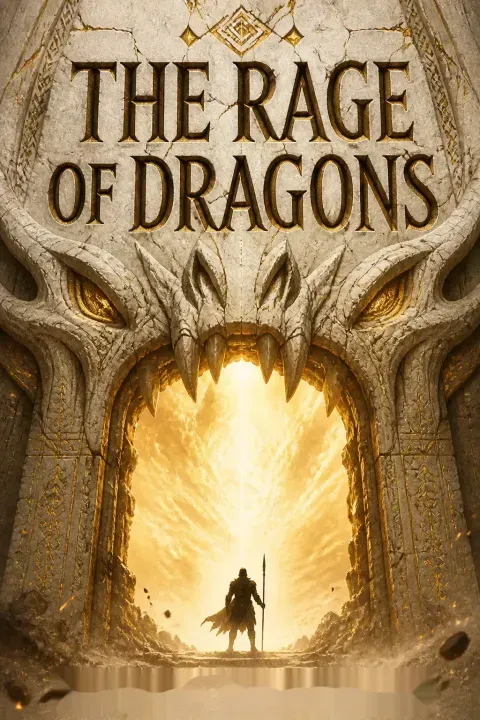
The Rage of Dragons is a highly praised African-inspired epic fantasy debut by Evan Winter. Readers commend its unique setting, intense action scenes, and compelling revenge-driven plot. The story follows Tau, a determined protagonist seeking vengeance in a world of magic, dragons, and class struggle. While some criticize the lack of female characters and world-building depth, most reviewers appreciate the fast-paced narrative, well-executed battle sequences, and refreshing take on fantasy tropes. The book is frequently compared to Pierce Brown's Red Rising series and is considered a promising start to a new epic fantasy series.
People Also Read



Characters
Tau Solarin
Vengeance-driven warrior prodigyA Low Common of Kerem whose father12 is murdered by Noble conspirators. Tau transforms from a reluctant, love-struck young man into the deadliest fighter the Omehi have ever produced. His defining trait is pathological determination: he will outwork, out-suffer, and outlast any opponent regardless of the cost to his body or sanity. He discovers he can enter the demon realm of Isihogo and uses it to compress years of combat training into months of nightly deaths, each one a full sensory experience of being torn apart. This self-inflicted trauma erodes his grip on reality, causing him to see demons in daylight and blurring the line between battle-fury and madness. His love for Zuri2 is the only force that competes with his thirst for vengeance, and her death nearly destroys him. He is neither hero nor villain but a natural disaster shaped by injustice into a weapon that the young queen Tsiora7 eventually wields as her champion.
Zuri Uba
Gifted initiate and Tau's belovedA handmaiden in Kerem who tests as one of the most powerful Gifted of her generation. Zuri loves Tau1 with a fierce, protective affection that predates his transformation and persists through his descent into violence. She is brave enough to kiss him first, principled enough to confront Kellan5 about Aren's12 death before agreeing to be his Enrager, and powerful enough to be groomed as an Entreater, one of the rare Gifted who can call dragons. Her knowledge of Isihogo and the Gifted's secret economy of sacrifice (a Gifted dies every time a dragon is called) makes her both Tau's1 teacher and his conscience. She believes in peace, in the possibility of a life beyond caste and war, but she also accepts the monstrous costs of their world with more grace than Tau1 can muster. Her willingness to sacrifice herself for others is not weakness but the moral core that Tau's1 vengeance lacks.
Jayyed Ayim
Visionary umqondisi and secret reformerA Lesser of partial Noble blood who rose to become an adviser to the Guardian Council before being dismissed for advocating peace. Jayyed returns to the Ihashe isikolo with a radical theory: superior training methods can elevate Lessers to near-Noble capability. He handpicks a scale of cross-caste fighters, the hidden offspring of Noble-Lesser unions, believing they represent the Omehi's only hope against the overwhelming Xiddeen numbers. He is a mentor caught between idealism and pragmatism, genuinely inspired by Tau's1 progress yet privately convinced that pure Lessers cannot match Greater Nobles. His daughter Jamilah was given to the Xiddeen as part of the peace negotiations, a sacrifice he never chose. Jayyed's death in the gully, pressing his guardian dagger into Tau's1 hand, passes his legacy to the one student who surpassed his expectations and rejected his limits.
Hadith Buhari
Scale inkokeli and strategic mastermindA Governor caste cross-caste with green eyes and a mind for military tactics that rivals any Noble's. Hadith becomes Scale Jayyed's3 inkokeli, the leader who translates Tau's1 individual brilliance into collective victory. He is charming, politically aware, and carries a quiet bitterness toward the Nobles whose blood he shares through likely-violent circumstances. His plan to challenge Scale Ojuolape to single combat instead of a full skirmish is a masterclass in leveraging Noble pride against them. Where Tau1 is a blade, Hadith is the hand that wields it, understanding that winning wars requires more than killing. He is pragmatic enough to see the strategic value in peace while also recognizing that the caste system must be dismantled for Lessers to survive. His loyalty to his sword brothers, particularly Uduak8, grounds the scale in something beyond Tau's1 obsessive vengeance.
Kellan Okar
Noble rival, unwilling executionerThe nephew of Champion Abshir Okar and the greatest Indlovu initiate in a generation. Kellan is trapped by his father's legacy: the man was hanged for cowardice at the Battle of Kwabena, and Kellan has spent his life trying to prove he is different. He becomes Odili's6 protégé out of financial necessity, forced to do the councillor's bidding to protect his mother and sisters from poverty. When ordered to kill Tau1 at the testing, he attempts to find a loophole by maiming Aren12 instead, a moral compromise that satisfies no one. He is genuinely skilled, genuinely conflicted, and genuinely despised by Tau1 for his role in Aren's12 death. His defeat by Tau1 in the Queen's Melee semifinal shatters the myth of Noble supremacy. He eventually joins the queen's7 loyalists, fighting alongside the same Lessers he once viewed as lesser beings.
Abasi Odili
Chairman of the Guardian Council and architect of the coupA Royal Noble of Palm whose elegant cruelty drives the novel's central conflicts. Odili orders Aren's12 death at the testing not out of personal malice but because a Lesser besting a Noble threatens the entire caste system on which his power depends. He is charming, calculating, and utterly committed to preserving Noble supremacy even if it means destroying his own civilization. When Queen Tsiora7 pursues peace with the Xiddeen, a peace that would abolish the castes and end Noble privilege, Odili orchestrates a coup: he arranges for the Xiddeen Conclave to be destroyed by a dragon, framing the queen7 and triggering the very invasion that will kill thousands of his own people. He is the novel's most dangerous antagonist because he believes his own propaganda, genuinely convinced that Noble rule is divinely ordained and worth any cost to preserve.
Queen Tsiora Omehia
Young monarch seeking impossible peaceThe second of her name, barely past her own womanhood testing, Tsiora inherits a queendom losing a two-century war. Unlike her predecessors, she believes the data Jayyed3 presented to the Guardian Council: the Omehi cannot defeat the Xiddeen and must negotiate peace, even if it means surrendering Noble privilege and marrying a Xiddeen prince. She is secretly Gifted, trained by her vizier Nyah to use the royal bloodline's unique powers, including the ability to forcefully expel souls from Isihogo. Her courage is quiet but absolute: she faces down an Enraged Ingonyama's assault on her keep, negotiates a moon's truce with a genocidal warlord14, and has the political acumen to recognize that Tau Solarin1, a Common of Kerem, is the weapon and symbol she needs to reunite her fractured people.
Uduak
Mountain-sized sword brotherA Low Common of immense physical power and few words. Uduak nearly kills Tau1 in the Ihashe testing, breaking his wrist and kicking him unconscious, but the tie between them earns both a place in Scale Jayyed3. He is the only initiate who can match Tau's1 intensity in the early training, and their rivalry evolves into a deep, protective brotherhood. Uduak stops Tau1 from murdering the Indlovu who killed Oyibo, understanding that the system will hang a Lesser for killing a Noble regardless of the circumstances. He calls Tau1 'little demon' and means it as both warning and respect. His loyalty is absolute: when Scale Jayyed3 must choose between Odili's6 coup and the queen7, Uduak's decision is instant and unshakeable.
Jabari Onai
Tau's childhood friend, conflicted NobleThe second son of Umbusi Onai of Kerem, Jabari is Tau's1 closest friend and sparring partner. He is everything a Petty Noble should be: brave, loyal, and genuinely fond of Tau1 despite the caste gap. Yet he also holds the unconscious prejudices of his class, speaking of Lessers in ways that reveal he sees them as inherently lesser beings. His conflict with Tau1 after the Daba raid foreshadows the impossibility of their friendship surviving Tau's1 radicalization. Jabari passes his Indlovu testing in the North, joins Scale Osa under Kellan5, and eventually fights alongside Tau1 in the keep against Odili's6 Indlovu. He throws himself into dragonfire to save Uduak8, Hadith4, and Themba, sustaining horrific burns that leave him hovering near death as the novel ends.
Yaw
Precise, sunburnt swordsmanSmall and coppery-skinned, Yaw is one of Jayyed's3 five and a supremely precise fighter whose blade always finds the most painful opening. He becomes the scale's storyteller, embellishing Tau's1 exploits into legends that spread through the entire Ihashe isikolo. His need to narrate heroism is as much a coping mechanism as Tau's1 Isihogo training: by turning their brutal reality into epic tales, Yaw creates meaning for men who might otherwise break. He survives the gully, the keep, and the youngling's rampage, emerging as one of the scale's steady core who will follow Tau1 into whatever comes next.
Chinedu
Coughing warrior with quiet courageA member of Jayyed's3 five whose persistent, hacking cough makes him seem frail despite his skill. Chinedu provides dry humor and stubborn loyalty, always present in the morning extra training sessions. He is the first to charge when Tau1 needs support and the first of the five to die, decapitated by Daaso Headtaker's enraged spear in the gully. His death, sudden and absolute, crystallizes the invasion's cost for Scale Jayyed3 and pushes Tau1 into a berserk fury that nearly gets him killed chasing the Xiddeen champion.
Aren Solarin
Tau's father, murdered catalystA Low Common who rose through military service to become inkokeli of Kerem's Ihagu. Aren is the best fighter in the fief and a devoted father who trains Tau1 with the quiet hope that his son will have a better life. His love for Imani Tafari, Tau's1 mother, ended when she left him for a wealthier man, and he poured all his remaining devotion into his son. When he steps into the fighting circle to take Tau's1 place against Kellan Okar5, he knows he will die. His death, his sword hand severed, his chest pierced by Dejen's dragon-scale blade, is the foundational trauma that drives every subsequent event in Tau's1 life.
Lekan Onai
Cruel, cowardly heir of KeremThe obese, entitled firstborn of Umbusi Onai who failed his Indlovu testing and takes out his inadequacy on Lessers. Lekan tries to rape Anya, murders her entire banished family including the infant, and attempts to have Tau1 hanged. He gives Tau1 his facial scar during their fatal confrontation, and his death, skull crushed against his own chamber wall, sets Tau1 on the path to Kigambe and the Ihashe.
Warlord Achak
Xiddeen leader, burned and vengefulThe warlord who led the raid on Daba and later negotiates peace terms with the Omehi. Half his face is a ruin of burn scars. He despises the invaders who have poisoned his land with dragons, and he agrees to peace only because his shul commands it. When the Omehi destroy the Conclave, killing a hundred thousand Xiddeen, Achak launches an invasion and swears genocide against every Chosen man, woman, and child.
Queen Taifa Omehia
Founding monster, first dragon queenThe queen who led the Omehi across the ocean fleeing the Cull, landed on Xidda, and used dragons to slaughter the native population. Her choice to bind a youngling and burn the peninsula established the template for nearly two centuries of war. She carried Champion Tsiory's child after his death, founding the royal line that leads to Tsiora7. She is both savior and original sinner, the necessary monster her descendants must reckon with.
Plot Devices
Isihogo
Demon realm enabling time-dilated trainingThe underworld prison created by the Goddess Ananthi to hold Ukufa and his demonic followers. All souls can enter Isihogo, but only Gifted can shroud their soul's light from the demons that hunt there. Time passes roughly fifty times faster than in the real world, making it a brutal training ground for those willing to be torn apart repeatedly. The realm's energy can be drawn upon by anyone, but doing so makes a soul corporeal and vulnerable to permanent death. Tau1 weaponizes Isihogo in an unprecedented way: he enters unshrouded, fights the demons with swords, and dies hundreds of times, compressing cycles of combat experience into months. This self-inflicted trauma grants him supernatural fighting instincts but progressively erodes his sanity, causing him to hallucinate demons in the waking world. Isihogo is also the source of all Gifted powers, including enervation, enraging, edification, and entreating.
Guardian Dragons
Massive fire-breathing weapons of warEnormous black-scaled creatures whose scales bend light and whose fire can incinerate dozens in a single blast. They are not allies but prisoners: the Omehi hold an immature youngling captive beneath the Guardian Keep, keeping it constantly enervated. Entreaters mimic the youngling's distress call to summon adult dragons, then entreat them into combat service. Each time a dragon is called, the beast retaliates by holding the Entreater's soul in Isihogo until her shroud collapses and demons consume her. A Hex of Gifted can share this burden, with one member sacrificed each time. The dragons' prolonged presence on Xidda is believed to poison the land, causing the curse-scars that afflict the hedeni and the Roar's violent ocean. The youngling's eventual release by Zuri2 saves the queen's7 keep but costs Zuri2 her life.
Enraging and Enervation
Gifted combat enhancement and incapacitationTwo primary Gifted abilities used in warfare. Enraging allows a Gifted to channel Isihogo's energy into a Greater or Royal Noble warrior, transforming them into a colossus with superhuman strength, speed, and stone-hard skin. The Enraged fighter can withstand blows that would kill normal men, but maintaining the enraging depletes the Gifted's ability to shroud herself from demons. Enervation forces targets' souls into Isihogo, where demons attack them, incapacitating them in the real world. The Xiddeen were thought to have lost access to their gifts due to the Goddess's curse, but they have relearned enraging through the captured Gifted Nsia. Jamilah, Jayyed's3 daughter, is given to them to teach enervation as part of the doomed peace agreement.
The Caste System
Rigid social hierarchy driving all conflictOmehi society divides people into Royal Nobles, Greater Nobles, Petty Nobles, and Lessers (including Governors, Harvesters, Commons, and Drudge). Nobles are bigger, stronger, and faster by birth. Crossing caste lines for relationships is forbidden, and offspring of such unions are believed to be stillborn, though Jayyed3 discovers many survive as Lessers with enhanced physical capabilities. The military mirrors this hierarchy: Nobles become Indlovu or Ingonyama, Lessers become Ihashe (elite) or Ihagu (fodder). Only military status grants the right to blood-duel across castes. The entire system is a self-perpetuating engine of injustice, and the peace terms would abolish it, placing Nobles under the Xiddeen shul's rule without special privileges. Odili's6 coup is a direct response to this existential threat to Noble supremacy.
Guardian Weapons
Dragon-scale blades marking martial excellenceSwords and daggers forged from dragon scale, impossibly sharp and blacker than darkness. Their surfaces confuse the eye, making their exact position difficult to track, giving a skilled wielder a significant advantage. Guardian daggers are awarded to top Ihashe initiates and first and second-cycle Indlovu. Guardian swords go to the top three graduating Indlovu and to the queen's champion. Jayyed3 won a guardian dagger during his own training and passes it to Tau1 as he dies. At the novel's end, Queen Tsiora7 commissions two guardian swords for Tau1, using the hilts from his father's12 and grandfather's shattered blades, symbolically fusing his personal vengeance with the highest martial honor the Omehi can bestow.
FAQ
0. Synopsis & Basic Details
What is The Rage of Dragons about?
- A Vengeful Quest: The Rage of Dragons follows Tau Solarin, a young man from the Lesser caste of the Omehi people, who is thrust into a brutal world of war and rigid social hierarchy after his family is tragically murdered. Driven by an insatiable desire for vengeance against the Nobles responsible, Tau dedicates himself to becoming the greatest warrior in the land.
- Unconventional Training: Tau enrolls in the Southern Ihashe Isikolo, a military academy for Lessers, where he undergoes grueling training under the visionary Umqondisi Jayyed Ayim. He pushes himself beyond human limits, even venturing into the perilous spirit world of Isihogo to battle demons, all to gain the strength needed to challenge the powerful Noble elite.
- A World at War: Set on the Xidda Peninsula, the Omehi are locked in a centuries-long, seemingly endless war with the indigenous Xiddeen, who they call "savages." The Omehi rely on their Gifted women and enslaved dragons for military superiority, but hidden truths about their history and the true nature of their power begin to unravel, threatening their very survival.
Why should I read The Rage of Dragons?
- Visceral, Relentless Action: Evan Winter delivers a high-octane, immersive reading experience with incredibly detailed and brutal combat sequences. Tau's journey is a relentless pursuit of power, making every training session and battle feel earned and impactful, appealing to fans of intense, character-driven fantasy.
- Deep Character Transformation: The novel excels in portraying Tau's psychological and physical evolution. Readers witness his descent into obsession, his struggle with moral compromises, and his eventual transformation from a vengeful individual to a reluctant champion, offering a compelling exploration of the costs of power and the nature of heroism.
- Rich World-Building & Social Commentary: Beyond the action, the book crafts a complex society with a rigid caste system, unique magic (the Gifts, Isihogo), and a nuanced history of invasion and survival. It subtly critiques themes of classism, prejudice, and the moral ambiguities of war, inviting readers to ponder deeper societal questions.
What is the background of The Rage of Dragons?
- Omehi Migration & Conquest: The Omehi are an invading people who fled a cataclysmic event known as the Cull from their homeland, Osonte. Led by Queen Taifa, they landed on the Xidda Peninsula, a land already inhabited by the Xiddeen. Their initial survival was secured through the brutal use of enslaved dragons, establishing a violent precedent for their presence.
- Rigid Caste System & Military Focus: Omehi society is strictly hierarchical, divided into Nobles (Royal, Greater, Petty) and Lessers (Governor, Harvester, Common, Low Common, Drudge). Military service is paramount, with Nobles typically becoming powerful Indlovu warriors and Lessers serving as Ihashe or Ihagu fodder. This system dictates every aspect of life, from opportunity to perceived worth.
- The Nature of Gifts & Isihogo: The Omehi possess "Gifts" – unique magical abilities tied to their bloodline, primarily manifested by women. These powers, like enraging and dragon control, draw energy from Isihogo, a spirit world where Ukufa and his demons are imprisoned. The use of these gifts, especially dragon control, comes with hidden, horrific costs and moral compromises.
What are the most memorable quotes in The Rage of Dragons?
- "Where we fight! The world burns!": This iconic Omehi war cry, initially a symbol of their destructive power and dominance, evolves throughout the narrative. It encapsulates the Omehi's relentless spirit in battle, but also hints at the devastating consequences of their prolonged war and the moral compromises made for survival.
- "Life is nothing more than moments in time. To achieve greatness, you have to give up those moments. You have to give your life to your goal.": Jayyed Ayim's profound statement to Tau encapsulates the core theme of sacrifice and obsession. It defines Tau's relentless pursuit of vengeance and power, highlighting the extreme personal cost of his ambition and the narrow, brutal path he chooses.
- "You will die here.": Queen Tsiora's chilling words to Tau in Isihogo, followed by her expulsion of him, reveal her own hidden Gift and the ruthless pragmatism of Omehi royalty. This quote underscores the queen's willingness to make impossible choices for her people's survival, mirroring Queen Taifa's actions in the prologue and solidifying Tsiora's "monster" identity.
What writing style, narrative choices, and literary techniques does Evan Winter use?
- Immersive First-Person Perspective: The story is primarily told from Tau's limited third-person perspective, immersing the reader directly into his experiences, thoughts, and emotional turmoil. This choice intensifies the reader's connection to Tau's journey, making his pain, rage, and determination deeply personal and immediate.
- Propulsive, Sensory-Rich Prose: Winter employs a lean, direct, and highly sensory writing style that propels the narrative forward at a relentless pace. Descriptions of combat are particularly vivid, focusing on the sounds of clashing bronze, the smell of blood and sweat, and the visceral impact of blows, creating a truly immersive and often brutal experience.
- Repetitive Motifs & Foreshadowing: The author frequently uses recurring phrases (e.g., "Where we fight! The world burns!"), sensory details (the smell of blood, the feel of Isihogo), and structural parallels (Taifa/Tsiora's choices, Tau's repeated deaths in Isihogo) to reinforce themes and subtly foreshadow future events, adding layers of depth and cohesion to the narrative.
1. Hidden Details & Subtle Connections
What are some minor details that add significant meaning?
- The Peninsula Map on the Dignitary Door: The bronze map on the door to the dignitary rooms in the umqondisi quarter, depicting the Xidda Peninsula, subtly symbolizes the Omehi's self-imposed confinement. It shows their known world, but also highlights the vast unknown beyond their borders, hinting at their limited understanding of the larger world and their true enemy, the Cull, beyond Xidda.
- Ochieng's Act of Defiance: The seemingly minor character of Ochieng, the keep guard, plays a pivotal role in Tau's escape after Lekan's murder. His decision to cover for Tau and spit on Lekan's body ("That's for Anya, for Nkiru's family, and for Aren, you heartless cek") reveals a deep-seated resentment among some Lessers towards Noble abuses, hinting at the simmering class tensions that underpin the Omehi society.
- Tsiory Statue's "Blood": The statue of Champion Tsiory in the Guardian Keep's anteroom, with "bloodred waters" flowing from his sword's hilt, is a grim and symbolic detail. It visually represents the foundational sacrifice and violence upon which the Omehi nation was built, constantly reminding those in power of the bloody cost of their survival and the moral compromises made by their first queen.
What are some subtle foreshadowing and callbacks?
- The Wrecked Boat at Kerem: Early in the novel, Tau and Jabari observe a wrecked boat near the Roar, speculating it might be Hedeni. This seemingly throwaway detail subtly foreshadows the Daba raid, confirming the Xiddeen's ability to navigate the treacherous waters and mount surprise attacks, challenging the Omehi's perceived invulnerability.
- Demon-Death Phenomenon: The "demon-death" of the captured hedena in Daba, where she convulses and bleeds from orifices, is a chilling foreshadowing of the fate of Gifted who are overwhelmed in Isihogo. This callback is explicitly confirmed later with the death of the Gifted in Daba's prologue and the KaEid during the coup, revealing the horrific cost of drawing power from the underworld.
- Jayyed's "Noble" Bloodline: Jayyed's eventual confession of his Greater Noble father, born from a forced union, subtly foreshadows his unique perspective on caste and his radical vision for cross-caste warriors. This hidden detail explains his exceptional skill, his disillusionment with the traditional hierarchy, and his belief that "blood determines destiny" is a lie, setting him apart from other umqondisi.
What are some unexpected character connections?
- Kellan Okar's Disgraced Lineage: Kellan Okar, initially presented as a primary antagonist, is revealed to be the nephew of the queen's champion, Abshir Okar, and the son of "coward Okar," who was hanged for treason. This unexpected connection provides a deeper motivation for Kellan's relentless pursuit of honor and his ambition to become champion, as he seeks to redeem his family's name and escape the shadow of his father's perceived cowardice.
- Jayyed Ayim and Jamilah's Relationship: The revelation that Jamilah, the powerful Entreater sacrificed during the peace talks, is Jayyed Ayim's daughter, adds a profound layer of tragedy and personal cost to Jayyed's character arc. This connection highlights the deep personal sacrifices made by even the most pragmatic leaders in the Omehi hierarchy, and the emotional toll of the endless war.
- Queen Tsiora's Hidden Gift: The most unexpected connection is Queen Tsiora's possession of the "expulsion" gift, a rare form of enervation that allows her to forcibly remove souls from Isihogo. This hidden power, inherited from Queen Taifa, reveals a direct lineage of extraordinary Gifted queens and underscores Tsiora's capacity for ruthless action, solidifying her role as a "monster" willing to make ultimate sacrifices for her people.
Who are the most significant supporting characters?
- Ochieng: More than just a gate guard, Ochieng represents the quiet defiance and simmering resentment within the Lesser castes. His decision to aid Tau after Lekan's murder, risking his own life and spitting on Lekan's body, is a powerful act of solidarity and revenge for the injustices suffered by Lessers like Nkiru and Anya.
- Themba: Initially a comic relief character, Themba evolves into a voice of cynical realism within Scale Jayyed. His constant complaining and focus on self-preservation, while often annoying, provide a grounded perspective on the brutal realities of war and the Omehi's precarious situation, contrasting with Tau's idealistic rage.
- Kana: The Xiddeen warlord's son, Kana, becomes a pivotal figure in the fragile peace negotiations. His initial role as a symbol of Xiddeen power and his later bewilderment at the Omehi's internal treachery highlight the complexities of inter-species conflict and the potential for understanding, even between long-standing enemies.
2. Psychological, Emotional, & Relational Analysis
What are some unspoken motivations of the characters?
- Kellan Okar's Drive for Redemption: While Kellan explicitly states his desire to become Ingonyama, his deeper, unspoken motivation is to cleanse his family's name from the stain of his father's "cowardice." His relentless training and ambition are fueled by a desperate need to prove his worth and escape the societal judgment that has plagued his family, making him a mirror to Tau's own quest for justice.
- Queen Tsiora's Pragmatic Ruthlessness: Beyond her stated desire for peace and her strategic leadership, Queen Tsiora's unspoken motivation is a deep-seated, almost cold pragmatism inherited from Queen Taifa. Her willingness to sacrifice Jamilah, to use the youngling as a bargaining chip, and to potentially manipulate Tau into becoming her champion, reveals a leader who prioritizes the survival of her people above all else, even at immense moral cost.
- Abasi Odili's Fear of Obsolescence: Odili's coup is driven not just by a lust for power, but by an unspoken fear of losing the Noble caste's privileged position in a time of peace. His actions are a desperate attempt to maintain the status quo where Nobles are indispensable warriors, ensuring their continued dominance and preventing the "pollution" of their bloodlines through assimilation with the Xiddeen.
What psychological complexities do the characters exhibit?
- Tau's Obsessive Self-Destruction: Tau's psychological complexity lies in his descent into a self-destructive obsession with vengeance, blurring the lines between reality and the horrors of Isihogo. His nightly "deaths" and increasing detachment from human connection reveal a mind teetering on the brink, where the pursuit of power for justice becomes a form of madness, making him question his own humanity.
- Zuri's Moral Compromise: Zuri grapples with the psychological burden of her Gifted status and the horrific truths of Omehi survival. Her internal conflict between her love for Tau and her duty to her people, culminating in her sacrifice, showcases the immense psychological toll of wielding power that demands such moral compromises, forcing her to confront the "things we do" for survival.
- Jayyed's Disillusioned Idealism: Jayyed's character is a complex blend of idealism and profound disillusionment. His secret Noble heritage and his vision for a new, stronger Omehi military are driven by a genuine desire to save his people, yet he is deeply scarred by the war's futility and the sacrifices it demands, particularly the loss of his daughter. His psychological struggle reflects the burden of foresight in a world unwilling to change.
What are the major emotional turning points?
- Aren's Death and Tau's Vow: The brutal murder of Tau's father, Aren, at the hands of Dejen Olujimi under Odili's command, is the foundational emotional turning point. It shatters Tau's innocence and ignites his all-consuming rage, transforming him from a reluctant fighter into a man driven solely by vengeance, setting the entire trajectory of his journey.
- Oyibo's Murder and Tau's Unchecked Rage: Oyibo's death in the skirmish, despite calling for mercy, is a critical emotional turning point for Tau. It pushes him beyond the bounds of controlled violence, revealing the raw, unchecked fury that Isihogo training has amplified. This moment underscores the moral cost of his power and the blurring line between justice and brutality.
- Zuri's Sacrifice and Tau's Grief: Zuri's selfless act of freeing the youngling and her subsequent incineration by dragon fire is a devastating emotional climax. Her death, witnessed by Tau, shatters his singular focus on vengeance and plunges him into profound grief, forcing him to confront the true, personal cost of the war and the sacrifices made by those he loves.
How do relationship dynamics evolve?
- Tau and Jabari: From Brotherhood to Disillusionment: Their relationship evolves from a close childhood friendship and "sword brothers" bond to one strained by differing values and the harsh realities of caste. Jabari's initial loyalty and naive belief in Noble honor clash with Tau's growing disillusionment and brutal pragmatism, culminating in Jabari's horror at Tau's actions and his eventual, reluctant alliance against Odili.
- Tau and Kellan: From Antagonists to Reluctant Allies: Their dynamic shifts from bitter enemies, fueled by Tau's desire for revenge and Kellan's perceived role in Aren's death, to a complex, reluctant alliance against a common foe (Odili). This evolution is driven by Zuri's intervention and the shared threat of the coup, forcing them to set aside personal grievances for a greater cause, highlighting themes of shifting loyalties and pragmatic cooperation.
- Tau and Jayyed: Mentor, Father Figure, and Ideological Clash: Jayyed initially serves as a mentor and surrogate father figure, shaping Tau's combat prowess. However, their relationship evolves into an ideological clash as Tau's extreme methods and singular focus on vengeance diverge from Jayyed's broader vision for peace and a new Omehi society. Jayyed's death, a direct consequence of the peace talks, solidifies Tau's rage but also leaves him without his guiding force.
4. Interpretation & Debate
Which parts of the story remain ambiguous or open-ended?
- The True Nature of the Cull: While the Omehi creation myth and Zuri's explanation describe the Cull as immortal, soul-stealing beings, their actual existence and threat remain largely ambiguous. They serve as a foundational fear and a justification for the Omehi's actions, but the reader never directly encounters them, leaving their true nature and the extent of their threat open to interpretation.
Download PDF
Download EPUB
.epub digital book format is ideal for reading ebooks on phones, tablets, and e-readers.








































