
Key Takeaways
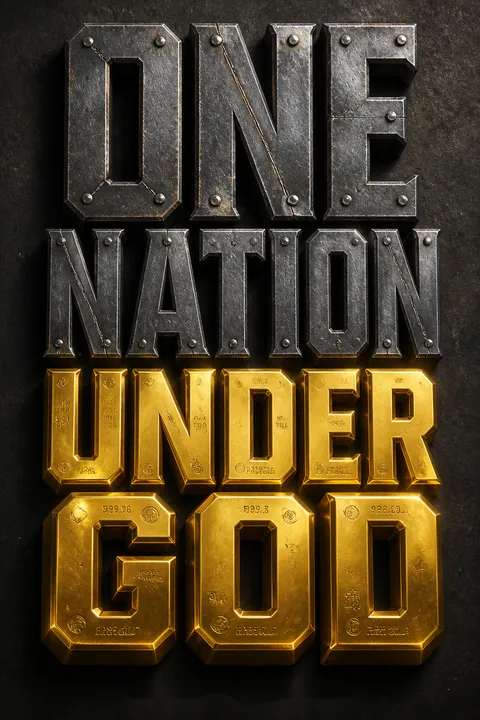
1. "Christian America" was a mid-20th Century invention, not a founding principle.
This history reminds us that our public religion is, in large measure, an invention of the modern era.
A recent phenomenon. The widespread belief that the United States has always been a "Christian nation" is a relatively recent development, largely taking shape in the mid-20th century. While a "moral establishment" of Protestant piety existed earlier, it was never as explicitly codified or integrated into government institutions as it became during this period. This challenges the common assumption that such religious foundations date back to the nation's founding.
Founders' intent. Historical evidence suggests the Founding Fathers favored a "wall of separation between church and state," as articulated by Thomas Jefferson. Their vision for government did not include explicit acknowledgments of Christ's authority or a specific religious identity for the nation. The modern "Christian America" narrative emerged from specific political and social movements, rather than being an unbroken tradition from the 18th century.
Beyond the Cold War. While often attributed solely to Cold War anxieties distinguishing the U.S. from "godless communism," the roots of this religious identity run deeper. It was influenced by domestic political struggles and a concerted effort by various groups to reshape public understanding of America's core values, predating the full intensity of the Cold War.
2. Corporate America funded "Christian libertarianism" to fight the New Deal.
Decades before Eisenhower’s inaugural prayers, corporate titans enlisted conservative clergymen in an effort to promote new political arguments embodied in the phrase “freedom under God.”
Business salvation. In the 1930s, facing public backlash from the Great Depression and the rise of the New Deal, corporate leaders sought to rehabilitate their image and counter government expansion. Organizations like the National Association of Manufacturers (NAM) and the U.S. Chamber of Commerce dramatically increased public relations spending, but their direct appeals were often dismissed as self-serving propaganda.
Clergy as allies. Industrialists found a powerful, credible voice in conservative clergymen, who could articulate anti-New Deal sentiments without appearing motivated by self-interest. These ministers, like James W. Fifield Jr., argued that the New Deal's welfare state violated biblical principles, such as making a "false idol" of government and encouraging covetousness, thereby perverting Christian doctrine.
Christian libertarianism. This alliance forged a new ideology, "Christian libertarianism," which inextricably linked Christianity and capitalism. It asserted that individual salvation and free enterprise were political soul mates, both rooted in individualistic ethos. This framework positioned the state not as a benevolent provider, but as a threat to both economic and spiritual freedom, laying the groundwork for a new vision of America "under God."
3. Key religious leaders popularized "Freedom Under God" to link faith and free enterprise.
The government had never loomed large in Americans’ thinking about the relationship between Christianity and capitalism, but in Fifield’s vision the state cast a long and ominous shadow.
Spiritual Mobilization. Reverend James W. Fifield Jr. founded Spiritual Mobilization in 1935, aiming to "arouse the ministers of all denominations in America to check the trends toward pagan stateism." With ample funding from corporate titans like J. Howard Pew Jr. of Sun Oil, the organization distributed pamphlets and radio programs, arguing that the New Deal threatened "basic freedom and spiritual ideals."
Prayer breakfasts. Abraham Vereide, a Methodist minister, established influential prayer breakfast groups in Seattle in the 1930s, expanding them to Washington D.C. by the 1940s. These groups, including members of Congress and business leaders, promoted a "God-directed and God-controlled nation," believing that "Men must either be governed by God or ruled by tyrants." They provided a forum for influential figures to connect and advance a shared conservative agenda.
Billy Graham's crusades. Billy Graham, a charismatic evangelical preacher, rose to national prominence in the late 1940s, leveraging Cold War anxieties to promote a blend of faith and anti-communism. He openly embraced business leaders like Sid Richardson, condemned organized labor and government intervention as "socialism," and insisted that "the American way of life" was rooted in "rugged individualism that Christ brought."
4. Eisenhower's presidency sacralized the state, embedding religion in public life.
For Eisenhower, the most important thing about religion was its power to unite Americans around a common understanding of their past and to dedicate them to a common plan for their future.
A "vague religion." President Dwight D. Eisenhower, though not deeply denominational, believed in a "deeply-felt religious faith" as the foundation of American government. He understood that a broad, non-sectarian religiosity could unite a diverse nation, leading to a "fervent believer in a very vague religion" approach that resonated with many Americans.
Presidential initiatives. Eisenhower's administration initiated numerous public religious practices:
- Inaugural prayer: He led a personal prayer at his 1953 inauguration, a public spectacle.
- Cabinet prayers: Instituted opening prayers at all cabinet meetings.
- National Day of Prayer: Signed legislation requiring an annual day of prayer.
- National Prayer Breakfast: Became a regular attendee, solidifying this annual tradition.
"Government Under God." These actions, along with his support for the Freedoms Foundation (co-chartered with Herbert Hoover), transformed the federal government into a "government under God." This ironically undercut the Christian libertarians' original aim to dismantle the state, as piety was now used to legitimize and strengthen government institutions, making them seem inherently godly.
5. Popular culture amplified religious nationalism through advertising and entertainment.
In its conflation of piety and patriotism, Disneyland embodied larger currents in American popular culture during the postwar era.
Madison Avenue's mission. The advertising industry, through the Advertising Council's "Religion in American Life" (RIAL) campaign, actively promoted religious observance. JWT, the largest ad firm, crafted messages urging Americans to "Find yourself through faith" and linking church attendance to national well-being, effectively "selling" religion as a public service and a cornerstone of American life.
Hollywood's embrace. The entertainment industry also played a crucial role:
- Walt Disney: A staunch conservative, Disney planned a "One Nation Under God" attraction for Disneyland, emphasizing free enterprise and faith as America's foundation.
- Cecil B. DeMille: His 1956 blockbuster The Ten Commandments was promoted as a timeless struggle between tyranny and "freedom under God," resonating with Cold War themes.
- Ten Commandments monuments: DeMille partnered with the Fraternal Order of Eagles to erect thousands of granite monuments on public property, solidifying religious symbols in civic spaces.
Total saturation. RIAL aimed for "total saturation" of its message, using billboards, radio, TV, and print to make religious themes inescapable. This pervasive cultural messaging, often echoing Eisenhower's rhetoric, ensured that "under-God consciousness" became deeply ingrained in the national psyche.
6. Supreme Court rulings on school prayer exposed deep divisions over public faith.
“I think it is the final arrogance to talk constantly about ‘our religious tradition’ in this country and equate it with the Bible. Sure, religious tradition. Whose religious tradition?”
Gideons' challenge. The Gideons International's program to distribute Bibles in public schools sparked controversy, particularly in religiously diverse areas. Jewish and Catholic leaders objected to the King James Version's sectarian nature, leading to lawsuits like Tudor v. Board of Education of Rutherford, which successfully challenged the practice in New Jersey.
Regents' Prayer. New York's Board of Regents composed a "non-denominational" prayer for daily recitation in public schools: "Almighty God, we acknowledge our dependence upon Thee, and we beg Thy blessings upon us, our parents, our teachers, and our Country." Intended to unify, it instead deepened divisions, especially between Catholic and Jewish families in districts like Herrick Union Free School.
Engel v. Vitale (1962). The Supreme Court ruled the Regents' Prayer unconstitutional, asserting that "it is no part of the business of government to compose official prayers for any group of the American people to recite." Justice Hugo Black's majority opinion emphasized the founders' intent to maintain a "wall of separation between church and state," though a footnote affirmed "ceremonial deism" in broader public life.
Abington School District v. Schempp (1963). The Court extended this ruling to state-mandated Bible reading, finding it also violated the Establishment Clause. Justice Tom Clark's opinion stressed government neutrality in religion, acknowledging America as a "religious people" but emphasizing individual freedom of worship over state-imposed practices. These rulings, while affirming religious liberty, ignited a national firestorm.
7. The "prayer amendment" debate revealed a rift between clergy and conservative laypeople.
“The politician who says he believes in reducing the scope of Government and then asks for a Government role in nurturing and guiding the inner man can expect scrutinizing conversations as these issues are pursued by our people in future debate.”
Grassroots outrage. The Supreme Court's school prayer decisions sparked widespread public outrage, with polls showing 70% of Americans favoring a constitutional amendment to restore prayer. Petitions and letters flooded Congress, overwhelmingly supporting an amendment, driven by a belief that the Court was "outlawing God."
Congressional champions. Representative Frank Becker introduced the "Becker Amendment," aiming to permit voluntary prayer and Bible reading in public institutions and explicitly allow references to God in government documents. Despite strong support from over 100 congressmen and patriotic groups like the American Legion, the amendment faced a roadblock in Judiciary Committee Chairman Emanuel Celler.
Clergy opposition. Surprisingly, leaders of major Protestant and Jewish denominations, including the National Council of Churches, largely opposed the amendment. They argued that state-mandated prayer was a "theological caricature," undermined true religious education, and threatened the separation of church and state. This created a significant rift between denominational leadership and their conservative lay members.
Dirksen's defeat. Senator Everett Dirksen later championed a similar amendment, garnering significant senatorial support. However, the sustained opposition from religious leaders, who argued they represented the "armies" of their congregations, ultimately swayed enough votes. Dirksen's amendment failed in 1966, highlighting the growing disconnect between the religious establishment and a burgeoning conservative lay movement.
8. Nixon and Graham weaponized religious nationalism for partisan political ends.
“Every president in American history had invoked the name and blessings of God during his inauguration address, and many . . . had made some notable public display of their putative piety, but none ever made such a conscious, calculating use of religion as a political instrument as did Richard Nixon.”
Inaugural spectacle. Richard Nixon's 1969 inauguration was an unprecedented display of public prayer, orchestrated to evoke Eisenhower's era. Billy Graham delivered a partisan invocation, calling for "moral and spiritual restoration" and explicitly linking Nixon's leadership to divine sovereignty. This set a tone of overt religious nationalism for the administration.
White House church services. Nixon established regular Sunday services in the White House East Room, a novel practice. These events, carefully curated by aides like Bob Haldeman (a former ad executive) and Charles Colson, were used for political purposes:
- Romancing religious leaders: Inviting conservative clergy and influential donors.
- Political messaging: Sermons often blessed administration policies and criticized dissent.
- Public relations: Services were broadcast, with media present to capture the "family" image.
"Honor America Day." In 1970, amidst Vietnam War protests, Nixon and Graham organized "Honor America Day" on the National Mall. This massive rally, featuring conservative entertainers and funded by corporate allies, aimed to mobilize the "Silent Majority" and counter anti-war sentiment. Graham's sermon at the Lincoln Memorial explicitly linked patriotism, faith, and support for national institutions, further polarizing public religion.
9. Reagan solidified the "God strategy," making public piety a political norm.
“If we ever forget that we’re one nation under God, then we’ll be a nation gone under.”
A new political ritual. Ronald Reagan, drawing on his past involvement with Christian libertarian movements, transformed public piety into a central political strategy. His 1980 acceptance speech, ending with a silent prayer and "God bless America," established a new norm for presidential rhetoric, making overt religious invocation a staple of political discourse.
Energizing the religious right. Reagan actively courted the "religious right," endorsing their agenda on issues like school prayer and abortion. Despite his infrequent church attendance, he effectively positioned himself as their champion, famously telling the Religious Roundtable, "I know you can't endorse me, but I want you to know I endorse you and what you are doing." This alliance cemented the religious right's role in the Republican Party.
Sacralizing policy. Once in office, Reagan continued to deepen the sacralization of the state, using events like the National Prayer Breakfast to push for conservative social policies. His repeated calls for a school prayer amendment, though ultimately unsuccessful, kept these issues at the forefront of the political agenda and further linked conservative politics with religious faith.
Enduring legacy. Reagan's "God strategy" became the blueprint for future Republican campaigns, influencing George H.W. Bush's "Pledge issue" and George W. Bush's "compassionate conservatism" and faith-based initiatives. The rhetoric of "one nation under God," once a unifying symbol, increasingly became a partisan rallying cry, reflecting a deeply divided political landscape where faith was often used as a "wedge to divide us."
Review Summary
One Nation Under God examines how corporate America, beginning in the 1930s, fused Christianity with capitalism to combat FDR's New Deal. Through meticulous research, Kruse shows how phrases like "under God" and "In God We Trust" were added in the 1950s, not at America's founding. Reviewers praise the book's well-documented analysis of how business leaders partnered with ministers to rebrand government opposition as religious duty. Most found it eye-opening and disturbing, though some noted dry academic writing. The work reveals how religious nationalism became weaponized for political and economic gain.
People Also Read



About the Author
Other books by Kevin M. Kruse

Download PDF
Download EPUB
.epub digital book format is ideal for reading ebooks on phones, tablets, and e-readers.








































