
Key Takeaways
1. The Genesis of Militant Masculinity
In their place, white native-born Protestant men began to assert a new kind of masculinity—a rougher, tougher masculinity.
A masculinity problem. By the early 20th century, American Christians felt Christianity had become "feminized," emphasizing gentility and emotional responses. This coincided with dramatic shifts in American masculinity, as men moved from manual labor to corporate jobs, questioning their traditional roles. The influx of immigrants and the rise of "new women" further fueled anxieties among white, native-born Protestant men, who felt their manhood and the nation's fate were at stake.
Theodore Roosevelt's influence. Theodore Roosevelt championed this new, rugged American masculinity. After being ridiculed as a "weakling," he reinvented himself as the "Cowboy of the Dakotas," embodying a violent, fantasized masculinity that brought order to savagery. This ideal, later encapsulated by his "Rough Riders" in the Spanish-American War, framed American imperialism as a conservative effort to restore national manhood, injecting this sensibility into national politics.
Muscular Christianity emerges. To reconcile this aggression with Christian virtue, figures like baseball-player-turned-preacher Billy Sunday preached a "muscular Christianity." Sunday, known for his fervent, flag-waving sermons during WWI, insisted Christianity was "essentially masculine, militant, warlike," and that men must "take back the church." This era saw fundamentalists, through modern advertising and celebrity pitchmen, replace traditional denominational authority with market power and consumer choice, uniting against common enemies like "modernists" and pacifists.
2. Cold War Forges Christian Nationalism
For evangelicals who believed that America was a Christian nation, the 1950s offered plenty of circumstantial evidence.
Billy Graham's rise. Billy Graham, with his "All-American Male" image and rigorous exercise regime, became the face of this new evangelicalism, proving Christianity was compatible with "red-blooded masculinity." His conversion narrative used athletic and military metaphors, portraying Jesus as a "star athlete" and "Our Great Commander." WWII provided the perfect context, sweeping away ambivalence toward war and allowing evangelicals to embrace patriotism and militarism, enhancing their cultural and political power.
Eisenhower's alliance. President Dwight D. Eisenhower, though not overtly religious, recognized the Cold War's religious nature and allied closely with Graham and evangelicals. This partnership led to:
- Graham's help in selecting Bible verses for Eisenhower's inaugural address.
- Opening cabinet meetings with prayer.
- Adding "one nation under God" to the Pledge of Allegiance (1954).
- Adding "In God We Trust" to national currency (1955).
This era solidified the conflation of "God and country," giving Christian nationalism a decidedly militaristic bent.
Sunbelt evangelicalism. Graham's 1949 Los Angeles crusade, fueled by the threat of nuclear annihilation and the conversion of celebrity cowboy Stuart Hamblen, propelled postwar evangelicalism. Millions of southern evangelicals migrated to the Sunbelt, bringing a combative faith and an eagerness to experiment with media. The myth of the American cowboy, embodying rugged individualism and righteous authority, resonated powerfully, symbolizing a nostalgic yearning for a mythical "Christian America" and a return to white patriarchal authority.
3. Defending Patriarchy: The "Family Values" Crusade
The biblical remedy for marital conflict” was the submission of wives to husbands.
Marabel Morgan's "Total Woman." In the 1970s, Marabel Morgan's bestseller, The Total Woman, offered women a solution to marital woes: complete devotion and submission to their husbands. Her advice, rooted in a religious foundation, included practical tips like:
- Treating husbands "like a king."
- Maintaining "curb appeal" and looking "delicious."
- Using costumes in the bedroom to keep interest.
- Being sexually available for seven nights in a row.
Morgan promised tangible rewards for wives' sexual generosity, like new refrigerators or cruises, and linked father absence to homosexuality, appealing to women invested in defending "traditional womanhood" against feminism.
Elisabeth Elliot's theological grounding. Elisabeth Elliot, a revered evangelical figure, provided a theological defense for women's submission. In Let Me Be a Woman, she argued that God created male and female as "complementary opposites," with men having a "virile drive for domination" and women embodying "self-giving, sacrifice, suffering." She asserted that equality was "not a Christian ideal," as hierarchy descended "from the nature of God Himself," with the Son exhibiting "willing and joyful submission" to the Father.
Phyllis Schlafly's political mobilization. Catholic activist Phyllis Schlafly became a national figure by opposing the Equal Rights Amendment (ERA). She argued that American women already enjoyed immense privilege and that the ERA threatened God-given gender differences, forcing women into military service and making them vulnerable to sexual exploitation. Schlafly's anti-ERA rhetoric, which often mirrored segregationist language (e.g., "desexegration," "the potty issue"), successfully mobilized a "pro-family" movement, uniting conservative women across denominations and classes to defend patriarchal authority and Christian nationalism.
4. The Rise of the Religious Right and Reagan's Alliance
In Ronald Reagan, the Religious Right had found their leader.
Reagan's appeal. Despite his mixed religious credentials and past policy stances, Ronald Reagan became the hero of the Religious Right. His "cowboy conservatism," tough-on-crime stance, and aggressive foreign policy resonated with evangelicals seeking strong, masculine leadership. Reagan's ability to speak the language of the Christian Right, promising "peace through strength" and a return to "a shining city upon a hill," solidified his image as the antidote to Jimmy Carter's perceived "wimp factor."
Evangelical political realignment. The 1980 election marked a pivotal moment, with 67% of white evangelical voters choosing Reagan over born-again Baptist Jimmy Carter. This shift, accelerated by the Democratic Party's embrace of civil rights and feminism, cemented evangelicals' loyalty to the Republican Party. Reagan's "Southern strategy" effectively used racially coded rhetoric like "states' rights" and "law and order" to draw white voters, including former segregationists, into the Republican fold.
Architects of the Religious Right. Figures like Tim LaHaye, Beverly LaHaye, and Jerry Falwell became key architects of the Religious Right, weaving together anti-communism, Christian nationalism, and patriarchal "family values." LaHaye's The Act of Marriage linked male leadership to sex drive, while Falwell's Listen, America! explicitly connected family values to a revitalized military. Beverly LaHaye's Concerned Women for America (CWA) mobilized evangelical women, demonstrating how the defense of patriarchy became central to a coalescing cultural and political identity.
5. Oliver North: The Military Hero as Evangelical Icon
For American evangelicals, Ollie North was the perfect hero at the perfect time.
Olliemania and its aftermath. Oliver North, a decorated Marine and convert to charismatic Protestantism, became a hero to conservative Christians during the Iran-Contra hearings. Despite being indicted for lying to Congress and destroying documents, North's image as a soldier who did "dirty work" for God and country resonated deeply. Jerry Falwell compared him to Jesus, and his "Freedom Message" tapes were widely distributed, providing a "financial shot in the arm" to evangelical organizations reeling from televangelist scandals.
North's "God and country" faith. North's personal journey, from a patriotic Catholic upbringing to a born-again Christian who credited James Dobson's Dare to Discipline with saving his marriage, perfectly aligned with evangelical values. His role in the Reagan administration, leading covert operations and collaborating with Christian Right leaders, showcased a seamless fusion of faith and military mission. He openly prayed with President Reagan and participated in Bible studies, embodying the ideal of a "shining example of American righteousness."
A hero for a movement. North's appeal stemmed from his embodiment of a "certified five-star hero" in a movement "short on heroes." He represented a throwback to an era of clear moral certainties, an antidote to the perceived hypocrisy of televangelists. His military background, combined with his unapologetic stance against "peaceniks" and "politicians," solidified his status as a warrior who would do "whatever it took to serve God and country," reinforcing the idea that the military was a bastion of virtue and discipline.
6. The Culture Wars: New Enemies, Enduring Militancy
There is a religious war going on in this country . . . a cultural war as critical to the kind of nation we shall be as the Cold War itself.
Post-Cold War disorientation. The end of the Cold War in 1991, while a victory, left evangelicals disoriented, lacking a clear external enemy to justify their militant stance. This led to a decline in donations and the disbanding of organizations like Falwell's Moral Majority. Pat Robertson, however, quickly identified a new crisis, publishing The New World Order (1991) which warned of a totalitarian return and accused President Bush of ceding American sovereignty to the United Nations, fueling fears of a "one-world" government.
Buchanan's "culture war." Pat Buchanan, challenging George H.W. Bush in the 1992 primaries, declared a new kind of conflict: "a cultural war... for the soul of America." This war, however, was initially lost with Bill Clinton's victory. Clinton, a draft dodger and Democrat, along with his feminist wife Hillary, became anathema to the Religious Right, providing fresh fodder for outrage and galvanizing conservative organizations like Robertson's Christian Coalition, which quickly grew to over a million members.
Clinton as the enemy. The Clinton presidency fueled conservative anxieties on multiple fronts:
- Hillary Clinton's feminism and refusal to take her husband's name.
- Her health care reform efforts, seen as "socialism" and a "radical social agenda."
- The "children's rights" movement, perceived as undermining parental authority.
- Clinton's policies on "gays in the military" and women in combat, viewed as "feminizing" the military and threatening national security.
- The Lewinsky affair, which, despite its immorality, paradoxically enhanced Clinton's "phallic leader" image among some, further infuriating evangelicals who saw it as a betrayal of "moral values."
7. "Tender Warriors" and the Shifting Sands of Masculinity
The Promise Keepers seem to think women will be so thrilled that men are promising to take ‘responsibility’ in their families that we will take a back seat in this and every other area of our lives.
Promise Keepers emerges. In the 1990s, the Promise Keepers (PK) movement, founded by football coach Bill McCartney, drew hundreds of thousands of Christian men to rallies. PK aimed to renew Christian manhood, urging men to honor God, protect families, and pursue virtue. While critics like Patricia Ireland saw PK as "stealth political cells" of the Religious Right, the movement also encompassed varied notions of masculinity, from "soft patriarchy" to more expressive and even egalitarian models.
The "tender warrior" ideal. PK sought a middle path between "macho" and "effeminate" masculinity, often promoting the "tender warrior" ideal. This concept, popularized by authors like Stu Weber, emphasized men's roles as protectors and leaders while also encouraging emotional expression and "servant leadership." This allowed men to maintain authority in the home even as the male breadwinner economy declined, and it appealed to women who found the feminist critique alienating.
Racial reconciliation and decline. PK's commitment to racial reconciliation, though viewed skeptically by some critics as "racial tokenism," was a notable effort within white evangelicalism. However, this focus proved challenging for many predominantly white members, with McCartney conceding it was "a major factor in the significant fall-off" in attendance. Despite its decline, PK's influence persisted through numerous spin-off ministries and a burgeoning market for Christian masculinity literature, which continued to shape evangelical identity.
8. The Resurgence of Aggressive Christian Manhood
If you want a safer, quieter animal, there’s an easy solution: castrate him.
"Wild at Heart" and the warrior God. John Eldredge's 2001 bestseller, Wild at Heart, ushered in a new evangelical militancy. Eldredge argued that men were made in the image of a warrior God, longing for "a battle to fight, an adventure to live, and a beauty to rescue." He dismissed "Sunday school Jesus" as "meek and gentle milk-toast," advocating for a "warrior Jesus" more akin to William Wallace or Bruce Willis. This book, selling over four million copies, framed evangelical masculinity for years, emphasizing aggression and danger as intrinsic to manhood.
Dobson and Wilson's contributions. James Dobson's Bringing Up Boys (2001) reinforced this by attributing boys' "competitive, aggressive, assertive" nature to testosterone, lamenting feminist attempts to "feminize" them. Douglas Wilson's Future Men: Raising Boys to Fight Giants (2001), rooted in Christian Reconstructionism, called boys "future warriors" with an innate drive to conquer. Wilson, a staunch critic of "wimpy" Christian men, even advocated a "theology of fist fighting" and training boys in firearms, asserting that "Christianity was in no way pacifistic."
Post-9/11 amplification. The 9/11 attacks provided a real-world "battle to fight," amplifying the resonance of these calls for "manly" heroes. Figures like Phyllis Schlafly declared that the attacks dashed feminist hopes for a "gender-neutral society," asserting that "real men" were needed to fight the Taliban. Authors like Steve Farrar, in King Me (2005), explicitly linked masculine men to walking into burning buildings and fighting terrorists, while Paul Coughlin's No More Christian Nice Guy (2005) urged men to be "good," not "nice," and embrace righteous anger.
9. Islamophobia and the War on Terror
The Muslims have become the modern-day equivalent of the Evil Empire.
Islam as the new enemy. Post-9/11, Islam replaced communism as the primary enemy in conservative evangelicalism. Fueled by pre-existing pro-Israel sympathies and concerns about Christian persecution in Islamic countries, this led to widespread Islamophobia. Evangelical leaders like Franklin Graham called Islam "a very evil and wicked religion," and Pat Robertson claimed Muslims were "worse than the Nazis." A 2002 poll showed 77% of evangelical leaders viewed Islam unfavorably, with 70% believing it was "a religion of violence."
Fabricated narratives. The Christian publishing industry and speaking circuit amplified these fears through "ex-Muslim terrorists" like the Caner brothers, Walid Shoebat, Zachariah Anani, and Kamal Saleem. Their books and speeches, often filled with graphic, fabricated stories of jihadist training and violence, dehumanized Muslims and positioned American Christians as victims, justifying extreme responses. Despite numerous factual discrepancies, these figures remained popular, selling books and speaking to law enforcement and military audiences.
Militarized faith and policy. This Islamophobia intertwined with a militant foreign policy. In 2002, five evangelical leaders, including Richard Land and Charles Colson, sent a letter to President Bush assuring him that a preemptive invasion of Iraq was "both right and just." Figures like Lt. Gen. William G. Boykin, a devout evangelical and under secretary of defense, depicted the War on Terror as "an enduring battle against Satan," asserting that God had placed Bush in power to defeat radical Muslims. This fusion of faith and military mission, often bypassing international law, led to a "holy bloodlust" among some, with Boykin even involved in "gitmoizing" Abu Ghraib prison.
10. The Pervasive Culture of Abuse and Cover-Up
The gospel of Jesus Christ does not need your protection.
Alpha male downfalls. The 2010s saw a series of high-profile scandals involving prominent evangelical leaders who had aggressively promoted patriarchal power. Mark Driscoll, C.J. Mahaney, Darrin Patrick, John MacArthur, and James MacDonald all faced accusations of abusive leadership, bullying, and financial mismanagement. Their falls from grace, often met with initial defenses from fellow evangelicals who praised their "boldness" and "tenacity," revealed a pattern of excusing domineering behavior as a characteristic of "alpha males."
Patriarchy and purity's dark side. The culture of militant patriarchy and sexual purity fostered environments ripe for abuse and cover-ups. Cases like Bill Gothard's (accused of molestation and harassment by over 30 women) and Doug Phillips's (accused of grooming and sexually abusing a minor) exposed how:
- Authoritarian structures demanded absolute obedience to male leaders.
- Victims were often blamed, accused of "seducing" abusers or failing to "cry out."
- Church leaders pressured victims to forgive perpetrators and avoid law enforcement.
- "Gossip" was condemned, effectively silencing whistleblowers and shielding abusers.
Institutional complicity. The #MeToo movement brought these issues to the forefront, revealing systemic problems within evangelical institutions. Reports on Bob Jones University, Patrick Henry College, and the Independent Fundamental Baptist movement detailed decades of sexual assault, cover-ups, and victim-blaming. The Houston Chronicle's investigation into the Southern Baptist Convention exposed over 700 victims of 380 perpetrators since 1998, with churches often disciplining female pastors more readily than known sex offenders. Rachael Denhollander, a conservative evangelical and Nassar accuser, starkly stated that the church was "one of the worst places to go for help" for abuse victims.
11. Donald Trump: The Embodiment of Militant Evangelical Masculinity
Donald Trump was the culmination of their half-century-long pursuit of a militant Christian masculinity.
The unlikely candidate. In 2016, despite initial preferences for traditional Republican candidates like Ted Cruz or Mike Huckabee, white evangelicals overwhelmingly rallied behind Donald Trump. His unconventional, bombastic, and often vulgar rhetoric, including boasts about sexual assault, was not a deterrent but rather a testament to his aggressive, militant masculinity. Figures like Jerry Falwell Jr. and Robert Jeffress became early, brazen supporters, framing Trump as a strong leader needed to "punch the bully" and protect Christianity from "godless progressive agenda."
John Wayne reincarnated. For many evangelicals, Trump embodied the "John Wayne" ideal: a man of "strength" and "power" who wasn't afraid to break rules or be politically incorrect. His supporters, including Wayne's own daughter, saw him as a "warrior" who would fight for them, even if it meant overlooking his moral shortcomings. This perspective was rooted in a long-standing evangelical belief that God-given testosterone came with certain "side effects," but that aggressive, even reckless, masculinity was necessary to deal with enemies.
A "baby Christian" and a "high priest." While some evangelical leaders like Russell Moore denounced Trump's "Bronze Age warlord" attitude and "scandal to the gospel," others, like James Dobson, declared Trump a "baby Christian" who had "accepted a relationship with Christ," urging evangelicals to "cut him some slack." Ultimately, 81% of white evangelicals voted for Trump, demonstrating that his persona was not a betrayal of their values but a culmination of their pursuit of a militant Christian masculinity. He became, in effect, "the latest and greatest high priest of the evangelical cult of masculinity."
Review Summary
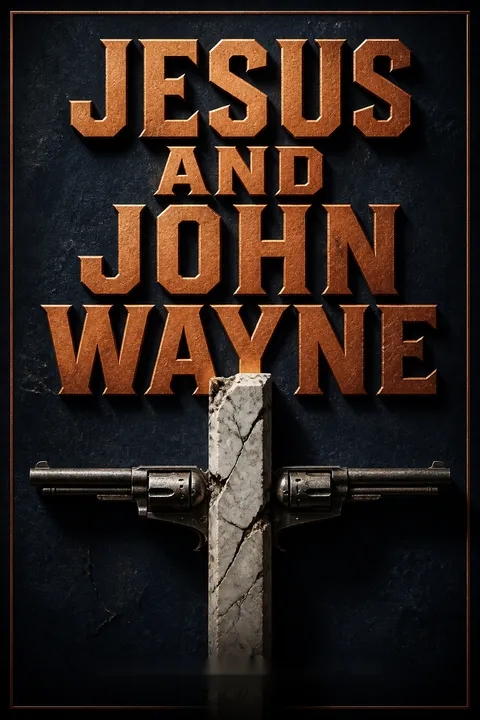
Jesus and John Wayne explores how white evangelicals embraced militant masculinity and patriarchal authority, leading to their support of Trump. Du Mez argues this is not an aberration but the culmination of decades-long trends in evangelical culture. While some reviewers found the book insightful and thought-provoking, others criticized it for painting with too broad a brush and lacking nuance. The book sparked discussions about evangelicalism's relationship with politics, gender roles, and power structures, resonating strongly with some readers while others felt it misrepresented their faith.
People Also Read



Download PDF
Download EPUB
.epub digital book format is ideal for reading ebooks on phones, tablets, and e-readers.








































