
Plot Summary
Ashes and Shattered Promises
Terra and Finn, two childhood friends in love, yearn to leave their small mountain village before an impending war tears their world apart. Their hopes rest on secret moonlit plans, but the weight of trauma and unspoken hurt sabotages their honesty. The night before escape, old wounds reopen—Finn's fear, scarred by his father's abuse and the looming legacy of war, convinces him to stay behind, breaking Terra's heart. As dawn rises, their naïve dream of running away is dashed, leaving Terra alone with loss pressing against her every breath. With war at the gates, both are left forever changed—bonded by shared pain, yet driven apart by the choices dictated by violence and fear.
The Night the Sky Fell
Terra's world cracks open as Fernestia unleashes a devastating attack. A surreal, unnatural orange light burns across the sky, consuming the village in death and chaos. Elders melt into steaming, screaming sludge; fire and terror turn the streets into an apocalyptic nightmare. Finn, separated from Terra, becomes a shell, wandering through carnage, haunted by the failures of his family and the horrors he can't comprehend. Survivors—mostly the young—are rounded up as prisoners by Fernestian soldiers, thrown into camps with barcoded arms and terror in their eyes. The village that was everything has become only a memory, its people reduced to nothing more than shadows and bones.
Flight, Grief, and Betrayal
Reeling, Terra flees from memories and burning ruins, her brother and parents gone. Guilt for surviving becomes her companion, as does fury at Finn's abandonment. Her path tangles with Elias—a Fernestian assassin—whose attempt to kill her is interrupted by a supernatural force. Both marked by strange, sentient Shadows, they are bound by power and fate, neither able to deny nor destroy the other. Fear, trauma, and awakening abilities swirl together as Terra is forced to trust the one who should be her executioner. The mountains become a burial ground for innocence as grief hardens into bitter acceptance.
Shadows Claim Their Hosts
The attack was no mere invasion, but an experiment in magic-imbued genocide. Only select, "incomplete" souls—the young—survive, merging with volatile Shadows: semi-immortal, monstrous symbiotes that warp trauma, erase pain, and focus desire into power. Terra learns from Elias that she is now a host, patched together from agony and death, made a monster by the weaponization of suffering. Shadow mates—fated bonds of power and carnality—twist connection between Terra and Elias into something both addictive and dangerous. Emotion becomes a luxury, as Shadows strip away grief and leave only the ache of transformation.
Blood, Memory, and Mutiny
Elsewhere, Finn is processed with other youth, each labeled with mysterious stabilizer bars and sorted into ranks. His guilt for failing his loved ones mutates into rage—a dormant, vengeful Shadow stirring in secret. Edgar, Terra's brother, awakens on Grimrose Island, a seemingly utopian orphanage for war's lost children. Amnesia cloaks him in false peace, but dissonant visions and forgotten trauma gnaw at the edges of his mind. All are watched and manipulated by unseen Fernestian masters, their suffering strategized, memories stolen and family bonds weaponized for the dark experiments to come.
Captives and Consequences
Finn, Kai, Corvus, and Martin cling to uneasy friendships amidst horror in the Fernestian camps. Submission and the threat of magical execution enforce order. Each prisoner's Shadow-infusion is tracked—six marks for the rarest, one for the most expendable. Lines blur between the captors and the condemned as all are forced to accept servitude, bond, and sometimes mercy to survive. Power becomes currency; trauma, its price. Amidst these forced kinships, the difference between hero and monster grows less clear, with every choice to save or betray a life an act of heresy against the past.
Of Monsters and Mates
Terra's relationship with Elias and her evolving Shadow defy simple categories: affection, lust, and violence entwine. Both driven by Shadows' urges, their intimacy is as brutal as it is healing, existing at the razor's edge between devotion and destruction. Love, once an anchor, is now a myth—a game played with threats and seduction. Terra's emotional landscape, once defined by guilt and yearning for Finn, transforms into a hunger for power, connection, and a willingness to embrace the monstrosity within. Pain becomes the new normal, and love is reduced to an ancient, predatory ritual.
Shadows, Families, and Fates
Edgar, obliterated by the revelation of his family's fate, stumbles through toxic camaraderie in Grimrose's manufactured paradise—a prison, not a home. The children's strange unity is forged through carefully curated codespendence, their individuality systematically erased by manipulation and "examinations." Terra, Finn, and Elias—separately—wrestle with the impossible: retaining identity in environments where every relationship is weaponized and every reunion becomes a test of loyalty. Whether family, lover, or friend, each connection is a tool: to numb, to survive, or to destroy.
The Crownless Kings of Barkovah
Raine, a brutal youth-king left in charge after adults flee the capital, becomes Terra's protector and warden—a survivor wielding charm and violence interchangeably. In Barkovah's ruined towers, Terra abandons the last vestiges of her old self, dancing between alliances with Raine and Elias as Barkovah's children play at civilization and war. Sex, affection, and love become currency as those left behind grasp for power or oblivion. Identities fracture: the line between captor and captive, savior and abuser, all but erased.
Trials in the Dead City
As Terra is swept deeper into Barkovah's power games, forced to choose between Raine's broken tenderness and Elias's predatory allure, the city's children are slaughtered by new waves of Fernestian "cleansing." Each survivor is faced with one unremitting law: betray, be betrayed, or die. Grief and guilt are devoured by Shadows; love is subsumed by the hunger for survival and a new, intoxicating power. At every turn, affection and violence are inseparable—pleasure and horror become two sides of the same doomed fate.
The Price of Survival
Finn's and Edgar's struggles become mirrors—each haunted by dead friends and family, both drawn inexorably into the machinery of Fernestia's monstrous academy. Old friendships dissolve into predation; alliances mean betrayal. To live, you must become what destroyed you. As Shadows reveal their full influence, stripping away morality, young survivors hunt or are hunted by their own peers—innocence the price of power. Without the ability to care, to mourn, or to repent, survivors must ask: when survival is all that is left, what does it mean to be human at all?
The Secrets of Grimrose
Edgar's mind splinters open as the true purpose of Grimrose is revealed: it's no haven but a crucible designed by Fernestia and Heirah alike to manufacture monsters. "Restoration" brings back memories of his family's horrors and his own, the knowledge that every paradise he's experienced is a preamble to exploitation. The chosen are marked—Novas, the rarest, most powerful Shadows—while the rest are discarded, their suffering a byproduct of Fernestian ambition. The line between self and monster grows indistinguishable as power replaces conscience and freedom is only another tool for control.
Emergence of Powers
In Alkrose and Grimrose, the survivors' Shadows awaken with deadly purpose—raw trauma, shame, desire, and rage fueling new magical abilities. As House loyalties form and trainers test their charges, Finn, Terra, and Edgar each emerge as rare shadow-bearers: Novas, Cosmos, anomalies destined to either reforge or annihilate nations. Their growing strength is equaled by their darkening hearts. Magic is not a liberation, but an amplifier of everything ruined within them; each act of self-defense or affection leaves new corpses on the field.
Fractures of Trust
Friendship becomes a commodity, love a liability, and trust a ruinous gamble. Finn's desperate attempts to protect friends end in blood. Terra's alliances collapse under the weight of violence and lust; her trust in either Elias or Raine poisoned by their betrayals and her own shifting desires. Edgar, after regaining memory of his family's murder, can no longer separate love from vengeance. Every tender moment risks exploitation. Fractured by the cost of survival, each character's heart floats further from what they once believed was worth saving.
Reaping and Reckoning
Barkovah falls to another wave of Fernestian purges. Children with lesser Shadows are incinerated or used as stepping stones for the next generation of monsters. Elias unleashes his full devastation: he is not just a weapon but the instrument of the "reaping," sending souls to Alkrose for training. Terra, now bound to Amser and wielding the power to rewind time, learns she can save but not resurrect; every act of healing is also a sentence to someone else. In every hand raised in protection, blood must be spilled.
House of Ghosts and Fire
Heirah's and Fernestia's grand plan becomes clear: the children will out-monster each other, betraying or befriending, murdering or dying in ritual "Culling Assessments." Finn, desperate to save his friends, unleashes the fire-shrouded Shadow Laphia. Yet saving one means damning another. Each House of Alkrose is a warzone—Cosmos, Ekko, Tauri, Nova—all trained to kill peers or teachers, the act of mercy now a capital crime. Edgar's, Terra's, and Finn's paths all converge on the realization: if they are to survive, they must claim their monsters fully.
Collisions at the End
Paths converge at Alkrose as Arthur—ancient, haunted master of memory—and the "heroes" unite. Terra, Elias, Raine, Finn, and Edgar, each a scarred remnant of humanity, are delivered via portals from Grimrose and Barkovah. Reunions are not salvation, for everyone has paid in blood and betrayal merely to stand together. Family is transformed beyond recognition; love and hope become weapons, if not just old ghosts. The last veil has fallen between child and monster, past and future.
Welcome to Alkrose
The surviving monsters—now wielders of the world's deadliest Shadows—enter Alkrose, Fernestia's monument to ambition and ruin. There, teachers and students alike are transformed: not into saviors, but into the next generation of rulers and weapons. Each life and each loss is another stone in the monument to violence. Only one lesson is left: pain changes all. What they will become together will decide not just the fate of nations, but the very purpose of power, memory, and survival in a world where love is a myth and hope the most dangerous magic of all.
Analysis
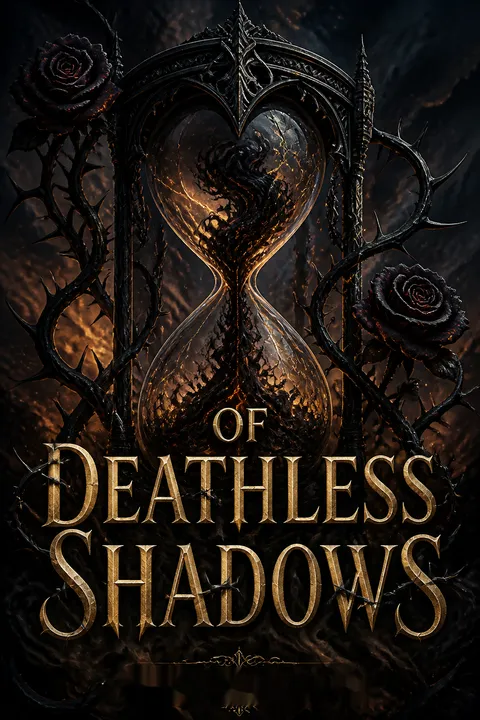
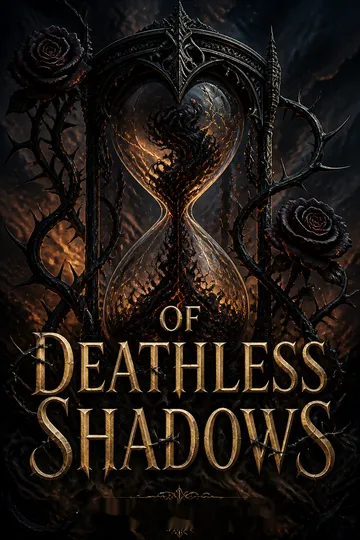
Of Deathless Shadows is a relentless dissection of trauma's long shadow—how violence, grief, and lost innocence do not just scar individuals, but become the crucible for remaking humanity itself. Through its fusion of dark fantasy and psychological horror, the novel argues that power (especially when rooted in pain) makes monsters not just of rulers, but of everyone forced to survive their rule. By stripping away the sentimental trappings of "chosen one" stories, Moronova crafts a world where intimacy and violence are fully entwined: love cannot be separated from betrayal, and the price of survival is the death not just of loved ones, but of the very self. Through the narrative's nonlinear memory, brutal initiation rites, and supernatural logic of Shadows, the story insists that the cycles of pain—whether personal or geopolitical—require reckoning, not forgetting. The lesson is both bleak and honest: hope is a luxury for the innocent, and in a world built on battlefields, only those who learn to weaponize their scars can hope to survive, even if it means the end of everything they once cherished.
Review Summary
People Also Read
Characters
Terra Eldridge
Terra is the central lens through which the reader experiences loss, transformation, and the corrosion of innocence. Once a dreamer, fiercely loyal to family and Finn, her journey is one of relentless betrayal and adaptation—first by war, then by the traumatizing power of her Shadow, Amser. Her role fluctuates between victim, monster, and reluctant lover, torn between the remnants of old affections (Finn, Edgar) and new, dangerous ties (Elias, Raine). Her psychological arc reveals how love, grief, and violence can coexist, forging a person who survives not through hope, but through calculated surrender to darkness.
Finnick "Finn" Rott
The son of a merciless Heirah war captain, Finn embodies the cost of obedience—wracked by guilt for deserting Terra and failing to protect his family. His psycho-spiritual journey is marked by the tension between kindness and explosive rage, manifesting in his magical Shadow. As friend, enemy, and potential savior, Finn's evolving relationship with trauma positions him as both hero and danger; his inability to save others without sometimes destroying them binds him in perpetual cycles of sacrifice and loss, each costing him more of his empathy.
Elias
The epitome of the "monstrous mentor," Elias is the first to expose the reality of Shadows to Terra. He is both destroyer and teacher: abuser, lover, and ultimately peer, defined by his traumatic past as a weapon forged from childhood. His cold philosophies—"turn it off, become invincible"—enrobe a desperate hunger for belonging and the agony of loving what he must inevitably destroy. Elias's development is an infinite loop of cruelty, regret, and longing, neither friend nor enemy, but always the shadow behind Terra's every step.
Edgar Eldridge
Edgar is both victim and secret weapon: his gentle, observant nature is warped by Fernestia's manipulation, his amnesia a temporary mercy from a past even more horrifying than he suspects. Once restored, he becomes the audience's window into radicalization—a fundamentally kind soul torn apart by the memory of his family's murder and repurposed as an instrument of vengeance. His journey explores the cost of memory and the ambiguous morality of violence done in the name of love.
Raine Thimble
Raine is the ruthless young "king" of Barkovah, embodying the ambiguity of power corrupted by loss. He oscillates between tenderness and brutality, offering shelter and cruelty in equal measure. His relationship with Terra is at turns nurturing, toxically possessive, and self-destructive; his Shadow weaponizes trauma as destiny, insight as doom. Raine stands as proof that survival and goodness are wholly incompatible in Fernestia's world, serving as both warning and temptation.
Kallos
Kallos is among the rarest magic-bearers, both oppressor and victim. His sorrowful, paternal mentorship is both genuine and transactional. Possessing great power bruised by loss and regret, he attempts to shepherd Finn and others through Alkrose's brutality while hinting at a deeper, personal cost for doing so. His struggle is that of conscience versus necessity: he trains monsters, but cannot save himself or those he loves from what they become.
Arthur
Arthur is a tragic figure of immense power masked by resignation—old, gray-eyed, haunted by ancient loyalty and guilt. He orchestrates and enables much of Fernestia's grand design, restoring or stealing memories as he judges necessary. His emotional detachment is an armor against the countless children he has failed to save. Arthur's relationship to Edgar and Terra is tinged with unspeakable pain; his pivotal influence bends destiny as much as shadows do.
Kai
Kai is Finn's chief source of light amidst darkness, often providing humor and hope even in dire moments. Yet he conceals a raw strength that surfaces in unexpected situations. His psychological function is to maintain group morale and offer an alternative to despair, but his own trauma simmers beneath, emerging under pressure. Kai's warmth is both authentic and fragile, and his survival often means watching his optimism become another casualty.
Corvus
Corvus is the black-haired, sharp-eyed member of Finn's group—always observing before acting. He functions as a voice of reason and caution, often steering the group away from impulsive or fatal choices. Corvus's subdued trauma surfaces in his constant vigilance, and his role is indispensable: he embodies the danger of overthinking in a world that punishes both carelessness and insight.
Martin
Martin, Finn's oldest friend, physically and emotionally bears the trauma of Fernestia's purges most deeply. His journey—from hope to devastation to ultimate sacrifice—reveals the final cost of attachment and memory in wartime. His fate is a barometer for just how much innocence the protagonists have left, and his presence raises the perpetual question: is survival worth the price?
Plot Devices
Shadows as Magical Trauma
The novel's central speculative device is the "Shadow"—a sentient, magical entity grafted to survivors via violence or catastrophe. Shadows have the purpose of consuming or numbing trauma, binding individuals to supernatural power at the expense of feeling and humanity. They organize Fernestia's social order (Novas, Cosmos, etc.), sort children into castes, and catalyze both intimacy and violence. The narrative structure uses Shadows to strip away genre conventions of "chosen one" narratives: power always arrives with trauma's cost, and relationships are inevitably colored by monstrosity.
Nonlinear Memory and Restoration
Throughout the narrative, memory is stolen, erased, returned, and falsified—not just through magic but via psychological and institutional means (Grimrose's examinations, Arthur's returns, Raven's interventions). This narrative tactic both foreshadows future betrayals and doubles as commentary: identity is made and unmade as needed by those in power. Trauma, once forgotten, becomes lethal upon return, with restored memory rendering the innocent vengeful monsters.
House Divisions and Ritual Tests
Borrowing from classic boarding school/academy structures, survivors are sorted into "Houses" by their Shadows' rank and abilities. Advancement always comes at the expense of another's life or dignity: culling assessments, magical duels, and peer competition force characters to shed mercy and cultivate power. Each test is a crucible to burn away loyalty, friendship, and even familial love—until only the most adaptable monsters remain.
Eroticized and Weaponized Intimacy
The lines between love, lust, violence, and healing are deliberately blurred. Intimacy (whether romantic, sexual, or caring) is always freighted with the threat of betrayal, the hunger of Shadows, and the constant possibility that comfort is a prelude to domination or destruction. Relationships become performance, bargaining, or mutually assured emotional destruction—the fulfillment of the novel's central idea: pain and love are inseparable, and all currency in the ruined world.
Portal and Worldbuilding Structure
Fernestia's construction of portals—especially between Grimrose and Alkrose—manifests the calculated, institutional nature of the world's brokenness: geography is a network of controlled fiefdoms, and magic serves to control, not liberate. The structure ensures that trauma is always distributed and reunited strategically: allies and enemies can never escape long, and each "homecoming" is engineered for maximum psychic impact.
Foreshadowing of Cycles and Destiny
From the first lines (love is the costliest lie) to the last, the narrative is steeped in the idea that suffering mutates rather than ends; survivors become new monsters, old monsters train the next round. The foreshadowing is literal (nightmares of violence, visions from Shadows, glimpses of future betrayals) and structural, with each generation of protagonists stepping into the roles once held by their tormentors.
Alkrose Academy Series Series
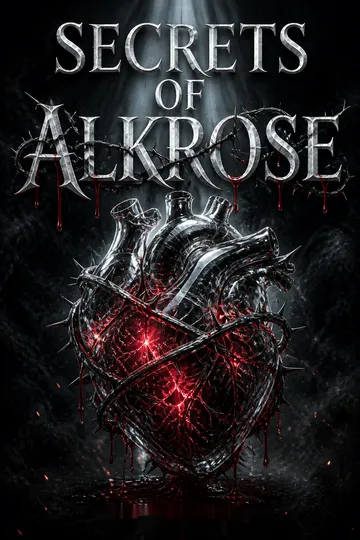
About the Author
Other books by K.M. Moronova

Download PDF
Download EPUB
.epub digital book format is ideal for reading ebooks on phones, tablets, and e-readers.








































