
Plot Summary
Grief's Forest Sanctuary
Elodie, a young woman haunted by trauma, lives in a shed on her parents' property, isolated by the deaths of her beloved aunt and her dog, Margo. The forest surrounding her home is both a sanctuary and a prison, echoing her grief and confusion. She struggles to distinguish reality from dreams, her days blurred by depression and the weight of memory. The shed, once a place of warmth and companionship, now feels empty, and Elodie's only solace is in the familiar rituals of coffee and walks among the pines. Her parents, distant in their own ways, cannot reach her, and Elodie's pain is compounded by the sense that she is irreparably broken, her only anchor lost with Margo's violent death.
Stranger in the Pines
Elodie's solitary existence is interrupted by the arrival of a stranger and his dog, Murph, who begin trespassing in her woods. Annoyed but intrigued, she observes the enigmatic man, Wren, whose presence is sharper and more vivid than the world around him. One night, curiosity overcomes her, and she follows Wren deep into the forest, witnessing strange lights and magic. When he invites her to join him, Elodie, desperate for something to break her numbness, accepts. This decision marks the first step into a world where the boundaries between reality and fantasy dissolve, and where her pain might finally find meaning.
Crossing into Tomorrow
Guided by Wren and Murph, Elodie steps through a misty portal into Tomorrow, a realm parallel to her own. The landscape is breathtaking—fields under multiple moons, forests alive with magic, and creatures both beautiful and terrifying. Wren reveals himself as a Cypress, a guardian of the forest, and Murph transforms into a majestic Pine Hollow. Elodie is given a magical collar, the Vernovian Thorn, marking her as an outsider but also granting her protection. Though overwhelmed, she is captivated by the beauty and strangeness of this new world, and for the first time in years, she feels a flicker of hope and excitement.
The Cypress and the Collar
Wren brings Elodie to his cottage in the village of Caziel, where she meets Marley, a child with moss on his head, and experiences the customs of Tomorrow. The night is filled with tension—Elodie is both drawn to and wary of Wren, whose kindness is shadowed by secrets. Sharing a bed, their proximity stirs longing and vulnerability in Elodie, but also a deep sense of safety she hasn't felt since her losses. Yet, the magical collar remains a symbol of her captivity, and the boundaries between trust and danger blur as she drifts into uneasy sleep, haunted by dreams of Margo and the past.
Village of Moss and Wings
The next day, Elodie is introduced to the vibrant life of Caziel, where mystical beings—Cypresses, Eostrixes, Moss Sparrows—coexist. She is enchanted by the beauty and strangeness, but the sense of being an outsider persists. Wren's charm and the village's warmth begin to thaw her defenses, yet she remains wary, especially as Wren's possessiveness grows. The day is filled with small joys—food, laughter, and fleeting moments of belonging—but the undercurrent of danger is never far. Elodie's desire for adventure is tempered by the realization that she is not as free as she hoped.
Nightmares and New Bonds
Elodie's attempt to leave is met with violence—Wren, revealed as more captor than companion, chases her through the forest, binding her with magic and force. Her desperation leads to a chance meeting with Kastian, a dark-winged Eostrix whose presence is both comforting and mysterious. Kastian helps her escape, and their connection is immediate, forged in shared loneliness and pain. As they flee together, Elodie's understanding of Tomorrow deepens, and she begins to sense that her arrival here is no accident. The world's magic is tied to her fate, and the bonds she forms will determine her survival.
The High Court's Decree
Wren delivers Elodie to the High Court, ruled by the formidable Lady Violet. In a throne room filled with gods and monsters, Elodie is judged and found wanting. Violet, convinced Elodie is a descendant of a god she seeks, sentences her to Inxtrelium—death. Wren's betrayal is complete, and Elodie's hope crumbles. Yet, even in the face of execution, she refuses to submit, fighting for her life and the lives of those she has come to care for. The court's cruelty exposes the true nature of Tomorrow's power struggles, and Elodie's role as a pawn in a much larger game.
Flight, Betrayal, and Blood
In a desperate bid for freedom, Elodie wounds Wren and flees, only to be caught in a deadly chase involving Kastian, Arulius (a golden Eostrix), and the relentless forces of the High Court. The violence escalates—blood is spilled, bonds are tested, and Elodie is forced to confront her own capacity for violence and survival. The lines between friend and foe blur as Arulius's motives become suspect, and Kastian's loyalty is proven through sacrifice. Elodie's transformation accelerates—she is no longer merely a victim, but a force capable of shaping her own destiny, even as the cost grows higher.
The Eostrix's Hunger
Gravely wounded, Elodie awakens to find herself changed—horns, wings, and a hunger for blood mark her as an Eostrix, a creature of both life and death. Her relationship with Kastian deepens, their bond sealed through the sharing of blood and pain. Yet, the rules of this world are strict—feeding on the wrong blood is taboo, and Elodie's actions spark jealousy and conflict. The sensuality of blood-sharing blurs the boundaries between love, need, and power. As Elodie grapples with her new identity, she must navigate the dangerous politics of Tomorrow, where every alliance is fraught with risk.
Truths in the Dark
In the aftermath of violence and transformation, Elodie learns the truth of her death in the human world—her parents, bewitched, murdered her and Margo. The trauma resurfaces, but so does clarity. Wren confesses his own role in her fate, and the tangled web of lies, love, and betrayal becomes clear. Elodie is not merely a victim of circumstance—she is central to the fate of both worlds. The gods' war, Violet's obsession, and the dying magic of Tomorrow all converge on her. The weight of destiny settles on her shoulders, and she must decide who she will become.
The Hollow Keeper's Secret
Determined to find Margo, now a Pine Hollow in Tomorrow, Elodie joins forces with Kastian, Arulius, and Wren. Their journey to the Hollow Keeper's village is fraught with danger, but also moments of healing and camaraderie. Training with Arulius, Elodie hones her powers, learning to wield aura and defend herself. The search for Margo becomes a quest for redemption—not just for Elodie, but for all those who have lost and suffered. The Hollow Keeper, Moro, reveals the deeper mysteries of the realm, and Elodie's role as a potential goddess of life and rebirth is hinted at.
Training, Trust, and Tension
As the group trains and prepares for the challenges ahead, old wounds and new rivalries surface. Arulius and Kastian vie for Elodie's trust and affection, while Wren seeks redemption. The politics of Tomorrow are ever-present—alliances shift, secrets are revealed, and the true nature of the gods' war becomes clearer. Elodie's powers grow, but so does the danger. The price of memory and the burden of destiny weigh heavily, and the group's unity is tested by jealousy, fear, and the ever-present threat of Violet's wrath.
The Price of Memory
The group is ambushed in the Hollow Grove by Kol and Violet's forces. In the chaos, Kastian is mortally wounded, and Elodie's attempt to heal him is only partially successful. The cost of memory is steep—Elodie is forced to confront the reality that not all wounds can be healed, and that some losses are permanent. The trauma of her own death resurfaces, and the boundaries between past and present blur. The group is scattered, and Elodie is left to pick up the pieces, her resolve hardened by grief and the knowledge that her powers are both a gift and a curse.
Death, Despair, and Awakening
In the aftermath of the ambush, Elodie is consumed by despair. The loss of Kastian, the betrayal of Arulius, and the weight of her own trauma threaten to overwhelm her. She contemplates surrendering to the void, but the love and loyalty of her friends—especially Arulius—pull her back. Through pain and struggle, Elodie awakens to her true power as the Goddess of Dawn, capable of healing and resurrection. The rhythm of life and death is restored, but at great personal cost. Elodie's survival is an act of defiance, a refusal to be defined by loss.
The Weight of Survival
Time passes in the glades of Kastian's court, where Elodie and Arulius find solace and healing. Their bond deepens, forged in the crucible of shared pain and survival. Training, storytelling, and the slow return of hope mark their days. The world outside remains dangerous, but within the sanctuary of the glades, Elodie begins to reclaim her sense of self. The weight of survival is heavy, but it is also a testament to resilience and the possibility of new beginnings. The past cannot be undone, but the future is still unwritten.
The Goddess of Dawn
Wren returns, gravely wounded, and Elodie heals him, confirming her identity as the reincarnation of Talia, the Goddess of Dawn. The truth of the gods' war, Violet's vendetta, and the broken rhythm of the realms is revealed. Elodie's power is both a blessing and a burden—she can restore life, but only at great cost. The group resolves to rescue Kastian and restore balance to Tomorrow, even as the forces arrayed against them grow stronger. Elodie's acceptance of her destiny marks a turning point—she is no longer running from her past, but embracing her role as a healer and leader.
The Rhythm Broken
The journey to rescue Kastian and the Pine Hollows brings the group to the heart of Nesbrim, where the consequences of Violet's actions are laid bare. The rhythm of life and death is broken—creatures cannot be reborn, and the world is dying. Moro reveals the history of the gods, the tragedy of Violet and Lucius, and the true nature of the curse afflicting Tomorrow. Elodie's powers are the key to restoration, but the price is steep. The group's unity is tested as old wounds and new betrayals come to light, and the final confrontation with Violet looms.
The God of Wrath Revealed
The rescue of Kastian is successful, but the group is ambushed by Violet and her forces. In the ensuing battle, Arulius is revealed as the God of Wrath and Lies, the true architect of Elodie's suffering. His betrayal is devastating—he was the one who bewitched her parents, orchestrated her death, and manipulated her trust. The bond between Elodie and Arulius is both a source of power and pain, and the revelation shatters the fragile hope she had built. The cost of love and trust is laid bare, and Elodie must choose between vengeance and mercy.
The Final Betrayal
In the climactic confrontation, Elodie is forced to choose between saving her friends and surrendering to Arulius and Violet. The truth of her death, Margo's sacrifice, and the cycle of love and loss is revealed in a harrowing flashback. Elodie's acceptance of her role as the Goddess of Dawn is both an act of defiance and surrender—she chooses to pay the price for her friends' freedom, even as her heart is broken by Arulius's betrayal. The story ends with Elodie's fate uncertain, but the hope of reunion and restoration remains—a promise that, even in the darkest night, dawn will come again.
Analysis
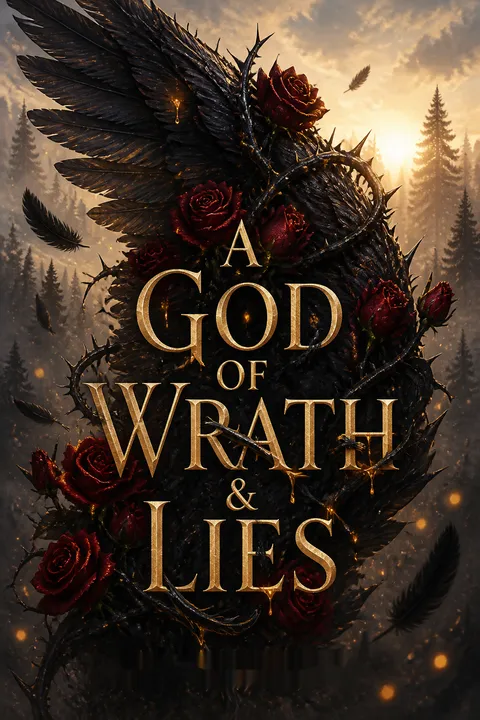
A God of Wrath & Lies is a dark, emotionally charged fantasy that uses the conventions of portal fantasy and magical realism to explore the psychological aftermath of trauma, the complexities of grief, and the redemptive power of love and self-acceptance. At its core, the novel is about the struggle to reclaim agency in a world defined by loss and betrayal. Elodie's journey—from isolated survivor to reluctant goddess—mirrors the process of healing: the need to confront painful truths, to forgive oneself and others, and to find meaning in suffering. The narrative's use of parallel worlds, blood bonds, and the cyclical rhythm of life and death serves as both metaphor and mechanism for this healing. The betrayals of Wren and Arulius are not merely plot twists, but reflections of the ways in which trust can be both a source of strength and vulnerability. The novel's ultimate message is one of hope: that even in the face of overwhelming darkness, the possibility of renewal remains. The restoration of the rhythm, the reunion with Margo, and the promise of new beginnings are testaments to the resilience of the human (and inhuman) spirit. In a modern context, the book resonates as an allegory for mental illness, the search for identity, and the enduring need for connection and belonging.
Review Summary
Characters
Elodie Marrowbone
Elodie is a young woman defined by loss, trauma, and a profound sense of unreality. The deaths of her aunt and dog, Margo, leave her isolated and adrift, her only solace found in the forest and the rituals of daily life. Elodie's journey is one of transformation—from victim to survivor, from human to Eostrix, and ultimately to the reincarnation of Talia, the Goddess of Dawn. Her relationships are fraught with longing, betrayal, and the desperate search for meaning. Elodie's psychological arc is marked by the struggle to distinguish reality from dream, to trust others, and to accept her own power and worth. Her development is a testament to resilience, the possibility of healing, and the enduring hope that even the deepest wounds can be mended.
Wren Bartholomew
Wren is a Cypress, a guardian of the forest, whose initial kindness masks a deeper possessiveness and pain. He is both captor and protector, his actions driven by duty to Lady Violet and a complicated affection for Elodie. Wren's psychological complexity is rooted in guilt, loyalty, and the desire for redemption. His relationship with Elodie is marked by moments of genuine care, but also by violence and control. Wren's arc is one of self-sacrifice—he ultimately chooses to help Elodie, even at great personal cost. His bond with Murph, his Pine Hollow, is a source of vulnerability, and his grief at Murph's death is a turning point in his journey toward forgiveness and self-acceptance.
Kastian
Kastian is an Eostrix with ebony wings and a tragic past, exiled to a land of death and silence. His connection with Elodie is immediate and profound, rooted in shared loneliness and the burden of being different. Kastian is revealed to be the reincarnation of Borvon, the God of Death, his powers both a gift and a curse. His psychological arc is defined by the struggle to find purpose, to accept love, and to forgive himself for the pain he has caused. Kastian's sacrifice and resurrection are central to the restoration of the world's rhythm, and his relationship with Elodie is a testament to the possibility of healing through connection.
Arulius
Arulius is a golden Eostrix, dazzling and seductive, whose loyalty is ultimately to Lady Violet and his own hidden agenda. He is revealed as the God of Wrath and Lies, the architect of Elodie's suffering—bewitching her parents, orchestrating her death, and manipulating her trust. Arulius's psychological complexity lies in his capacity for both love and betrayal; his bond with Elodie is genuine, yet poisoned by his actions. His arc is one of tragic self-awareness—he cannot escape his nature, and his love for Elodie is both his salvation and his doom. The final betrayal is devastating, forcing Elodie to confront the limits of forgiveness and the cost of survival.
Lady Violet
Lady Violet is the High Court's sovereign, a goddess consumed by loss and vengeance. Her vendetta against Elodie is rooted in ancient wounds—the death of her lover, Lucius, and the perceived betrayal by Talia. Violet's psychological arc is one of obsession, cruelty, and the refusal to accept the natural rhythm of life and death. She is both a tragic figure and a formidable antagonist, her actions driving the world toward ruin. Violet's complexity lies in her capacity for both love and destruction, and her ultimate defeat is as much a release as a punishment.
Margo / Ceres
Margo, Elodie's beloved dog, is both a source of comfort and the embodiment of her deepest trauma. In Tomorrow, Margo is reborn as Ceres, a Pine Hollow whose loyalty and courage are unwavering. Margo's sacrifice is the catalyst for Elodie's transformation, and her presence in the magical realm is a reminder that love endures beyond death. Margo's arc is one of devotion, protection, and the bittersweet promise of reunion.
Moro
Moro is the Hollow Keeper, a figure of wisdom and compassion who aids Elodie and her friends in their quest. His knowledge of the world's history and the rhythm of life and death is crucial to the group's survival. Moro's psychological depth is rooted in his sense of duty, his empathy for the suffering of others, and his willingness to sacrifice for the greater good. He is a stabilizing force, offering guidance and hope in the face of overwhelming darkness.
Marley
Marley is a Moss Sparrow child, Wren's apprentice, whose innocence and curiosity provide moments of levity and warmth. His presence is a reminder of what is at stake—the possibility of a future free from violence and grief. Marley's arc is one of growth, learning to navigate a world filled with danger and magic, and his relationship with Wren and Elodie is a source of comfort and hope.
Kol
Kol is a tri-horned Dreadius, Violet's most ruthless soldier. He is responsible for Kastian's near-fatal wound and is a constant threat to the group's safety. Kol's psychological makeup is defined by loyalty to Violet, a love of violence, and a complete lack of empathy. He is a symbol of the world's brokenness, a reminder that not all wounds can be healed.
Old Man Bruno
Bruno is Elodie's childhood neighbor, a believer in the magic of the forest and the existence of gods and spirits. His kindness and eccentricity make him a figure of comfort, but he is ultimately a victim of the world's violence—murdered by Elodie's bewitched parents. Bruno's death is a turning point in Elodie's journey, a reminder that innocence is no protection against the world's cruelty.
Plot Devices
Parallel Worlds and Magical Realism
The novel's central device is the existence of Tomorrow, a magical realm parallel to the human world, accessible through portals in the forest. This device allows for the exploration of trauma, grief, and healing in a context where the boundaries between life and death, reality and dream, are fluid. The magical realism is grounded in Elodie's psychological state—her confusion, longing, and eventual acceptance of her power are mirrored in the world's shifting rules.
The Rhythm of Life and Death
The narrative is structured around the concept of the Rhythm—a cosmic balance between life and death, maintained by the gods Talia (Dawn) and Borvon (Death). The breaking of this rhythm by Violet's actions is both a literal and metaphorical representation of trauma and the refusal to accept loss. The restoration of the rhythm is tied to Elodie's acceptance of her role as the Goddess of Dawn, and the possibility of healing and renewal.
Blood Bonds and Transformation
The sharing of blood is both a literal and symbolic act, marking the transformation of Elodie from human to Eostrix, and the forging of bonds between characters. Blood-sharing is sensual, taboo, and fraught with power dynamics, reflecting the complexities of love, trust, and betrayal. The device of transformation—horns, wings, hunger—mirrors Elodie's psychological journey from victim to survivor to goddess.
Betrayal and Revelation
The narrative is driven by secrets, lies, and betrayals—Wren's initial deception, Arulius's ultimate treachery, the hidden history of the gods. Foreshadowing is used to build tension, with dreams, flashbacks, and symbolic imagery hinting at the true nature of Elodie's death and the roles of those around her. The gradual revelation of these truths is both cathartic and devastating, forcing Elodie to confront the limits of forgiveness and the cost of survival.
The Price of Memory
Elodie's journey is marked by the loss and recovery of memory—her inability to recall the details of her death, the gradual resurfacing of trauma, and the ultimate confrontation with the truth. This device allows for the exploration of psychological healing, the ways in which the mind protects itself from unbearable pain, and the necessity of facing the past in order to move forward.
Pine Hollow Series Series
About the Author
Other books by K.M. Moronova
Download PDF
Download EPUB
.epub digital book format is ideal for reading ebooks on phones, tablets, and e-readers.








































