
Plot Summary
Shattered Bonds, Shattered Hearts
The story opens in the aftermath of a devastating loss. Wren, Kastian, and Moro are fractured by Elodie's abduction and the deaths of friends and Hollows. Each is haunted by guilt and sorrow, their bonds fraying under the weight of trauma. Arulius, once a friend, now stands as an enemy, delivering a chilling ultimatum from the High Lady Violet: any rescue attempt will cost more lives. The group is forced into uneasy inaction, vowing to become stronger before they can hope to save Elodie. The emotional landscape is bleak—resentment, longing, and the ache of love lost. The chapter sets the tone: this is a world where hope is fragile, and every heart is broken.
Prisoner of Blood and Bone
Elodie endures six months of torture in Violet's court, her body and spirit battered daily. She is forced into a perverse bond with Arulius, the man who betrayed her, finding herself both hating and needing him. Their relationship is a cycle of violence and reluctant tenderness, each wound a reminder of love's corruption. Violet's cruelty is relentless, collecting Elodie's blood for a mysterious purpose, while Arulius suffers alongside her, bound by the Eostrix bond. Elodie's sense of self erodes, replaced by a hardened, vengeful survivor. The emotional core is raw: shame, desire, and the desperate hope for rescue war within her.
The High Lady's Bargain
Arulius delivers Violet's terms: a seven-month ceasefire, after which Elodie may be freed—if her friends comply. The bargain is a trap, but the group has no choice but to accept, forced into a period of uneasy waiting. Each character is left to confront their own demons: Wren's guilt, Kastian's rage, Moro's loss, and Elodie's isolation. The chapter explores the tension between hope and despair, the agony of inaction, and the slow, grinding passage of time under threat. The emotional stakes are sharpened: every day is a test of endurance, and the promise of peace is laced with poison.
Six Months of Suffering
Time blurs as Elodie is broken and remade by pain. She adapts to her captivity, finding small moments of agency—befriending her guard Naminé, manipulating her routines, and clinging to memories of her friends. Her relationship with Arulius becomes more complex: he is both tormentor and comfort, their bond a source of both agony and solace. Violet's obsession with Elodie's blood deepens, hinting at a larger, darker plan. Elodie's heart hardens, but a flicker of hope remains: the belief that her friends have not forgotten her, and that she might one day be free.
The Curse of Repulsion
In a calculated move, Violet curses Elodie with blood repulsion, making her violently ill if she drinks from anyone but her new Dreadius guard, Rune. This isolates Elodie further, cutting her off from the healing and comfort of Eostrix blood. Rune, silent and enigmatic, becomes her reluctant lifeline. The curse is both a punishment and a test, designed to break Elodie's will and force her dependence on a stranger. The emotional tension is acute: shame, fear, and the terror of losing even the small comforts she had. The chapter marks a turning point—Elodie's world shrinks, but her resolve begins to sharpen.
A Guard Without a Voice
Rune, mute and scarred, is both jailer and companion. At first, Elodie resents and mistrusts him, but necessity breeds a strange intimacy. Through gestures and shared silences, they begin to understand each other. Rune's trauma is palpable, his silence a shield against a world that has hurt him deeply. Elodie, in turn, finds herself drawn to his quiet strength and the mystery of his past. Their relationship is tentative, built on small acts of kindness and mutual survival. The emotional arc is one of cautious hope: even in captivity, new bonds can form, and healing can begin in unexpected places.
Blood, Hunger, and Hope
As the blood repulsion curse takes its toll, Elodie grows weaker and more desperate. Rune tries to care for her, but she resists, unwilling to submit to Violet's design. Their standoff is broken by necessity: when Elodie is on the brink of death, Rune offers his blood in a kiss, saving her life and deepening their connection. This act of vulnerability cracks open both their defenses, allowing trust and even desire to take root. The chapter is charged with longing and the ache of forbidden hope—Elodie begins to imagine a future beyond survival, and Rune's silent devotion becomes her anchor.
The Festival of Masks
During Nesbrim's winter festival, Rune uses his magic to make them invisible, granting Elodie a night of stolen freedom. They dance among the revelers, share laughter and food, and for a moment, Elodie feels alive again. But the illusion shatters when she glimpses Kastian—her lost love—seemingly allied with Violet. The betrayal cuts deep, reigniting old wounds and fears. The festival becomes a crucible: joy, jealousy, and the pain of divided loyalties collide. Elodie's heart is torn between past and present, and the seeds of rebellion are sown anew.
Library of Lost Truths
Elodie, Rune, and Naminé form a clandestine alliance, searching the castle's library for answers. They uncover hidden histories: the true nature of the Rhythm Gods, the origins of Violet's power, and the dark legacy of the God of War, North. The library becomes a sanctuary and a battleground, as the trio races to piece together the puzzle of their world before Violet's plans come to fruition. The emotional tone is one of urgency and camaraderie—friendship forged in adversity, and the hope that knowledge can be a weapon against tyranny.
The Rhythm's Forgotten Gods
The group learns that the Rhythm—the cycle of life, death, peace, and war—is maintained by four gods: Life (Elodie), Death (Kastian), Peace (Rune), and War (North). Violet's obsession with resurrecting her lost love, Lucius, is tied to a ritual requiring the blood of all four. The discovery that Rune is the God of Peace, and that North's bones are being used for a dark resurrection, raises the stakes to existential levels. The emotional impact is profound: the characters realize they are not just fighting for themselves, but for the fate of all realms.
Nightmares and New Alliances
Elodie is plagued by nightmares—visions of blood, betrayal, and a skull that seems to pulse with malevolent life. These dreams are warnings, urging her to return to the human realm and confront her past. With Rune's help, she visits her burned-out home, finding closure and the graves of her family. Wren, Kastian, and Moro rejoin her, and the group is finally reunited. Old wounds are acknowledged, forgiveness is sought, and a new sense of purpose emerges. The emotional arc is one of healing and resolve: together, they will face whatever comes.
The Breaking of Chains
Elodie, with the help of her friends and Rune's growing power, finally breaks free from Nesbrim. The bond with Arulius is severed, and the group stages a daring rescue of the Pine Hollows. The city is thrown into chaos as alliances shift and old enemies become reluctant allies. The emotional climax is one of liberation and bittersweet triumph: freedom is won at great cost, and the scars of captivity linger. Elodie's heart is whole again, but the threat of North's return looms ever larger.
The God of War's Return
Violet completes her ritual, using the blood of the Rhythm Gods to resurrect North—by possessing Elodie's body. The group is forced to fight their friend, now a vessel for the God of War's rage and destruction. Kastian, Arulius, and Rune are pushed to their limits, torn between love and the necessity of violence. The emotional stakes are excruciating: to save the world, they may have to kill the woman they love. The battle is brutal, and the cost is high—sacrifice, grief, and the shattering of every bond.
Resurrection and Ruin
In a final act of love and power, Elodie, aided by the spirits of her friends and the memory of Murph, breaks free of North's control. She channels the full force of the Rhythm, resurrecting the dead and restoring balance to the realms. The act is both salvation and farewell: Elodie must die to banish North, trusting her friends to carry on without her. The emotional resolution is both devastating and hopeful—loss is not the end, and love endures beyond death.
The Last Wish
As Elodie prepares to make the ultimate sacrifice, she shares final moments with each of her loves: Kastian, Rune, Wren, and Arulius. Forgiveness is given, promises are made, and the cycle of the Rhythm is affirmed. Rune, now freed from his curse, grants Elodie's last wish: that they all find happiness, that Violet's heart may heal, and that the world may know peace. Elodie's death is not an ending, but a beginning—the dawn of a new cycle, and the hope that, in another life, they will all find each other again.
Analysis
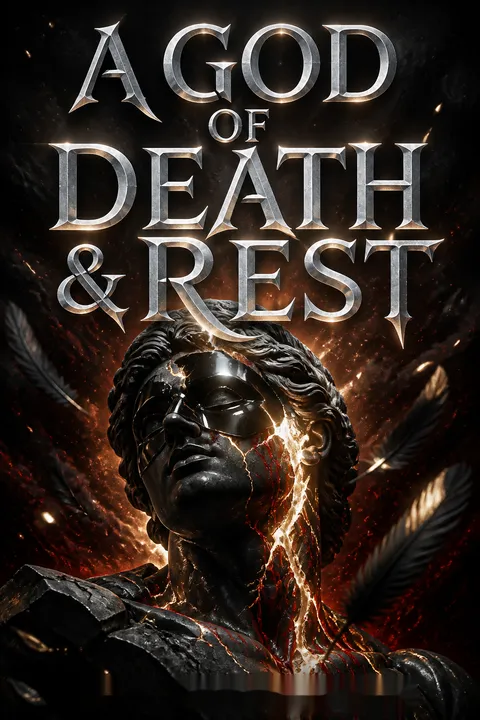
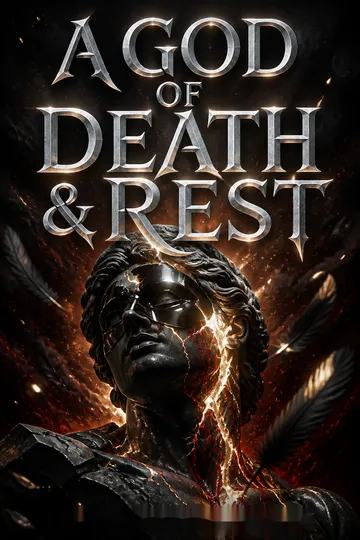
A God of Death & Rest is a dark, emotionally charged fantasy that explores the intersections of trauma, love, and cosmic destiny. At its core, the novel is about the struggle to reclaim agency and hope in a world designed to break both. Through Elodie's journey—from captive to savior, from broken to whole—the story interrogates the nature of bonds: how they can imprison, but also heal; how love, in its many forms, is both the greatest risk and the only true salvation. The narrative's use of polyamory and found family challenges traditional notions of romance and heroism, suggesting that strength lies in vulnerability and connection. The cosmic stakes—the Rhythm, the battle between gods—are ultimately a metaphor for the internal battles we all face: the fight to forgive, to trust, and to believe in the possibility of renewal. The novel's lesson is clear: healing is possible, but it requires sacrifice, honesty, and the courage to let go of the past. In a world of death and rest, it is love—messy, imperfect, and enduring—that offers the only true dawn.
Review Summary
People Also Read

Characters
Elodie
Elodie is the heart of the story—a young woman reborn as the Goddess of Life, whose journey is one of suffering, survival, and self-discovery. Her relationships are complex: she is loved by many, betrayed by some, and forced to navigate a world where every bond is both a weapon and a wound. Elodie's psyche is marked by trauma—her captivity, torture, and the loss of friends—but she refuses to be defined by victimhood. Her arc is one of reclamation: she learns to trust, to love, and ultimately to sacrifice herself for the greater good. Her connection to the other Rhythm Gods is both a source of power and vulnerability, and her final act of resurrection is a testament to her enduring hope.
Rune
Rune is Elodie's Dreadius guard, cursed to silence and haunted by a brutal past. His muteness is both literal and symbolic—a shield against a world that has punished him for speaking. Through his growing bond with Elodie, Rune finds healing and purpose, revealing himself as the God of Peace, a vital but overlooked pillar of the Rhythm. His love for Elodie is quiet but fierce, and his willingness to sacrifice himself for her is the ultimate act of devotion. Rune's arc is one of redemption: from a voiceless outcast to a savior whose words and wishes shape the fate of the world.
Kastian
Kastian is the God of Death, Elodie's fated counterpart and the embodiment of loss and endurance. His love for Elodie is deep and unwavering, but marked by tragedy—he has lost her before, and fears losing her again. Kastian's psyche is shaped by guilt and the burden of his role, but he is also a source of strength and comfort. His willingness to do whatever it takes to save Elodie, even at the cost of his own soul, is both his greatest virtue and his deepest flaw. Kastian's arc is one of acceptance: learning to let go, to forgive, and to trust in the cycle of life and death.
Arulius
Arulius is both villain and victim—a being created from Violet's rage, bound to serve her even as he yearns for freedom and love. His relationship with Elodie is fraught: he is her betrayer, her captor, and yet also her protector and penitent. Arulius's psyche is a battlefield of guilt, loyalty, and longing. He is tormented by the things he has done and the things he cannot change. His arc is one of tragic self-awareness: he knows he may never be forgiven, but he fights for Elodie's happiness regardless, even if it means losing her forever.
Violet
Violet is the story's primary antagonist, driven by the centuries-old loss of her beloved Lucius. Her cruelty is legendary—she tortures Elodie, manipulates her court, and will stop at nothing to achieve her goals. Yet beneath her malice is a core of grief and desperation. Violet's psyche is fractured by love's corruption: she cannot let go, and her quest to resurrect Lucius warps her into a monster. Her arc is a cautionary tale: the dangers of obsession, the cost of refusing to heal, and the tragedy of a heart turned to stone.
Wren
Wren is Elodie's oldest friend, a source of humor, comfort, and unwavering support. He is marked by sacrifice—giving up everything to protect Elodie and the Hollows. Wren's psyche is resilient, but not unscarred; he carries the weight of loss and the fear of being left behind. His arc is one of steadfastness: he remains by Elodie's side through every trial, embodying the hope that friendship can endure even the darkest times.
Moro
Moro is the guardian of the Pine Hollows, a figure of stability and wisdom. He is haunted by loss—of his charges, his memories, and his place in the world. Moro's psyche is marked by age and sorrow, but also by a quiet strength. His journey to reclaim his memories and powers is a metaphor for healing and self-acceptance. Moro's arc is one of guidance: he helps the others find their way, even as he searches for his own.
Naminé
Naminé is a minor but vital character—a kind, compassionate guard who befriends Elodie and becomes a symbol of the world's potential for goodness. Her relationship with Greysil, the café owner, is a rare source of joy and normalcy. Naminé's psyche is unbroken by the world's cruelty, and her presence is a reminder that innocence and kindness can survive even in darkness.
Kol
Kol is Rune's brother, a figure torn between loyalty to Violet and love for his sibling. His actions are often antagonistic, but his true motivations are complex. Kol's psyche is shaped by duty, guilt, and the desire for redemption. His arc is one of gradual awakening: as the truth of Violet's plans becomes clear, he must choose where his loyalties truly lie.
North
North is the story's ultimate threat—a being of pure destruction, resurrected through Violet's ritual and possessing Elodie's body. His psyche is alien, driven by the need for conflict and chaos. North's arc is one of opposition: he is the force that must be overcome for the world to heal, a reminder that some evils cannot be reasoned with, only resisted.
Plot Devices
The Rhythm and the Four Gods
The narrative is structured around the concept of the Rhythm—a cycle maintained by four gods (Life, Death, Peace, War). This device elevates the personal struggles of the characters to a cosmic scale: their relationships, betrayals, and sacrifices are not just matters of the heart, but the fate of all realms. The disruption of the Rhythm by Violet's actions creates existential peril, and the restoration of balance becomes both a literal and metaphorical goal. The device allows for foreshadowing (the recurring dreams, the significance of blood and bonds), and for the intertwining of personal and universal stakes.
Blood Bonds and Curses
The use of blood bonds, curses, and magical compulsions serves as both plot engine and psychological metaphor. Elodie's bonds—to Arulius, to Rune, to Kastian—are sources of both power and pain, reflecting the ways trauma and love can both imprison and liberate. The breaking of these bonds is not just a magical act, but an emotional and existential one, requiring self-knowledge, forgiveness, and the willingness to let go. Curses (like the blood repulsion) isolate and test the characters, forcing them to confront their deepest fears and desires.
Possession and Duality
The device of possession—most notably North's takeover of Elodie—serves as a literalization of the struggle between good and evil, self and other, love and hate. The battle for Elodie's soul is mirrored in the battles between the gods, and in the internal conflicts of every character. The device allows for dramatic reversals, moments of horror and hope, and the ultimate affirmation that identity is not fixed, but forged in struggle.
Found Family and Polyamory
The story's emotional core is the web of relationships between Elodie and her companions. Love is not limited to one form or one person; it is expansive, inclusive, and redemptive. The found family trope is used to counteract the isolation and cruelty of the world, offering a vision of healing through connection. The polyamorous dynamics are not just romantic, but existential: each bond is a thread in the tapestry of the Rhythm, and every act of love is an act of defiance against despair.
Foreshadowing and Dreams
Elodie's recurring dreams and visions serve as both psychological insight and narrative foreshadowing. They warn of dangers to come, reveal hidden truths, and connect the personal to the cosmic. The device blurs the line between reality and imagination, suggesting that the answers to the world's problems lie as much in the heart as in the mind.
Pine Hollow Series Series
About the Author
Other books by K.M. Moronova


Download PDF
Download EPUB
.epub digital book format is ideal for reading ebooks on phones, tablets, and e-readers.








































