
Plot Summary
Death in the Barn
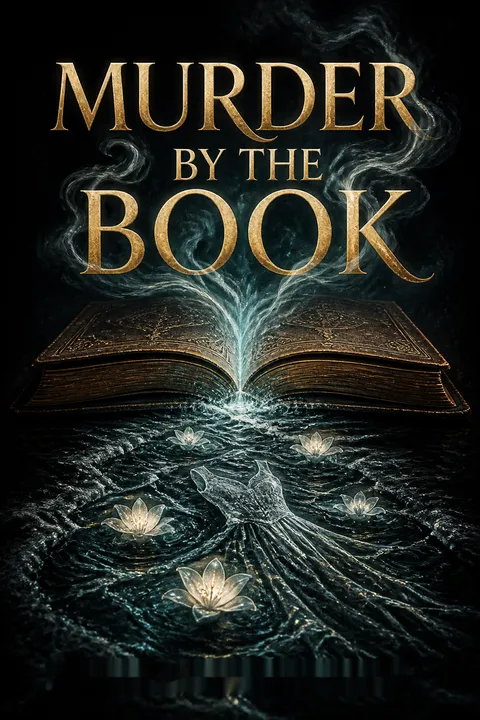
In the aftermath of a storm, Detective Ian Carter and his partner Mike Kellogg investigate a murder in a decrepit barn. The victim, a young woman, is posed in a water trough, surrounded by flowers and candles, dressed in a silver gown. The scene is meticulously arranged, echoing a work of art. The killer leaves behind a blood-stained book and a cryptic note, signaling a desire to be seen and understood. The detectives sense this is no ordinary crime—someone is sending a message, and the game has just begun.
The Professor's Class
Emma Reilly, a literature professor at Carlisle College, is introduced as she leads a class discussion on Poe's unreliable narrators. Her students are lively, and Emma's passion for literature is evident, but she is also socially awkward and prefers the safety of books to the unpredictability of people. Her colleague and friend, Rory Tamblyn, encourages her to attend an upcoming art gala, hinting at a deeper connection between art, literature, and the unfolding events.
A Killer's Calling Card
Ian and Mike dig into the evidence, discovering the victim was sedated and carefully cared for before her death. The killer's attention to detail and the symbolic staging suggest a mind obsessed with meaning and display. The detectives realize the case will draw public attention, and Ian feels a personal challenge—this killer is playing a game, and he's determined to win.
Art, Literature, and Murder
At the art gala, Emma is drawn to a painting of the Lady of Shalott, discussing its tragic symbolism with a stranger—Detective Ian Carter. Their connection is immediate, but the night takes a dark turn as Emma witnesses a tense encounter between a young woman and a man in the crowd. The event's Pre-Raphaelite theme and the art's focus on doomed women echo the murder scene, weaving Emma and Ian's worlds together.
A Night Gone Wrong
After the gala, Emma is mugged on a dark street, her purse stolen. Ian finds her, comforts her, and takes her to a diner to file a report. The incident leaves Emma shaken and exposed, but also sparks a tentative intimacy between her and Ian. The mugging, seemingly random, is later revealed to be a calculated move by the killer, drawing Emma further into the web.
Pie, Pain, and Connection
In the aftermath, Emma and Ian share pie and stories, discovering a mutual love of classic literature. Their conversation is laced with flirtation and vulnerability, hinting at a possible romance. Emma's favorite book, Jane Eyre, is lost in the mugging, but later returned by Ian, deepening their bond. The killer's manipulation of Emma's life becomes more apparent, as her personal and professional worlds collide.
The Victim's Story
The detectives identify the victim as Sarah Weston, a promising student-athlete whose life unraveled after an injury. Interviews with her roommate reveal a secret relationship with an older man and a struggle with addiction. The investigation uncovers a pattern of control and isolation, suggesting the killer targeted Sarah for her vulnerability and symbolic value.
Literary Clues Emerge
As the investigation stalls, Emma's literary knowledge proves crucial. She recognizes the murder scene as a recreation of Ophelia's death from Hamlet, with symbolic flowers and a fig tree replacing the traditional willow. Her insights reveal the killer's obsession with literary women who die tragically, and she becomes an unofficial consultant, despite Ian's reluctance to involve her.
The Detective's Guilt
Ian's determination to solve the case is fueled by guilt over a past informant's death. He fears failing another vulnerable woman and struggles with his feelings for Emma. His personal investment clouds his judgment, leading to tension with his partner and risky decisions. The killer's taunts and escalating violence force Ian to confront his own limitations and the cost of obsession.
Patterns and Paranoia
Another student, Phillipa Minor, is found dead, posed as Elaine of Astolat from Arthurian legend. The killer's methods evolve, blending art, literature, and psychological manipulation. The campus is gripped by fear, and Emma, now a target, is drawn deeper into the investigation. The detectives and Emma's circle of friends form a reluctant alliance, each bringing their own expertise and suspicions.
The Killer's Message
The killer sends staged photographs and literary quotes to the local newspaper and directly to Emma, escalating the psychological warfare. Each murder scene references a different tragic literary heroine, and the killer's notes challenge the investigators to decipher his intentions. Emma's academic circle debates the symbolism, while the detectives race to prevent another murder.
The Sleuths Assemble
Emma, Rory, and their friends—Carolyn, Charlie, and Niall—form an amateur sleuthing team, analyzing the killer's literary and artistic references. Their discussions reveal the killer's misogynistic reinterpretations of classic texts and his desire to control the narrative. Tensions rise as suspicions fall on various students and faculty, and the group's safety is threatened by the killer's proximity.
Another Body, Another Scene
A third victim, Olivia Ballard, is found, but the staging is rushed and less artful. The killer's pattern is disrupted, suggesting panic or a change in motivation. Emma receives direct threats, and the detectives realize the killer is now targeting her personally. The investigation narrows to a handful of suspects, including a troubled graduate student, Malcolm Haynes, and the charismatic Rory.
Into the Darkness
Emma is lured home by a text from someone posing as Ian and is abducted. She awakens in a root cellar, bound and dressed as a literary figure, with Rory—also a captive—beside her. The killer, revealed as Malcolm, rants about postmodern art and his need to be seen. Emma's intelligence and resilience are tested as she plots escape, waiting for a chance to fight back.
The Copycat's Game
As the detectives close in, evidence emerges that Malcolm was manipulated by a more sophisticated mind. Rory's involvement becomes clear—he is the true "Artist," orchestrating the murders and using Malcolm as a pawn. Rory's narcissism and need for recognition drive him to confess, and he attempts to kill Emma to complete his masterpiece.
Campus in Crisis
The campus reels from the murders, with students and faculty gripped by paranoia and grief. Emma's friends rally around her, providing support and helping to piece together the killer's literary clues. The detectives, under pressure from the media and administration, struggle to maintain order and focus as the killer's endgame approaches.
The Next Target
The killer's obsession with Emma culminates in her being cast as the ultimate tragic heroine. He plans to stage her death as a work of art, completing his series of literary murders. Emma's knowledge of literature and her understanding of the killer's psychology become her only weapons as she fights for her life.
The Circle Narrows
Ian, suspended and desperate, follows the trail of clues left by Emma and the killer. He discovers Malcolm's hideout and the location of the root cellar, racing against time to save Emma and Rory. The final confrontation is set in motion, with the lines between detective, victim, and perpetrator blurred by obsession and betrayal.
The Trap is Set
Ian rescues Emma and Rory from the cellar, but Malcolm attacks, leading to a violent struggle. Emma's quick thinking and courage help subdue Malcolm, but the true mastermind remains at large. The aftermath leaves Emma traumatized and Ian questioning his own judgment and role in the tragedy.
The Abduction
In the aftermath, Emma seeks solace with Rory, only to realize he is the real killer. Rory's confession is chilling—he orchestrated the murders for artistic immortality, using Malcolm as a tool. He attacks Emma, intent on making her his final masterpiece, but she fights back with all her strength and intelligence.
The Detective Unravels
Ian, wracked with guilt and self-doubt, pieces together the final clues and rushes to Emma's aid. He arrives in time to witness Emma's struggle with Rory, and together they bring the killer down. The case's resolution is bittersweet, as the cost of obsession and violence lingers for all involved.
The Real Artist Revealed
The police and Emma's friends learn the full truth—Rory was the "Artist," manipulating Malcolm and the entire investigation. The evidence, confessions, and Emma's testimony bring closure to the case, but the scars remain. The community mourns the victims, and Emma and Ian face the challenge of healing and moving forward.
The Final Confrontation
In a final, harrowing confrontation, Emma uses her wits and strength to defeat Rory, reclaiming her narrative from the killer who sought to make her a victim. The story ends with Emma surrounded by friends, supported and celebrated for her courage, as she and Ian tentatively explore the possibility of a future together.
Aftermath and New Beginnings
In the aftermath, Emma and Ian reflect on the trauma and loss, but also on the resilience and connection that emerged from darkness. Emma finds solace in literature and friendship, determined to write her own story. The community honors the victims, and the lessons of art, literature, and survival linger as Emma and Ian look toward a new chapter.
Analysis
A modern gothic about narrative, agency, and survivalMurder by the Book is a sophisticated, self-reflexive thriller that interrogates the power of stories—how they shape our understanding of ourselves, others, and the world. By weaving together literary allusion, psychological realism, and a classic whodunit structure, the novel explores the dangers of objectification, the allure of tragic narratives, and the necessity of reclaiming one's own voice. The killer's obsession with tragic heroines and artistic immortality is a critique of the ways women are often reduced to symbols in both art and life. Emma's journey from passive observer to active survivor is a powerful assertion of agency, challenging the notion that suffering is ennobling or inevitable. The novel also examines the cost of obsession—for the detective, the artist, and the community—and the importance of connection, empathy, and truth-telling in the face of violence. Ultimately, Murder by the Book is a story about the possibility of new beginnings, the resilience of the human spirit, and the enduring need to write one's own story.
People Also Read
Characters
Emma Reilly
Emma is a literature professor whose deep knowledge of tragic heroines and symbolic texts becomes the key to unraveling the killer's motives. Socially awkward but fiercely intelligent, she is drawn into the investigation by her empathy and curiosity. Emma's journey is one of transformation—from a woman who hides behind books to a survivor who claims her own narrative. Her relationships with Ian and Rory reveal her vulnerabilities and strengths, and her psychological insight is both her weapon and her burden. Emma's arc is about reclaiming agency, confronting trauma, and finding hope beyond the stories that once defined her.
Ian Carter
Ian is a homicide detective driven by a need for justice and haunted by past failures. His sharp intellect and dogged determination are matched by a deep sense of guilt, especially regarding a former informant's death. Ian's connection with Emma is both professional and personal, complicating his judgment and fueling his obsession with the case. He struggles with boundaries, authority, and his own emotional wounds, but ultimately finds redemption through vulnerability and partnership. Ian's development is marked by his willingness to trust, to let go of control, and to accept the possibility of healing.
Rory Tamblyn
Rory is Emma's colleague, friend, and former lover—a charming, witty, and respected academic. Beneath his affable exterior lies a narcissistic need for recognition and control. As the true mastermind behind the murders, Rory manipulates those around him, orchestrating violence for artistic immortality. His relationship with Emma is complex, blending admiration, envy, and possessiveness. Rory's psychological profile is that of a classic sociopath—intelligent, charming, but ultimately empty and destructive. His downfall is precipitated by his own hubris and Emma's refusal to be his victim.
Mike Kellogg
Mike is Ian's older, world-weary partner, providing stability and pragmatism amid chaos. He is supportive but unafraid to challenge Ian's decisions, serving as a moral compass and reality check. Mike's personal life—his husband and daughter—grounds him, and his empathy for victims and survivors is genuine. He is instrumental in piecing together the investigation and in supporting both Ian and Emma through the ordeal.
Malcolm Haynes
Malcolm is a graduate student and teaching assistant, socially awkward and desperate for approval. He becomes the killer's tool, manipulated by Rory into committing the murders and staging the scenes. Malcolm's psychological fragility and need for validation make him susceptible to Rory's influence. He is both a perpetrator and a victim, his actions driven by a longing to be seen and valued. Malcolm's arc is a cautionary tale about the dangers of isolation, obsession, and the abuse of power.
Carolyn Matthews
Carolyn is Rory's assistant and Emma's friend, providing practical support and emotional grounding. She is skeptical, protective, and unafraid to challenge the group's assumptions. Carolyn's role is to keep the amateur sleuths focused and safe, and her loyalty to Emma is unwavering. She represents the importance of community and the power of friendship in the face of trauma.
Charlie Mason
Charlie is a journalism student and intern at the local newspaper, determined to uncover the truth and tell the victims' stories. Her investigative skills and tenacity make her a valuable ally, and her outsider perspective challenges the group's biases. Charlie's arc is about the ethics of storytelling, the responsibility of bearing witness, and the courage to confront darkness.
Niall Chadha
Niall is a psychology professor who brings expertise in criminal profiling and trauma to the group. He is analytical, empathetic, and supportive, helping Emma and the others understand the killer's motives and patterns. Niall's presence underscores the importance of mental health, self-awareness, and the need for professional help in the aftermath of violence.
Sarah Weston
Sarah is a promising student-athlete whose life is cut short by the killer's obsession. Her story is one of vulnerability, isolation, and the consequences of being seen as a symbol rather than a person. Sarah's death sets the narrative in motion and haunts the characters throughout, representing the real cost of violence and the need for justice.
Phillipa Minor
Phillipa is another student whose life and death are manipulated for artistic effect. Her relationship with her boyfriend Ethan and her presence at the gala tie her to the central characters. Phillipa's murder deepens the sense of urgency and fear, and her memory motivates Emma and the others to fight for the truth.
Plot Devices
Literary Symbolism and Intertextuality
The central plot device is the killer's use of literary and artistic symbolism—each murder scene is a recreation of a famous tragic heroine (Ophelia, Elaine of Astolat, Desdemona, Cressida). The killer's notes, quotes, and staging force the investigators to interpret the crimes as texts, blurring the line between fiction and reality. This device allows for rich intertextuality, with references to Shakespeare, Tennyson, Poe, and Pre-Raphaelite art. The narrative structure mirrors a detective novel, with clues embedded in literary analysis and foreshadowing through classroom discussions and art exhibits.
Unreliable Narrators and Perspective Shifts
The story employs multiple points of view—primarily Emma and Ian—each with their own biases, traumas, and blind spots. The killer's manipulation of narrative (both in the murders and in his interactions with Emma and Malcolm) echoes the theme of unreliable narration. The reader is invited to question appearances, motives, and the reliability of memory and interpretation.
Red Herrings and Misdirection
The plot is driven by a series of red herrings—various students, faculty, and even Ian himself are considered suspects at different points. The killer's use of a pawn (Malcolm) and his manipulation of evidence create layers of misdirection, keeping both the characters and the reader guessing. The ultimate reveal—that Rory is the true mastermind—relies on careful foreshadowing and the subversion of expectations.
Psychological Realism and Trauma
The narrative delves deeply into the psychological impact of violence—on victims, survivors, investigators, and the community. Emma's trauma, Ian's guilt, and the killer's narcissism are explored with nuance and empathy. The story does not shy away from the aftermath of violence, emphasizing the need for healing, support, and the reclamation of agency.
Meta-Narrative and Self-Reflection
The novel is self-aware, with characters discussing the nature of storytelling, the ethics of representation, and the power of narrative to shape reality. The killer's desire to control the story, Emma's struggle to reclaim her own, and the community's efforts to honor the victims all reflect the central theme: who gets to tell the story, and at what cost.
Download PDF
Download EPUB
.epub digital book format is ideal for reading ebooks on phones, tablets, and e-readers.








































