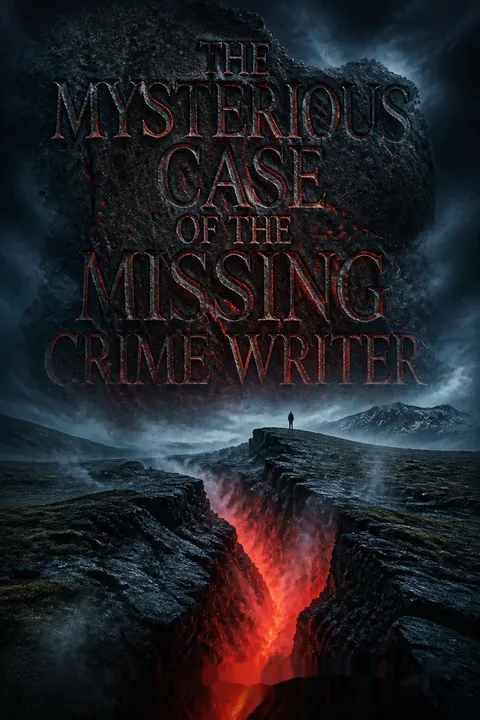

Plot Summary
Shadows Between Daylight
The story opens with Elín S. Jónsdóttir, Iceland's most celebrated crime writer, reflecting on her life and the allure of crime fiction. She finds inspiration in the ambiguous borderland between light and shadow, where justice and punishment intertwine. Now retired after ten successful novels, Elín is content to read and reminisce, but her past is tinged with secrets and regrets. Her interview with a journalist, Kristín, reveals her deep connection to literature, her solitary existence, and her belief that every story is ultimately about crime—whether literal or metaphorical. This chapter sets the tone: a meditation on mortality, creativity, and the hidden truths that shape a writer's life.
The Disappearance of Elín
In 2012, Helgi Reykdal, a detective and crime fiction enthusiast, is called away from his peaceful retreat in Akureyri to investigate the sudden disappearance of Elín. Her absence alarms her publisher, Rut, and her close friends, as she has not been seen or heard from in days. The case is immediately high-profile, given Elín's fame, and Helgi is both excited and apprehensive. The investigation is complicated by Elín's reclusive habits—she has no mobile phone, few close relatives, and a history of withdrawing from public life. The mystery of her vanishing becomes a national obsession, and Helgi is thrust into the center of a case that blurs the lines between fiction and reality.
Bookshop Memories and Broken Ties
Helgi's return to Reykjavík is shadowed by his own recent breakup with Bergthóra, a relationship marred by emotional and physical abuse. He finds solace in his family's old bookshop, a sanctuary filled with memories of his father and the comfort of stories. Helgi's new relationship with Aníta offers hope, but the scars of his past linger. As he juggles the demands of the investigation and his personal life, Helgi's love of detective fiction becomes both a coping mechanism and a lens through which he views the unfolding mystery. The chapter explores the interplay between personal trauma and professional duty.
The Call to Investigate
Helgi's boss, Magnús, assigns him the missing-persons case, knowing Helgi's passion for crime novels. The investigation begins with interviews: Rut, the publisher, insists Elín would never disappear for publicity, while Thor, Rut's husband and Elín's old friend, downplays any possibility of foul play. Helgi senses that everyone is withholding something. The case is further complicated by the absence of clear evidence—no signs of struggle, no financial distress, and no known enemies. Helgi's methodical approach, shaped by his love of classic detective stories, drives him to look for hidden motives and overlooked details.
Ghosts of the Past
The narrative shifts between timelines, revealing a 1965 bank robbery involving three law students—one of whom is later convicted, while the other escapes justice. These events, long buried, cast a shadow over the present investigation. Meanwhile, Helgi's predecessor, Hulda, also vanished under mysterious circumstances, her fate unresolved. The theme of disappearance—whether voluntary or forced—recurs, linking the fates of Elín, Hulda, and the long-ago criminals. The past is never truly past; it seeps into the present, shaping destinies and fueling secrets.
The Circle of Friends
Helgi interviews Elín's closest friends: Rut, Thor, and Lovísa, a retired judge. Each offers fragments of Elín's life, but inconsistencies emerge. Rut is fiercely protective, Thor is evasive about his past with Elín, and Lovísa is both supportive and secretive. The trio's shared history stretches back to university, where ambitions, betrayals, and unspoken love triangles simmered. Helgi senses that the bonds between them are fraught with old wounds and unresolved guilt. The investigation becomes as much about understanding these relationships as about finding Elín.
The Unraveling of Relationships
As Helgi delves deeper, his own life becomes entangled with the case. Bergthóra, his ex, begins stalking Aníta, threatening Helgi's fragile new happiness. The emotional toll of the investigation mounts, mirroring the psychological complexity of the people he interviews. Helgi's empathy for victims and suspects alike is both his strength and his vulnerability. The narrative explores the corrosive effects of secrets, the difficulty of moving on from trauma, and the ways in which love and violence can become intertwined.
The Case Grows Colder
Days pass with no sign of Elín. Helgi's investigation stalls as he chases dead ends: Elín's cousin Orri knows little, and her house yields no clues. The only anomaly is a mysterious manuscript delivered to Rut, written under the pseudonym Marteinn Einarsson. The revelation that Elín continued writing in secret raises new questions. Is her disappearance a publicity stunt, a retreat, or something more sinister? The case becomes a test of Helgi's resolve and ingenuity, as he struggles to separate fact from fiction.
Secrets in the Highlands
The investigation takes a dramatic turn when Helgi discovers that Elín had a secret daughter, Kristín, given up for adoption during a year spent in Ísafjördur. Kristín, now a journalist, possesses an unpublished interview with Elín, recorded under the condition it be released only after her death. The interview reveals that Elín knew the truth about the 1965 bank robbery and the identity of the real killer. Meanwhile, Lovísa confesses that she and Elín went hiking in the highlands, where Elín died of a heart attack. Lovísa, wracked with guilt, tried to conceal the death to delay the exposure of her own crime.
The Interview That Waited
Kristín's interview with Elín becomes the linchpin of the case. On tape, Elín recounts her knowledge of the bank robbery, her complicity in keeping silent, and her decision to finally reveal the truth. She names Lovísa as the true killer, a revelation that will destroy reputations and upend lives. The interview is both a confession and a reckoning, forcing all involved to confront the consequences of their actions. The power of storytelling—its ability to reveal, to heal, and to condemn—is at the heart of this chapter.
The Pseudonym's Revelation
The manuscript delivered to Rut is revealed to be the latest in a series of novels published under the pseudonym Marteinn Einarsson. Only a handful of people knew the truth, and the books allowed Elín to continue writing without the pressures of fame. The dual identity mirrors the duplicity in her personal life: secrets kept for decades, truths hidden even from those closest to her. The revelation of the pseudonym is both a literary twist and a metaphor for the masks we all wear.
The Will and the Daughter
Elín's will names Kristín as her primary heir, a fact that shocks everyone—including Kristín herself, who only recently learned of her true parentage. The inheritance is not just financial but emotional: a legacy of secrets, regrets, and unfinished business. The discovery forces Kristín to reevaluate her own identity and her relationship to the mother she never knew. The chapter explores themes of belonging, loss, and the search for connection across generations.
Confessions and Consequences
Lovísa, confronted with the evidence from the interview, confesses to her role in the bank robbery and the accidental killing of the cashier. Her confession is both a relief and a tragedy, as it ends decades of guilt but also destroys her carefully constructed life. The statute of limitations has expired for the robbery, but not for murder. Lovísa's arrest is a somber moment, underscoring the cost of secrets and the inevitability of justice. The past, long denied, finally demands its due.
The Judge's Guilt
Lovísa's story is one of ambition, friendship, and moral compromise. Her rise to prominence as a judge was shadowed by the crime she committed in her youth. Her friendship with Elín, once a source of strength, becomes a source of torment as the truth emerges. The chapter delves into the psychology of guilt, the burden of living with a hidden crime, and the ways in which even the most respected lives can be built on fragile foundations.
The Last Manuscript
Elín's final manuscript, written in secret and delivered after her death, becomes both a literary event and a personal testament. The book is a gift to her readers, a final act of creation, and a coded message to those who knew her best. The manuscript's existence is a reminder that stories outlive their creators, carrying forward the truths and lies of those who write them. The act of writing is both escape and confrontation, a way to shape reality and to face it.
Rain, Loss, and Reckoning
As the investigation concludes, Helgi faces his own reckoning. His mother's illness, his relationship with Aníta, and the lingering threat of Bergthóra all come to a head. The rain that has fallen throughout the story becomes a symbol of grief, cleansing, and renewal. The final confrontation with Bergthóra ends in violence, echoing the destructive power of secrets and unresolved pain. Helgi's journey is one of survival, resilience, and the hope of new beginnings.
The End of the Mystery
With Elín's body found and the truth revealed, the case is officially closed. The consequences ripple outward: Lovísa faces justice, Kristín inherits both a fortune and a legacy of sorrow, and Helgi is left to pick up the pieces of his own life. The story ends not with triumph but with a sense of hard-won understanding. The mysteries of the past are never fully resolved, but the act of seeking the truth brings a measure of peace.
Beginnings in the Shadows
The final chapter returns to the theme of shadows and liminality. Life goes on: Helgi and Aníta look to the future, Kristín contemplates her inheritance, and the literary world prepares to celebrate Elín's last book. The story ends as it began, in the borderland between light and darkness, where every ending is also a beginning. The power of stories—to conceal, to reveal, to heal—remains undiminished.
Analysis
Ragnar Jónasson's The Mysterious Case of the Missing Crime Writer is a masterful meditation on the nature of secrets, the burden of guilt, and the redemptive power of truth. Through its intricate structure and psychologically rich characters, the novel explores how the past shapes the present, how silence can be as damaging as action, and how the stories we tell—about ourselves and others—can both conceal and reveal. The disappearance of Elín S. Jónsdóttir is not just a whodunit but a lens through which to examine the complexities of friendship, love, and ambition. The novel's modern relevance lies in its portrayal of trauma, the challenges of moving on from abuse, and the ways in which women's voices are both silenced and reclaimed. Ultimately, the book suggests that justice is not always found in the courts but in the courage to confront one's own history, to confess, and to forgive. The final message is one of hope: that even in the shadowlands between light and darkness, new beginnings are possible, and the truth, however painful, can set us free.
Review Summary
The Mysterious Case of the Missing Crime Writer receives mixed reviews averaging 3.64/5 stars. Readers praise the atmospheric Nordic noir setting, multiple timelines (1965, 2005, 2012), and protagonist Detective Helgi's character development, including his handling of domestic abuse. The audiobook production earns particular acclaim for its immersive sound effects. Common criticisms include an abrupt, cliffhanger ending that leaves key mysteries unresolved, particularly regarding missing Detective Hulda. While functional as a standalone, the book is actually the second in the Helgi Reykdal series. Reviewers appreciate the bookish themes and meta-mystery elements but express frustration with pacing and unanswered questions requiring future installments.
People Also Read


Characters
Helgi Reykdal
Helgi is a thoughtful, introspective detective whose love of classic crime fiction shapes both his worldview and his investigative style. Haunted by a violent breakup with his ex, Bergthóra, and tentatively building a new life with Aníta, Helgi is both vulnerable and resilient. His empathy for victims and suspects alike makes him a compassionate investigator, but also leaves him exposed to emotional turmoil. Helgi's journey is one of self-discovery, as he learns to confront his own traumas while seeking the truth in others' lives. His development is marked by a growing understanding of the complexities of justice, guilt, and forgiveness.
Elín S. Jónsdóttir
Elín is Iceland's pioneering crime writer, celebrated for her ten-novel series and revered for her intellect and independence. Beneath her public persona lies a woman marked by solitude, regret, and a lifetime of secrets. Her decision to stop writing is both an act of control and a response to personal loss. Elín's clandestine authorship under the pseudonym Marteinn Einarsson reveals her need for creative freedom and anonymity. Her greatest secret—a daughter given up for adoption and knowledge of a decades-old crime—shapes her final acts. Elín's legacy is one of brilliance, complexity, and the enduring power of stories.
Aníta
Aníta is Helgi's new girlfriend, a steadying presence in his turbulent life. Intelligent, independent, and empathetic, she provides the emotional support Helgi needs to heal from his past. Her own experiences with difficult relationships make her both cautious and compassionate. Aníta's resilience is tested by Bergthóra's harassment, but she remains determined to build a future with Helgi. Her character embodies hope, renewal, and the possibility of happiness after trauma.
Bergthóra
Bergthóra is Helgi's former partner, whose charm masks deep-seated anger and instability. Her descent into violence and obsession is both a personal tragedy and a catalyst for the story's climactic events. Bergthóra's inability to let go, her manipulation, and her final act of violence against Aníta reveal the dangers of unaddressed trauma and the destructive power of jealousy. She is both victim and perpetrator, a complex figure whose actions force Helgi to confront his own vulnerabilities.
Rut Thoroddsen
Rut is Elín's longtime publisher and confidante, fiercely protective of her authors and their legacies. Her relationship with Elín is both professional and deeply personal, marked by mutual respect and shared secrets. Rut's initial reluctance to reveal the truth about Elín's pseudonym and disappearance stems from loyalty, but also from fear of the consequences. Her character highlights the ethical dilemmas faced by those who hold others' secrets and the cost of silence.
Thor
Thor is Rut's husband and Elín's former lover, a man whose choices have far-reaching consequences. His youthful romance with Elín, rekindled years later, results in the birth of Kristín, a secret kept from all but a few. Thor's inability to commit to Elín, his loyalty to Rut, and his evasiveness during the investigation reveal a man torn between duty and desire. His character embodies the complexities of love, regret, and the unintended harm caused by indecision.
Lovísa
Lovísa is Elín's best friend, a retired judge whose distinguished career masks a dark secret: her involvement in the 1965 bank robbery and the accidental killing of a cashier. Her friendship with Elín is both a source of strength and a reminder of her guilt. Lovísa's eventual confession is an act of courage and surrender, as she accepts responsibility for her actions. Her character explores the themes of guilt, redemption, and the limits of justice.
Kristín Unnur Árnadóttir
Kristín is a journalist and radio presenter, unaware of her true parentage until the investigation into Elín's disappearance. Her discovery that she is Elín's daughter—and the primary heir to her estate—forces her to reevaluate her life and her sense of self. Kristín's role as the interviewer who holds Elín's final confession positions her as both witness and participant in the story's resolution. Her journey is one of self-discovery, reconciliation, and the search for belonging.
Magnús
Magnús is Helgi's superior at Reykjavík CID, a man more concerned with appearances and career advancement than with the nuances of police work. His decision to assign Helgi the high-profile case is motivated as much by self-interest as by confidence in Helgi's abilities. Magnús represents the bureaucratic pressures and political calculations that shape modern policing.
Hulda Hermannsdóttir
Hulda is Helgi's predecessor, a trailblazing female detective whose own disappearance mirrors that of Elín. Her story, told in interludes, is one of ambition, resilience, and tragedy. Hulda's unresolved fate haunts Helgi and serves as a reminder of the dangers faced by those who seek the truth. Her character is a tribute to the women who break barriers and the costs they often bear.
Plot Devices
Dual Timelines and Interwoven Narratives
The novel employs a structure that alternates between the present-day investigation and key moments from the past—most notably the 1965 bank robbery and the lives of Elín, Lovísa, and their circle. This device allows the reader to piece together the mystery alongside Helgi, gradually uncovering the connections between seemingly disparate events. The use of interludes—such as Hulda's story and Elín's interview—adds depth and complexity, creating a tapestry of secrets, regrets, and revelations.
The Unpublished Interview
The interview between Elín and Kristín, recorded with the stipulation that it be released only after Elín's death, serves as both a narrative anchor and a plot twist. It is the key to unraveling the central mystery, providing both motive and resolution. The interview's delayed publication heightens suspense and underscores the theme of truth emerging only when the time is right.
The Pseudonym and Hidden Manuscript
Elín's secret life as Marteinn Einarsson, revealed through the delivery of a new manuscript, mirrors the duplicity in her personal life. The device of the pseudonym allows for commentary on the nature of creativity, the burdens of fame, and the desire for anonymity. The manuscript itself becomes a symbol of unfinished business and the enduring power of art.
Foreshadowing and Red Herrings
The narrative is rich with foreshadowing—references to past disappearances, hints of hidden relationships, and the recurring motif of rain and darkness. Red herrings abound: the possibility of suicide, the suspicion of murder, the ambiguity of motives. These devices keep both Helgi and the reader guessing, reinforcing the novel's central theme that truth is elusive and often stranger than fiction.
Psychological Realism
The novel's focus on the psychological states of its characters—guilt, regret, longing, and fear—grounds the mystery in emotional reality. The interplay between personal trauma and public investigation blurs the line between victim and perpetrator, detective and suspect. This device deepens the reader's engagement and elevates the story beyond conventional crime fiction.
Download PDF
Download EPUB
.epub digital book format is ideal for reading ebooks on phones, tablets, and e-readers.








































