
Plot Summary
Marigold Cottages in Bloom
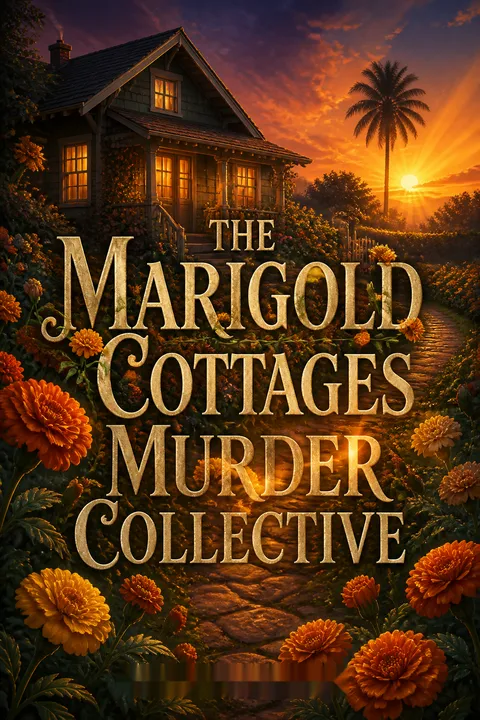
The Marigold Cottages, a cluster of quirky, colorful homes in Santa Barbara, are more than just a place to live—they're a haven for the broken, the eccentric, and the hopeful. Mrs. B, the elderly landlady, has spent decades cultivating both her garden and her tenants, each as unique as the flowers she tends. The cottages are home to a diverse group: anxious Sophie, perfectionist Lily-Ann, artistic Ocean and her kids, reclusive Hamilton, secretive Nicholas, and, soon, a new arrival. Mrs. B's philosophy is simple: people are as flawed and beautiful as her garden, and she's determined to nurture them all. The sense of belonging is palpable, but beneath the surface, each resident carries wounds and secrets, setting the stage for the drama to come.
The Outsider Arrives
Anthony Lambert, a tattooed ex-con, appears at the bus stop late at night, catching the wary eyes of Sophie and the curiosity of Mrs. B. Despite his intimidating appearance, Mrs. B welcomes him, renting him the studio apartment. His presence stirs unease—especially for Sophie, who is haunted by past trauma and hypervigilance. The other tenants, from the practical Lily-Ann to the protective Ocean, debate his place in their community. Mrs. B, ever the mediator, insists on seeing the good in him, even as his past and the circumstances of his arrival raise questions. The cottages, once a sanctuary, now feel charged with tension and possibility, as the outsider's presence begins to disrupt the fragile balance.
Secrets Beneath the Surface
As Anthony settles in, the tenants' private struggles come to light. Sophie battles anxiety and the lingering effects of a college stalker. Lily-Ann, separated from her husband Piotr, clings to order and routine to stave off loneliness. Ocean juggles single motherhood and her own artistic ambitions, while Nicholas, the aloof city planner, hides his connection to the property's fate. Mrs. B's role as confidante and protector deepens, but her own memory lapses hint at vulnerability. The group chat, initiated by Sophie, becomes a lifeline and a source of comic relief, but also a window into the residents' fears. The sense of community is real, but so is the isolation each person feels, setting the stage for crisis.
A Body in the Hedge
Early one morning, Sophie discovers a man's corpse in the hedge outside her cottage, his head bloodied and crows pecking at his flesh. The police descend, led by Detective Vernon, and suspicion immediately falls on the residents—especially Anthony, given his criminal record and proximity to the scene. The victim, James Dedrick, is a stranger to most, but his presence raises questions about why he was there. The shock ripples through the community, reigniting old fears and forcing the tenants to confront their own vulnerabilities. Mrs. B, ever protective, insists on Anthony's innocence, while the others grapple with the possibility that a killer lives among them.
The Collective Forms
With Anthony arrested and the police investigation stalling, Mrs. B calls a meeting of the tenants—dubbed the Marigold Cottages Murder Collective. Reluctantly, the group bands together, pooling their skills and resources to clear Anthony's name and protect their own. Hamilton leverages his online gaming connections for inside info, Lily-Ann applies her analytical mind, and Ocean and Sophie dig into the backgrounds of the victim and suspects. The group chat buzzes with theories, jokes, and anxieties. As they investigate, the tenants grow closer, their quirks and differences becoming strengths. The collective's amateur sleuthing is both comic and poignant, revealing the power of community in the face of fear.
Suspicions and Alibis
The investigation uncovers a web of motives and secrets. Anthony's past is scrutinized, but so are the lives of the other tenants. Nicholas's involvement in city rezoning, Piotr's financial troubles, and Sophie's stalker all become potential threads. Alibis are constructed and challenged, sometimes truthfully, sometimes not. Mrs. B's certainty about Anthony's innocence is unwavering, but her reasons are mysterious. The group's efforts are complicated by their own biases and the pressure of the police, who are eager for a quick resolution. The search for the truth becomes a test of trust, loyalty, and the willingness to confront uncomfortable realities.
The Ex-Con's Past
Anthony's silence and stoicism mask a complex past. Through conversations with Ocean and others, it's revealed that he once saved Sophie from danger, carrying her home when she was blackout drunk—a fact Mrs. B witnessed and kept secret to protect Sophie's dignity. His criminal record, while real, is more nuanced than it appears, rooted in youthful mistakes and a desire to protect others. As the tenants learn more about him, their perceptions shift from fear to empathy. Anthony's struggle to find acceptance and redemption mirrors the community's own journey toward forgiveness and understanding.
The Playwright's Fear
Haunted by her past, Sophie channels her anxiety into writing a play about the events at the Cottages. Her notes, both comic and raw, capture the absurdity and pain of living in a world where safety is never guaranteed. The process becomes therapeutic, helping her reclaim agency and voice. Her relationships with the other tenants, especially Nicholas, deepen as she learns to trust again. The act of storytelling becomes a way to process trauma, build connections, and imagine a future where she is more than a victim. The play within the story blurs the line between art and life, highlighting the healing power of creativity.
The Landlady's Confession
When the police case against Anthony falters, Mrs. B shocks everyone by confessing to the murder, presenting a bloodied walking stick as the weapon. Her confession is a calculated act of protection, designed to muddy the waters and force the authorities to reconsider. The tenants are stunned, torn between admiration and fear for her well-being. Her time in jail is both harrowing and oddly affirming, as she befriends fellow inmates and remains steadfast in her refusal to betray her principles. The confession galvanizes the collective, who redouble their efforts to uncover the truth and bring Mrs. B home.
The Amateur Sleuths
Freed from the constraints of official investigation, the Murder Collective digs deeper. They discover that the murder may have been a case of mistaken identity or a crime of opportunity. Clues point to Piotr, Lily-Ann's estranged husband, whose financial desperation and access to the property make him a prime suspect. The group uncovers evidence of blackmail, hidden wills, and secret inheritances. Their sleuthing is messy and imperfect, but driven by love and loyalty. As they piece together the puzzle, they confront their own flaws and the limits of justice, realizing that sometimes the truth is less important than protecting those they care about.
The Real Target
It becomes clear that the murder was not random—someone at the Cottages was the real target. The investigation uncovers that Piotr, facing ruin, intended to kill Lily-Ann for her inheritance, but was interrupted and killed Dedrick instead. The second murder, of Ybarra, is linked to blackmail and the threat of exposure. The tenants grapple with the moral ambiguity of their actions, as they manipulate evidence and testimonies to protect their own. The revelation forces them to confront the darkness within their community and the lengths they will go to preserve it.
The Stalker Returns
Sophie's old stalker, Neal Hesse, reappears in town, reigniting her fears and threatening her hard-won sense of safety. With the support of the collective, she confronts him, reclaiming her power and breaking the cycle of victimhood. The episode underscores the ongoing vulnerability of the tenants, even as they close ranks against external threats. The confrontation with Hesse becomes a turning point for Sophie, marking her transition from fear to agency, and for the group, a reminder of the importance of solidarity and vigilance.
The Second Attack
Just as the tenants begin to feel safe, a second attack occurs—this time targeting Lily-Ann. She survives, thanks to Sophie's intervention, but the incident shatters any illusion of security. The group is forced to reckon with the reality that danger can come from within as well as without. The attack galvanizes them to take decisive action, both to protect themselves and to ensure that justice, however imperfect, is served. The experience deepens their bonds and clarifies their priorities, as they choose each other over the demands of the outside world.
Truths and Cover-Ups
In the aftermath of the attacks, the tenants face difficult choices. They fabricate alibis, manipulate evidence, and withhold information from the police to shield Mrs. B and Anthony. The lines between right and wrong blur, as the desire to protect their own outweighs abstract notions of justice. The collective's actions are driven by love, but also by fear and self-preservation. The experience forces each member to confront their own capacity for deception and the cost of loyalty. The community emerges stronger, but not unscathed, forever changed by what they have done.
The Will and the Heir
The revelation that Nicholas is Mrs. B's secret heir—and the illegitimate son of her late husband—reshapes the dynamics of the group. The knowledge that the Cottages will pass to one of their own is both comforting and fraught, as Nicholas grapples with guilt and responsibility. The issue of inheritance becomes a metaphor for the transmission of care, values, and community. Mrs. B's decision to leave the property to Nicholas, rather than to the highest bidder, affirms her commitment to the people she loves. The tenants, in turn, must decide what kind of legacy they want to create.
Blackmail and Betrayal
Gregory Ybarra, a local landlord, is revealed to have blackmailed Mrs. B with video evidence of the murder, threatening to expose her unless she signs over the Cottages. Nicholas, caught between loyalty and pragmatism, nearly betrays Mrs. B to protect her from prison. The tension between self-interest and communal good comes to a head, as the tenants confront the reality that justice is often a matter of power and negotiation. The resolution of the blackmail plot requires sacrifice, cunning, and a willingness to bend the rules for the greater good.
The Final Gathering
With the truth revealed and the immediate threats neutralized, the tenants gather for a celebratory meal. The collective, once a group of strangers, has become a chosen family, bound by shared experience and mutual care. Mrs. B returns home, Anthony is exonerated, and the wounds of the past begin to heal. The group reflects on what they have learned—the necessity of forgiveness, the power of community, and the importance of embracing imperfection. The future remains uncertain, but the bonds forged in crisis endure, offering hope and comfort.
Justice, Community, and Forgiveness
In the aftermath, the Marigold Cottages stand as a testament to resilience and the messy, beautiful work of building a community. The tenants, forever changed by what they have endured, choose to move forward together, accepting the ambiguities and compromises that come with love and loyalty. The story ends not with perfect justice, but with a renewed commitment to each other and to the place they call home. The lessons of the past linger, but so does the promise of belonging, forgiveness, and the possibility of thriving—even in a world that is always, inevitably, broken.
Analysis
A modern fable of community, justice, and imperfectionThe Marigold Cottages Murder Collective is a witty, poignant, and psychologically astute exploration of what it means to belong in a fractured world. At its core, the novel is less a whodunit than a meditation on the messy, necessary work of building and sustaining community. The murder mystery is both a catalyst and a metaphor: it exposes the cracks in the façade of safety, but also reveals the strength that comes from solidarity, forgiveness, and mutual care. The characters' willingness to lie, cover up, and even break the law for each other is both troubling and deeply human, reflecting the compromises we make for those we love. The novel's structure—ensemble cast, group chat, metafictional play—mirrors the complexity of real communities, where every voice matters and every secret has consequences. Ultimately, the book suggests that justice is not a matter of perfect truth or punishment, but of compassion, accountability, and the courage to face our own brokenness together. The Marigold Cottages, with their mismatched colors and tangled gardens, stand as a symbol of hope: a place where the flawed and the foolish can find not just shelter, but home.
Review Summary
People Also Read







Characters
Mrs. B (Golda Bakofsky)
Mrs. B is the heart of the Marigold Cottages—a fiercely loving, eccentric, and aging landlady who sees herself as both gardener and guardian of her tenants. Her nurturing is matched by a steely resolve; she will do anything to protect her "family," even at great personal cost. Her past is marked by loss and resilience, and her present by a keen awareness of her own mortality and the fragility of those she loves. Psychoanalytically, Mrs. B embodies the archetype of the wise old woman, but with a subversive edge—her willingness to confess to murder for the sake of another reveals both her self-sacrifice and her cunning. Her relationships with the tenants are deeply maternal, yet she is not above manipulation or secrecy. Her development is a journey from benevolent meddler to self-sacrificing hero, ultimately reaffirming the power of chosen family.
Sophie Gilman
Sophie is a young woman haunted by trauma—a college stalker left her with PTSD and a tendency toward hypervigilance. She is both fragile and fiercely determined to reclaim her agency, channeling her fears into the creation of a play about the Cottages. Her relationships with the other tenants, especially Mrs. B and Nicholas, are marked by a longing for safety and belonging. Sophie's psychoanalytic arc is one of moving from victimhood to agency, learning to trust herself and others, and ultimately finding strength in vulnerability. Her creativity is both a coping mechanism and a means of connection, allowing her to process pain and imagine new possibilities. Her development is a testament to the healing power of community and art.
Lily-Ann Novak
Lily-Ann is a meticulous, order-obsessed woman whose drive for control masks deep loneliness and insecurity. Separated from her husband Piotr, she clings to routines and lists as a way to manage anxiety. Her analytical mind makes her the group's de facto detective, but her emotional intelligence is often lacking. Psychoanalytically, Lily-Ann represents the defense mechanisms of rationalization and compartmentalization, but her journey is one of opening up to messiness—both in relationships and in herself. Her bond with Anthony, and her willingness to bend the rules for the sake of justice, mark her growth from rigid individualism to compassionate solidarity. Her survival of the second attack cements her as both vulnerable and resilient.
Ocean Mistral
Ocean is a creative, pragmatic, and deeply loyal woman raising two children on her own. Her artistic sensibility infuses her worldview, but her primary identity is as a mother—protective, nurturing, and sometimes overbearing. Her relationship with Mrs. B is quasi-familial, and her interactions with the other tenants are marked by a blend of skepticism and warmth. Psychoanalytically, Ocean embodies the tension between independence and connection, struggling to balance her own needs with those of her children and community. Her arc is one of embracing vulnerability, accepting help, and learning to trust others with her burdens. Her role as a den mother to the Cottages is both a source of strength and a challenge to her autonomy.
Anthony Lambert
Anthony is a physically imposing, heavily tattooed man whose criminal past and silence make him an object of suspicion. Beneath the surface, he is gentle, loyal, and desperate for acceptance. His history is marked by violence, but also by acts of protection—most notably, saving Sophie from harm. Psychoanalytically, Anthony represents the shadow self, the part of the community that is feared and rejected, yet essential for wholeness. His journey is one of redemption, as he moves from scapegoat to valued member of the collective. His relationship with Lily-Ann is transformative for both, offering a model of forgiveness and second chances.
Nicholas Perez
Nicholas is the most enigmatic resident—a city planner with a hidden connection to the Cottages as the illegitimate son of Mrs. B's late husband. His detachment masks deep guilt and a longing for belonging. Psychoanalytically, Nicholas is caught between the desire for autonomy and the pull of family legacy. His arc is one of moving from avoidance and self-protection to engagement and responsibility. The revelation of his inheritance forces him to confront issues of loyalty, betrayal, and the meaning of home. His relationship with Sophie is a catalyst for growth, challenging him to risk vulnerability.
Hamilton
Hamilton is the shut-in of the group, rarely leaving his cottage and engaging with the world primarily through online games and the group chat. His encyclopedic knowledge and quirky humor provide comic relief, but also mask social anxiety and a fear of the outside world. Psychoanalytically, Hamilton represents the retreat into fantasy as a defense against pain. His participation in the Murder Collective is both a stretch and a lifeline, allowing him to contribute meaningfully while remaining within his comfort zone. His loyalty and kindness are quietly heroic, and his growth is measured in small, significant steps toward connection.
Piotr Novak
Piotr is Lily-Ann's estranged husband, a man whose charm and ambition conceal financial desperation and moral bankruptcy. His willingness to resort to violence to secure his inheritance makes him the story's most dangerous antagonist. Psychoanalytically, Piotr embodies narcissism and entitlement, using others as means to his own ends. His arc is one of increasing isolation and exposure, as his schemes unravel and his true nature is revealed. His relationship with Lily-Ann is a study in power, control, and the corrosive effects of greed.
Gregory Ybarra
Ybarra is a local property owner whose affable exterior hides a calculating mind. His involvement in the murder is indirect but pivotal—he witnesses the crime, records it, and uses the evidence to blackmail Mrs. B and Nicholas. Psychoanalytically, Ybarra represents the corrupting influence of power and the dangers of unchecked ambition. His downfall is a cautionary tale about the costs of exploitation and the limits of leverage. His interactions with Mrs. B and the tenants are marked by a blend of nostalgia, manipulation, and self-interest.
Detective Vernon Enible
Detective Vernon is the face of official justice—methodical, skeptical, and ultimately limited by the constraints of the system. His pursuit of the obvious suspect, Anthony, reflects both the strengths and weaknesses of institutional logic. Psychoanalytically, Vernon is the superego, enforcing rules but blind to nuance. His interactions with the tenants are alternately adversarial and bemused, and his inability to see the full truth highlights the story's central tension between law and justice. His arc is one of frustration and resignation, as he is outmaneuvered by the collective's loyalty and cunning.
Plot Devices
Ensemble Cast and Rotating POV
The novel employs a rotating point of view, giving each character a voice and interiority. This ensemble structure allows for a rich exploration of community dynamics, as well as the psychological complexity of each resident. The shifting perspectives create suspense, as secrets are revealed piecemeal and the reader is invited to piece together the truth alongside the characters. The device also fosters empathy, as even the most flawed or suspicious characters are given depth and motivation.
Amateur Sleuthing and Group Chat
The formation of the Marigold Cottages Murder Collective is both a plot device and a thematic statement. The group chat serves as a modern Greek chorus, providing commentary, humor, and a record of the investigation. The amateur sleuthing is both earnest and bumbling, highlighting the limitations and strengths of ordinary people confronting extraordinary events. The device underscores the power of collective action and the importance of communication in building trust and solving problems.
Play-Within-a-Play and Metafiction
Sophie's ongoing work on a play about the events at the Cottages serves as a metafictional device, allowing the novel to comment on its own structure and themes. The play-within-a-play format provides both comic relief and emotional insight, as Sophie's drafts capture the absurdity, pain, and hope of the community. The device also foregrounds the role of storytelling in making sense of trauma and forging identity.
Red Herrings and Misdirection
The narrative is rich with red herrings—Anthony's criminal past, Sophie's stalker, Nicholas's secrecy, Piotr's charm, Ybarra's eccentricity. Foreshadowing is used to build tension, as small details (a misplaced twig, a missing alibi, a cryptic confession) take on new meaning as the plot unfolds. The misdirection keeps both characters and readers guessing, while the ultimate resolution is both surprising and thematically resonant.
Moral Ambiguity and Collective Guilt
The story's structure and resolution hinge on the community's willingness to bend the truth, fabricate alibis, and manipulate evidence to protect their own. The device of collective guilt—everyone is complicit, to some degree—raises questions about the nature of justice, the limits of loyalty, and the ethics of self-preservation. The narrative structure mirrors the messiness of real life, where right and wrong are rarely clear-cut, and where forgiveness and belonging are hard-won.
Download PDF
Download EPUB
.epub digital book format is ideal for reading ebooks on phones, tablets, and e-readers.








































