
Plot Summary
Gods and Monsters Debate
Professor Kallum Locke, notorious for his intellect and arrogance, lectures on the nature of gods, violence, and the futility of seeking enlightenment through philosophy. He spars with Professor Wellington, exposing the paradox that creation is born from destruction. Kallum's dark charisma and disdain for academic hypocrisy set the stage for his obsession with the primal, violent roots of human nature. Beneath his intellectual bravado, he is haunted by a personal abyss and a hunger for a muse who can match his intensity. The seeds of rivalry, self-destruction, and the search for meaning are sown, foreshadowing the collision of intellect and brutality that will define his journey.
Abyss Stares Back
Kallum reflects on Nietzsche's abyss, once dismissing it as weakness but now recognizing its truth after meeting Halen, his muse. His life, once filled with academic triumphs and empty pleasures, is now colored by obsession and loss. The world is dull without her, and he is willing to cross any line to reclaim the ecstasy she brings. As news of a new murder in Hollow's Row surfaces, Kallum's protective instincts ignite. The philosophical becomes personal—his need for Halen is as consuming as his need to understand the darkness within himself and others.
Rituals and Revelations
Halen, a profiler scarred by trauma, works a grisly crime scene, haunted by memories of Kallum and the violence that binds them. She is both hunter and hunted, searching for evidence to convict Kallum while unable to escape his psychological grip. The crime scene is a ritualistic tableau, echoing ancient myths and personal wounds. Halen's obsession with the case mirrors her struggle to process her own grief and guilt. The investigation becomes a descent into her own psyche, where the line between victim and perpetrator blurs, and the need for answers threatens to consume her.
Daemons and Desire
Kallum and Halen's reunion at the crime scene is electric with tension, desire, and suspicion. Their intellectual sparring masks deeper wounds—each is both the other's salvation and damnation. Kallum's seductive intellect and Halen's relentless logic clash and entwine, exposing vulnerabilities and secrets. The investigation is as much about understanding each other as it is about catching a killer. The boundaries between love, violence, and madness dissolve, and both are forced to confront the daemons that feed on their pain and longing.
Evidence and Obsession
Halen's determination to prove Kallum's guilt is complicated by her own emotional entanglement and the ambiguous evidence. The discovery of a crucial piece of rope implicates her, blurring the line between investigator and suspect. As she battles exhaustion and self-doubt, the case becomes a mirror for her own fractured identity. The investigation is a labyrinth of psychological traps, where every clue is suspect and every motive is shadowed by personal history. The danger is not just from the killer, but from the truths Halen is unwilling—or unable—to face about herself.
Storms and Confessions
A literal and metaphorical storm rages as Halen and Kallum confront each other in the rain. Accusations and confessions fly—each blaming the other for violence, betrayal, and obsession. Kallum's declaration of love is as fierce as his threats, and Halen's resistance is eroded by the intensity of their connection. The storm exposes raw wounds and unspoken desires, forcing both to admit the depth of their need and the impossibility of escape. The world narrows to the space between them, where trust and destruction are inseparable.
Chasms and Connections
The investigation leads to a ravine filled with animal remains, a symbol of failed attempts at transcendence. Halen and Kallum, joined by local allies and rivals, piece together the offender's ritualistic motives. The chasm is both physical and emotional—a gulf between what is known and what is felt, between past trauma and present danger. Connections are made between the missing, the rituals, and the personal histories of those involved. The search for the killer becomes a search for meaning, belonging, and the possibility of healing.
The Philosopher's Stone
The discovery of the philosopher's stone symbol at the crime scene deepens the mythic resonance of the case. Halen and Kallum debate the origins of suffering, art, and transformation, linking the killer's motives to ancient philosophies and personal tragedies. The investigation becomes an alchemical process, where destruction is the catalyst for creation. The search for the philosopher's stone is a metaphor for the search for wholeness—a journey through pain, loss, and the hope of transcendence. The past and present converge, revealing the true cost of enlightenment.
Ecstasy in the Dark
Alone in her hotel room, Halen is tormented by memories, doubts, and the seductive pull of Kallum's darkness. The boundaries between reality and fantasy blur as she listens to old recordings and contemplates the nature of memory and truth. The ecstasy she finds in the dark is both a refuge and a danger—a place where she can surrender to desire, pain, and the possibility of transformation. The night becomes a crucible, burning away illusions and leaving only the raw, unvarnished self.
Conjunction of Fates
The investigation reaches a tipping point as evidence is manipulated, alliances are tested, and the press closes in. Halen and Kallum's fates are increasingly intertwined, their choices echoing through the case and their own psyches. The conjunction of their desires, fears, and ambitions creates a volatile mix, threatening to ignite at any moment. The search for the killer becomes a struggle for agency, identity, and the right to define one's own fate. The past is ever-present, and the future is uncertain.
Violence and Vengeance
Halen is attacked by a trusted authority, and Kallum's violent intervention blurs the line between justice and vengeance. The aftermath is a reckoning with the cost of survival—the physical, emotional, and moral toll of living in a world where violence is both a threat and a means of protection. The system is revealed as flawed, and the only justice is the one they can claim for themselves. The cycle of violence continues, each act echoing the traumas of the past and shaping the choices of the present.
Overman Unmasked
The search for the missing and the killer leads to the unmasking of Devyn, a trusted friend turned priestess of madness. Halen's willingness to risk herself to save others is mirrored by Devyn's descent into delusion and violence. The Overman is revealed not as a transcendent ideal, but as a broken human seeking meaning through destruction. The confrontation is both physical and philosophical—a battle for the soul, where the only victory is survival and the only truth is the one forged in suffering.
Creative Genius Unleashed
Kallum, imprisoned and enraged, faces his own capacity for violence and the consequences of his obsession. The creative genius he seeks is inseparable from the destruction he inflicts and endures. The boundaries between hero and villain, creator and destroyer, are erased. The only way forward is through the fire—embracing the darkness within and without, and accepting the price of genius. The world is remade in blood and pain, and the only redemption is found in the act of creation itself.
Priestess of Madness
Halen is drawn into Devyn's ritual, forced to confront the madness and suffering at the heart of the case. The victims are revealed as both followers and prisoners, their humanity obscured by devotion and mutilation. Halen's empathy is both her strength and her vulnerability, allowing her to reach Devyn but also exposing her to the risk of annihilation. The priestess of madness is both a mirror and a warning—a reminder of what can happen when pain is worshipped and the self is sacrificed to an impossible ideal.
Harbinger's Arrival
As Devyn's ritual reaches its climax, Kallum arrives as the Harbinger, disrupting the cycle of violence and claiming Halen as his own. The confrontation is brutal and cathartic, a reckoning with the forces that have shaped their lives. The rescue is not a return to innocence, but an acceptance of the darkness that binds them. The daemon is both savior and destroyer, and the only way out is through the fire. The past is not erased, but transformed.
Chaos and Consequence
In the wake of the ritual, Halen and Kallum retreat to process the trauma and make sense of what remains. The consequences of their choices ripple outward, affecting allies, enemies, and the community at large. The chaos of the past is not resolved, but integrated—a part of who they are and who they will become. The only certainty is change, and the only hope is in the willingness to face the consequences of one's actions.
Sorcery of the Soul
In the privacy of the mansion, Halen and Kallum tend to each other's wounds—physical, emotional, and spiritual. Their intimacy is both a balm and a crucible, burning away the last defenses and forging a new bond. The sorcery of the soul is the ability to transform pain into connection, violence into tenderness, and fear into trust. The past cannot be undone, but it can be redeemed through the act of loving and being loved, even in the face of darkness.
Hermetic Seal
As the case concludes, the truth is revealed: the Harbinger killer is dead, and the real danger was always within. Halen and Kallum, now united by shared trauma and mutual understanding, face the future together. The hermetic seal is the acceptance of all that has been lost and gained—the willingness to question everything, to embrace ambiguity, and to find meaning in the midst of chaos. The story ends not with closure, but with the promise of continued transformation and the hope that even in darkness, beauty can be found.
Analysis
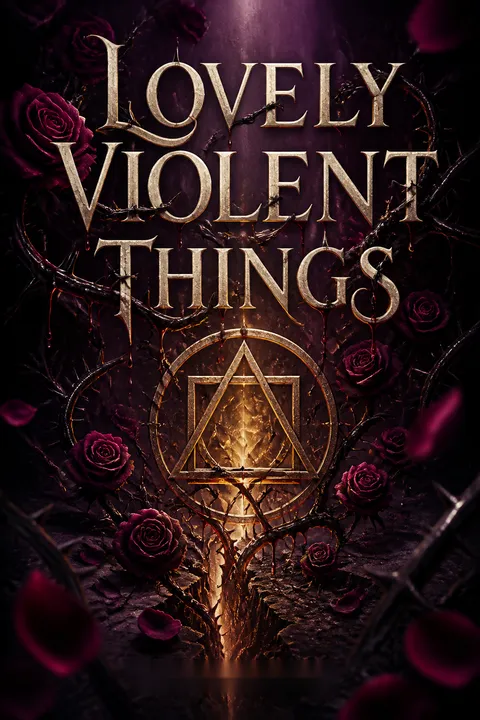
Lovely Violent Things is a dark, intricate exploration of the human psyche, where philosophy, trauma, and desire intertwine in a relentless search for meaning. The novel interrogates the boundaries between good and evil, sanity and madness, victim and perpetrator. Through the entwined journeys of Kallum and Halen, it exposes the seductive power of obsession, the necessity of confronting one's own darkness, and the impossibility of true objectivity in the face of personal pain. The story's use of myth, ritual, and philosophical debate elevates the narrative beyond a simple thriller, inviting readers to question the nature of truth, justice, and redemption. Ultimately, the lesson is that healing and transformation require not the denial of violence and suffering, but their integration into a larger, more compassionate understanding of the self and others. The novel's refusal to offer easy answers or neat resolutions is its greatest strength, challenging readers to embrace ambiguity, question everything, and find beauty even in the most violent of things.
Review Summary
Lovely Violent Things received mixed reviews, with an average rating of 4.03 out of 5. Many readers praised the intense psychological thriller elements, complex characters, and philosophical depth. Some found the plot confusing and overly dense with philosophical concepts. Fans appreciated the dark romance between Kallum and Halen, while others felt the relationship was too intense. The book's twists and cliffhanger ending left readers eager for the final installment, though some felt overwhelmed by the intricate plot and heavy themes.
People Also Read




Characters
Kallum Locke
Kallum is a brilliant, arrogant professor whose intellect is matched only by his capacity for darkness. Scarred by a violent past and a toxic family legacy, he seeks meaning through philosophy, ritual, and the pursuit of a muse who can match his intensity. His relationship with Halen is both redemptive and destructive—she is his obsession, his salvation, and his undoing. Kallum's psychological complexity lies in his embrace of both creation and destruction, his willingness to cross moral boundaries, and his desperate need to be seen and understood. Over the course of the story, he evolves from a detached intellectual to a man willing to risk everything for love, even as he remains haunted by the violence within.
Halen St. James
Halen is a forensic psychologist driven by trauma, guilt, and an unyielding need for answers. Her past is marked by loss—of family, love, and self—and her present is consumed by the hunt for truth and justice. Halen's relationship with Kallum is a crucible, forcing her to confront her own darkness, desires, and capacity for violence. She is both victim and perpetrator, healer and destroyer. Her journey is one of self-discovery, as she learns to accept the parts of herself she fears most and to find strength in vulnerability. Halen's evolution is a testament to the power of empathy, resilience, and the willingness to question everything.
Devyn Childs
Devyn is a forensic analyst and Halen's trusted ally, whose intelligence and organizational skills mask a deep well of pain and delusion. As the Overman, she orchestrates rituals and manipulates evidence, seeking transcendence through violence and suffering. Devyn's psychological profile is one of obsession, envy, and a desperate need for connection. Her betrayal is both shocking and tragic, revealing the thin line between devotion and madness. Devyn's downfall is a warning about the dangers of unchecked pain and the seductive allure of becoming more than human.
Wren Alister
Alister is the federal agent in charge of the task force, whose outward professionalism conceals a predatory nature. His interactions with Halen are marked by control, manipulation, and ultimately violence. Alister represents the failure of systems meant to protect, and his downfall is both a personal and institutional reckoning. His psychological unraveling exposes the dangers of repression, entitlement, and the abuse of power.
Percy Wellington
Wellington is Kallum's academic adversary, whose intellectual posturing and personal failings make him both a threat and a mirror. His murder is a turning point in the narrative, forcing Halen and Kallum to confront the consequences of obsession and the limits of reason. Wellington's role is that of the sacrificial scapegoat, his death a symbol of the violence inherent in the pursuit of knowledge and power.
Agent Hernandez (Gael)
Hernandez is the federal agent assigned to monitor Kallum, whose pragmatism and empathy make him a stabilizing force amid chaos. He serves as a bridge between the protagonists and the institutions they navigate, offering support, protection, and occasional subversion of protocol. Hernandez's loyalty and integrity are tested by the unfolding events, and his willingness to bend the rules for the greater good highlights the complexity of justice.
Dr. Torres
Torres is the head psychiatrist at the mental hospital, whose own descent into madness mirrors the instability of those he treats. His interactions with Kallum are fraught with power struggles, delusion, and mutual manipulation. Torres's breakdown is both a personal tragedy and a commentary on the limits of psychological intervention in the face of true darkness.
Vince Lipton
Lipton is one of the missing locals, transformed from an ordinary person into a participant in Devyn's rituals. His mutilation and dehumanization are emblematic of the story's themes of loss, identity, and the search for meaning. Lipton's fate is a reminder of the vulnerability of all who are drawn into the orbit of charismatic leaders and destructive ideologies.
Detective Riddick
Riddick is a local detective who steps in during the investigation, providing a counterpoint to the federal agents and a potential source of support for Halen. His skepticism and pragmatism ground the narrative, offering a perspective that is both critical and compassionate. Riddick's role is to challenge assumptions, ask difficult questions, and remind the protagonists of the human cost of their pursuits.
Charles Crosby
Crosby is Kallum's attorney, whose cynicism and resourcefulness make him an indispensable ally in navigating the legal and ethical minefields of the case. His willingness to bend the rules and his understanding of the system's flaws provide a pragmatic counterbalance to the idealism and desperation of the other characters.
Plot Devices
Duality and the Abyss
The narrative structure is built on the interplay of opposites—light and dark, love and violence, intellect and instinct. Foreshadowing is achieved through philosophical debates, symbolic rituals, and the recurring motif of the abyss. The story uses unreliable narration, shifting perspectives, and fragmented memories to blur the line between reality and delusion. The use of ritual, alchemical symbols, and mythic references deepens the psychological complexity and heightens the sense of inevitability. The plot is driven by the convergence of personal trauma and collective violence, with each revelation serving as both a clue and a challenge to the characters' understanding of themselves and the world.
Hollow's Row Series
About the Author
Other books by Trisha Wolfe



Download PDF
Download EPUB
.epub digital book format is ideal for reading ebooks on phones, tablets, and e-readers.








































