

Plot Summary
Monsters in Love's Grasp
Grayson Sullivan, a brilliant, sadistic serial killer, and Dr. London Noble, his psychologist, are drawn together by a force neither can resist. Their relationship is a paradox: predator and prey, healer and destroyer, lover and executioner. Each sees in the other a reflection of their own darkness, and together they find a twisted kind of perfection. Their love is both their salvation and their doom, a folie à deux that blurs the line between passion and pathology. As they reunite after Grayson's escape, their connection deepens, setting the stage for a deadly duet that will test the limits of trust, control, and the human psyche.
The Hunter and His Prey
Grayson and London's reunion is marked by a hunt—one that is both literal and symbolic. In a nightclub, they select a would-be predator as their victim, turning the tables on a man who would harm others. Their shared act of violence is both a consummation of their bond and a declaration of war on the world that would judge them. The thrill of the hunt, the intimacy of shared blood, and the power of choice become the foundation of their partnership. Together, they are unstoppable, feeding each other's needs and desires in a world that cannot contain them.
Blood-Stained Reunion
The act of murder cements Grayson and London's connection, transforming their relationship into a partnership in crime. Their first kill together is a ritual, a merging of identities and compulsions. The violence is erotic, the aftermath a moment of raw vulnerability. They confess their love in the blood of their victim, acknowledging the darkness that binds them. Yet, beneath the ecstasy, there is fear—of losing control, of being consumed by the very madness that draws them together. Their love is a double-edged blade, offering both freedom and destruction.
Copycat in the Shadows
As Grayson and London navigate their dangerous love, a copycat killer emerges, emulating Grayson's methods and threatening to expose them both. The copycat's presence is a challenge and a threat, forcing Grayson to adapt and London to question her own instincts. The authorities, led by Agent Nelson and Detective Foster, close in, each with their own obsessions and secrets. The lines between hunter and hunted blur, and the couple must use all their cunning to stay ahead of the law and the imitator who seeks to claim Grayson's legacy.
The Trap Is Set
Grayson and London orchestrate a plan to draw out the copycat, using their knowledge of psychology and crime scene staging. They manipulate the media, the police, and even each other, setting a trap that is as much about control as it is about survival. Trust becomes a weapon, and every move is a test of loyalty. As the copycat escalates, the danger intensifies, and the couple's bond is strained by secrets, doubts, and the ever-present threat of betrayal.
Past Unburied, Truths Revealed
London's quest to uncover her true identity leads her back to the horrors of her childhood and the graves of her family. Grayson's own past, marked by abuse and abandonment, is mirrored in London's journey. Both are shaped by trauma, and both seek answers that may never bring peace. The revelation of London's birth name, Lydia Prescott, and the discovery of her sister's fate force her to confront the possibility of a life she never lived. The past is a prison, and only by facing it can they hope to escape.
Dissociation and Doubt
London's sense of self splinters as she grapples with her dual identities—London the doctor, Lydia the lost child. Grayson, too, is haunted by the fear of inheriting his mother's madness. Their relationship is tested by secrets, jealousy, and the intrusion of Agent Nelson, whose own obsession with London threatens to unravel everything. Doubt seeps in, eroding the trust that is the foundation of their partnership. The specter of betrayal looms, and both must decide how much of themselves they are willing to risk for love.
The Copycat's Game
The copycat's murders grow bolder, and suspicion falls on those closest to the investigation. Agent Nelson and Detective Foster become both hunters and suspects, their own demons driving them to the edge. Grayson and London must navigate a web of lies, manipulation, and psychological warfare, using their insight into human nature to survive. The game becomes deadly, and the cost of losing is everything.
Trust and Betrayal
As the net tightens, Grayson and London are forced to confront the limits of their trust. Betrayal comes from unexpected quarters, and the line between ally and enemy is razor-thin. London's research into Grayson's past uncovers painful truths, while Grayson's need for control clashes with London's desire for autonomy. Their love is both a shield and a weapon, and only by embracing their shared darkness can they hope to outwit their enemies.
The Key to Freedom
The motif of locks and keys recurs throughout their story, symbolizing both imprisonment and liberation. Grayson's obsession with escape is mirrored in London's need to unlock the secrets of her past. Together, they design a final trap—a masterpiece of psychological and physical engineering—that will determine their fate. The key to freedom is trust, but trust is the hardest thing to give when everything is at stake.
The Final Trap
The climax unfolds in a warehouse, where Grayson and London are forced to play out the ultimate test of their bond. Agent Nelson, revealed as the copycat, orchestrates a trap that pits lover against lover, predator against predator. The design is perfect, the stakes absolute: only one can survive. In a moment of exquisite agony, London must choose between saving Grayson and saving herself. The line between victim and executioner vanishes, and the true nature of their love is revealed.
Death's Perfect Design
The trap is sprung, and blood is spilled. Grayson and London enact a plan that fakes their deaths, using the chaos to escape the law and their enemies. Sacrifice is the price of freedom, and both must give up everything they were to become something new. The world believes them dead, but their story is far from over. In the aftermath, they are reborn—monsters set free, lovers unbound by law or morality.
Sacrifice and Survival
In the wake of the final confrontation, Grayson and London disappear, leaving behind only questions and legends. Their love survives the grave, transformed by the crucible of violence and loss. They are no longer bound by the rules of society or the expectations of others. Together, they forge a new path, one that is as dangerous as it is liberating. The world may never understand them, but they understand each other—and that is enough.
The End That Isn't
Grayson and London begin a new life under assumed identities, haunted by the ghosts of their past but determined to seize the future. The scars of their ordeal remain, both physical and psychological, but they are stronger for having survived. Their love is a sanctuary and a curse, a reminder that true freedom comes at a cost. The story ends, but their dance continues—a duet of madness, passion, and defiance.
Love Beyond the Grave
The world moves on, but the legend of the Angel of Maine and his dark muse endures. Grayson and London become myths, their story retold in whispers and rumors. Yet, for those who know where to look, the signs of their survival are everywhere—keys left in trees, messages hidden in plain sight. Their love is immortal, a testament to the power of connection in the face of oblivion.
Monsters Set Free
Grayson and London settle into a life of movement and secrecy, never staying in one place for long. Their compulsions remain, but they channel them into a twisted form of justice, targeting those who would harm the innocent. They are both monsters and avengers, gods and devils, forever walking the line between creation and destruction. Their love is their anchor, their madness their guide.
The Dance of Madness
The story comes full circle as Grayson and London embrace their roles as both lovers and killers. Their dance is one of passion and violence, trust and betrayal, freedom and captivity. They are each other's salvation and damnation, locked in a cycle that can never truly end. In the space between heaven and hell, they find their peace—not in redemption, but in acceptance of who they are.
Epilogue: Between Heaven and Hell
London visits the graves of her family, making peace with her past and the person she has become. Grayson waits for her, a dark angel watching over his beloved. Together, they walk away from the world that tried to destroy them, free at last to write their own story. In the end, even monsters deserve love—and in each other, they find a home.
Analysis
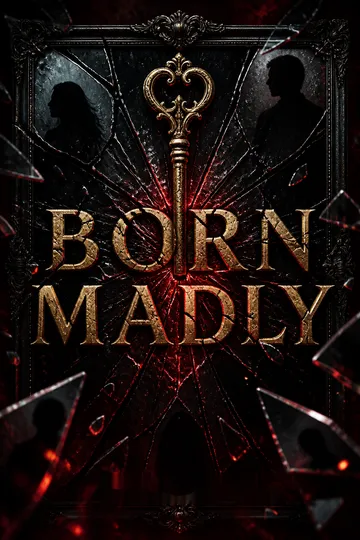
Born, Madly is a dark, psychological exploration of love, violence, and the human need for connection. At its core, the novel asks whether two broken people can find wholeness in each other, or whether their union will only amplify their madness. Through its dual narrative and intricate plotting, the story blurs the boundaries between hero and villain, victim and perpetrator, sanity and insanity. The recurring motifs of locks, keys, and traps underscore the central tension between freedom and control, while the presence of the copycat killer externalizes the internal struggles of the protagonists. The novel's modern relevance lies in its unflinching examination of trauma, identity, and the seductive power of darkness. It challenges readers to question the nature of evil, the limits of empathy, and the possibility of redemption. Ultimately, Born, Madly suggests that love—no matter how twisted—can be both a prison and a key, and that true freedom comes not from escaping our demons, but from embracing them together.
Review Summary
Born, Madly concludes the Darkly, Madly duet following serial killer Grayson Sullivan and psychologist London Noble in a dark psychological thriller romance. Reviews are polarized: fans praise the intense chemistry, audiobook narration, psychological depth, and twisted love story, while critics cite overly poetic prose, slow pacing, vague plotting, and shallow character development. Most appreciate the complex mind games and dark themes but disagree on execution quality. Common praise includes the suspenseful twists and obsessive relationship dynamics. Criticisms focus on repetitive internal monologues and telling versus showing. Trigger warnings advised for extreme content.
People Also Read





Characters
Grayson Sullivan
Grayson is a complex blend of genius and trauma, shaped by a childhood of abuse and captivity. His intelligence and sadistic tendencies make him a master manipulator and a feared serial killer, but beneath the surface lies a desperate need for connection and understanding. London becomes both his salvation and his undoing, drawing out his capacity for love even as she fuels his darkest compulsions. Grayson's journey is one of self-discovery, as he confronts the legacy of his mother's madness and the possibility of redemption through love. His relationship with London is both a partnership and a battleground, where trust is earned through blood and sacrifice.
Dr. London Noble / Lydia Prescott
London is a psychologist with a hidden past, stolen from her family and raised by a monster. Her professional façade masks deep wounds and a capacity for violence that rivals Grayson's. As she uncovers the truth of her origins and embraces her dual identity as Lydia, she is forced to confront the darkness within herself. Her love for Grayson is both a rebellion against her trauma and an acceptance of her true nature. London's arc is one of integration—melding the victim, the survivor, and the monster into a whole self. Her intelligence, empathy, and ruthlessness make her both a formidable partner and a dangerous adversary.
Agent Randall Nelson
Nelson is the FBI agent tasked with capturing Grayson, but his pursuit becomes a mirror of the very evil he seeks to destroy. Driven by personal loss and professional pride, Nelson crosses the line from lawman to murderer, becoming the copycat killer who threatens Grayson and London. His obsession with London is both sexual and psychological, and his descent into madness is marked by increasing violence and duplicity. Nelson's arc is a cautionary tale of how the pursuit of justice can become indistinguishable from the crimes it seeks to punish.
Detective Marshall Foster
Foster is a tenacious detective whose career is defined by his pursuit of Grayson. Though initially an antagonist, his own obsessions and setbacks bring him closer to London, and he becomes a reluctant ally in the final confrontation. Foster's journey is one of disillusionment and adaptation, as he moves from rigid lawman to a more nuanced understanding of justice. His relationship with London is marked by mutual respect and shared trauma, and he ultimately plays a crucial role in exposing Nelson and ensuring London's survival.
Rebecca Sullivan
Grayson's mother is a shadowy figure whose schizophrenia and neglect shape much of his psychological landscape. Her abandonment and the abuse he suffered in her absence are the root of his compulsions and his fear of madness. Rebecca's presence in the story is more symbolic than active, representing the inescapable influence of the past and the genetic legacy of mental illness.
Mia Prescott
Mia is London's biological sister, whose death and unmarked grave become a focal point in London's quest for identity and closure. Mia's fate is a reminder of the randomness of survival and the cost of evil, and her memory haunts London's every decision.
Sadie Bonds
Sadie is London's college friend and fellow psychologist, providing support and practical assistance when London needs to disappear. Her presence is a grounding force, reminding London of the possibility of normalcy and trust outside the madness of her relationship with Grayson.
Michael Lawson
Lawson is a forensic technician manipulated by Grayson to gain access to crime scene details. His vulnerability and fear are exploited, highlighting the ease with which even the innocent can become complicit in the games of monsters.
Charity
Charity is a prostitute caught in the crossfire of Grayson and Nelson's deadly game. Her fate underscores the story's themes of exploitation, vulnerability, and the blurred lines between predator and prey.
David Lyman
Lyman is a new patient of London's, a man with predatory intentions toward his daughter. His presence at the end of the story signals that Grayson and London's work is not done—that their brand of justice will continue, even as they seek peace.
Plot Devices
Dual Narrative and Psychological Mirroring
The novel alternates between Grayson and London's points of view, allowing readers to experience the story through both the killer's and the psychologist's eyes. This dual narrative structure deepens the psychological tension, as each character's thoughts, fears, and desires are mirrored and refracted through the other. The use of mirroring extends to the plot, with the copycat killer serving as a distorted reflection of Grayson, and London's dissociation echoing Grayson's own fractured identity. The narrative structure heightens suspense and emotional resonance, drawing the reader into the intimate, dangerous dance between the protagonists.
Motifs of Locks, Keys, and Traps
Throughout the story, locks and keys represent both imprisonment and the possibility of escape. Grayson's obsession with locks is rooted in his childhood captivity, while London's tattooed key becomes a literal and metaphorical tool for liberation. The traps they design—both physical and psychological—are expressions of their need for control and their fear of vulnerability. The final trap, with its intricate design and deadly stakes, is the culmination of these motifs, serving as both a test and a crucible for their relationship.
Foreshadowing and Repetition
The narrative is rich with foreshadowing, as early events and symbols recur in new and more dangerous forms. The repetition of certain phrases, images, and scenarios—such as the dance in the club, the act of killing, and the motif of the duet—creates a sense of inevitability, as if the characters are caught in a cycle they cannot escape. This structural device reinforces the themes of fate, madness, and the inescapability of trauma.
Unreliable Narration and Shifting Reality
Both Grayson and London are unreliable narrators, their perceptions colored by trauma, obsession, and psychological instability. The story frequently questions what is real and what is imagined, especially in moments of dissociation or heightened emotion. This device keeps the reader off-balance, mirroring the characters' own uncertainty and deepening the sense of psychological suspense.
The Copycat as Catalyst
The introduction of the copycat killer serves as both a plot engine and a thematic mirror. The copycat's actions force Grayson and London to confront their own methods, motives, and boundaries. The external threat accelerates the internal reckoning, pushing the protagonists to make choices that reveal their true selves and the depth of their commitment to each other.
Darkly, Madly Series
About the Author
Other books by Trisha Wolfe




Download PDF
Download EPUB
.epub digital book format is ideal for reading ebooks on phones, tablets, and e-readers.








































