
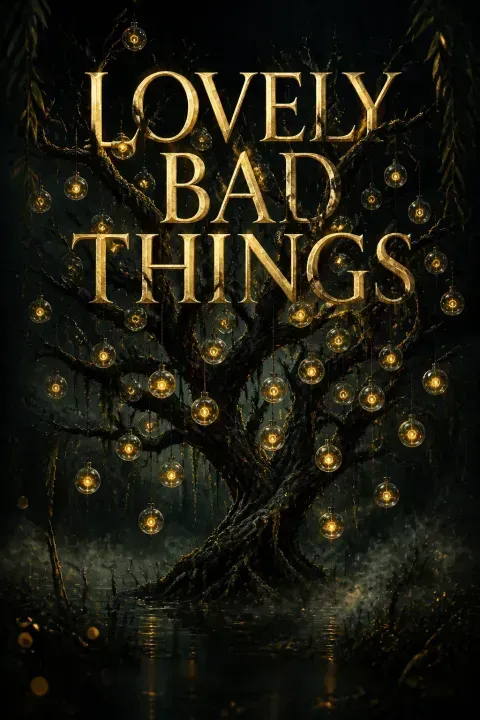


Plot Summary
Prologue
Six months before the Hollow's Row case, criminologist Halen St. James1 testifies against Professor Kallum Locke2 for the brutal murder of a university colleague. She plays a secret recording of their courtyard conversation where Kallum2 describes the victim's jaw being dismantled with a tire iron, a detail not yet public.
His mismatched blue-green eyes never leave her face as she accuses him of being a sadistic killer. But the case is purely circumstantial: no DNA, no witnesses, only Halen's1 profile and his missing alibi.
The jury finds him not guilty by reason of insanity, remanding him to Briar Correctional Institute. As Halen1 flees the courtroom, Kallum2 catches her hand and whispers a quotation from Chaucer: time and tide wait for no man. His expression holds only amusement, not anger, and she knows this is far from over.
The courtroom scene establishes the central paradox of the novel: Halen's absolute certainty about Kallum's guilt, juxtaposed against the lack of physical evidence. This mirrors the larger theme of epistemological uncertainty that runs through the book. What can we truly know? Halen's professional instinct says Kallum is a killer, yet the law demands proof she cannot provide. Kallum's whispered Chaucer quote is both a threat and a philosophical invitation, a game he's already playing that she doesn't yet understand. The moment also introduces the power dynamic: he is entertained by her defiance, while she is terrified by his attention, a push-pull that will define their entire relationship. The prologue frames the rest of the story as a mystery about guilt, memory, and whether evil can be recognized without evidence.
Fields of Severed Eyes
Halen St. James1 arrives in Hollow's Row, a gothic New England town where thirty-three residents vanished five years earlier. Detective Emmons,8 a former football star turned small-town cop, leads her through the marsh to a gruesome crime scene: dissected human eyes painstakingly threaded with lace-weight yarn and affixed to three barren trees.
The sheer precision disturbs her — the optic nerves are cleanly severed, the pupils arranged at exact distances. A stag carcass nearby has been gutted to lure scavenging crows away from the display.
Crime-scene tech Devyn Childs3 mutters a Chaucer proverb about trees having eyes, and the words strike Halen1 like a physical blow. Six months ago, Kallum Locke2 whispered another Chaucer quote as she left his trial. She phones her field manager and demands a plane ticket to Boston.
The discovery of the eyes functions as both an inciting incident for the investigation and a symbolic opening of sight. Hollow's Row is a town that has refused to look at its own tragedy for five years. The eyes, forcibly removed from their owners and pinned open, literalize the demand to see what has been hidden. Halen's immediate recognition of a connection to Kallum—triggered by a Chaucer quote—reveals how deeply he has colonized her psyche. She is not moving toward a case; she is circling back to the man she failed to convict, and her professional judgment has already been compromised by obsession she refuses to name.
Visitor at the Asylum
At Briar Correctional Institute, Halen1 sits across a visitation table from Kallum Locke.2 He wears patient scrubs, but his presence still dominates the room: tall, leanly muscled, dark hair falling over heterochromatic eyes that devour her. She presents crime-scene photos and asks about the Chaucer proverb.
Kallum2 dismisses Chaucer and points her toward antiquity, quoting Socrates. When she asks what he wants in return for his expertise, he demands freedom. Halen1 visits Dr. Torres,5 the facility's head psychiatrist, who reveals severe burns on his arm and begs her to remove Kallum2 from his hospital.
Torres5 connects her to a lawyer who can secure Kallum's2 temporary release. Halen1 returns with a deal: ankle monitor, field psychiatrist, transfer to a nicer facility if he helps. Kallum2 signs, adding one term: she owes him something personal, to be collected later.
The asylum encounter establishes the transactional nature of their relationship, but also its fundamental asymmetry. Halen believes she is trading Kallum's expertise for his limited freedom, while Kallum treats the entire arrangement as foreplay for a much larger game. Torres's desperation—he would rather risk releasing a dangerous patient than continue treating him—signals that Kallum's influence extends beyond manipulation into something more unsettling. The burns on Torres's arm are never fully explained, leaving open the question of whether Kallum caused them through mundane violence or through the psychological torment he specializes in: making people destroy themselves.
Hemlock and Human Ears
Released to Hollow's Row with Dr. Stoll Verlice7 as his psychiatrist, Kallum2 examines the eye-tree scene and immediately identifies burned reeds soaked in homemade wine. He leads Halen1 deeper into the marsh, past the rotting stag carcass, where he stops her inches from water hemlock: a toxic plant not native to the region.
Someone cultivated it here deliberately. Strung to the hemlock stems are desiccated human ears, threaded with the same meticulous yarn as the eyes. Halen1 photographs the discovery while Agent Alister's4 FBI team arrives too late.
She accuses Kallum2 of knowing about the scene beforehand. He responds with cold fury, reminding her that she came to him. The scene shifts: he was never a resource to control, but a predator she invited into the investigation.
The discovery of ears alongside hemlock transforms the case from bizarre to ritualistic. Kallum's ability to locate the hidden scene seems almost preternatural, raising the question: is he reading the evidence through superior expertise, or did he already know? The hemlock carries specific philosophical weight—it killed Socrates—and its presence confirms the killer's immersion in Greek esoteric thought. For Halen, the moment also marks a shift in vulnerability. She entered the marsh believing she could manage Kallum. She leaves understanding that she has placed herself alone with a man who may be orchestrating far more than she imagined.
The Lemon Cleansing
At a nearly empty local diner, Kallum2 orders rare steak while Halen1 sips chamomile tea. He seizes her wrist across the table and drags a lemon wedge across her knuckles, explaining how its citric acid masks scent — the same method the killer used to hide his practice sites.
As Halen's1 pulse hammers against his fingers, Kallum2 traces the philosophy behind the crimes: the sacred number three, Socrates' execution by hemlock, and finally Nietzsche. The killer believes Nietzsche's writings contain hidden instructions for becoming the Übermensch, a superhuman being who transcends morality and death.
He sacrificed body parts in threes to mark stages of ascension. When Halen1 demands a single word to give the FBI, Kallum2 smiles cruelly and answers: Nietzsche. The waitress slips him a party address, intrigued by his ankle monitor.
The diner scene compresses the novel's intellectual framework into a single charged interaction. Kallum uses the lemon as both a pedagogical tool and a sensual provocation, erasing the boundary between investigation and seduction. His casual explanation of the Übermensch concept introduces the book's central philosophical question: what happens when someone believes their desires outweigh all moral constraints? The killer, in Nietzschean terms, is trying to become a god. But Kallum's own behavior—his manipulation of Halen, his pleasure in her discomfort—suggests he is not merely describing the philosophy but intimately understanding it from the inside.
The Übermensch Engraved
At three in the morning, Halen1 drags Kallum2 back to the killing fields for an impromptu lecture. Under a spotlight and a moonless sky, he walks her through Western esotericism: Socrates, Plato, Aristotle, the mystery schools, the unwritten doctrines passed down only to initiates.
Later, as they wander into the dark marsh, he stops her before she steps on a mutilated stag killed not by bullets but by human teeth and fingernails — sparagmos, the sacred rending of a living creature. Then he finds it: a giant black willow tree with three symbols branded into its bark.
Socrates. The herd. Dionysus. The order of ascension. Kallum2 crowns Halen1 against the tree, his restraint fracturing as he declares the suspect is pursuing Nietzsche's Übermensch through Dionysian madness and ritual sacrifice.
The willow tree engravings function as the killer's manifesto written in symbolic code. The progression from Socrates (the search for wisdom) through 'the herd' (Nietzsche's contempt for ordinary humanity) to Dionysus (the god of madness, ecstasy, and dismemberment) maps exactly onto the killer's psychological journey. Kallum's near-violent reaction to discovering the third symbol reveals that he is not a detached consultant. He is, in some way, recognizing himself in this taxonomy of transcendence through destruction. His inability to keep his hands off Halen in this moment—pressing her against the tree—mirrors the ritual's demand to dissolve the boundary between control and frenzy.
Dancing into the Frenzy
Kallum2 and Halen1 ditch Dr. Verlice7 and the FBI minders to infiltrate a house party at an old Gothic revival mansion. Kallum2 tears the lower half of her dress, removes her earrings, and lets down her hair, declaring that natural beauty should not compete with decorations.
Inside, amid strobe lights and pounding bass, he pours wine down her throat and sways her against his body, instructing her to surrender to the frenzy that the killer experiences during his rituals. His hands roam under her shredded hem. He describes the Maenads, female followers of Dionysus who tore animals apart in states of divine madness.
Halen,1 half-drunk and overwhelmed, grinds against him, chasing a feeling other than grief. When he carries her into a bedroom, his mouth finds her through her panties. Then the ankle monitor beeps. Agents burst in and haul him away.
The party sequence is the book's most explicit demonstration of how Kallum uses philosophical concepts as seduction techniques. He is not merely explaining the Dionysian rite; he is inducting Halen into it. By tearing her clothing, pouring wine, and orchestrating their physical choreography to the beat of the music, he transforms her from observer into participant. Her psychological defenses—built over months of grief, professional distance, and fear of him—collapse under the combined assault of alcohol, rhythm, and his relentless physical attention. The interrupted oral sex serves as both a consummation and a deferral: Kallum has proven his power over her body, but the ankle monitor (society's restraint) prevents completion, leaving her in a state of unresolved desire that he will exploit later.
Crown of Bone and Blood
Kallum2 returns to Halen's1 hotel room, breaking the chain lock. She has dreamt of his sigils. He shows her the matching design carved into his chest: the mark for his muse, inked the night of Wellington's murder. That night, he leads her to the ritual ground.
He crowns her with antlers woven from stag bones, disrobes her, and pours merlot over her breasts. Slashing his palms with a knife, he smears his blood across her body in sacred patterns. He binds her wrists to an eerie marsh tree and carves the muse sigil into her inner thigh.
Then he takes her — brutally, reverently — against the tree, demanding she accept that she belongs to him. At the height of her orgasm, branches shift in the reeds. Yellow eyes glow. A massive figure with antlers rises from the darkness. The killer has come.
The ritual is the novel's narrative and thematic fulcrum. Kallum transforms Halen into a living offering—adorned, anointed, bound, cut, and penetrated—explicitly mirroring the killer's own methodology. He is either baiting the suspect or enacting his own parallel ritual, and the ambiguity is deliberate. The sigil carved into Halen's thigh echoes the one on Kallum's chest, branding her as his in the same magical system he genuinely believes operates. Her willing participation, despite fear and rational objection, completes something that began six months ago: she is no longer the profiler hunting a killer, but the initiate being inducted into a private religion of two. The killer's arrival at the moment of climax suggests the ritual worked exactly as Kallum intended.
The Horned Man Falls
The horned man, Leroy Landry,6 advances. His eyelids are stitched shut, his ears severed, tongue cut out — a self-mutilated devotee of the Overman philosophy. Antlers are bolted to his shaved skull. He throws Kallum2 across the clearing, then grips Halen's1 throat.
She manages to loop her binding rope around his neck and strangle him from behind. As his hands crush her airway, Kallum2 — who had been standing motionless, watching — finally snaps off one of Landry's6 antlers and presses it into her palm. Halen1 drives the bone point into his jugular.
Landry6 collapses, seizing. White foam bubbles from his mouth: hemlock poisoning. He was dead before she stabbed him. Someone else injected him with the toxin and sent him here as a sacrifice, not a hunter. Halen1 stares at her bloodied hands, fragments of memory surfacing like nightmares.
Landry's death is a triple revelation. First, that the terrifying monster was himself a victim: mutilated, poisoned, and weaponized by a larger intelligence. Second, that Halen is capable of lethal violence when cornered—a capacity that will shortly connect to her repressed past. Third, and most disturbing, that Kallum hesitated before intervening. He watched her nearly die, as if testing whether she would survive, or perhaps as an offering of her own. The hemlock confirms that the real killer—the actual Harbinger or an accomplice—is still orchestrating events from outside the investigation. Landry was never the Übermensch. He was a bridge, a sacrifice, and a message.
The Murder She Forgot
As the adrenaline fades, Halen's1 mind fractures. Vivid flashbacks overlay the present: blood spraying from a tire iron, Wellington's mutilated face, Kallum's2 voice telling her to breathe. The dam breaks. Six months ago, on the anniversary of her parents' death, she drove to Cambridge University.
She encountered Professor Wellington. Something happened — the full memory remains a jagged hole — but she killed him with a lug wrench in a blind rage. Kallum2 found her, saw a creature of pure, beautiful fury, and helped her arrange the body to mimic a Harbinger killing.
Then, at her desperate plea, he used a blood sigil to suppress the memory. He told no one. He took the blame. He spent six months in a facility for the criminally insane to protect her. When she confronts him, Kallum2 strokes her jaw and says he has never lied to her.
The memory recovery is not just a plot twist but a complete inversion of every assumption the reader has held since the prologue. Halen, the righteous profiler who confidently identified Kallum as a sociopathic murderer, was the actual killer. Kallum, whom she imprisoned, was her protector. This reframes their entire relationship: his obsession was not predatory stalking but devotion; her instinctive fear of him was not professional intuition but buried recognition. The sigil that suppressed her memory raises the novel's most unsettling question: if the mind can be made to forget murder, what else might be hidden? Kallum's six-month sacrifice also complicates his villainy. He is not simply manipulating her; he is also serving her, in the only way his philosophy allows.
Time and Tide
Halen1 spends the day in FBI debriefing, fabricating a story about 'extreme investigative methods' to explain the ritual. She is fired from CrimeTech. Kallum,2 his ankle monitor removed, is scheduled for return to Briar. They meet on a wooden bridge over a winding stream.
Halen1 tells him she will petition for his release by confessing to the Wellington murder and requesting a full investigation. Kallum's2 expression turns lethal. He informs her that if she reopens the case, he will let the thirty-three missing victims die — he knows where they are.
He also hints that he possesses physical evidence tying her to Wellington's death, a contingency he prepared long ago. When she refuses to be blackmailed, he grips her face and kisses her violently, biting until blood flows. The FBI agents pull him away. He calls back: time and tide, sweetness, and I am done waiting.
The bridge scene crystallizes the ethical trap at the novel's center. Halen's desire for moral absolution—to confess, to clear Kallum's name, to face justice—would cost thirty-three lives. Kallum's ultimatum forces her into complicity: to save the victims, she must remain silent about her own crime and allow him to maintain leverage over her. This is not merely manipulation; it is his version of care. In his Nietzschean framework, conventional morality is a herd instinct, and true devotion means protecting what you love by whatever means necessary. The violent kiss, with its blood and public display, seals a new contract: they are bonded not by romance but by shared secrets and mutual destruction.
The Harbinger Resurfaces
Minutes after Kallum's2 departure, Devyn3 intercepts Halen1 with news of a fresh crime scene. They race to a different section of the marsh, where FBI agents swarm a new display. Between two trees, severed tongues form an intricate webbing.
At the center, a male body has been erected: decapitated, arms arranged as wings, face painted as a skull — the signature of the Harbinger killer. Antlers sawn from the head suggest this was one of the missing. The victim is identified as Detective Emmons's8 brother. Agent Alister4 reveals that injection sites on Landry's6 body prove someone else administered the hemlock.
Landry6 was a pawn. A new Harbinger letter, written in block letters, is found on the body. Halen1 stares at the scene and understands: the real killer orchestrated everything, and she has been investigating the wrong monster all along.
The final crime scene functions as a narrative reset, undermining every resolution the reader thought they had reached. Landry's death, which felt like a climax, was merely a move in a larger game. The real Harbinger killer—the one who actually committed the original cross-state murders—is still active, and he is specifically targeting the 'higher men' (the victims Landry dismembered). The letter's threat against the 'Overman' raises the possibility that the killer sees Kallum as either a rival or a target. For Halen, this revelation is professionally catastrophic (her profile named Landry as the prime suspect) and personally destabilizing: the man she thought was the devil may be the only one who can help her fight the real devil.
Epilogue
A letter from the Harbinger killer is reproduced in full. It declares that the Overman cannot be permitted to ascend, that the Übermensch represents not a gift to humanity but a death knell tolling the end of days. The letter addresses the Overman directly, claiming the writer has uncovered him and will eradicate his higher men one by one until he is fearless enough to face the Harbinger.
It is signed with the killer's signature block letters. The letter positions the novel's central conflict not as a hunt for a serial killer, but as a war between two competing philosophies — two rival claimants to transcendence — with the missing victims as collateral and Halen1 caught between them.
The Harbinger's letter reframes the entire novel as a theological dispute enacted through murder. The killer is not simply eliminating people; he is engaged in a doctrinal war against the concept of the Übermensch itself. By addressing the letter to an unnamed Overman, the Harbinger implies that someone—possibly Kallum, possibly another figure—has been pursuing the same Nietzschean ascension and must be stopped. This creates a symmetry between the two antagonists: both believe in hidden wisdom, both use ritual sacrifice, both claim to serve a higher purpose. The letter also recontextualizes Halen's role. She is not merely a profiler or a lover; she is the contested territory between competing apocalypses.
Analysis
Lovely Bad Things operates in the tradition of the philosophical thriller, using crime scene investigation as a vehicle for exploring Nietzsche's most dangerous ideas about morality, suffering, and the will to power. The novel asks what happens when someone takes Thus Spoke Zarathustra not as metaphor but as literal instruction. The answer it provides is a series of ritual murders designed to transform a human being into a god, a project that requires the systematic destruction of thirty-three victims as bridges to transcendence.
But the book's deeper subject is not the killer's philosophy but Halen's1 psychology. She is a woman who has lost everything: parents, lover, child, career, and finally her own memory. Her attraction to Kallum2 is repulsive and irresistible in equal measure because he is the first person since her losses who makes her feel anything at all. He does not comfort her grief; he devours it, transforms it into something erotic and sacred. In Nietzschean terms, he offers her the one thing conventional healing cannot: the alchemical transmutation of suffering into ecstasy.
The novel's structure mirrors its theme of repressed truth. Information is revealed in reverse, from the courtroom prologue that positions Kallum2 as villain to the memory recovery that positions him as protector. This inversion forces the reader to re-evaluate every prior interaction. Was his courtroom smirk cruelty or devotion? Was his obsessive surveillance stalking or guardianship? The book refuses to settle these questions, insisting that truth is not singular but dual: Halen1 is both murderer and victim, Kallum2 both monster and savior. The epilogue's revelation that a third player — the real Harbinger — has been orchestrating events from outside their dyad pushes the story beyond personal psychology into something closer to myth. The Overman and the Harbinger are not merely criminals; they are rival prophets competing for the soul of a world that has abandoned both gods and reason.
Review Summary
Lovely Bad Things is a psychological thriller with mixed reviews. Many readers praise its dark, twisted plot and intense romance between a criminologist and a sociopathic philosophy professor. The book is lauded for its complex characters, philosophical themes, and unexpected twists. However, some readers found it confusing, overly philosophical, and lacking in chemistry between the main characters. The novel ends on a cliffhanger, leaving readers eager for the next installment. Overall, it's a polarizing read that appeals to fans of dark academia and psychological thrillers.
People Also Read






Characters
Halen St. James
Grief-haunted criminologist with a secret buried in her own psycheA specialized crime-scene profiler for CrimeTech, Halen buries her devastating personal losses under obsessive work. A car accident killed her fiancé Jackson and their unborn baby; her parents died years earlier. She wears her engagement diamond on a necklace and has a scar on her forearm covered by a Voltaire tattoo. Her white forelock is a genetic oddity. She is brilliant at reading crime scenes but blind to her own psychological fractures. Her testimony sent Kallum2 to Briar, yet she has never stopped thinking about him. She is drawn to darkness not for its own sake but because grief has already hollowed her out—what remains is a void that Kallum2 recognizes as kin. Her investigative rigor masks a fundamental dissociation: she cannot remember what happened the night of Wellington's murder.
Kallum Locke
Imprisoned philosophy professor with a devouring obsessionA tenured professor of esoteric philosophy at a prestigious university, Kallum possesses extraordinary intelligence, heterochromatic eyes (one blue, one green), and a body covered in sigils and alchemical tattoos. He was acquitted of murder by reason of insanity and housed at Briar. His interest in Halen1 began the moment he saw her at the university; he describes her as his muse, the only person who has ever made him feel alive. He practices chaos magick, believing his will can reshape reality through charged symbols. He is witty, predatory, and unapologetically hedonistic. His guiding text is Nietzsche's Thus Spoke Zarathustra. He has spent six months in an asylum, not as punishment but as a willing sacrifice for a purpose only he fully understands.
Devyn Childs
Loyal local crime-scene analyst turned allyA sharp, stylish woman who works for the Hollow's Row police department. She is the first person to welcome Halen1 to the case, and her Chaucer quote inadvertently triggers Halen's1 journey back to Kallum2. She is more competent and assertive than the local detectives, earning Halen's1 respect. She becomes Halen's1 confidante, helping her bypass FBI obstruction and later agreeing to process private evidence off the books. Her warmth and humor provide the novel's few moments of genuine human connection outside the toxic intensity of Halen1 and Kallum's2 relationship.
Agent Wren Alister
Hostile FBI task force leaderThe special agent in charge of the Hollow's Row investigation. Alister is dismissive of Halen's1 esoteric profile, preferring conventional satanic-panic theories. He resents her ability to command the room and is threatened by Kallum's2 intellect. After the ritual, he degrades Halen1 during debriefing and makes a crude sexual proposition. His animosity represents institutional resistance to unconventional thinking, but his later cooperation—sharing evidence of the real Harbinger's return—suggests he is pragmatic enough to recognize when he is out of his depth.
Dr. Torres
Briar psychiatrist desperate to expel KallumThe head psychiatrist at Briar whose office is in chaotic disarray. He bears third-degree burns on his arm that he attributes, obliquely, to Kallum's2 presence in his facility. He gives Halen1 the contact information needed to secure Kallum's2 release, openly admitting he wants the patient removed. He represents the limits of institutional psychology when confronted with a mind like Kallum's2, one that does not respond to treatment but instead treats the doctors as subjects for his own experiments.
Leroy Landry
The hermit pawn, a mutilated false suspectThe town recluse who lives in a decaying gothic mansion. He has transformed himself into a horned beast: antlers bolted to his skull, eyelids stitched shut, ears and tongue removed. He believes he is the Übermensch made flesh. But he was never the mastermind. Injection sites on his body prove he was dosed with hemlock by someone else and sent to the ritual ground as a sacrifice rather than a predator. His death advances the real killer's agenda while eliminating the most visible suspect.
Dr. Stoll Verlice
Kallum's ineffectual field psychiatristA lanky, white-haired psychiatrist assigned to monitor Kallum2 during his release. He is physically intimidated by Kallum2, easily manipulated, and ultimately quits after Kallum2 threatens him in the holding cell. His presence serves as a bureaucratic checkbox—the system's attempt to contain what cannot be contained—and his rapid exit demonstrates the inadequacy of conventional oversight.
Detective Emmons
Grieving local detective whose brother was takenThe first officer to escort Halen1 to the crime scene. Initially hostile and skeptical, his brusque manner masks personal terror: his brother was among the thirty-three missing. When DNA confirms his brother's remains are among the recovered body parts, and later when his brother's fully staged body is discovered as a Harbinger victim, his professional detachment shatters. He embodies the town's collective trauma.
Plot Devices
Sigils and Chaos Magick
Memory suppression and desire manifestationKallum2 practices chaos magick, a belief system where symbols (sigils) are charged with intent through blood, sexual energy, or intense emotion, then purged from conscious memory so the subconscious can manifest the desire. He used a blood sigil on Halen's1 neck to suppress her memory of killing Wellington. Later, he carves a matching sigil into her inner thigh during the ritual, attempting to break the suppression and awaken her buried self. The sigils function both as a literal supernatural mechanism (within the story's internal logic) and as a metaphor for the power of belief and desire to reshape perception. Whether they work through magic or psychology is deliberately ambiguous.
The Ankle Monitor
Electronic leash and narrative tension deviceKallum2 wears a GPS ankle monitor as a condition of his release. It restricts him to approved areas of Hollow's Row. He removes it before the ritual by bypassing the circuit with a butterknife, leaving it in his hotel room so the tracking data shows he never left. This allows him to participate in the unsanctioned ritual without alerting the FBI. The monitor functions as society's attempt to control someone who considers himself beyond such constraints, and his casual defeat of it underscores the inadequacy of technological oversight against a mind like his.
Nietzsche's Thus Spoke Zarathustra
The killer's philosophical blueprint and Kallum's scriptureThe killer models his crimes on Nietzsche's concept of the Übermensch (Overman): a being who transcends conventional morality through suffering, solitude, and the will to power. The three stages of ascension (camel, lion, child) parallel the three types of body parts displayed. The killer also incorporates Dionysian elements from Nietzsche's later work, believing that ritual madness, blood sacrifice, and sexual ecstasy can induce divine transformation. Kallum2 uses the same text as his personal philosophy, blurring the line between profiler and perpetrator. The book functions as a shared sacred text for both hunter and hunted.
The Harbinger Letters
Communication from the true killer, threading cases togetherWritten in block letters with no DNA or prints, the Harbinger's letters warn of an impending doomsday and reference the death's-head hawkmoth. The original killings across New England always included such letters. The letter found on the newest victim in Hollow's Row explicitly addresses the 'Overman,' threatening to eradicate his higher men. This reveals that the real Harbinger killer is not only still free but is engaged in a philosophical war with the Overman figure, framing the murders as a doctrinal purge rather than random violence.
The Hemlock Plant
Poison, symbol of Socratic execution, and murderer's signatureWater hemlock, the most lethal species, is cultivated in the marsh by the killer. It was used to execute Socrates and thus carries specific philosophical weight: the death of the gadfly who challenged the gods. Landry6 is poisoned with hemlock before being sent to the ritual ground. The plant also appears at the second crime scene (ears strung to hemlock stems) and represents the killer's willingness to sacrifice his own followers. In the novel's philosophical framework, hemlock is the penalty for impiety, the same charge that killed Socrates.
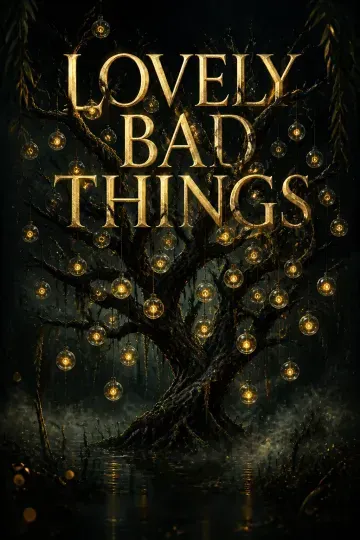
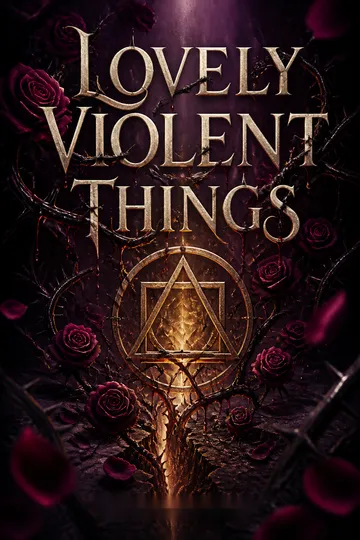
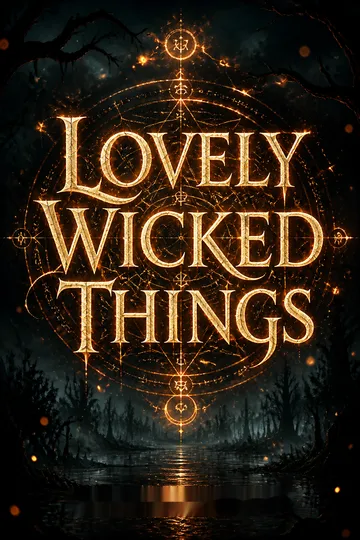
Hollow's Row Series
About the Author
Other books by Trisha Wolfe


Download PDF
Download EPUB
.epub digital book format is ideal for reading ebooks on phones, tablets, and e-readers.








































