
Plot Summary
Patterns in the Shadows
Gardner Camden, leader of the FBI's Patterns and Recognition (PAR) unit, sees the world through the lens of patterns—biological, mathematical, criminal. When a confidential informant, Freddie Pecos, is found murdered in his trailer, Gardner and his partner Shooter Harris are thrust into a case that quickly spirals from unemployment fraud to something far darker. The team's unique skills—Gardner's statistical mind, Shooter's forensic expertise—are tested as they navigate a world where every detail, from ATM withdrawals to the angle of a gunshot, could be a clue. The emotional detachment that makes Gardner brilliant also isolates him, but the stakes are personal: the safety of his team, his daughter, and the truth itself.
Burned Evidence, Broken Trust
With corrupt local cops closing in and the Sandoval gang on their heels, Gardner and Shooter make a fateful decision: destroy the crime scene by fire, erasing evidence and the body of their informant. The act severs trust with FBI leadership and raises ethical questions about the value of informants and the cost of justice. Gardner's logic-driven approach clashes with the emotional toll on his team, especially as the case's complexity deepens. The fire is both literal and symbolic—a line crossed, a case that can no longer be solved by conventional means. The team is left with only fragments: a million dollars in fraud, a dead informant, and a sense that the real threat is still lurking.
Ghost Guns and Dead Ends
The investigation pivots when evidence surfaces of a massive order for "ghost guns"—untraceable, privately made firearms—possibly from a major manufacturer. The implications are chilling: a domestic militia, led by the enigmatic J.P. Sandoval, is stockpiling weapons for an attack on law enforcement. Gardner faces pressure from FBI Director Poulton to deliver results, but the team is hamstrung by the loss of their informant and the shadowy nature of the threat. The ghost guns represent more than a criminal enterprise; they are a symbol of a new kind of violence, one that is both everywhere and nowhere, and the team must find a way to see the pattern before it's too late.
Family, Puzzles, and Pressure
As Gardner juggles the demands of the case, he also navigates the complexities of fatherhood and family. His daughter Camila's riddles and science projects mirror the puzzles he faces at work, while his mother's awakening from a coma brings hope and anxiety. The team's dynamic is tested by stress, secrets, and the ever-present threat of failure. Each member—Shooter, Cassie, Richie—brings their own strengths and vulnerabilities, and Gardner's leadership is both a source of stability and tension. The case becomes a crucible, forging bonds and exposing cracks, as the team races against time and their own limitations.
The New Informant Trap
With their first informant dead, the team sets their sights on Travis Wells, a minor player in Sandoval's operation. Through a carefully orchestrated sting, they manipulate local laws and exploit Wells's vulnerabilities, hoping to flip him before Sandoval's men can silence him. The operation is a high-wire act, blending surveillance, undercover work, and psychological pressure. But just as Wells is about to deliver the information they need, Sandoval's ruthlessness is revealed: anyone who knows too much is expendable. The team's reliance on informants becomes a double-edged sword, and the line between hunter and hunted blurs.
Undercover at Rotten Coconut
The team's undercover operation at the Rotten Coconut bar is a study in tension and improvisation. As they watch and wait for Wells to slip up, Sandoval himself arrives, exuding charisma and menace. The bar becomes a stage for power plays, betrayals, and a chilling demonstration of Sandoval's control: a suspected traitor is murdered in plain sight, drowned in a bathroom stall. The team is forced to confront the limits of their surveillance and the reality that their enemy is always one step ahead. The operation's failure is a blow to morale and a stark reminder of the stakes.
Sandoval's Ruthless Calculus
Sandoval's leadership is defined by a cold, data-driven approach to risk and loyalty. He eliminates threats with surgical precision, using fear and uncertainty as weapons. The team's attempts to infiltrate his operation are met with countermeasures and violence. Gardner recognizes in Sandoval a kindred spirit—someone who sees the world in probabilities and patterns—but without the constraints of empathy or law. The case becomes a battle of minds, with each side trying to outthink the other, and the team is forced to question their own methods and morals.
A Rookie's Breakthrough
Richie, the youngest member of PAR, makes a critical discovery: a mysterious figure seen with Freddie Pecos at an ATM just before his death. Using new AI-driven facial recognition, Richie links the figure to a composite from an unsolved serial murder case in Shilo, Florida. This breakthrough opens a new front in the investigation, connecting the gun case to a string of missing and murdered women. The team is forced to split their focus, chasing two cases that may be intertwined. Richie's intuition and persistence prove invaluable, but also put him in the crosshairs of a killer.
The Shilo County Three
The team travels to Shilo, where three women's bodies were found years earlier, their cases unsolved. Through interviews, forensic analysis, and pattern recognition, they begin to see the outlines of a serial killer who preys on marginalized women, using medical knowledge to evade detection. The killer's methods—burial patterns, surgical precision, manipulation of victims—suggest a chilling intelligence and a deep-seated need for control. The investigation is hampered by local politics, old grudges, and the killer's ability to blend in, but the team's determination is unwavering.
Digging for the Dead
Using forensic mapping, drone technology, and an understanding of soil chemistry, the team uncovers more bodies, expanding the scope of the serial killer's crimes. Each discovery is a blow to the community and a challenge to the team's resolve. The killer's signature—bodies wrapped in animal shrouds, surgical marks, and a focus on women with specific facial features—emerges as a pattern only Gardner and his team can see. The emotional toll mounts, especially as the team realizes that the killer may be hiding in plain sight, and that time is running out for his next victim.
The Serial Killer's Signature
The investigation uncovers the killer's obsession with facial reconstruction—practicing on victims to perfect his own appearance. The team pieces together his background: a failed medical student, a veterinary tech, a man with a fractured identity and a vendetta against those he perceives as having stolen his birthright. The killer's ability to change his face, his use of medical knowledge, and his manipulation of those around him make him a ghost in the system. The team's pursuit becomes personal, as Gardner is targeted and Richie is nearly killed by a drug overdose administered by the killer.
The Mother Awakens
Amid the chaos, Gardner's mother awakens from a coma, forcing him to confront his own vulnerabilities and the cost of his relentless pursuit of justice. Her recovery is a miracle, but also a reminder of the fragility of life and the importance of connection. Gardner's relationship with his daughter, his team, and his own sense of self are tested as he balances the demands of the case with the needs of his family. The emotional arc of the story deepens, grounding the procedural in the personal.
Two Cases, One Team
With the serial killer still at large and the gun case heating up, the team is forced to split, with Gardner and Cassie pursuing the gunrunners and Shooter and Richie chasing the killer. The cases intersect in unexpected ways, revealing a web of corruption, betrayal, and hidden agendas. The return of Frank, the team's former leader, brings both relief and tension, as old dynamics resurface and new alliances are forged. The team's ability to adapt, trust, and innovate is put to the ultimate test.
The Gunrunner's Gambit
The team tracks a shipment of weapons and ammunition destined for a house in Washington, D.C., intended for a militia attack. Through surveillance, undercover work, and a high-stakes chase, they narrowly avert disaster, uncovering a bomb plot that could have killed hundreds. The operation is a triumph of teamwork, intuition, and courage, but also a reminder of the ever-present threat of violence and the thin line between order and chaos. The political fallout is immediate, and the team's future hangs in the balance.
The Stingray and the Shut-In
Using advanced cell phone tracking ("stingray" devices) and psychological profiling, the team narrows in on the killer's identity: Donnie Dom, a man who has remade himself through surgery and murder, living as a shut-in in a wealthy Florida enclave. The final pieces fall into place as Gardner connects the killer's obsession with facial features, his medical background, and his connection to the victims. The team races to save the last potential victim, Amber Isiah, before it's too late.
The Face Behind the Mask
Gardner confronts Donnie Dom in his lair, discovering the killer's true face—both literally and metaphorically. The encounter is a battle of wits and wills, with Gardner restrained and facing death. The killer's motivations—envy, resentment, a desperate need to become someone else—are laid bare. In a final act of courage, Richie, newly recovered, arrives in time to save Gardner, ending the killer's reign of terror. The victory is hard-won, and the scars—physical and emotional—remain.
The Final Confrontation
The aftermath of the case brings both closure and new questions. The team is celebrated for their heroism, but the personal toll is evident. Gardner reconciles with his mother, finds new depth in his relationship with Cassie, and reflects on the meaning of justice, loyalty, and sacrifice. The team's future is uncertain, with leadership changes and the ever-present threat of new cases. But the bonds forged in crisis endure, and the story ends with a sense of hope, resilience, and the knowledge that, for now, the pattern has been broken.
Aftermath and Reckoning
In the wake of the investigation, the team grapples with the consequences of their actions—the lives saved, the lines crossed, the truths uncovered. Gardner's journey is one of growth, humility, and acceptance, as he learns to balance logic with empathy, and solitude with connection. The story closes with a sense of resolution, but also the awareness that evil adapts, patterns shift, and the work of justice is never truly done. The team stands ready, changed but unbroken, for whatever comes next.
Analysis
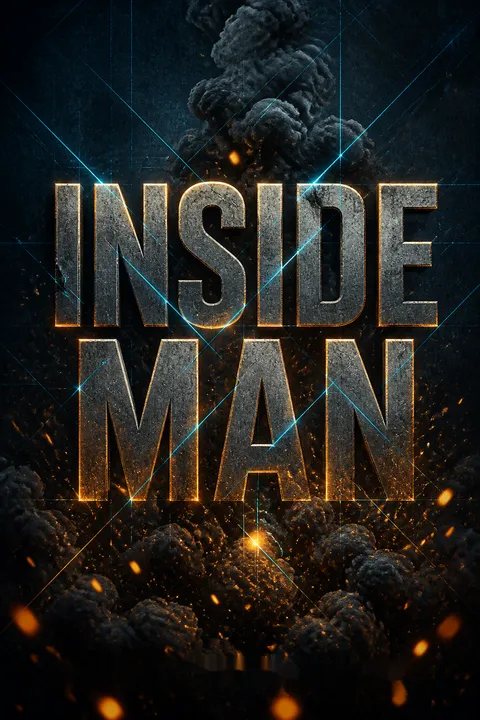
Inside Man is a masterful exploration of the intersection between logic and humanity, order and chaos, justice and its cost. John McMahon crafts a narrative that is both a gripping procedural and a profound meditation on the nature of evil, the limits of reason, and the necessity of connection. The novel's dual structure—two cases, one team—mirrors the duality within its characters: Gardner's struggle to balance intellect and emotion, the team's need for both data and intuition, the killer's desperate quest to become someone else. The story interrogates the ethics of law enforcement, the dangers of unchecked power, and the resilience of those who refuse to give up, even when the odds are against them. Ultimately, Inside Man is about the patterns that define us—those we inherit, those we create, and those we must break to become whole. It is a testament to the power of teamwork, the importance of empathy, and the enduring hope that, even in a world of darkness, the right people can make a difference.
Review Summary
Inside Man, the second book in John McMahon's Head Cases series, follows FBI Agent Gardner Camden and the PAR unit as they investigate two cases: a militia stockpiling weapons and a serial killer murdering women in Florida. Reviewers praised the fast-paced plot, intricate mysteries, and well-developed characters, particularly Camden's neurodivergent brilliance and social struggles. The audiobook narration by Will Damron received high acclaim. Most rated it 4-5 stars, appreciating the team dynamics and clever puzzle-solving. Some found the pacing slow initially or less engaging than the first book.
People Also Read





Characters
Gardner Camden
Gardner is the brilliant, neurodivergent head of the FBI's Patterns and Recognition unit. His mind is a machine for detecting anomalies, patterns, and statistical outliers, making him a formidable investigator but often an awkward human. Haunted by past mistakes—his wife's imprisonment, his mother's coma, the burden of fatherhood—Gardner struggles to connect emotionally, relying on logic and data to navigate a chaotic world. His leadership is both a strength and a liability, as he pushes his team to excel while sometimes missing their emotional needs. Gardner's arc is one of gradual self-acceptance, learning to value connection as much as cognition, and realizing that the greatest puzzles are often human.
Joanne "Shooter" Harris
Shooter is Gardner's partner and the team's forensic and firearms expert. Raised in Alaska, a former Olympic shooter, and ex-ATF agent, she brings a blend of gallows humor, physical courage, and deep technical knowledge. Shooter's emotional armor hides a fierce loyalty to her team and a willingness to cross lines for justice. Her relationship with Gardner is one of mutual respect and occasional exasperation, as she grounds his abstractions in reality. Shooter's journey is about finding purpose and belonging in a world that often misunderstands her, and her actions—especially the burning of the crime scene—highlight the moral ambiguities of law enforcement.
Cassie Pardo
Cassie is the team's mathematician and data analyst, specializing in "unknowable numbers" and creative problem-solving. Her warmth, humor, and emotional intelligence balance Gardner's detachment, and her partnership with him is both professional and potentially romantic. Cassie's ability to see connections others miss, her mentorship of younger agents, and her resilience in the face of trauma make her indispensable. She struggles with the boundaries between work and life, and her arc is one of self-discovery, courage, and the pursuit of meaning in chaos.
Richie Brancato
Richie is the youngest member of PAR, a legacy agent with a famous grandfather and a burning desire to prove himself. His fresh perspective, tenacity, and willingness to question assumptions lead to critical breakthroughs in the case. Richie's vulnerability—his near-fatal overdose, his feelings of inadequacy—make him relatable and human. His relationship with Gardner is both mentor-mentee and brotherly, and his arc is about finding his place, surviving trauma, and emerging as a true equal in the team.
Frank Roberts
Frank is the former head of PAR, a profiler with deep experience and a talent for managing misfits. His return to the team brings stability, wisdom, and a reminder of the importance of community. Frank's humility, willingness to admit mistakes, and ability to see the best in others make him a counterpoint to Gardner's logic. His arc is about letting go, trusting the next generation, and finding meaning in service.
J.P. Sandoval
Sandoval is the mastermind behind the gunrunning operation, a man who combines charm, intelligence, and a chilling willingness to kill. His leadership is based on fear, data, and a cult-like devotion from his followers. Sandoval's ability to anticipate threats, eliminate traitors, and manipulate systems makes him a formidable adversary. He is a mirror to Gardner—brilliant but amoral—and his downfall is a testament to the power of teamwork and conscience.
Donnie Dom / El Médico
Donnie Dom is the serial killer at the heart of the Shilo case, a man obsessed with remaking himself through surgery and murder. His fractured identity, envy of his half-brother, and medical knowledge make him both invisible and deadly. Donnie's need to become someone else, his manipulation of victims, and his ability to evade detection are rooted in deep psychological wounds. He is both a product of neglect and a creator of horror, and his confrontation with Gardner is the story's emotional and moral climax.
Camila Camden
Camila is Gardner's young daughter, a source of riddles, puzzles, and emotional grounding. Her intelligence, curiosity, and resilience mirror her father's, but she also represents the possibility of connection and healing. Camila's presence in the story humanizes Gardner, reminding him—and the reader—of what is at stake beyond the case.
Craig Poulton
Poulton is the FBI Director, a man more skilled at navigating bureaucracy and optics than at fieldwork. His relationship with Gardner is fraught—he values results but is wary of unconventional methods. Poulton's decisions drive much of the team's stress, and his arc is about learning to trust the misfits when the stakes are highest.
Amber Isiah
Amber is the sister of one of the killer's victims, living under an assumed identity to escape his reach. Her testimony, courage, and vulnerability provide key insights into the killer's methods and psychology. Amber's arc is one of survival, guilt, and ultimately, empowerment, as her story helps bring the killer to justice.
Plot Devices
Dual Narrative Structure
The novel employs a dual narrative structure, with the team pursuing both a gunrunning/militia case and a serial killer investigation. This structure allows for thematic resonance—patterns of violence, the limits of logic, the cost of justice—while building suspense as the cases intersect. The split focus tests the team's cohesion and Gardner's leadership, and the eventual convergence of the cases delivers a powerful payoff.
Pattern Recognition and Statistical Analysis
Gardner's reliance on patterns, probabilities, and data is both his superpower and his blind spot. The narrative uses his analytical approach to drive the investigation, but also to explore the limits of logic in the face of human unpredictability. The story's structure mirrors this, with clues hidden in plain sight, red herrings, and the ultimate revelation that some patterns are only visible in hindsight.
Foreshadowing and Symbolism
The novel is rich in foreshadowing—Camila's riddles, the burned evidence, the killer's surgical marks, the missing serial numbers—all point to deeper mysteries. Symbolism abounds: fire as both destruction and cleansing, masks as both disguise and revelation, and the recurring motif of faces—seen, remade, erased—underscores the theme of identity.
Psychological Profiling and Character Mirrors
The use of psychological profiling, both as a tool for the team and as a narrative device, allows for deep exploration of motive, trauma, and the nature of evil. Gardner and Sandoval, Gardner and Donnie Dom, are mirrors—each defined by their relationship to logic, empathy, and the need to be seen. The killer's obsession with faces and transformation is a metaphor for the masks we all wear.
Technology and Modern Policing
The story integrates cutting-edge investigative tools—AI facial recognition, stingray cell tracking, forensic drones—highlighting both the power and the fallibility of modern policing. The tension between human intuition and technological surveillance is a recurring theme, as is the danger of overreliance on systems that can be gamed or broken.
Moral Ambiguity and Ethical Dilemmas
The team's actions—burning evidence, manipulating informants, crossing legal lines—raise questions about the price of justice and the boundaries of right and wrong. The narrative structure forces the reader to confront these ambiguities, refusing easy answers and emphasizing the complexity of real-world investigations.
Download PDF
Download EPUB
.epub digital book format is ideal for reading ebooks on phones, tablets, and e-readers.








































