


Plot Summary
A Stranger Wearing Her Name
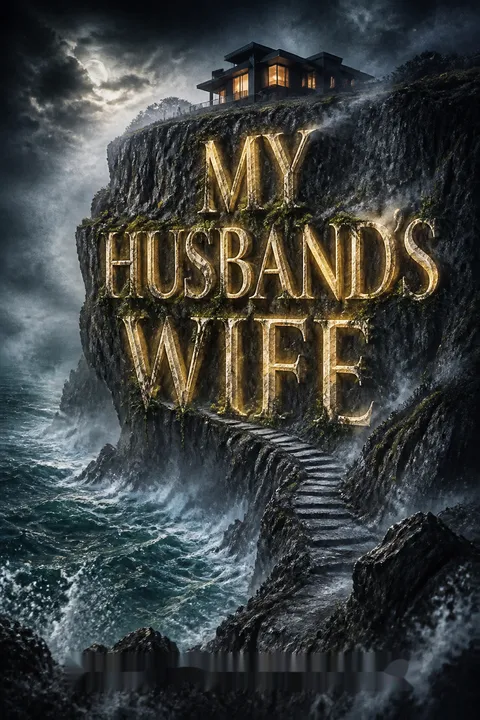
After her evening run through Hope Falls, Eden2 approaches the front door of Spyglass — the Cornish cliffside house she and Harrison3 recently renovated — and finds her key won't turn. A woman answers: long blond hair, wearing Eden's2 black velvet dress, her perfume, her wedding rings.
She introduces herself as Eden Fox. Harrison3 appears behind the impostor,5 wraps a protective arm around her, and tells the real Eden2 he doesn't know her. Then he slams the door in her face. Eden2 pounds the wood until her fists ache. Nobody answers.
She has no phone, no wallet, no ID — everything is inside the house she has been locked out of. When a police car arrives, she crouches in the shadows and watches her husband3 calmly lie to the young officer, describing his own wife as a confused, threatening stranger.
The Grandmother Who Died Twice
Six months before Eden's2 nightmare, a woman named Olivia Bird — Birdy1 — lies in a hospital gown awaiting an MRI. She is forty, tattooed, fiercely alone, and terrified. The scans confirm the worst: multiple tumors, terminal.
That same week, a solicitor informs her that a grandmother she never knew has died, leaving her a house called Spyglass in Hope Falls — the Cornish village where Birdy1 was born, where her mother killed herself when Birdy1 was ten. She travels to Cornwall and finds a house haunted by memories she didn't know she had: decades of unopened Christmas cards addressed to her, a childhood photo on an old woman's lap.
Carter,4 the young local sergeant, tells her the grandmother's legend: buried alive at eighteen during wartime, she woke when grave robbers sliced her finger, and walked home to Spyglass.
Your Deathday Is Confirmed
Among her grandmother's mail, Birdy1 discovers a black envelope from a company called Thanatos claiming it can predict a person's exact date of death. Her grandmother received a prediction two weeks before dying — on precisely that date.
Birdy1 calls the number, uses her grandmother's invitation — they share the name Olivia Bird — and visits a sleek Harley Street clinic staffed by unnervingly perfect people. They draw her blood, scan her body, clip her nails, scan her fingerprints. A doctor who seems to know everything about her asks why she wants to know when she'll die.
The next day, a hand-delivered letter arrives with her predicted death date: November 2, 2025. She has roughly six months. Whether it is real science or elaborate fraud, Birdy1 resolves to use the remaining time to see the person she hurt most.
Every Trace of Eden Removed
Carter4 takes Eden2 to the Hope Falls police station, but nothing she says convinces him. She has no ID, no phone, no social media presence. An Instagram account under her name shows the impostor's5 face alongside photos of Eden's2 own paintings and home. Carter4 plans to transfer her to a larger station.
In desperation, Eden2 calls Harrison's3 number — which she knows by heart — from Carter's4 phone. Harrison3 denies knowing her voice and hangs up. Eden2 steals Carter's4 car keys, throws them in the harbor, then smashes the back door at Spyglass.
Every trace of her has been erased: no passport, no photos, no laptop. She grabs spare car keys and cash, hears a creak on the landing, then tumbles down the staircase — whether tripped or pushed, she cannot tell. Carter4 finds her bleeding, goes upstairs for towels, and she escapes in her Range Rover.
She Is Not My Mother
Eden2 drives through the night to The Manor, an exclusive care facility in Blackmoor National Park where Gabriella6 — Harrison's3 eighteen-year-old daughter — has lived for six months. Gabriella6 hasn't spoken since a childhood accident at age eight; Eden2 was her full-time carer for a decade before placing her here.
A night staffer lets Eden2 in without checking ID. The walls of Gabriella's6 room are covered in exquisite paintings of Spyglass — a house the girl has never visited. When the light clicks on, Gabriella6 sits up, stares at Eden,2 and shakes her head.
Then the girl who hasn't uttered a word in ten years whispers five: she is not my mother. Eden2 flees. Her electric car dies somewhere on the moor. A burner phone in the glove compartment buzzes with a text: meet at our special place at sunrise. Signed with Harrison's3 pet phrase.
Through the Waterfall
Eden2 runs through dawn mist to the cliff above Hope Falls, past the waterfall that gave the village its name, past the suicide hotline poster she always averted her eyes from. Harrison3 isn't there. She waits, pulling off the cashmere sweater covered in stars, dropping it on the ground. There is no phone signal. She steps back from the edge, suddenly uneasy, deciding to leave.
Then she hears footsteps on the path behind her. Seconds later she is falling — through the waterfall, her body twisting, spinning — until she smashes onto the rocks below. The pain is enormous and brief. Her final thought is that true love kills. Nobody saw who was on the path. Nobody heard her scream over the crashing sea.
The Detective Nobody Hired
That same morning, Birdy1 strolls into the Hope Falls police station with her Siberian husky10 and two cups of coffee, announcing herself as DCI Olivia Bird — Carter's4 new senior detective. Carter's4 face cycles through shock, panic, and mortification: this is the woman he slept with at Spyglass six months ago, the one who swore she'd never return.
She commandeers the investigation into Eden's2 disappearance instantly, mocking Carter's4 tape recorder and establishing her office at The Smuggler's Inn.
Carter4 already interviewed Harrison,3 who reported a disturbed woman claiming to be his wife; now Birdy1 reads the transcripts and picks them apart. She questions everything — Harrison's3 calm, the gallery owner's9 story, Carter's4 handling of the case — while privately calculating whether the body that will soon wash ashore is really Eden's.2
No Face, No Name
Diana Harris,9 the gallery owner, discovers a woman's body on Blackwater Bay while swimming after lunch. The corpse is face down in the sand, long blond hair plastered to its skull. When Birdy1 rolls it over, there is no face — just shattered bone and tissue, teeth gone, impossible to identify.
Carter4 vomits on the sand. Earlier, while walking Birdy's dog10 on the same beach, he spotted a distant figure who vanished into the cliff face — someone he suspects was Harrison.3 The forensics team arrives and processes the scene.
Eventually the DNA sample from the hairbrush Birdy1 collected at Spyglass returns: it doesn't match the body. The mismatch baffles Carter,4 who doesn't understand why. Birdy1 acts equally puzzled, though her expression betrays something closer to satisfaction than surprise.
The Husband Behind the Algorithm
While reading Carter's4 interview transcript at the pub, Birdy1 freezes at one line: Harrison3 tells Carter4 he is CEO of a pharmaceutical-tech company called Thanatos. The same company that handed Birdy1 her death date. She closes her laptop, grabs the table for balance, and swallows pills to manage a wave of pain she hides from everyone.
When she and Carter4 visit Spyglass to question Harrison,3 Birdy1 presses him about the company. He deflects smoothly, calling it research focused on human frailty.
She doesn't reveal her personal connection but catalogs details Carter4 misses: freshly laundered bedsheets, a medicine cabinet stocked with pills, and painted-over bookcases that violate the house's ancient preservation covenant. Harrison3 cooperates just enough to seem innocent. His first real lie, Birdy1 notes, is claiming he has nothing to hide.
The Village's Eden Was a Fraud
Carter4 defies Birdy's1 explicit orders and drives to The Manor at dawn. He finds Gabriella6 painting Spyglass — a fox on one side, a wolf on the other. She won't acknowledge him. Then a woman in a white uniform enters, her name badge reading Mary.
Carter4 recognizes her face instantly: she is the woman the entire village knew as Eden Fox,2 who gave the gallery speech, whom Harrison3 embraced on the doorstep. Gabriella6 whispers a fractured warning — run rabbit, run — and the woman5 bolts. Carter4 chases her through the dining room and into the grounds.
She nearly runs him over with a red Mini. The realization hits him like the car almost did: the real Eden2 was telling the truth. The woman everyone believed was Harrison's3 wife was someone else entirely. Birdy1 suspends Carter4 for disobeying orders, but his discovery has changed everything.
The Wife Carter Never Mentioned
Birdy1 learns from Carter's sister Maddy8 that Carter4 is married — a fact he never disclosed before sleeping with her again. Furious and suspicious, she arrives at his cottage for a dinner his wife Jane7 has innocently arranged.
Over homemade lasagna, with baby Steren asleep upstairs, Carter4 presents his findings: Mary Kendall's5 employment file from The Manor includes a photograph identical to the woman the village called Eden Fox.2 The real Eden2 — the woman Carter4 arrested for trespassing — had been telling the truth all along.
Mary,5 a care worker who formerly served Birdy's1 grandmother at Spyglass, had impersonated Eden around Hope Falls for weeks while Harrison3 orchestrated the deception. Carter4 also produces Eden's silver key chain, found on the cliff. The evidence now points toward conspiracy, and Birdy1 agrees they must confront Harrison3 that night.
Cuffed in His Own Hallway
During the Day of the Dead parade — villagers in skeleton masks carrying torches through the streets — Birdy1 and Carter4 climb the hill to Spyglass. Two packed suitcases sit at the bottom of the stairs and Mary's5 red Mini is in the driveway; Harrison3 was minutes from fleeing the country.
The confrontation escalates: Harrison3 insults Carter,4 Carter4 threatens to re-interview Gabriella,6 and Harrison3 lunges at him. A text from the coroner arrives mid-argument — DNA results are inconclusive, the body still unidentified.
Harrison3 claims vindication, but Birdy1 cuffs him anyway for intimidation and obstruction. She sends Carter4 outside. When he discovers a secret door behind the library bookcases and steps into a hidden tunnel carved through the cliff, someone strikes him from behind. His world goes black.
The Mother Who Caused the Crash
Carter4 wakes bleeding in a pitch-dark tunnel beneath Spyglass. Birdy1 sits on the other side of the locked door and confesses everything. She is Harrison's3 first wife. Gabriella6 is her biological daughter.
Ten years ago, Birdy1 was driving the police car that struck Gabriella's6 bike — but Eden,2 their nanny, had already pushed the child down a staircase and staged the scene to look like a road accident. Eden2 called Birdy's1 phone to distract her at the wheel, then let the world blame the detective-mother for a decade.
When Gabriella6 finally whispered the truth at The Manor, Birdy,1 Harrison,3 and Mary5 planned revenge: gaslight Eden, erase her identity, lure her to the cliff. Birdy1 was supposed to push her but arrived to find Eden2 already gone. Now she offers Carter4 a deal — his family's pub returned, mortgage erased — for silence. Then she swallows a lethal dose of pills.
The Woman Who Died Twice
Carter4 follows the sound of the sea through the tunnel, emerges at Blackwater Bay where the Day of the Dead bonfire still smolders, and sprints back through the village to Spyglass. He finds Birdy1 collapsed on the library floor, her pulse gone.
He begins CPR — breathing into her mouth, pounding her chest — begging her not to die on the date some company predicted. He tells her she has something to live for now: her daughter.6 Birdy1 is clinically dead for seven minutes before the paramedics revive her, mirroring her grandmother who once woke in her own coffin.
In the hospital, doctors discover something inexplicable: her tumors are shrinking. Whether the sea air, the second chance, or sheer stubbornness is responsible, Birdy1 — like the woman who died twice before her — is going to live.
Epilogue
One year later, Birdy1 lives at Spyglass with Sunday,10 running at dawn, her cancer in remission. Carter4 was promoted; his parents run The Smuggler's Inn8 again. Harrison3 moved to Switzerland with Mary.5 Gabriella6 visits her mother monthly — still whispering, still painting, still locking doors from inside.
When Birdy1 returns from her run and her key sticks, the door opens from within: Gabriella,6 grinning in her mother's clothes, mirroring the nightmare that started everything — except this time the stranger behind the door is family.
But the story's final truth belongs to the most invisible character. Jane Carter7 confesses silently — to the reader alone — that she was the one on the cliff path that morning. She had watched Eden2 kiss her husband4 through the station window. She pushed Eden2 off the edge. Nobody knows. Jane7 is still watching.
Analysis
My Husband's Wife operates as a hall of mirrors where every reflection is someone else's lie. At its structural core, the novel asks whether knowing your death date would improve your life — then systematically demonstrates that the answer is always catastrophic. Harrison3 built Thanatos to predict death, but the algorithm couldn't predict his own heart attack. Birdy1 received her deathday and used it to justify conspiracy and suicide. The company's existence embodies the hubris of treating mortality as a solvable equation: even God-level knowledge, Feeney suggests, cannot improve human nature.
The novel's identity-theft architecture transcends plot mechanics into a meditation on who owns a life. Eden2 isn't erased through technology but through social consensus — her husband, her neighbors, even the police simply agree she doesn't exist, and she vanishes. The book argues that identity is less a matter of documentation than of communal agreement: you are whoever the people around you decide you are. Strip that consensus away and a person becomes a ghost while still breathing.
Motherhood functions as the novel's moral battlefield. Three women — Birdy,1 Eden,2 and Mary5 — each claim maternal authority over Gabriella,6 and each claim is simultaneously legitimate and corrupt. Birdy1 abandoned her daughter out of guilt; Eden2 exploited caregiving to destroy a child; Mary5 commodified devotion into a transactional relationship. The novel refuses to crown any as the real mother, suggesting instead that the title belongs to whoever shows up — flawed, selfish, years too late, but present.
The final twist delivers the book's sharpest thesis. In a story engineered by masterminds and investigated by professionals, the decisive act of violence comes from Jane Carter7 — the woman in dungarees and animal slippers whom every character dismisses as unremarkable. Feeney's argument hides in plain sight throughout: the most dangerous person in any room is never the one you're watching. It's always the one you've decided doesn't matter. People always suspect the husband, but sometimes it's the wife.
Review Summary
My Husband's Wife by Alice Feeney receives overwhelmingly positive reviews (4.33/5), with readers praising its relentless twists and gripping premise. The story follows Eden Fox, who returns from a run to find another woman claiming to be her, while her husband confirms the stranger's identity. Six months earlier, Birdy inherits the estate Spyglass after a terminal diagnosis. Reviewers celebrate Feeney's mastery of unreliable narrators, atmospheric Cornish setting, and shocking revelations. The audiobook's full-cast narration and sound effects enhance immersion. Some note the plot becomes convoluted or implausible, but most find it unputdownable and thrilling.
People Also Read

Characters
Birdy (Olivia Bird)
Tattooed detective with a death clockA forty-year-old former Metropolitan Police detective, Birdy is brilliant, acerbic, and profoundly alone. She lives above a London bookshop with her Siberian husky Sunday10—her only companion. Beneath her armor of tweed jackets and brutal wit lies a woman consumed by guilt over a catastrophic event from her past, one she believes destroyed everything she loved. She stopped drinking and driving after that event and retreated into obsessive work, becoming one of London's most decorated detectives while maintaining zero personal relationships. A terminal cancer diagnosis forces her to confront what she has been running from. Her return to Hope Falls—the village where she was born and where her mother died—represents both a reckoning with her origins and an attempt at redemption before time runs out.
Eden Fox
The wife no one believesHarrison's3 wife, a talented painter of seascapes who married young and spent a decade as full-time carer for her stepdaughter Gabriella6. Painfully shy and socially isolated, Eden has no friends, no social media presence, and no identity beyond being a wife and mother. She runs every evening—her only escape from a marriage grown distant and a life that swallowed her ambitions whole. Moving to Hope Falls was supposed to be her fresh start; her first art exhibition, a reclamation of self. Eden is trusting, earnest, and dangerously invisible: she has spent so long being defined by her roles that when those roles are stripped away, she discovers there is almost nothing left to prove she exists at all.
Harrison Woolf
CEO selling the science of deathA self-made CEO in his early fifties, Harrison built the pharmaceutical-tech company Thanatos from nothing, fueled by a childhood of neglect and his mother's relentless emotional cruelty. Behind tailored Armani suits and a commanding presence lies a man haunted by his failures as a father. His daughter Gabriella6 is his greatest love and deepest regret—he believes he failed her when it mattered most. Harrison is ambitious to the point of obsession, brilliant at manipulation, and genuinely convinced that knowing when you will die could transform the world. He married Eden2 when she was barely twenty, keeps a flat in London for work, but his emotional center has always been his daughter6. His need for control is both his driving force and his most destructive trait.
Carter (Luke Carter)
Lovesick sergeant out of his depthThe twenty-eight-year-old police sergeant of Hope Falls, Carter is earnest, handsome, and naïve about the depth of darkness people contain. Born in the village pub, he has never left Hope Falls and treats the place like sacred ground. Beneath his Boy Scout demeanor lies a man trapped by duty: obligations he didn't choose, a career stuck in neutral, and a fierce desire to prove himself as more than a scenic face in a uniform. Carter's instincts are sharper than anyone credits, including himself. He craves mentorship and validation, which makes him dangerously susceptible to authority figures—especially charismatic ones. His greatest strength is dogged loyalty; his most destructive flaw is romantic impulsiveness that consistently overrides his judgment.
Mary Kendall
The carer who wanted the houseA care worker with long blond hair and a talent for earning trust. Mary spent two decades as a live-in carer at Spyglass before working at The Manor, where she bonds closely with Gabriella6. Patient and adaptable, she excels at making herself indispensable to the families she serves—but beneath her helpful exterior lies a woman with deep grievances about what she believes she is owed after years of devoted, invisible labor.
Gabriella Woolf
Silent daughter trapped in timeHarrison's3 eighteen-year-old daughter who has not spoken since an accident at age eight left her with selective mutism. Trapped inside herself, she perceives the world as the child she was when time froze. She expresses herself exclusively through painting—exquisite watercolors of a house she has never visited. Beautiful, intelligent, and far more aware of her surroundings than anyone suspects, Gabriella is the story's most important witness and its most unpredictable variable.
Jane Carter
The overlooked wife who watchesCarter's4 wife, a young mother who married him after an unplanned pregnancy. Dressed in denim dungarees and animal slippers, Jane appears unremarkable and is consistently underestimated by everyone she meets—dismissed as a plain woman with a handsome husband. She is fiercely protective of her family, far more observant than her humble exterior suggests, and quietly furious about threats to the domestic life she has built through sheer determination.
Maddy Carter
Carter's pub-running sisterCarter's4 older sister and barmaid at The Smuggler's Inn, the pub where they grew up. Fiercely protective of her brother, sharp-witted, and deeply rooted in Hope Falls village life.
Diana Harris
Gallery widow seeking husband fourOwner of the Saltwater Gallery who hosted Eden's2 exhibition. Outlived three husbands, rumored to stir their ashes into her tea. Currently eyeing Harrison3 as a potential fourth.
Sunday
Birdy's husky, her only familyBirdy's1 Siberian husky, found abandoned as a puppy outside a bookshop. Her most loyal companion and emotional anchor, Sunday mirrors Birdy's1 own history of being discarded.
Old Stu
Unreliable dawn dog walkerAn elderly Hope Falls villager who walks his dog at sunrise. The last person to see someone running toward the cliffs, though his memory proves inconsistent under repeated questioning.
Plot Devices
Thanatos
Predicts your date of deathHarrison Woolf's3 pharmaceutical-tech company, named after the Greek god of death, which claims to predict the exact date a person will die. Built from years of DNA research, AI algorithms, and data harvested from online health questionnaires, Thanatos operates through an invitation-only Harley Street clinic staffed by actors posing as medical professionals. Harrison3 watches each session remotely, directing the performers through earpieces. The company targets vulnerable populations—the elderly and terminally ill—offering certainty in exchange for intimate personal data. Thanatos drives the plot on multiple levels: it accurately predicted Birdy's1 grandmother's death, gave Birdy1 her own death date of November 2, and connects Harrison3 to every thread of the conspiracy. However, the algorithm is imperfect—Harrison3 couldn't predict his own heart attack—making its predictions equal parts science and psychological manipulation.
Spyglass and Its Tunnels
The house connecting all secretsA sixteenth-century house built into the cliffs above Hope Falls, with curved white walls and oversized windows shaped like eyes. Originally owned by the Bird family for over a century, Spyglass passed from Birdy's1 grandmother to Birdy1, then was sold to Harrison3 and Eden2. Every major character's fate intersects within its walls. Behind the library's antique bookcases—protected by a centuries-old preservation covenant—lies a hidden door leading to a network of tunnels through the cliff, emerging at Blackwater Bay. Harrison3 discovers these tunnels and uses them to reach the beach undetected. The house functions as a physical embodiment of the novel's architecture: secrets concealed behind beautiful facades, identities hidden behind locked doors, and the past literally buried within the walls of the present.
The Identity Swap
Mary erases the real wifeThe central mechanism of the conspiracy. Mary Kendall5—who spent twenty years caring for Birdy's1 grandmother at Spyglass—is recruited to impersonate Eden Fox2 around Hope Falls. With similar blond hair and build, Mary5 visits the bakery, befriends the gallery owner9, creates an Instagram account under Eden's2 name, and introduces herself to the village as Harrison's3 wife over several weeks. The real Eden2 remains at home renovating, never meeting the neighbors herself. When the plan activates, Eden's2 locks are changed, her possessions claimed, and the village unanimously confirms the impostor5 as the real Eden Fox2. The swap weaponizes social consensus: identity, the novel argues, belongs not to the person who holds it but to whoever the surrounding community agrees it belongs to.
The Day of the Dead Festival
Annual parade that hides killersAn annual tradition in Hope Falls held on November first. Villagers paint their faces as skeletons, don costumes and masks, then carry flaming torches in a procession from the church to Blackwater Bay, where they burn a boat commemorating the Serendipity—a ship found abandoned in 1878 with a full dinner set but no crew. The festival provides crucial cover for the story's climactic night: costumed revelers flood the streets while Birdy1 and Carter4 confront Harrison3 at Spyglass, Harrison3 attempts to flee with Mary5, and the identity of anyone moving through Hope Falls becomes impossible to verify beneath masks and face paint. The tradition also provides thematic resonance—a village that ritually remembers the dead becomes the stage for determining who among the living deserves to join them.
The Burner Phone and Key Chain
The trap that lures Eden to dieTwo objects planted by Harrison3 to control Eden's2 movements after the identity swap. The burner phone, hidden inside a plastic bag in Eden's2 Range Rover's glove compartment, carries a GPS tracker. When Eden's2 electric car dies in Blackmoor after fleeing The Manor, the phone delivers a text mimicking Harrison's3 affectionate language: meet at their special place at sunrise. The key chain—engraved with Eden's2 name on one side and the words love you to the moon and back on the other—was a genuine gift from Harrison3 when they bought Spyglass. Eden2 carries it as proof of her identity, but it ultimately becomes evidence found at the cliff edge, confirming she was there before she fell. Together, these objects form the closing mechanism of a trap designed to look like a suicide.
About the Author
Other books by Alice Feeney



Download PDF
Download EPUB
.epub digital book format is ideal for reading ebooks on phones, tablets, and e-readers.








































