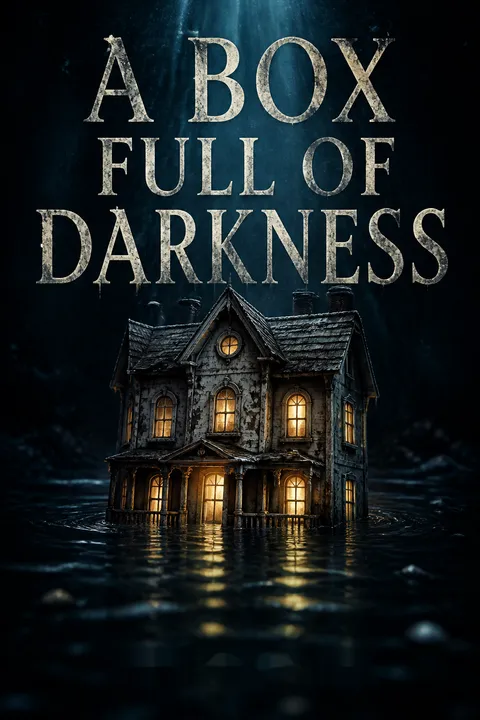

Plot Summary
Nightmares and Old Houses
Violet, a woman with a troubled past and a unique ability to see the dead, works as a cleaner of deceased people's homes. Her life is marked by estrangement from her daughter, Lisette, and a history of mental illness. When a landscaper calls about her family's long-abandoned house in Fell, New York, reporting the apparition of a little boy who says, "Come home," Violet is forced to confront the trauma of her childhood: the mysterious disappearance of her younger brother, Ben. The call stirs up old fears and unresolved grief, compelling Violet to return to the house she and her siblings have avoided for nearly two decades. The darkness of her past, both literal and metaphorical, begins to stir, and she senses that the time has come to face what happened to Ben.
The Siblings Reunite
Violet contacts her brother Vail, a former diver turned UFO investigator, and her sister Dodie, a model in New York. Each sibling is haunted by their own failures and the shadow of Ben's disappearance. Vail, living in isolation, is drawn back by the news of Ben's ghost, while Dodie, drifting through shallow relationships, is shaken by the call to return. The three siblings, each damaged in their own way, converge on the decaying family home in Fell. Their reunion is awkward, laced with old resentments and the weight of shared trauma. Yet, beneath the surface, there is a current of loyalty and love, forged by the pain of their upbringing and the loss of their brother.
Ben's Call Home
The siblings settle into the house, each taking their childhood rooms. The atmosphere is thick with memories and the sense of something unfinished. Violet, who has always seen ghosts, is especially attuned to the house's oppressive energy. The siblings are drawn together by the urgency of Ben's message—his ghost has been seen, and he is calling them home. The house itself seems to pulse with anticipation, as if waiting for them to uncover its secrets. The siblings begin to sense that Ben's disappearance was not just a family tragedy, but something darker and more mysterious, rooted in the very fabric of the house and the land it stands on.
Ghosts in the Attic
As the siblings explore the house, they encounter strange phenomena: toys in the attic are rearranged, marbles roll across the floor, and the air is thick with the presence of the past. Violet sees apparitions, while Vail and Dodie experience vivid dreams and waking nightmares. The attic, once a repository for Ben's toys, becomes a focal point for the haunting. The siblings realize that Ben's spirit is not at rest, and that the house is a nexus for restless souls. The attic's contents—old games, a wooden horse, a bag of marbles—become clues in the unraveling mystery, each object resonating with the energy of loss and longing.
The Unwelcome Inheritance
The siblings confront the legacy of their parents: neglect, alcoholism, and emotional abandonment. Violet's ability to see the dead is both a gift and a curse, isolating her from others and marking her as unstable. Dodie's beauty and charm mask a deep sense of inadequacy, while Vail's obsession with UFOs is a way to impose order on chaos. As they sift through the detritus of their childhood, they begin to suspect that Ben's disappearance was not an isolated event, but part of a pattern of darkness that has plagued the family for generations. The house, with its locked rooms and hidden corners, becomes a symbol of the secrets they have inherited.
Secrets in the Woods
Vail and Dodie venture into the woods behind the house, searching for clues. They discover that the land once belonged to the Whitten family, whose history is marked by tragedy and loss. Old graves are hidden among the trees, and the sense of being watched is palpable. The siblings realize that the haunting is not confined to the house, but extends to the land itself. The woods are a place of both memory and menace, where the boundaries between past and present blur. The discovery of the Whitten graves hints at a deeper connection between Ben's fate and the history of Fell.
The Police File
Violet seeks out the old police file on Ben's disappearance, aided by Bradley Pine, a former high school crush turned reluctant ally. The file is thin, filled with speculation and suspicion. The police had considered the siblings as possible suspects, noting Violet's "sickness" and the family's isolation. There are no photos of Ben, no school or medical records, and no one outside the family can describe him. The lack of evidence is chilling, suggesting that Ben was a ghost even in life—a child who existed only within the walls of the house. The file raises more questions than it answers, deepening the siblings' sense of unease.
The Past Awakens
The haunting intensifies. Violet is attacked by a malevolent presence she calls "Sister," a figure from her childhood nightmares. Dodie and Vail experience visions and physical manifestations: wet footprints, moving objects, and voices in the dark. The siblings realize that they are not just dealing with Ben's ghost, but with something older and more dangerous. The house becomes a battleground between the living and the dead, and the siblings are forced to confront the possibility that the evil haunting them is rooted in the land's history—a legacy of violence and betrayal that predates their family.
Footprints and Messages
Ben's ghost leaves wet footprints in the hall, leading the siblings to the attic and to hidden messages scrawled on the walls: "WAKE UP." The words are both a warning and a plea, urging the siblings to see the truth of what happened. Sister's attacks become more violent, targeting Violet and threatening Lisette when she arrives unexpectedly. The siblings piece together the clues: Ben is trying to communicate, to lead them to the real story of his death. But Sister, the embodiment of the house's darkness, is determined to stop them, using fear and violence to keep the past buried.
The Attic's Toys
In the attic, the siblings find objects that don't belong: a wooden horse, a bag of marbles stamped with a date from the 19th century, and an old children's book inscribed to "Edward Whitten, from his sister Anne." These artifacts point to a much older tragedy. The siblings realize that Ben was not their biological brother, but the reincarnation—or ghost—of a child who died in the house nearly a century earlier. Anne Whitten, his sister (and possibly his mother), drowned him in a fit of rage and despair. The house has been haunted ever since, trapping the spirits of the lost and the guilty.
The Whitten Legacy
Research at the local college and in the town's archives reveals the full story of the Whitten family: a lineage marked by misfortune, madness, and early death. Anne, disgraced by an illegitimate pregnancy, was forced to pass her son Edward off as her brother. Consumed by shame and resentment, she killed him and later took her own life. The land, once the Whitten estate, is dotted with unmarked graves and carries the weight of their suffering. The siblings understand that the darkness in their family was not unique, but part of a cycle of pain that began long before they were born.
Sister's Shadow
Sister, the vengeful spirit of Anne Whitten, is the true antagonist. She has haunted the house for generations, feeding on the fear and misery of its inhabitants. Her power is greatest at night, when she can physically attack and possess the living. The siblings realize that to free Ben—and themselves—they must confront Sister directly. The final confrontation takes place in the flooded basement of the abandoned house across the street, where Anne drowned Edward. Armed with weapons and the knowledge of the past, the siblings face Sister in a battle that is as much psychological as it is physical.
The Real Beginning
In the darkness and cold water of the basement, the siblings fight Sister, who tries to drag them under as she did Edward. Each sibling faces their own fears and guilt, but together they manage to overpower her. Violet, with the help of her daughter Lisette, delivers the final blow, severing Sister's hold on the house and the land. The act is both violent and cathartic, breaking the cycle of haunting that has plagued the family for generations. Ben's spirit is finally freed, and the siblings are left to pick up the pieces of their lives.
The Neighbor's Graveyard
After the confrontation, Dodie discovers the Whitten family graveyard hidden in the woods behind the house. The graves of Anne and Edward are there, along with those of other family members. The siblings realize that the land itself is a palimpsest of grief and loss, and that their own suffering is part of a much larger story. By tending the graves and acknowledging the past, they begin the process of healing—not just for themselves, but for the restless spirits of Fell.
The Unraveling
With Sister gone and Ben at peace, the siblings are finally able to move on. Violet starts a new life in Vermont, running her own business and rebuilding her relationship with Lisette. Dodie returns to New York, finding love and a sense of belonging she never thought possible. Vail stays in Fell, renovating the family home and tending the Whitten graves. Each sibling carries the scars of their past, but they are no longer defined by it. The house, once a place of terror, becomes a place of memory and quiet redemption.
The Final Confrontation
The siblings' victory over Sister is hard-won and costly. The battle in the basement is a crucible, forcing each of them to confront their deepest fears and regrets. The experience binds them together in a way that nothing else could. They emerge from the darkness changed, but alive. The house is no longer haunted, and the land begins to heal. The siblings honor Ben's memory by living fully, refusing to let the past dictate their future.
After the Darkness
A year later, the siblings have found new purpose. Violet's business thrives, and she finds unexpected happiness with Bradley Pine. Dodie embraces her life in New York, finally allowing herself to hope for love. Vail, the eternal caretaker, finds peace in the routines of daily life and the quiet company of the dead. The house in Fell stands as a testament to survival and the possibility of redemption. The cycle of darkness has been broken, and the siblings are free to write the next chapters of their lives—together, but no longer haunted.
Analysis
Simone St. James's A Box Full of Darkness is a masterful exploration of generational trauma, the persistence of grief, and the redemptive power of confronting the past. Through the lens of a supernatural mystery, the novel examines how families inherit not just property and genetics, but also secrets, shame, and unresolved pain. The haunting is both literal and metaphorical, a manifestation of the ways in which unspoken wounds fester and infect the living. The Esmie siblings' journey is one of painful self-discovery, as they are forced to reckon with the darkness in their family and in themselves. The novel's structure—fragmented, multi-perspective, and laced with unreliable memory—mirrors the psychological reality of trauma, where truth is elusive and healing is nonlinear. Ultimately, the story offers hope: by facing the darkness, naming it, and refusing to let it define them, the characters break the cycle and reclaim their lives. The message is clear: the past cannot be changed, but it can be understood, honored, and, finally, left behind. The box full of darkness, once opened, reveals not just pain, but the possibility of light.
Review Summary
A Box Full of Darkness follows three siblings who return to their childhood home in Fell, New York, after their brother Ben, who vanished at age six during hide-and-seek, beckons them back. Reviews praise Simone St. James's atmospheric writing and character development, though opinions diverge on pacing. Many loved the haunted house setting and connections to The Sun Down Motel. Common criticisms include slow pacing, unanswered questions, and a rushed ending. Ratings averaged 3-4 stars, with readers finding it creepy and engaging but not always satisfying, particularly regarding plot resolution.
People Also Read



Characters
Violet Esmie
Violet is the eldest Esmie sibling, marked by her ability to see the dead—a gift that has isolated her since childhood and led to a history of mental illness, addiction, and estrangement from her daughter, Lisette. As a professional cleaner of the dead's homes, Violet is both practical and deeply empathetic, carrying the weight of other people's secrets as well as her own. Her relationship with her siblings is complex: she is both caretaker and outsider, respected for her strength but feared for her strangeness. Violet's journey is one of reluctant leadership, as she is forced to confront the literal and figurative ghosts of her past. Her development is a slow acceptance of her own power and the realization that her curse can also be a source of healing—for herself, her family, and the restless spirits she encounters.
Vail Esmie
Vail, the middle sibling, is a former competitive diver whose life was derailed by Ben's disappearance. He channels his need for control and understanding into UFO investigations, seeking order in the inexplicable. Vail is logical, methodical, and emotionally guarded, using skepticism as a shield against pain. His relationship with his sisters is marked by a mix of protectiveness and distance; he is the family's fixer, but also its most isolated member. Vail's psychological arc is one of reckoning with his own vulnerability and the limits of rationality. The haunting forces him to accept that some mysteries cannot be solved by logic alone, and that true strength lies in facing fear with others, not alone.
Dodie Esmie
Dodie, the youngest, is a model whose beauty masks a deep sense of inadequacy and loss. She copes with trauma through humor, detachment, and a series of shallow relationships. Dodie is the most outwardly functional of the siblings, but also the most emotionally fragile. Her relationship with Violet and Vail is ambivalent—she resents their seriousness but craves their approval. Dodie's psychological journey is one of self-acceptance and the discovery that she is capable of love and loyalty, even when she feels unworthy. Her connection to Ben is especially poignant, as she blames herself for his disappearance. By the end, Dodie finds a sense of home and purpose she never thought possible.
Ben Esmie / Edward Whitten
Ben is both the literal and symbolic heart of the story—a beloved younger brother whose disappearance shattered the family. In life, he was sweet, playful, and deeply loved by his siblings. In death, he becomes a restless spirit, trying to communicate with those he left behind. As the mystery unfolds, it is revealed that Ben is the reincarnation or ghost of Edward Whitten, a child murdered by his own sister (and possibly mother) a century earlier. Ben's presence is both a source of pain and a call to action, forcing the siblings to confront the darkness in their family and in themselves. His arc is one of release: by helping him find peace, the siblings free themselves as well.
Sister / Anne Whitten
Sister is the malevolent spirit haunting the Esmie house—a figure from Violet's childhood nightmares and, ultimately, the ghost of Anne Whitten. Anne's life was marked by shame, isolation, and the burden of an illegitimate child. Her murder of Edward/Ben and subsequent suicide set in motion a cycle of haunting and misery that ensnares the Esmie family. As a ghost, Sister is both terrifying and pitiable, driven by rage and regret. She represents the destructive power of secrets and the way unacknowledged pain can poison generations. Her defeat is not just an exorcism, but an act of historical justice and compassion.
Lisette
Lisette is Violet's teenage daughter, caught between her parents' acrimonious divorce and her mother's troubled legacy. She is headstrong, impulsive, and desperate for connection. Lisette's arrival at the haunted house is both a catalyst for crisis and an opportunity for healing. Through her, the story explores the ways trauma is passed down—and the possibility of breaking the cycle. Lisette's relationship with her mother is fraught but ultimately redemptive, as both learn to see and accept each other's flaws.
Bradley Pine
Bradley is a former high school jock turned small-town everyman, whose life has not turned out as planned. Initially a figure of adolescent longing and disappointment for Violet, he becomes an unlikely partner in the investigation. Bradley is practical, unpretentious, and surprisingly open-minded, providing comic relief and grounded support. His relationship with Violet evolves from awkwardness to genuine affection, offering both characters a chance at happiness beyond their haunted pasts.
Charlotte Ryder
Charlotte is a parapsychologist called in by Vail to help investigate the haunting. She is calm, methodical, and deeply empathetic, with her own history of loss and disappointment. Charlotte's presence brings a scientific perspective to the supernatural events, but she is also attuned to the emotional realities of grief and trauma. Her interactions with Vail are marked by mutual respect and unspoken longing. Charlotte's arc is one of acceptance: she cannot save everyone, but she can bear witness and offer comfort.
The Whitten Family
The Whittens are the original owners of the land and house, their history a tapestry of misfortune, secrecy, and death. Anne's illegitimate pregnancy, Edward's murder, and the family's decline set the stage for the haunting that ensnares the Esmies. The Whittens are both victims and perpetrators, their suffering echoing through the generations. Their story is a cautionary tale about the dangers of shame, repression, and the refusal to confront the truth.
Terri Chatham
Terri is a young girl living in the neighborhood, isolated and vulnerable. Her nightmares and encounters with the supernatural highlight the ongoing danger posed by the haunting. Terri's presence serves as a reminder that the cycle of trauma will continue unless it is confronted and broken. Her rescue by Dodie is an act of compassion and a turning point in the siblings' quest to end the darkness.
Plot Devices
Generational Trauma and Haunting
The novel's central device is the intertwining of personal and historical trauma. The haunting is not just a supernatural phenomenon, but a metaphor for the way unresolved pain, secrets, and violence echo through generations. The Esmie siblings are trapped by the legacy of the Whittens, just as they are trapped by their own family's dysfunction. The ghosts are both literal and symbolic, representing the unfinished business of the past and the necessity of confronting it to move forward.
Unreliable Memory and Fragmented Narrative
The story is structured around the siblings' fragmented memories and the gradual revelation of the truth. Official records are missing or incomplete, and the characters' recollections are clouded by fear, guilt, and denial. The narrative unfolds through multiple perspectives, each adding a piece to the puzzle. The use of dreams, visions, and supernatural encounters blurs the line between reality and imagination, forcing both characters and readers to question what is real.
Symbolic Objects and Messages
Objects from the past—Ben's toys, the bag of marbles, the wooden horse, the inscribed book—serve as conduits between the living and the dead. These items are imbued with emotional and supernatural significance, guiding the siblings toward the truth. Messages scrawled on walls ("WAKE UP") and ghostly footprints function as both literal clues and metaphors for the need to see and acknowledge what has been hidden.
The House as Character
The Esmie house is more than a backdrop; it is a living entity, shaped by the suffering and secrets of its inhabitants. Its rooms, attic, and basement are stages for both memory and haunting. The house's decay mirrors the family's disintegration, while its restoration parallels the possibility of healing. The land itself is haunted, its history inscribed in graves and ruins, reinforcing the idea that place and memory are inseparable.
Confrontation and Exorcism
The climax centers on a direct confrontation with Sister/Anne Whitten in the flooded basement—a symbolic descent into the underworld. The siblings' willingness to face their fears, work together, and fight for each other is what ultimately breaks the haunting's power. The exorcism is not religious but personal: an act of collective will, love, and acknowledgment of the past's pain.
Download PDF
Download EPUB
.epub digital book format is ideal for reading ebooks on phones, tablets, and e-readers.








































