
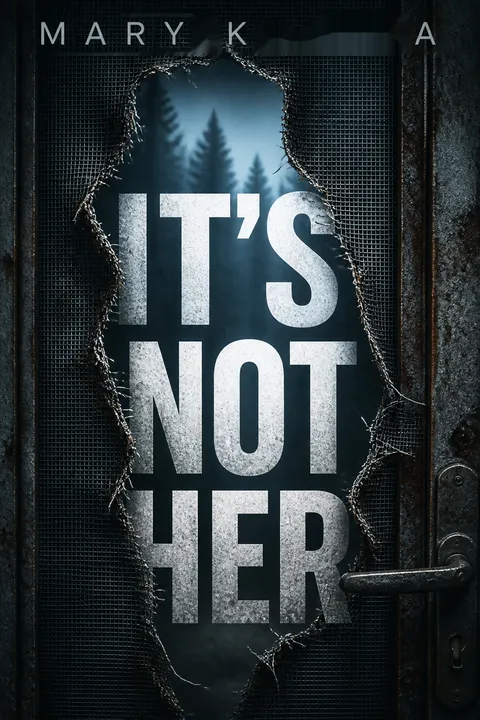


Plot Summary
Trapped in the Northwoods
The Crane family — parents Nolan6 and Emily,4 teenagers Reese2 and Wyatt,7 and ten-year-old Mae11 — drive five hours into rural Wisconsin for a lake vacation, joined by Nolan's6 sister Courtney,1 her husband Elliott,3 and their daughter Cass.12
By arrival, Emily4 and Nolan6 haven't spoken in twenty miles. He's been unemployed for six months; she suggested the mall was hiring. Their cottage is dim and musty — plaid furniture, dead flies in the sills, the antithesis of last year's Hawaii trip.
Reese,2 seventeen and furious about missing her summer with best friend Skylar,15 claims the screened-in porch as her bedroom against Emily's4 protests. Through the loose screens that first afternoon, she spots a boy with dark hair walking alone in the trees. He's watching her.
The Boy Behind the Screens
He approaches Reese2 in the woods — Daniel Clarke,8 a twenty-four-year-old resort employee with a cobra tattoo coiled up his arm, though she doesn't yet know his age. He parrots Emily's4 nagging back at her, and for the first time someone seems to see the world the way Reese2 does.
He calls her beautiful — something no one has ever said without a qualifier. He asks her to meet him by the pier after dark. That night, Reese2 sneaks past sleeping parents and navigates pitch-black woods alone, telling herself the darkness is just the absence of light.
Daniel8 takes her to an abandoned cemetery deep in the trees, tells her it's haunted, and waits for her to be scared. She pretends she isn't. Before the night ends, they share their first kiss among the headstones.
Cemetery Kisses, Stolen Evidence
Wyatt7 followed them with his phone recording and weaponizes the footage into blackmail — forty dollars or he tells their parents everything. Reese's2 response is to pin him down and nearly drive a shard of broken glass into his chest, revealing the explosive rage she was diagnosed with at twelve.
Over subsequent nights, the relationship with Daniel8 deepens. On the pier, he clasps a gold beaded necklace around her neck, its pattern spelling 'daughter' in Morse code — a gift that a local couple once gave their daughter Kylie Matthews14 before she vanished five years ago.
No one recognizes its origin. Meanwhile at the pool, Cass12 and Mae11 sneak Elliott's3 iPad and photograph Reese2 wearing the necklace. The images look like harmless mischief. They will prove fatal.
Daniel Shows His Teeth
Daniel's8 tenderness turns out to be a script. When a pretty new girl arrives at the resort, Reese2 watches him deploy the same smile, the same wave, the same rehearsed lines. The devastation confirms what she feared: she was never special. That night, Daniel8 breaks onto the screened-in porch with a knife. He presses the flat of the blade to her throat and tells her to undress.
A noise from inside the cottage interrupts just long enough for Reese2 to knock the knife from his hand, grab it, and slash his palm. He wraps his bleeding hand in her pink fleece sweatshirt and leaves, calling her nothing, not worth it. Reese2 hides the knife in the nightstand drawer and refuses to sleep on the porch ever again, moving upstairs to share Mae's11 bed.
One Last Night on the Sofa
Emily4 organizes a family baseball game. Wyatt7 swings his four-hundred-dollar Louisville Slugger while Reese2 can barely hold the bat. That evening, Cass12 and Mae11 hack Reese's2 phone and post a humiliating old photo to Instagram; the comments are vicious.
Reese2 screams at Emily4 that she hates her, that she wishes Emily4 would die. But later, after everyone leaves, Reese2 finds Emily4 crying alone in the kitchen. For the first time in years, they sit together on the sofa and actually talk.
Emily4 admits she plans to divorce Nolan.6 She tells Reese2 to slow down, to stop rushing past her own youth. She confides that she slipped Wyatt7 an Ambien for his allergies — both pills are pink, he wouldn't notice. She promises Reese2 that the best is yet to come.
A Father Breaks Down the Door
A knock comes. Reese2 begs Emily4 not to open it. Emily4 assumes it's Mae11 returning from the sleepover and turns the dead bolt. A man stands there — eyes locked past Emily4 onto Reese,2 calling her Kylie,14 insisting she's his missing daughter. Emily4 tries to block him. He enters anyway. When Emily4 swings Wyatt's bat at him, he catches the barrel and rips it from her hands.
He beats Emily4 on the screened-in porch, then climbs the stairs and kills Nolan6 before he can even find his contacts. Sam Matthews9 — a grieving father who found a Facebook post claiming his missing daughter was alive in cottage eight — drags Reese2 into his car. At his house, his wife Joanna10 looks once and delivers the verdict: it's not Kylie.14 But the damage is absolute.
Mae's Scream at Dawn
The next morning, Mae11 skips back to her family's cottage from the sleepover and comes running back screaming, blood on her small hands. Courtney1 crosses through the trees to investigate. The front door of cottage eight stands open.
On the screened-in porch, Emily4 lies motionless on the floor — skin discolored to the same mauve as the pedicure polish Courtney1 helped her choose weeks before. Blood streaks the walls like paint flicked from a brush. Nolan's6 body lies at the top of the stairs, eyes vacant, blood seeping from his temple.
Despite orders to stay behind, Cass12 and Mae11 follow and see everything. Courtney1 grabs both children and runs to the resort lodge, where owner Greta Dahl13 calls the police. A young, red-haired detective named Evans5 arrives. Reese2 is simply gone.
The Bat, the Boy, the Benadryl
Detective Evans5 interviews the family at the cottage. Wyatt,7 found asleep and untouched upstairs, claims Emily4 gave him Benadryl for allergies — which would explain how he slept through the violence.
Mae11 mentions that Reese2 had been seeing a boy at the resort, one who came to the cottage at night, one who scared her and made her cry. The medical examiner determines cause of death: blunt force trauma from a baseball bat. The murder weapon — Wyatt's7 black-and-teal Louisville Slugger — is recovered outside the cottage with blood matching both victims.
An AMBER Alert is issued. A volunteer ground search organized using Reese's2 last Snapchat location yields nothing. Courtney1 recalls Reese2 screaming that she wished Emily4 would die and wonders, despite herself, if her niece could have done this.
Grief Befriends Grief
During the search, Courtney1 meets Joanna10 and Sam Matthews9 — parents of Kylie Matthews,14 the girl on the missing poster in the resort lodge. Joanna10 describes Kylie14 as bold and free-spirited, vanished at eleven while biking home from a friend's house five years ago. They never found her body. Sam9 is quiet, hollowed out, but he was the one who insisted they come help look.
The couple offers Courtney1 their phone number and home address on Found Lake Road, saying they understand her pain better than anyone. Courtney1 feels grateful to find people who know what she's going through. She never notices how Sam9 studies her when she mentions Reese,2 or that their sympathy arrives with a precision that feels almost rehearsed.
Trust Fractures Everywhere
Courtney1 spots pinpricks of red on Elliott's3 fishing shoes. He attributes them to bleeding fish — then later, to cutting himself on a line. On his iPad, she discovers candid photos of Reese2 in her bikini, the last showing Reese2 defiantly raising her middle finger at the camera.
Courtney's1 faith in her husband starts to crack. That same night, Wyatt7 sleepwalks into the kitchen, searching the refrigerator for a lost school lunch, growing agitated. When Courtney1 touches his arm, he strikes her across the face hard enough to bruise.
Evans5 later questions whether Wyatt7 was truly asleep — he dreamed about a missing lunch, not an intruder, so why did he think Courtney1 was attacking him? Evans5 also reveals that no Benadryl was found anywhere in the cottage.
Pink Sweatshirt, Empty House
Courtney1 drives to Daniel Clarke's8 address on Moon Road and lets herself in through an unlocked sliding glass door. The TV plays Family Feud on mute. Under Daniel's8 bed, she finds Reese's2 pink fleece sweatshirt with blood on the sleeve.
Before she can leave, Evans5 bursts through the front door with his gun drawn — a neighbor reported a trespasser. He warns that illegally obtained evidence could be thrown out in court. But the blood turns out to be Daniel's,8 not Reese's2 — she cut him in self-defense.
Traffic cameras and gas receipts place Daniel8 in Minnesota by the evening of the murders. He was already gone. Whatever Daniel8 did to Reese,2 he didn't kill her parents. The prime suspect vanishes, and Courtney's1 suspicions narrow toward the people she's been living with.
The Post That Started Everything
Searching Elliott's3 iPad before dawn, Courtney1 finds a post on the Help Find Kylie Matthews Facebook page — made from Elliott's3 account, featuring Reese's2 photo alongside the resort's address, suggesting Reese2 is the missing Kylie.14 The post is dated the night before the murders.
Courtney1 believes her husband orchestrated everything: the post that lured a killer, the early-morning fishing trip that provided an alibi. She wakes the three children, walks them along the rural highway to the police station while Elliott3 drives around town searching for coffee, and presents the evidence to Detective Evans.5
She is certain her husband is responsible. She is wrong about that — but the truth behind the post, when it surfaces, proves far worse than anything she imagined.
Two Ten-Year-Olds Confess
At Evans's5 desk, the truth reassembles. Cass12 nudges Mae11 under the table. Mae11 starts crying. The confession comes in fragments: the two girls made the Facebook post using Elliott's3 iPad as a joke during the vacation, never imagining anyone would take it seriously.
Evans5 traces the chain instantly — Sam Matthews9 saw the post, recognized Kylie's necklace on Reese,2 and drove to cottage eight to reclaim his daughter. Evans5 races to the Matthews home.
In the basement, behind a wall panel, he finds Reese2 in a crawl space — alive but hollowed out by days of captivity and the memory of watching her parents die. Sam9 is arrested. From her hospital bed, Reese2 tells Courtney1 where the real Kylie14 is buried: the unmarked grave in the cemetery where she once saw Ms. Dahl13 laying flowers.
Epilogue
Under interrogation, Greta Dahl13 confesses she saw someone with a cobra tattoo burying a body in the cemetery the night Kylie14 vanished. She assumed it was Daniel Clarke.8 Driving home alone in the rain, Detective Evans5 drops the mask. The tattoo Dahl13 saw was his.
Four friends from the same street got matching cobras as teenagers — Daniel,8 Evans,5 and two others. Evans's5 real name is Josh, and his sister was Kylie's14 best friend. At nineteen, he swerved his car to scare Kylie14 as she biked home. He clipped her tire. She fell.
He couldn't brake in time. He buried her in that cemetery and became a detective to atone, telling himself every life he saved balanced the one he took. Tomorrow, he'll arrest Daniel8 using Dahl's13 misidentification. He repeats his mantra in the dark: he is one of the good guys.
Analysis
"It's Not Her" operates as a precision-engineered thriller, but its deepest incision is into the architecture of trust. Every relationship in the novel is load-bearing, and every load-bearing relationship cracks under incomplete information. Kubica structures the dual timeline not merely for suspense but to demonstrate how identical events look radically different depending on who's watching and what they fear. Courtney1 sees blood on Elliott's3 shoes and constructs a murder case; the reader sees a man who gutted fish. The disconnect isn't deception — it's how fear rewrites evidence into confession.
The novel's most devastating mechanism is the Facebook post — a ten-year-old's prank that kills two people. Kubica refuses to let this remain ironic. She traces the full causal chain: children who understand technology but not consequence, algorithmic delivery to a man made irrational by five years of grief, a stolen necklace that transforms coincidence into conviction. The result is a thesis on how the internet collapses the distance between impulse and catastrophe.
Sam Matthews9 complicates the moral universe. He is simultaneously the villain and the most sympathetic figure: a father whose love calcified into obsession, who murders two innocent people while genuinely believing he is saving his child. Kubica does not forgive him, but she refuses to make him easy to hate.
The Evans5 epilogue reframes everything. The empathetic detective who protected Courtney1 and rescued Reese2 is also the man who killed Kylie14 at nineteen and spent his career laundering guilt through heroism. His plan to frame Daniel8 — a genuine predator — for a crime Daniel8 didn't commit poses the novel's final, unanswerable question: can justice built on a lie still function as justice? Kubica's answer is silence, which may be the most honest answer available. The thriller's deepest horror isn't the violence — it's how many people in every room are performing goodness while burying something in the dark.
Review Summary
It's Not Her receives overwhelmingly positive reviews (4.11/5 stars), with readers praising its addictive pacing, atmospheric tension, and shocking twists. The thriller follows Courtney Gray's vacation nightmare when her brother and sister-in-law are murdered and their teenage daughter Reese vanishes. Most reviewers appreciated the dual perspectives, expertly crafted suspense, and unpredictable reveals, though some found the middle sections slow or character behaviors irritating. Several critics noted unrealistic procedural elements and predictability. Overall, fans celebrate Kubica's masterful storytelling, comparing it favorably to her hit Local Woman Missing, calling it a 2026 blockbuster.
Characters
Courtney Gray
Aunt turned protectorNolan's6 younger sister and Emily's4 best friend since fifth grade—a preschool teacher married to attorney Elliott3, mother to ten-year-old Cass12. She is the family's emotional fulcrum: steady, self-sacrificing, perpetually tuned to others' pain. When crisis strikes, she becomes both protector and detective, driven by guilt that she should have seen the signs, should have stayed longer, should have asked more questions. Her psychological architecture is built on responsibility—she once promised Emily4 she'd care for the kids if anything happened. But her vigilance curdles into paranoia as suspicion contaminates every relationship: her husband, her nephew, even strangers who offer kindness. Courtney represents the terrifying realization that the people closest to you may be the ones you understand least.
Reese Crane
Volatile teenager at the centerSeventeen, volatile, starving to be seen. Reese narrates the week leading to catastrophe with the raw voice of a teenager who swings between cruelty and tenderness in the same breath. Diagnosed with intermittent explosive disorder at twelve, she experiences incandescent rages followed by crushing guilt—kicking garbage cans in class, nearly stabbing her brother with glass, then lying awake wishing she were dead. Her relationship with Emily4 is the novel's emotional spine: adversarial on the surface, deeply codependent beneath. She calls her parents by their first names behind their backs and threatens violence when cornered, yet she once carried Mae11 on her back through the zoo for hours without complaint. She is catastrophically vulnerable to the first person who tells her she is beautiful.
Elliott Gray
The suspicious husbandCourtney's1 husband, Cass's12 father, the family's charismatic anchor. Elliott is an attorney with an easy smile who suggested the Wisconsin trip—he'd visited the resort years ago with college friends. On the surface, he's attentive and protective, the kind of man who wraps his arms around Courtney1 from behind. But small inconsistencies accumulate like cracks in ice: blood on his fishing shoes, pictures on his iPad, a private conversation with Emily4 he can't recall. Whether these fractures reflect genuine secrecy or merely Courtney's1 deteriorating trust becomes the novel's most persistent question. Elliott is the portrait of a good man viewed through the lens of justified paranoia—or the portrait of something else entirely.
Emily Crane
The controlling, lonely motherNolan's6 wife, mother of three. Emily is controlling, anxious, and profoundly lonely—a woman whose need for order masks a fear that everything is falling apart. She married the only man she ever dated at nineteen, not from certainty but from terror of being alone. Her relationship with Reese2 is combustible: she calls Reese's2 clothes inappropriate, micromanages her movements, yet she was once the only fifth-grader who sat with a lonely new kid at recess. Emily's tragedy is proximity to understanding—she knows Reese2 is hurting, knows the marriage is dying, knows the vacation won't fix anything. She is simultaneously the person Reese2 needs most and the person Reese2 pushes hardest away.
Detective Evans
Young, sharp lead investigatorThe lead investigator, introduced as a young, ruddy redhead with freckles who seems almost too green for the role. Evans is disarmingly perceptive beneath his youth—he reads body language, notices bruises, asks questions that peel away comfortable lies. He grew up locally, knows the area and some of its residents personally, which provides access but also creates blind spots. His empathy toward Courtney1 feels genuine; he touches her shoulder, offers his phone number, promises to protect her. Yet his competence coexists with an undercurrent of control—he steers conversations, manages information flow, and always seems to know slightly more than he reveals. Evans embodies the fundamental tension of the thriller: whether the person offering safety is actually safe.
Nolan Crane
Unemployed father, Courtney's brotherCourtney's1 older brother, Emily's4 husband. A former software engineer from MIT whose six-month unemployment has metastasized into the family's defining wound. Nolan oscillates between aggression and withdrawal—he tells Emily4 the vacation would be better without her, then ignores her for hours. He sleeps through alarms and snores through crises. His emotional immaturity drives much of the family's dysfunction, yet he remains sympathetic in his helplessness.
Wyatt Crane
Calculating teenage brotherFourteen, a baseball all-star with a batting average near .500 and a talent for quiet corruption. Behind his parents' assumption of perfection, Wyatt sells drugs, gambles online, blackmails his sister, and lies as naturally as breathing. He is simultaneously a child and something more unsettling—calculating, composed under pressure, capable of sudden physical force. His sleepwalking adds an unpredictable dimension that keeps everyone around him off-balance and afraid.
Daniel Clarke
Predatory resort workerTwenty-four-year-old resort maintenance worker with a cobra tattoo and a practiced playbook for targeting vulnerable teenage girls. Daniel's charm operates like a rip current—warm and irresistible until you're pulled under. He grew up in poverty, lost his mother to alcoholism, and learned early that tenderness can be wielded as a tool. His pattern of grooming, gifting jewelry, and escalating coercion reveals a predator hiding behind a wounded-boy facade.
Sam Matthews
Kylie's obsessive, grieving fatherKylie's14 father. Five years of searching for his missing daughter have atrophied his body and distorted his judgment. Sam is gentle, soft-spoken, and profoundly broken—a man who channels grief into obsessive investigation, collecting evidence in shoeboxes and scouring the internet for leads. His love for Kylie14 is beyond question. What that love drives him to do is the novel's most devastating revelation.
Joanna Matthews
Kylie's haunted motherKylie's14 mother, Sam's9 wife. Joanna keeps her daughter alive through storytelling while Sam9 keeps her alive through action. She maintains Kylie's14 bedroom as an untouched shrine. Her guilt over not searching sooner on the night Kylie14 vanished is a wound that never closes. She offers Courtney1 genuine empathy rooted in shared devastation, making her one of the novel's most psychologically complex figures.
Mae Crane
Youngest Crane childTen-year-old baby of the Crane family who nearly died at birth from umbilical cord complications. Petite and sheltered, she is Emily's4 shadow and Cass's12 inseparable best friend, bridging the two families with innocent devotion.
Cass Gray
Courtney's people-pleasing daughterCourtney1 and Elliott's3 ten-year-old daughter, Mae's11 cousin and constant companion. A people-pleaser who hero-worships her mother, Cass is more digitally savvy than any adult in her life suspects.
Greta Dahl
Resort owner with a secretThe resort owner, a practical woman with a kind face who hired Daniel8 as a favor to his dead mother. She has maintained a complicated silence about something she witnessed in the cemetery years ago.
Kylie Matthews
The girl who vanishedBold, free-spirited, eleven years old when she disappeared while biking home from a friend's house. Her absence is the gravitational center that bends every plotline toward itself.
Skylar
Reese's estranged best friendReese's2 former best friend back home, their friendship fractured after Reese's2 explosive outburst at school went viral on TikTok. Skylar's silence amplifies Reese's2 isolation and hunger for Daniel's8 attention.
Plot Devices
Kylie's Beaded Necklace
Links Reese to the missing girlA gold chain with beads arranged in Morse code spelling 'daughter'—a birthday gift Sam9 and Joanna Matthews10 gave their daughter Kylie14 before she disappeared. How it came into Daniel Clarke's8 possession is never fully explained, though he likely stole it. Daniel8 gives the necklace to Reese2 as a romantic gesture, oblivious to or indifferent about its origin. When Cass12 and Mae11 photograph Reese2 wearing it and post the image to the Help Find Kylie Matthews Facebook page, Sam9 recognizes it from his family portrait. Combined with a passing physical resemblance between the two girls, the necklace becomes the evidence that convinces a grieving father his daughter has been found—and the catalyst that transforms parental love into lethal action.
The Facebook Post
Inciting cause of the murdersCreated by ten-year-old Cass12 and Mae11 on Elliott's3 iPad as a thoughtless prank, this post to the Help Find Kylie Matthews14 page features Reese's2 photo alongside the resort's address, claiming she is the missing girl. The children thought it would be funny—a silly joke from kids who understand social media's mechanics but not its reach. Sam Matthews9, who has monitored every lead on his daughter for five years, sees the post and recognizes the necklace. He drives to the resort that night, certain he's found Kylie14 living with the people who stole her. The post's consequences—two deaths, a kidnapping, three orphaned children—crystallize the novel's thesis on how digital carelessness can metastasize into irreversible real-world catastrophe.
Wyatt's Louisville Slugger
Murder weapon hidden in plain sightA black-and-teal alloy baseball bat belonging to fourteen-year-old Wyatt7, the family's baseball star. The bat is introduced naturally—Wyatt7 practices swings in the yard, uses it during the family game—so its presence in the cottage never feels planted. When Sam Matthews9 enters the cottage, Emily4 grabs the bat in self-defense. Sam9 catches the barrel, tears it from her grip, and uses it to inflict the blunt force trauma that kills both parents. The bat carries fingerprints from every family member who played baseball that evening, muddying the forensic evidence. A child's sporting equipment becomes the instrument of his parents' deaths—one of the novel's cruelest ironies.
The Snap Map
False lead in tracking ReeseSnapchat's location-sharing feature places a cartoon avatar of Reese2 on a digital map, showing where her phone last pinged. Wyatt7 discovers it at two in the morning and shows Courtney1, who calls Detective Evans5. But the map only reflects the last login—it doesn't update if the phone is off. The police search the coordinates and find nothing, because Reese2 has already been moved to the Matthews'9 basement. The device embodies the novel's broader meditation on digital tools that promise connection but deliver false certainty. It gives Courtney1 just enough hope to keep searching and just enough disappointment to nearly break her—the cruelest species of almost.
The Abandoned Cemetery
Burial site and recurring settingA small, forgotten cemetery deep in the woods near the resort, accessible only by overgrown trails. Daniel8 takes Reese2 there on their first real outing, calling it haunted. They kiss among the tombstones. Reese2 later returns alone and discovers the resort owner13 laying pink wildflowers on an unmarked grave—a plot with concave earth and patchy grass, no headstone, no name. The cemetery connects every layer of the mystery: it holds the body of Kylie Matthews14, serves as the backdrop for Reese's2 first romance, and ultimately provides the tip that leads investigators to recover Kylie's14 remains. The same ground holds a secret burial, a first kiss, and a five-year silence.
Download PDF
Download EPUB
.epub digital book format is ideal for reading ebooks on phones, tablets, and e-readers.








































