
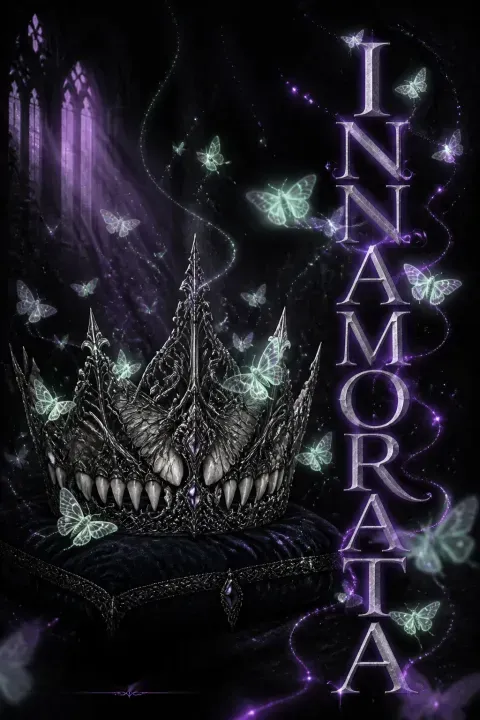


Plot Summary
Prologue
The castle of Nicephorus the Sluggard,5 before him Widsith the Precious, before him Berengar Who-Fights-Alone, and before any king, the island of Drepane knew only death upon its marshes and peaks, its sickly-white beaches.
Then blood watered the earth and the great monument flowered upward, stone upon cruel stone, built from the bones of the conquered and cemented with the tears of the subjugated. This is the foundation upon which all power in Drepane rests: the blade, the betrayal, the obliteration of what came before.
The prologue establishes Drepane as a palimpsest of violence, each regime built on the ruins of the last. The castle itself is not merely a setting but a presence, a monument that flowered from blood like something organic and monstrous. This framing primes readers for a story in which the past is never truly dead, where ancestors' crimes shape the living, and where any attempt at love or justice must contend with foundations laid in atrocity. The absence of a pre-conquest history suggests that Drepane's identity was forged in trauma and may not survive without it.
The Desecration of Adele-Blanche
Agnes1 holds her grandmother's4 teeth in a velvet pouch, the only inheritance the Septinsular Covenant permits. Around Adele-Blanche4's naked corpse in the mud, leeches from the seven great houses perform their grisly tasks: draining blood, plucking eyes, extracting thirty-two teeth with brisk dexterity, slicing open the chest, stripping flesh from bone.
The Most Esteemed Surgeon stomps the remaining entrails into the earth until nothing recognizable remains. Marozia,3 the new Mistress of Teeth, weeps only when the teeth are handed to her, then passes them to Agnes.1
The House of Blood sends no noble representative, only a household guard. Among the gray-clad Dolorous Guard, Prince Liuprand2 emerges, golden-haired and impossibly beautiful. He addresses both cousins with grace, but as he departs, his gaze lingers not on Marozia3 in passionate red but on silent Agnes1 in bruise-colored silk.
The desecration ritual embodies Drepane's founding trauma: death must be total obliteration to prevent resurrection. For Agnes, watching her grandmother reduced to nothing becomes a meditation on erasure. The passing of the teeth to Agnes rather than Marozia subtly establishes the actual power dynamic between the cousins. Liuprand's lingering look at the wrong cousin initiates the central tension: desire that defies political logic and will eventually unravel the fragile peace his ancestors imposed.
The Fangs of the Serpent
Alone in her chamber, Agnes1 commits the highest of treasons. She boils henbane and mandrake root, inhaling the sweet, poisonous steam. In her dreams, three versions of Adele-Blanche4 appear with a spindle, a broken scepter, and enormous shears, commanding her to search Castle Crudele for the forbidden tomes and tombs that hold the lost resurrection ritual.
Her grandmother4 trained her for this purpose: Marozia3 is the serpent's hypnotic gaze, but Agnes1 is its deadly fangs. The training was literal. When Agnes1 was fourteen, Adele-Blanche4 ordered Wrestbone the leech to carve commandments into her naked torso with a surgical knife: never seek pleasure, eat only bread and watered wine, master all plant knowledge, guard her maidenhead. Agnes1 screamed until she realized no one would stop the blade. She chose silence then, and has worn it like armor ever since.
Agnes's scars literalize the psychological violence of her upbringing. The carving scene functions as an anti-baptism, consecrating Agnes not to life but to a posthumous purpose. Her silence, which others interpret as defect, is a strategic withdrawal — the only power available in a world that treated her voice as worthless. The three Adele-Blanches represent creativity, authority, and destruction: the Fates, who have already woven her destiny, and from whom she will spend the novel trying to free herself.
A Prince's Probing Gaze
In the magnificent library of Castle Crudele, Agnes1 discovers books not dictated by her grandmother4 — words from other minds, proof of a world beyond the black peaks of her childhood prison. When Liuprand2 enters and dismisses her guard, they read together in a strange, companionable silence.
He recognizes her handwriting from the betrothal letter and admits he knows she wrote it. Later, he follows her into the corridor and demands to know why she will not speak. He orders her to open her mouth.
With a single finger he tips up her chin and peers inside, finding no injury, no mutilation. When she still refuses to answer, he drops his hand and lets her go. But as she walks away, her heart pulses like a caught bird in a clutching fist. For the first time, someone has truly looked at her and not turned away.
Liuprand's fascination with Agnes's silence is the first crack in both their armors. He is drawn to what resists him; she is thawed by being truly seen. His clinical examination of her mouth is intimate without being sexual — an attempt to find the mechanism of her muteness so he might dismantle it. But her silence is not a mechanism; it is a citadel. The library becomes a liminal space where the rules of court and crown temporarily dissolve, and where two people trapped by their roles can approach each other as something closer to equals.
Blood on the Bridal Sheets
The Exarch speaks of the Seraphine doctrine of soulmates: two halves of one soul seeking each other across lifetimes, a bond that transcends all earthly law. King Nicephorus5 leans close to Agnes1 and whispers that such bonds are deadly serious in Seraph, where a man may duel to the death if his bond is threatened.
As he speaks, his swollen hand finds her thigh under her gown. While Liuprand2 and Marozia3 kneel for blessing, the king works himself against her, panting about betrayal. That night, Marozia3 returns to Agnes1 sobbing.
Liuprand2 left a gap between them in bed, averted his eyes as she undressed, would not touch her. She feels ugly, rejected, humiliated. Agnes1 writes two words on parchment: Try harder. She does not yet understand why the command tastes like poison in her own mouth.
The wedding intertwines three forms of violation: the king's physical assault on Agnes, the spiritual violation of false vows, and Marozia's emotional violation through rejection. The soulmate doctrine, introduced here, becomes the theological justification for everything that follows. If Liuprand's soul belongs to another, can any earthly law bind him? The contrast between Nicephorus as a monster of appetite and Liuprand as a man so restrained he cannot perform desire on command sets up the novel's central exploration of what happens when the restrained man finally breaks.
The Language of Moths
In a hidden garden lush with enormous moths, Liuprand2 reveals a system devised by his ancestor Berengar during the conquest: moths bred for specific colors and patterns to carry coded messages. Gray for grief, fuchsia for forward march, one black wing and one white for resolve, speckling for apology.
The moths are intelligent, capable of forming bonds with humans, as clever as ravens. Agnes1 finds a black-and-white moth and sends it to him. His smile is pleased but determined. He returns a fuchsia moth and tells her she will not drive him back so easily.
They spend hours exchanging moths, conducting a conversation more intimate than any she has had aloud. She forgets entirely to plant her grandmother's4 treasonous seeds. Liuprand2 has given her something Adele-Blanche4 never could: a language that respects her silence while transcending it.
The moth language is the novel's most elegant symbol — a system of communication that bypasses speech entirely, allowing two people trapped by their roles to speak truth. It is also a legacy of conquest repurposed for love. Liuprand's choice to share this secret code with Agnes meets her in her own territory and offers her a bridge. The garden itself, wild and beautiful, contrasts with the cold stone of the castle. Agnes forgetting her grandmother's seeds signals the beginning of her shift in allegiance from the dead to the living.
The Martyr's Price
Enraged by the House of Blood's continued defiance, King Nicephorus5 orchestrates a calculated humiliation. He forces everyone in the great hall to declare him a true king. When he reaches Agnes,1 she cannot speak. He planned this: a tournament spectacle of his power.
The leeches Truss and Mordaunt hold her down on the table while the king drives his knife through her hand, again and again, between her knuckles, splitting her fourth finger to the bone. She watches sinew snap, feels the blade scrape bone, sees her own flesh floating in pooling blood.
Marozia3 weeps but does not intervene. Liuprand2 batters himself against the Dolorous Guard until he breaks free, seizing his father by the throat. But the damage is done. Agnes1's left hand is destroyed. She will never hold a quill again.
This scene is the novel's crucible. Nicephorus's cruelty is theatrical, designed to demonstrate that his power extends even to the violation of noble bodies. The leeches' participation shows how systems of authority corrupt those who serve them. Liuprand's failure to protect Agnes becomes the wound they both carry forward — his shame and her scarred hand forever twinned. Marozia's passivity plants the first seed of Agnes's eventual estrangement from her cousin. The destroyed hand is significant: Agnes's one tool of agency is taken from her.
The Necklace Changes Throats
The king announces his solution to the political crisis: Agnes1 will wed Lord Fredegar,6 Master of Blood, to seal the alliance. When Marozia3 protests that Agnes1 has no title, Nicephorus5 seizes the opportunity to dismantle another House of Teeth tradition.
Agnes1 is the elder by five days; by Drepane's laws, the title Mistress of Teeth should be hers. He orders Liuprand2 to transfer the ancestral tooth necklace from Marozia3's throat to Agnes1 's. Liuprand2's fingers tremble against her neck as he fastens the clasp. It is the only touch that has passed between them since her torture.
Marozia3's fury radiates like winter cold. Agnes1 holds the teeth in her palm, feeling the weight of her grandmother's4 hopes dashed and fulfilled at once. She is Mistress of Teeth now, promised to a stranger who will violate the terms carved into her flesh.
The transfer of the necklace is a scene of multiple violations: of tradition, of Marozia's identity, of Agnes's bodily autonomy. Liuprand's trembling fingers reveal his anguish. The title that should empower Agnes becomes instead a chain binding her to the king's political machinations. Marozia's fury, while understandable, also reveals her limitation: she cannot see past her own loss to recognize that Agnes is equally a victim. The king, in his cunning, has wounded all three with a single decree disguised as honor.
A Bridegroom's Slaughter
Lord Fredegar6 surprises Agnes1 with his gentleness. He brings her a wreath of white flowers, speaks kindly of his late wife, and promises her silence will never trouble him. At the feast she eats meat and drinks wine for the first time in her adult life, breaking Adele-Blanche4's commandments, and something foreign stirs in her chest: hope.
But afterward, in the corridor, his son Unruoching11 intercepts them. He denounces his father's weakness, then plunges a dagger into Fredegar's6 chest, his stomach, his throat. Agnes1 is drenched in blood.
When Unruoching11 turns the blade toward her, something breaks open inside. She screams, a wordless howl that becomes Liuprand2's name. The Dolorous Guard thunders in. Hours later, after Waltrude9 bathes her, Liuprand2 comes to her chamber. Agnes1 speaks to him for the first time. Then she takes him into her body.
Agnes's scream is the novel's emotional climax — her decade-long silence shattering under trauma and need. That she screams Liuprand's name reveals where her heart has already gone. Their subsequent lovemaking is both consummation and consecration, an act of mutual salvation that is also the original sin from which all later catastrophe flows. They have crossed a line that cannot be uncrossed. The white flowers Fredegar gave her will become Agnes's permanent adornment, a sign of her widowhood that also conceals her true allegiance.
Walled Alive
In the dungeon, Liuprand2 enacts a punishment of medieval cruelty. He pours Lord Fredegar6's preserved blood down Unruoching11's throat, then changes his mind. Masons are summoned. They build a wall of stone around the still-living man, sealing him in darkness to die of thirst over days.
Unruoching11's son Gamelyn,12 a boy of twelve, watches with cold green eyes that will never forget. At Castle Crudele, Marozia3 endures a near-fatal labor and delivers twins: a girl she names Meriope,15 whom she clutches with desperate love, and a boy she rejects utterly.
Agnes1 takes the unnamed princeling against her barren breast and loves him instantly. The king5 decrees Meriope15 will be betrothed to Gamelyn12 as soon as she can walk. Marozia3's daughter will pay for the Crown's sins against the House of Blood.
Liuprand's cruelty toward Unruoching, though framed as justice, creates an enduring enemy in Gamelyn. The boy's cold stare promises a reckoning. The twin births literalize the novel's central duality: Meriope, cherished but doomed, and Tisander, rejected but loved. Marozia's inability to love her son, the product of her forced coupling with Liuprand, is the first sign of her psychological unravelling. The king's decree weaponizes an infant, ensuring the cycle of political violence will continue into the next generation.
Wife of the Dark
In the abandoned chapel at the top of Castle Crudele's tallest tower, the leech Pliny8 arranges a thousand candles. He speaks the sacraments in the dead tongue of old Seraph while Waltrude9 stands witness. Agnes1 wears a veil of lace; Liuprand2 places a silver ring set with a black pearl and two white ones on her scarred finger.
It is the same ring he gave her before his wedding to Marozia,3 which she returned in the House of Blood. They are bound now by a law that transcends the Covenant: the Seraphine soul-bond, which in its homeland justifies any violence to protect it.
Liuprand2 cups her face and whispers the words she has longed to hear. They will meet here every evening for six years, building a secret life of velvet couches, lavender, and candlelight. They are married in every way that matters.
The secret wedding is an act of radical hope and radical folly. Pliny's willingness to perform the ceremony shows how personal devotion can override institutional loyalty. The returned ring symbolizes the circular nature of their love: always present, always prohibited, always returning. The chapel transforms over the years from a place of shame into a sanctuary, suggesting love's power to consecrate profane spaces. Yet the very secrecy that protects them also ensures their vulnerability: a love that cannot be spoken is a love that can be revealed at the worst possible moment.
The Princess in the Tower
Marozia3 has not left the east wing in six years. She still nurses Meriope,15 using potions from the leeches to maintain her milk. She tells her daughter stories of the House of Teeth's ancient glory, of Berengar's treachery against their ancestors, of their stolen birthright.
Her handmaiden Ninian10 shares her bed, her hatred, and her body. Ninian10 worships Marozia3 with a devotion indistinguishable from obsession. In sixty-six days, Meriope15 will be taken to the House of Blood as Gamelyn12's bride. When Waltrude9 visits to offer help, Marozia3 demands to know what awaits her daughter.
Waltrude9 tells her the truth: Gamelyn12 may be gentle, or he may not. Either way, a child's body will be required to do a woman's duty. Marozia3's fury finds its target not just in the king,5 but in Agnes,1 who she now understands has stolen everything.
Marozia's prolonged nursing is a desperate act of maternal preservation, an attempt to keep her daughter an infant and thus ineligible for marriage. It is also a regression to the customs of the House of Teeth, rejecting the Seraphine order. Ninian's devotion has become a weapon; her love for Marozia expresses itself as hatred of Marozia's enemies. The information Waltrude provides about the physical realities awaiting Meriope becomes the catalyst that transforms Marozia's passive suffering into active vengeance.
The Prince Unmasked
Agnes1 writes a grand masque for Meriope15's wedding celebration. On stage she and Liuprand2 dance together publicly for the first time, a coded performance of their love. Moths carry messages above the audience. But Marozia3 watches with newly clear eyes and sees the truth beneath the pageantry.
Afterward, at the feast, Lord Childeric13 proposes marriage to Agnes,1 clumsily mentioning her waning fertility and need for an heir. Liuprand,2 drunk for the first time in his life, lunges across the table and beats Childeric13 savagely, leaving him permanently paralyzed but mentally intact.
The hall erupts. Thrasamund,7 Childeric13's father, renounces his allegiance and orders Gamelyn12 to take his bride immediately. Meriope15 is torn screaming from Marozia3's arms. In a single night of drunken rage, Liuprand2 has shattered the peace his forced marriage was meant to secure.
The masque represents the impossibility of containing forbidden love within art. What Agnes intends as celebration becomes, to Marozia's perceptive eye, a confession. Liuprand's violence reveals the monstrous potential of his love: the same intensity that makes him gentle with Agnes can become brutality toward others. The loss of Meriope is the direct, catastrophic consequence of their inability to keep their love hidden. The personal has become politically apocalyptic. This scene also marks the moment Marozia transforms from passive victim to active agent of revenge.
A Widow Offers Herself
After the wedding disaster, Marozia3 confronts Agnes1 on the crumbling parapet. She slams her against the stone, hands around her throat, screaming accusations of theft and betrayal. Liuprand2 arrives and Marozia3 flees, leaving Agnes1 with a necklace of bruises.
Desperate to repair what has been broken, Agnes1 sends a moth to Thrasamund7 proposing a summit. When the Master of Eyes arrives with his wheelchair-bound son, Agnes1 makes her offer: she will marry Childeric,13 becoming his wife and nurse, to restore the alliance and honor.
Liuprand2 is devastated but cannot publicly object. Thrasamund7 agrees to consider the terms. What no one realizes is that Marozia3 has already opened the castle gates from within. Thrasamund7's men are inside. The offer of marriage is not a negotiation; it is the final piece of a trap already sprung.
Agnes's self-sacrifice is both noble and naive. She believes catastrophe can be undone through rational exchange, not understanding that the emotional calculus has moved beyond reason. Her offer mirrors her grandmother's logic (using bodies as political instruments) while her motivation (saving Liuprand's honor) is pure love. The dramatic irony is devastating: even as Agnes offers herself to fix things, Marozia's machinery of revenge is already in motion. The bond between the cousins, once the central relationship of Agnes's life, has become a death sentence.
The Conspiracy Unveiled
For weeks the conspiracy has been building. Ninian,10 following Marozia3's orders, has fed information to the leeches Truss and Mordaunt, who in turn cultivated Offal-Eater, the mad vagrant who renovated the chapel. They promised him human flesh in exchange for confirming the secret affair.
The two leeches intercept Waltrude9 when she tries to warn Liuprand,2 flipping a coin for her fate. Meanwhile, Thrasamund7's soldiers infiltrate through the gate Marozia3 opened. They know every detail: the chapel, the evening meetings, the precise hour Agnes1 will be alone.
The leeches, the handmaiden, the wise woman's castoff, the grieving mother — a network of the overlooked and the abused has coalesced into an instrument of destruction. All of them have been waiting for this, their resentments flowering like the poisonous plants in Adele-Blanche4's garden.
The conspiracy reveals how systemic abuse creates networks of resentment that eventually become operational. Each conspirator has a specific grievance: Ninian's obsessive love, the leeches' petty humiliations, Offal-Eater's dehumanization, Marozia's stolen daughter. Their alliance is fragile but functional, powered by shared hatred. The most chilling detail is Marozia's agency: she has spent six years in apparent isolation, but her isolation was strategic, allowing her to plot without suspicion. She has become her grandmother's true heir: cold, patient, and utterly ruthless.
Silenced Forever
In the chapel, Agnes1 waits with loosened bodice, anticipating Liuprand.2 Instead, armed men pour through the door. Thrasamund7's soldiers seize her, force her to her knees, and bare her throat.
The Master of Eyes tells her this execution is for his son, paralyzed by Liuprand2's rage, and for his daughter Ygraine, who has never recovered from watching her husband walled alive. He draws his dagger across Agnes1's throat, and she dies calling Liuprand2's name. Her body is laid on the altar where they made their secret vows.
Ninian10 watches from the shadows, having fulfilled her mistress's commission. When Liuprand2 arrives, soldiers stab him through the backs of his thighs. He crawls to Agnes1's corpse and takes it in his arms, screaming with an anguish that makes hardened soldiers cover their ears.
Agnes's death in the chapel, the space she consecrated with love, transforms their sanctuary into a tomb. Her final words being Liuprand's name completes the arc from her first scream after Fredegar's murder. The silencing of her voice, so painfully won, is the ultimate cruelty. The setting is significant: an altar, a sacrifice, a blood ritual that inverts the sacrament of their marriage. Thrasamund's statement of motive reframes the murder as justice, making it impossible to separate vengeance from righteousness.
The Prince Defiled
Thrasamund7 is not satisfied with Agnes1's death. He orders his men to strip Liuprand2 and press him onto Agnes1's body. They stroke him to hardness against his will. Her corpse, still slick from anticipation before death, receives him.
Some part of Liuprand2 responds, thrusting with desperate need even as tears streak his face. Thrasamund7 declares the experiment a success: the golden prince is no demigod but a beast, indistinguishable from the revenants his ancestor slaughtered. The Septinsular Covenant is dead.
Drepane will return to its ancient customs. Thrasamund7 leaves to join the massacre of the castle's inhabitants. Liuprand2 is abandoned, naked and broken, beside the body of the woman he married in secret. Outside, the slaughter has begun.
This transgressive scene pushes beyond tragedy into something mythic. Thrasamund's experiment is perversely theological: he seeks to prove Liuprand's love is merely appetite, that Seraphine superiority is a lie. The violation is doubled — Agnes's body used without consent, Liuprand's body betraying him. Yet the novel refuses simple judgment. Liuprand's physical response may be involuntary, or it may be the last expression of a love that cannot accept death's finality. The scene forces readers to confront the border between the sacred and the profane, between devotion and degradation.
A Stirring in the Womb
Thrasamund7's men carry Agnes1's corpse to the deepest vault beneath Castle Crudele, an empty treasury that has never held gold. They lay her on cold stone, limbs folded awkwardly, hair obscuring her face. This is Drepane's first burial in a century — an act of defiance against the Covenant that mandated total obliteration.
The stone door seals with a heavy iron bolt. Death should come for her now, softening flesh, liquefying organs, reducing her to bone. But death does not. Time turns gelid around her. Some will say it is Adele-Blanche4's herbs, finally bearing their poisoned fruit.
Others will point to the castle itself, whose stones were watered with ancient blood. Still others will whisper that Liuprand2's Seraphine seed, planted in a barren womb during their final desperate act, has quickened into impossible life. In the absolute darkness, something stirs.
The ending transforms the novel from tragedy into something stranger — a gothic resurrection narrative that refuses explanation. Three theories are offered, each plausible within the world's logic, and the text endorses none. The stirring in Agnes's womb is both literal (a fetus) and metaphorical (the persistence of love beyond death, the refusal of the Covenant's logic of obliteration). It suggests the novel's ultimate subject is not death but impossible survival: the thing that endures when all systems of power and meaning have collapsed. The tomb becomes a womb, and the silenced woman may yet have the last word.
Analysis
Innamorata is a dark fantasy that interrogates the relationship between love and violence, asking whether passion can ever be disentangled from destruction. The novel's gothic architecture — castles built on blood, rituals of bodily desecration, the ever-present threat of resurrection — externalizes its psychological concerns. The past is never dead in Drepane because the political order is designed to keep it alive. The Septinsular Covenant, with its mandate of total bodily obliteration, represents a society so terrified of what might return that it has foreclosed the possibility of genuine mourning.
The central love story between Agnes1 and Liuprand2 is structured as a heresy against multiple orthodoxies. It violates the Covenant's spirit by refusing to accept death's finality, the political order by threatening the alliance secured through Liuprand2's dynastic marriage, and Adele-Blanche4's posthumous commandments carved into Agnes's flesh. The novel takes seriously the question posed by the Seraphine soulmate doctrine: if love truly transcends all earthly law, does that justify any action taken in its name? The answer it offers is bleak. Liuprand2's love for Agnes1 makes him capable of tenderness he never knew, but also of brutality — the entombment of Unruoching,11 the beating of Childeric13 — that undermines everything he claims to value.
The novel's structure, moving from Agnes1's imposed silence to her hard-won voice and back to the silence of death, suggests that speech and agency are not permanent acquisitions but ongoing struggles. Agnes1 finds her voice only to have it cut from her throat. Yet the epilogue's ambiguous stirring — life quickening in a barren womb, movement in a corpse — offers the possibility that love, for all its destructiveness, may also be the one force that refuses the logic of obliteration. The tomb becomes a womb. In a world governed by death, the most radical act may be simply to endure. The novel ultimately suggests that love is not redemption, but it may be the only thing worth dying for — and perhaps the only thing strong enough to cheat death itself.
Review Summary
Reviews for Innamorata are sharply divided, averaging 3.68/5. Admirers praise its haunting, lyrical prose, oppressive gothic atmosphere, and the compelling, unsettling protagonist Agnes. Many compare it favorably to House of the Dragon and cite its bold, shocking ending. Critics argue the plot loses focus, abandoning its necromancy premise in favor of a unconvincing romance, with overly purple, repetitive prose. Nearly all reviewers emphasize the extreme content—including cannibalism, necrophilia, and graphic violence—and strongly urge readers to consult trigger warnings beforehand.
People Also Read







Characters
Agnes
Silent granddaughter turned mistressThe younger granddaughter of Adele-Blanche4, raised in remote Castle Peake. Mute by choice since age fourteen, when her grandmother4 had ritual scars carved into her torso as part of a forbidden training in resurrection magic. Agnes is fiercely intelligent, deeply repressed, and singularly devoted to her cousin Marozia3 — until an unexpected love begins to crack her armor. She is a creature of winter: pale, silent, seemingly fragile, but possessed of a core of iron will. Her greatest desire is to be seen and valued for herself rather than as a tool for others' ambitions. Her silence, originally a defense against trauma, becomes her signature and eventually her undoing when the world demands she speak.
Liuprand
Golden prince of DrepaneThe heir to the throne of Drepane, son of King Nicephorus the Sluggard5 and the late Queen Philomel. Possesses the preternatural beauty, strength, and longevity of his Seraphine blood. Unlike his monstrous father, Liuprand is ascetic, scholarly, and genuinely committed to just rule — he prefers libraries to feasting halls and has never taken a lover. But his restraint conceals a capacity for passionate love and, when that love is threatened, catastrophic violence. Named 'the Just' by his subjects, he carries the weight of his epithet as both honor and burden. His fascination with Agnes1's silence becomes the defining relationship of his life, drawing him toward a happiness his political role forbids.
Marozia
Beautiful heiress turned vengeful motherAgnes1's passionate, beautiful cousin and the original heiress to the House of Teeth. Where Agnes1 is winter, Marozia is spring: vibrant, emotional, hungry for admiration and love. She is not unintelligent, but her desires are refreshingly simple — to be cherished, to be powerful, to keep what belongs to her. When the political machinery of Drepane strips her of her title, her husband's affection, and eventually her daughter, her grief transforms into a cold fury that rivals her grandmother Adele-Blanche4's legendary cruelty. Her central tragedy is that she can perceive others' desires with uncanny accuracy but cannot control the forces that thwart her own.
Adele-Blanche
Dead matriarch and haunting presenceThe deceased Mistress of Teeth whose posthumous existence haunts the entire novel. In life, she was the most feared woman in Drepane: ruthless, brilliant, and absolutely committed to restoring her house's ancient power over death. She carved her commandments into Agnes1's flesh, orchestrated the political marriage with the Crown, and trained her granddaughters as complementary weapons — Marozia3 the lure, Agnes1 the blade. Even dead, she exerts a gravitational pull on the living through dreams, drugs, and the scars she left behind. She represents the old Drepane, a world of cold power that refuses to accept death's dominion.
King Nicephorus
The Sluggard, decaying tyrantThe king of Drepane, known by the epithet 'the Sluggard.' Once a vigorous jouster, he has decayed into a creature of pure appetite: gluttonous, lecherous, and casually cruel. His body has swollen past recognition, rotting from within, a physical manifestation of the decay of Seraphine rule over the island. He tortures Agnes1 not out of specific malice but because she presents an opportunity to demonstrate his waning power over those who cannot or will not submit. His relationship with Liuprand2 is a war of mutual loathing, marked by physical violence and profound contempt.
Lord Fredegar
Gentle master and doomed bridegroomMaster of Blood, a gentle, aging widower who becomes Agnes1's brief husband. Unlike most Drepane nobles, he is genuinely kind: he loved his first wife Eupraxia deeply and approaches his second marriage with unexpected tenderness. He brings Agnes1 a wreath of white flowers and promises her silence will never trouble him. His murder on their wedding night by his own son Unruoching11 is the catalyst that finally shatters Agnes1's decade-long silence. Though he appears only briefly, his death and the manner of its avenging set in motion the cycle of vengeance that will ultimately destroy everyone Agnes1 loves.
Thrasamund
Master of Eyes, patient avengerA towering lord with a flaming red beard who presents himself as a jovial, charismatic man but conceals a patient, calculating rage. As Master of Eyes, his sigil is perception, and he perceives the Crown's abuses with perfect clarity. His loyalty is tested beyond breaking when Liuprand2's drunken violence leaves his son Childeric13 permanently paralyzed. He becomes the instrument of Marozia3's vengeance, orchestrating the conspiracy that brings down the House of Berengar. His tragedy is that righteous anger, pursued without mercy, becomes indistinguishable from the cruelty it seeks to punish.
Pliny
Loyal leech and secret keeperAn elderly leech who served Lord Fredegar6 since delivering him at birth, and who transfers his loyalty to Agnes1 after Fredegar6's murder. Scholarly, principled, and profoundly decent, he is a man of medicine and philosophy in a court of violence. He discovers the secret love affair between Agnes1 and Liuprand2 and, despite his better judgment, becomes its enabler, even performing their clandestine wedding ceremony. He represents the corruption of institutional loyalty by personal devotion — a good man compelled by love to participate in a dangerous deception. He also treats Agnes1's wounded hand, becoming her confidant.
Waltrude
Ancient wet nurse and moral witnessThe ancient wet nurse of Castle Crudele, who has served the House of Berengar for nearly a century. She nursed King Nicephorus5 at her breast, witnessed the deaths of two Seraphine queens, and has watched the royal line decay from within. She recognizes Liuprand2's love for Agnes1 almost immediately and becomes their reluctant confidante. Though she loves Liuprand2 like a son, she cannot prevent the catastrophe his love engenders. Her advanced age gives her perspective but no power to intervene. She is the conscience of the castle, seeing everything and able to stop nothing.
Ninian
Handmaiden with mismatched eyesA peasant girl with one blue eye and one gray, plucked from the Outer Wall by Liuprand2 to serve as Marozia3's handmaiden. Initially grateful and eager to please, her devotion to Marozia3 deepens into obsessive love that expresses itself physically and emotionally. She shares Marozia3's bed, tastes her milk, and absorbs her hatred like a catechism. Ninian represents love weaponized: the dark mirror of Agnes1's transformative passion. Her mismatched eyes, which the village wise woman claimed were a mark of second sight, instead prove to be a mark of her divided soul — half devoted servant, half willing instrument of murder.
Unruoching
Treacherous son and kinslayerLord Fredegar6's resentful son, a shifty, slender man with unsettling, kaleidoscopic eyes. He murders his own father on his wedding night to prevent the birth of a rival heir. His execution by Liuprand2 — walled alive in the dungeon to die slowly of thirst — creates the enduring blood feud that will later destroy the fragile peace. His cruelty toward animals as a child foreshadowed his capacity for violence.
Gamelyn
Cold-eyed heir to BloodUnruoching11's son, who watches his father's terrible death at age twelve and inherits the title Master of Blood. A handsome, green-eyed youth trained as a swordsman, he is forced to marry the child Meriope15 as part of a political settlement. His eyes, which Agnes1 first sees in the dungeon during his father's execution, hold a cold, patient hatred that waits for its moment.
Lord Childeric
Earnest suitor, ruined victimThrasamund7's handsome but tactless son and heir. His clumsy marriage proposal to Agnes1 at the wedding feast, mentioning her 'withering fruits,' triggers Liuprand2's catastrophic drunken rage. He is beaten so savagely that he survives permanently paralyzed, his mind intact within a useless body — a living monument to the cost of unchecked passion.
Tisander
Rejected princeling, beloved sonThe twin son of Liuprand2 and Marozia3, rejected by his mother at birth and raised by Agnes1 as her own. A strange, precocious child with golden curls and unnerving wisdom, he speaks in complete sentences before he can walk and asks questions that suggest perception beyond his years. He is the child of Agnes1's heart if not her body, and his existence gives her a taste of the motherhood her grandmother's4 scarring denied her.
Meriope
Cherished daughter, political pawnTisander14's twin sister, fiercely loved by Marozia3 and betrothed as an infant to Gamelyn12. Still a child sucking her thumb when she is torn from her mother's arms at her own wedding, she is the innocent whose fate catalyzes the novel's final catastrophe. Her name and her suffering embody the cost of dynastic politics.
Plot Devices
The Septinsular Covenant
Legal framework mandating desecrationThe treaty imposed by Berengar after his conquest of Drepane, which mandates the total desecration of every corpse on the island. Bodies are anatomized: blood, eyes, teeth, heart, lungs, flesh, and bones are distributed among the seven great houses, and the remains are obliterated. Designed to prevent the resurrection magic that once created ravening revenants, the Covenant has become an instrument of political control, enforced by the Crown to maintain Seraphine supremacy. It also forbids recording birth and death dates, growing herbs, or praying to God — any practice that might preserve the old magic. The ritual bookends the novel, opening with Adele-Blanche4's desecration and closing with Agnes1's burial, the first in a century.
The Moth Language
Secret coded communication systemA system developed by Berengar during the conquest, using moths bred in specific colors and patterns to carry coded messages. Each combination conveys a distinct meaning: gray for grief, fuchsia for forward march, black and white for resolve, speckling for apology, iridescence for love, lime green for sacrifice. The moths are intelligent creatures capable of forming bonds with humans. Liuprand2 shares this secret language with Agnes1, and it becomes the medium of their clandestine courtship — a way to speak without words that respects her chosen silence while transcending it. Agnes1 later uses a moth to summon Thrasamund7 for the negotiations that become her trap.
The Tooth Necklace
Ancestral totem of powerThe sacred heirloom of the House of Teeth, composed of carved teeth from every deceased mistress strung on a gold chain. It represents both the house's power and its burden of memory across generations. The transfer of the necklace from Marozia3 to Agnes1 by order of the king5 marks the definitive shift in their relationship and Agnes1's assumption of a title she never sought. After Fredegar6's murder, the necklace is broken, and Pliny8 has it remade with silver and pearls — a transformation that mirrors Agnes1's own metamorphosis from her grandmother's4 instrument into a woman who claims her own identity.
Adele-Blanche's Scars
Ritual commandments carved into fleshWords carved into Agnes1's torso at age fourteen by Wrestbone the leech under Adele-Blanche4's direction, dictating an ascetic life: never seek pleasures of the body, eat no foods richer than bread and no wine without water, consume all knowledge of herbs and plants, jealously guard your maidenhead. The scars are both a map of her grandmother's4 control and, paradoxically, the source of Agnes1's eventual liberation — she must violate every commandment to become fully human. They also serve as the 'text' of her training, making her body a document of the forbidden resurrection magic. When Liuprand2 traces them with his fingers, he reads her trauma as a form of intimacy.
The Pearl Ring
Secret token of enduring loveA silver ring set with a black pearl and two white pearls, first given to Agnes1 by Liuprand2 on the eve of his wedding to Marozia3 — a gift so subtle that only the giver and receiver recognize its significance. She returns it in the House of Blood after her own wedding to Fredegar6. Years later, at their secret marriage ceremony in the chapel, Liuprand2 places it back on her scarred finger. The ring becomes the novel's central symbol of a love that cannot be publicly acknowledged: small enough to escape notice, precious enough to anchor hope, and always returning despite every attempt to relinquish it.
Download PDF
Download EPUB
.epub digital book format is ideal for reading ebooks on phones, tablets, and e-readers.








































