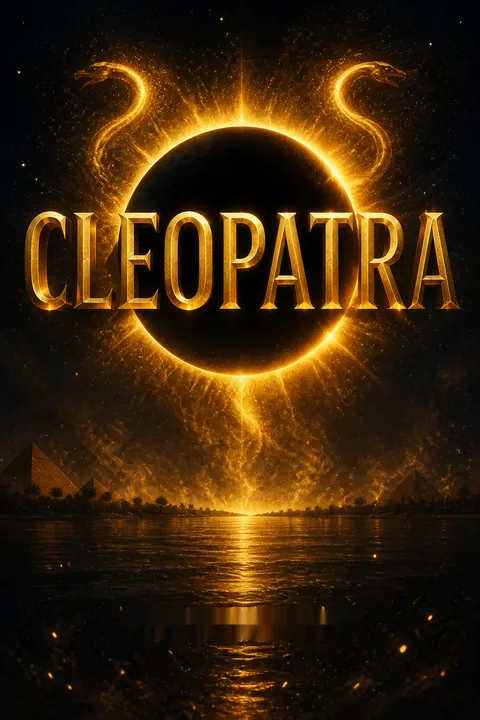

Plot Summary
The Crowned Daughter's Doubt
Cleopatra's story begins not with her death, but with her reluctant ascension to the throne. As her father's health fails, she is thrust into the role of Pharaoh, a position she feels unprepared for. Her closest companion, Charmion, offers comfort and loyalty, but Cleopatra's mind is haunted by the weight of her lineage and the expectations of divinity. The city of Alexandria pulses beneath her, wild and untamable, mirroring her own doubts. The death of her father is both a liberation and a shackle, and as she swims across the bay to claim her crown, she is both the chosen of Isis and a young woman terrified of failing her people and herself.
Sibling Shadows and Sacrifice
Cleopatra's siblings—Arsinoe, Theos, and Ptolemy—are both her allies and her greatest threats. The memory of Berenice, the sister executed for supposed divine corruption, lingers as a warning. The palace is a nest of intrigue, with Pothinus, the eunuch regent, manipulating the young Theos and sowing seeds of discord. Cleopatra's legitimacy is questioned, her lack of a visible god-given power a source of gossip and danger. The rituals of mourning for her father are tinged with the knowledge that every Ptolemy's reign is built on the bones of their kin. Sacrifice, she learns, is the currency of survival in her family.
The First Taste of Power
As Cleopatra assumes the throne, she is immediately confronted by the realities of rule: corrupt governors, shifting alliances, and the need to perform strength even when she feels none. Her first acts are both symbolic and practical—she exposes the greed of the Theban governor, rewards loyalty among her servants, and learns that spectacle is as much a tool as justice. The city's hunger for stories and rumors is insatiable, and Cleopatra must shape her own legend or be devoured by it. Her love for Egypt becomes her guiding star, even as she realizes that to rule is to be both adored and reviled.
The City's Heartbeat
Cleopatra's reign brings reforms and prosperity, but also drought and famine. She commissions temples, standardizes coinage, and secretly practices healing among her people, adopting the guise of Selene. The city's pulse is her own, and she finds solace in the Library of Alexandria, a haven of knowledge and memory. Yet, the shadow of Rome looms ever larger—Pompey's arrival and death on Egyptian soil entangle her fate with that of Julius Caesar. The politics of the wider world threaten to engulf her, and the first cracks in her family's unity begin to show.
The Witch's Scar
A storyteller's blade nearly ends Cleopatra's life, but Charmion's quick intervention leaves her with a scar—a mark of devotion and survival. The attack is a warning: her enemies are many, and her power is fragile. Cleopatra's healing skills are put to the test, and she crafts a public image of divine blessing to quell rumors of her inadequacy. The city's faith in her is as precarious as her own, and every act of mercy or vengeance becomes part of the myth that will outlive her. The bond with Charmion deepens, forged in blood and trust.
The Healer's Secret
Cleopatra's nights are spent in disguise, tending to the sick and poor of Alexandria. Her healing is both a calling and a rebellion against the limitations of her role as Pharaoh. The people know her as Selene, unaware of the queen's true identity. This secret life brings her closer to her subjects, but also exposes her to danger. The boundaries between ruler and ruled blur, and Cleopatra finds meaning in service, even as she fears the consequences of discovery. Her compassion is both her strength and her vulnerability.
The River's Turning
The murder of Pompey sets Egypt ablaze, and Cleopatra's position becomes perilous. Pothinus and Arsinoe conspire against her, and she is forced into exile within her own city. With the help of loyal allies and cunning disguises, she engineers a dramatic return—smuggling herself into the palace to plead her case before Julius Caesar. Their meeting is a collision of ambition, intellect, and mutual need. Cleopatra's wit and resolve win Caesar's support, but at the cost of further alienating her siblings and deepening the rift within her family.
The Betrayal Unveiled
The fragile peace between Cleopatra and her siblings shatters as Arsinoe and Theos, manipulated by Pothinus, seize power and plunge Egypt into civil war. Cleopatra's authority is challenged at every turn, and the city becomes a battleground of loyalties and betrayals. The burning of the Alexandrian fleet and the destruction of the Library mark the cost of ambition and vengeance. The loss of knowledge and kin is a wound that will never fully heal. Cleopatra's survival depends on her ability to adapt, to forgive, and to outmaneuver those who would see her fall.
The Queen and the Consul
Cleopatra's partnership with Caesar is both political and personal. Together, they reclaim Egypt, and their union produces a son, Caesarion. The birth of her child is both a triumph and a source of anxiety—he is unmarked by the gods, and his legitimacy is questioned by Romans and Egyptians alike. Cleopatra's love for Caesar is fierce, but shadowed by the knowledge that their worlds are fundamentally different. The death of Caesar shatters her, and she is left to navigate the treacherous waters of succession, motherhood, and the ever-present threat of Rome.
The Whore's Legend
Cleopatra's enemies weaponize her sexuality, branding her a witch, a whore, and a villain. The stories told about her—by poets, politicians, and rivals—become as real as any deed. She learns to wield her image as both shield and sword, embracing spectacle and rumor to maintain her grip on power. The birth of her twins by Marcus Antonius (Mark Antony) further complicates her legacy, as love and politics become inseparable. The world's gaze is relentless, and Cleopatra must decide which parts of herself to reveal and which to conceal.
The Family Fractures
The deaths of her siblings—by drowning, poison, and execution—leave Cleopatra increasingly isolated. Each loss is a scar on her soul, a reminder of the price of power. Her relationship with Charmion is both solace and sorrow, as the boundaries between friend, lover, and servant blur. The birth of her children is a fleeting joy, overshadowed by the knowledge that their futures are uncertain. Cleopatra's reign is marked by both abundance and tragedy, and she is haunted by the ghosts of those she could not save.
The Burning Library
The fire that consumes the Library of Alexandria is both literal and symbolic—the loss of memory, culture, and hope. Cleopatra mourns not only the scrolls and the tree of knowledge, but the possibility of a different future. The city is scarred, and so is she. The world is changing, and the old gods are silent. In the ashes, Cleopatra must find a new way to lead, to love, and to endure. The past cannot be reclaimed, but its lessons linger in every decision she makes.
The Lovers' War
Cleopatra's alliance with Antonius is passionate, tempestuous, and ultimately doomed. Together, they challenge Octavian for control of Rome and the world. Their victories are fleeting, their defeats catastrophic. The Donations of Alexandria, in which their children are granted kingdoms, provoke outrage in Rome and seal their fate. The war culminates at Actium, where betrayal and hunger sap their strength. Cleopatra's strategic brilliance is not enough to overcome the tides of history, and the lovers are driven to the brink of annihilation.
The Mother's Bargain
As Octavian's forces close in, Cleopatra's thoughts turn to her children. She orchestrates their escape, entrusting them to Charmion and the secret tunnels beneath the palace. Her own death is both an act of defiance and a final gift to those she loves—she will not be paraded as a trophy, nor allow her children to be hunted. The bonds of motherhood, friendship, and love are tested to their limits. Cleopatra's final acts are shaped by both desperation and dignity.
The Curse of the Gods
In death, Cleopatra meets Isis and learns the truth: the divine gifts of the Ptolemies are not blessings, but a curse for their ancestor's hubris. Her own power is the cruelest of all—resurrection. She is doomed to live and die, again and again, never finding peace. The gods are both just and merciless, and Cleopatra's suffering is both personal and cosmic. The cycle of love, loss, and longing is unending, and her story becomes a cautionary tale for all who would seek to rival the divine.
The Final Triumph
Octavian's conquest of Egypt is as much a battle of narratives as of armies. Cleopatra's death is transformed into legend, her image manipulated to serve the new order. The children are scattered, their fates uncertain. The city that was once the heart of the world is reduced to a footnote in Rome's glory. Cleopatra's memory is both preserved and distorted, her life a mirror for the ambitions and anxieties of those who come after. The end of her line is the beginning of her myth.
The End of the Line
Cleopatra's curse is to endure, to witness the deaths of her children and the erasure of her legacy. She wanders the world under many names, seeking solace in knowledge, love, and the fleeting joys of existence. The pain of survival is exquisite, and the hope of redemption elusive. Her story is retold in countless forms, each one a distortion, a reflection, a plea for understanding. In the end, she is both more and less than the sum of her legends.
The Curse Awakens
In the afterlife, Cleopatra confronts Isis and the truth of her fate. She is not granted rest, but condemned to live again, to bear witness to the endless cycle of ambition, love, and loss. Her story is not one of death, but of life—messy, glorious, and unending. She is every woman and no woman, a myth and a memory, a curse and a blessing. The final lesson is that freedom lies not in escape, but in the refusal to be defined by others. Cleopatra lives still, in every story told and every heart that dares to dream.
Analysis
Cleopatra by Saara El-Arifi is a bold reimagining of one of history's most mythologized women, blending historical detail with psychological depth and speculative elements. The novel interrogates the nature of power, gender, and legacy, challenging the reader to look beyond the familiar tropes of witch, whore, and villain. By giving Cleopatra her own voice, El-Arifi dismantles the narratives imposed by centuries of male historians and dramatists, revealing a woman shaped by love, loss, and the relentless demands of survival. The story's cyclical structure and the revelation of the family curse invite reflection on the ways in which history repeats itself, both as tragedy and as farce. The novel's modern resonance lies in its exploration of the costs of ambition, the complexities of identity, and the enduring struggle to define oneself in the face of overwhelming expectation. Cleopatra's refusal to be defined by others—her insistence on living, loving, and suffering on her own terms—is both a lament and a call to freedom. In the end, her immortality is not a blessing, but a challenge to all who would seek to understand her: to look beyond the legend, and to see the woman who lived, and lives still.
Review Summary
Most reviewers praise Cleopatra as a refreshing, emotionally resonant retelling that humanizes the legendary pharaoh by centering her own perspective. Readers appreciate El-Arifi's dismantling of misogynistic historical narratives, portraying Cleopatra as a complex, flawed, and deeply human figure rather than a mere seductress. The memoir-style first-person narration and Egyptian mythological elements were widely celebrated, though some critics noted pacing issues, heavy-handed foreshadowing, and a rushed ending. The audiobook performance also received praise. Overall, the novel earned a strong 4.01 rating across thousands of reviews.
People Also Read



Characters
Cleopatra
Cleopatra is the heart of the narrative—a woman shaped by lineage, expectation, and the relentless gaze of history. Her intelligence, wit, and compassion set her apart from her ancestors, yet she is haunted by the same curse of ambition and betrayal. Her relationships—with Charmion, her siblings, Caesar, and Antonius—reveal her capacity for love and loyalty, as well as her willingness to sacrifice for those she holds dear. Cleopatra's psychological complexity is rooted in her struggle to reconcile her humanity with the roles imposed upon her: queen, lover, mother, witch, whore, villain. Her development is marked by moments of doubt, triumph, and profound loss. In the end, she is both a victim and an agent of fate, condemned to eternal return by the very gods she sought to serve.
Charmion
Charmion is Cleopatra's anchor—a friend, lover, and handmaiden whose loyalty is unwavering. Her presence is a source of comfort and strength, and her scar is a testament to the price of devotion. Charmion's relationship with Cleopatra is intimate and complex, blurring the lines between service and equality. She is both a participant in and a witness to Cleopatra's greatest triumphs and tragedies. Her psychoanalysis reveals a woman who finds meaning in loyalty, even as it leads her to sacrifice her own happiness and, ultimately, her life. Charmion's death is both a culmination of her love and a symbol of the bonds that define and destroy.
Arsinoe
Arsinoe embodies the dangers of proximity to power. Her relationship with Cleopatra is fraught with jealousy, competition, and a longing to be seen. Gifted by the gods but denied the throne, Arsinoe's ambitions drive her to betrayal and rebellion. Her psychological profile is marked by insecurity and a desperate need for validation. The arc of her character—from mischievous child to formidable adversary to exiled and executed queen—mirrors Cleopatra's own journey, but with a darker outcome. Arsinoe's fate is a warning and a wound, her death both a relief and a source of enduring grief for Cleopatra.
Julius Caesar
Caesar is both a partner and a challenge for Cleopatra. Their relationship is built on mutual respect, political necessity, and genuine affection. Caesar's presence legitimizes Cleopatra's rule but also entangles her in the web of Roman politics. His psychological complexity lies in his ability to balance ambition with vulnerability, and his death is a shattering blow that leaves Cleopatra adrift. Caesar's legacy is embodied in Caesarion, but also in the shifting tides of power that follow his assassination. He is both a source of strength and a reminder of the impermanence of alliances.
Marcus Antonius (Mark Antony)
Antonius is Cleopatra's equal in intensity and ambition. Their love is tempestuous, marked by moments of ecstasy and despair. Antonius's loyalty is tested by the demands of Rome, his marriage to Octavia, and his own insecurities. His psychological profile is defined by a need for pleasure, recognition, and belonging. The arc of his relationship with Cleopatra is both a romance and a tragedy, culminating in mutual destruction. Antonius's death is the final blow that seals Cleopatra's fate, and his memory haunts her in life and death.
Caesarion
Caesarion is the embodiment of Cleopatra's hopes for the future—a child born of love and ambition, yet marked by the absence of divine blessing. His legitimacy is contested, and his life is a constant negotiation between safety and destiny. Caesarion's psychological development is shaped by the expectations placed upon him and the dangers that surround him. His death is a devastating loss, both personal and political, and it marks the end of Cleopatra's line and the beginning of her myth.
Theos and Ptolemy
Theos and Ptolemy represent the tragic fate of those born into the Ptolemaic dynasty. Their relationships with Cleopatra are marked by affection, rivalry, and manipulation by others (notably Pothinus and Arsinoe). Theos's drowning and Ptolemy's accidental poisoning are both the result of the family's curse and the relentless demands of survival. Their deaths are scars on Cleopatra's soul, reminders of the cost of ambition and the fragility of kinship.
Pothinus
Pothinus is the embodiment of court intrigue—a eunuch whose ambitions and machinations set the stage for much of the early conflict. His psychological profile is defined by resentment, cunning, and a willingness to exploit the weaknesses of others. Pothinus's influence over Theos and Arsinoe is both a symptom and a cause of the family's dysfunction. His eventual downfall is a testament to the dangers of underestimating Cleopatra's resolve.
Faunus
Faunus is a stabilizing force in Cleopatra's court—a man whose wisdom and pragmatism help navigate the complexities of governance. His relationship with Cleopatra is one of mutual respect, and his survival is a rare example of loyalty rewarded. Faunus's perspective offers a counterpoint to the passions and ambitions that drive the main characters, grounding the narrative in the realities of rule.
Isis
Isis is both a presence and an absence—a goddess whose favor is sought but never fully granted. Her mark on Cleopatra is both a blessing and a curse, and her revelation in the afterlife reframes the entire narrative. Isis's psychological role is that of the ultimate arbiter, her motivations inscrutable and her justice both poetic and cruel. She is the embodiment of the forces that shape and destroy the Ptolemaic line.
Plot Devices
Duality of Legend and Reality
The narrative structure is built on the tension between the stories told about Cleopatra and the reality of her life. The use of first-person narration allows for a re-examination of familiar events, challenging the reader to question the sources and motivations behind the legends. Foreshadowing is employed through references to the curse of the gods, the inevitability of betrayal, and the cyclical nature of history. The motif of resurrection—both literal and metaphorical—underscores the theme of eternal return and the impossibility of escape from one's fate.
Symbolism of the Asp and the Mark
The asp (cobra) is a recurring symbol of both protection and destruction, mirroring Cleopatra's own dual nature. The mark of Isis, and later the inked mark on Caesarion, serve as tangible representations of the family's connection to the divine—and the curse that comes with it. These symbols are woven throughout the narrative, linking personal and political events to the larger forces at play.
Interplay of Love and Power
Cleopatra's relationships—with Charmion, Caesar, and Antonius—are both sources of strength and catalysts for tragedy. The blending of love and politics is a central plot device, illustrating the impossibility of separating personal desire from public duty. The narrative structure alternates between moments of intimacy and scenes of grand spectacle, highlighting the ways in which private choices shape the course of history.
The Curse and the Cycle
The revelation that the Ptolemaic "gifts" are a curse reframes the entire story, casting Cleopatra's struggles as part of a larger, inescapable cycle. The use of cyclical narrative—beginning and ending with Cleopatra's voice, and her resurrection—emphasizes the themes of fate, repetition, and the search for meaning. The curse is both a plot device and a metaphor for the burdens of history, memory, and identity.
Download PDF
Download EPUB
.epub digital book format is ideal for reading ebooks on phones, tablets, and e-readers.








































