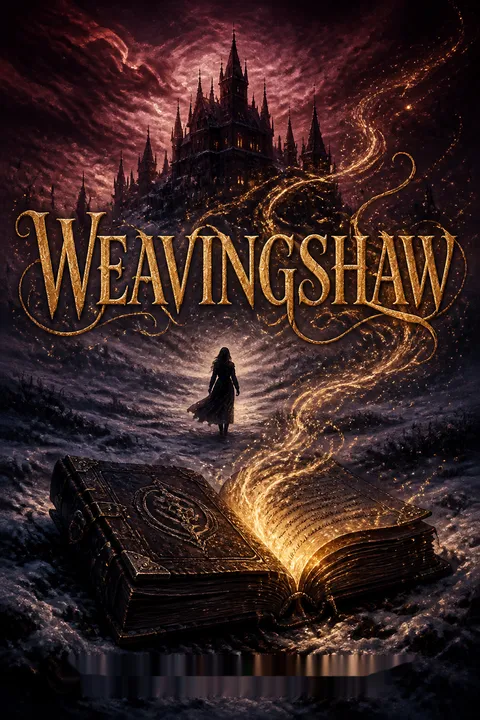

Plot Summary
Secrets For Sale
Leena Al-Sayer, a sharp-witted but impoverished refugee in the coal-choked city of Golborne, faces a crisis: her brother Rami, sick with the deadly Sweeper's Cough, is dying. Old rumors swirl about the enigmatic Saint of Silence—a man who pays for confessions, but whose deals change people and, if they lie, destroy them. Despite warnings, Leena braves the night, seeking the Saint's shop. Driven by terror and love, she offers up her greatest secret in exchange for a chance to save Rami. As she enters the Saint's hush-filled domain, shadow and hunger hover, and nothing about this transaction will leave her unchanged.
A Dangerous Bargain
After fighting for the Saint's audience, Leena bargains for medicine, agreeing her secret will be tested for truth, with deadly punishment for lies. Her secret? She sees the dead. The Saint—revealed to be the magnetic, perilous Bram St. Silas—demands proof. She's whisked that very night to Newtorn Prison, haunted and infamous, where the cost of confession attaches to body and soul. Leena's gift is tested: she identifies a hidden ghost and, implicitly, a killer—St. Silas himself. In exchange, she gains the cure for Rami and unwittingly binds herself into Bram's world of contracts, confessions, and controlled cruelty.
Hallways of Suffering
Ensconced at St. Silas's residence, Leena battles her own fever and guilt, healing alongside her brother but haunted by ghosts both literal and familial. Memory dredges up buried trauma—her mother's exile, her father's imprisonment, her brother's wounds, the loss of normalcy since the ability to see the dead. Ghosts test her while poverty and longing define her days. Nightmares blur past and present, but recovery grants Leena renewed determination. St. Silas, watching with calculated coldness, sets new terms: Leena must now hunt a ghost for him—Lord Avon—sealing her captivity to his dark design.
Terrors in Newtorn Prison
Visited by memories of the broken and betrayed, Leena's time in the confession room exposes her to stories of suffering: deaths in locked factories, betrayals among refugees, the high cost of survival for the poor. Haunted by echoes of her father's radicalism and rumors of political unrest, Leena sees how justice is sold and despair inherited. The prison's machinery, run by Warden cruelty and political intrigue, churns up trauma and foreshadows coming revolts—a crucible that forges Leena's hunger for something larger than coins or secrets.
The Ghost-Seeing Girl
Her rare gift is both weapon and wound. Leena endures the agony of confession after confession, sits beside Bram as he uses her insights to prey on human misery and profit from pain. She's increasingly trapped—by her poverty, gender, and alienation as an immigrant, but also by the uncanny. Her visions bring her no peace, her patron little kindness. Still she sharpens herself, determined to turn curse into leverage, even as Bram uses every trick to keep the balance of power in his own hands.
The Saint's True Price
The ledgers of St. Silas are revealed as cursed books, trapping human emotion like a poison, feeding demons in the underworld and ensuring Bram's survival. Secrets for sale are currency, but those who lie to the Saint face brutal mutilation—a tongue cut, a mouth carved with a bloody X. Leena, unable to escape, witnesses first-hand the dangers of both truth and silence, and the bargains made by the powerful with the supernatural in order to triumph over fate.
Confessions and Contracts
Leena and Bram's relationship twists as suspicion, indebtedness, and reluctant admiration seed between them. Rami's fate, too, entangles with Bram's: the young man is beaten, nearly lost in a criminal scheme, before Leena and Bram undertake a perilous rescue. Every act and alliance is secured by contract or contaminated coin, each with a hidden price. As the Saint maneuvers to get what and whom he wants, Leena glimpses the hidden power structures that shape their city—and Bram's own curses and compulsions.
Demon-Blood and Salt Circles
At the city's Festival of Demons, masks drop: Bram and Leena test the boundaries of trust, violence erupts, and the city's tensions swell. Leena's protection against ghosts—salt, copper, and song—begins to fail in a world where demons walk as housekeepers and shopkeepers, and even memories are haunted. Demonic bargains and immigrant magic entwine as Bram's own cursed inheritance is hinted at, and Mrs. Van's monstrous, ageless nature is unmasked.
Currencies of Power
Revolution stirs at the margins of Morland: rumors of rebellion, economic distress, and police corruption surge as the poor begin to organize. Bram's ledgers fatten—he is never on the losing side, as gold from suffering lines his coffers. Leena, meanwhile, glimpses how her tiny secrets or quirks—her book, her clothes, her brother—can be used as leverage. Every kindness or cruelty is now a coin to be spent; even the past is for sale when power is at stake.
Awakenings and Betrayals
With the search for Lord Avon stalling, Leena's greatest betrayals come from unexpected places: a trusted spirit leads them into a trap, and loyalties are bought and sold at the highest price. The Wake, a cabal of aristocrats and demons, are revealed to be at the core of the city's secret trades—prisoners, demons, and even children. Each chapter of ancient treachery intertwines with the present, and Leena finds herself facing double-crosses—even as she's forced to cross every boundary to survive.
The Wake's Tangle
At last, the Wake's history and purpose become clear: the aristocrats trade their own—children and kin—for power, summoning demons into the world through rare vessels. Lady Hargreaves's memories, imprinted on Leena, tell of betrayed love, cutthroat alliances, and the cost of ambition. Leena uncovers the truth about Bram: he is the lost Avon heir, sold by his father and godfather for a cursed object, survivor of a demon contract whose chains reach beyond the grave.
Legacy of Weavingshaw
The search for Lord Avon's ghost and the red diary brings Leena and Bram to the ancestral Weavingshaw estate—a monstrous fortress bound to both blood and demon. There, Bram's secret identity as Avon's heir is exposed, and their fates—along with the estate's—are revealed to be bound up in demonic bargains struck centuries ago. As snow cloaks the moors and revolution boils in the village below, vengeance, love, and survival collide, even as the land itself seems hungry for blood.
Possession and Possibility
As Leena battles possession from vengeful spirits and ancient demons, her insight—the legacy that sickens and saves—becomes the key to freedom for more than one tormented soul. The revelation that she is herself a vessel for the supernatural throws everything into doubt: is her power curse, gift, or accident? What can she choose, and who is choosing for her? The dead, the dying, and the damned all circle, each seeking release or dominance, as old contracts and new affections demand the impossible.
The Festival's Unmasking
In the aftermath of violence, Bram and Leena circle each other at the city's most decadent celebration. Surrounded by revels and predators, their mutual longing—physical, emotional, even metaphysical—comes to a boiling point, but it is haunted by the patterns of their pasts: power is never freely given, and pleasure is always shadowed by sacrifice. They unmask each other's strengths and vulnerabilities, but still keep the most dangerous truths just out of reach.
Avons Can Cross
The meaning of ancient timepieces, cryptic warnings, and hidden diaries finally surface: only an Avon can cross the crypt lake and open the true secret at Weavingshaw's heart. The crypt demon is hungering; fresh revolution threatens. As Bram faces duel, poison, and betrayal, Leena risks everything, traversing boundaries of blood, loyalty, and the spectral, to try to secure a future for both herself and the man she now loves.
Blood on the Moors
The duel for Weavingshaw—between Bram and his persecutors—turns bloody. Betrayals by friends, family, and ghosts force Leena and Bram into flight. The moors become both womb and grave: as Bram's life ebbs from poison, Leena's own strength is tested to its limits. In seeking shelter among revolutionaries, demons, and the dispossessed, Leena claims agency not through birthright, but will—refusing to let fate, heritage, or demon dictate the end of her story.
Bargain in the Dark
Desperate to save Bram, Leena bargains with the demon Orley, traversing into the shadow realm through a vessel within herself. Here, human suffering is currency and contracts bind beyond death. The secrets traded in the living world find their echo in this otherworld, where the consequences of ancient bargains play out across generations. As Leena struggles to survive—and to pull Bram back from the brink—each deal threatens to cost her her identity, her freedom, or her soul.
Unwritten Endings
As both Leena and Bram face the possibility of death or damnation—he to demon poison, she to the power of the vessel inside her—the meaning of agency, of love, and of home comes into sharpest focus. Old contracts are challenged, revolutions spark, and bloody reckonings loom. In the end, the only true escape from cycles of suffering and legacy is in choosing one's own loyalty—and in the hope, at last, of writing a story not dictated by anyone else's terms.
Analysis
Weavingshaw is a gothic-fantasy masterwork of psychological and social allegory, fusing the haunted expanses of generational trauma with the claustrophobic terror of obligation—both human and supernatural. At its core is a meditation on the cost of survival in a world shaped by ancient bargains, cyclical exploitation, and the ever-renewing hunger of power. Leena Al-Sayer's journey is simultaneously personal and political: as a woman, a refugee, and a vessel—literally and metaphorically—for other people's stories, she confronts injustice at every level, from city poverty to magical damnation. Bram St. Silas/Avon stands as a counterpoint, his ruthlessness and suffering inseparable; both he and Leena are shaped—and nearly destroyed—by the violence of legacy. The plot's supernatural elements, including demon contracts and cursed ledgers, accentuate but never overshadow the very human costs of community, rebellion, and love. Ultimately, Weavingshaw warns against the idolization of inheritance and the sanctifying of suffering—reminding modern readers that only through claiming agency, disrupting cycles of silence, and forging new terms with both the living and the dead can true freedom be approached.
Review Summary
Weavingshaw receives an overall rating of 4.17/5, with most readers praising its atmospheric gothic setting, slow-burn romance, and beautifully layered writing. Reviewers consistently highlight the aching yearning between leads Leena and St. Silas, the richly immersive worldbuilding, and thoughtful themes around immigration and displacement. Critical reviews cite scattered plotting, a slow start, and familiar romantasy tropes as weaknesses. Many readers were surprised to discover it's the first book in a trilogy, left desperate for the sequel after its gripping cliffhanger ending.
Characters
Leena Al-Sayer
Leena is a refugee's daughter, surviving on the fringes of a hostile city with the rare, double-edged gift of seeing the dead. Her life is defined by love for her family—her sick brother and imprisoned father—and a sharp awareness of her outsider status as an Algaraan in Morland. Psychoanalytically, she is driven by fear of abandonment, a hunger for belonging, and inherited trauma. Leena's character arc is an ascent from powerless survival to active negotiation with her own curse, the systems that exploit her, and even supernatural forces. Her emotional openness becomes both vulnerability and strength; she is at once a mirror for injustice and a catalyst for revolution within the world of Weavingshaw.
Bram St. Silas / Lord Bramwell Avon
Bram is the enigmatic Saint of Silence—a confessor and punisher, merchant of secrets, and reluctant master of horror. As the son of Percival Avon, Bram was betrayed and sold by his father for a demonic contract, marked by secrets trapped not only in ledgers but in his flesh and lineage. He is brilliant at reading others, calculating, and emotionally guarded, surviving on cruelty and control. Yet, under this, Bram's wounds run deep: abandonment, child abuse, mental and physical violence. His relationship with Leena pushes him toward self-awareness and, eventually, a desire for freedom not just from contracts but from his own legacy. The tension between his claim to power and his need for connection defines his arc.
Rami Al-Sayer
Rami embodies both the potential and peril of masculinity shaped by exile, trauma, and poverty. A fighter—sometimes literally, always emotionally—his love for Leena drives both reckless acts (duels, betrayals) and moments of self-sacrifice. He represents the familial stakes of Leena's choices and serves as a parallel for Bram's loneliness and the cost of fraternal bonds. Increasingly entangled in the city's criminal and revolutionary underworld, Rami resists being victimized but remains vulnerable to cycles of exploitation.
Mrs. Van
Presenting as a severe, tireless housekeeper, Mrs. Van is revealed to be part-demon and a storied survivor, once servant to Bram's family, witness to betrayal and violence at Weavingshaw. She is fiercely loyal to the Avon line but harbors her own motives and griefs. Mrs. Van's existence destabilizes easy categories of good and evil, bridging the human and demonic worlds. She is both a source of comfort in crisis and a reminder of Weavingshaw's ancient, inhuman bargains.
Theodore Daye
Theo was Bram's servant and friend, traded alongside him into demonic bondage as a boy and ultimately sacrificed. As a ghost, Theo's apparent loyalty to Leena becomes a double-cross orchestrated by Orley, making him both victim and instrument of manipulation. His presence in the narrative links past cycles of betrayal to present dangers and exposes the ease with which the vulnerable can be used by the powerful.
Lord Charles Hargreaves
Hargreaves begins as a seeming ally—once family friend, employer, even surrogate parent to Bram—but is revealed as an architect of exploitation and, ultimately, a murderer. He symbolizes the rot at the heart of the aristocracy: loyalty warped by ambition, compassion curdled to cold calculation. As a Wake leader, he manipulates human and demon alike, representing the integration of old power with new, predatory forms of control.
Percival Avon
Lord Avon is both ghost and trauma: his deals with demons, willingness to trade his own son, and obsession with preserving Weavingshaw breed cycles of suffering. His charisma and vitality, recalled in memory, stand in jarring contrast to his capacity for betrayal. His relationship with Hargreaves initiates the Wake and seals the fate of multiple generations.
Orley
At first, a grotesque ally, Orley is eventually exposed as a demon exiled from his world, hungering for home and willing to manipulate dance between corrupt worlds. His ability to bargain, coerce, and consume human suffering points to the broader allegory of exploitation in both worlds, blurring the line between supernatural evil and human vice.
Moira
Once Lord Avon's mistress and briefly wife, Moira is strangled to death by him in a final haze of paranoia and secrecy. Her ghost weaponizes anger at both male violence and the silencing of women, at times possessing Leena. The parallel between her fate and the dangers Leena faces is stark; Moira is a warning and, ultimately, freed by Leena's intervention.
The Wake
Not a single character but a network, the Wake embodies the cycle of betrayal and exploitation in the world of Weavingshaw—trading humans and secrets with demons for land, legacy, and fleeting power.
Plot Devices
Ledgers and Contracts
Central to the narrative are Bram's ledgers, demon-forged books that capture the emotional agony of confession—becoming both a commodity and a curse. The formalization of exchanges by written contract literalizes the transactional nature of survival; both physical pain and the threat of supernatural retribution force the characters to honor bargains. This structure underpins the narrative's psychological intensity—the fear of what is owed, the peril of knowledge, and the ever-present possibility of violence or betrayal.
Possession and Haunting
Possession operates on multiple levels: Leena is at risk physically, psychologically, and existentially, not just from supernatural ghosts but from inherited trauma and societal expectation. The motif of being overtaken—by memory, love, curse, or ghost—mirrors the characters' struggles with agency in an exploitative society. This device also allows for layered revelations, as past injustices surface through Leena's visions and trances.
False Hope and Betrayal
The narrative repeatedly uses figures imbued with trust (Theo, old housekeepers, even spirits) as lures for larger betrayals, often orchestrated by systems or individuals of power. The search for the red diary, the hope of finding Lord Avon's ghost, and the safety of contracts all prove temporary, always unraveling to reveal deeper manipulations and new dangers.
Supernatural as Allegory
Demonic possession, cursed contracts, vampiric landlords and corrupted aristocrats allegorize real-world cycles of poverty, migration, collaboration, and trauma. The magical world's rules and currencies reflect and critique the existing power structure in Morland; the supernatural is never escapist but always intertwined with economic and political reality.
Revolution and Legacy
The revolutionary fervor in the background mirrors Leena's personal revolt against her fate; the ancient bargains of the landed classes contrast against the dynamic suffering and resilience of newcomers. Family legacy, bloodline, and the forging/breaking of oaths organize the plot's momentum. The ways these are formally written—on paper, in ledgers, into supernatural contracts—underscore the contest between past fate and future possibility.
Download PDF
Download EPUB
.epub digital book format is ideal for reading ebooks on phones, tablets, and e-readers.








































