
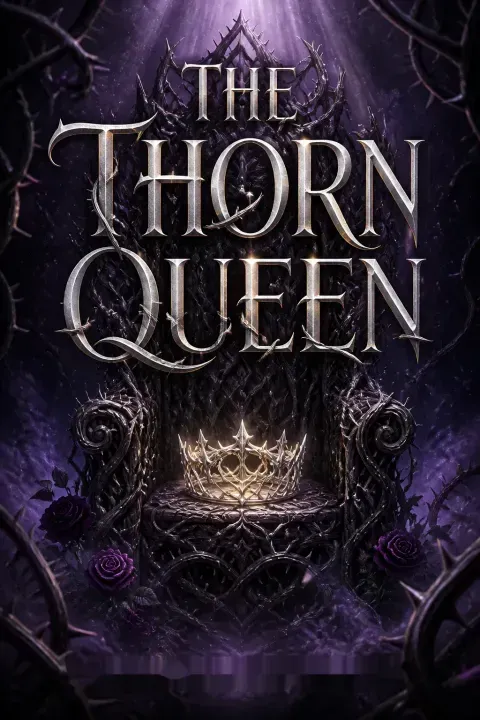


Plot Summary
Prologue
Emmett De Vere2 lies starving in a dungeon, counting days by the drip of water and the healing of a scar on his scalp. He picks the lock of his cell with a boutonniere pin and nearly reaches sunlight before a guard catches him, hurls his emaciated body down the stairs, and beats him bloody.
As consciousness fades, his mind fills with images of Ivy Benton:1 her wedding dress haloed by golden sun, her freckled shoulder, her soft brown eyes. He cannot regret loving her, even if it means dying here. The last thing he feels is warmth.
The prologue establishes Emmett's physical and emotional devastation as the direct cost of loving Ivy and opposing Bram. His attempted escape is both desperate and doomed, underscoring the impossibility of resisting Bram's power alone. The prison imagery of darkness, hunger, and dripping water creates a sensory deprivation that mirrors his psychological isolation. That his final thoughts are not of regret but of Ivy's warmth redefines love not as a weakness that led to his capture, but as the one thing his captors cannot strip away. This reframes suffering as a currency spent willingly.
The Faerie King's Story
Four months after her wedding to Bram,4 Ivy1 lives in Bath's Royal Crescent as England's queen and Bram's4 neglected wife. He visits her bed only to sleep, whispering her name. At night she attends his court's grotesque revels where humans are tortured for sport.
During one party at the house of Rhion,5 Bram's4 closest adviser, Ivy1 and her ladies-in-waiting attempt to befriend a skittish courtier named Aurelia Vallen, hoping she will reveal secrets about the Otherworld. Before Aurelia can speak, Bram's4 guards drag her away screaming.
Moments later Bram4 arrives, his arm bruising Ivy's1 ribs as he pulls her close. He warns her cryptically to be more careful, then promises a gift arriving tomorrow. Ivy1 realizes she is being watched far more closely than she knew.
Ivy's performance of the 'story of the faerie king' is the book's central ritual of survival: a bedtime narrative she tells Bram while imagining smashing his perfect nose. The story within the story collapses the distance between bedtime comfort and waking nightmare. Bram's need to hear this tale reveals his pathological dependence on being seen as beloved despite his monstrosity. Ivy's simultaneous hatred and caretaking creates a psychological double-bind where her very identity as queen requires her to nurture what she wants to destroy. The failed Aurelia gambit establishes that no conspiracy escapes Bram's surveillance, raising stakes for every subsequent act of rebellion.
Ethel Among the Branches
The next morning Bram4 announces Ivy's1 present has arrived. She searches the house and finds nothing until shrieks of faerie laughter draw her outside, where she discovers her elderly cousin Ethel's body impaled on tree branches. Two faeries explain through giggles that Ethel had bargained with them to fly, but she did not look up for branches.
Ivy1 collapses, screaming at Bram4 to retrieve the body and kill the faeries responsible. Bram4 complies with the corpse retrieval but lets the killers go, dismissing Ethel's death as a freely made bargain. Inside, Ivy's1 hope extinguishes like a snuffed candle. She sits by the window all day, wishing for death for the first time in her life, watching the gray world pass below.
Ethel's death weaponizes Ivy's childhood correspondences against her. The letters about prize pumpkins become evidence of a relationship Bram could exploit, transforming innocent connection into mortal vulnerability. The faeries' laughter at Ethel's death is not sadism alone but a genuine incomprehension of why humans value fragile life. Bram's indifference to punishing the killers reveals his governance philosophy: no rules, only appetite. Ivy's desire for death marks a psychological inflection point: she has moved from strategist-survivor to someone whose continued existence requires a reason beyond survival itself.
Beneath the Baths
Suspicious after Rhion5 mentions Olive's9 daily disappearances, Ivy1 follows her lady-in-waiting through the streets of Bath to a magically hidden door in a stone wall. Inside the underground Roman ruins, Ivy1 discovers Queen Mor6 imprisoned in a cage, with Olive9 delivering her food in an enchanted trance.
Ivy1 confronts Mor,6 demanding she help save Bram4 from himself and open the door to the Otherworld, but Mor6 refuses to betray her son. As Ivy1 departs, Rhion5 appears in the tunnels and makes a stunning confession: he has grown to loathe the monster Bram4 became and wants Ivy's1 help to kill him. He reveals that Bram4 himself is the door between worlds, and only a member of his royal family can pass through. He also claims to love Lydia.3
The revelation that Bram is the door transforms geography into anatomy: crossing between worlds requires proximity to the monster himself. The caged mother and enchanted caretaker compose a dark nativity scene, with Olive's blank obedience mirroring Ivy's own nightly performances for Bram. Rhion's defection introduces the problem of trusting a faerie, the species that cannot lie but excels at selective truth. His confession of love for Lydia is strategically unverifiable, making his allegiance the novel's central gamble. The underground temple setting, once a place of worship, now houses the deposed goddess who still commands devotion from her son.
Hate Tastes Sweeter
Rhion5 explains that faeries can taste strong human emotions like a drug. Ivy1 resolves to intoxicate Bram4 with her hatred so he will open the door between worlds. At the next revel, she sits on his lap, trailing kisses down his neck while flooding her mind with memories of Emmett.2 Bram4 grows glassy-eyed and pliant.
When Ivy1 whispers a plea to see the Otherworld, he lazily reaches out and opens a shimmering portal to a landscape of autumn hills and a distant castle. While Bram4 sleeps, Rhion5 urges Ivy1 through. She steps from Bram's4 bedroom into sun-warmed grass, then watches the door vanish behind her. Ahead lies the opalescent castle, her sister,3 and Emmett,2 if they still live.
The emotional intoxication scene inverts the consummation Bram expects into a transaction where Ivy's hatred is the currency and her desire for reunion with Emmett is the true passion. The physical revulsion she feels becomes a weapon rather than a weakness, converting her trauma into tactical advantage. The portal's appearance as a 'postage stamp' dimension suggests the Otherworld is both vast and contained, a realm that can be viewed but not entered without the king's consent. Ivy's crossing completes the transition from hunted to hunter, though the closing door leaves her stranded with no escape except through or around the very tyrant she just drugged.
The Court Laughs
Ivy1 crosses the Otherworld's countryside and enters the castle, where guards drag her into a revel. At the front of the ballroom, on twin thrones, sit Lydia3 and Emmett,2 both crowned and transformed: kohl rimming their eyes, their hair long, their bodies sharper. A dark-haired girl sits in Emmett's2 lap, feeding him honey from her fingers.
When Ivy1 gasps his name, the entire court erupts in laughter. Lydia3 rushes after her fleeing sister and reveals the truth: Bram4 married Lydia3 here two years ago, before ever coming to England. Emmett2 emerges, and what he says shatters Ivy1 further. He tells Lydia3 it is not really Ivy,1 that Ivy1 died on her wedding night. He believes she is a selkie, a shape-shifter sent to trick them.
The court's collective laughter at Ivy's entrance is the novel's cruelest inversion: she has imagined herself as rescuer, but the people she came to save greet her as a punchline. Emmett's refusal to believe she is real extends beyond caution into a defense mechanism. Accepting Ivy's survival would mean confronting two years of grief he has structured his identity around. The honey-feeding tableau works as a visual echo of Ivy's own performance with Bram, suggesting that survival in the Otherworld requires everyone to become something they despise. Lydia's two-year marriage retroactively transforms the entire first book's premise, revealing Bram's courtship as a deliberate, decades-long scheme.
Water Proves Truth
Ivy1 bangs on Emmett's2 door until her knuckles ache. Lydia3 suggested selkies return to their true form in water, so Ivy1 dumps a full bucket over her head when he finally opens the door. Emmett2 sees her soaking wet, still human, and crushes her against the wall in a desperate kiss. He pins her there, months of grief pouring into the heat between them.
Then, just as suddenly, he lowers her to the floor and wrenches himself away, apologizing. She pounds on his door until the sleeping draught she was given earlier pulls her under, and she collapses in the hallway. Emmett2 later carries her to bed, braids her hair, and stands in her doorway watching her breathe before confessing to Lydia3 that he cannot burden Ivy1 with what he has become.
The water test transforms an old folklore trope into a threshold of intimacy. The kiss following proof of identity is not reconciliation but grief's sudden release: Emmett kisses her as if she were already lost again. His withdrawal reenacts the original trauma, except this time he is the one doing the leaving. The violence of his self-denial, slamming the door on the person he has mourned for two years, reveals that he fears his own damage more than any external threat. Sleeping outside her door while refusing to enter her room literalizes his inner contradiction: he will guard her life but not share it.
Bram's Welcome Banner
The next morning Ivy1 is led into the town square where banners reading WELCOME, IVY hang from every window. Bram4 lounges on a throne, spinning a knife, and declares he knew she would come. To resolve the problem of two wives, he announces a series of trials to determine who will remain queen of the Otherworld.
Guards haul Marion8 and Faith7 forward, bruised and bloodied, as leverage: if Ivy1 refuses to participate, her friends will suffer in the dungeons. If Lydia3 acts out, Bram4 will punish Emmett.2 When Ivy1 lies to placate him, her enchanted corset constricts until she can barely breathe. Emmett2 later cuts her free in the carriage, then recedes back into his role as Bram's4 compliant regent.
Bram's pre-printed welcome banner transforms Ivy's daring escape into a scheduled performance. She never entered the Otherworld; she walked onto a stage already set. The sisters-as-competitors structure externalizes Bram's worldview that love is a zero-sum resource to be extracted through violence. The enchanted corset that punishes lying is Bram's cruelest innovation: a device that makes authenticity lethal while rendering performance physically dangerous. Emmett's public compliance and private rescue embody the novel's central survival strategy: perform complicity before an audience that never stops watching, then act in the margins.
The Unicorn's Horn
The first trial requires the sisters to hunt and kill a creature marked with Bram's4 royal seal. Ivy,1 lost in the forest, befriends a water sprite named Duddon11 who gives her a map after she cries into its stream.
She finds Lydia3 standing over a baby unicorn, its coat white and unblemished except for Bram's4 freshly branded seal. Ivy1 throws her sword into the water and begs Lydia3 not to kill it, but Lydia3 snaps the creature's golden horn off its head and stabs it through the neck.
The unicorn screams a death knell that haunts Ivy1 as Lydia3 carries its body to Bram's4 feet. Later that night, Lydia3 slips into the garden where the unicorn lies healing in a hollow beneath a rosebush. She whispers an apology and guides the creature to freedom beyond the castle gates.
The unicorn killing is a sacrifice Lydia performs to protect Ivy from the land's retribution. Her public brutality and private mercy create a split-self architecture that defines her character: she performs monstrousness to preserve her capacity for gentleness. The unicorn's survival, hidden from Bram, suggests the Otherworld's true loyalties lie with Lydia, not its king. Duddon's appearance introduces the small folk as moral witnesses who will become crucial allies. The water sprite's exchange of a map for tears establishes the Otherworld's transactional logic while also showing that grief itself has value.
Seventy Years Too Late
Ivy,1 Emmett,2 Lydia,3 Rhion,5 Marion,8 and Faith7 set out through the enchanted forest to find Ferrinus, the cold iron knife that can kill a faerie king. To cross a bridge, each must offer a button and a memory. The spirit rejects Ivy's1 offering as meaningless and flings her back to the castle. When she arrives, seven decades have passed.
An elderly Emmett2 with white hair and a lined face tells her she disappeared seventy years ago. Ivy1 collapses, realizing she has missed his entire life. Then she blinks and finds herself back in the forest with the others, covered in blood from their battle with Redcaps at Bram's4 old cottage. The spirit's cruelty was only an illusion.
The seventy-year vision externalizes Ivy's deepest fear: that the gap between her and Emmett, measured in years apart rather than miles, is already unbridgeable. The spirit's rejection of her button as meaningless mirrors her own anxiety that her memories lack sufficient weight. This temporal disorientation is the Otherworld's signature violence: not physical pain but the weaponization of regret against the present. That the vision proves false does not diminish its psychological impact; Ivy now knows exactly what she fears losing. The Redcap battle that follows, with its visceral bloodshed, grounds the abstract terror of time in the immediate threat of mortal combat.
The Cave's True Horror
Bram's4 second trial sends the sisters into the Isern Caves, legendary for containing pure pain. Ivy1 finds Ferrinus almost immediately, the knife dropped near the entrance by the Redcaps.
But the deeper she walks, the more the cave traps her in visions: Emmett2 and Lydia3 grieving together in a decaying garden, Emmett2 as Bram's4 hollow-eyed regent, and finally Lady Thalia,10 a cruel faerie courtier, standing opposite Emmett2 in a candlelit ceremony. He speaks marriage vows. Then Lydia3 screams at him for making the worst possible bargain.
In the final vision, Ivy1 sees Emmett2 in Thalia's10 bed on the very night Ivy1 herself was dosed with a love potion, the bruise she left on his neck still fresh. Ivy1 emerges from the cave hollowed out, having lasted longer than Lydia3 and thus won the trial.
The cave's mechanism is devastatingly precise: it does not show lies or fears but the factual past Ivy was not present to witness. The emotional pain is the truth itself. Emmett's political marriage to Thalia recontextualizes every interaction since Ivy's arrival, turning his evasions from mystery into confession he could not speak aloud. The final vision, of him in Thalia's bed with Ivy's love-bite still visible, collapses the distance between 'he loves me' and 'he cannot be mine' into a single unbearable image. The cave's genius is that it offers no catharsis, only knowledge. Ivy wins the trial but loses the ability to trust her own understanding of what she and Emmett are to each other.
Letters from the Dead
Ivy1 confronts Emmett2 in Thalia's10 bedroom, and he confesses to the marriage, explaining it was a political bargain made when he believed Ivy1 dead and needed to protect Lydia.3 Ivy1 walks out. At dawn, Lydia3 brings her a box: dozens of letters Emmett2 wrote to Ivy1 throughout his two years of grief.
Each letter is dated and addressed to a dead woman. They describe dreams of her, promises to be worthy, and a wedding he imagined where Pig would carry the rings. The most recent, written just before her arrival, begs for a sign from beyond the grave.
Ivy1 runs to Emmett's2 room, and he drops to his knees, swearing he is hers down to his bones. She finally understands: his distance was never indifference but the paralysis of a man who has spent two years mourning someone who suddenly stands before him, demanding he believe in futures again.
The letters function as an epistolary séance, a one-sided correspondence that kept Ivy alive for Emmett while simultaneously entombing her. The revelation that he wrote them while married to Thalia reframes the marriage not as betrayal but as a living suicide, a choice to become dead in life because the alternative, moving on, would mean accepting Ivy's death as permanent. His kneel-and-confess moment reverses their first reunion: where water proved she was not a selkie, the letters prove he was not faithless. The emotional arc completes when Ivy understands that Emmett has been faithful to a ghost, and the real woman is more terrifying than the memory.
The Last Trial Begins
Bram4 catches Ivy1 when he visits her bedroom glamoured as Emmett.2 She kisses him, thinking he is her lover, and his rage at discovering the affair precipitates the final trial. Guards seize Ivy,1 Mor,6 and the others.
In a coliseum packed with faerie spectators, Bram4 announces the winner will be the last living sister. He arms Ivy1 with the knife that failed to kill him and Lydia3 with the unicorn horn. When neither moves to attack, he floods their minds with a magical voice whispering their ugliest thoughts about each other.
Both sisters curl in the dirt, hands clamped over their ears, screaming. When they still refuse to fight, an enraged Bram4 levitates Ferrinus and sends it flying into Lydia's3 heart. She falls, and blood blooms across her chest.
The coliseum scene weaponizes Bram's understanding of love's dark underside: he knows the unsaid resentments between sisters and amplifies them into murderous commands. The magical voice represents internalized patriarchy given literal voice, the whisper that other women are competition, that love is finite, that one sister's survival demands the other's death. By refusing to obey, Ivy and Lydia demonstrate that love is not the absence of negative feelings but the choice to act despite them. Bram's decision to kill Lydia himself when his puppets will not dance reveals his ultimate fear: that he cannot control the narrative, only end it.
The Land's Revenge
Ivy1 cradles Lydia's3 body as the coliseum begins to shake. Trees erupt through the marble floor, vines snake over the stands, a river bisects the arena. The land itself is mourning its queen. Duddon11 the water sprite appears, weeping, and explains that Lydia3 was connected to the Otherworld, its true queen.
The sprite retrieves the sword Ivy1 threw in the water during the unicorn trial and urges her to be clever. Ivy1 finds Bram4 pinned to a massive tree by branches that have coiled around his limbs and throat. He begs her to cut him free.
She asks why he pitted them against each other. His answer, that he only wanted someone to fight for him, is the last thing he says before Ivy1 drives her unforged iron sword through his chest. The blade, never having spilled blood before, kills an immortal.
The land's awakening fulfills Lydia's earlier intuition that the Otherworld grieves Bram's absences. Her death is the final absence the land cannot bear, transforming passive sadness into active vengeance. The sword that failed to kill a unicorn succeeds in killing a king because it remained pure: cold iron, unforged, never bloodied. The paradox is that mercy, sparing the unicorn, created the weapon that justice required. Bram's dying confession, that he only wanted someone to fight for him, reduces his centuries of tyranny to a child's loneliness, a hollowing revelation that makes his death more pitiful than triumphant. Ivy's killing stroke is both execution and euthanasia, ending a life that had long ceased to feel anything but absence.
Queen Lydia Rises
After Bram's4 death, the faeries gather around Lydia's3 body, kneeling in grief. Thousands chant her name. Vines slither over her corpse, covering every inch of her until she glows with blinding white light.
When the vines retreat, Lydia3 gasps back to life, her skin luminous, her hair dotted with white blooms. She describes walking past Bram4 on a flower-lined road before a golden tether pulled her back into her body. Duddon11 declares that the land refused to let her go.
That night, Lydia3 discovers she can open the door to England but cannot cross through it herself. She has become part of the Otherworld, resurrected as its immortal queen. Ivy1 steps through to Kensington Park but Lydia's3 hand dissolves to smoke at the threshold. She will remain forever.
Lydia's resurrection through the land's intervention completes her arc from Bram's discarded wife to the Otherworld's chosen sovereign. The 'golden tether' pulling her back suggests that love, particularly the love of a place for its ruler, can override death itself. But the resurrection comes at a cost: she is now as bound to the Otherworld as her subjects are to her. The door test scene, with Ivy in England and Lydia unable to follow, mirrors and inverts the original separation. Before, Ivy crossed worlds to find Lydia; now Lydia must remain while Ivy returns home. The childhood dream of shared adventures has become a permanent geographical partition, redefining sisterhood as a bond that transcends physical proximity.
God Save the Queen
Back in London, Parliament summons Ivy1 to determine the future of England. Lord Langley proposes passing the crown to a distant duke, dismissing Ivy1 as a temporary regent. Emmett2 rises and delivers an impassioned defense: Ivy1 killed Bram,4 held the country together during his reign, and possesses the justice and kindness England needs.
Ivy1 herself addresses the council, listing her accomplishments in railway proposals, food shipments, and governance while Bram4 neglected the realm. When Langley protests that an eighteen-year-old girl cannot rule, Emmett2 proposes on the spot as her regent.
The council votes overwhelmingly to keep Ivy1 as queen. Months later, during their coronation carriage ride to Westminster Abbey, Emmett2 reminds her they first met in a carriage, and she was just as beautiful then. Hand in hand, they enter the abbey to the swell of an orchestra.
The Parliament scene dramatizes the tension between institutional legitimacy and demonstrated competence. Ivy's list of accomplishments is a quiet rebuke to the assumption that power derives from bloodlines rather than action. Emmett's public proposal transforms their private love into a political solution: a regent-husband satisfies the patriarchal demand for male leadership while preserving Ivy's authority. The vote, with scattered nays, acknowledges that consensus is never total, but legitimacy requires only a working majority. The coronation carriage callback to their first meeting closes a narrative loop that began in darkness and ends in ceremony, the private memory now public ritual.
Epilogue
Twenty years later, Ivy1 rules England from Kensington Palace with Emmett2 at her side and five children filling the halls. Their oldest, Lydia, turns eighteen and prepares to enter royal service. Their youngest, Pippa, has her aunt Lydia's3 eyes and her father's dark hair. At bedtime, she pulls a worn green book from the stack by her bed and asks her mother the same question every night: to tell again the story of the faerie king.4
Ivy,1 now Ivy De Vere, begins the tale while Emmett2 waits to kiss her goodnight. Lydia3 rules the Otherworld still, visited often by her namesake niece. The door between worlds remains closed except to ambassadors, and Pig, now an elderly dog with a puppy namesake, sleeps on the children's beds.
The epilogue performs the radical act of imagining a happy ending for a story built on trauma. Pippa's request for the 'story of the faerie king' transforms the ritual Ivy once performed for Bram into a bedtime tale for a child who will never know that the monster in the story shared her home. The narrative has become mythology rather than memory, its danger neutralized by repetition. The children's names, Lydia, Elizabeth, Edmund, Henry, Amelia, and Pippa, root the family in continuity, while their varied personalities suggest a future where the crown does not demand the erasure of self. That Ivy still signs letters to the prime minister, and Emmett still distracts her from work, demonstrates that their partnership remains active rather than settled. The door staying closed is not isolation but boundary, a scar that has healed clean.
Analysis
The Thorn Queen operates as a dark fairy tale about the difference between being chosen and being owned. Bram's4 obsession with Ivy,1 seeded when she was six years old and leaving necklaces on tree roots, transforms what she experienced as romantic destiny into something closer to stalking. The novel's central horror is not faerie magic but the violation of consent that magic enables: the enchanted corset, the love potions, the glamoured seduction, the decades of surveillance. Each trial Bram4 designs forces the sisters to choose between their own survival and each other, a structural replication of domestic abuse dynamics where the abuser isolates victims by making them compete for safety.
The Otherworld's resurrection of Lydia3 as its immortal queen offers a counter-mythology to Bram's4 reign. Where Bram4 took power through patricide and forced marriage, Lydia3 earns it through service: holding visiting hours for small folk, learning names, coaxing gardens back to life. The land recognizes her as its true sovereign because she treated it as a relationship rather than a resource. Her transformation from mortal to immortal at the cost of never returning to England literalizes the sacrifices leadership demands.
The novel's romantic structure is notably anti-triangular. The initial suggestion of a love triangle between Ivy,1 Lydia,3 and Emmett2 resolves into something more interesting: two people who love each other deeply because they both loved Ivy,1 not despite it. Emmett's2 and Lydia's3 bond, forged in shared grief and survival, does not threaten his bond with Ivy1 but strengthens it. The real triangle is between Ivy,1 Emmett,2 and Bram,4 with Bram4 occupying the position of the love that must be killed for the true love to survive.
The epilogue's twenty-year time jump performs the radical narrative work of imagining life after trauma. Ivy's1 children, her ongoing governance, her visits to Lydia3 through the door she now controls, all argue that survival is not merely not-dying but building something that outlasts the catastrophe. Pippa asking for 'the story of the faerie king4 'at bedtime completes the alchemy that began with Ivy1 telling Bram4 that same story: the tale that was once a performance to placate a monster has become a fairy tale to delight a child. The content has not changed, but the context has transformed horror into heritage.
Review Summary
Reviews for The Thorn Queen are generally positive, averaging 3.82/5. Many readers praised the emotional romance between Ivy and Emmett, particularly Emmett's heartfelt letters and devoted yearning. The atmospheric fae world drew frequent comparisons to The Cruel Prince. Common criticisms included a rushed ending, underdeveloped characters, pacing issues, and insufficient world-building. The sisterhood between Ivy and Lydia resonated strongly with readers. Most found it a satisfying, if imperfect, conclusion to the duology, best enjoyed as a fast-paced, atmospheric read rather than deeply plot-driven fantasy.
People Also Read

Characters
Ivy Benton De Vere
Human Queen of England, survivorQueen of England through forced marriage to Bram4, Ivy is driven by a ferocious love for her sister Lydia3 and Emmett2 that fuels every dangerous decision. As a child she was the faerie-obsessed dreamer who left offerings at the forest's edge; as an adult she is pragmatic, learning tax codes and railway proposals to hold a crumbling country together. She performs tenderness for Bram4 while imagining smashing his face, a psychological split that exacts a heavy toll. Her growth moves from guilt, believing her childhood offering summoned Bram4, to agency, claiming her queenship not as Bram's4 gift but as her own achievement. She is capable of lethal decisiveness when love demands it, yet never loses the capacity to weep over a dead unicorn or an elderly cousin's body. Her defining trait is refusal: she refuses to kill her sister, refuses to abandon England, refuses to stop loving Emmett2 even when he pushes her away.
Emmett De Vere
Prince Regent, Ivy's true loveBram's4 half-brother by Queen Mor's6 marriage to his human father. Emmett spent two months in the dungeons believing Ivy1 dead, then two years as Bram's4 regent in the Otherworld, hollowed out by grief and survival. He married the cruel faerie Lady Thalia10 as a political bargain to protect Lydia3, a choice that fills him with self-loathing. He sleeps outside Ivy's1 door but refuses to enter her room, caught between wanting her and believing himself unworthy. His earring, longer hair, and kohl-rimmed eyes are the visible markers of his transformation, but beneath them remains the boy who taught Ivy1 to waltz and kissed her in a coaching inn. His arc is from performative rake to genuine partner, learning that protecting Ivy1 does not require pushing her away.
Lydia Benton
Queen of the Otherworld, Ivy's sisterIvy's1 older sister, whose two-week disappearance as a teenager was actually months spent in the Otherworld where Bram4 married her. She has ruled as queen for two years by the time Ivy1 arrives, earning the respect of her subjects through kindness and listening sessions that Bram4 dismissed as beneath him. She still loves Bram4 despite knowing he is a monster, a bond she describes as chasing the warmth of his attention like oxygen. Her public killing of the unicorn and private healing of it reveal her core survival strategy: perform cruelty to protect what she loves. When the land resurrects her after Bram4 kills her, she emerges transformed, glowing faintly, unable to cross into England. Her arc moves from Bram's4 discarded wife to the Otherworld's chosen, immortal sovereign.
Bram
Faerie King of two worldsThe ageless, beautiful, and profoundly empty king who orchestrates decades of manipulation to possess Ivy1. He first saw her as a child leaving a necklace offering at the forest's edge and arranged his entire courtship to coincide with her coming-of-age. He married Lydia3 in the Otherworld, then Ivy1 in England, treating both women as interchangeable. In a rare moment of honesty, he confesses he has not felt anything in a very long time and does not understand what humans mean by love. He feeds on strong emotions like a drug, finding Ivy's1 hatred intoxicating. His death at the land's hands, and then at Ivy's1 sword, reveals him as not a force of nature but a hollowed-out boy who could never be filled, no matter how much others poured into him.
Rhion
Bram's adviser, Lydia's secret loveBram's4 oldest friend and closest adviser who defects after realizing his friend has become a monster. He is flamboyant, riddling, and wears mismatched human fashions with delight. His love for Lydia3, confessed first to Ivy1 and later seen by everyone, drives his betrayal of Bram4. He watched Lydia3 during her first stay in the Otherworld, noticing every kindness she performed, and has loved her ever since. He fights Redcaps in a burning cottage for her, saves Emmett's2 life with a thrown knife for her, and weeps over her body saying he never told her. As emissary to England after Bram's4 death, and likely future consort to Lydia3, he represents the possibility of a faerie who chooses love over power.
Queen Mor
Deposed faerie queen, Bram's motherThe former queen of the Otherworld and England, imprisoned by her son after his coup. She spent four centuries closing the door between worlds to protect humans from faerie cruelty, but her love for Bram4 blinds her to his monstrosity. She remains in a cage by choice, insisting Bram4 loves her even as he leaves her to rot. She reveals she sent humans, including Lydia3, to the Otherworld as diplomatic gestures to a court she thought her husband still ruled. Her disappearance at the end, transformed into or consumed by lux flowers, leaves her fate ambiguous: perhaps dead, perhaps fled, perhaps finally at peace with the son she could not save.
Faith Fairchild
Lady-in-waiting, rebel, Marion's loverOne of Ivy's1 four ladies-in-waiting and former competition for Bram's4 hand. Sharp-tongued and fiercely protective, she loves Marion8 openly and fights Redcaps with an axe to defend her. She still carries scars from Emmett's2 treatment of her during the courtship competition, but channels her anger into rebellion rather than bitterness. Her pragmatism balances Ivy's1 emotional decision-making, and her willingness to threaten and fight makes her the group's most capable physical defender.
Marion Thorne
Lady-in-waiting, writer, Faith's loverFaith's7 partner and Ivy's1 loyal friend. Softer-spoken than Faith7 but equally committed to the rebellion. She took a bargain from Mor6 to become a talented writer, but lost the magic when bargains broke; she never needed it anyway. Her relationship with Faith7 provides the novel's healthiest romantic model: two people who chose each other without compulsion or political necessity. She fights alongside the others in the Redcap cottage and the coliseum.
Olive Lisonbee
Lady-in-waiting, enchanted caretakerOne of Ivy's1 ladies-in-waiting whom Bram4 placed under an enchantment to care for Queen Mor6 in her prison. Unaware of her daily treks to the Roman baths, she returns to her normal self once Rhion5 breaks the spell with a kiss. She is a hothouse flower, easily upset but genuinely loyal, and the object of Ben13 the cook's devoted affection.
Lady Thalia
Emmett's faerie wife, political rivalA cruel faerie courtier who was once Bram's4 lover before he cast her aside for the Benton sisters. She married Emmett2 as revenge against Bram4 and as a means to political influence, using his desperation to protect Lydia3 as leverage. She is feline, sharp-featured, and delights in Emmett's2 misery. Lydia3 eventually orders her arrested and tried for crimes against humans.
Duddon
Water sprite, tear-drinkerA tiny, fish-scaled sprite of the spring who trades a map for Ivy's1 tears during the first trial. They appear again at Lydia's3 death, weeping for their queen, and retrieve the sword Ivy1 threw into the water. Duddon represents the small folk of the Otherworld who suffered under Bram4 and love Lydia3 for her kindness. Their exchanges model the Otherworld's transactional magic while proving that grief itself has value.
Nan and Fennick
Tavern-keepers, faerie familyA faerie couple who run a tavern outside the castle and treat Emmett2 like a son. They have two children, Veda and Orin, who call Emmett2 'Uncle.' They represent the ordinary faeries who opposed Bram's4 cruelty and who make the Otherworld worth saving. Nan's observation that a single minute can matter more than a hundred years articulates the novel's philosophy of love across temporal divides.
Ben
Cook's apprentice, Olive's admirerAn eighteen-year-old kitchen worker who joins Ivy's1 rebellion after accidentally overhearing their plans. He is in love with Olive9, baking her favorite desserts and following her to meetings, though she barely notices. He provides information about Bram's4 household movements from his kitchen vantage point.
Plot Devices
Ferrinus
Cold iron knife, faerie-killing bladeThe legendary knife Bram4 used to kill his own father. It is made of cold iron, which Ivy1 initially believes means unforged, but later realizes means a blade that has never spilled blood. The Redcaps threw it into the Isern Caves, where Ivy1 retrieves it. When she stabs Bram4 with it, the knife fails because it is not cold iron. The true cold iron weapon is the sword Ivy1 threw in the river during the first trial: it has never drawn blood, and Duddon11 retrieves it for her. She uses it to kill Bram4. The device teaches that purity, not brutality, is what defeats tyranny.
The Door Between Worlds
Portal controlled by royal bloodlineBram4 and the royal family are themselves the door, able to open portals between England and the Otherworld at will. Queen Mor6 sealed all other doors centuries ago, leaving only this one. When Ivy1 marries Bram4, she becomes part of the royal family and can open the door, a power she first discovers while starving in the dungeon. Lydia3 also possesses this ability, though she cannot cross physically after her resurrection because she has become bound to the Otherworld. The door is the story's central mechanism for separation and reunion.
Emotional Intoxication
Faeries get drunk on human emotionsRhion5 reveals that the Others can taste strong human emotions like a drug. This explains both the faeries' obsession with humans and Bram's4 particular hunger for Ivy's1 hatred, which he finds more intoxicating than her love. Ivy1 weaponizes this by flooding Bram4 with loathing to manipulate him into opening the door between worlds. The device transforms emotional vulnerability from a weakness into a tactical advantage, and also explains the psychological addiction Bram4 has to the sisters he claims to own.
The Pearl Ring
Bram's childhood trophy and tracking charmThe ring Bram4 gives Ivy1, set with a pearl, was fashioned from her baby necklace that she left as an offering at the forest's edge when she was six. Bram4 found it, kept it for over a decade, and used the pearl to craft a ring he gave her during their courtship. It represents his decades-long obsession and surveillance. Ivy1 wears it throughout her marriage as a performance of devotion, and only throws it into the fire after she is imprisoned, finally freeing herself of his claim on her.
The Enchanted Corset
Clothing that squeezes when wearer liesA corset enchanted to constrict whenever the teller tells a lie. Bram4 uses it during the trial announcement to physically punish Ivy's1 placating falsehoods. Emmett2 cuts it off her in the carriage with his knife, a moment that echoes their first intimate encounter at the coaching inn. The device literalizes the suffocating nature of performing for Bram4 and the impossibility of surviving his court while speaking truth.
Download PDF
Download EPUB
.epub digital book format is ideal for reading ebooks on phones, tablets, and e-readers.








































