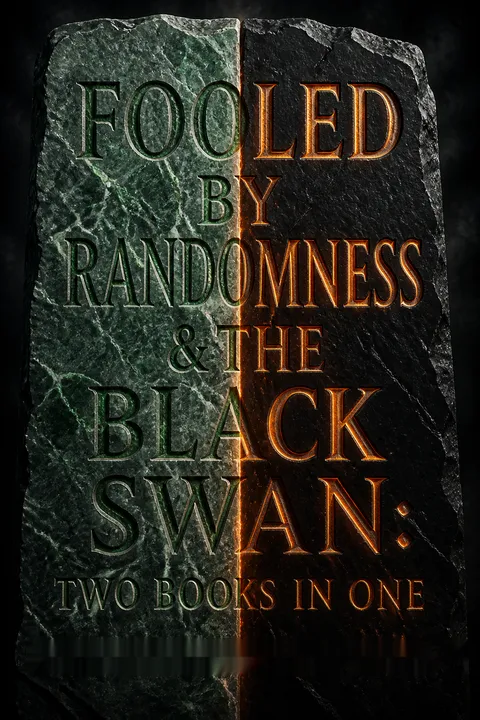

Key Takeaways
1. Antifragility: What Gains from Disorder
Some things benefit from shocks; they thrive and grow when exposed to volatility, randomness, disorder, and stressors and love adventure, risk, and uncertainty.
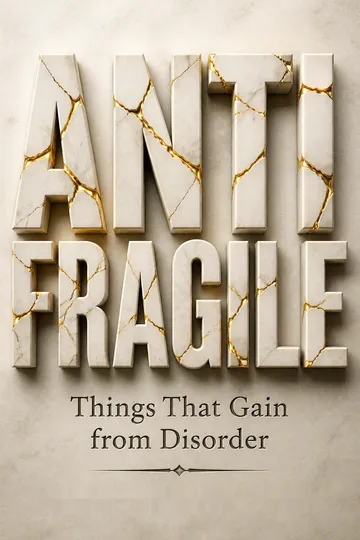
Beyond resilience. Antifragility is the opposite of fragility. While fragile things are harmed by shocks (like a porcelain cup), robust or resilient things resist shocks and stay the same (like a rock). Antifragile things, however, get better when stressed or exposed to volatility. This property is behind everything that evolves and survives over time, from biological systems and evolution itself to ideas, cultures, and economic systems.
Nature is antifragile. Living, organic, and complex systems tend to be antifragile. They use stressors as information to improve. For example:
- Bones get stronger under stress (Wolff's Law).
- The immune system is strengthened by exposure to pathogens (Mithridatization, Hormesis).
- Populations evolve through the fragility and death of individuals.
Embrace the wind. Instead of avoiding randomness, uncertainty, and chaos, we should seek to use them. We want to be the fire that is energized by the wind, not the candle that is extinguished by it. This requires a fundamental shift in mindset from fearing the unknown to embracing it.
2. Modernity Often Creates Fragility
Crucially, if antifragility is the property of all those natural (and complex) systems that have survived, depriving these systems of volatility, randomness, and stressors will harm them.
Suppressing volatility. Much of our modern, structured world has been fragilizing systems by suppressing randomness and volatility. Just as muscles atrophy without stress, complex systems weaken when deprived of stressors. This top-down approach, often driven by naive rationalism and planning, insults the natural antifragility of systems.
Examples of fragilization:
- Over-stabilizing political systems (like centralized nation-states) can lead to larger, more catastrophic blowups instead of smaller, manageable fluctuations.
- Depriving children of minor stressors can make them more fragile later in life.
- Long periods of economic stability can lead to hidden vulnerabilities accumulating, making subsequent crises worse.
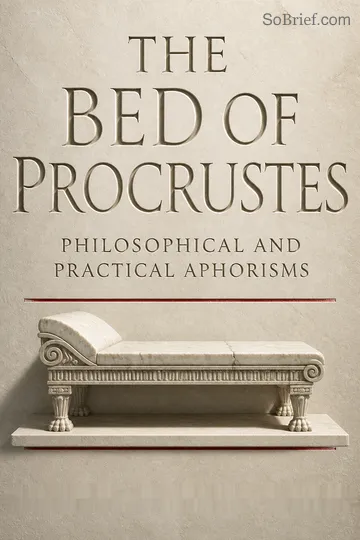
The Procrustean bed. Modernity often treats complex systems like simple machines, forcing them into rigid, predictable structures that deny their inherent need for variability. This can lead to severe, unforeseen consequences when the system inevitably encounters real-world randomness.
3. Prediction is Fundamentally Limited
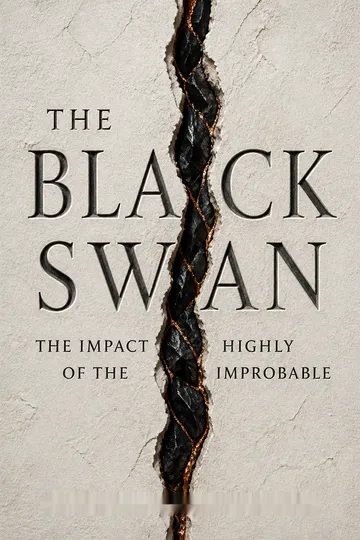
Black Swans (capitalized) are large-scale unpredictable and irregular events of massive consequence—unpredicted by a certain observer, and such unpredictor is generally called the “turkey” when he is both surprised and harmed by these events.
The turkey problem. We are often like the turkey, fed daily by the butcher, gaining confidence in the pattern, only to be blindsided by Thanksgiving. Black Swans are rare, high-impact events that lie outside our normal expectations and cannot be predicted from past data alone.
History jumps. History, technology, and many social systems are dominated by Black Swans. They do not follow predictable, linear paths but make jumps and experience sudden, large shifts. Our models and forecasts, based on past data and linear thinking, are fundamentally incapable of predicting these events.
Scandal of prediction. Despite this abysmal track record, we continue to make predictions and rely on forecasters (economists, political analysts, financial experts). This epistemic arrogance, the overestimation of what we know, is a major source of fragility, as it leads us to take risks based on faulty forecasts.
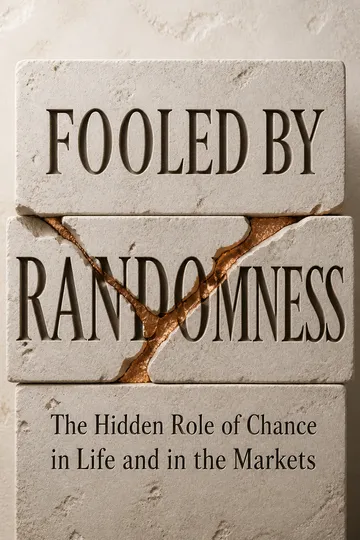
4. We Are Fooled by Randomness and Narratives
The narrative fallacy addresses our limited ability to look at sequences of facts without weaving an explanation into them, or, equivalently, forcing a logical link, an arrow of relationship, upon them.
Explanation machines. Our minds are wired to seek patterns and explanations, even in random data. We prefer compact stories over raw facts, which helps us remember information but distorts our understanding of the world's randomness.
Biases in perception:
- Confirmation bias: We seek information that confirms our existing beliefs.
- Hindsight bias: We see past events as more predictable than they were ("I knew it all along").
- Availability heuristic: We overestimate the likelihood of events that are easily recalled (e.g., sensational news).
- Ludic fallacy: We mistake the sterilized randomness of games (like dice or roulette) for the wild, undefined randomness of real life.
Ignoring the abstract. We are naturally drawn to the tangible, the specific, and the emotional, while struggling with abstract concepts like true randomness or the absence of evidence. This makes us vulnerable to being fooled by randomness and narratives that simplify complex realities.
5. Skin in the Game is Essential for Ethics
The chief ethical rule is the following: Thou shalt not have antifragility at the expense of the fragility of others.
Transfer of fragility. A major source of fragility in modern society is the transfer of fragility from one party to another. Some individuals or institutions become antifragile (gaining from volatility) by exposing others to the downside risks (fragility), often without the latter's knowledge.
Agency problem. This transfer is often facilitated by the agency problem, where decision-makers (agents) benefit from upside while others (principals, like taxpayers or shareholders) bear the downside. Examples include bankers receiving bonuses for hidden risks that later require bailouts, or politicians starting wars without personal risk.
Hammurabi's wisdom. Ancient codes, like Hammurabi's, understood the need for symmetry of consequences. If a builder's house collapsed and killed the owner, the builder was put to death. This created a powerful incentive to build robustly, as the builder had "skin in the game."
Making talk less cheap. Opinions and forecasts are dangerous when the person offering them bears no cost for being wrong. Forcing "skin in the game" ensures accountability and aligns incentives, mitigating the harmful transfer of fragility.
6. Optionality Allows You to Benefit from Uncertainty
Option = asymmetry + rationality
Asymmetry of payoff. An option gives you the right, but not the obligation, to take a certain action. This creates a favorable asymmetry: you can benefit from upside if things go well, but your downside is limited if they don't.
Thales' example. The philosopher Thales of Miletus, by buying options on olive presses, paid a small fee for the right to use them. If the harvest was good (upside), he profited immensely. If it was bad (downside), he only lost the small fee. He benefited from the uncertainty of the harvest.
Barbell strategy. A practical way to gain from optionality is the barbell strategy: be extremely conservative in some areas (protecting against negative Black Swans) and extremely aggressive in others (exposing yourself to positive Black Swans). This limits your downside while keeping upside open.
Substitute for knowledge. Optionality allows you to benefit from uncertainty even when you don't understand the underlying process or can't predict outcomes. You don't need to be right often, just right when it counts, and avoid being wrong when it hurts significantly.
7. Via Negativa: The Power of Subtraction
Knowledge grows by subtraction much more than by addition—given that what we know today might turn out to be wrong but what we know to be wrong cannot turn out to be right, at least not easily.
Subtractive epistemology. We know with more certainty what is wrong than what is right. Disconfirmation is more rigorous than confirmation. Science progresses significantly by proving theories wrong, not just by confirming them.
Less is more. In many domains, particularly complex ones, removing things is more effective and less likely to cause harm than adding things. This applies to:
- Health: Removing toxins, unnecessary medications, or unhealthy habits (fasting, avoiding sugar).
- Decision making: Focusing on avoiding major errors rather than seeking optimal solutions.
- Knowledge: Discarding false information and theories.
Robustness through removal. Via negativa is a powerful heuristic for building robustness and antifragility. By identifying and removing sources of fragility (like debt, unnecessary interventions, or harmful substances), you increase the system's ability to withstand shocks and benefit from natural antifragility.
8. Time Reveals Fragility (The Lindy Effect)
For the nonperishable, every additional day may imply a longer life expectancy.
The old is more likely to survive. The Lindy Effect suggests that for nonperishable things (ideas, technologies, books, institutions), the longer they have already survived, the longer they are likely to continue to survive. Time acts as a filter, breaking down the fragile.
Antifragility to time. Things that are antifragile benefit from time and disorder. They are more likely to survive and even strengthen over long periods, while fragile things break down. This is why ancient technologies (like the wheel, the book, the chair) are still with us, while many newer ones disappear.
Subtractive prophecy. Instead of trying to predict what new things will emerge in the future (an additive approach prone to neomania), a more robust way to forecast is to predict what fragile things will not survive the test of time (a subtractive approach).
Beware neomania. Our love for the new for its own sake (neomania) often blinds us to the robustness of the old and the fragility of the novel. This can lead us to adopt fragile technologies or ideas simply because they are new, ignoring the wisdom embedded in things that have already survived.
9. Size Creates Fragility
For the fragile, shocks bring higher harm as their intensity increases (up to a certain level).
Nonlinear harm. Fragility is often nonlinear. The harm from a shock increases disproportionately with its intensity. A large stone causes much more than the cumulative harm of many small pebbles.
Big is fragile. This nonlinearity means that size often creates fragility. Larger entities (companies, cities, animals, projects) are disproportionately more vulnerable to shocks and unexpected events than smaller ones.
- Large companies are more vulnerable to squeezes and systemic risks.
- Large animals are more fragile to falls or injuries.
- Large projects are more prone to cost overruns and delays.
Avoid optimization. Naive optimization often leads to removing redundancy and slack, making systems more efficient in calm times but extremely fragile when stressed. This is particularly dangerous for large systems.
Small is robust. A collection of small, independent units is often more robust and antifragile than a single large unit, even if the small units are individually fragile. Their failures are localized and do not cascade through the system.
10. Beware Naive Intervention and Iatrogenics
In the case of tonsillectomies, the harm to the children undergoing unnecessary treatment is coupled with the trumpeted gain for some others.
Harm by the healer. Iatrogenics is harm caused by the intervener, often unintentionally. This is particularly prevalent in complex systems where causal links are opaque and interventions have unforeseen consequences.
Naive interventionism. The urge to "do something," even without clear evidence of benefit or understanding of potential harm, is a major source of iatrogenics. This is common in medicine, policy-making, and social planning.
Small benefits, large hidden costs. Iatrogenics often occurs when interventions offer small, visible, and immediate benefits but carry large, hidden, and delayed costs. Examples include:
- Unnecessary medical treatments with side effects.
- Policies that suppress volatility, leading to larger future crises.
- Over-managing systems that would function better left alone.
Via negativa intervention. A more robust approach is often via negativa: intervening to remove harmful elements rather than adding potentially beneficial ones. The burden of proof should be on those who propose interventions, especially in complex systems.
11. Doing Trumps Knowing (Green Lumber Fallacy)
What is not intelligible to me is not necessarily unintelligent?
Unintelligible vs. unintelligent. We often mistake what we don't understand for nonsense. This leads us to dismiss knowledge or practices that lack a clear, rational explanation, even if they are effective.
Green lumber fallacy. This fallacy occurs when we mistake a visible, often theoretical, source of knowledge for the true, less visible, and often non-narratable source of effectiveness.
- A trader who knows economic theories but fails to understand market dynamics.
- An architect who knows geometry but lacks practical building heuristics.
- A scientist who knows theories but misses empirical regularities.
Innovation from tinkering. Innovation and progress often come from trial-and-error, tinkering, and practical experience (techne), not necessarily from top-down theoretical knowledge (episteme). Many crucial inventions were serendipitous or developed by practitioners without formal scientific understanding.
Trust deeds, not words. In domains with high randomness and opacity, practical knowledge gained through doing and surviving is often more reliable than theoretical knowledge gained from books or lectures. Focus on what people do, not just what they say or what theories they espouse.
Review Summary
The reviews for Fooled By Randomness & The Black Swan are mixed. While some readers appreciate the book's new perspectives and philosophical depth, others find it irritating and self-congratulatory. Critics argue that the writing style is wandering, repetitive, and filled with tangents, making it difficult to follow the main points. Some readers find the explanations shallow and the author's tone condescending. However, a few reviewers acknowledge that the book contains good ideas and an enjoyable writing style, despite its flaws.
People Also Read








FAQ
1. What is Fooled By Randomness & The Black Swan by Nassim Nicholas Taleb about?
- Core exploration of randomness: The book investigates how randomness, luck, and rare events (Black Swans) shape history, markets, and personal lives, often more than skill or planning.
- Antifragility and fragility: Taleb introduces the concepts of antifragility (systems that benefit from disorder) and fragility (systems harmed by volatility), applying them to finance, medicine, and society.
- Human cognitive biases: The work delves into why people, including experts, are blind to randomness, prone to overconfidence, and misinterpret the role of chance in outcomes.
- Practical and philosophical insights: Through stories, philosophy, and empirical evidence, Taleb challenges conventional wisdom about prediction, risk, and knowledge.
2. Why should I read Fooled By Randomness & The Black Swan by Nassim Nicholas Taleb?
- Challenge to conventional wisdom: The book exposes flaws in how experts and laypeople perceive risk, uncertainty, and success, urging skepticism toward predictions and models.
- Practical risk management: Taleb offers actionable strategies for navigating uncertainty, such as the barbell strategy and via negativa, which help readers avoid catastrophic losses.
- Ethical and philosophical depth: The book provides a framework for ethical decision-making, emphasizing "skin in the game" and accountability in risk-taking.
- Broad applicability: Its lessons are relevant for investors, entrepreneurs, policymakers, and anyone interested in understanding and thriving in a world dominated by uncertainty.
3. What are the key takeaways of Fooled By Randomness & The Black Swan by Nassim Nicholas Taleb?
- Black Swans dominate outcomes: Rare, unpredictable events have massive impacts and are only explained after the fact, not before.
- Human biases distort risk: Cognitive errors like the narrative fallacy, confirmation bias, and survivorship bias lead to overconfidence and misjudgment of uncertainty.
- Mediocristan vs. Extremistan: Most real-world phenomena belong to Extremistan, where rare events dominate, making traditional risk models inadequate.
- Robustness over prediction: Instead of trying to predict the unpredictable, focus on building systems that can withstand shocks and benefit from positive surprises.
4. What is the definition of a "Black Swan" event in The Black Swan by Nassim Nicholas Taleb?
- Rare and unpredictable: A Black Swan is an outlier event that lies outside regular expectations and cannot be predicted using standard models.
- Extreme impact: These events have massive consequences, shaping history, markets, and personal lives disproportionately.
- Retrospective rationalization: After they occur, people create stories to explain them, but they were not foreseeable beforehand.
- Examples: The 9/11 attacks, the 1987 market crash, and the rise of the Internet are cited as Black Swans.
5. How does Nassim Nicholas Taleb explain "antifragility" in Antifragile and its relation to randomness?
- Beyond resilience and robustness: Antifragile systems not only withstand shocks but actually improve and grow stronger from volatility and stressors.
- Contrast with fragility: Fragile systems are harmed by disorder, while robust systems resist change but do not benefit; antifragile systems thrive on uncertainty.
- Applications across domains: Taleb applies antifragility to biology, economics, innovation, and personal decision-making, advocating for embracing beneficial stressors.
- Practical strategies: He recommends nonpredictive approaches, such as the barbell strategy and optionality, to harness antifragility in life and business.
6. What is the "barbell strategy" in Antifragile and The Black Swan, and why does Nassim Nicholas Taleb recommend it?
- Dual extremes approach: The barbell strategy involves allocating most resources to extremely safe assets and a small portion to highly speculative bets with unlimited upside.
- Downside protection, upside exposure: This method limits potential losses while allowing for large gains from positive Black Swans.
- Avoiding the fragile middle: Taleb warns that medium-risk exposures are often the most vulnerable to rare, devastating events.
- Applicability: The strategy is relevant not just in finance, but also in career choices, innovation, and personal risk management.
7. What are "Mediocristan" and "Extremistan" in The Black Swan by Nassim Nicholas Taleb, and why are they important?
- Mediocristan: A domain where variations are mild, averages are stable, and no single event can drastically affect the total (e.g., human height).
- Extremistan: A domain dominated by rare, extreme events where a single occurrence can disproportionately impact the total (e.g., wealth, book sales, financial markets).
- Implications for risk: Most social and economic phenomena belong to Extremistan, making traditional Gaussian-based models misleading.
- Practical advice: Recognizing which domain you are in is crucial for understanding and managing risk appropriately.
8. How does Nassim Nicholas Taleb critique prediction and forecasting in Fooled By Randomness & The Black Swan?
- Limits of prediction: Taleb argues that in complex, nonlinear systems, prediction is largely futile, especially for rare, high-impact events.
- Fragility from reliance on forecasts: Depending on predictions increases vulnerability, as errors can lead to catastrophic outcomes.
- Focus on robustness: He advocates for designing systems that can survive and benefit from errors, rather than attempting precise forecasting.
- Empirical evidence: Studies show that expert predictions often perform no better than random guesses or simple algorithms.
9. What are the main cognitive biases and fallacies discussed in Fooled By Randomness & The Black Swan by Nassim Nicholas Taleb?
- Narrative fallacy: The tendency to create stories to explain random events, leading to an illusion of understanding and predictability.
- Confirmation bias: Seeking evidence that supports existing beliefs while ignoring contradictory information.
- Survivorship bias: Focusing on visible successes and ignoring the many unseen failures, distorting perceptions of skill and risk.
- Silent evidence and epistemic arrogance: Ignoring data that is not immediately visible and overestimating one’s knowledge, both of which increase vulnerability to Black Swans.
10. What is "skin in the game" in Nassim Nicholas Taleb’s ethical framework, and why is it important?
- Definition: "Skin in the game" means that decision-makers must share in the risks and consequences of their actions, aligning incentives and responsibility.
- Mitigating agency problems: It prevents individuals or institutions from benefiting at others’ expense without bearing the downside.
- Historical examples: Taleb cites Hammurabi’s code and the principle that "the captain goes down with the ship" as early forms of risk accountability.
- Modern relevance: The lack of skin in the game among bankers, politicians, and experts contributes to systemic fragility and ethical failures.
11. What is the "ludic fallacy" in The Black Swan by Nassim Nicholas Taleb, and how does it affect our understanding of risk?
- Definition: The ludic fallacy is the error of applying the neat, well-defined probabilities of games to real-life situations, which are far more complex and unpredictable.
- Critique of probability models: Taleb criticizes the use of classroom examples and mathematical models that fail to capture the wild randomness of real-world events.
- Real-life randomness is wild: Unlike games, real-world uncertainty is scalable and can produce extreme, unpredictable outcomes that do not fit Gaussian models.
- Practical implication: Relying on such models blinds us to the true nature of risk and the possibility of Black Swans.
12. What practical advice and strategies does Nassim Nicholas Taleb offer in Fooled By Randomness & The Black Swan for dealing with uncertainty and Black Swans?
- Barbell strategy and optionality: Allocate most resources to safety while exposing a small portion to high-risk, high-reward opportunities, and seek options with asymmetric payoffs.
- Via negativa and subtraction: Focus on removing harmful exposures and avoiding unnecessary interventions, especially in medicine and finance.
- Embrace redundancy and robustness: Avoid optimization that removes slack; redundancy acts as insurance against rare shocks.
- Intellectual humility and skepticism: Be wary of overconfidence, limit exposure to noisy information, and recognize the limits of knowledge and prediction.
Incerto Series
About the Author
Other books by Nassim Nicholas Taleb


Download PDF
Download EPUB
.epub digital book format is ideal for reading ebooks on phones, tablets, and e-readers.








































