
Plot Summary
Nightmares and Invitations
Goldie Roth wakes from nightmares, her parents still scarred by their imprisonment. She yearns to accept the Museum of Dunt's invitation to become Fifth Keeper, but guilt over her parents' suffering holds her back. Despite her longing for adventure and belonging, Goldie lies to her parents, insisting she's happy at home. When a message arrives from the museum, her parents encourage her to go if needed, but Goldie's sense of responsibility keeps her rooted. She sneaks out to confide in her friend Toadspit, torn between her destiny and her family's needs. The city of Jewel, once ruled by the oppressive Blessed Guardians, is still healing, and Goldie's internal conflict sets the stage for the choices and dangers ahead.
Bonnie Disappears
Goldie and Toadspit's argument is interrupted when Bonnie, Toadspit's younger sister, vanishes. They discover evidence of a struggle and blood, realizing two men have kidnapped her. Tracking muddy footprints through the city, they follow the trail to the docks, where Bonnie's captors board a ship. Goldie and Toadspit leap aboard just as the vessel departs, desperate to rescue Bonnie. The tension between their personal quarrels and the urgent need to save a loved one propels them into a dangerous, unknown journey. The city's shadows and the threat of child-stealers become real, and Goldie's skills as a thief and liar are put to the test as she faces the consequences of her choices.
The Child-Stealers' Trail
Hidden aboard the Piglet, Goldie and Toadspit witness Bonnie's captivity and the cruelty of her kidnappers, Cord and Smudge. The ship's name is changed to avoid detection, and the children must remain concealed, relying on Goldie's training in concealment and observation. The wild, spotted cat from the docks reappears, adding an unpredictable element. Goldie's guilt intensifies as she realizes the danger Bonnie faces, and Toadspit's determination hardens. Their journey is fraught with fear, hunger, and uncertainty, but their resolve to rescue Bonnie grows stronger. The city of Spoke, their destination, looms as a place of both peril and possibility.
The Fugleman Returns
In Jewel, the Grand Protector is shocked when her brother, the disgraced Fugleman, surrenders himself. His apparent humility is suspect, and his presence rekindles old fears among the citizens. The city, still adjusting to newfound freedoms, is unsettled by accidents and the Fugleman's manipulations. Meanwhile, Sinew from the Museum of Dunt reports the disappearance of Goldie, Toadspit, and Bonnie. The Protector fears the return of old dangers and the possibility of slavers or mercenaries at work. The Fugleman's true motives remain hidden, and the city's fragile peace is threatened by his schemes and the children's absence.
Aboard the Piglet
After days at sea, Goldie remains hidden while Bonnie and Toadspit are kept drugged and captive. The Piglet arrives in Spoke, and the children are delivered to a mysterious bread shop. Goldie, exhausted and hungry, follows, determined to rescue her friends. She observes the city's vibrant, chaotic life and the presence of other street children. Goldie adopts a disguise, cutting her hair and becoming "Goldie No One," shedding her old identity to survive and strategize. Her resourcefulness and adaptability are tested as she navigates unfamiliar streets, searching for clues and allies.
Spoke's Festival of Lies
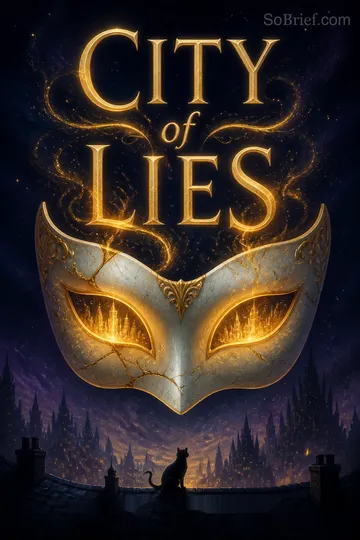
Spoke erupts in the Festival of Lies, where truth is forbidden and chaos reigns. Goldie, blending in with a mask and disguise, witnesses the city's wild celebrations and the power of collective deception. She encounters the mismatched prison band, chained together and reliant on the generosity of festival-goers. The rules of the festival—lies, masks, and the occasional "Big Lie" that can reshape reality—create both opportunities and dangers. Goldie's search for Bonnie and Toadspit is complicated by the city's shifting truths, and she learns that survival depends on understanding and manipulating the festival's unique logic.
The Bandmaster's Secret
Goldie befriends the bandmaster, sharing stolen food and learning about Spoke's criminal underworld. When she asks about Harrow, the bandmaster's fear is palpable—Harrow is a shadowy, ruthless figure with ties to murder and sabotage, including a bombing in Jewel. The bandmaster's evasions and warnings reveal the depth of Harrow's influence and the danger Goldie faces. The band's role in the festival, their chains, and their precarious freedom mirror the city's instability. Goldie realizes that finding her friends will require navigating a web of lies, secrets, and shifting alliances.
Mouse and the Fortune
Goldie meets Mouse, a mute boy with white hair and a talent for fortune-telling using mice and scraps of paper. Mouse's fortune for Goldie warns of "great danger" and the importance of friendship and help. The wild cat, now tamed by Mouse, becomes an unexpected ally. Goldie's interactions with Mouse and the cat highlight the power of kindness and trust in a world of deception. The fortune's cryptic messages guide Goldie's next steps, reinforcing the theme that survival and success depend on unlikely friendships and the courage to seek help.
The Green Cloak Clue
Goldie deciphers a hidden message left by Toadspit—"GREEN CAT"—which she realizes refers to a woman in a green cloak and cat mask. This clue leads her to Flense, the true mastermind behind the child-stealing operation. Goldie's skills in concealment and observation allow her to track Flense to a five-story house where Bonnie and Toadspit are held. With the help of Morg the slaughterbird and the chaos of the festival, Goldie orchestrates a daring rescue. The revelation that Flense is actually Blessed Guardian Hope, presumed dead, deepens the conspiracy and raises the stakes.
The Sewer Sanctuary
Goldie, Toadspit, Bonnie, Mouse, and the cat find refuge in the sewers with Pounce, a streetwise boy, and Mouse's mice. The group forms a fragile alliance, sharing food, stories, and strategies. The Festival of Lies continues above, and the children must navigate both the literal and metaphorical darkness below. Goldie's leadership and resourcefulness are tested as she balances trust and caution, knowing that betrayal is always a risk. The sewers become a place of both safety and vulnerability, reflecting the precariousness of their situation.
The Trap and the Truth
Betrayed by Pounce, the children are lured into a trap and imprisoned in a flooded sewer. Guardian Hope (Flense) reveals the full extent of the conspiracy: the child-stealing was orchestrated by the Fugleman to manipulate public opinion and regain power in Jewel. The children's knowledge makes them too dangerous to release, and they are left to drown as the tide rises. Goldie is paralyzed by guilt and despair, believing her actions have doomed her friends. The truth of the Fugleman's ambition and the depth of the adults' cruelty are laid bare.
Guardian Hope Unmasked
The children realize that Flense is actually Blessed Guardian Hope, and that Harrow is the Fugleman himself, orchestrating events from behind the scenes. The plot to destabilize Jewel and restore the old order is revealed in full. The children's sense of betrayal and the magnitude of the adult conspirators' manipulation deepen their resolve to survive and expose the truth. The convergence of personal and political stakes heightens the tension, as the children's fate becomes a microcosm of the city's struggle for freedom and justice.
The Drowning Cellar
As the water rises in the sewer, Goldie, Toadspit, Bonnie, and Mouse face imminent death. Goldie is consumed by guilt, believing her choices have led to this moment. Bonnie's fierce hope and Mouse's silent support keep the group from giving up entirely. The cat and the mice provide small comforts, but the situation appears hopeless. The children's emotional vulnerability and the physical threat of drowning create a crucible in which their true strengths and weaknesses are revealed. The need for a miracle becomes urgent.
The Big Lie's Power
In desperation, Goldie sings the First Song, invoking the wildness of the Festival and the power of the Big Lie. The swirling energy of the city's collective deception responds, and the children are swept into an alternate reality where they become characters in the ancient tale of Princess Frisia. Goldie, as Frisia, leads her friends through a heroic narrative, gaining the skills and courage needed to escape. The Big Lie blurs the boundaries between truth and fiction, past and present, allowing the children to break free from their prison and return to the real world with new strengths and insights.
Frisia's Destiny
Within the Big Lie, Goldie inhabits the role of Princess Frisia, a warrior destined to lead and protect. She experiences the challenges of leadership, the burden of destiny, and the intoxicating power of battle. The lessons of courage, sacrifice, and self-control learned as Frisia remain with Goldie after the Lie ends. The experience transforms her understanding of herself and her role as Fifth Keeper, blending the wisdom of the past with the demands of the present. The merging of identities underscores the novel's exploration of personal growth and the power of stories.
The Escape and the Hunt
The children escape the flooded sewer and, with the help of allies like Morg, the cat, and Mouse's mice, outwit their pursuers. The Festival's chaos and the lingering effects of the Big Lie provide cover for their flight. Cord and Smudge, the remaining villains, pursue them relentlessly, leading to a final confrontation aboard the Piglet. The children's resourcefulness, teamwork, and the support of their animal companions are crucial to their survival. The lines between friend and foe blur, and the cost of betrayal and loyalty becomes clear.
The Shark Nursery
Aboard the Piglet, Cord and Smudge plan to feed the children to the sharks. Goldie and Toadspit use their skills in concealment and deception, aided by Mouse's mice and the cat, to create confusion and fear. The arrival of Morg and the invocation of another Big Lie turn the tide, leading to Cord's downfall and the children's victory. The confrontation is both physical and psychological, testing the children's courage and ingenuity. The defeat of Cord and the escape from the shark nursery mark the climax of their ordeal.
Fifth Keeper's Resolve
With Cord defeated and the Piglet under their control, Goldie, Toadspit, Bonnie, Mouse, and their allies set sail for Jewel. Goldie reflects on the lessons learned, the power of stories, and the responsibilities of leadership. She embraces her role as Fifth Keeper of the Museum of Dunt, determined to fight for her city and her friends. The journey home is both a return and a new beginning, as the children prepare to confront the Fugleman's final scheme and defend the freedoms they have earned. The story ends with hope, resolve, and the promise of further adventures.
Analysis
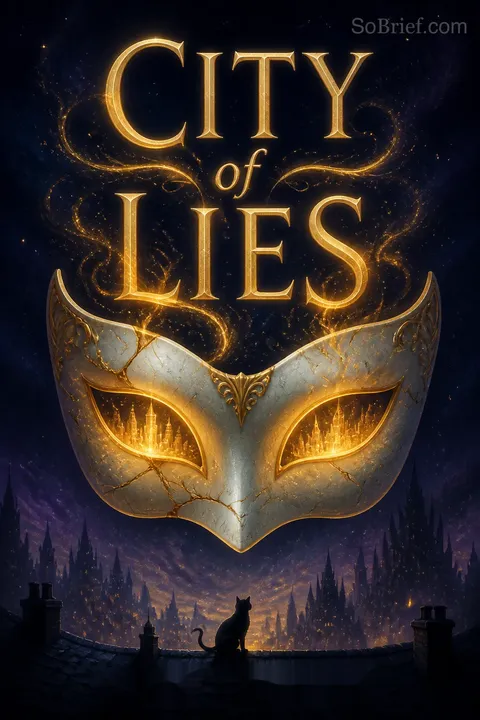
A modern fable of truth, power, and identityCity of Lies is a rich, layered narrative that uses fantasy to explore the complexities of truth, deception, and the struggle for freedom. At its core, the novel is about the power of stories—how they can imprison or liberate, conceal or reveal, destroy or heal. The Festival of Lies serves as both a literal and metaphorical backdrop, challenging characters to discern reality from illusion and to find their own truths in a world of shifting narratives. The psychological depth of the characters, especially Goldie, reflects the universal journey from guilt and self-doubt to acceptance and agency. The novel critiques the dangers of authoritarianism and the seductive allure of power, embodied by the Fugleman and Guardian Hope, while celebrating the resilience, ingenuity, and solidarity of the young. The use of animal companions, parallel narratives, and prophetic fortunes enriches the story's texture, inviting readers to question the boundaries between reality and fiction, self and other. Ultimately, City of Lies is a testament to the enduring human need for connection, courage, and the freedom to shape one's own destiny.
Review Summary
City of Lies receives a 4.03/5 rating with readers praising its action-packed plot and creative Festival of Lies concept. Most enjoyed Goldie's journey to rescue kidnapped friends in the city of Spoke, where everything is backwards. Claudia Black's audiobook narration earned particular acclaim. Common criticisms include second-book syndrome, confusing character names, an abrupt cliffhanger ending, and less focus on the beloved Museum. Several readers found Goldie's reluctance to trust the voice in her head frustrating. While some felt the plot dragged, many appreciated the themes of self-discovery and independence.
People Also Read
Characters
Goldie Roth
Goldie is the heart of the story—a twelve-year-old girl shaped by trauma, guilt, and a longing for purpose. Her journey from hesitant daughter to Fifth Keeper is marked by internal conflict: she yearns for adventure and belonging at the Museum of Dunt but feels responsible for her parents' suffering. Goldie's skills as a thief and liar, honed in the museum, are matched by her compassion and sense of justice. She is haunted by the consequences of her choices, especially when her actions endanger her friends. Goldie's psychological arc is one of self-forgiveness and growth; through the ordeal of the Festival of Lies and the Big Lie, she learns to trust herself, accept help, and embrace her destiny as a leader and protector.
Toadspit Hahn
Toadspit is Goldie's closest friend and Bonnie's older brother. He is fiercely protective of his sister, often masking his fear and vulnerability with bravado and sarcasm. Toadspit's skills in concealment and fingertalk make him an invaluable ally, but his impulsiveness sometimes leads to conflict with Goldie. The trauma of Bonnie's abduction and the dangers they face force Toadspit to confront his own limitations and fears. His relationship with Goldie is complex—marked by rivalry, loyalty, and deep mutual respect. Toadspit's development is seen in his willingness to trust others, accept help, and put the needs of the group above his own pride.
Bonnie Hahn
Bonnie, Toadspit's younger sister, is tenacious and imaginative, aspiring to be a warrior like Princess Frisia. Her abduction catalyzes the story's central quest, and her resilience in captivity inspires those around her. Bonnie's belief in stories and heroes is both a source of strength and vulnerability; she clings to hope even in the darkest moments. Her relationship with Toadspit is affectionate but contentious, and she quickly bonds with Goldie and the other children. Bonnie's arc is one of empowerment—she moves from being a victim to an active participant in her own rescue, wielding a bow and embracing her inner courage.
Mouse
Mouse is a mute, white-haired boy who communicates through gestures and his fortune-telling mice. He embodies innocence and kindness, forming a bond with Goldie and the others through small acts of trust and bravery. Mouse's fortunes, delivered by his mice, are cryptic but often prophetic, guiding the children through danger. His ability to tame the wild cat and his quiet resilience make him a symbol of hope and the power of friendship. Mouse's psychological depth lies in his vulnerability and his capacity for joy despite hardship.
Pounce
Pounce is an older street boy, fiercely protective of Mouse but hardened by life's betrayals. He is pragmatic, self-serving, and initially untrustworthy, willing to betray the children for personal gain. However, his loyalty to Mouse and his eventual decision to help Goldie and her friends reveal a capacity for change. Pounce's psychological struggle is between survival and conscience; his actions are shaped by a deep-seated fear of abandonment and a longing for security. His arc is one of reluctant redemption, as he chooses loyalty over self-interest.
Cord
Cord is one of Bonnie's kidnappers, a sharp-faced man driven by greed and cruelty. He is a skilled tracker and enforcer, unafraid to use violence to achieve his goals. Cord's relationship with Smudge is one of dominance and manipulation, and his loyalty to Harrow is motivated by fear and ambition. Psychologically, Cord is marked by a lack of empathy and a need for control. His downfall comes through his inability to adapt to the children's resourcefulness and the unpredictable power of the Big Lie.
Smudge
Smudge is Cord's partner, a large man with a simple, eager-to-please demeanor. He is superstitious and easily frightened, especially by the cat and the supernatural elements of the Festival. Smudge's loyalty to Cord is rooted in dependence and fear, but he is not inherently cruel. His psychological arc is one of confusion and vulnerability, manipulated by those stronger than himself. Smudge's eventual capitulation to the children's demands reflects his desire for safety and acceptance.
Guardian Hope / Flense
Once a Blessed Guardian in Jewel, Hope fakes her death and reemerges as Flense, orchestrating the child-stealing plot. She is a master of disguise and deception, driven by a desire for power and revenge against those who opposed her. Hope's psychological complexity lies in her ability to inspire fear and loyalty, her capacity for cruelty, and her belief in her own righteousness. Her relationship with the Fugleman is one of mutual ambition and manipulation. Hope's unmasking is a turning point, exposing the depth of adult betrayal and the dangers of unchecked authority.
The Fugleman
The Fugleman is the former leader of the Blessed Guardians and the mastermind behind the conspiracy to destabilize Jewel. He is a consummate actor, feigning humility while plotting to regain power. The Fugleman's psychological profile is marked by narcissism, a need for control, and a willingness to sacrifice others for his own ends. His relationship with Hope is one of mutual exploitation, and his manipulation of public opinion reveals his skill in psychological warfare. The Fugleman's return threatens the fragile peace of Jewel and sets the stage for further conflict.
The Cat and Morg
The gray-spotted cat and Morg the slaughterbird are animal companions who play pivotal roles in the children's survival. The cat, initially feral and distrustful, is tamed by Mouse and becomes a symbol of the power of kindness and the possibility of transformation. Morg, the museum's slaughterbird, is a guardian and ally, intervening at critical moments. Both animals embody the wildness and unpredictability of the world, serving as protectors, guides, and agents of change. Their presence blurs the line between the natural and the magical, reinforcing the story's themes of trust, loyalty, and the interconnectedness of all beings.
Plot Devices
The Festival of Lies
The Festival of Lies transforms Spoke into a place where truth is forbidden and reality is malleable. This device allows for the creation of "Big Lies"—moments when collective belief can reshape the world, granting characters new identities, skills, or opportunities. The festival's rules—masks, lies, and the occasional truth when touching an animal—create a landscape of uncertainty and possibility. The Big Lie that sweeps Goldie and her friends into the story of Princess Frisia is a masterstroke, blending fantasy and reality, past and present. The festival's chaos mirrors the characters' internal struggles and the city's political instability, providing both obstacles and solutions.
Concealment and Disguise
Goldie's training in concealment and the use of masks and disguises are central to the children's survival. The ability to become "nothing"—to blend into the background or assume a new identity—reflects the psychological need to adapt and protect oneself in a hostile world. Disguise is both a literal and metaphorical tool, allowing characters to navigate danger, gather information, and challenge authority. The shifting of identities, especially during the Big Lie, underscores the fluidity of self and the power of stories to transform.
Foreshadowing and Fortune
Mouse's fortunes, delivered through his mice, serve as a form of foreshadowing, offering cryptic warnings and guidance. The recurring motifs of danger, friendship, and rescue prepare the reader for key plot developments. The use of fate-telling, both in Spoke and in the Frisia narrative, reinforces the theme that destiny is shaped by both choice and chance. The fortunes' ambiguity allows for multiple interpretations, keeping characters and readers alike in suspense.
Parallel Narratives and Metafiction
The Big Lie's transformation of the children into characters from the ancient tale of Princess Frisia creates a parallel narrative that enriches the main plot. This metafictional device allows for exploration of themes such as destiny, courage, and the power of myth. The merging of Goldie and Frisia's identities blurs the boundaries between fiction and reality, highlighting the ways in which stories shape identity and action. The parallel narrative also provides a means for character growth and the acquisition of new skills.
Animal Companions as Agents of Change
The cat and Morg the slaughterbird are more than mere pets; they are active participants in the story, influencing events and character decisions. Their actions often provide the turning point in moments of crisis, and their loyalty and wildness symbolize the unpredictable forces that shape the children's journey. The animals' ability to bridge the gap between the human and the magical reinforces the story's themes of trust, transformation, and the interconnectedness of all life.
The Keepers Trilogy Series
Download PDF
Download EPUB
.epub digital book format is ideal for reading ebooks on phones, tablets, and e-readers.








































