


Plot Summary
Prologue
Arianette1 wakes in a hospital bed after being dead for three minutes. Pulled from a river with rope-burned wrists and lungs full of silt, she remembers almost nothing — only a beast in a mask, hands that felt inhuman, and a voice calling her chosen. An FBI agent presses for details she cannot or will not give.
Her body carries evidence her mind has buried: bruises blooming under brown skin, a scar behind her ear where a tracking device was ripped out, the raw geography of a girl who ran through a forest and nearly did not survive. She gives them nothing. If she speaks, she will remember. If she remembers, the beast returns.
Oaths Carved in Bone
Damon Kemp2 — an ex-convict recruited from prison on a mysterious scholarship — kneels beside Hunter Sorrin,3 a quiet engineering student who hosts late-night radio, and Armand Stein,7 an arrogant East End legacy.
In a torchlit forest clearing ringed by faceless Shadows, the Baron King4 slices his scarred palm and bleeds into a chalice carved from bone. Each man repeats the oath and cuts his own flesh, their blood mixing in the ancient vessel.
The King paints pentagrams on their foreheads and distributes weapons: Armand7 receives the bone-handled knife, Damon2 his compound bow, and Hunter3 nothing — the King taps his own temple and calls Hunter's3 mind the sharpest blade. Then the King orders the girl brought forward. Arianette1 steps into the firelight, and the hunt begins.
The Baroness Hunt
She bolts at the first toll of the clock tower, branches slicing her skin, roots catching her feet. An arrow thuds into a tree inches above her head. She crawls into a thicket and draws herself small, using a visualization of periwinkle flowers to steady her heart. Through the darkness she hears one Baron's taunting voice promising to find her.
The minutes bleed past while she fights a cramp seizing her calf, dissociating until silence returns. Regina,6 the outgoing Baroness who prepared her for this night, had warned her to stay hidden as long as possible — the longer the Barons search, the less time they have to claim her. She dares to stretch, and a hand clamps around her ankle.
The Baron She Killed
Armand7 pins her to the forest floor and tells her she was never meant to survive the forest, that she possesses dangerous knowledge. He tears off her underwear and positions himself to rape her — violating the King's single command that her virginity be preserved.
A figure crashes through the brush, distracting him. Arianette1 seizes the bone-handled knife from the dirt and drives it across his throat in one decisive stroke. When Damon2 and Hunter3 arrive moments later, she stands over a dead Baron drenched in arterial spray.
Rather than kill or report her, Damon2 forces her to her knees and violates her mouth at knifepoint while Hunter3 watches and participates. Then they strike a bargain: they will lie to the King about who killed Armand,7 if she never reveals what Damon2 did afterward.
Blood and Blade at Dawn
Back at the ceremonial circle, the King accepts their altered story. He orders Damon2 to verify Arianette's1 virginity by hand — she screams, but he confirms her intact. The Shadows strap her to the obsidian altar. Hunter3 sterilizes the blade over a torch flame, then carves the Baron pentagram into the flesh between her breasts, each line precise and deliberate.
Simultaneously, Damon2 strokes her clitoris, weaving agony with arousal, drawing her toward the precipice of orgasm before withdrawing and leaving her gasping. They paint her body in sacred blood from the chalice. At sunrise, trembling and soaked in crimson, Arianette1 repeats the Baroness oath before the King. Three people now share a secret capable of destroying them all.
Not Clive Kayes
Behind the mask, the Baron King is Timothy Maddox4 — not the dead Clive Kayes everyone in Forsyth believes him to be. Decades earlier, Timothy4 discovered his cousin Benji had killed Clive and seduced Timothy's4 wife, Amber, into bearing a child she planned to sacrifice in a dark ritual.
Timothy4 killed Benji, buried both bodies in the catacombs, donned the mask, and claimed the throne. Amber was committed to an asylum. Their legitimate son, Remington,12 rejected the Barons entirely and became a Duke under a rival King.
The marriage to Arianette1 was originally arranged for Remy12 — but with his son gone, Timothy4 must fulfill the contract himself. When Dean Hexley8 visits to confirm wedding details, Timothy4 sees exactly what the Dean is: a powerless man leveraging his niece for a seat at the Royal table.
Silver Bars, Stolen Release
The afternoon after the Hunt, Damon2 enters Arianette's1 room while she sleeps. Using the leverage of their shared secret, he pierces both her nipples with stainless steel barbells — his personal mark beyond what Hunter3 carved on the altar.
The pain is searing, but she holds still, terrified that refusal means the King learns who really killed Armand.7 This establishes Damon's2 pattern: he brings her body to the edge of release, then withdraws, teaching her that pleasure must be earned.
Hunter3 expresses desire differently — he brings ice and numbing cream laced with a mild sedative for her piercings, then instructs her to touch herself while he watches from a chair, eventually gripping her throat and finishing on her body without entering her. Neither Baron kisses her. Neither gives her what she craves: completion.
Campus Under Siege
Arianette's1 first day at Forsyth University detonates the moment they exit the truck. Reporters swarm, shouting questions about her kidnapping and missing girls. Nick Bruin,9 the massive Duke King, disperses them with a veiled threat.
Inside the student center, Bruin9 demands access to Arianette1 for questioning — someone in Duke custody is being wrongly blamed for crimes he did not commit. Damon2 deflects while the Duchess, blue-haired Lavinia,10 takes Arianette1 for coffee and offers sisterly encouragement.
Later, during Hunter's3 mechanical engineering presentation, Damon2 pins Arianette1 against the back wall of the lecture hall and grinds against her from behind, bringing her to the verge of release before pulling away and photographing the evidence on her skin. She spends the rest of the day in ruined underwear.
Caught in the King's Room
Arianette1 gets lost wandering the House of Night and stumbles into the King's private bedroom. Curiosity overtakes caution — she touches his cologne, his cufflinks, slides his deceased wife's gold ring onto her thumb.
She hides in his closet when he returns and overhears him discussing Armand's7 death with Graves:5 the coroner identified the killer as someone much shorter than the victim, with zero hesitation marks. He knows she killed Armand.7
That night, the King storms into her room, retrieves the ring from her hand, and orders Damon2 and Hunter3 to lock her in the cage hidden beneath her iron bed. She spends the night on cold metal, eventually wetting herself when Damon2 refuses to let her out. Graves5 releases her the next morning and conceals the mess.
DK Takes the Ring
The designated BRN fighter, Mateo, ingests psychedelic mushrooms before Friday Night Fury and becomes violently ill. Damon2 volunteers to fight Duke representative Porterfield despite having no formal training. In the locker room, Arianette1 wraps his hands with a dancer's practiced precision and tapes off his piercings.
She defends her position against Bronwyn, a crypt chaser who insists the Baroness role should have been hers. When the first round goes badly, Arianette1 rushes to the corner and whispers advice: every fight has a rhythm like a dance — one, two, three, four.
In the second round, Damon2 finds the count, cuts angles, and buries Porterfield with a vicious combination. The gymnasium erupts, and for the first time the BRN Barons have earned genuine respect among Forsyth's Royal houses.
Queen of the Crypt
Deep in the Baron catacombs, fueled by the King's organic drug Phantom Bliss, the post-fight celebration transforms into ritual excess. Damon2 drops onto an iron throne and pulls Arianette1 into his lap.
He slices away her shorts with a knife, baring her to the room, and for the first time in their relationship does not deny her release. She orgasms violently against him while the entire fraternity watches in reverent silence. Then, unprompted, she crosses the crypt and kneels before Hunter3 — who has only ever observed from the shadows — and takes him in her mouth until he finishes.
Two crypt chasers had told her this was tradition: the Baroness publicly claims her Barons after a victory. The night reshapes all three from captors and captive into something far more tangled.
Ghosts at the Riverbank
Timothy4 orders Damon2 to walk Arianette1 through the site where she was found, hoping something shakes loose from her fractured memory. Standing at the water's edge, fragments surface: she remembers other girls crying, a clinking necklace, a beast in a mask.
She describes watching terrible things happen to children at Strong Manor, where her uncle8 raised her. She tells Damon2 she jumped into the river deliberately — choosing possible death over certain captivity. Meanwhile, Hunter3 uses his radio show to crowdsource information, fielding calls about bone piles in nearby woods and screaming from houses near campus.
A graduate student named Sofia approaches Hunter3 privately, revealing she is the half-sister of a dead Royal and is being stalked. The investigation widens while the answers stay buried underground.
Collar, Rod, and Proof
The pre-wedding dinner gathers the King, Arianette,1 her Barons, and Dean Hexley8 at one suffocating table. The Dean presents his gifts with ceremony: a crimson leather collar worn by Hexley women for generations, and a polished punishment rod he calls the Switch of Silence.
After the Barons are dismissed, Hexley8 demands physical proof his niece remains untouched. When the Dean reaches to examine her himself, the King intervenes — kneeling between Arianette's1 forced-open thighs and confirming her virginity with his own fingers.
She cries during the examination. Afterward, Damon2 takes the shattered Arianette1 to feed stray cats at an abandoned boathouse, where she calms herself in the car by holding him in her mouth during the drive home — seeking comfort, not his pleasure.
Samhain Bride in Black
All of Forsyth's Royalty fills the chapel on Halloween night — Lords, Dukes, Princes, their women, their weapons checked at the door. Arianette1 walks the candlelit aisle in a black satin corset gown, the crimson collar at her throat, an oversized bow veiling her face. The Baron King4 meets her at the altar, his mask gleaming bronze and gold. They exchange vows of darkness and wickedness.
Behind a barrier formed by the Shadows, the King uses an ancient ceremonial instrument to break her hymen on the obsidian altar while Damon2 holds his hand over her mouth to muffle her scream. The King tastes her blood. When the barrier dissolves and the guests raise their glasses, the deal between Hexley8 and Maddox4 is sealed in ceremony and sacrifice.
Ecstasy Then Exile
In a private forest cabin, Timothy4 claims his bride fully. She dances for him by firelight, and he takes her with consuming intensity — rough, repeated, transcendent across hours. She calls him Daddy and he loses the iron discipline that has defined his reign.
For one night they exist outside obligation. Then morning arrives. He dresses in silence, forces her to swallow an emergency contraceptive, and tells her she is nothing more than a business arrangement — a fixture for ceremonies, a receptacle for his Barons' excess.
When she rages at the betrayal, he buckles the collar tight around her throat and beats her with the punishment rod until welts crosshatch her back and thighs. He walks out, then informs the Barons that all restrictions on the Baroness are officially lifted.
The Manor Burns
After Damon2 and Hunter3 claim her sexually in the cabin — Damon2 penetrating her for the first time, rough and possessive — Arianette1 shatters completely. She scrawls frantic words across the cabin walls in her own blood, wraps a self-inflicted wound, and flees through the forest in her ruined wedding dress.
A stranger drives her to Strong Manor, where she confronts Dean Hexley.8 He reveals the truth: Armand7 was under Hexley's8 orders to kill her during the Hunt because she possessed dangerous knowledge.
He dismisses the children she remembers from the Manor as figments of her broken mind. She slashes him with a kitchen knife, douses the house in liquor, and sets it ablaze with him inside. Damon2 charges into the inferno and carries her out. Ares,14 Hunter's3 dog, suffers critical smoke inhalation searching for her.
Ashes and Oxygen Tubes
Arianette1 wakes in a hospital bed for the second time in this story, IV dripping, throat scorched from smoke. Damon2 lies in the adjacent bed, oxygen tubes plugging his nose, piercings removed. Hunter3 stands guard outside, physically blocking FBI Agent Knight13 from questioning her about the dead Dean and the fire.
When Hunter3 finally enters, he tells Arianette1 that Ares14 may not survive — that her reckless destruction nearly killed his dog and her Baron. Later that night, Damon2 tears off his medical equipment, looms over her bed, and delivers his verdict: she does not get to decide when she lives or dies because she belongs to them, and they are nowhere near finished with her. The fury in his voice carries something rawer than anger — the desperation of a man who almost lost the only thing worth keeping.
Epilogue
Timothy4 meets his Barons outside the House of Night. The coroner rules Hexley's8 death accidental — faulty wiring — and Timothy4 ensures the fire chief's cooperation with a complimentary hotel stay. Then he does something no Baron King has done in decades: removes his mask.
Damon2 and Hunter3 stare at the face of Timothy Maddox,4 not Clive Kayes. Their loyalty earned this trust. Meanwhile, Arianette1 is locked in a custom-forged cage inside the King's own bedroom, wearing a new black leather collar stamped with a gold pentagram.
Timothy4 eats breakfast across from her and announces the regime: silence first, then stillness, then total surrender. He vows to fix her. She grips the bars and says nothing. Her training begins again — this time under the direct hand of the man who married her, broke her, and refuses to let her go.
Analysis
Barons of Decay interrogates the paradox of agency within systems engineered to eliminate it. Arianette Hexley1 exists at the intersection of multiple male-dominated power structures — her uncle's8 academic empire, the Baron King's4 criminal feudalism, the fraternity's ritualized possession — yet the novel refuses to reduce her to mere victim. Her survival instinct (killing Armand,7 escaping the river, burning the Manor) consistently disrupts the machinery that would consume her, even as each act of defiance deepens her entanglement.
The rotating POV structure performs crucial psychological work. Damon2 narrates dominance while unconsciously revealing his own trauma — the throat scar, prison, abandonment. Hunter's3 voyeuristic chapters expose how control-through-observation masks profound isolation and fear of intimacy. Timothy's4 sections reveal that the most powerful man in Forsyth is also the most imprisoned, by grief, guilt, and a mask he cannot remove. Each narrator sees Arianette1 differently — feral goddess, obedient project, inconvenient obligation — and none sees her completely.
The novel operates as a study of institutional gaslighting across registers. The Royals frame exploitation as tradition, violence as ceremony, ownership as protection. Arianette's uncle8 taught her compliance equals goodness and silence equals safety. The Barons replicate those same structures while claiming to liberate her from them. When Hexley8 tells Arianette1 the children she remembers do not exist, the book leaves deliberately ambiguous whether her memories are truth, delusion, or manufactured confusion — forcing readers to inhabit the same epistemic uncertainty that trauma survivors navigate daily.
The sexual content functions as the primary language of power negotiation. Every encounter maps who holds control, who surrenders it, who steals it back. Arianette's1 choice to kneel before Hunter3 at the crypt party — the first act of genuine desire rather than coercion — marks the novel's most meaningful shift toward agency, precisely because it occurs within a system designed to deny it.
People Also Read








Characters
Arianette Hexley
The Baroness and brideRaised in isolation at Strong Manor by her controlling uncle8, Arianette is a trained dancer whose body knows discipline even when her mind fractures. Kidnapped and held captive before the story begins, she escaped through the river at the cost of three minutes without a heartbeat. Her psychology oscillates between startling lucidity and dissociative episodes—she visualizes periwinkle flowers to calm herself, hears voices from her past, and carries memories she cannot always trust. Despite her fragility, she possesses a feral survival instinct and a capacity for decisive violence that surprises everyone, including herself. She craves belonging above all else, which makes her fiercely loyal to whoever claims her and dangerously susceptible to manipulation by those who promise safety.
Damon Kemp
Baron, piercer, survivorDamon carries a jagged scar across his throat from a near-fatal stabbing during a wilderness rehabilitation program as a teenager—his heart stopped, mirroring Arianette's1 own brush with death. Recruited from prison on a mysterious scholarship, he is a skilled body piercer whose relationship with needles and flesh reflects his need to leave permanent marks on the world. His psychology is defined by control: he edges Arianette1 repeatedly toward pleasure before withdrawing, establishing dominance through denial. Beneath the aggression lies genuine protectiveness—he feeds stray cats at an abandoned boathouse, carried Arianette1 from danger, and covered for her most dangerous act at great personal risk. His attachment to her is possessive, combustible, and increasingly indistinguishable from devotion.
Hunter Sorrin
Baron, radio host, voyeurAn engineering student and late-night radio host at WXFU, Hunter is brilliant, socially isolated, and sexually fixated on observation rather than participation. He discovered voyeurism as a child crawling through university ventilation ducts while his maintenance-worker father repaired boilers. His refusal to touch stems not from absent desire but from fear of what he might do if he allows himself proximity. He expresses control through verbal direction—commanding others while watching—and finds power in being feared without raising a hand. His rescued brindle German Shepherd, Ares14, is his emotional anchor and the one relationship where he allows unconditional vulnerability. Hunter's intelligence makes him the King's investigative asset, but his obsessive nature makes him equally dangerous.
Timothy Maddox
The Baron King, masked rulerThe man behind the Baron King's mask presents two faces to Forsyth: hotel mogul and horned monarch ruling the Barons' criminal territory. Decades of wearing the disguise have fused both personas into something neither fully human nor fully sovereign. He is disciplined to the point of self-punishment—ice baths, martial arts, celibacy, organic supplements—as if physical mastery can compensate for emotional wreckage. He killed his cousin, institutionalized his wife, and lost his son12 to a rival Royal house. His arrangement to marry Arianette1 was never about desire but obligation, yet proximity to her exposes a hunger he has long suppressed. He oscillates between genuine tenderness and cruel rejection, terrified that caring for another woman will destroy him the way loving his first wife did.
Gibson Graves
The King's right handA former Baron brother from the class of '98 who became Timothy's4 most trusted confidant. Married to a man he keeps discreet, Graves manages the House of Night with impeccable fashion sense and dry wit. He treats Arianette1 with genuine kindness—releasing her from the cage, cleaning her messes, dressing her for important occasions—serving as the only truly benevolent male presence in her world. His loyalty to Timothy4 is absolute, but his sympathy for the Baroness creates quiet tension.
Regina
Outgoing Baroness, mentorThe outgoing Baroness and Daughter of Darkness. Elegant and self-possessed, Regina survived her own Hunt and Claiming years before. She prepares Arianette1 for both the Hunt and the wedding with a warrior's pragmatism and a sister's tenderness. She calls the King Daddy and occupies a throne-adjacent position of earned authority, embodying what Arianette1 might become. Her own past as Baroness carries scars she rarely reveals, including betrayal by one of her own Barons.
Armand Stein
Third Baron, East End legacyBorn into East End wealth and entitlement, Armand's swagger masks a darker agenda. He boasts of targeting virgins across Forsyth's Royal houses and enters the Hunt with intentions that violate the King's only rule. His arrogance and the secrets he carries about Arianette's uncle8 make him simultaneously dangerous and expendable. His mother, Trudie, is a powerful society figure whose string-pulling secured his position among the Barons.
Dean Owen Hexley
Arianette's uncle, manipulatorDean of Forsyth University and Arianette's1 sole guardian. A man without royal blood who craves royal power, Hexley engineered his niece's marriage to the Baron King4 as a bridge between academia and criminal aristocracy. He raised Arianette1 in strict isolation at Strong Manor, controlling her body and mind with discipline that borders on—and may cross into—systematic abuse. His punctuality and groomed exterior mask a calculating cruelty that extends to every relationship he touches.
Nick Bruin
Duke, enforcer, protectorThe Duke King's enforcer and Lavinia's10 husband. Massive, tattooed, and terrifying, Nick disperses media with veiled threats and demands cooperation from the Barons regarding the investigation into missing Forsyth girls. His blue eyes scan every room like a man who has built and destroyed worlds. He pressures the Barons to let him question Arianette1, believing her memories hold the key to freeing an innocent man.
Lavinia Bruin-Perilini
The blue-haired DuchessThe Duchess who once detonated her own father's compound. She offers Arianette1 sisterly encouragement and strategic advice, including the lesson that a Royal is only as strong as the woman beside him.
Sy Perilini
Duke King, investigatorThe Duke King and graduate student studying hypnotism. Massive and intelligent, he brokers cooperation between the Royal houses and proposes using hypnosis to unlock Arianette's1 buried memories about her captivity.
Remy Maddox
Timothy's estranged sonTimothy's4 son, now a Duke and tattoo artist. His defection from the Barons is a wound Timothy4 cannot heal and the reason the marriage arrangement fell to the father rather than the son.
Agent Alessio Knight
FBI agent, persistent threatThe FBI agent investigating Forsyth's missing girls. Persistent and suspicious of the Baron King4, he is repeatedly blocked from questioning Arianette1 by the Barons' interference.
Ares
Hunter's rescued shepherdHunter's3 brindle German Shepherd, trained in German commands. Rescued from abuse, fiercely loyal, and the only creature Arianette1 trusts without reservation.
Plot Devices
The Baron King's Mask
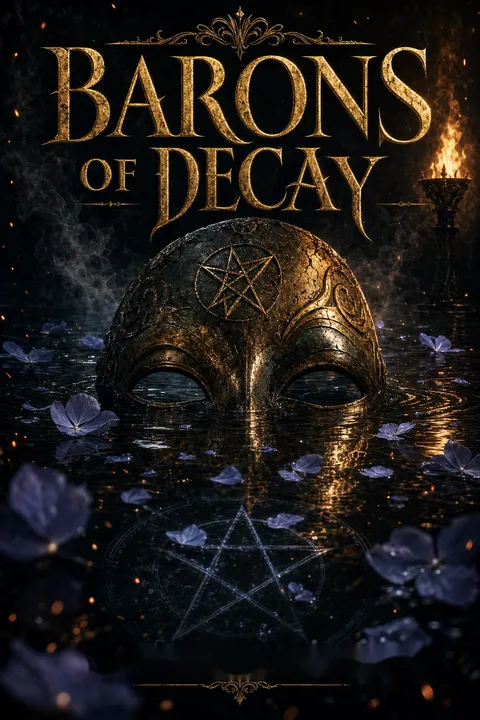
Conceals identity, projects powerThe bronze ceremonial mask with curved horns and an expressionless mouth serves as both shield and prison for Timothy Maddox4. It allows him to operate as two people—the hotel mogul and the criminal sovereign—while preventing genuine intimacy with anyone who serves him. The mask creates a central paradox: it projects absolute power while enforcing absolute isolation. For Arianette1, it embodies everything she fears and desires—the unknowable husband, the faceless authority, the monster she cannot read. Different masks serve different functions: the ceremonial bronze for rituals, a simpler black version for daily rule, and a half-mask for the wedding night that reveals his mouth while hiding everything else.
The Bone Chalice and Knife
Ceremonial blood oath instrumentsCarved from bone of unspecified origin, these paired objects consecrate every Baron initiation, Hunt, and Claiming. The chalice collects mingled blood from the King and his Barons, stained from years of ceremony. The knife cuts palms, carves pentagrams into flesh, and serves as the Hunt weapon that takes a life when turned against its wielder. They function as the physical connective tissue between all Barons past and present, making each ceremony a literal act of ancestor communion. When Arianette1 seizes the knife during the Hunt, she wields the Barons' own sacred weapon—an act that is simultaneously blasphemy and loyalty, destroying a traitor7 with the instrument meant to bind him.
The Cage Under the Bed
Punishment and captivity symbolHidden beneath the ornate iron bed in the Baroness's room, the cage is custom-forged with bars shaped like thorns. It transforms the most domestic object in the house—a bed—into a trap. When the King orders Arianette1 locked inside for stealing from his room, she spends the night on cold metal, eventually losing control of her bladder in a scene of deliberate humiliation. The cage collapses the distance between comfort and captivity, forcing the question of whether any space in the House of Night is truly safe. Its reappearance later in different rooms tracks the escalation of control over Arianette's1 body and spirit, each containment tighter than the last.
The Crimson Collar
Ownership transfer markerA blood-red leather collar passed through Hexley women for generations, inscribed with the Latin for obedience before all. Dean Hexley8 presents it as a wedding gift, but it functions as a transfer-of-ownership document worn around the throat. The metal ring at the front is both ornamental and practical—designed for something to hook into. The King buckles it on Arianette1 during his cruelest rejection, weaponizing the collar's symbolism: she belongs to the Hexley system of control even within his house. The collar's eventual replacement with a black version stamped with the Baron pentagram marks her passage from one system of ownership to another—neither representing freedom.
Phantom Bliss
Compliance through chemistryThe King's proprietary organic drug compound, administered as red pills stamped with gold pentagrams or small black tablets. Described as all-natural and consciousness-expanding, it appears at the crypt party celebration and the wedding reception. Phantom Bliss loosens inhibitions, heightens sensation, and dissolves resistance—functioning as both spiritual sacrament and compliance mechanism. The King frames it as connection to the earth and ancient tradition, but its practical effect is rendering Arianette1 more pliable for encounters she might otherwise resist. The drug occupies a deliberately ambiguous moral space, raising questions about consent that the narrative refuses to resolve cleanly.
Royals of Forsyth University Series









Download PDF
Download EPUB
.epub digital book format is ideal for reading ebooks on phones, tablets, and e-readers.








































