
Key Takeaways
1. Wartime Hysteria Ignited Domestic Repression
Judge Evans was right: these were no ordinary times.
War as pretext. America's entry into World War I in 1917, ostensibly to "make the world safe for democracy," paradoxically triggered an unprecedented assault on democracy at home. The government, aided by a compliant press and zealous citizens, used the war as an excuse to suppress dissent, silence critics, and consolidate power. This period saw mass imprisonments, torture, and vigilante violence, largely overlooked in historical narratives.
Unprepared nation. Despite having the world's largest economy, the U.S. Army was small and unprepared for a global conflict. The need to rapidly mobilize millions of men through conscription, coupled with fears of German espionage and sabotage (often exaggerated), created a climate of paranoia. This anxiety was skillfully exploited by politicians and business leaders to quash any opposition to the war or the existing social order.
A war against democracy. The conflict abroad became an excuse for a war against democracy at home, targeting anyone perceived as a threat. This included labor unions, immigrants, and racial minorities. The government's actions laid the groundwork for future periods of repression, demonstrating how easily civil liberties can be eroded during times of national crisis.
2. Censorship and Surveillance Silenced Dissent
The most stringent protection of free speech would not protect a man in falsely shouting fire in a theater and causing a panic.
Espionage and Sedition Acts. The Espionage Act of 1917 and the Sedition Act of 1918 criminalized virtually any criticism of the war effort or the government, leading to over 1,000 convictions. These laws were sweeping and vague, making it dangerous to:
- Make "false reports" interfering with military operations.
- Utter "disloyal, profane, scurrilous, or abusive language" about the government.
- Provide "disloyal advice" about war bonds.
Postal censorship. Postmaster General Albert Burleson, nicknamed "the Cardinal," wielded immense power, declaring hundreds of newspapers and magazines "unmailable" and revoking second-class mailing privileges for many more, effectively shutting them down. He targeted socialist, foreign-language, and Black newspapers, often without clear legal justification.
Widespread surveillance. Military Intelligence, under Colonel Ralph Van Deman, and the Justice Department's Bureau of Investigation (predecessor to the FBI) built extensive networks of agents and informants. They tapped phones, infiltrated organizations, and compiled hundreds of thousands of "file cards" on suspected subversives, creating a pervasive atmosphere of fear and self-censorship.
3. Vigilante Violence Became State-Sanctioned
A mob is a mob, whether made up of government officials acting under instructions from the Department of Justice, or of criminals, loafers, and the vicious classes.
Rise of vigilante groups. The war years saw the emergence of powerful vigilante organizations, often operating with official government sanction. The American Protective League (APL), with over a quarter-million members, became an auxiliary of the Department of Justice, conducting mass arrests and roughing up protestors. Other groups included the Knights of Liberty and the American Defense Vigilantes.
Brutal tactics. These groups, sometimes in collaboration with local police and federal agents, engaged in extreme violence:
- Tarring and feathering individuals who refused to buy war bonds or were deemed "disloyal."
- Attacking antiwar rallies and destroying socialist newspaper offices.
- Lynching perceived "pro-Germans," as seen in the case of Robert Prager in Illinois.
"Slacker raids." The APL conducted massive "slacker raids," rounding up hundreds of thousands of men who couldn't produce draft cards, often without warrants. These raids, though yielding few actual draft evaders, instilled fear and demonstrated the government's willingness to use extralegal force against its own citizens.
4. Labor and Immigrants Targeted as Internal Enemies
The capitalist has no heart, but harpoon him in the pocketbook and you will draw blood.
Crushing labor militancy. The war provided a "God-given excuse" for business and government to crush the militant labor movement, particularly the Industrial Workers of the World (IWW), or "Wobblies." Mass raids on IWW offices, arrests of hundreds of members, and show trials effectively dismantled the organization. The Bisbee Deportation, where 1,186 striking miners were forcibly exiled, exemplified this brutal anti-labor stance.
Nativism and xenophobia. Long-standing anti-immigrant sentiment intensified, fueled by eugenics and fears of "alien" ideologies. Woodrow Wilson himself, despite his own immigrant ancestry, expressed disdain for "the meaner sort" of immigrants. Foreign-language newspapers were heavily censored, and politicians like Congressman Albert Johnson championed restrictive immigration laws.
"Red" immigrants. The Russian Revolution further inflamed fears, leading to the conflation of immigrants with "Reds." The Union of Russian Workers, despite many members being apolitical, became a prime target for mass arrests and deportations, demonstrating how easily ethnic identity could be equated with subversive intent.
5. Racial Terror Erupted Across the Nation
Brothers we are on the Great Deep. We have cast off on the vast voyage which will lead to Freedom or Death.
The Great Migration. The war-fueled industrial boom in the North spurred the Great Migration of Black Americans from the South, seeking better jobs and an escape from Jim Crow violence. This influx, however, ignited intense white resentment in northern cities, exacerbating racial tensions.
"Red Summer" of 1919. The year 1919 saw an explosion of racial violence, often initiated by white mobs, in what became known as the "Red Summer." Cities like East St. Louis and Chicago experienced horrific massacres, with hundreds of Black Americans killed, injured, and left homeless.
- East St. Louis (1917): White mobs, aided by police and National Guard, killed nearly 100 Black residents and burned down neighborhoods.
- Chicago (1919): Rock-throwing at a segregated beach escalated into days of violence, leaving 38 dead, mostly Black.
- Phillips County, Arkansas (1919): White vigilantes and federal troops massacred hundreds of Black sharecroppers organizing a union.
Targeting Black veterans. Black soldiers, who fought bravely in Europe, returned home hoping for greater equality but often faced intensified violence, sometimes lynched in their uniforms. Their assertion of rights was met with brutal repression, as white supremacists sought to "show them what will and will not be permitted."
6. The Red Scare Fueled Mass Deportations
Like a prairie-fire, the blaze of revolution was sweeping over every American institution.
Palmer's presidential ambitions. Attorney General A. Mitchell Palmer, a "Fighting Quaker" transformed by an assassination attempt, leveraged public fear of revolution to advance his presidential aspirations. He orchestrated the "Palmer Raids," a series of mass arrests targeting suspected radicals, particularly non-citizen immigrants.
Hoover's rise to power. J. Edgar Hoover, a young and ambitious Justice Department official, became chief of the new Radical Division, meticulously compiling lists of subversives and orchestrating the raids. He skillfully used propaganda to link labor unrest and racial violence to a looming Communist threat, even when evidence was lacking.
Mass arrests and deportations. The Palmer Raids, particularly in November 1919 and January 1920, resulted in the arrest of thousands without warrants, often with brutal treatment. The most famous deportation, on the "Soviet Ark" Buford, expelled Emma Goldman and 248 others to Russia, setting a precedent for political expulsions.
7. Courageous Officials Resisted the Crackdown
A little man, cool but fiery, who set his belief in the Constitution of the country above all fears.
Louis F. Post's defiance. Acting Secretary of Labor Louis F. Post, a lifelong progressive, emerged as a crucial figure resisting the Red Scare. He meticulously reviewed thousands of deportation cases, invalidating nearly 3,000 arrests made without proper warrants or due process. His actions stemmed from a deep commitment to constitutional rights, regardless of a person's citizenship or political beliefs.
Legal challenges. Post's efforts, combined with the "Twelve Lawyer Report" – a scathing indictment of the Justice Department's illegal practices by eminent jurists – and a federal judge's condemnation of the raids, exposed the government's overreach. These challenges significantly deflated the campaign for mass deportations and highlighted the importance of legal safeguards.
Voices of dissent. Despite widespread repression, figures like Senator Robert La Follette continued to speak out against censorship, the draft, and the punitive peace treaty. Women radicals like Emma Goldman and Kate Richards O'Hare, even from prison, maintained their activism, inspiring others and exposing the harsh realities of incarceration.
8. Wilson's Idealism Masked Domestic Autocracy
I promised our soldiers . . . that it was a war to end wars, and if I do not do all in my power to put the Treaty in effect, I will be a slacker and never able to look those boys in the eye.
The League of Nations. Woodrow Wilson, a visionary internationalist, staked his political fortune on the League of Nations, believing it would ensure global peace. He embarked on an exhausting cross-country tour to rally public support for the League, seeing it as the "incomparable consummation of the hopes of mankind."
Contradictory leadership. Despite his lofty rhetoric abroad, Wilson presided over the greatest assault on American civil liberties in a century and a half. He showed little concern for the widespread repression, censorship, and violence against dissenters at home, often backing his hardline cabinet members. His "hyphenated Americans" speech, condemning those with foreign loyalties, further fueled nativist sentiment.
Incapacity and denial. A severe stroke in September 1919 left Wilson largely incapacitated for the remainder of his term. His wife, Edith, and close aides concealed the true extent of his illness, effectively running the country while the president remained largely invisible. This period of executive vacuum coincided with the peak of the Red Scare and the Palmer Raids.
9. A Lasting Legacy of Suppressed Freedoms
It is exceedingly fortunate that the government has . . . kept a sufficient number of them in prison to set an example of firmness that will go down in history as a warning.
End of an era, but not the forces. The extreme repression largely ended by 1924 with the release of the last political prisoners and the shift to "normalcy" under President Harding. However, the underlying forces of nativism, racism, and anti-radicalism persisted, shaping American society for decades.
Impact on institutions. The era left a profound legacy:
- Immigration: The Johnson-Reed Act of 1924 drastically restricted immigration, particularly from Southern and Eastern Europe, with devastating consequences for future refugees.
- Surveillance: J. Edgar Hoover's career as FBI director for nearly 50 years cemented federal surveillance as a permanent feature of American life.
- Civil Liberties: The American Civil Liberties Union (ACLU) emerged from this period, becoming a crucial defender of constitutional rights.
Unanswered questions. The crushing of the Socialist Party and the labor movement arguably prevented the development of a stronger social safety net in the U.S., unlike in Europe. The impunity for racial violence in the "Red Summer" set a dangerous precedent, contributing to future atrocities like the Tulsa Massacre. The period serves as a stark reminder of democracy's fragility and the constant need for vigilance against demagoguery and the erosion of fundamental freedoms.
Review Summary
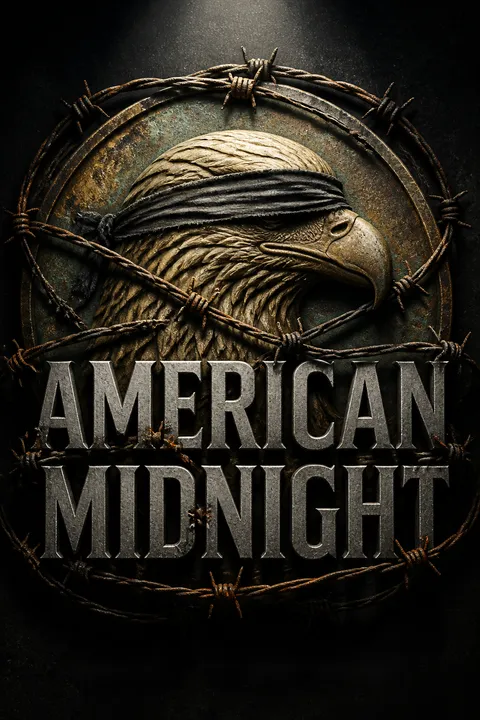
Reviews of American Midnight are largely positive, averaging 4.2 stars. Readers praise Hochschild's compelling narrative of the 1917–1921 period, highlighting government repression, censorship, vigilante violence, and the crushing of labor movements under Woodrow Wilson. Many find it a timely cautionary tale with unsettling parallels to modern America. Critics note the author's clear progressive bias occasionally detracts from the history, with some feeling contemporary political references feel forced. Nevertheless, most reviewers consider it essential, eye-opening reading about a largely forgotten chapter in American history.
People Also Read



About the Author

Download PDF
Download EPUB
.epub digital book format is ideal for reading ebooks on phones, tablets, and e-readers.








































