
Key Takeaways
1. America's "Liberal Tradition" is a Recent Invention
Yet, some “traditions” that appear to have a deep history are often more recent creations, constructions, or inventions.
Cold War origins. The idea of a long-standing, encompassing "liberal tradition" in American history, often seen as foundational to American exceptionalism, was largely an invention of the Cold War era. Scholars like Louis Hartz and Richard Hofstadter, writing in the 1940s and 50s, crafted this narrative to distinguish the U.S. from totalitarian regimes and to foster national unity. This intellectual project aimed to present America as inherently liberal, emphasizing consensus over conflict.
Shaping historical scholarship. This invented tradition profoundly influenced how American history was written, particularly in fields like:
- Slavery studies: Initially depicted as a paternalistic system, later reinterpreted through a capitalist lens, but still within a framework that often minimized its illiberal aspects.
- Immigration studies: Focused on assimilation and the "melting pot," overlooking the coercive and exclusionary experiences of many immigrant groups.
- American Studies: Emphasized American distinctiveness and exceptionalism, often downplaying internal divisions and conflicts.
Enduring influence. Despite significant critiques from the 1960s onward—which highlighted class, race, gender, and power imbalances—the "liberal tradition" narrative has retained remarkable cultural currency. Its persistence is partly due to its role in framing national identity and partly because critics, while exposing liberalism's contradictions, often failed to offer a comprehensive alternative narrative, inadvertently reinforcing liberalism's central place in historical discourse.
2. Colonial America's Feudal Roots and Coercive Labor
Theirs were feudal or neo-feudal dreams that, as the one historian has argued, “might better be seen as the final examples of a late-medieval form of enterprise . . . than as the harbingers of the modern era.”
Feudal aspirations. Early English colonization of North America was not primarily driven by liberal capitalist ideals, but by "feudal or neo-feudal dreams." Adventurers and investors sought to establish large landed estates, extract rents and tribute, and replicate European social hierarchies. This vision was influenced by England's own internal colonization of Ireland, where conquest and "civilizing" missions were intertwined with land grants and the subjugation of indigenous populations.
Widespread coerced labor. The peopling of British North America relied heavily on coerced labor, fundamentally shaping its societies.
- Indentured servitude: Approximately 250,000 Europeans, mostly English and Irish, arrived as indentured servants, treated as property and subject to harsh discipline.
- African enslavement: Around 350,000 Africans were forcibly brought to North America, forming the basis of a brutal, hereditary system of chattel slavery.
- Native enslavement: Indigenous peoples were also enslaved, particularly in the early colonial period, though this proved less sustainable than African enslavement.
Illiberal social order. These labor systems fostered a social order based on personal domination and hierarchy, not individual liberty. John Locke, often considered a foundational liberal thinker, was involved in drafting the Fundamental Constitutions of Carolina, which explicitly granted absolute power over enslaved people. This demonstrates how exclusionary impulses were present even in the earliest articulations of "liberal universalism," laying groundwork for future illiberal projects.
3. Revolutionary Illiberalism: Anti-Catholicism and Elite Power
What made the work of republican theorists like Algernon Sidney, James Harrington, John Locke, and John Milton possible were the rumblings of the Puritans and Presbyterians in the House of Commons, the Levellers and Independents in the New Model Army, and the even more radical Quakers, Diggers, and Ranters who called into question not only private property and the prevailing social relations of the realm but also the spiritual hierarchies that were so central to Catholicism and the ideas of divine rule.
Anti-Catholicism as a unifying force. The American Revolution, while espousing republican ideals, was deeply infused with illiberal anti-Catholicism. "Popery" was equated with tyranny and corruption, serving as a powerful cultural glue for Protestants across the colonies. This sentiment was evident in popular rituals like Pope's Day, which easily morphed into protests against British officials, linking anti-Catholic and anti-aristocratic resentments.
Enduring monarchical loyalties. Despite the eventual rejection of King George III, monarchical loyalty was widespread and deep in colonial North America. Many colonists viewed the king as a protector against a corrupt Parliament, and even enslaved people sometimes appealed to the Crown for emancipation. The final break with monarchy was a significant shift, but the desire for strong, centralized authority, even in a republican guise, persisted among some elites.
Backcountry illiberalism. Backcountry rebellions, like those of the Paxton Boys, revealed a localistic and often violent illiberalism. These settlers, while demanding self-governance and protesting elite corruption, also harbored intense hostility towards Native peoples and "white Indians" (hunters and squatters). Their vision of community was based on:
- Property ownership and labor
- Cultural homogeneity
- Exclusion or extermination of perceived threats
- Local justice, often brutal and summary
The Constitution, born from fears of democratic excesses (like Shays's Rebellion), reflected these illiberal currents by strengthening central authority, protecting property, and making compromises with slavery, ensuring that the new republic would be shaped by these exclusionary forces.
4. Jacksonian Democracy's Expulsive Nature
This disposition is awfully fearful in any community, and that it exists in ours, though grating to our feelings to admit, it would be a violation of the truth, and an insult to our intelligence, to deny.
Lincoln's warning. While Alexis de Tocqueville observed the "equality of conditions" and robust democratic practices in 1830s America, Abraham Lincoln, in 1838, issued a stark warning about "the increasing disregard for the law" and "savage mobs." Lincoln's concerns were rooted in contemporary events like the lynching of Francis McIntosh and the murder of abolitionist Elijah Lovejoy, highlighting a pervasive illiberalism beneath the veneer of democracy.
Widespread expulsions. The 1830s were characterized by a broad "expulsionism" targeting various groups deemed threats to white, Protestant, and propertied communities:
- Anti-abolitionist mobs: Violent attacks on abolitionists and Black communities, often led by "gentlemen of property and standing," aimed to suppress dissent and maintain racial hierarchies.
- Anti-Catholic violence: The burning of the Ursuline convent in Charlestown, Massachusetts, exemplified fears of Catholic influence and the perceived moral decay of society.
- Anti-Mormon persecution: Joseph Smith and his followers faced mob violence, property destruction, and forced removal from New York, Ohio, and Missouri due to their distinct religious practices and growing political power.
- Native removal: President Andrew Jackson's Indian Removal Act of 1830 led to the forced displacement of thousands of Native peoples, including the Cherokee, in a brutal "Trail of Tears," to create a "white republic."
Limits of "free labor" and democracy. The era's democratic expansion for white men often reinforced these illiberal tendencies. Electoral politics were frequently violent and coercive, and "Black Laws" in northern states confined African Americans to a netherworld of restrictions, demonstrating that "freedom" for some was predicated on the subjugation and expulsion of others.
5. Emancipation's Shadow: The Thirteenth Amendment's Coercive Legacy
Neither slavery nor involuntary servitude, except as a punishment for crime whereof the party shall have been duly convicted, shall exist within the United States or any place subject to their jurisdiction.
The "exception clause." The Thirteenth Amendment, while abolishing slavery, contained a critical "exception clause" allowing "involuntary servitude, except as a punishment for crime." This clause, often overlooked, became a legal loophole that enabled new forms of coercion, particularly against newly freed African Americans in the post-Civil War South. It reflected a broader societal discomfort with truly free Black labor and the perceived disorder it might bring.
Penal labor and the penitentiary. The rise of the penitentiary system in the North, championed by "enlightened humanitarians" like Benjamin Rush and Roberts Vaux, predated the Civil War and provided a model for coercive labor.
- Rehabilitation through labor: Inmates were subjected to solitary confinement and forced labor, often contracted to private employers, to instill discipline and productive habits.
- Abolitionist connections: Many penal reformers were also antislavery advocates, seeing penitentiaries as a humane alternative to corporal punishment and slavery, yet they worried about the "debased" character of formerly enslaved people.
- Racial disparities: Black individuals were disproportionately incarcerated in northern prisons, laying the groundwork for the idea of Black criminality.
Post-emancipation re-coercion. In the South, the exception clause facilitated the creation of a new system of racial control:
- Black Codes: Laws designed to force Black people into labor contracts, limit their mobility, and restrict their rights.
- Convict lease system: Black convicts, often arrested for minor offenses like vagrancy, were leased to private companies (railroads, mines, plantations) under brutal conditions, effectively re-enslaving them.
- "Free labor" ambiguities: Despite the ideal of "free labor," common law traditions and court rulings often upheld coercive employment relations, particularly for agricultural and industrial workers, blurring the lines between freedom and involuntary servitude.
6. Progressivism's Modernized Illiberalism
Whatever the dangers of Fascism, it has at any rate substituted movement for stagnation, purposive behavior for drifting, and visions of [a] great future for collective pettiness and discouragement.
Social engineering and expertise. The Progressive Era (early 20th century) saw the rise of a "modernized illiberalism" driven by a belief in social engineering and the rule of experts. Intellectuals and policymakers, disillusioned with chaotic individualism and class conflict, sought to reorganize society through scientific management and an administrative state. Figures like Herbert Croly advocated for a "national purpose" and the "subordination of the individual" to the state.
Corporate capitalism and political "reform." This era witnessed the consolidation of corporate power, with legal protections and a shift towards large-scale, integrated institutions. Political "reform" efforts, often led by elites, aimed to "purify" the ballot box and streamline governance, but often resulted in:
- Disfranchisement: Literacy tests, residency requirements, and other barriers disproportionately affected immigrants and African Americans.
- Bureaucratization: Increased reliance on non-partisan commissions and appointed officials, diminishing the role of popular participation.
- Corporatist models: Efforts to foster cooperation between business, labor, and government, often favoring corporate interests and conservative unionism.
Racial segregation and eugenics. Progressive illiberalism was deeply intertwined with racial control and eugenics.
- Jim Crow: De jure segregation in the South, and de facto segregation in the North, was seen as a "modern" and rational way to manage "race relations" and maintain social order.
- Eugenics: Advocated by figures like Margaret Sanger and embraced by many elites, eugenics promoted "scientific breeding" to improve the "racial stock," leading to sterilization laws and immigration restrictions.
- Imperialism: The administration of territories like the Panama Canal Zone exemplified racial hierarchies and coercive labor practices, reflecting domestic illiberal trends on an international stage.
These trends, emphasizing order, efficiency, and racial hierarchy, laid groundwork that would later be admired by European fascists.
7. The 1920s and 30s: American Fascist Pulses
Do not forget that the Fascisti are to Italy what the American Legion is to the United States.
Post-WWI repression. The period following World War I saw an intensification of illiberal forces, often described as "protofascist pulses." The Red Scare, fueled by fears of labor radicalism and Bolshevism, led to widespread government repression, surveillance, and deportations, targeting socialists, anarchists, and immigrants. Organizations like the American Protective League (APL) and the American Legion actively participated in this crackdown, often resorting to vigilantism.
The rise of the Ku Klux Klan. The 1920s witnessed the explosive growth of the "second" Ku Klux Klan, becoming the largest popular organization of the decade. Its appeal extended beyond the South, drawing millions of white Protestants across the country with a platform of:
- 100% Americanism: Advocating white Protestant supremacy, anti-Catholicism, anti-Semitism, and anti-radicalism.
- Prohibition: Vigorous defense of the Eighteenth Amendment, linking it to moral purity and national identity.
- Vigilantism: Widespread use of violence and intimidation against perceived enemies, often with local political protection.
Immigration restriction and eugenics. This era culminated in the Johnson-Reed Act of 1924, which drastically restricted immigration based on national origin quotas, effectively ending mass immigration from Southern and Eastern Europe and Asia. This policy was heavily influenced by eugenicists and aimed at "preserving the American race." Adolf Hitler, writing Mein Kampf, explicitly admired U.S. immigration and racial policies as models for Nazi Germany.
New Deal's authoritarian leanings. Even the early New Deal, while addressing the Great Depression, exhibited authoritarian tendencies. President Roosevelt consolidated unprecedented executive power, and some early programs, like the National Industrial Recovery Act (NIRA) and the Agricultural Adjustment Act (AAA), favored corporate and large landowning interests, sometimes at the expense of workers and poor farmers, drawing comparisons to European fascist states from contemporary observers.
8. The "Other" 1960s: Backlash Against Liberalism
I have never seen, even in Mississippi and Alabama, mobs as hateful as I’ve seen here in Chicago.
Wallace's northern appeal. The 1960s, often seen as the "salad days of modern liberalism," also witnessed the powerful rise of an illiberal backlash. George C. Wallace, Alabama's segregationist governor, found unexpected support among white working-class ethnics in northern cities during his 1964 presidential primary campaign. He skillfully reframed racial issues into a broader critique of federal overreach, "big government," and threats to local control and "traditional values."
White resistance to integration. White communities in the North and West mobilized fiercely against racial integration in housing and schools.
- Neighborhood associations: Formed to "defend" neighborhoods, often using race-neutral language to mask exclusionary aims.
- Violence and harassment: Black families attempting to move into white areas faced intimidation, property destruction, and violence, often with police complicity.
- "Neighborhood schools": This concept was used to justify de facto segregation and resist busing, framing it as a defense of parental rights and local autonomy. Martin Luther King Jr. noted the intensity of this hatred in Chicago.
Anti-feminism and the Christian Right. Opposition to the Equal Rights Amendment (ERA) and abortion rights coalesced, led by figures like Phyllis Schlafly. This movement, drawing on conservative women's networks and a newly politicized Protestant evangelicalism, framed feminism as an attack on traditional families and gender roles. It emphasized:
- "Privileges" of women: Arguing that women already enjoyed a privileged status in American society.
- Family as society's basic unit: Prioritizing patriarchal family structures over individual rights.
- Judeo-Christian civilization: Defending traditional moral values against perceived liberal decline.
Radical right's growth. Anti-communism, anti-statism, and localism fueled the growth of organizations like the John Birch Society and Young Americans for Freedom (YAF). These groups, often dismissed as fringe, built a base among white, middle-class, often evangelical, populations in the Sunbelt, laying the groundwork for future conservative ascendancy and demonstrating the deep roots of illiberal sentiment.
9. Neoliberalism's Punitive State and Market Coercion
Across his two terms, Clinton may have done more to free markets from regulation than even Reagan himself had done.
Deregulation and mass incarceration. The rise of neoliberalism from the 1970s to the 1990s, embraced by both Republicans (Reagan) and Democrats (Clinton), paradoxically combined economic deregulation with a strengthening of the punitive state. The Clinton administration, for example, signed a punitive crime bill and welfare reform, completing projects begun under Reagan's "War on Drugs." This approach reflected a belief in market liberation alongside the need for coercive measures to maintain social order.
Militarization of policing. The "War on Crime" and "War on Drugs" led to the militarization of domestic policing, drawing lessons from Cold War counterinsurgency tactics abroad.
- SWAT teams: Became widespread, viewed as "urban counterinsurgency bulwarks."
- Military equipment: Federal programs provided police departments with surplus military gear, blurring the lines between civilian law enforcement and military operations.
- Racial targeting: These policies disproportionately affected Black and Hispanic communities, reinforcing the criminalization of poverty and race.
Criminalization of poverty. The neoliberal emphasis on fiscal austerity led to the "criminalization of poverty" through court fines and fees.
- "Pay-to-stay" bills: Inmates were charged for their time in jail, creating cycles of debt and re-incarceration for minor offenses.
- Felon disfranchisement: Many states denied voting rights to felons until all fines and fees were paid, effectively disenfranchising millions, particularly people of color.
Surveillance capitalism. The tech industry, while promoting "freedom" and "innovation," developed "surveillance capitalism," where user data is harvested and sold, creating radically disproportionate power dynamics. This system, largely unregulated, exemplifies how neoliberal economic projects can foster new forms of illiberal control, prioritizing corporate accumulation over individual privacy and autonomy.
10. Specters of Race War and Replacement in the 21st Century
Nobody wants to be a minority. Look at how we’ve treated black people. Don’t for a second think that they’ll treat us any better.
Backlash against Obama. Barack Obama's election, initially hailed as a "post-racial" moment, quickly triggered a powerful far-right backlash. Movements like the Tea Party and Oath Keepers, while denying racist motivations, were energized by fears of federal overreach and the perceived threat of a Black president whose identity and policies challenged conservative white norms. This reaction tapped into long-standing white anxieties about losing power and status.
White nationalism and "replacement theory." White supremacist views, long present in American political culture, gained new traction, moving from the fringes to the mainstream.
- Militia movements: Fueled by anti-government sentiment and white supremacy, these groups grew significantly, exemplified by the Oklahoma City bombing.
- "Great Replacement Theory": This theory, originating in Europe, warns of "reverse colonialism" and the "extinction-level event" of white populations being replaced by non-white immigrants. It has been embraced by figures like David Duke, Pat Buchanan, and mainstream right-wing media.
- Weaponized immigration: The issue of "illegal aliens" and border security became a central rallying cry, framing immigration as an "invasion" and a threat to a predominantly white, English-speaking society.
Militarized gun culture. The National Rifle Association (NRA), under leaders like Harlon Carter and Wayne LaPierre, transformed into a potent political force, linking gun rights to:
- Freedom and patriotism: Framing gun ownership as essential for constitutional liberty and defense against government "tyranny."
- Racial fears: Associating gun ownership with protection against "terrorists, home invaders, drug cartels, carjackers, knock out gamers, and rapers, and haters," often with racial undertones.
- White masculinity: Reinforcing gun ownership as a symbol of white security and power, particularly in the face of demographic change.
These specters of race war and replacement, amplified by economic anxieties and a distrust of established institutions, have propelled the illiberal right into a dominant position in contemporary American politics.
11. Illiberalism is Deeply Embedded, Not Cyclical
Illiberal ideas, relations, practices, sensibilities, places of empowerment, cultural hierarchies, and political projects have been—as this book maintains—deeply embedded in our history, not at the margins but very much at the center, infusing the soil of social and political life, and often ensnaring or entangling much else that grows there.
A constant presence. Illiberalism in America is not a cyclical phenomenon or a temporary deviation from a liberal norm, but a deeply embedded and continuously evolving force throughout the nation's history. It has consistently shaped social and political life, often intertwining with and compromising ostensibly liberal projects. This perspective challenges the comforting narrative of a linear progression towards greater liberty and equality.
Evolution and adaptation. Illiberalism has demonstrated a remarkable capacity to adapt and reconstitute itself across different eras:
- Colonial feudalism: From coerced labor and aristocratic ambitions.
- Revolutionary era: Through anti-Catholicism and elite control.
- Jacksonian period: Via expulsions of Native peoples and anti-abolitionist violence.
- Post-emancipation: In the form of penal servitude and Jim Crow.
- Progressive Era: Through social engineering, eugenics, and corporate power.
- 20th-century backlashes: Against civil rights, feminism, and perceived threats to white dominance.
Nourished by "community will." A consistent feature of illiberalism is its reliance on the "will of the community," however that community is defined. This often translates into local control, patriarchal structures, and the enforcement of cultural homogeneity, frequently at the expense of individual rights or the rights of "outsiders." This communal aspect provides a powerful, often violent, mechanism for maintaining hierarchies and exclusions.
Understanding illiberalism as a central, rather than marginal, force is crucial for comprehending the complexities of American history and the enduring challenges to democratic ideals.
12. Counter-Currents of Struggle and the Volatility of Populism
History shows us what we have had and can fight for. And, just as surely, it shows us what we are up against.
Enduring counter-currents. Despite the pervasive influence of illiberalism, American history has also been marked by powerful counter-currents of struggle for social justice and expanded rights. These movements, often led by marginalized groups, have consistently pushed for more inclusive and equitable visions of the nation.
- Radical alternatives: From Levellers and Diggers in revolutionary England to abolitionists, early feminists, socialists, and civil rights activists in America.
- Expansive conceptions of rights: African Americans, in particular, have consistently offered the most far-reaching ideas of civil and political equality and freedom.
- Social movement building: Ordinary people, not just elites, have been central to reconfiguring historical narratives and challenging power structures.
Populism's complex legacy. "Populism," often viewed as a menace in contemporary discourse, has a complex and volatile history in the U.S.
- 19th-century radicalism: The People's Party of the 1890s, for example, advocated for fundamental economic and political changes, including public control of resources and a graduated income tax, and sometimes forged interracial alliances.
- Political fluidity: Populist movements have shown a capacity to trend left, right, or reformist, defying easy categorization and demonstrating how political migrations can occur among seemingly unlikely groups.
- Grimes County example: The biracial Populist coalition in Grimes County, Texas, in the late 19th century, demonstrated the possibility of shared struggle against exploitation, even among former Confederates and formerly enslaved people, before being violently suppressed.
Lessons for the present. History offers both inspiration and a sobering reminder of the fragility of democratic gains. The hollowing out of political engagement and the rise of authoritarian solutions in the face of profound crises underscore the ongoing need to fight for human rights and democratic practice. The struggles of the past, with their successes and failures, provide crucial insights into what is possible and what forces must be confronted.
Review Summary
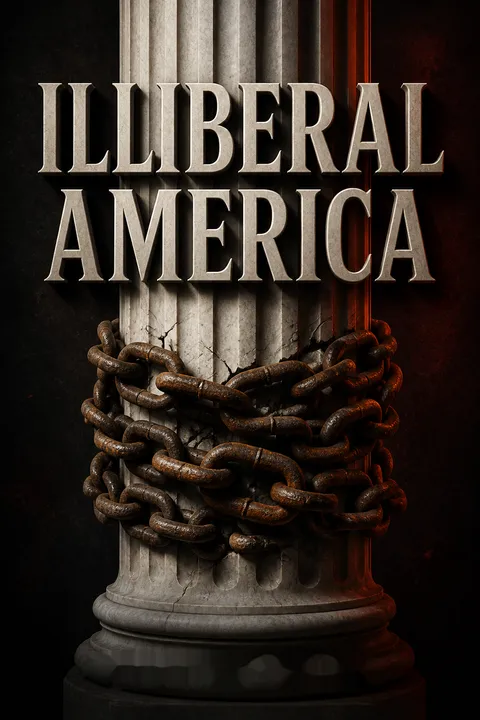
Illiberal America by Steven Hahn examines how illiberalism has been a persistent feature of American history rather than an aberration. Reviews praise Hahn's comprehensive historical analysis tracing patterns from colonial times through Trump's presidency, challenging American exceptionalism narratives. Readers appreciate his integration of social and political history, though some find the writing dense or textbook-like. Critics note the episodic structure and question whether "illiberalism" is adequately defined as distinct from related concepts. Most reviewers found it relevant to understanding contemporary politics, though some wanted more interpretation connecting past to present.
People Also Read




About the Author
Download PDF
Download EPUB
.epub digital book format is ideal for reading ebooks on phones, tablets, and e-readers.








































