


Plot Summary
Prologue
On December 28, 1893, mule skinner Brady arrives in the mining town of Abandon to find it deserted. Fires lie dead, Christmas dinners untouched on tables, the stamp mill silent. He calls through empty streets but hears only his own echo. A young girl17 emerges from the snow: six or seven, black curls, dark eyes like wet stones.
She tells him plainly that everyone is gone. When Brady presses her, she pulls a single-action army revolver from her gray woolen cloak. He watches, too stunned to move, as she struggles with the hammer, sights him up, and shoots him through the neck. Bleeding into the snow, he hears her observe the hole she has made, her voice utterly without affect.
The prologue functions as both a shocking hook and the final piece of a puzzle the novel will assemble. It opens with Western genre expectations but subverts them through the chilling banality of a child executioner. The girl's emotionless delivery and the mule skinner's helplessness establish Abandon's core horror: violence here operates outside normal moral frameworks. Her observation about the hole she made implies a corrupted mercy, an echo of religious logic twisted into murder. The absence of explanation makes the scene archetypal rather than merely sensational, a ghost story where the ghost is a living child and the haunting is what adults have taught her.
A Father's Calculated Invitation
Abigail Foster1 sits in her car outside a Durango brewpub, hands cramping on the steering wheel. She has not seen Lawrence Kendall2 since he left when she was four years old. A month ago she pitched her editor a story about a ghost town expedition, knowing it was really about confronting him. Inside, Lawrence2 waits with three empty pint glasses and a trembling hand.
The conversation is excruciating: no hug, no tears, just two people trying to survive the awkwardness. He is fifty-two, a history professor in Patagonia. She is thirty, a journalist in Cavalli. When she asks why he contacted her now, he claims her career inspired him. She raises her glass: to their past, fuck it. They can pretend.
The reunion anatomizes a specific kind of estrangement where the wound has calloused but never healed. Abigail's physical symptoms betray what her controlled exterior conceals. Lawrence's trembling hand and preemptive drinking suggest his guilt is closer to the surface than his words admit. The toast acknowledges the enormity of his abandonment while refusing to grant it power over the present. But the word 'pretend' hangs over everything, signaling that this expedition is built on a foundation of performance and concealed motives. Both characters know the script: polite distance, no real accountability, the past as a third person at the table.
The Weight of Thin Air
At dawn the group assembles: Lawrence,2 Abigail,1 Emmett7 and June Tozer6 (paranormal photographers who lost their young son years ago), Scott Sawyer5 (the guide), and Jerrod Spicer8 (his assistant). Sheriff Jennifer Primack10 intercepts them at the trailhead, scrutinizing their permits with peculiar intensity.
Abigail1 catches a glance between Scott5 and Lawrence2 that reads like relief. The two-day hike punishes Abigail,1 a city girl gasping at eleven thousand feet. Scott5 teaches her to fly-fish in a stream so metal-laced the rocks glow orange.
Around the campfire, Lawrence2 tells the story: on Christmas Day 1893, every soul in Abandon vanished. No bones were ever found. When a blizzard threatens, Scott5 urges retreat. The Tozers, who waited three years for this permit, vote to stay.
This section establishes the expedition as a coalition of hidden agendas. The Tozers seek spectral contact with their dead son; Lawrence and Scott seek gold; Abigail seeks her father. The sheriff's scrutiny introduces the first hint that outsiders are invested in this outcome. The decision to stay despite the storm is the group's point of no return, a collective choice that privileges desire over safety. Lawrence's campfire story weaponizes the town's mystery, using it as bait to keep everyone committed while concealing his true objective. Every character has a secret they are keeping from the others.
Whatever Watches from Windows
After dark, the group returns to Abandon with headlamps and cameras. Emmett7 shoots infrared film in the saloon while June6 describes her philosophy: spirits are confused souls needing help to move on. In the hotel, they climb a rotting staircase to the second floor.
June6 is drawn to room six, where she immediately feels heaviness, a watching presence. She enters a trance near the bay window, muttering about church bells and a woman who refuses to leave. Abigail,1 the skeptic, looks through Emmett7's infrared-filtered camera at the street below and sees a figure sprint from the saloon.
She calls out, but Lawrence2 sees nothing. Then they discover Jerrod8 has vanished from the lobby. Scott5 and Lawrence2 go searching. The staircase collapses behind them, stranding the group on the second floor.
This chapter layers rational and supernatural explanations in productive tension. June's apparent psychic sensitivity could be genuine perception or grief-fueled projection. Abigail's camera sighting is ambiguous: a deer, a trick of light, or something else. The structural parallel between the window-watching woman from 1893 and June's empathic collapse suggests that trauma imprints on spaces, creating resonances across time. Jerrod's disappearance is the first crack in the expedition's facade of normalcy, the moment when unease tips toward dread. The collapsing staircase physically severs the group's connection to the outside world.
Spec-Ops Savagery
Scott5 stumbles back toward the hotel, a knife wound gushing blood from his side. He gasps warnings before losing consciousness. Jerrod8 runs from the north end of town, pursued by shadows in night-vision goggles. A figure catches him, jams something into the base of his skull.
He drops. Abigail,1 Lawrence,2 Emmett,7 and June6 scatter. Abigail1 hides under the dance hall floor while boots creak above her. Lawrence2 finds her in the dark, gives her his day pack containing a Ruger revolver, and sends her to a house on the slope.
She loads the unfamiliar gun, fires at two men in the dark, and is brought down by a Taser. She wakes bound beside Lawrence2 and the Tozers, watching three masked men in night camouflage pack military gear. One of them, Isaiah,3 does the talking.
The attack's military precision transforms the wilderness thriller into a hostage drama. The killers' tactical expertise (the silent kill, the Taser deployment) signals professionals, not random criminals. Abigail's childhood memory of playing the 'Dead Game' as a ten-year-old creates an unsettling parallel: the terror is simultaneously real and uncannily familiar, as if some part of her has been training for this moment since the night her father walked out of her bedroom. The Ruger Lawrence gives her is both practical tool and symbolic transfer of responsibility.
The Empty Strong Room
The captors march the group through a blizzard to Emerald House, Bart Packer's decaying mansion. Lawrence,2 following old blueprints, discovers a hidden door in Packer's wardrobe leading to a steel-lined vault. He produces a key found years earlier. But the room is empty.
Isaiah3 prepares to cut out Lawrence2's right eye as persuasion. Abigail1 recognizes the third masked man's eyes: Jerrod,8 whose murder was staged. All three unmask. Isaiah3 is a black ex-Marine with a broad, malignant smile; Stu is an emaciated alcoholic; Jerrod8 was Scott5's assistant and the inside man.
On the snow-blasted roof, searching for another hiding place, Isaiah3 shoots Emmett Tozer7 through the forehead as June6 screams. Then the veranda floor collapses, plunging everyone through rotting wood and darkness into the mansion's interior.
The empty strong room is the novel's great anticlimax, a grail quest that yields only vacuum. It forces both characters and readers to confront the possibility that the object of obsessive pursuit simply no longer exists where it should. Isaiah's unmasking humanizes him in the worst way: a torture survivor who has become a torturer, his cruelty a malignant adaptation of his own trauma. Jerrod's betrayal of Scott reveals how thoroughly the promise of gold has corrupted every pre-existing loyalty. Emmett's execution strips away any remaining illusion that cooperation might lead to survival.
Packer's Christmas Massacre
On Christmas Eve 1893, Oatha Wallace15 and young Billy McCabe16 waylay Bart Packer on his sleigh ride home. They force him at gunpoint to his mansion, Emerald House. By morning, Packer and his four servants lie on the roof with their throats cut.
Billy16 gives his wife Bessie a twenty-two-pound gold bar for Christmas. When she questions its origin, he beats her nearly to death. Sheriff Ezekiel Curtice,13 a former outlaw turned lawman, finds Packer's body and rides with Dr. Russell Ilg and preacher Stephen Cole4 to pursue the killers.
At Sawblade Pass, Billy16 shoots Russell through the eye. Then he gut-shoots Ezekiel.13 As Ezekiel13 dies in the snow, Oatha15 confesses he murdered and cannibalized Ezekiel13's brother Nathan months earlier, during a winter starvation. Billy16 executes the dying sheriff13 at close range.
The 1893 narrative presents greed as a pathogen moving through the town like plague. Oatha and Billy's violence escalates in direct proportion to the gold's proximity. But the real horror is the domestic scene: Billy presenting his atrocity as a Christmas gift, then beating his wife when she resists. The gold becomes a solvent that dissolves all social bonds: marriage, employment, neighborliness, even the prohibition against cannibalism. Ezekiel's deathbed realization that he has wasted his life on outlaw nostalgia rather than cherishing his family is the novel's moral fulcrum, a truth that arrives too late.
The Preacher's Divine Genocide
Stephen Cole,4 the young preacher from Charleston, hears what he believes is God's voice commanding judgment on Abandon's wickedness. He sees a vision of heathen warriors, a hallucination he weaponizes. Ringing the church bell, he herds all 123 residents into a mine on the hillside, claiming it will protect them from an Indian attack.
Once everyone is inside, he swings the iron door shut and locks it. Over the following days, the townspeople slowly die of thirst and starvation. A mute piano player named Lana Hartman12 and the saloon keeper Joss Maddox11 escape the main cavern through a cave system.
Joss11 sacrifices herself so Lana12 can climb to the surface. Lana12 reaches Silverton but is found nearly frozen. Dr. Julius Primack18 amputates her feet, then all her limbs, and has her committed to an asylum, all to keep the gold's location secret. The key stays in his family for four generations.
Stephen Cole represents the novel's deepest horror: violence legitimized by religious conviction. His God commands annihilation, and Stephen obeys with the meticulous devotion of a true believer. The chapter forces an uncomfortable question: is Stephen's God real, or is the thin mountain air and isolation fracturing his mind? The ambiguity is the point. Faith and madness become indistinguishable when they produce identical outcomes. Dr. Primack's mutilation of Lana completes the pattern: everyone who touches the gold's secret becomes either a corpse or a monster, and the distinction between divine judgment and human greed collapses entirely.
A Century of Bones
After the veranda collapse, Lawrence2 and Abigail1 escape Emerald House through the kitchen. They find June6 catatonic beside Emmett7's impaled body. A stranger named Quinn9 appears: a gaunt man claiming to be a history professor from Arizona, whom Isaiah3 and Stu had been holding captive for days.
He says he overpowered Stu and threw him from the third floor. Lawrence2 recognizes a key Quinn9 carries as matching the mine where Lawrence2 theorizes the gold was hidden. They trek through the storm to the mine entrance.
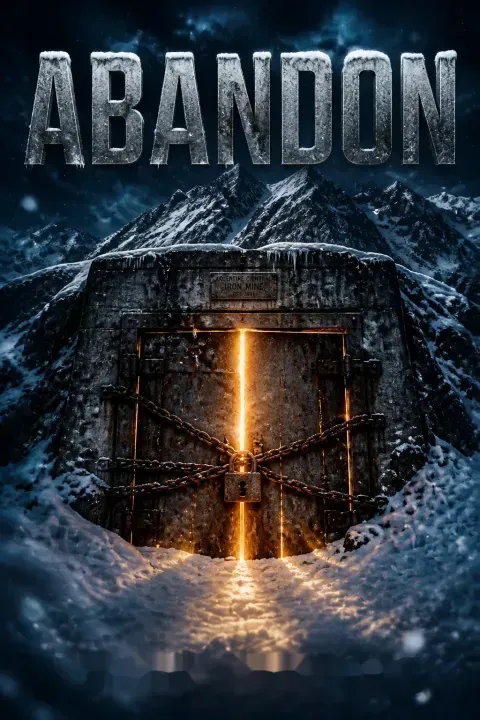
Inside, in an alcove, they find burlap sacks containing sixty-one gold bars. Deeper in, headlamps reveal a cavern floor covered with more than a hundred skeletons, some clutching gold bricks or weapons. Then Quinn9 slips out, slams the iron door, and locks them inside the mountain with Abandon's dead.
Quinn's betrayal completes a pattern: everyone who knows about the gold either kills or is killed. The skeletons are the book's central image, a monument to obsession that literalizes the cost of greed. When Abigail sees a mother's skeleton with a fetal skeleton in its pelvis, the abstraction of '123 vanished' becomes unbearable particularity. The gold and the bones occupy the same space, as if the novel insists we cannot have one without confronting the other. Quinn's treachery reveals that the gold's curse, far from being supernatural, operates through a multigenerational chain of human choices and secrets.
Chimney to the Surface
Inside the mine, June6 cannot bear the darkness and what she insists are spirits tormenting her. She wanders off, finds a boulder, and smashes her own skull. Lawrence2 and Abigail1 press deeper into the cave system, discovering an underground lake and a perfectly preserved female corpse mummified by sulfur gas.
Eventually they find a room with a narrow chimney reaching to the surface. With his sprained ankle, Lawrence2 cannot climb. He boosts Abigail1 up. She scales seventy feet of wet rock, emerging into a blizzard on a steep mountainside.
Before she leaves, Lawrence2 tells her the truth: his abandonment was never her fault, just something broken inside him that he has never understood. He makes her promise to try for help. She climbs out, leaving him alone in the dark with the last of the water.
Abigail's climb is both literal escape and symbolic rebirth, the narrow chimney a birth canal delivering her from the womb-tomb of the mountain. Lawrence's confession, timed to what both believe may be his death, finally gives Abigail the absolution she has needed since age four. But it arrives poisoned by context: he is only saying it because he has no other choice. The scene dramatizes a cruel paradox, that sometimes the truth only emerges when it can no longer do any good for the person who needed to hear it years ago.
The Hunter's Last Hunt
Abigail1 finds Scott5 in the Abandon hotel, alive despite his knife wound, having faked death to survive. They hike out together, pursued by Quinn,9 who takes sniper shots from a mile away. At lower elevation, they camp in a chokecherry thicket.
Scott5 goes out to relieve himself and does not return. At dawn, Abigail1 finds him propped against an aspen, his throat cut. Isaiah3 emerges from the trees, still alive despite his fall from the cliff. He tracked them through the forest.
He corners her with a knife, monologuing about his philosophy: he takes what he wants because he has the courage others lack. Abigail1 stalls, telling him she knows where the gold is. She retrieves Lawrence's Ruger from her jacket and shoots him in the chest. He falls, bleeding into the wet leaves.
Isaiah's reappearance feels like the return of the repressed, a trauma the novel cannot shake. His declaration that he takes what he wants because he has the courage is the book's purest articulation of its villains' philosophy: entitlement weaponized by suffering. Abigail's killing of him, unlike her earlier panicked shots, is deliberate and earned. She has learned to survive in this brutal ecosystem. The student has surpassed her teachers, though the cost of that education is written on her body in frostbite, exhaustion, and blood.
Help Wears a Badge
Abigail1 reaches Silverton, driving Scott5's Suburban down the mountain road with Quinn9 still in pursuit. She goes to the Grand Imperial Hotel, then to Sheriff Jennifer Primack10's Victorian house seeking help. Jennifer10 seems kind, brewing her tea. But the tea is laced with oxycodone.
While Abigail1 drifts in and out of narcotic consciousness, she discovers a journal belonging to Dr. Julius Primack,18 Jennifer10's great-grandfather, the doctor who mutilated Lana Hartman.12 She learns the Primack family has guarded the gold's secret for four generations.
Quinn9 arrives; Jennifer10 calls him her brother. They discuss throwing Abigail1 off a four-hundred-foot cliff to eliminate the last witness. They remove her boots to stage the death as hypothermia stripping. Abigail1 reaches into her jacket pocket and finds Lawrence's Ruger still there.
The Primack siblings complete the novel's argument about inheritance. Their great-grandfather's original sin of greed and mutilation has cascaded through four generations, each descendant choosing to guard the secret rather than expose it. Jennifer's deployment of her sheriff's authority to drug a victim is a study in institutional corruption. The scene's real power comes from the domestic details: prayer flags, ski furniture, Grey Goose bottles. Evil does not advertise itself. It drinks vodka and hangs spider plants and abuses the trust its uniform confers.
Mercy of the Drugged
As Quinn9 and Jennifer10 walk Abigail1 to the Bronco for her execution, she presses Lawrence's Ruger against Jennifer10's satin nightgown and fires. The sheriff10 drops, crawling toward the house through blood-sprinkled snow. Quinn9 freezes, tries to persuade Abigail1 she is confused by the drugs.
She shoots him below the right eye. He claws at the entry wound with his fingernails before collapsing in the gravel driveway. Abigail1 sits in the snow, staring at the prayer flags flapping above the porch.
Eventually she steps over Jennifer10's bleeding body and goes inside. The next morning, an undersheriff finds her. A Forest Service agent questions her skeptically. Search-and-rescue helicopters fail to locate Lawrence:2 an avalanche has buried the chimney entrance. He is presumed dead.
The shootings occur in a state of pharmaceutical dissociation that the novel refuses to fully judge. Abigail's actions are simultaneously self-defense and something more ambiguous, executed without the moral clarity sobriety might have provided. The detail about prayer flags in the snow is the chapter's quiet indictment: symbols of peace and mindfulness adorning a house where two people planned a murder. The failed rescue of Lawrence closes the loop on Abigail's relationship with her father: she could not save him, but she tried, and that trying is what finally matters.
Acquitted but Not Innocent
June 2010, Silverton. Abigail1 stands trial for the deaths of Jennifer10 and Quinn Primack.9 Her attorney argues temporary psychosis caused by extreme trauma and the storm, what the media calls snow madness. The jury acquits her.
Back in New York, she meets her mother Sarah at a Village café. They look at the photograph Emmett Tozer7 took on the hike in: Abigail1 and Lawrence2 together, the only picture that exists of them both. Her mother suggests returning to the mine for a few gold bars to solve Abigail1's financial ruin.
Abigail1 refuses. She reveals she threw the key into the East River from the Brooklyn Bridge weeks ago. That gold has brought nothing but misery for centuries, and she wants no part of any inheritance that requires guarding a cemetery.
Abigail's acquittal is legally necessary but morally incomplete: she killed two people, and the snow madness defense, while pragmatic, leaves the deeper truth unspoken. Her refusal of the gold is the novel's final moral statement: some inheritances must be refused, some cycles must be broken. The photograph of her with Lawrence becomes a secular relic, proof that despite everything, a moment of connection existed. Her choice to throw the key into the river is an act of liberation not just for herself but for every future generation that might have been tempted by the gold's promise.
Epilogue
Lawrence2 navigates the dark tunnels back to the main cavern, hoping rescuers have arrived. The iron door remains locked. With his headlamp dying, he chooses a spot beside Gloria Curtice14's skeleton and accepts what is coming.
In 1893, Gloria14 watches the last lantern flame gutter out. She hallucinates Ezekiel13 telling her their dead son Gus waits for them both. Lawrence2 empties his water bottles onto the stone.
Both he and Gloria,14 separated by more than a century, spend their final moments remembering the children they lost: his daughter1 turning book pages in his lap; her little boy laughing in an alpine meadow. In absolute dark, time dissolves. Lawrence2 rests his head on Abigail1's pack and lies down beside Gloria14's bones as her heart stops.
The epilogue collapses the novel's dual timelines into a single moment of extinction. Lawrence, the historian who spent his career studying Abandon's disappearance, becomes part of the history he pursued. His choice to die beside Gloria's skeleton completes a thematic circuit: both are parents who failed their children through absence (his by leaving, hers by dying). The parallel memories of children laughing in meadows function as the book's final judgment on what the gold actually cost: not lives in the abstract, but particular, irreplaceable relationships. The darkness that swallows them both is the same darkness that has swallowed everyone who touched Packer's gold, a darkness that Abigail alone escapes by refusing the inheritance.
Analysis
Abandon operates as a nested critique of American greed, using its dual timelines to demonstrate that the gold-rush mentality of the nineteenth century never ended; it simply changed costumes. The 1893 narrative presents avarice in its raw frontier form: men kill for gold, and a preacher4 kills for God, but the outcomes are indistinguishable. The 2009 narrative reveals that this violence has been professionalized, outsourced to traumatized veterans and protected by institutional authority. The Primack family18's century-long guardianship of the secret represents the novel's darkest insight: evil is not a single catastrophic act but a multigenerational project of silence and complicity, maintained by people who look like upstanding citizens.
The book's structure enforces its central thesis. By alternating between past and present, it denies readers the comfort of historical distance. The skeletons Abigail1 discovers in 2009 are not relics; they are evidence in an ongoing crime scene. Every character who touches the gold becomes either a corpse or a monster, and the novel meticulously catalogs each transformation. Lawrence2's intellectual obsession costs him his family and ultimately his life. Isaiah3's trauma-fueled entitlement turns him into the very thing he suffered under. Stephen4's faith becomes indistinguishable from psychosis. The gold functions as a moral solvent, dissolving every bond it contacts: marriage, friendship, professional ethics, even the prohibition against cannibalism.
Abigail1's refusal of the gold at the novel's end is more than a personal moral victory. It is the only act in the entire book that breaks the cycle. By throwing the key into the East River, she does not merely reject wealth; she forecloses the possibility of any future Primack10 or Kendall2 picking up where the last generation left off. The photograph Emmett7 took, the single image of father2 and daughter1 together, becomes the only inheritance worth keeping: proof that connection, however brief and flawed, is more durable than gold. Her acquittal under the snow madness defense leaves a productive unease: the law has absolved her, but the moral questions the book raises are not susceptible to legal resolution.
Review Summary
Reviews for Abandon are mixed, averaging 3.62 stars. Many readers felt misled by the book's blurb, which implied supernatural elements that never materialized. The dual-timeline structure — alternating between 1893 and 2009 — was praised by some for building tension but criticized by others for being confusing. Readers appreciated the vivid setting and mystery surrounding the vanished town, though many found the story overly long and violent. Fans of Crouch's sci-fi works like Dark Matter and Recursion were often disappointed by this earlier, grittier thriller.
People Also Read







Characters
Abigail Foster
Journalist and estranged daughterA freelance journalist from New York, thirty years old. When her father Lawrence2 abandoned the family, she was four, and she has spent her life constructing an independent identity to compensate for that original wound. She is sharp, skeptical, and emotionally guarded, her cynicism a carapace over a core of unresolved grief. Her decision to meet Lawrence2 after twenty-six years reveals a need for answers that her professional detachment cannot fully suppress. In the wilderness, stripped of urban defenses, she discovers reserves of physical and psychological resilience she never knew she possessed. Her arc traces the transformation from a woman defined by her father's absence to one capable of making choices that break generational cycles.
Lawrence Kendall
History professor and absentee fatherA fifty-two-year-old history professor at Fort Lewis College in Durango. His obsession with the disappearance of Abandon has consumed his career and replaced any meaningful personal life. He abandoned his wife and four-year-old daughter1 decades ago, a choice he has rationalized but never truly confronted. Brilliant and charismatic when discussing his subject, he is emotionally stunted, his academic pursuits functioning as a shield against genuine intimacy. The expedition represents his last chance at both professional glory and personal redemption, though his motives remain tangled between a desire for the gold and a genuine, if belated, wish to reconnect with the daughter1 he failed.
Isaiah
Ex-Marine and hijacker leaderA former Force Recon Marine and survivor of brutal torture in an Iraqi prison. His wartime experiences have forged a philosophy of entitled violence: the world took everything from him, so he will take whatever he wants in return. Charismatic and intelligent, he commands loyalty from his fellow veterans even as his instability escalates. He deploys therapeutic language about trauma and healing to mask a complete moral vacancy. He sees the gold not as wealth but as compensation for what was stolen from him, a material settlement for irreversible damage. His presence turns the expedition into a hostage crisis where his unpredictability is the most dangerous variable.
Stephen Cole
Preacher and divine instrumentA young preacher from Charleston, South Carolina, who came west to minister to mining towns. He is gentle, melancholic, and genuinely devout, but years of isolation, disappointment, and physical illness have eroded his mental stability. He carries a silver hairpin from a woman he loved but left to follow God's call, a relic of the life he sacrificed. His relationship with the divine has become increasingly direct and terrifying, the voice of God indistinguishable from the whisperings of his own fractured psyche. Whether he is a prophet or a madman is a question the novel refuses to settle; the consequences of his actions are identical either way.
Scott Sawyer
Wilderness guide with a guilty pastA professional guide in his late twenties, owner of Hinterlands Inc. He is haunted by a mountaineering accident on Mount Rainier two years earlier that killed his girlfriend Maria, an experienced skier who disappeared into a crevasse on his watch. He is competent and likeable but morally compromised, having agreed to help Lawrence2 find the gold in exchange for a share. His guilt over Maria's death makes him both more cautious and more desperate for redemption, a pattern that repeats when the expedition goes catastrophically wrong and he must decide whether to save himself or others.
June Tozer
Paranormal photographer and grieving motherA paranormal photographer who, with her husband Emmett7, turned to spirit photography after their young son Tyler was killed by a van a decade ago. Her grief has opened her to experiences she interprets as contact with the dead. She radiates a gentle, almost electrical warmth that others find both comforting and unsettling. Her conviction that spirits populate Abandon is either genuine psychic sensitivity or the projection of unresolved mourning. Either way, her vulnerability to the town's dark energy proves catastrophic when the expedition collides with real violence.
Emmett Tozer
Paranormal photographer and devoted husbandJune6's husband and photographic partner, more pragmatic than his wife but equally committed to their paranormal work. He serves as the technical expert behind their investigations, using infrared film and vintage cameras to capture what he believes are manifestations of trapped spirits. His love for June6 is the most functional relationship in the novel, a partnership forged in shared grief and sustained by mutual devotion. His death at Isaiah3's hands shatters June6 and removes the expedition's emotional anchor.
Jerrod Spicer
Scott's assistant, secret conspiratorScott5's assistant guide, an ex-Marine with PTSD. The crescent-shaped acid scars on his face are visible markers of his wartime torture in Iraq. Quiet and competent on the surface, he carries invisible wounds that have reshaped his loyalties. His military service bonded him to Isaiah3 and Stu in ways that transcend his professional obligations to Scott5 and the expedition. He moves through the story as a doubled figure: the helpful guide and the hidden enemy, his true allegiance concealed until the moment of revelation.
Quinn Collins
Fake academic, gold's guardianA man claiming to be a history professor from the University of Arizona, found held captive at Emerald House. Gaunt, intelligent, and bruised, he seems to know more about Abandon than he initially reveals. His academic interests in the ghost town run deeper than casual scholarship. His true identity and motives are intertwined with a family secret that stretches back to the town's disappearance in 1893, making him both a fellow victim and something far more dangerous.
Jennifer Primack
Silverton sheriff and secret keeperThe sheriff of San Juan County, petite and pretty with braided pigtails and a disarming smile. She takes her responsibility to patrol the backcountry seriously and projects an aura of friendly competence. Her family has lived in Silverton for four generations, giving her deep roots in a community where history is never far from the surface. Her initial scrutiny of the expedition's permits seems like routine law enforcement, but her interest in their destination is more personal than professional.
Jocelyn Maddox
Saloon keeper chained by lawThe barkeep of Abandon's saloon in 1893. A fugitive from Arizona facing execution for poisoning her abusive husband, she is chained to the bar by leg irons but still runs the establishment. Profane, fierce, and darkly funny, she has survived a lifetime of male violence by becoming harder than any man she encounters. Her profanity-laced philosophy masks a genuine loyalty to those few she respects. She is awaiting transport to Arizona for hanging, a fate the town's disappearance renders moot.
Lana Hartman
Mute piano player and escapeeA mute piano player in Abandon's saloon whose music provides the town's only consistent beauty. Three years earlier, her husband cut out her tongue during a violent assault in Santa Fe. She communicates through her playing and, rarely, by writing on door frames. Her muteness makes her the novel's most acute observer, seeing what others miss precisely because she cannot participate in their noise. She becomes the only person to escape the mine, carrying knowledge that will cost her everything.
Ezekiel Curtice
Sheriff with a violent pastAbandon's sheriff and a former outlaw who reformed for the love of his wife Gloria14. He is capable, fearless, and secretly mourns the excitement of his criminal years in Leadville. The death of his young son Gus has created a wall between him and Gloria14 that he cannot breach. When crisis erupts, his old instincts reawaken, and he rediscovers a version of himself he thought he had buried. His pursuit of Packer's killers is both a lawman's duty and an outlaw's last ride.
Gloria Curtice
Sheriff's wife, former prostituteEzekiel13's wife, a former prostitute from Leadville who carries a scar under her lip from a client who went insane and attacked her. Her faith has been shattered by the death of her son Gus, and she struggles to reconcile her past life with her present respectability. She presses Stephen Cole4 for theological answers about God's cruelty and finds no comfort in his responses. Her diary becomes a crucial historical document for Lawrence2's research, and her final hours in the mine form the emotional counterweight to Lawrence2's own death.
Oatha Wallace
Cannibalistic gold thiefAn ex-Confederate soldier and miner, hardened by years of poverty and violence. He survived a winter starvation by murdering and cannibalizing his companions, including Ezekiel13's brother. Cold-eyed and pragmatic, he has long since abandoned any moral constraints in his pursuit of wealth. He partners with Billy McCabe16 to steal Packer's gold, orchestrating the violence that triggers the town's destruction.
Billy McCabe
Young miner turned murdererA young miner with a severe stutter, husband to Bessie and father to Harriet17. His desperation to provide for his family has curdled into violence and self-justification. He participates in Packer's murder and beats his wife when she questions him, yet frames his crimes as acts of love and provision. His broken-tooth smile conceals a rage that poverty and shame have cultivated over years.
Harriet McCabe
Child witness turned executionerBilly16 and Bessie's six-year-old daughter, a child with black curls and unnervingly dark eyes. She witnesses her father's violence against her mother and becomes a pawn in Stephen Cole4's divine mission. Her innocence is systematically weaponized, transforming her from a frightened child into an instrument of judgment. Her presence in the 1893 timeline ties directly to the novel's prologue.
Dr. Julius Primack
Ambitious doctor and gold seekerA failed prospector turned doctor in 1890s Silverton. His medical practice masks an ongoing obsession with the lost gold of Abandon. When Lana Hartman12 arrives with knowledge of the treasure's location, he makes a choice that warps his ethical compass and sets in motion a four-generation family obsession. His journal, discovered by Abigail1, becomes the key to understanding the Primack family's century-long secret.
Plot Devices
Packer's Gold Bars
The treasure that drives all violenceNinety-one gold bars, twenty-two pounds each, originally stolen from Spanish conquistadors and later claimed by Bart Packer in the 1870s. Worth approximately twenty-five million dollars today. The gold was stolen from Packer on Christmas Day 1893 by Oatha Wallace15 and Billy McCabe16, who hid it in an abandoned mine at Sawblade Pass before Stephen Cole4 sealed the entire town inside the mountain. Sixty-one bars remain in the mine in 2009, untouched since 1893. The gold functions as the novel's central MacGuffin, drawing every character into its orbit and corrupting everyone who pursues it across both timelines. Its value is both monetary and symbolic: it represents the promise of transformation that the American West has always dangled before the desperate.
Dr. Primack's Key
The key to the mine's iron doorA rusted iron key on a nylon rope, passed down through four generations of the Primack family from Dr. Julius Primack18 in 1893 to his descendants Quinn9 and Jennifer10 in 2009. The key opens the padlock on the iron door of the mine where the townspeople were sealed and the gold was hidden. Primack obtained it from Lana Hartman12 after amputating her limbs to silence her, then spent the rest of his life unsuccessfully searching for the mine entrance. His obsession became a family legacy, with each generation guarding the secret and hunting for the treasure. Quinn9 carries the key to Abandon in 2009, finally locating the mine Lawrence Kendall2 spent his career seeking.
Lawrence's Ruger Revolver
Abigail's tool of survival and transformationA .357 Magnum revolver that Lawrence2 gives to Abigail1 in her day pack during the masked men's attack on Abandon. It is the first gun she has ever held. She uses it initially to fire at her captors in the dark, missing her targets. Later, after escaping the mine, she retrieves it and uses it to kill Isaiah3 when he corners her in the aspen grove. In the novel's climax, she employs it again to shoot both Jennifer10 and Quinn Primack9, despite being heavily drugged. The Ruger traces Abigail1's arc from helpless victim to reluctant killer, each use marking a stage in her transformation. It is also the object that connects her to her father2, a transfer of responsibility and agency.
The Mine and Cave System
Tomb, treasure vault, and escape routeA natural cave system expanded by mining operations above the ghost town of Abandon. In 1893, Stephen Cole4 sealed all 123 residents inside by locking the iron door, leaving them to die of thirst and starvation over several days. The mine contains a subterranean lake, sulfur gas pockets that mummified one escapee, a narrow chimney to the surface, and the main cavern where the townspeople's skeletons remain alongside Packer's gold bars. In 2009, Lawrence2, Abigail1, and June6 are locked inside by Quinn9. June6 commits suicide there. Abigail1 discovers the chimney and climbs to freedom. Lawrence2 dies beside Gloria Curtice14's skeleton when rescuers cannot find the entrance, buried by avalanche.
Emmett's Photograph
Proof of a fleeting connectionA single roll of infrared film shot by Emmett Tozer7 during the hike into Abandon. One frame captures Abigail1 and Lawrence2 together, the only photograph that exists of father and daughter. June6 gives the undeveloped roll to Abigail1 before the fatal night in the ghost town. After her acquittal, Abigail1 sends the film for processing and receives the photograph back in New York. She shows it to her mother, and both women recognize in Lawrence2's expression a genuine love he could never articulate in words. The photograph becomes a secular relic: proof that despite decades of absence, a moment of connection existed between them. It is the only inheritance Abigail1 chooses to keep.
About the Author





Download PDF
Download EPUB
.epub digital book format is ideal for reading ebooks on phones, tablets, and e-readers.








































