
Plot Summary
Discovery at CERN
Tyson Klein, a brilliant but socially awkward physicist at CERN, presents a discovery that could unite the fundamental forces of physics—a "quantum radio" that seems to receive organized data from outside our universe. His findings are met with skepticism, but the implications are staggering: a message, possibly from another world or time, is being broadcast into our reality. Ty's life, once defined by quiet research and personal struggles, is about to be upended by forces far beyond science, as his discovery draws the attention of powerful, unseen adversaries.
The Bomb and the Betrayal
Ty's world is violently disrupted when a bomb destroys his apartment, nearly killing him and his neighbors. The attack is linked to the mysterious package he received—a cheap alarm clock, now revealed as a deadly device. In the chaos, Ty's girlfriend Penny warns him just in time, but her actions and subsequent behavior reveal a devastating truth: she's been spying on him for a shadowy organization. Betrayed and hunted, Ty is forced to flee Geneva, his research and life in ruins, and the line between friend and foe blurring with every step.
Flight and Pursuit
Ty's escape from Geneva is fraught with danger and uncertainty. He hitchhikes with a truck driver, Lars, who becomes an unlikely ally, risking everything to help Ty evade a Europe-wide manhunt. Ty's journey leads him to Zürich and a tense reunion with Gerhard Richter, his estranged father, who whisks him away on a private jet to the United States. As Ty is drawn deeper into a web of international intrigue, he realizes his discovery is at the center of a global—and possibly cosmic—struggle, with the mysterious Covenant organization always one step behind.
The Quantum Radio Unveiled
In Washington, Ty is swept into the secretive world of the Origin Project, where his mother Helen and father Richter are both key players. The quantum radio's data is decoded: it contains not only a machine schematic but also four complete human genomes. The revelation is staggering—the machine is a quantum device, and the genomes belong to living people, including Ty himself. The Origin Project races to identify the other three, as the Covenant's motives and reach become ever more ominous. Ty's family history and the fate of humanity are now inextricably linked.
Family Ties and Hidden Agendas
Ty's reunion with his parents is fraught with unresolved pain and suspicion. As the Origin Project scrambles to decode the quantum message, Ty's twin brother Tom and other potential genome matches are drawn into the fray. The search expands globally, using a "genetic lottery" to collect DNA samples. The team's efforts reveal the other chosen: Kato Tanaka, a Navy SEAL; Nora Brown, a psychologist and Ty's childhood friend; and Maria Santos, a troubled musician. Each is uniquely gifted, and their selection is no accident. The four are bound by fate, science, and the machinations of unseen powers.
The Covenant's Shadow
The Covenant, a clandestine organization with roots in alternate history, is revealed as the antagonist manipulating events across timelines. Their agents infiltrate the Origin Project, and their true goal emerges: to use the quantum radio and the chosen four for their own ends. As Ty and his allies are hunted, betrayed, and imprisoned, they begin to understand the scale of the threat—the Covenant is not just a human conspiracy, but a force capable of altering the course of entire worlds. The four must learn to trust each other and themselves if they are to survive.
Genomes and the Chosen Four
Ty, Kato, Nora, and Maria are brought together, each carrying the weight of their pasts and the promise of their talents. Their genomes were broadcast for a reason: they represent the best of humanity's potential in science, history, psychology, and art. As the Origin Project builds the quantum device, the four are forced to confront their own demons and the possibility that they are meant for something greater. The device is activated, and the four are transported—not just across space, but into a new world, one shaped by the Covenant's interference.
Fugitive Science
The four awaken in an alternate Washington, DC, devastated by war and ruled by the Covenant. They must navigate the ruins, evade deadly technology, and piece together the history of this "World After." Each uses their unique skills—Ty's scientific insight, Kato's tactical prowess, Nora's empathy, and Maria's creativity—to survive and search for a way home. Along the way, they encounter echoes of their own lives and the consequences of choices made in other timelines. The stakes are no longer just personal; the fate of this world, and perhaps all worlds, hangs in the balance.
The World After
As the four explore the alternate Earth, they discover the Pax and the Covenant—two superpowers locked in a perpetual, technologically stunted cold war. The Covenant's manipulation of history has led to a world of mass suffering, lost potential, and looming extinction. The four learn that both sides possess doomsday weapons: the Covenant's bioweapon to erase intelligence, and the Pax's plan to destroy the planet's oxygen supply. The team must prevent mutual annihilation, even as they are hunted by both factions and the Covenant's agents.
The Pax and the Covenant
Ty and Nora use their knowledge and empathy to broker a fragile peace between the Covenant's Helen Klein and the Pax's Robert Brown—alternate versions of their own parents. They reveal the truth of the Covenant's manipulation and the futility of endless war. Through acts of kindness, honesty, and courage, they convince both sides to stand down, disarm, and begin rebuilding together. The four's actions avert catastrophe, but their journey is not over. They have passed a test, but new challenges—and new worlds—await.
The Four's True Purpose
The four are confronted by the quantum historians, advanced beings from a peaceful Earth who observe but do not intervene in the multiverse. The historians explain that the Covenant is a rogue faction exploiting worlds for their own survival, and that Ty and his friends were chosen as agents of change. The four are offered a choice: return home, or join the historians in a mission to save other worlds from the Covenant's predations. Each glimpses a "Looking Glass World"—a perfected version of their own lives, possible only if they succeed.
The Peenemünde Gambit
The team travels to Peenemünde, the Covenant's missile base, posing as Maria Santos and her entourage. They must outwit their counterparts, evade suspicion, and sabotage the launch of the A21 missiles—a bioweapon designed to erase the intelligence of the Pax. Kato faces his own double in a deadly confrontation, while Maria must perform a song that becomes the anthem of a new era. Through courage, sacrifice, and ingenuity, the four prevent the launch and set the stage for peace.
The Song and the Launch
Maria's performance becomes a turning point, inspiring hope and signaling the end of the Covenant's dominance. The four's actions ripple across the world, changing the course of history. They are reunited and extracted by the quantum historians, who reveal the true nature of their mission. Each must confront what they have become, what they have lost, and what they still hope to achieve. The journey has changed them, and the multiverse awaits.
The Historians' Test
The quantum historians offer the four a deal: continue as agents, traveling to other worlds to stop the Covenant, in exchange for the chance to create their own "Looking Glass World"—a perfected reality where their deepest wounds are healed. The four accept, each motivated by hope, redemption, and the bonds they have forged. They are given the Gestalt, a quantum tool that grants knowledge, language, and the ability to record and transmit their experiences. Their journey as quantum agents begins.
The Looking Glass World
Each of the four experiences a vision of their ideal life: Ty as a leader in quantum defense, Nora as a celebrated author and healer, Kato as a whole and loving father, Maria as an artist at peace with herself. These visions are both reward and motivation—a promise of what is possible if they succeed. The four are changed, united by purpose and the knowledge that their actions matter across worlds and time.
The Multiverse Mission
Armed with the Gestalt and the quantum radio, Ty, Nora, Kato, and Maria set out on their first official mission as quantum agents. Their task: to save worlds from the Covenant's exploitation, to heal what has been broken, and to earn the future they have glimpsed. The multiverse is vast, the dangers are real, but together, they are more than the sum of their parts. Their story is just beginning, and the fate of countless worlds rests in their hands.
Analysis
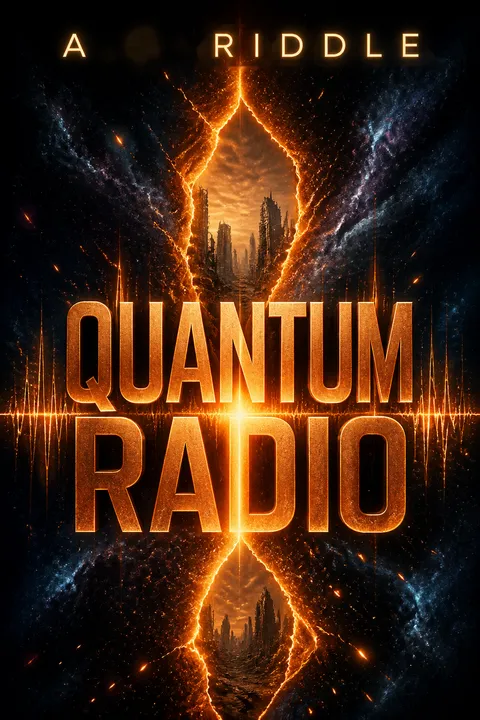
Quantum Radio is a sweeping, genre-blending exploration of science, history, and the human condition, using the multiverse as both setting and metaphor. At its core, the novel asks: What does it mean to be human when every choice, every trauma, and every act of kindness can echo across worlds? The story is a meditation on the power of agency—how individuals, even when shaped by loss, betrayal, or circumstance, can choose to act with courage and compassion. The four protagonists, each marked by wounds and gifts, are not superheroes but deeply human, and their journey is one of growth, forgiveness, and the forging of unlikely bonds. The Covenant and the quantum historians represent opposing philosophies: exploitation versus stewardship, intervention versus observation. The novel ultimately argues for a middle path—engagement with empathy, action tempered by wisdom. The use of alternate histories and mirror worlds is not just a narrative device but a call to recognize the contingency of our own reality and the responsibility we bear for shaping it. Quantum Radio is both a thrilling adventure and a profound reflection on the choices that define us, the worlds we create, and the futures we dare to imagine.
Review Summary
Quantum Radio receives mixed reviews, with an overall 4.10 rating. Readers praise its intriguing premise, fast-paced plot, and scientific concepts. Some enjoy the blend of sci-fi, alternate history, and thriller elements. Critics note issues with dialogue, character development, and an overreliance on exposition. The book's shift in tone and genre midway through divides opinions. Many reviewers see it as a setup for a series, with some excited for future installments while others found the ending unsatisfying.
People Also Read
Characters
Tyson Klein
Ty is a brilliant quantum physicist whose discovery of the quantum radio thrusts him into a cosmic struggle. Socially awkward and shaped by the absence of his father, Ty's drive to prove himself is both his strength and his wound. His journey is one of transformation—from isolated scientist to leader, from doubter to believer. Ty's empathy, intellect, and capacity for kindness make him the heart of the team. His relationships—with his mother, estranged father, and childhood friend Nora—are central to his growth. Ty's arc is about learning to trust, to forgive, and to accept his role as a catalyst for change across worlds.
Nora Brown
Nora is a psychologist and psychiatrist, Ty's childhood friend and first love. Marked by the mysterious disappearance of her father, Nora's life is a quest for understanding—of herself, others, and the human mind. Her compassion and insight are vital to the team's survival and success. Nora's journey is about healing old wounds, embracing vulnerability, and finding her own strength. Her relationship with Ty is a source of both comfort and fear, as she grapples with the risk of loving and losing again. Nora's ability to connect, to listen, and to inspire hope is her superpower.
Kato Tanaka
Kato is a Navy SEAL, a man of action haunted by violence and regret. His tactical skills and discipline are indispensable, but beneath his stoic exterior lies deep pain—estrangement from his family, guilt over past actions, and a struggle to find peace. Kato's arc is about confronting his darkness, learning to forgive himself, and discovering that true strength lies in vulnerability and connection. His loyalty to the team and willingness to sacrifice for others make him a pillar of the group. Kato's journey is one of redemption and the search for a home.
Maria Santos
Maria is a once-famous musician whose career and life have been derailed by addiction, trauma, and self-doubt. Her creativity and resilience are matched by her inner demons, but through the journey, she finds purpose and healing. Maria's arc is about reclaiming her voice, overcoming shame, and realizing that her art—and her life—matter. Her empathy for her alternate self and her refusal to perpetuate harm are acts of courage. Maria's transformation is a testament to the power of second chances and the importance of kindness, both to others and oneself.
Helen Klein
Ty's mother is a renowned evolutionary biologist, a woman of intellect and principle. Her research into quantum evolution and her role in the Origin Project place her at the center of the story's ethical dilemmas. Helen's relationship with Ty is complex—supportive yet demanding, loving yet marked by the pain of family separation. In alternate worlds, she becomes both a force for good and a potential architect of catastrophe. Helen embodies the struggle between scientific ambition and moral responsibility.
Gerhard Richter
Ty's father is a man of secrets—an investment banker, a covert operative, and a key player in the Origin Project. His absence shapes Ty's life, and his return is both a blessing and a source of pain. Richter's motivations are layered: guilt, love, duty, and a desire to atone for past choices. He is both a guide and a cautionary figure, representing the costs of sacrifice and the possibility of redemption. Richter's actions are pivotal in the team's survival and the unraveling of the Covenant's schemes.
Penny Neumann
Penny is Ty's girlfriend, revealed to be an agent for the Covenant. Her betrayal is a catalyst for Ty's transformation, but her actions are driven by her own conflicts and regrets. Penny's arc is one of deception, sacrifice, and the hope for forgiveness. She represents the gray areas of loyalty and the human cost of espionage in a war that spans worlds.
Sanford Bishop
Bishop is the head of the DARPA facility and a key figure in the Origin Project. His pragmatism, skepticism, and bureaucratic instincts often put him at odds with Ty and the team. Bishop embodies the institutional challenges of scientific discovery in a world of secrecy and danger. His arc is about learning to trust, to adapt, and to recognize the extraordinary in the ordinary.
Robert Brown
In the World After, Robert is Nora's father and the mastermind behind the Pax's doomsday plan. His love for his family and his willingness to make hard choices mirror Helen's dilemmas. Robert's arc is about the limits of reason, the dangers of desperation, and the possibility of hope in the darkest times. His interactions with Nora and Ty are crucial to averting catastrophe.
The Quantum Historians
The quantum historians are advanced beings from a peaceful Earth, dedicated to cataloging and preserving worlds. Their refusal to intervene directly is both a strength and a limitation. They represent the ideals of science, the dangers of naivety, and the necessity of action. Their selection of Ty and his team as agents is both a test and an act of faith in humanity's potential.
Plot Devices
Quantum Radio and Multiverse Travel
The quantum radio is the central plot device—a machine that receives and transmits data across universes, enabling communication, intervention, and travel. Its discovery is the inciting incident, and its activation propels the protagonists into alternate realities. The radio's schematic, hidden in quantum data, is both a MacGuffin and a symbol of humanity's quest for meaning. The device's operation—requiring the chosen four and a specific code—serves as a narrative lock, ensuring only those with the right qualities can use it. The radio's ability to cross time and space introduces themes of fate, free will, and the consequences of intervention.
Genomic Selection and the Chosen Four
The broadcast of four human genomes is a plot device that unites the protagonists and justifies their selection. Each represents a facet of human potential—science, history, psychology, and art. The search for the matches drives the narrative, while the revelation that the genomes belong to living people raises questions of identity, agency, and purpose. The device also enables exploration of alternate selves and the impact of choices across worlds.
The Covenant and Quantum Historians
The Covenant is a shadowy organization manipulating timelines for its own survival, serving as the primary antagonist. Their agents, technology, and schemes create constant danger and moral ambiguity. The quantum historians, by contrast, are observers who test and guide the protagonists, offering knowledge and the promise of a better world. The interplay between these factions structures the narrative as a series of tests, missions, and revelations, with the protagonists caught in the middle.
Alternate History and Mirror Worlds
The use of alternate Earths—each shaped by different choices and interventions—allows for exploration of "what if" scenarios, the fragility of history, and the universality of human struggle. The World After, with its perpetual war and stunted progress, serves as both a cautionary tale and a crucible for the protagonists. The Looking Glass World offers hope and motivation, showing what is possible if the right choices are made.
The Gestalt
The Gestalt is a narrative device that grants the protagonists access to knowledge, language, and the ability to record and transmit their experiences. It symbolizes the fusion of technology and humanity, the importance of memory and learning, and the interconnectedness of all things. The Gestalt's limitations—offline mode, encrypted missions—create tension and force the team to rely on their wits and each other.
Foreshadowing and Recursion
The narrative is structured with recurring motifs—mirrored relationships, repeated phrases, and parallel events—that foreshadow future developments and reinforce the theme of cycles. Ty's struggles with public speaking, the motif of kindness as a solution to fear, and the repeated betrayals and reconciliations all serve to create a sense of destiny and interconnectedness. The story's recursive structure—missions within missions, worlds within worlds—mirrors the quantum reality it depicts.
Download PDF
Download EPUB
.epub digital book format is ideal for reading ebooks on phones, tablets, and e-readers.








































