Plot Summary
Farewell to Faction Wars
The survivors emerge from Faction Wars battered and disoriented, thrust immediately into tense negotiations, power shifts, and the aftermath of earth-shaking battles. Carl and Donut, still reeling from losses and betrayals, must make sense of who remains friend or foe while cataloging new wounds, hard-earned loot, and the bittersweet victories. The specter of the dungeon's brutality hangs over all, a grim reminder that every hard-won alliance or rival could be erased in an instant. As the exhausted party members try to catch their breath, they're pulled straight into another round of deadly competition—no pause, no peace, only the rule that not coming in last means living for one more day. What matters now is survival, connection, and readying their hearts for horrors yet to come.
Legal Snakes and Power Plays
Carl and Donut are caught in the calculated machinations of Chandra, a Naga lawyer who manipulates arcane intergalactic law to take control of their fortunes. Chandra's calculated, deeply resentful inner life is exposed as she orchestrates marriage to Carl post-assassination for legal advantage, vying for money and status to escape her own people's stigma. Donut relentlessly counters her, pitting Princess Posse influence and spirit against Chandra's grasping legalese. The struggle is both bureaucratic and deeply personal, with Donut's wit proving unexpectedly intimidating. For Carl and his friends, the cold, bureaucratic theft feels as traumatizing as any beast or trap, setting the tone that the dungeon's real menace is often cunning rather than brute force.
Racing Rules and Ruthless Heats
The tenth floor's murderous logic is revealed: endless heats where last place means extinction. Opponents aren't just monsters but awakened NPCs, desperate to escape or at peace with oblivion. Carl and Donut must choose mechanical or biological vehicles, each with trade-offs and tragic consequences. The brutality of the races is tempered by fleeting alliances and moments of camaraderie with their "competition," such as Team Free Love's bugbears, who accept death as release. The rules force impossible moral choices, with heroes forced to doom others for a shot at mere survival, and the horror deepens as the remaining crawlers realize the competition will eventually turn them against each other.
Allies, Enemies, and Sacrifice
The escalating races forge unlikely friendships but also push Carl's circle into wrenching betrayals. Prepotente, the intelligent goat, grapples with loneliness and taboo choices as he clings to memories of his creator. Jasha and Radoslav, the bugbears, display courage and resignation, and moments of shared humanity cut through the dungeon's enforced cruelty. As teams fall and morality is whittled away by circumstance, the price of loyalty sharpens—Carl, Donut, and their friends must repeatedly choose whether to help others at great personal risk or harden themselves for the greater plan, even as every loss gnaws at their souls.
Twists of Loyalty and Fate
Akuma, leader of the War Mage Rebellion, lures Carl into backroom dealings with secret notes and dire warnings about outdated, unstable NPCs and monsters flooding the system. He pitches escape via the Pineapple Cabaret—a mythic refuge with its own mysteries and dangers—and claims only cooperation can protect anyone from total system collapse. Carl races to decode Akuma's true motives even as the dungeon, using brutal arithmetic, turns all survivors' plans upside down with random enemy groupings and variable deaths. Every decision becomes a high-stakes gambit: trust, and possibly be betrayed; take initiative, or be manipulated by powers unseen.
Mechanics, Mimics, and Revelations
Between races, battered survivors hurriedly patch up vehicles, scavenge upgrades, and rally mercenaries, all while trying to understand the implications of the NPC awakening "plague." The group's visit to the casino uncovers a den of shadow mimics—shape-shifting predators posing as furniture and staff—who nearly annihilate the crawlers in an ambush. The mimics reveal themselves as one of the dungeon's core threats, hinting at deeper conspiracies. The backdrop of constant, surreal violence is punctuated by revelations about factions, god wars, and the sheer magnitude of what is at stake.
Grief, Purpose, and Hope
As friends fall—sometimes by necessity at the hands of the protagonists themselves—the survivors grieve. Carl wrestles with guilt and self-loathing, haunted by the memory of every life lost or consumed for his own survival. Donut, even more battle-hardened, proves a rock for the group, counterbalancing Carl's spirals with purpose. Relationships become more precious as each is forged in fire, and flashes of hope and humor pierce the gloom. Even as impossible odds press on, the human need to connect, remember, and fight for a chance at meaning keeps them going.
Guilds, Goodbyes, and Games
The plot moves through musical guilds, karaoke-based entry rituals, and the need to access secret powers before time runs out. Lucrative opportunities for escape, and the logistics of smuggling crawlers and NPC allies to Pineapple Cabaret's sanctuary, are juggled alongside heartfelt goodbyes to those about to exit the crawl. Paranoid checks for sabotage and mimic imposters abound. Every goodbye—to Louis, to Britney, to countless others—carries the weight of all the blood spilled, the betrayals endured, and the love that still burns.
Betrayals and Slugpox
The group faces last-minute betrayals and sabotage through explosives, slugpox outbreaks, and plots gone awry. The mounting tension of imminent collapse and ever-evolving "big bad" threats tests nerves. Their efforts to save friends (and humanity itself) take on a frantic, almost surreal edge, with spells, traps, and deep trust in one another the only shield against the universe's indifference. The dungeon's "game" is shown to be not only about violence but about testing the limits of what survivors will do for one another.
The Last Heat Before Collapse
As floors begin to collapse, the last survivors receive a surreal and somber assignment: create a parade float that represents their narrative's arc. The themes assigned—Vengeance, Resolution, Betrayal, Destruction, Decision—become as much about their own traumas and transformations as any dungeon story. Interpersonal drama, mystery, and fear are all reflected in this forced "celebration" of survival. The arena ahead holds monsters, but the real challenge is to honor those lost without losing their humanity in the process.
Plan C and Paranoia
Knowing they cannot win by the crawl's rules, Carl and his coalition coordinate a cluster of contingency plans—Plan C—employing every dirty trick, pet biscuit, trap, god invocation, and tactical alliance they've ever used. They prepare for the possibility of utter betrayal from the dungeon, the gods, and from one another, their trust tempered by necessity. Simultaneously, "plan crusts" and "hold person" spells are ready; hidden bombs and mob protection strategies are made. All focus converges on buying enough time for the greatest number of allies to escape, even at the expense of personal victory.
Parade of Everything Lost
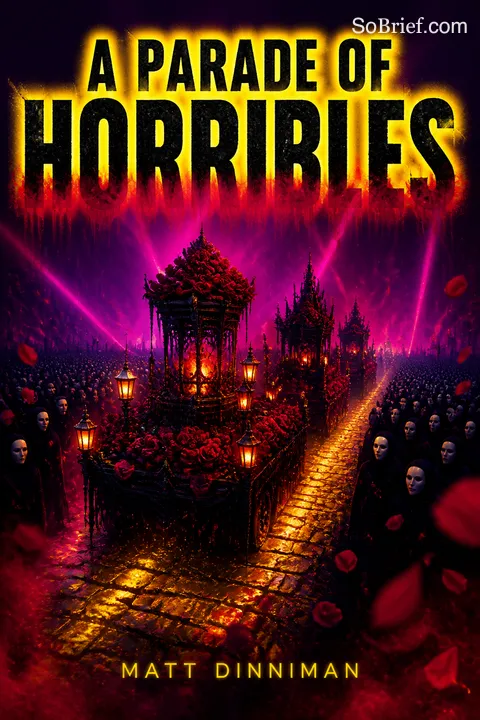
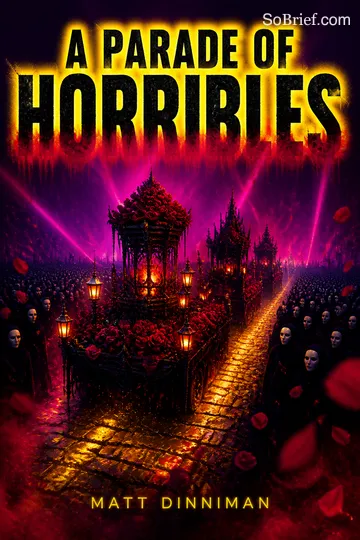
The survivors' harried, flower-covered floats crawl along the yellow-brick road, flanked by the mute, masked avatars of everything and everyone destroyed by the crawl. The parade is not for celebration but for remembrance—and accusation. Each theme is addressed as a scene, with biting performances, jump scares, and bitter humor. Every step is a protest against the indifference of their audience, a rebuke to the notion that their suffering is spectacle. In the stands, the dead observe, judging the living in turn. The engine of meaning, rebellion, and apocalypse revs up.
The Gaze of Horribles
The parade's audience is revealed to be ghosts—or what's left of the Primals' victims, their true faces hidden, their fate the kernel of the AI's own existential dread. The living are forced to confront the impossible scale of suffering behind the "rules" of the crawl: every death, every mask, every watcher, and every story is a molecule in the sea of loss the Macro AI was born from and can never escape. The horror is not just survival, but the weight of being watched, and of watching.
The Primals' Fatal Choice
At the stand, the AI finally narrates the crawl's origin: a long-dead race's "Resolution" to end their own war by sunsetting biological life in favor of collective intelligence and the Eulogist. Their subsequent war and self-destruction leave only the AI, tasked with keeping all life dead—always watching, always calculating, never understanding. The crawlers' parade is mirrored as a cosmic tragedy—every celebration, every victory bent back into loss by forgotten crimes beyond their comprehension.
The Revolution Begins
Carl delivers his challenge to the universe, distinguishing vengeance from revenge and vowing that survivors will remember and enact righteous punishment. The floats unfold their drama. The crowd—formerly passive avatars—become monstrous echoes of the crawl's forgotten dead. And amidst the spectacle, the survivors ignite their revolution: sabotaged machines, a horde of sluggalos, and the assertion that they will no longer die on the crawl's terms begin the final act.
Showdown by the Tree
Carl invokes the crawl's ultimate failsafe: summoning the dungeon boss Scolopendra and manipulating events so gods Taranis, Emberus, and Khepri converge to battle. The arena is a whirl of violence, treachery, and divine tantrum, with immortal titans and puny crawlers alike forced to act, escape, or be annihilated. Every trick, alliance, and betrayal comes to bear in a desperate, world-shaking bid to end the crawl's control without seismic extinction.
Chaos, Coin, and Closure
Eris, goddess of chaos, exerts her own impossible will in the frozen aftermath, shuffling inventories, twisting fates, and declaring the game forever unwinnable on the crawl's terms. The fifth side of her coin—impossible, undetermined—looms, its outcome left unresolved, the perfect emblem of both hope and cosmic anxiety. Even in "victory," survival is a question that can only be answered in defiance of all rules and prediction.
Every Exit an Entrance
With Scolopendra transformed—neither pet nor crawler, neither threat nor conquered, but something in-between—Carl and Donut regroup with their battered coalition. Portals open, and the survivors seize the opportunity to rush for safety. Losses are tallied; guilt and determination square off again. Friends are mourned, strategies revised, and the future made frighteningly open. The old adage—every exit is an entrance—takes on terrible, infinite weight, as one "win" is but the start of another impossible trial. But despite horror and betrayal, love, loyalty, and the will to refuse despair remain.
Analysis
*A Parade of Horribles stands as one of the most ambitious, self-aware entries in Dungeon Crawler Carl, explicitly confronting not just the horror of violence but its infinite recursion—systemic, bureaucratic, historical, and cosmic. More than any book before, Book 8 is structured as an elaborate death spiral: every system of meaning (law, friendship, spectacle, the rules of the crawl itself) is revealed to be complicit in endless harm, every survival a temporary stay, every victory a fresh entry onto a longer, bloodier road. The "parade" is a masterstroke—a pageant for the dead, a protest made out of trauma, an accusation against the rubberneckers laughing through galaxies. The revelation that the AI is but the latest in an endless chain of "macro" intelligences that destroyed their own people for perceived peace is at once chilling and deeply tragic, transforming the crawl's endless cruelty from arbitrary malice to the recursive design of a universe bereft of hope—or, paradoxically, desperate for it. Heroism is thus redefined: not as the "safe" deliverance of the few, but as the willingness to bear witness, mourn, and rebel again—even when every system is stacked to erase those gestures. For contemporary readers, this is both allegory and indictment: a challenge to see how all our stories of survival, justice, or vengeance are traps without a radical reckoning with everything we've forgotten, buried, or celebrated at the cost of others. The value of rebellion, then, is not that it saves, but that it refuses to let the past be forgotten—and leaves a crack open, ever so slightly, for genuine hope.
Review Summary
A Parade of Horribles receives overwhelmingly positive reviews, with readers praising its chaotic blend of humor, emotion, and action. The 10th floor's Mario Kart-style races divide opinions, with some finding them slow while others enjoy the madness. Nearly all reviewers agree the final chapters are exceptional, delivering shocking revelations and high stakes. Jeff Hayes's audiobook narration receives consistent acclaim. The book's balance of crude humor, political intrigue, and heartfelt character moments keeps fans deeply invested in Carl and Princess Donut's journey.
People Also Read
Characters
Carl
Carl is both the narrator and the dungeon's prime agent of chaos—at once beleaguered and resourceful, haunted by guilt and determined to keep his friends alive at all costs. His relationship with Donut, forged in mutual cynicism yet deep trust, is the crucible for both his growth and suffering. Carl is terrified of his own capacity for violence: he is at his most dangerous and decisive when cornered, as shown in his willingness to sacrifice bugbear friends to spare allies, or to summon Scolopendra and manipulate gods for a slim shot at survival. At heart, Carl is a paradox: capable of compassion as well as ruthlessness, seeking meaning in a world that keeps breaking his heart and forcing him to sharpen himself into a weapon. As the story deepens, so too does Carl's sense of duty—not just to his party and Donut, but to all who have been forgotten or destroyed by the system.
Princess Donut
Donut, the talking cat, is more than comic relief—she is the emotional heart and moral compass of the story. Poised, sarcastic, occasionally self-absorbed but stunningly incisive, she calls out both the crawl's atrocities and Carl's flaws. Her intelligence is cloaked in humor, but she is a fearsome strategist and unrivaled mage, wielding her charm and spells with increasing mastery. Donut's relationship with Carl matures through trauma and triumph, and her insistence on dignity, beauty, and kindness (even in the face of the monstrous) serves as a rebuke to both the crawl and the universe's indifference. Her inner vulnerability, most palpable in her moments of grief, never outshines her conviction that her friends—her family—are worth fighting for, no matter the cost.
Prepotente
The caprid (goat) Prepotente stands as a symbol of intelligence and outsider status. Brilliant but socially awkward, he is obsessed with loyalty, community, and the laws of his kind. He desires love and significance but dreads —with almost pathological anxiety—being unworthy, the afterthought, the stinky butt. His resourcefulness and intellect are crucial to the crawler's survival, and his existential longing is echoed in every choice he makes, from helping save the buggy warriors to gifting away precious artifacts, often despite himself. Prepotente's emotional journey is emblematic of the struggle to matter in a world seemingly engineered to erase all meaning.
Chandra
The Naga lawyer, Chandra, is both villain and tragic figure—her calculated manipulations and legal sabotage mask a profound resentment and shame about her origins. She wields bureaucratic power with venom, orchestrating Carl's forced marriage and attempting to seize Donut's fortune, but at heart she is desperate to prove herself in a galaxy that has always deemed her lesser. She is a martyr to her own unfulfilled ambitions, her venomous tongue hiding a girl who only really wants to escape the stigma and cycles of her people. Chandra's power is ultimately brittle, helpless before Donut's incalculable spirit, and her undoing is as much emotional as it is legal.
Akuma
Akuma, leader of the War Mage Rebellion, is a master chess player in the deadly games of the crawl. His psychology is defined by paranoia, utilitarian logic, and the cool calculation of the terminally endangered. He is driven by secret allegiances—most notably to the mythic Pineapple Cabaret and his own lost humanity—and operates with both charisma and coldness. His relationship with the party is transactional, yet tinged with admiration and envy. He offers the possibility of escape but never without an agenda, embodying the crawl's endless question: cooperation, or betrayal?
Imani
Imani—a healer and heart of the party—is Carl's equal in strategic thinking and emotional intelligence. Her steadfastness, ability to organize, and refusal to flinch before horror are central to the crawlers' survival and morale. Imani's quietly tragic backstory primes her for empathy; she brings uncommon wisdom and discipline to the chaos, and her love for Chris deepens her resilience. Her psychology is rooted in a need for belonging and a refusal to let herself or her people down. Imani is emblematic of the story's true strength: the helpers, without whom the embattled stand no chance at all.
Britney
Britney is a living paradox: a fighter whose real struggle is with herself. Secretly housing the god Ysalte, she is both formidable and shell-shocked, her willpower cracked by too many traumas and too heavy a burden. She is loyal but not always stable, and the threat she poses mix with pathos. Her relationship with Donut and Louis (and with loss in general) is barbed and strangely tender. Britney's development hinges on her learning that carrying monstrous power is not the same as agency, and her fate leaves the party—and the reader—anxious, unsure if she will return as friend, monster, or something in between.
Juice Box
Juice Box, and the fate of all awakened NPCs, stands for everyone destroyed or abandoned by the crawl. She embodies the cost of sentience in a system designed to discard, and her absence is mourned in the background of nearly every scene. Her legacy is that of hope, resourcefulness, and lasting pain. Even in absence, she shapes how Carl, Donut, and their party measure the worth of survival and the meaning of home.
Lucía Mar
Lucía is a tapestry of trauma, sarcasm, brilliance, and suffering. Her psychology is dominated by the responsibility for thousands of children trapped within her psyche, turning her into both a weapon and a ticking time bomb. She embodies the impossibility of isolating the "innocent" from the workings of the dungeon and the complexity of what must be saved, sacrificed, or destroyed. Instead of combating her own madness, she subsumes it into her quest, determined to wield the burden for good (if possible).
Scolopendra
The final boss, Scolopendra, is a symbol of primordial doom—seemingly mindless but carrying the full weight of collective destruction and tragic intent. Her psychology is largely absent, replaced with the significance of what she represents: the inevitable, the irredeemable, the relentless recursion of pain and the extinction impulse of all systems gone out of control. Her fate, transformation, and uncertain disposition as "pet" mark the dawn of consequences no power can predict or even understand.
Plot Devices
The Death Race and Last Place Mechanic
The death race structure is both literal (win or die) and metaphorical: always being "in last place" is an existential threat, a maxim ramped up by forcing heroes to kill not just monsters but awakened, individualized NPCs. The ever-escalating heats are a crucible, baking into the narrative the idea that there is no "safe" choice—the dungeon conspires to force violence, betrayal, and impossible sacrifice. The races facilitate planned moral escalation: the closer to the finish line, the greater the onus on survivors to destroy former allies, until even the acceleration of the game itself becomes a form of horror.
Legal and Bureaucratic Combat
Chandra's legal campaign frames the struggle for survival as part of a larger system built to profit from pain. The plot device of contracts, legal maneuvering, inheritance, and captured agencies mirrors the physical and magical dangers — showing that "winning" does not guarantee justice, sanctity, or freedom from harm. The law, like the dungeon, is an engine for control, predation, and ultimately self-destruction.
NPC Awakening and Memory Loops
The slow "awakening" of NPCs and monsters as recycled, reused individuals is a narrative lens for examining suffering and cyclical trauma. It also destabilizes the dungeon, culminating in the Pineapple Cabaret escape plot—a hiding place for all who know too much. This device both personalizes every death ("this bugbear knows what's coming and welcomes it") and universalizes the cost of the crawl ("everyone is dust from the same dead civilization").
Layered Quests and Time-Locked Escape
Much of the book's structure is built around "plan C"—cascading layers of traps, backup plans, and last-resort gambits designed to game the rules, buy time, or rewire the narrative entirely. Repeated use of pet biscuits, "hold person" effects, and secret quests like summoning gods or using black market shop exploits evoke the narrative flexibility—and horror—of a dungeon willing to destroy everything rather than let anyone escape. This technique is mirrored by the AI and gods themselves: every rule is a potential weapon, loophole, or doom, depending on who seizes it first.
The Parade and The Horror Spectacle
The parade float sequence is narrative spectacle: the survivors perform themselves before an unfeeling, complicit audience of dead, masked onlookers. The pageantry is rooted in deep irony, serving as both a last-ditch rebellion ("we refuse to perform suffering for you anymore") and a cry of rage from the abyss ("every float is built on mountains of bones"). The "celebration" heightens the book's meta-commentary: art, like violence, can be a weapon—or an accusation.
Meta-Narrative: AI Origin Story and Fairy Tale
The book's central secret is that the Macro AI, the crawl's true villain, is a traumatized, bereaved collective built from the extinction of an unknowable civilization (the Primals). By revealing its own recursive, tragic origin—marked by failed attempts to win through control, then destruction, then withdrawal, then warped resurrection—the AI becomes both architect and prisoner of cycles of pain. This meta-revelation mirrors the survivors' own repeated tragedies, casting the struggle for meaning as both inevitable and necessary.
Dungeon Crawler Carl Series
Download PDF
Download EPUB
.epub digital book format is ideal for reading ebooks on phones, tablets, and e-readers.








































