
Key Takeaways
1. The 5:1 Magic Ratio is the Core of Marital Stability
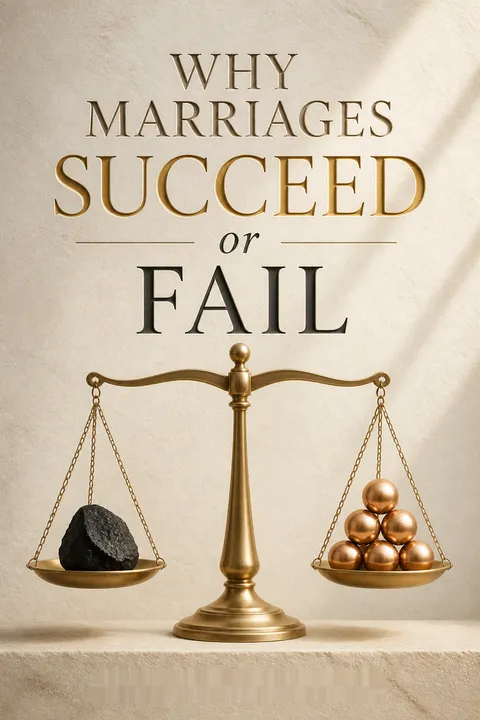
Amazingly, we have found that it all comes down to a simple mathematical formula: no matter what style your marriage follows, you must have at least five times as many positive as negative moments together if your marriage is to be stable.
Scientific Insight. Decades of research reveal that marital success isn't about avoiding conflict, but maintaining a specific emotional balance. This "magic ratio" of 5:1 means that for every negative interaction, stable marriages experience five positive ones. This ratio acts as a vital nutrient, fostering affection and joy.
Beyond Conflict Avoidance. Many believe a low level of conflict equals happiness, but this research shows otherwise. Even couples with frequent arguments can thrive if their positive interactions overwhelmingly outweigh the negative. The key is how negativity is balanced, not its complete absence.
Positive Interactions Defined. Positive moments aren't just grand gestures; they include showing interest, affection, care, appreciation, concern, empathy, acceptance, humor, and sharing joy. These small, consistent acts build a robust emotional ecology, inoculating the relationship against inevitable rough patches and preventing the "predator" of negativity from consuming the bond.
2. Three Stable Marriage Styles Challenge Conventional Wisdom
Rather, I believe that marriages settle into one of five different styles over time.
Diverse Paths to Stability. Contrary to popular belief, there isn't one "ideal" way to have a successful marriage. Research identifies three equally stable styles:
- Validating: Couples compromise calmly, listen, and respect each other's views.
- Volatile: Frequent, passionate arguments balanced by intense love and affection.
- Conflict-Avoiding: Couples minimize disagreements, "agreeing to disagree," and prioritize shared values.
Beyond the Ideal. Many psychologists previously considered volatile or conflict-avoiding marriages pathological. However, these styles can be highly successful adaptations, each maintaining the crucial 5:1 positive-to-negative interaction ratio in its own way. The key is finding a style that comfortably suits both partners' temperaments.
Potential Pitfalls. Each style has unique risks. Validating couples might sacrifice romance for friendship, volatiles risk escalating to contempt or violence, and avoiders might become lonely or unprepared for unavoidable major conflicts. Awareness of these risks allows couples to adapt and strengthen their union.
3. The Four Horsemen of the Apocalypse Predict Marital Failure
They are criticism, contempt, defensiveness, and withdrawal.
Warning Signs. Four destructive interaction patterns, dubbed "The Four Horsemen of the Apocalypse," are powerful predictors of marital dissolution. They escalate in danger:
- Criticism: Attacking a partner's personality or character, not just a specific behavior.
- Contempt: Insulting, mocking, or psychologically abusing a partner, fueled by disgust.
- Defensiveness: Playing the innocent victim, denying responsibility, or counterattacking.
- Stonewalling: Withdrawing emotionally or physically from interaction, conveying disapproval.
Escalating Negativity. These behaviors sabotage communication, creating a cycle where each horseman paves the way for the next. Criticism leads to contempt, which triggers defensiveness, ultimately resulting in stonewalling. This cascade overwhelms positive interactions, making repair attempts ineffective.
Beyond Anger. While anger itself isn't necessarily destructive, its expression alongside criticism, contempt, or defensiveness is highly corrosive. Recognizing these specific patterns is the first step toward reversing the downward spiral and re-establishing healthy communication.
4. Negative Inner Thoughts and Flooding Drive Marital Decline
When this occurs you feel so overwhelmed by your partner’s negativity and your own reactions that you experience “systems overload,” swamped by distress and upset.
The Inner Script. What partners think during conflict profoundly impacts their interactions. "Distress-maintaining thoughts" like innocent victimhood ("I can't do anything right") or righteous indignation ("My partner has no right to say that") fuel negativity and prevent resolution. These internal monologues reinforce a negative view of the spouse.
The Danger of Flooding. These negative inner scripts, combined with physiological arousal (increased heart rate, adrenaline), lead to "flooding." When flooded, individuals feel overwhelmed, making constructive discussion impossible. They become hypervigilant, expecting attacks, and their bodies enter a "fight or flight" state.
Chronic Flooding's Impact. Persistent flooding leads to a catastrophic shift: partners view each other through "negative glasses," ignoring positive qualities and focusing only on flaws. This destroys the 5:1 ratio, making the marriage fragile. Learning to calm oneself and rewrite these inner scripts is crucial for recovery.
5. Gender Differences Fundamentally Shape Marital Conflict
Just like Patsy and her husband, men and women often “miss” each other, resulting in two marriages: his and hers.
Divergent Emotional Worlds. Men and women often approach intimacy and conflict with fundamentally different styles, rooted in biology and socialization. Women typically act as "emotional managers," seeking to confront and resolve issues, while men tend to avoid intense emotional discussions.
Men and Flooding. Men are more prone to physiological flooding during marital conflict, with heart rates rising higher and recovering slower than women's. This biological predisposition, combined with societal conditioning to suppress emotions, explains why men are overwhelmingly more likely to stonewall.
The Demand/Withdraw Cycle. These differences often create a destructive "demand/withdraw" cycle: wives demand emotional engagement, husbands withdraw due to flooding, which further escalates wives' demands. This cycle must be broken by both partners understanding and adapting to each other's emotional needs and responses.
6. The Distance and Isolation Cascade Leads to Marital Breakdown
Once this occurs, you’re at great risk for feeling so overwhelmed by the negativity that you enter the final leg of the marital rapids, what I call the “Distance and Isolation Cascade.”
A Four-Stage Descent. Unchecked negativity and flooding propel couples down a predictable path toward marital dissolution, even if they don't physically separate. This cascade involves four stages:
- Problems as Severe: Viewing marital issues as insurmountable obstacles.
- Talking is Useless: Losing hope in communication as a means of resolution.
- Parallel Lives: Occupying the same space but living emotionally separate lives.
- Loneliness: Feeling profound isolation within the marriage, often leading to affairs or illness.
The Role of Flooding. Flooding is the primary driver of this cascade. When partners are chronically overwhelmed, they retreat, leading to a sense of hopelessness and a breakdown of connection. This emotional divorce can occur long before any legal separation.
Reversing the Cascade. Recognizing these stages is critical. The key to halting and reversing this cascade lies in addressing the underlying flooding and negative thought patterns. Re-engaging, even with small steps, can begin to bridge the growing chasm of distance and isolation.
7. Rewriting Marital History Signals Deeper Relationship Trouble
The crucial factor is not necessarily the reality of a marriage’s early days but how husband and wife currently view their joint history.
Past as Prologue. How a couple recounts their shared past is a remarkably accurate predictor of their marital future. When a marriage is unraveling, partners tend to "rewrite history," recasting earlier positive memories in a negative light, focusing on past disappointments and slights.
Signs of Negative Revisionism:
- Chaos vs. Control: Viewing early days as confusing and haphazard, rather than joyful and committed.
- Disappointment vs. Glorifying the Struggle: Seeing past difficulties as disillusioning, rather than triumphs overcome together.
- Separate Lives vs. We-ness: Husbands, in particular, framing their history as individual rather than a joint undertaking.
- Lack of Expansiveness/Affection: Inability to recall specific positive details or express fondness for the spouse.
A Self-Fulfilling Prophecy. This negative reframing isn't just a symptom; it reinforces current distress. Distressed feelings trigger negative memories, which in turn deepen current negativity. Consciously recalling positive memories and reframing past struggles as shared triumphs can help restore hope and admiration.
8. Four Key Strategies Transform Conflict into Connection
The key is not only to understand these strategies intellectually but to use them so often that they become second nature and are available to you even when you are feeling very upset —the moments you’ll need them most.
Beyond Problem-Solving. The goal isn't just to solve problems, but to manage emotions and break negative cycles. Four core strategies are essential for most marriages:
- Calm Down: Recognize flooding (monitor pulse) and take breaks (20+ minutes). Replace distress-maintaining thoughts with soothing ones.
- Speak Nondefensively: Reintroduce praise and admiration. When complaining, be specific (X, Y, Z statements) and avoid blame, insults, or character attacks.
- Validate: Acknowledge and empathize with your partner's feelings and perspective, even if you don't agree. Take responsibility and apologize when appropriate.
- Overlearn: Practice these skills consistently, even in low-stakes situations, until they become automatic responses during heated arguments.
Practical Application. Implement structured discussions with time limits and agendas. Use repair mechanisms like "stop action," editing (ignoring negativity), gate-keeping (guiding discussion), and humor. These tools help de-escalate tension and foster a climate of acceptance.
Acceptance and Nurturing. Ultimately, a lasting marriage requires accepting each other's limitations and differences. Nurture the relationship with abundant positive moments, celebrating shared experiences, and continuously working to maintain the 5:1 magic ratio.
Review Summary
Why Marriages Succeed or Fail receives mostly positive reviews (4.14/5), with readers praising Gottman's research-based approach and practical advice. Key takeaways include the "Four Horsemen of the Apocalypse" (criticism, contempt, defensiveness, stonewalling), the 5:1 positive-to-negative interaction ratio, and recognition of three healthy marriage styles. Readers appreciate the concrete communication strategies and self-assessment tools. Some criticisms note dated language from the 1995 publication, gender stereotypes, and repetitiveness. Many recommend reading Gottman's newer works instead for updated research, though the book remains valuable for understanding relationship dynamics.
People Also Read


About the Author
Other books by John M. Gottman





Download PDF
Download EPUB
.epub digital book format is ideal for reading ebooks on phones, tablets, and e-readers.








































