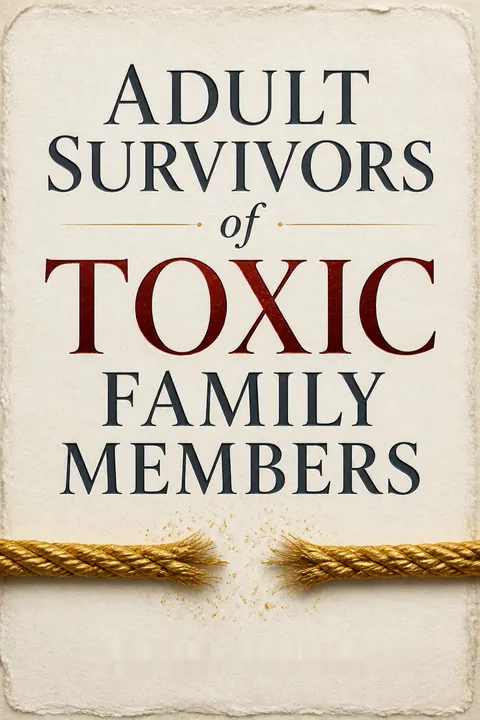

Key Takeaways
1. Severing Ties is a Necessary Act of Self-Protection
Severing ties is exclusively about self-care.
Protect your peace. Cutting ties with toxic family members is not an act of malice or anger, but a fundamental decision for self-preservation. It's a commitment to your mental, emotional, and spiritual well-being, recognizing that you cannot heal in an environment that continues to poison you. This decision is often born from years of enduring various forms of abuse and manipulation, leaving no other healthy choice but to create distance.
Recognize toxicity. Toxic family members exhibit a range of destructive traits, often stemming from Cluster B Personality Disorders, making them incapable of genuine love or empathy. They prioritize power and control, viewing relationships as a competition of winners and losers. Common toxic behaviors include:
- Emotional abuse: gaslighting, lying, smear campaigns, shaming, controlling.
- Physical or sexual abuse, addiction, and neglect.
- Financial exploitation and lack of respect or loyalty.
- Ganging up or ostracizing family members.
Understanding these traits validates your experience and the necessity of your decision.
It's more common than you think. You are not alone in this difficult choice. Studies show that over 40% of individuals experience family estrangement at some point, with a significant percentage cutting ties with immediate family members due to persistent abuse. This "silent epidemic" often goes unacknowledged, leading survivors to feel isolated and misunderstood. Your decision is a courageous step towards breaking generational cycles of dysfunction.
2. Acknowledge the Profound Grief of Family Estrangement
Sometimes you have to let go of what is killing you, even when it’s killing you to let go.
Grief is justified. The aftermath of severing ties brings immense emotional pain, a complex mix of liberation and profound grief. This isn't just sadness; it's mourning the family you deserved but never had, the safety, security, and belonging that should have been your birthright. This grief is often compounded by societal misunderstanding, as others may dismiss your pain or blame you for your choices.
The "Rapunzel Effect." Like Rapunzel escaping her tower, you will experience conflicting emotions: the elation of newfound freedom juxtaposed with overwhelming guilt and self-doubt. This internal war stems from the deep-seated belief that you are "betraying" your family, even when they were the source of your trauma. This emotional vacillation is normal and a sign of your caring nature, not a flaw.
Steps to healthy grieving: To navigate this complex emotional landscape, active grieving is crucial.
- Acknowledge misdeeds: Create a "F*ck You For" list to externalize anger and place accountability.
- Stop chasing vindication: Redirect energy from trying to make abusers understand to focusing on your own life.
- Challenge self-blame: Remind yourself that their inability to love is their dysfunction, not your unworthiness.
- Embrace emotions: Allow yourself to cry, rage, and feel the full spectrum of pain privately to release nonproductive energy.
- Reprogram negative self-talk: Replace family-imposed lies with positive, accurate affirmations about yourself.
This intentional process helps cleanse your emotional palate and shifts your perspective towards healing.
3. Heal Core Wounds: Unpack Self-Doubt and Insecure Attachment
Healing core wounds starts with your efforts to rewire the way you think and feel about yourself.
Foundational insecurity. Your pervasive self-doubt and feelings of unworthiness are not inherent flaws but core wounds inflicted during childhood development. Toxic families deliberately create insecurity to maintain control, preventing children from developing a healthy sense of self. This "not enough" syndrome makes you a people-pleaser, constantly seeking external validation.
Psychosocial development impacts. Erik Erikson's stages of psychosocial development illustrate how early trauma shapes your identity:
- Infancy (Trust vs. Mistrust): Inconsistent care leads to mistrust and foundational anxiety, replacing hope with fear.
- Early Childhood (Autonomy vs. Shame/Doubt): Criticism or overcontrol stifles independence, fostering shame and self-doubt.
- Play Age (Initiative vs. Guilt): Suppressed curiosity or initiative leads to guilt and a fear of self-expression.
- School Age (Industry vs. Inferiority): Overemphasis on external competence or constant criticism breeds feelings of inferiority.
- Adolescence (Identity vs. Role Confusion): Lack of acceptance for your true self leads to confusion about who you are.
Understanding these origins is the first step in deprogramming the psychological abuse.
Insecure attachment styles. Growing up with emotionally disconnected or contradictory parents often results in insecure attachment styles, impacting adult relationships:
- Disorganized/Disoriented: From abuse or neglect, leading to fear and feeling unwanted.
- Anxious-Ambivalent: From unpredictable parenting, causing intense anxiety and confusion in relationships.
- Anxious-Avoidant: From distant caregivers, leading to emotional unavailability and difficulty expressing feelings.
These styles perpetuate the cycle of seeking love from a place of wound, rather than security, making love a painful and confusing topic.
4. Dismantle Toxic Shame: Reclaim Your True Self
You deserve to be loved, especially in your less-than-perfect moments.
Toxic shame's grip. Toxic shame is a devastating, persistent feeling of worthlessness and self-loathing, often triggered by the slightest event. It's a poisonous mixture of regret, humiliation, and self-hate that paralyzes rational thought and blocks access to joy, trust, and fulfillment. This shame creates a "manufactured self" – a persona you adopted to survive, constantly trying to please others at the expense of your true desires.
Uncover your True Self. Healing involves shedding this manufactured self and rediscovering your authentic identity. This means confronting the lies your family programmed you to believe, especially if you were the family scapegoat. The scapegoat is unfairly blamed for family dysfunction, labeled as "mentally ill" or "the problem," allowing others to avoid responsibility. Recognizing this false narrative is crucial for reclaiming your personal rights and stepping off the stage of performance.
Strategies for healing toxic shame:
- Prioritize self-care: Give yourself the time, love, and attention you never received.
- Challenge perfectionism: Embrace imperfections as relatable human qualities.
- Communicate needs: Assert your wants and emotions without apology.
- Recognize triggers: Identify and examine emotional triggers to understand their origins and prevent impulsive reactions.
- Practice self-compassion: Treat yourself with the kindness and patience you would offer a loved one.
- Eliminate shame reinforcers: Remove critical, belittling individuals from your life.
This journey empowers you to define your worth internally, rather than seeking external validation.
5. Cultivate Self-Love and Empathy for Lasting Connection
You must choose yourself, even when others refuse to.
Empathy as a double-edged sword. Empathy, your awareness of others' feelings, is a powerful gift that fosters deep connections. However, for survivors, it can be a curse if used to empathize with toxic individuals who exploit your compassionate nature. Becoming an "educated empath" means using wisdom from past heartbreaks to discern who deserves your emotional investment, prioritizing actions over manipulative words.
The curative power of your story. Sharing your story is a profound act of healing and connection. It validates your experience, helps others feel less alone, and builds a community based on mutual understanding. While your toxic family may dismiss or gaslight your truth, sharing it with receptive individuals in therapy, journaling, or with trusted friends reinforces your reality and empowers you.
- Journaling: A safe, private space for unconditional emotional expression.
- Therapy: A non-judgmental environment for processing trauma and receiving support.
- Trusted friends: Offer empathy and validation, fostering genuine connection.
Never sacrifice your truth to a system of lies; your story is your power.
Self-love is the foundation. Miracles happen when you focus on nourishing yourself. Self-love means accepting your imperfections, recognizing that life's challenges are opportunities for growth, and understanding that your family's betrayal revealed their truth, not your unworthiness. It's about choosing yourself, even when others don't, and actively investing in your well-being.
- Emotional acceptance: Allow yourself to feel all emotions without judgment.
- Authenticity: Stop pleasing others and be true to your desires.
- Boundaries: Do not let love for someone make you ignore their toxic truth.
- Future-focused: Prioritize actions that benefit your future self.
This commitment to self-love is the path to attracting healthy, validating relationships and experiencing true fulfillment.
6. Anticipate and Disarm Post-Separation Abuse Tactics
Your toxic family members can do absolutely nothing if you do nothing.
Vindictive persistence. Even after severing ties, toxic family members often continue their manipulative efforts, albeit in different forms. This "post-separation abuse" is a cruel, intentional campaign to reassert control and punish you for setting boundaries. They aim to make you doubt your decision and feel that you are not allowed to say no to them.
Triangulation and "flying monkeys." Your family will often use "messengers" (or "flying monkeys") – often well-intentioned but naive individuals – to deliver their manipulative messages. These messengers are convinced by your family's fabricated stories of your "cruelty" and "mental instability." They may:
- Guilt or coerce you into reconnecting.
- Refuse to accept your boundaries.
- Minimize or dispute your abuse.
- Intentionally bring up your family in conversation.
A firm response is crucial: "If you continue to bring my family up or refuse to accept the validity of my experience, I will have no choice but to cut ties with you as well."
Exploiting life events. Toxic family members weaponize holidays, major events, and even illness or death to breach your boundaries.
- Gifts and cards: Sent with passive-aggressive, sickly-sweet messages to maintain their "good person" image and gather evidence of your "cruelty" when you don't respond.
- Financial abuse: Using wills, trusts, or shared resources to control, guilt, or punish you, often by withholding what is rightfully yours.
- Illness and death: Using a family member's declining health or passing as an opportunity to force contact, often through third-party "informers" or public social media announcements, to make you appear heartless.
The most effective response to these ploys is often silence and non-engagement, protecting your peace and refusing to play their game.
7. Safeguard Nontoxic Relationships with Clear Boundaries
Most people will not be able to understand how emotionally incapacitating it is to be the focus of the destructive, degrading, condemning, shaming narrative of a smear campaign.
Navigating complex loyalties. Maintaining relationships with healthier, nontoxic family members can be challenging, as they may still be connected to your abusers. This can lead to feelings of betrayal when they inadvertently share information or fail to fully grasp the depth of your trauma. Your decision to sever ties often casts you as the family "scapegoat," with false narratives about your mental health being spread.
Nonnegotiable boundaries. To protect these valuable relationships and your mental health, clear, nonnegotiable boundaries are essential.
- Topic prohibition: Explicitly state that discussions about your toxic family are off-limits. This prevents unhealthy triangulation and protects you from triggering gossip or aggravating positive remarks.
- Emotional regulation: Practice self-control over your curiosity about what's being said behind your back. While it's natural to want to correct false narratives, engaging only fuels the drama.
- Protect your peace: If healthier family members repeatedly violate these boundaries, you must be prepared to limit contact with them too, prioritizing your well-being.
Your boundaries are direct statements of self-worth, defining what you will and will not tolerate.
Levels of contact. Different levels of contact can be established with nontoxic family members based on their respect for your boundaries:
- High contact: For those who consistently respect your boundaries, allowing for deep, safe connection.
- Low contact: For those who occasionally slip, requiring you to reset boundaries and keep interactions more superficial.
- Cordial contact: For those who are happy to gossip or struggle with boundaries, limiting interactions to brief, polite encounters.
- No contact: For those who are also toxic or actively participate in post-separation abuse.
Your mental health is paramount; you are a cycle breaker, choosing peace over inherited dysfunction.
8. Embrace Self-Reliance: Your Ultimate Liberation
Trust yourself. Be the kind of person you will be happy to live with all your life.
Mastering your own person. Self-reliance is the ultimate liberation from the coercive influence of your toxic family. It means taking full responsibility for your thoughts, feelings, and decisions, no longer allowing others to define your worth or dictate your path. This freedom allows you to redefine your life's landscape, embracing your authentic self without compromise.
Cultivating self-sufficiency. Self-reliance is an active process of drawing upon your inner strength and developing new life skills.
- Emotional ownership: Take responsibility for your emotional well-being, choosing to rely on yourself and healthy supports rather than reverting to toxic patterns.
- Decision-making authority: Exercise your right to make choices about your future, saying "no" when necessary and "yes" when desired.
- Skill development: Continuously learn and grow, asking for help when needed without shame, as this is a sign of maturity, not weakness.
Your inner peace and happiness are the greatest payback for your toxic family members.
Mindfulness for self-reliance. To fully embrace self-reliance, integrate mindfulness techniques into your daily life:
- Emotional regulation: Practice pausing before reacting, gaining control over impulsive responses.
- Peace protection: Regularly check in with your emotional well-being and remove anything that disrupts your peace.
- Self-acceptance: Stop comparing yourself to others; create a list of your exceptional qualities to reinforce your worth.
- Trust your instincts: Your intuition, honed by past experiences, is a powerful asset in discerning healthy from toxic.
By nurturing your heart, mind, and body, you build confidence, attract abundance, and inspire others to break their own cycles of dysfunction. You are someone you can count on, always.
People Also Read



Download PDF
Download EPUB
.epub digital book format is ideal for reading ebooks on phones, tablets, and e-readers.








































