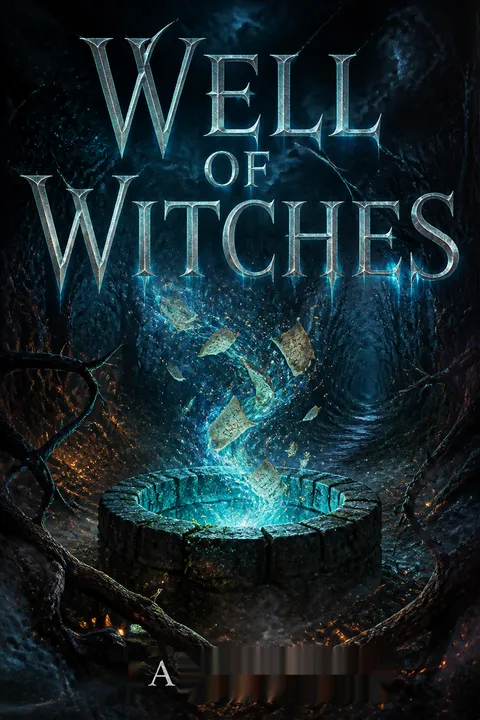

Plot Summary
Shadows on the Road
On a dark, windswept road, Bethany, a girl who feels invisible in her own life, encounters a mysterious, beautiful woman named Rygoth. Rygoth's words cut deep, exposing Bethany's longing to be seen and her pain at being forgotten. Rygoth offers her a grimoire—a spellbook that calls to Bethany's true self, whispering her secret name. Entranced, Bethany accepts, and the book's magic begins to change her. This encounter is the spark that will ignite chaos across the world, as Rygoth sets out to awaken witches everywhere, and Bethany's wish to be noticed becomes a curse that will haunt her and others.
The Witch's Gift
Rygoth, newly freed from her ancient prison, travels the land, bestowing grimoires upon girls who feel powerless or overlooked. Each book is a seductive promise: power, attention, and a place in the world. But the magic is a trap, feeding on the girls' desires and drawing them into Rygoth's web. Meanwhile, Kara Westfall, a girl who once wielded great magic, is now powerless and adrift, haunted by guilt for unleashing Rygoth. As Rygoth's influence grows, the seeds of a new witch war are sown, and Kara's journey to redemption begins.
Ashes of De'Noran
Kara and her brother Taff, fleeing their past and the wrath of Timoth Clen, return to their village only to find it burned and abandoned. The villagers, driven by fear and zealotry, have left a chilling message: animal skeletons and a scarecrow effigy of Kara hang from the sacred tree. The siblings are haunted by memories and guilt, but Kara's resolve hardens—she must save her father, whose body is possessed by Timoth Clen, and stop Rygoth before more innocents suffer. The journey ahead is perilous, but Kara's compassion and Taff's loyalty are their guiding lights.
Nightmares and New Resolve
Kara is plagued by dreams of her father, trapped in a false reality and slipping into madness. She confides in Taff her desperate plan: to enter the Well of Witches, a place of legend and terror, and bargain with Grace—the witch who cursed her father. The only way in is through Sablethorn, the lost school of magic. With Safi, a friend struggling with her own grimoire's temptations, they set sail for the World, pursued by monsters and hunted by those who fear witches. Kara's hope is fragile, but her love for her family steels her against despair.
The Ship and the Monster
As Kara, Taff, and Safi journey by ship to the World, Rygoth unleashes Coralis, a monstrous sea creature, to destroy them. Kara, powerless, is paralyzed by helplessness, but Safi, wielding her grimoire, saves the ship with a display of raw magic. The attack leaves Kara shaken—her lack of magic is a wound, and she fears she is nothing without it. Safi's struggle with her grimoire's dark influence deepens, and the group's bonds are tested. The sea crossing is a crucible, forging their resolve but also exposing their vulnerabilities.
Safi's Secret
Safi reveals to Kara the truth: her grimoire's whispers nearly drove her to harm her own father, and she stowed away on the ship to escape its pull. Kara, who once lost herself to a grimoire's power, understands and forgives her. The two girls promise to help each other resist the darkness within their spellbooks. Safi's visions warn of Rygoth's growing army, and Kara reluctantly agrees to teach her how to use magic wisely. Their friendship, tested by secrets and fear, becomes a source of hope in a world shadowed by witchcraft.
Arrival in the World
The children arrive in the World, a place both wondrous and strange, filled with relics of lost technology and unfamiliar customs. They seek Sablethorn, but the land is vast and the path uncertain. In Nye's Landing, a fishing village haunted by "unghosts"—children lost to a mysterious curse—they find both kindness and suspicion. Kara's compassion draws her into the town's troubles, even as she knows her true quest cannot wait. The World is bigger and more dangerous than she imagined, and the line between magic and science is blurred.
The Unghosts of Nye's Landing
Nye's Landing is plagued by unghosts—children who wander the night, unseen and desperate to be noticed. Kara, Taff, and Safi are drawn into the mystery, discovering that the curse is linked to a witch in their midst. The townspeople, terrified and eager for a scapegoat, turn on Safi when her grimoire is revealed. Kara's attempt to help only deepens the suspicion, and Safi is imprisoned, facing execution. The mob's fear is a mirror of Kara's own village, and she is determined to break the cycle of hatred and save her friend.
The Witch Among Us
Using magical toys and clever deduction, Kara and Taff discover that Bethany, the seemingly ordinary girl everyone adores, is the witch responsible for the unghosts. Under the grimoire's influence, Bethany has stolen the essence of children to make herself loved. Kara confronts her, showing her the harm she's caused. Bethany, horrified, breaks the spell and restores the children, but is immediately captured by graycloaks—witch hunters led by the possessed Timoth Clen. The children's victory is bittersweet, as the machinery of persecution grinds on.
The Well of Witches
Kara, Taff, and Safi escape the graycloaks and, with the help of allies, find the hidden entrance to Sablethorn beneath the Forked Library. They navigate ancient puzzles and magical traps, pursued by Rygoth's twin witches. Safi sacrifices herself to save the others, staying behind to mislead their pursuers. Kara and Taff enter the Well of Witches, a surreal realm where thoughts become reality and the souls of witches are harvested to power grimoires. The Well is a place of punishment and temptation, ruled by the Faceless and haunted by the past.
Sablethorn's Forgotten Doors
In Sablethorn, Kara and Taff uncover the truth about the Well's origins: it was once a paradise for wexari, corrupted by a Last Spell. They meet Aunt Abby, Kara's mother's sister, who is trapped in the Well and wracked by guilt. The children learn that the Well feeds on memories and suffering, and that escape is possible only through the Burngates—portals that open when a witch casts her Last Spell. To save their father, they must find Grace, now a powerful Whisperer who tempts witches in the real world to use their grimoires.
The Sundering Chamber
To regain her lost magic, Kara must face the Sundering—a test that forces her to confront her deepest flaw. In a chamber of mirrors and mysterious objects, she realizes her greatest weakness is self-doubt, the belief that she is not good enough. Rejecting all the offered tokens, she claims her identity as a good witch, worthy of power. Her magic is restored, and she emerges transformed, ready to face Rygoth and the darkness spreading across the world. The lesson is clear: true strength comes from believing in oneself.
The Faceless and the Whisperers
Kara and Taff witness the fate of witches in the Well: those who fail are turned into Faceless, mindless enforcers who keep others in line. The Whisperers, like Grace, tempt girls in the real world to use their grimoires, perpetuating the cycle of suffering. Betrayed by Grace, the siblings are captured and nearly transformed, but escape through cooperation and cleverness. They free a magical beast, Rattle, and race to the Burngates as the Well erupts in chaos. The cost of magic is laid bare, and the children's resolve is tested.
Escape and Betrayal
Riding Rattle's wings, Kara, Taff, and Grace escape the Well through a Burngate, emerging into a world at war. Rygoth's monsters and witches clash with Timoth Clen's graycloaks in a nightmarish battle. Kara, her magic restored, turns Rygoth's creations against each other, saving the soldiers. But time has passed differently in the Well—a year has gone by, and the world has changed. Lucas, now a graycloak, helps them find their father, still possessed by Timoth Clen. The final confrontation looms, and old alliances are tested.
The Battle for Sentium
In a graveyard atop a mountain, Rygoth gathers her coven, forcing rescued witches to swear loyalty by casting spells on the imprisoned Timoth Clen. Kara, with Lucas, Taff, and Grace, infiltrates the gathering. Grace attempts to break the curse, but the spell fails. Kara challenges Rygoth to a contest of wills, using compassion and cunning to turn the tide. Safi, now under Rygoth's control, is lost to them. In the chaos, Kara's magic and leadership inspire hope, but the cost is high—Grace betrays them, and the family's reunion is bittersweet.
The Graveyard's Last Spell
Amid the ruins of battle, Kara's father is finally freed from Timoth Clen's possession, but the victory is hollow. Safi is lost, Grace escapes with a grimoire, and the world is still threatened by Rygoth's quest for the ultimate spellbook. Kara's journey has changed her—she is no longer the powerless girl she once was, but a leader who understands the true cost of magic. The family is reunited, but the scars of their ordeal remain, and the fight against darkness is far from over.
Family Restored, Paths Divided
Kara, Taff, and their father are together again, but the world is changed. Timoth Clen's followers still hunt witches, Rygoth's threat looms, and the search for the four pieces of the first grimoire begins. Kara must part from Lucas and her father, each taking up their own burdens in the struggle ahead. The lessons of the Well—about power, forgiveness, and self-belief—guide her as she steps into an uncertain future. The story ends with hope: the promise of family, the possibility of redemption, and the courage to face whatever comes next.
Analysis
A meditation on power, identity, and redemptionWell of Witches is a dark, emotionally resonant fantasy that interrogates the nature of power and the cost of desire. Through the journeys of Kara, Safi, and Grace, the novel explores how longing—for attention, control, or belonging—can lead to both greatness and ruin. The grimoire is a potent metaphor for the temptations of power, offering agency but demanding a terrible price. The Well of Witches, with its Faceless enforcers and Whisperers, is a cautionary vision of a world that punishes failure and difference, but also a crucible for self-discovery. Kara's arc—from self-doubt to self-acceptance—embodies the novel's central lesson: true strength lies not in magic, but in compassion, humility, and the courage to believe in oneself. The story's modern relevance is clear: it warns against the dangers of fanaticism, the seduction of easy answers, and the dehumanization of the "other." Yet it also offers hope—that even in a world scarred by fear and hatred, forgiveness, friendship, and love can break the cycle and begin anew.
Review Summary
Well of Witches, the third book in The Thickety series, receives an overall rating of 4.26/5. Readers praise the imaginative worldbuilding, particularly the creative Well of Witches setting, and the compelling characters Kara and Taff. Many appreciate the series' exploration of morality, magic's dual nature, and themes of empathy and forgiveness. Some critics note this installment feels slower than previous books, with extensive traveling and less horror. Several reviewers expected it to conclude the series and express mixed feelings about continuing. Most recommend the dark middle-grade fantasy for ages 12+.
People Also Read
Characters
Kara Westfall
Kara is a girl marked by loss, guilt, and the burden of power. Once a witch of great ability, she is stripped of her magic and forced to confront her own self-doubt and the consequences of her actions. Her journey is one of redemption—seeking to save her father, protect her brother, and atone for unleashing Rygoth. Kara's compassion is her greatest strength, allowing her to forgive, to teach, and to inspire others. Her psychological arc is a struggle with self-worth, culminating in the realization that she is, and always was, a good witch. Her relationships—with Taff, Safi, Lucas, and her parents—anchor her, and her growth is defined by learning to trust herself and use her power wisely.
Taff Westfall
Taff is Kara's younger brother, a child prodigy whose intelligence and curiosity often save the day. He is fiercely loyal to Kara, willing to follow her into any danger, and his optimism is a counterpoint to her doubts. Taff's magical toys, inherited from Mary Kettle, are both tools and symbols of his ingenuity. Psychologically, Taff struggles with feelings of helplessness and the desire to protect his sister, but he matures into a partner who contributes equally to their survival. His unwavering belief in family and hope is a source of strength for the group.
Safi
Safi is a witch with the rare ability to see glimpses of the future. Her struggle with her grimoire's seductive power mirrors Kara's own, and her journey is one of temptation, guilt, and the search for control. Safi's visions are both a blessing and a curse, isolating her from others but also making her indispensable. Her friendship with Kara is tested by secrets and betrayal, but ultimately becomes a source of healing. Safi's psychological arc is about learning to trust herself and others, and her sacrifice in Sablethorn is a testament to her courage and love.
Rygoth
Rygoth is the architect of chaos, a witch of immense power driven by resentment and a desire for control. Her beauty and charm mask a deep insecurity and a history of rejection. Rygoth's distribution of grimoires is both a quest for followers and a test to find those who will embrace darkness. She is a master manipulator, exploiting the vulnerabilities of others, but her own wounds—her expulsion from Sablethorn, her rivalry with Minoth—fuel her cruelty. Psychologically, Rygoth is both a villain and a victim, her actions shaped by a world that feared and rejected her.
Grace Stone
Grace is the witch who cursed Kara's father, a prodigy whose talent is matched only by her capacity for cruelty. In the Well, she becomes a Whisperer, tempting other witches to darkness. Grace's psychological complexity lies in her self-awareness—she knows she is broken, but cannot escape the grimoire's pull. Her relationship with Kara is fraught with rivalry, betrayal, and a twisted respect. Grace's arc is a cautionary tale about the dangers of unchecked ambition and the seductive nature of power.
Lucas Walker
Lucas is Kara's childhood friend, a survivor of trauma who seeks belonging and purpose. His journey takes him from De'Noran to the World, where he becomes a graycloak out of necessity. Lucas's loyalty to Kara is unwavering, but he is torn between his love for her and his belief in the need for order. Psychologically, Lucas embodies the struggle between justice and mercy, and his choices reflect the complexities of a world at war. His relationship with Kara is a source of hope and heartbreak.
Bethany
Bethany is the first girl to receive a grimoire from Rygoth, and her wish to be noticed leads her to steal the essence of other children. Under the grimoire's influence, she becomes both victim and perpetrator. Bethany's arc is one of self-discovery and remorse—when confronted with the harm she has caused, she chooses to break the spell and accept the consequences. Her story is a meditation on the dangers of longing for what others have and the redemptive power of empathy.
Timoth Clen (Possessed Father)
Timoth Clen is the spirit of a legendary witch-hunter, possessing Kara's father and leading a crusade against witches. He is both a symbol of righteous fury and the dangers of fanaticism. The real father's consciousness is trapped, slipping into madness, and the struggle to restore him is the emotional core of Kara's quest. The duality of Timoth Clen—the loving father and the merciless hunter—explores themes of identity, memory, and the cost of vengeance.
Minoth Dravania
Minoth is the founder of Sablethorn, a wexari who sought to teach humility and empathy to those with magic. His presence in the Well is a remnant of a lost age, and his guidance helps Kara reclaim her power. Minoth's psychological depth lies in his recognition of his own failings and the unintended consequences of his legacy. He is a symbol of the possibility of redemption and the importance of self-knowledge.
The Faceless
The Faceless are witches who failed the Sundering and were transformed into monsters, stripped of identity and will. They are both victims and instruments of the Well's cruelty, enforcing its rules and perpetuating the cycle of suffering. Psychologically, they represent the loss of self that comes from surrendering to darkness, and the dangers of a system that punishes failure without mercy.
Plot Devices
The Grimoire
The grimoire is the central plot device—a magical book that grants power but also corrupts and consumes its user. Each grimoire is unique, whispering to its owner and tempting her to use more magic, drawing her closer to the Last Spell and the Well of Witches. The grimoire is both a symbol of agency and a trap, embodying the seductive nature of power and the dangers of unchecked desire. Its mirrored pages reflect the user's true self, and its influence is a test of character.
The Well of Witches
The Well is both a literal and metaphorical underworld, where the souls of witches are harvested to power grimoires. It is a place of punishment, temptation, and transformation, ruled by the Faceless and haunted by the past. The Well's structure—a landscape of paper, thoughts, and memories—serves as a narrative device to explore the characters' inner lives and the consequences of their choices. The Burngates, which open when a witch casts her Last Spell, are both a means of escape and a symbol of the cycle of suffering.
The Sundering
The Sundering is the rite of passage for wexari, stripping them of magic and forcing them to confront their greatest flaw. The test in the queth'nondra is both a literal puzzle and a psychological journey, requiring the candidate to recognize and accept her weakness. The Sundering is a narrative device that explores themes of self-worth, redemption, and the true nature of power.
Foreshadowing and Parallelism
The narrative is rich with foreshadowing—Bethany's wish to be noticed, Safi's visions, Kara's dreams of her father—all hint at future events and the consequences of desire. The parallel journeys of Kara, Safi, and Grace explore different responses to temptation and suffering, while the cycle of persecution and redemption is mirrored in the fates of the witches and the townspeople. The use of magical toys, puzzles, and mirrored pages reinforces the theme of self-discovery and the importance of perspective.
Narrative Structure
The story is structured as a series of interlocking quests—Kara's search for her father, the battle against Rygoth, the mystery of the unghosts, the descent into the Well—each revealing new layers of character and theme. The shifting alliances, betrayals, and sacrifices create a sense of constant tension and moral ambiguity. The use of dreams, visions, and magical communication allows for exploration of inner conflict and the blurring of reality and fantasy.
The Thickety Series
Download PDF
Download EPUB
.epub digital book format is ideal for reading ebooks on phones, tablets, and e-readers.








































