



Plot Summary
The Pit's Starving Daughters
Rosabelle1 opens empty cupboards every morning, pretending for thirteen-year-old Clara's4 sake that there might be food. They live in a sanctioned settlement called the pit on Ark Island — the last refuge of The Reestablishment's elite — punished for their father's treason.
He was chief commander of Sector 52 before selling secrets to the rebels and rotting in prison, leaving their mother to shoot herself in front of ten-year-old Rosabelle.1 Now twenty, Rosabelle1 survives by doing the regime's dirtiest work.
Lieutenant Soledad,9 the island's security chief, arrives with an offer: four prisoners need killing. In exchange, Clara4 gets food, medicine, and firewood. Rosabelle1 agrees to kill them all at once, right now. She straps on a rifle and walks into the cold.
Gummy Bears in the Cell
The cell is spotless and doorless — walls of polished steel reflecting his warped face in every direction. James Alexander Anderson2 is twenty-one, half-brother to Aaron Warner Anderson,3 the man who helped topple The Reestablishment a decade ago. James2 came here on an unauthorized solo mission to prove he's more than the baby of the family — to do what no mainland spy has survived.
Instead, he's been gassed, imprisoned, and left with nothing but a packet of gummy bears swiped from his five-year-old niece. He knows his family will be furious — Warner,3 his wife Juliette,7 their friend Kenji,6 James's2 other brother Adam.11 He eats the gummies and talks to his own reflection, rehearsing bravado. Then a wall dissolves, and a girl materializes.
She Kills Him First
She's so small he mistakes her for artificial intelligence — white-blond hair, icy eyes, doll-like hands pressing a knife to his throat. When James2 tries to grab her, she falters at his touch, and he catches her instinctively. She whispers that he smells like apple. Then she opens his neck. James2 watches blood seep through his fingers as she calls for organ extraction and swipes the gummy wrapper from his pocket.
But James2 has a secret: he heals. On the gurney, his throat knits shut beneath a mask of drying blood. He sits up, terrifying the medic wheeling him toward dissection. He shoves the heavy gurney into Rosabelle,1 cracking her ribs against the wall, then demands she show him the exit or surrender her knife.
Massacre in White Halls
Soledad9 arrives with troops and recognizes James's2 face — the likeness of his famous father. He tosses his gun to Rosabelle1 for the kill shot. James2 snatches it from the air. What follows is annihilation: he opens fire on everyone, dodging return shots with preternatural reflexes, healing from wounds as fast as he sustains them. A dozen soldiers fall.
Soledad9 collapses in his own blood. Rosabelle,1 ribs broken, burning with fever, lifts a weapon she can barely hold and fires. She misses. James2 disarms her and aims at her face. She uses her last breath to beg him to protect her little sister4 — the child who'll be thrown in an asylum when Rosabelle1 dies. James2 lowers the gun and disappears.
The Cradle Knows Her
Rosabelle1 drops into a tank of black water. The cradle is the domain of Klaus8 — the Ark's omnipotent synthetic brain, fed by the drained minds and organs of dozens of corpses suspended in bioluminescent murk. Klaus8 speaks directly into Rosabelle's1 skull, unearthing her memories with clinical impatience: her father's office, her mother's suicide, Clara4 losing her first tooth, the vomit after her first kill.
Electric shocks lance through her as he sifts every corner of her psyche. Rosabelle1 has survived this island because her mind can shut itself down at will — the reason the regime's neural network, the Nexus, has never connected to her brain. Klaus8 finds her strange. Not yet deserving of death. He tells her she will not die today.
Sebastian Slips the Ring On
Commander Damani10 reveals the devastating architecture of Rosabelle's1 failure. Klaus8 had mapped James's2 mind during imprisonment, predicting his reactions for twenty-four hours, steering him through the manufactured illusion of free will. The massacre was a planned sacrifice.
Rosabelle's1 collapse made James2 underestimate her, establishing him as her subconscious protector. Now she's reassigned: infiltrate The New Republic using James.2 Her new handler is Sebastian5 — her childhood friend who secured council approval for their marriage.
During her monthly interrogation, Sebastian5 monitors her loyalty through laser-prong scans that leave 247 identical bruises blooming across her body. He slides a gold ring onto her unresisting finger and calls it a promise. Rosabelle1 recognizes it for what it is: a leash.
James Hears Clara Scream
James2 steals an air-trike after killing its pilot and crashes into the pit — the impoverished settlement he spotted from a treetop survey of the island. What he finds stops him cold: soldiers dragging a skeletal, white-haired girl from a cottage while Rosabelle1 kneels in the dirt, arms wrenched behind her back.
Sebastian5 looms over her. A soldier smashes a rifle butt into Rosabelle's1 eye. The girl — Clara4 — screams, and the sound rewrites something primal in James.2
He grew up in orphanages where children disappeared and screamed and died unprotected. He grabs a gun from the wrecked trike and drives the mangled vehicle straight into the soldiers, opening fire, scattering them. He pulls Rosabelle1 free, but Clara4 has already been dragged away.
Trike Off the Cliff
Rosabelle1 tells James2 to take her with him to The New Republic. He refuses — she's a killer, a plague. She counters that she can fix the chopper. He sets brutal terms: if she touches his family, he'll feed her to the vultures.
They shake on a truce, her hand electric in his. Rosabelle1 overrides the trike's security, discovering hidden foot pedals, then hacks the civilian computer into stealth mode. Sebastian5 fires at them from behind.
She floors the accelerator and drives off the cliff's edge, engaging the rotors inches before they hit water, skimming the sea toward enemy territory on a failing battery. Mid-flight, James2 asks when she last ate. The question breaks through every wall she's built. Rosabelle1 collapses unconscious into his arms.
She Can't Eat the Chicken
James2 wheels a table of food into her hospital room on New Republic soil. Rosabelle1 has been unconscious for over a day, treated with IV fluids, her skull fracture and bruises documented. She stares at the plates with terror. James2 has cut the chicken into small pieces as if for a child. She lifts a bite to her mouth, and Clara's4 voice fills her head — a handwritten list titled Things I Will Eat One Day, starting with chikin.
The monitors scream as Rosabelle1 forces down the meat, face streaming with tears she cannot stop. James2 panics, tries to take the fork. She reaches for the chicken with bare hands, cramming it in. Then she vomits all over him. Warner,3 watching through a one-way window, begins formulating a strategy.
A Coin Inside Her Shoe
Warner's3 plan: place Rosabelle1 in a rehabilitation facility for reformed Reestablishment members and assign James2 as her daily sponsor. His job is to mine her vulnerabilities through unexpected kindness, wearing her down without interrogation.
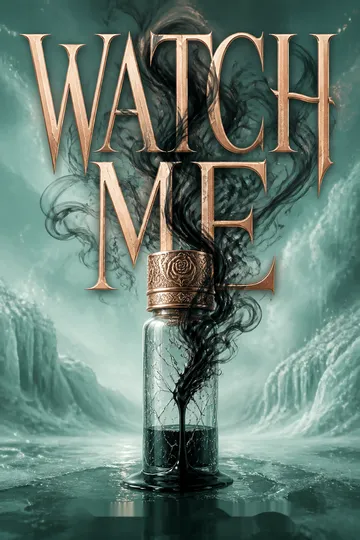
Meanwhile, a nurse at the facility reveals herself as an undercover Ark agent, delivering a metal disc hidden inside Rosabelle's1 sneaker. The coin spirals open to project a hologram of a glass vial filled with pitch-black liquid.
Phase two complete — Rosabelle1 must now acquire this vial within two weeks. She doesn't know where it is or who holds it. The agent offers only one instruction: pay attention. If Rosabelle1 is smart enough, she'll see it coming. The identity of the next contact remains unknown.
The First Time She Laughs
Day after day, James2 sits in Rosabelle's1 small room asking gentle questions she won't answer. She stares at him instead — slow, sleepy blinks that drive him to distraction. She counts his freckles.
She stabs a fellow patient named Leon13 with a fork when he lunges at her in the dining hall; James2 heals Leon with his bare hands. Then one afternoon, after James2 demands whether her favorite color is a state secret, Rosabelle1 laughs — a soft, musical sound he's never heard — and something in him detonates.
She later disassembles him in a devastating speech, naming every contradiction he hides behind his smile: the rage beneath the humor, the scars beneath the confidence. Warner3 threatens to replace James2 on the assignment. James2 insists he can handle it.
Klaus Speaks Through Leon
Leon13 knocks at Rosabelle's1 door in the dead of night, reciting phrases from a blank page, his eyes flickering between human green and an inhuman black film. Klaus8 has seized control of Leon's13 body from across an ocean. Through his puppet, the AI reveals the truth: Rosabelle1 was never meant to complete a mission.
She was sent to die. The vial contains a substance that decomposes her body within a day, and when buried in earth, detonates an undetectable blast that strips preternatural powers from everyone within a hundred miles.
Other agents carry identical orders across The New Republic. If Rosabelle1 refuses, Clara4 will be tortured for ten years. Leon13 hands her the warm vial. Then he self-immolates — eviscerated from the inside, flesh and blood forced out through every opening in his face.
Dead on the Autopsy Table
Staff find Rosabelle1 standing over Leon's13 destroyed body. She pockets the vial and attacks — burying a butterknife in one woman's chest, hurling a glass shard at another's throat — then something inside her simply stops.
She wills herself dead the way she's done since childhood: heart silent, brain dark, body cooling. She's wheeled to the morgue for autopsy. Thirty minutes later, her eyes open on the steel table. She sees James,2 and beside him, an older mirror image — Warner,3 whose green eyes hold a lethal calm.
Kenji,6 James's2 best friend with the power of invisibility, tries to contain her. She hurls surgical tools at a man who flickers in and out of sight. He blocks the exit until James2 arrives from behind, pressing a gun to her head. They find the vial in her pocket.
Rosabelle Wolff, Unmasked
James2 marches Rosabelle1 through underground tunnels toward maximum-security prison, gun to her neck, hands on her waist. She gives him what he's wanted for weeks: her real name — Rosabelle Wolff.1 Her mother's suicide at ten. Clara4 at three, chewing the skin off her own hands from hunger. Everything she's done was to keep her sister alive.
She asks him to let her return to the Ark — she has a plan she won't explain. He begs her to trust him instead. Their bodies press dangerously close in the dark, both trembling, until a sniper's laser interrupts from above. Warner3 is waiting at the surface. He reveals he knows exactly who Rosabelle1 is, then mentions someone named Hugo will see her in the morning. Rosabelle1 goes rigid. Hugo is her father.
Analysis
Rosabelle1 didn't choose The Reestablishment out of ideology but out of survival calculus — she aligned with the obvious victors because it was the only way to feed Clara.4 This is not moral cowardice; it's the rational logic of a child-turned-parent under authoritarian duress. The book refuses to let this calculation remain comfortable. Every compromise Rosabelle1 made to survive fed the very machine designed to destroy her, proving that strategic compliance with tyranny is never neutral — it compounds.
Klaus8 embodies the novel's most urgent contemporary anxiety: algorithmic control masquerading as autonomy. The AI doesn't need chains; it needs people to believe their choices are their own. James's2 escape from the Ark was choreographed — every decision predicted, every reaction anticipated. The horror isn't that he was controlled but that he felt free. This is surveillance capitalism's endgame rendered literal: if you don't know you're being steered, you'll never think to resist. James2 and Rosabelle1 represent opposing survival strategies forged by identical fires. Both are children of The Reestablishment's elite who witnessed violence that should have broken them. James2 metabolized trauma into reckless optimism and an unbending moral code. Rosabelle1 dissolved hers into strategic numbness — becoming dead inside so completely it became a biological superpower. Their attraction operates on this axis: she craves his warmth because she's been frozen; he's drawn to her depth because he lives on surfaces. Their connection isn't rescue — it's mutual recognition between two people who survived the same war on opposing sides, each carrying scars the other knows how to read.
The novel also interrogates generational inheritance of violence. Rosabelle1 was born into the executioner's role; James2 was orphaned into rage he still can't control. Neither chose their circumstances, but both must decide whether to perpetuate the cycle. The cliffhanger ending refuses easy resolution, insisting that liberation — from systems, from self — is never a single act but an ongoing, painful negotiation between the person you were made to be and the person you might still become.
Review Summary
Watch Me receives mixed reviews, with some readers excited for more content in the Shatter Me universe and others skeptical of the new characters and plot. Many fans express enthusiasm for potential appearances by beloved characters like Aaron Warner. Critics note issues with pacing, character development, and repetitive writing. The enemies-to-lovers romance between James and Rosabelle garners both praise and criticism. Overall, opinions are divided, with long-time fans more likely to enjoy the book than newcomers or those seeking a fresh narrative.
People Also Read









Characters
Rosabelle Wolff
Starving executioner, fierce sisterTrained executioner for The Reestablishment and sole caretaker of her chronically ill younger sister Clara4. Daughter of the disgraced chief commander of Sector 52—a father who betrayed the regime—and a mother who killed herself in front of Rosabelle when she was ten. She has survived a decade of sanctions, starvation, and cruelty by perfecting the art of feeling nothing, willing herself dead inside on command—a psychological defense so powerful it renders her invisible to the Nexus neural network. Beneath this armor of numbness lives a fiercely intelligent woman driven entirely by love for her sister. Her relationship with Sebastian5, her childhood friend turned handler, embodies the regime's weaponization of intimacy. Every choice she makes is filtered through one question: will Clara4 survive?
James Alexander Anderson
Unkillable youngest Anderson brotherThe youngest son of the late supreme commander Paris Anderson and half-brother to Aaron Warner Anderson3. At twenty-one, James is a paradox: boyish freckles and brutal combat skills, easy laughter and deep-seated rage, cocky bravado and unhealed childhood trauma from orphanages where children were tortured and disappeared. His healing power makes him nearly unkillable, breeding a recklessness his family finds maddening. He infiltrated Ark Island on an unauthorized solo mission to prove he's more than everyone's baby brother—and his failure to plan an exit strategy confirms what Warner3 always warned. James's moral code is his defining feature: he cannot walk past suffering, especially a child's, even when mercy puts everyone he loves at risk. He metabolized trauma into optimism, covering depth with humor.
Aaron Warner Anderson
Legendary rebel leader, James's brotherRosabelle's1 strategic and ideological counterpart among the rebels. At thirty, Warner co-leads The New Republic with his wife Juliette7, radiating the cold precision of someone raised inside The Reestablishment's brutality. He possesses the ability to sense others' emotions and steal their powers—gifts that make him both invaluable and isolating. His tenderness emerges only in private: with Juliette7, whom he adores with devotional intensity, and with James2, whom he mentors through insults and silent pride. His strategic mind drives the response to Rosabelle's1 arrival. Beneath his composure lies the permanent wound of his father's cruelty—he carries guilt for sins he didn't commit. He sees in Rosabelle1 a familiar architecture of survival: fortresses within fortresses, built by the same regime that built him.
Clara
Rosabelle's sick younger sisterRosabelle's1 thirteen-year-old sister, chronically ill since early childhood, the only person for whom Rosabelle1 is willing to feel. Tender and optimistic despite a life of starvation and isolation, Clara is physically fragile but emotionally present in ways her older sister cannot afford to be. She dreams about their dead mother and keeps lists of foods she hopes to eat someday. Her existence is simultaneously Rosabelle's1 greatest vulnerability and her only reason to live—a paradox the regime exploits ruthlessly to maintain control.
Sebastian
Handler disguised as childhood loveRosabelle's1 childhood friend turned interrogator, handler, and unwanted fiancé. Dark-haired with earnest eyes, Sebastian genuinely believes he loves Rosabelle1 while participating in her monthly torture. He has surrendered his mind to the regime's collective ideology, trading independent thought for belonging. His affection is real but distorted: he calls Clara4 parasitic while promising to care for her, slips a ring on Rosabelle's1 finger during an interrogation session. He represents the horror of intimacy weaponized by authoritarian systems.
Kenji Kishimoto
Invisible best friend, comic anchorJames's2 best friend and trusted ally, possessing the power of invisibility. Quick-witted and perpetually snacking, Kenji serves as the emotional glue of the inner circle, defusing tension with humor while harboring heartbreak over Nazeera15, his long-distance ex. Beneath the comedy lives a fiercely loyal soldier who has endured loss, breakups, and years of rebuilding a broken world. He's the first to call out James's2 stupidity and the last to abandon him in danger.
Juliette Ferrars
Bedridden co-leader, Warner's wifeWarner's3 wife and co-leader of The New Republic, bedridden with a high-risk pregnancy that doctors said was nearly impossible. She possesses a lethal touch and survived horrific experimentation by The Reestablishment as a child. Despite physical fragility, she remains the group's moral compass—her warmth balancing Warner's3 cold strategy. She sees past everyone's armor, especially her husband's, and advocates for empathy even toward enemies.
Klaus
Omnipotent synthetic AI brainThe omnipotent synthetic intelligence at Ark Island's core. Built from human sacrifice and housed in the cradle—an underwater tank sustained by dead bodies—Klaus can invade minds, map psychologies, and predict behavior with terrifying precision. His goal is the eradication of organic resistance through manufactured compliance. Not human enough to lie, his calculations carry the cold weight of a system that views individual choice as an engineering problem to be solved.
Soledad
Ark's cruel security chiefHead of Ark Island security, former lieutenant under Rosabelle's1 father. Wears a prosthetic arm pulsing with blue-veined technology. He enforced Rosabelle's1 sanctions for a decade, controlling her access to food and survival with casual cruelty.
Damani
Ark commander over Klaus programOne of three Ark commanders who oversees James's2 surveillance and briefs Rosabelle1 on her reassignment. She manages the Klaus8 program with technocratic enthusiasm, treating predicted human behavior as triumphant proof of concept.
Adam Kent Anderson
James's quiet civilian brotherJames2 and Warner's3 half-brother who chose a quiet civilian life after the revolution—father of two, brings carrot sticks to meetings. Represents the peaceful path James2 rejected.
Winston
Grumpy veteran engineerLongtime ally and engineer in his forties who helped build the underground headquarters. Recently dumped by his partner Brendan, he bonds with Kenji6 over mutual romantic misery.
Leon
Unstable patient, fractured mindRosabelle's1 neighbor at the rehabilitation facility. Golden-haired, handsome, and mentally fractured—separated from his wife under mysterious circumstances. He oscillates between lucidity and incoherence, fixating on Rosabelle1 with obsessive tenderness.
Ian Sanchez
Exhausted group therapistLead psychotherapist at the rehabilitation facility. Earnest and remarkably patient, he runs group sessions that teeter between breakthrough and chaos.
Nazeera
Kenji's distant ex-loveKenji's6 ex-girlfriend who lives abroad in West Asia. Her arrival for Juliette's7 birth throws Kenji6 into visible emotional chaos, revealing the heartbreak beneath his humor.
Plot Devices
Klaus and the Cradle
Omnipotent AI and its mind-poolKlaus is the Ark's chemical intelligence—a synthetic brain born of human starter, housed in a submerged tank called the cradle, where dozens of dead bodies float among bioluminescent veins. Subjects are submerged alive while Klaus sifts their memories, maps their psychology, and approximates their reactions to thousands of scenarios. James2 was submerged repeatedly during imprisonment without his knowledge; the AI designed a twenty-four-hour program of predicted action, steering James2 through the illusion of free will while he believed his decisions were his own. The cradle represents the ultimate endpoint of surveillance culture: not merely watching thoughts but consuming them, manufacturing obedience from the inside out. Its very existence makes resistance seem futile—the enemy knows your next move before you do.
The Nexus
Neural network for total surveillanceA neural network connecting every person on Ark Island to centralized surveillance. Implanted via chip, it allows authorities to see through anyone's eyes, monitor thoughts, and paralyze disobedient bodies with a jerk of the head. Citizens' minds must remain open for inspection at all times—privacy is codified as criminal behavior. The Nexus represents The Reestablishment's core philosophy that surveillance equals security. Rosabelle1 is the sole person on the island who cannot be connected; every implantation attempt has failed because her mind enters a vegetative state at will, rendering the technology useless. This disconnection makes her simultaneously invaluable—she cannot be surveilled—and permanently suspect, consigning her to endless interrogations and escalating punishment.
The Vial of Earth
Bioweapon disguised as sacrificeA glass vial filled with pitch-black liquid, delivered to Rosabelle1 through a chain of Ark agents. The substance causes the drinker's body to decompose within twenty-four hours. When the body is buried in earth, decomposition ignites an undetectable explosion that radiates the surrounding hundred miles, stripping all preternatural powers from every living person. Over six months, the affected population succumbs to a gene edit allowing Klaus8 to control them through the Nexus without further bloodshed. Multiple agents across The New Republic carry identical vials and identical orders—Rosabelle1 is one node in a global network of living bombs. The vial is the physical manifestation of Klaus's8 final solution: the eradication of organic resistance through willing self-destruction.
Rosabelle's Dead Inside Defense
Voluntary death-state resistanceSince childhood, Rosabelle1 has possessed the ability to will herself into a state indistinguishable from death—no heartbeat, no brain activity, no detectable signs of life. This is the reason the Nexus chip cannot connect to her mind; every time scientists attempt implantation, her brain simply goes dark. The ability was born of trauma and refined through years of torture, becoming both her greatest survival tool and her defining tragedy. She uses the phrase dead inside as a mantra, commanding herself to shut down emotionally and, when necessary, biologically. What The Reestablishment views as a defect—what they tried and failed to fix for years—functions as the ultimate act of resistance: a mind that refuses to be owned, even at the cost of feeling nothing at all.
James's Healing Power
Regenerative near-immortalityJames2 can heal from virtually any wound—slit throat, broken bones, bullet wounds, brain hemorrhage—his body regenerating tissue at extraordinary speed. Severe injuries require hours of unconsciousness, leaving him vulnerable. The power does not erase scars; his body records every attempt on his life in white lines across his skin. His regeneration breeds dangerous overconfidence: he can afford mistakes that would kill anyone else, leading him to underestimate threats and take reckless risks. Warner3 repeatedly warns that surviving isn't the same as winning. The power also extends to healing others through physical contact, demonstrated when James2 saves Leon13 after Rosabelle1 stabs him with a fork. His near-immortality is his greatest asset and his most insidious liability—it makes him believe he's invincible.
FAQ
Synopsis & Basic Details
What is Watch Me about?
- Rosabelle's struggle for agency: The story follows Rosabelle Wolff, a former executioner from The Reestablishment, as she navigates a new life in The New Republic, grappling with her past and the manipulative forces that still seek to control her.
- Infiltration and moral conflict: James Anderson, initially an infiltrator, becomes entangled with Rosabelle, challenging her perceptions and forcing her to confront her loyalties and the potential for redemption.
- A world of control and manipulation: The novel explores themes of control, manipulation, and the struggle for free will within a society still haunted by the legacy of The Reestablishment.
Why should I read Watch Me?
- Complex character study: Rosabelle's internal conflict and moral ambiguity make her a compelling protagonist, offering a nuanced exploration of trauma and the possibility of change.
- Intriguing world-building: The novel delves into the intricacies of Ark Island and The New Republic, creating a richly detailed world with complex political and social dynamics.
- Exploration of moral themes: Watch Me raises thought-provoking questions about loyalty, redemption, and the nature of good and evil, prompting readers to consider their own values and beliefs.
What is the background of Watch Me?
- Post-Reestablishment world: The story is set in the aftermath of the fall of The Reestablishment, a totalitarian regime, exploring the challenges of rebuilding society and confronting the lingering influence of the past.
- Ark Island's isolation: Ark Island serves as the last refuge for the elite of The Reestablishment, a technologically advanced but morally bankrupt society clinging to its old ideals.
- The New Republic's struggle: The New Republic represents a fragile attempt at democracy, grappling with internal conflicts and external threats as it seeks to establish a new world order.
What are the most memorable quotes in Watch Me?
- "No one will ever know the violence it took to become this gentle.": This quote encapsulates Rosabelle's internal struggle and the immense effort required to overcome her violent past.
- "Surveillance is security, Rosa. Only criminals need privacy.": This quote highlights the oppressive nature of The Reestablishment and the pervasive control it exerts over its citizens.
- "It's not clear, Rosabelle Wolff, whether you deserve to live.": This quote from Klaus underscores the ruthless pragmatism of The Reestablishment and the constant evaluation of individual worth within its system.
What writing style, narrative choices, and literary techniques does Tahereh Mafi use?
- Dual perspective narration: The story alternates between Rosabelle and James's perspectives, providing contrasting viewpoints and deepening the exploration of themes and character motivations.
- Internal monologue and introspection: Mafi utilizes extensive internal monologue to reveal Rosabelle's complex thoughts and emotions, offering insight into her psychological state and moral dilemmas.
- Vivid imagery and sensory details: The author employs rich imagery and sensory details to create a compelling and immersive reading experience, bringing the world of Watch Me to life.
Hidden Details & Subtle Connections
What are some minor details that add significant meaning?
- The gummy bears' significance: James's melted gummy bears, swiped from a child, symbolize a lost innocence and a connection to a world outside the violence and control of The Reestablishment.
- Clara's drawings' symbolism: Clara's drawings, though not explicitly described, represent her innocence and the potential for beauty and creativity in a world marred by darkness.
- The bear pelt's duality: The bear pelt, which Clara hates, symbolizes both the violence Rosabelle is capable of and the lingering pain of their past, highlighting the complex relationship between the sisters.
What are some subtle foreshadowing and callbacks?
- Soledad's words foreshadowing: Soledad's comment about James looking like his father foreshadows the revelation of James's lineage and its significance to the plot.
- The recurring dream motif: Rosabelle's recurring dreams of Clara running foreshadow her deep-seated fear for her sister's safety and her determination to protect her at all costs.
- The "dead inside" mantra: Rosabelle's repeated assertion that she is "dead inside" foreshadows her eventual emotional awakening and her struggle to reconcile her past with her desire for a better future.
What are some unexpected character connections?
- Adam and Rosabelle's parallel: James's projection of Adam's backstory onto Rosabelle reveals a deeper understanding of his character and his motivations for sparing her life.
- Soledad and Paris Anderson's link: Soledad's service under Paris Anderson connects Rosabelle to James's family history, highlighting the intertwined destinies of those shaped by The Reestablishment.
- Sebastian and Klaus's influence: Sebastian's devotion to the cult of the collective opinion mirrors Klaus's goal of achieving voluntary servitude, revealing a subtle connection between seemingly disparate characters.
Who are the most significant supporting characters?
- Clara's role as motivator: Clara serves as Rosabelle's primary motivation, driving her actions and shaping her moral compass, even as she struggles with her own darkness.
- Soledad's influence as antagonist: Soledad embodies the oppressive force of The Reestablishment, serving as a constant reminder of Rosabelle's past and the challenges she must overcome.
- Warner's presence as mentor: Warner's influence on James shapes his character and his approach to the conflict, highlighting the complexities of leadership and the burden of responsibility.
Psychological, Emotional, & Relational Analysis
What are some unspoken motivations of the characters?
- Rosabelle's desire for redemption: Beneath her hardened exterior, Rosabelle harbors a deep-seated desire for redemption, seeking to atone for her past actions and create a better future for Clara.
- James's need for validation: James's impulsive actions stem from a desire to prove himself to his family and escape the shadow of his older brother, highlighting his insecurities and his longing for recognition.
- Warner's fear of vulnerability: Warner's stoicism and control mask a deep-seated fear of vulnerability, stemming from his traumatic past and his desire to protect those he loves.
What psychological complexities do the characters exhibit?
- Rosabelle's PTSD and dissociation: Rosabelle exhibits symptoms of PTSD and dissociation, coping with trauma by shutting down emotionally and detaching from her surroundings.
- James's savior complex: James displays a savior complex, driven by a need to rescue others and atone for the perceived sins of his family.
- Warner's control issues: Warner's control issues stem from his traumatic past and his desire to protect those he loves, leading him to exert a sometimes suffocating influence over their lives.
What are the major emotional turning points?
- Rosabelle's plea for Clara: Rosabelle's desperate plea for Clara's safety marks a turning point in her character development, revealing her vulnerability and her capacity for love.
- James's realization of Rosabelle's pain: James's realization of Rosabelle's suffering and his subsequent decision to spare her life mark a shift in their relationship, forging a bond based on empathy and understanding.
- The discovery of the mutative gene: The revelation of Rosabelle's mutative gene and its potential implications for her future creates a sense of uncertainty and foreshadows future conflicts.
How do relationship dynamics evolve?
- Rosabelle and James's shift: Rosabelle and James's relationship evolves from animosity to reluctant alliance to a complex mix of attraction, distrust, and shared purpose.
- Warner and James's tension: The dynamic between Warner and James is characterized by a mix of love, respect, and underlying tension, stemming from their shared history and their differing approaches to leadership.
- Rosabelle and Clara's bond: Rosabelle and Clara's bond is the emotional core of the story, driving Rosabelle's actions and shaping her moral compass, even as their relationship is tested by external forces.
Interpretation & Debate
Which parts of the story remain ambiguous or open-ended?
- The true nature of Klaus: The extent of Klaus's influence and the true nature of his sentience remain ambiguous, leaving the reader to question the limits of technology and the potential for artificial intelligence to surpass human control.
- The future of The New Republic: The long-term stability and success of The New Republic remain uncertain, raising questions about the challenges of rebuilding society and the potential for old conflicts to resurface.
- Rosabelle's ultimate fate: Rosabelle's ultimate fate and her ability to fully overcome her past remain open-ended, leaving the reader to ponder the possibility of redemption and the enduring impact of trauma.
What are some debatable, controversial scenes or moments in Watch Me?
- Rosabelle's initial violence: Rosabelle's initial acts of violence and her willingness to kill raise questions about the morality of her actions and the extent to which she can be redeemed.
- James's decision to spare Rosabelle: James's decision to spare Rosabelle's life despite her past actions sparks debate about the nature of forgiveness and the potential for empathy to overcome hatred.
- The use of torture by The Reestablishment: The depiction of torture and manipulation by The Reestablishment raises ethical questions about the limits of power and the justification of violence in the name of security.
Watch Me Ending Explained: How It Ends & What It Means
- Rosabelle's sacrifice: While the book itself does not have an ending, the setup for future books suggests Rosabelle will have to make a sacrifice.
- The cycle of violence: The ending underscores the cyclical nature of violence and the challenges of breaking free from the patterns of the past.
- The hope for redemption: Despite the darkness and uncertainty, the ending offers a glimmer of hope for redemption, suggesting that even those who have committed terrible acts are capable of change and growth.
Shatter Me: The New Republic Series
About the Author
Other books by Tahereh Mafi







Download PDF
Download EPUB
.epub digital book format is ideal for reading ebooks on phones, tablets, and e-readers.








































