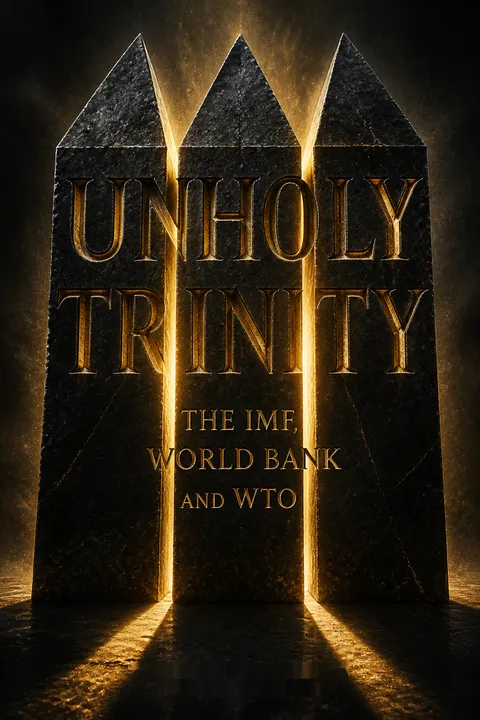

Key Takeaways
1. Neoliberalism: The Dominant Ideology of Global Capitalism
Neoliberalism is an entire structure of beliefs founded on right-wing, but not conservative, ideas about individual freedom, political democracy, self-regulating markets and entrepreneurship.
From Keynesianism to Neoliberalism. The mid-20th century saw Keynesian economics, advocating state intervention for full employment and wealth redistribution, dominate Western policy. However, by the 1970s, a "counter-revolution" led by figures like Friedrich von Hayek and Milton Friedman pushed for a return to classical liberal principles. This new ideology, neoliberalism, championed self-regulating markets and minimized state interference.
Intellectual Foundations. Neoliberalism found its intellectual capital in institutions like the Austrian School of Economics and the Chicago School of Political Economy. Key tenets included monetarism (inflation from excessive government spending), rational expectations (government intervention is futile), supply-side economics (tax cuts for the rich stimulate growth), and public choice theory (politicians maximize votes, causing inflation). These ideas were aggressively promoted by right-wing think tanks and sympathetic media.
The Washington Consensus. This neoliberal shift culminated in the "Washington Consensus," a set of policies imposed on borrowing countries by the IMF and World Bank. These policies included fiscal discipline, reduced public spending, tax reform, market-determined interest rates, competitive exchange rates, trade liberalization, encouragement of foreign direct investment, a competitive economy (privatization, deregulation), and secure property rights. This framework, presented as scientific and optimal, became the blueprint for global economic governance.
2. The Washington-Wall Street Alliance: Power Behind Global Policy
In terms of the backgrounds and private sector affiliations of the key players, in terms of the knowledge and expertise that they brought to bear and, more controversially, in terms of the interests they served, the ‘Washington Consensus’ might more accurately be described as the Washington–Wall Street Alliance, an institutional complex centered on the US Treasury Department, the IMF and the World Bank, with an intellectual offshoot to Harvard University and MIT, particularly the Harvard Business School, whose MBA, doctoral and executive education programs train the corporate and banking elites, but with the leading role being played by Wall Street bankers, especially investment bankers.
Beyond Consensus. The "Washington Consensus" is not merely a set of neutral economic policies but reflects a powerful alliance between the US Treasury Department, global financial institutions, and elite academia. Key figures in US administrations, often former Wall Street bankers, shaped these policies. This alliance ensures that global economic governance aligns with the interests of the financial community.
Banking Interests Drive Policy. Investment banks, specializing in corporate finance and long-term loans, play a leading role. Their concerns—conserving capital, ensuring loan repayment, and maximizing returns for corporate clients—translate directly into policy prescriptions. Policies like minimizing state spending, increasing competitiveness, and export-orienting economies are designed to maximize a country's loan capacity and repayment ability.
The Market's Unseen Hand. While presented as objective, the "market" itself is a complex interplay of biases and speculative subjectivities. Financial analysts' judgments, influenced by these biases, determine capital flows and economic fates. This uncontrolled, speculative nature of global finance, often driven by the pursuit of high returns, is seen as inherently unstable and detrimental to humanitarian potential.
3. Bretton Woods: A US-Dominated Genesis of Global Governance
The IMF and the World Bank, the chapter argues, were set up as US-dominated institutions, as collectivist fronts for US international economic policy – arms, some might say, of a new world order characterized by a more subtle, effective imperialism.
Post-War Economic Order. The Bretton Woods Conference in 1944, involving 44 nations, aimed to prevent future economic crises and secure global peace through international economic cooperation. It envisioned three institutions: the IMF, the World Bank (IBRD), and an International Trade Organization (ITO, later GATT/WTO). This marked a shift from the laissez-faire policies of the 19th century and the protectionism of the 1930s.
US Hegemony in Formation. The conference was largely a formalization of prior US-UK agreements, with the US playing a dominant role. Harry Dexter White's plans for the IMF and IBRD, favoring US interests, prevailed over John Maynard Keynes's proposals. The US ensured its effective veto power through a quota system that tied voting strength to economic might, rather than democratic equality.
Conditionality's Origins. From the outset, the US insisted on "conditionality" for loans, meaning borrowing countries had to adopt specific policies. This laid the groundwork for the IMF's future role in dictating economic reforms. The post-war period also saw the "recolonization" of newly independent Third World nations, as their efforts for economic autonomy were often thwarted by First World-backed institutions.
4. The IMF's Expanding Power: From Stabilizer to Neoliberal Enforcer
So it is not the actual deliverance of the loan but its conditionality which is contested.
Initial Mandate. The IMF was originally conceived to regulate exchange rates and provide short-term loans to member countries facing balance of payments crises, primarily for industrial nations. Its early conditionality was limited to ensuring currency stability. However, this role dramatically expanded over time.
The 1970s Turning Point. The 1970s saw the end of the gold standard and fixed exchange rates, and the IMF re-emerged as a powerful international lending organization. A 1976 loan to Britain, with harsh austerity conditions, marked a shift: the IMF became an instrument of First World control over Third World economic policy. The oil crisis further cemented its role in recycling petro-dollars and imposing "stabilization programs" on indebted nations.
Neoliberal Conditionality. The debt crisis of the 1980s, particularly in Latin America, led to the widespread imposition of Structural Adjustment Programs (SAPs) by the IMF. These programs, influenced by the Baker and Brady Plans, mandated market-oriented reforms like privatization, deregulation, and trade liberalization. The IMF's push for capital account liberalization, however, was widely blamed for exacerbating the 1997 East Asian crisis, severely damaging its reputation.
5. The World Bank's Shifting Narrative: Poverty Alleviation as Paradigm Maintenance
The World Bank,’ as one commentator wittily puts it, ‘is to economic development theology what the papacy is to Catholicism, complete with yearly encyclicals’.
From Reconstruction to Development. Initially an "afterthought" at Bretton Woods, the IBRD (World Bank) focused on post-war European reconstruction. Its early lending to developing countries prioritized infrastructure projects, emphasizing "sound banking practices" to gain Wall Street's confidence. The Cold War era, however, pushed the Bank to address poverty, leading to the creation of the International Development Association (IDA) for "soft loans" to poorer nations.
McNamara's Poverty Crusade. Under Robert McNamara (1968-1981), the Bank aimed to redefine itself as a development agency, focusing on "basic needs" and integrated rural development. This shift, driven by a mix of humanitarianism and national security concerns, sought to eradicate poverty through direct policy intervention. However, many of these projects proved difficult to implement effectively, often failing to reach the poorest and sometimes exacerbating inequalities.
Neoliberal Turn and "Paradigm Maintenance." By the 1980s, influenced by the Reagan administration and neoliberal economists like Anne Krueger, the Bank embraced Structural Adjustment Loans (SALs), aligning with the IMF's market-oriented reforms. While later attempting to soften its image with "holistic approaches" and the Comprehensive Development Framework (CDF), critics argue these were often "paradigm maintenance" exercises. Research within the Bank supporting neoliberal policies was privileged, while dissenting views were suppressed, as exemplified by the controversy surrounding the 2000 World Development Report.
6. The WTO: Free Trade's Ideological Champion and Corporate Enabler
The WTO is an institution formed through the interactions of governments under certain conditions. Governments meet at the WTO through their trade ministers, trade representatives and delegates under specific circumstances – to discuss trade issues; with declared immediate objectives in mind – to reduce trade barriers and settle trade-related problems; and with an overall purpose – to increase the volume of trade, increase production and raise incomes.
From GATT to WTO. The General Agreement on Tariffs and Trade (GATT), established in 1947, aimed to liberalize trade through tariff reductions and non-discriminatory principles. After decades of negotiations, the Uruguay Round (1986-1994) vastly expanded trade agreements to include services (GATS), intellectual property (TRIPs), and investment measures (TRIMs), culminating in the creation of the more formalized and powerful World Trade Organization (WTO) in 1995.
An Ideological Mission. The WTO presents itself as a neutral arbiter of trade rules, but it is deeply committed to the ideology of free trade, arguing it leads to peace, lower costs, more choice, higher incomes, and economic growth. Its Trade Policy Review Mechanism (TPRM) acts as a disciplinary tool, pressuring member countries to adopt neoliberal policies, often ignoring their specific economic contexts or stated objections. This "peer group pressure" ensures adherence to a single, market-oriented model.
Bias Against Environment and Labor. The WTO's commitment to trade liberalization often conflicts with environmental protection and labor rights. Its dispute settlement system has consistently favored trade over environmental regulations, even in cases like the "Shrimp-Turtle" dispute. Similarly, despite calls from labor unions and NGOs, the WTO has resisted incorporating core labor standards, viewing them as disguised protectionism that undermines the "comparative advantage" of low-wage developing countries.
7. The Illusion of Reform: Institutional Responses to Mounting Criticism
The essence of hegemony is self-delusion!
Mounting Pressure. The IMF and World Bank have faced decades of intense criticism from social movements, NGOs, and even internal reports, highlighting the devastating social and environmental impacts of their policies. Protests, often escalating into "food riots" and large-scale demonstrations (like Seattle 1999), forced these institutions to acknowledge public discontent.
Superficial Adjustments. In response, the IFIs have often engaged in "paradigm maintenance," adopting new rhetoric and initiatives without fundamentally altering their core neoliberal agenda. Examples include the IMF's Poverty Reduction and Growth Facility (PRGF) replacing SAPs, and the World Bank's Comprehensive Development Framework (CDF) and Millennium Development Goals (MDGs). These initiatives, while seemingly progressive, often repackage old policies and lack genuine participatory mechanisms.
Ignoring Dissent. Despite internal evaluations and external collaborations like the Structural Adjustment Participatory Review Initiative (SAPRI), the institutions frequently dismiss findings that contradict their established beliefs. The World Bank's withdrawal from SAPRI, after its critical findings on structural adjustment, and the suppression of research questioning neoliberal benefits, demonstrate a reluctance to truly listen and learn, prioritizing ideological consistency over evidence-based policy.
8. Global Finance Capitalism: A System of Speculation and Inequality
This reckless pursuit of money for the sake of more money is financial, global madness. It can result only in disaster.
The New Economic Order. The late 20th century witnessed a shift from corporate industrial capitalism to global finance capitalism, where finance became the dominant fraction of capital. This involved an increasing abstraction of capital from productive bases, faster money movement across wider spaces, and the spread of speculation into every sphere of life, including home ownership and pension funds.
Redistribution to the Rich. Neoliberal policies, by drastically reducing marginal tax rates on high incomes, deliberately redirected wealth towards the already rich. This led to an over-accumulation of investment funds, driving financial institutions to seek ever-higher returns through increasingly speculative and lightly regulated ventures like hedge funds and sub-prime mortgages. This competitive compulsion for extreme risk-taking became endemic.
Systemic Instability. The interlocking nature of these speculative investments creates a system prone to disaster. The financial crisis of 2007/08, stemming from an overpriced housing market and reckless lending, exposed the fragility of this system. The sheer scale of global finance capital, measured in trillions, overwhelms the capacity of traditional governance institutions, leading to accumulating crises that are neither fully understood nor controllable.
9. The Crisis of Global Governance: IFIs on the Brink of Irrelevance
The Bretton Woods period is over, its institutions are irrelevant, and the will to found a new global regulatory order is not there.
Eroding Legitimacy. The IMF, World Bank, and WTO, once powerful architects of the global economic order, are now facing internal and external crises that threaten their relevance. Their repeated failures in crisis management, the imposition of harmful policies, and their perceived lack of democracy have severely eroded their credibility and legitimacy, particularly among developing nations.
IMF's Decline. The IMF's influence has plummeted since the East Asian crisis, with middle-income countries actively avoiding its loans due to high political costs and the availability of alternatives. Countries like Argentina and Ecuador have successfully defied IMF prescriptions, while regional alternatives like the Bank of the South and the Chiang Mai Initiative are emerging. The Fund faces budget cuts and struggles to redefine its role beyond "monitoring" and "advising."
WTO's Impasse. The WTO's Doha Round collapsed due to irreconcilable differences, particularly over agricultural subsidies and market access, highlighting a growing North-South divide. Developing countries, led by nations like India and Brazil, are increasingly asserting their interests and resisting the imposition of neoliberal agendas. This impasse signals the end of an era where a few First World countries could dictate global trade rules.
10. A Call for Radical Transformation: Reimagining Global Justice
Globalization has to be directed into becoming something finer by a democratic alliance of social movements that opposes the alliance of the rich, the famous, and the gratuitously philanthropic.
Beyond Neoliberalism. The current crises in global finance and governance demand a radical re-evaluation of globalization itself. The prevailing neoliberal ideology, with its faith in unregulated markets and its detrimental impact on the poor, must be critiqued and replaced by an economic understanding grounded in social justice, historical context, and empirical reality.
Dismantling the Unholy Trinity. The IMF should revert to its original, limited role as an emergency lender or be disbanded. The WTO, currently a champion of corporate interests, must either be transformed into a fair trade organization that prioritizes workers' rights and environmental protection, or it too should be allowed to collapse. The World Bank, despite its flaws, holds some potential for positive change if it genuinely listens to its critics, democratizes its decision-making, and commits to social justice.
Empowering the Marginalized. True global governance must emerge from a democratic alliance of social movements, empowering the poor and marginalized to plan their own development. This involves supporting NGOs, fostering informed public debate, and challenging the "alliance of the rich, the famous, and the gratuitously philanthropic" that often disguises self-interest as benevolence. Only through such fundamental transformations can globalization realize its potential for a humanity appreciative of difference, rather than perpetuating domination and inequality.
People Also Read


Download PDF
Download EPUB
.epub digital book format is ideal for reading ebooks on phones, tablets, and e-readers.








































