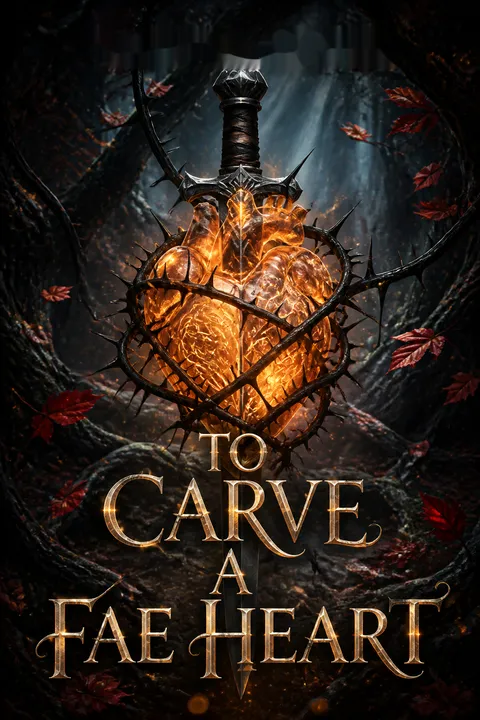

Plot Summary
Night Offerings and Fae Bargains
Evelyn Fairfield, practical and sharp-tongued, braves the night to leave a humble offering at the faewall, hoping to protect herself and her sister Amelie from the dreaded Reaping—a centennial event where fae claim human brides. She encounters a mysterious fae, who tries to bargain for her name. Their tense exchange is a dance of wit and danger, revealing Evelyn's skepticism and the fae's predatory charm. The encounter leaves her shaken but alive, and she returns home, believing she and Amelie are safe from the fae's grasp. The night is thick with superstition, but Evelyn clings to logic, unaware that her fate has already been altered by the bargain she almost made.
The Reaping's Dreadful Relief
Morning brings news: the Holstrom sisters, not Evelyn or Amelie, have been chosen as the fae's brides. The village is awash with relief and guilt, especially for Evelyn, who secretly knew the outcome from her fae encounter. Amelie dreams of romance and marriage, while Evelyn's ambitions lie in science and escape—she plans to attend medical school on the mainland. Their mother, a healer with mystical leanings, is both proud and heartbroken at Evelyn's plans. The family's dynamic is a blend of love, tension, and unspoken fears, as the shadow of the fae lingers over their small victories.
Dreams of Escape and Family Ties
Evelyn's desire to leave the Fair Isle for medical school sparks conflict with her mother, who clings to magic and tradition. The memory of Amelie's near-fatal illness—misdiagnosed as a fae curse—haunts them, fueling Evelyn's devotion to science. The sisters' bond is tested by diverging dreams: Amelie seeks love and belonging, Evelyn craves knowledge and freedom. Their mother's sorrow is palpable, but Evelyn's resolve is unshakable. The family's love is fierce, but so is the world's danger, and the Reaping's shadow is never far from their door.
Blood, Science, and Fae Wounds
Evelyn assists in a gruesome surgery after a fae attack leaves a villager maimed. The incident exposes the fragile peace between humans and fae, and the limits of both science and superstition. The fae's cruelty is matched only by the villagers' fear, and Evelyn's logical mind is both a shield and a burden. The village's mood is tense, and Evelyn's sense of safety is shattered. The fae are not just stories—they are real, unpredictable, and deadly. The world she wants to leave behind is more dangerous than she ever imagined.
The Chosen's Fate Reversed
News arrives that the Holstrom sisters are dead, executed for "treason" in the fae lands. In a shocking reversal, Evelyn and Amelie are named as replacements. The family is devastated, and the village is gripped by fear and gossip. Evelyn's earlier encounter with the fae comes back to haunt her—she realizes she was chosen by name, a personal selection that overrides all others. Guilt and terror consume her as she prepares to leave everything behind, her dreams of freedom replaced by the nightmare of fae captivity.
A Name Given, A Life Changed
Evelyn's realization that her name—given to the fae—sealed her fate is a moment of crushing clarity. She arms herself with iron, salt, and her mother's talismans, determined to survive whatever awaits. The sisters' departure is a wrenching farewell, filled with regret, love, and the weight of unspoken apologies. Evelyn's scientific mind wars with the reality of fae magic, and her mother's wisdom—rooted in both superstition and science—becomes a lifeline. The journey to Faerwyvae begins, and the sisters are thrust into a world where logic and reason may not be enough.
Through the Faewall: Sisters Taken
Evelyn and Amelie are escorted by Foxglove, a fae ambassador, through the faewall into the Autumn Court. The journey is surreal, the landscape both beautiful and menacing. Foxglove's explanations of fae history, politics, and the seelie/unseelie divide are laced with humor and menace. The sisters' fear is palpable, but so is their determination. The fae world is a place of shifting rules and hidden dangers, and the sisters cling to each other as their only constant. The palace looms ahead, a gilded prison at the edge of the world.
Arrival in Autumn's Palace
The sisters are greeted by Lorelei, a fae with a personal vendetta against humans, and are shown to their opulent quarters. The palace is a marvel of beauty and strangeness, but every comfort is laced with threat. The fae's customs are alien, their servants both enchanting and unsettling. Evelyn's scientific curiosity is piqued, but her fear never leaves her. The sisters' bond is tested as Amelie adapts to the palace's luxuries, while Evelyn remains wary. The stage is set for a confrontation between human will and fae power.
Fae Dresses, Human Fears
Baths, gowns, and fae etiquette become the sisters' new reality. Amelie delights in the wardrobe and the attention, while Evelyn clings to her iron and skepticism. Lorelei's story of loss and revenge blurs the line between victim and villain, forcing Evelyn to question everything she thought she knew about the fae. The palace is a labyrinth of secrets, and every interaction is a test. The sisters must navigate a world where beauty is a weapon and trust is a luxury they cannot afford.
The Stag King Revealed
The sisters meet their intendeds: Amelie is to marry King Aspen, the Stag King, while Evelyn is paired with his brother, Prince Cobalt. Aspen is revealed as the fae from the wall, his interest in Evelyn both personal and perilous. The dinner that follows is a tense affair, filled with veiled threats and unspoken desires. Aspen's power is undeniable, but so is Evelyn's defiance. The palace is a stage for games of power, and Evelyn realizes she is both pawn and player.
Dangerous Games and Unspoken Truths
Evelyn's confrontations with Aspen grow more charged, their mutual attraction laced with danger. Cobalt warns her of Aspen's instability, hinting at dark secrets and past violence. The sisters' relationship is strained by secrets and fear, and Evelyn's scientific certainty is eroded by the fae's inexplicable power. The palace is a place of masks—literal and figurative—and every truth is layered with lies. The sisters must decide who to trust, and what they are willing to risk for survival.
The King's Challenge, The Prince's Warning
Evelyn learns the truth about the Holstrom sisters' deaths and the treacherous politics of the fae courts. Aspen's paranoia and Cobalt's ambition come into sharper focus, and Evelyn is caught between them. The mate ceremony looms, a ritual that will bind her to Aspen and determine the fate of the treaty. The sisters' paths diverge as Amelie is drawn deeper into the fae world, her choices increasingly her own. Evelyn's resolve is tested as she faces the possibility of love—and betrayal—in a world where nothing is as it seems.
Sisterly Bonds and Hidden Knives
The sisters' relationship is pushed to the breaking point as Amelie's feelings for Cobalt—and her willingness to bargain—come to light. Evelyn's protectiveness is both a strength and a weakness, blinding her to the dangers within and without. The palace's luxuries are a thin veneer over a world of violence and manipulation. The mate ceremony approaches, and the sisters must choose between loyalty to each other and the demands of their fae captors. The cost of survival is higher than either imagined.
Fae Politics and Human Hearts
The mate ceremony is a spectacle of beauty and danger, binding Evelyn and Aspen in a public display of alliance. The ritual is both a performance and a test, and the lines between duty and desire blur. Aspen's past is revealed, his actions both monstrous and understandable. Evelyn's scientific mind is forced to reckon with the reality of fae magic, and her heart is pulled in directions she cannot control. The palace is a crucible, forging new alliances and exposing old wounds.
Honey Pyrus and Lost Control
A picnic with Cobalt turns disastrous when Evelyn is drugged by fae fruit and lost in the enchanted forest. Her journey is a hallucinatory nightmare, ending with a deadly encounter with a kelpie. Cobalt's rescue is both a blessing and a curse, deepening the web of obligation and mistrust. Evelyn's vulnerability is exposed, and her scientific certainty is shaken. The fae world is not just dangerous—it is seductive, and survival requires more than logic.
The Kelpie's Deadly Bargain
Evelyn's near-drowning at the hands of the kelpie is a turning point, forcing her to confront the reality of fae magic and her own mortality. Cobalt's role in her rescue is ambiguous, and the boundaries between friend and foe blur. Amelie's independence grows, and the sisters' paths continue to diverge. The palace is a place of healing and harm, and Evelyn's resolve is both tested and renewed. The cost of survival is no longer just physical—it is emotional and moral.
Recovery, Regret, and New Resolve
Evelyn's recovery is marked by guilt, regret, and new understanding. Her relationship with Amelie is strained by secrets and the growing influence of the fae. Lorelei's story of loss and revenge becomes a mirror for Evelyn's own struggles, and the boundaries between healer and patient, victim and perpetrator, blur. The palace is a place of second chances and new dangers, and Evelyn must decide what she is willing to forgive—and what she cannot forget.
The Mate Ceremony's Mask
The mate ceremony is a spectacle of beauty and danger, binding Evelyn and Aspen in a public display of alliance. The ritual is both a performance and a test, and the lines between duty and desire blur. Aspen's past is revealed, his actions both monstrous and understandable. Evelyn's scientific mind is forced to reckon with the reality of fae magic, and her heart is pulled in directions she cannot control. The palace is a crucible, forging new alliances and exposing old wounds.
The Queen's Test and Aspen's Past
Queen Melusine's arrival brings new tests and old wounds. Her disdain for Evelyn is matched only by her ambition for her sons. Aspen's past is laid bare, his actions both monstrous and understandable. The sisters' relationship is tested by secrets and the growing influence of the fae. The palace is a place of second chances and new dangers, and Evelyn must decide what she is willing to forgive—and what she cannot forget.
The Coup of Cobalt
Cobalt's ambition comes to fruition as he orchestrates a coup, using glamour and manipulation to turn the council against Aspen. Amelie's role as Cobalt's pawn is revealed, her love both genuine and tragic. Evelyn's scientific certainty is shattered by the reality of fae magic, and her heart is pulled in directions she cannot control. The palace is a place of shifting alliances and hidden dangers, and Evelyn must decide who to trust—and what she is willing to risk for survival.
The Twelfth Court's Judgment
Evelyn is forced to become Aspen's champion in a magical trial before the All of All, the mysterious force that governs fae fate. The journey is a test of heart, mind, and spirit, forcing Evelyn to confront her own darkness and light. The trial is both a battle and a revelation, and the outcome will determine the fate of the Autumn Court. The palace is a crucible, forging new alliances and exposing old wounds.
The Crown, The Bond, The War
Evelyn's victory in the Twelfth Court restores Aspen to the throne, but the cost is high. Amelie is lost to the sea, Cobalt escapes, and the threat of war looms. The bond between Evelyn and Aspen is tested by betrayal and forgiveness, and the future is uncertain. The palace is a place of healing and harm, and Evelyn must decide what she is willing to risk for love, for peace, and for herself. The story ends on the brink of war, with the promise of new battles—and new beginnings—to come.
Analysis
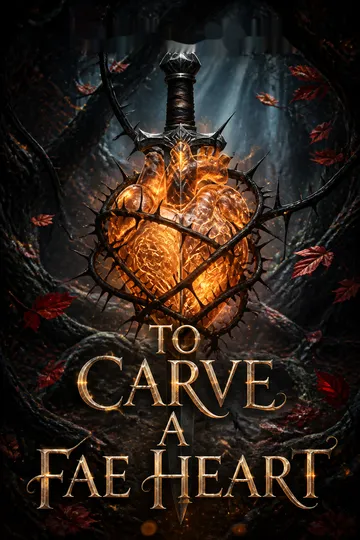
"To Carve a Fae Heart" is a lush, emotionally charged fantasy that interrogates the boundaries between science and magic, love and power, self-preservation and sacrifice. At its core, the novel is about the cost of peace—personal, political, and psychological. The forced marriage at the heart of the story is both a metaphor for the bargains we make with power and a literal exploration of consent, agency, and vulnerability. Evelyn's journey from skeptic to survivor is a meditation on the limits of logic and the necessity of trust, both in oneself and in others. The fae world is a mirror for our own, its beauty inseparable from its danger, its politics a reflection of our own struggles with extremism, balance, and the seductions of power. The novel's lesson is that survival requires both reason and faith, that love is as dangerous as it is redemptive, and that true power lies not in control, but in the willingness to risk one's heart. As the story ends on the brink of war, it asks us to consider what we are willing to sacrifice for peace—and what we are willing to become to protect those we love.
Review Summary
To Carve a Fae Heart receives mixed reviews, with an overall rating of 3.76 out of 5. Many readers praise the engaging plot, fae world-building, and enemies-to-lovers romance. The protagonist Evelyn is generally well-received for her strong personality and scientific mindset. Some criticize the predictable storyline and underdeveloped relationships. Comparisons are drawn to popular series like The Cruel Prince and ACOTAR. While some find the book addictive and enjoyable, others feel it lacks originality. The cliffhanger ending leaves readers eager for the sequel.
People Also Read

Characters
Evelyn Fairfield
Evelyn is the story's heart—a surgeon's apprentice whose devotion to science and reason is both her shield and her vulnerability. Her relationship with her sister Amelie is central, marked by protectiveness and guilt. Evelyn's journey is one of forced adaptation: from skeptic to survivor, from pawn to player. Her psychoanalysis reveals a woman who uses logic to mask fear, who craves control in a world of chaos, and who is ultimately forced to confront the limits of her own certainty. Her development is a slow surrender to vulnerability, love, and the possibility of magic.
Amelie Fairfield
Amelie is Evelyn's older sister, defined by her beauty, charm, and longing for love. She is more fragile than she appears, her optimism masking deep insecurities. Amelie's willingness to bargain for love makes her both a victim and a participant in the fae's games. Her relationship with Cobalt is both genuine and tragic, and her choices have far-reaching consequences. Psychologically, Amelie is driven by a need for belonging and affection, her development marked by both growth and loss.
King Aspen
Aspen, the Stag King, is a study in contradictions: regal yet wounded, cruel yet capable of tenderness. His relationship with Evelyn is a battle of wills, marked by mutual attraction and distrust. Aspen's paranoia and shifting allegiances are rooted in trauma—abandonment by his mother, betrayal by his court. His development is a slow, painful journey toward vulnerability and trust, catalyzed by Evelyn's defiance and eventual love. Aspen is both monster and man, his power matched only by his capacity for self-doubt.
Prince Cobalt
Cobalt is Aspen's younger brother, outwardly kind but inwardly driven by ambition and resentment. His relationship with Amelie is both genuine and exploitative, and his manipulation of the Holstrom sisters and the council reveals a ruthless streak. Cobalt's psychoanalysis reveals a man who craves validation and power, whose charm masks deep insecurity. His development is a descent into villainy, his actions setting the stage for war.
Lorelei
Lorelei, a wood nymph, is both servant and adversary. Her hatred of humans is rooted in personal loss, and her interactions with Evelyn are a mirror for the story's central themes of forgiveness and understanding. Lorelei's limp and scars are both literal and symbolic, marking her as a survivor of fae-human violence. Her development is a journey from vengeance to reluctant empathy, her wisdom a bridge between worlds.
Foxglove
Foxglove is a fae ambassador whose humor and flamboyance mask a keen intelligence. He serves as a guide to the fae world, translating its dangers and absurdities for Evelyn and the reader. Foxglove's loyalty is to the Autumn Court, but his true allegiance is to balance and peace. Psychologically, he is a survivor, using wit to navigate a world of shifting power. His development is subtle, his role essential.
Maven Fairfield (Mother)
Evelyn and Amelie's mother is a healer whose belief in magic is both a comfort and a source of conflict. Her relationship with her daughters is marked by love, regret, and the pain of past mistakes. Maven's psychoanalysis reveals a woman who clings to tradition out of fear, whose wisdom is often misunderstood. Her development is a quiet arc of acceptance and letting go.
Queen Melusine
Aspen and Cobalt's mother, Melusine is the Queen of the Sea Court—a being of immense power and ambition. Her relationship with her sons is fraught with disappointment and manipulation. Melusine's psychoanalysis reveals a creature who values strength above all, whose love is conditional and whose loyalty is to herself. Her development is a study in the costs of power and the dangers of emotional detachment.
The Holstrom Sisters
Theresa and Maryanne Holstrom are the original Chosen, their deaths a catalyst for the story's events. Their innocence is contrasted with the brutality of their fate, and their role as pawns in Cobalt's scheme is a commentary on the expendability of the powerless. Psychologically, they represent the cost of political games and the dangers of blind trust.
The Kelpie
The kelpie is both monster and metaphor—a creature of the unseelie, representing the dangers of the fae world and the limits of human control. Its bargains are literal and symbolic, forcing Evelyn to confront her own vulnerability and the reality of fae magic. The kelpie's role is to test, to punish, and to reveal the story's central truths.
Plot Devices
The Reaping and the Treaty
The Reaping is the story's inciting incident and central plot device—a ritualized selection of human brides to maintain peace between fae and humans. It is both a literal and symbolic act, representing the cost of peace, the commodification of women, and the dangers of power imbalances. The treaty's rules and loopholes drive the plot, forcing characters into impossible choices and revealing the fragility of peace.
True Names and Glamour
The fae's obsession with true names is a device that explores themes of control, consent, and intimacy. Glamour—both magical and psychological—is used to manipulate, seduce, and destroy. The giving of a name is both a weapon and a gift, and the story's central conflicts revolve around who controls whom, and at what cost. The interplay between science and magic, logic and belief, is embodied in this device.
The Seelie/Unseelie Divide
The division between seelie and unseelie fae is both a political allegory and a psychological metaphor. It represents the tension between order and chaos, civilization and nature, love and violence. Characters shift between these states, and the story's structure mirrors this duality—every alliance is unstable, every truth is layered with lies. The device is used to explore the costs of balance and the dangers of extremism.
The Twelfth Court and the All of All
The Twelfth Court is a narrative device that externalizes the story's internal conflicts—a place where heart, mind, and spirit are tested. The trial before the All of All is both a literal and symbolic judgment, forcing Evelyn to confront her own darkness and light. The device allows for a resolution that is both magical and psychological, and sets the stage for the next phase of the story.
Iron, Salt, and Science
Evelyn's reliance on iron, salt, and scientific reasoning is a device that grounds the story in realism, even as it is undermined by the reality of fae magic. The tension between science and superstition is a recurring motif, and the gradual erosion of Evelyn's certainty is both a plot engine and a source of character development. The device is used to explore the limits of reason and the necessity of faith—in oneself, in others, and in the unknown.
The Fair Isle Trilogy Series
About the Author
Download PDF
Download EPUB
.epub digital book format is ideal for reading ebooks on phones, tablets, and e-readers.








































