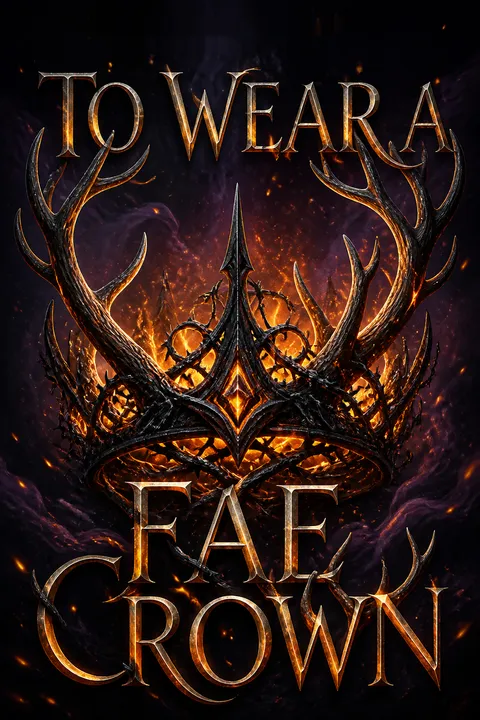

Plot Summary
Shattered Treaty, Shattered Hearts
Evelyn "Evie" Fairfield's world collapses as the fragile peace between humans and fae shatters. The treaty binding the two races is invalidated, and her marriage to King Aspen—meant to secure peace—becomes impossible. The human council claims Evie is not fully human, rendering her ineligible to fulfill the treaty. Aspen, her fae mate, is torn between love and duty, while Evie is thrust into a maelstrom of political intrigue, heartbreak, and looming war. Explosions rock the palace, casualties mount, and the threat of open conflict grows. Evie's anger and grief are matched only by her determination to fight for those she loves, even as her own identity and future are called into question.
The Queen's Desperate Bargain
Queen Melusine, Aspen's mother, arrives in desperation, seeking an alliance with her son after being usurped by Cobalt, her other son. She fears Cobalt's newfound power and his human consort, Amelie—Evie's sister. Melusine's vulnerability is shocking, revealing the instability of fae politics and the dangers of unchecked ambition. Evie, still reeling from personal loss, is forced to navigate Melusine's manipulations and the shifting allegiances of the fae courts. The queen's plea for protection underscores the fragility of power and the ever-present threat of betrayal, as old enemies become unlikely supplicants.
Secrets, Blood, and Heritage
Evie's world is upended when she learns the truth about her heritage: she is not fully human, but the granddaughter of the exiled Fire King, Caleos. Her mother, Maven, is half-fae, and Evie herself is a quarter fae, inheriting the forbidden fire magic. This revelation explains the council's accusations and the unraveling of the treaty. The knowledge is both a curse and a key, offering Evie new powers but also making her a target for both human and fae enemies. The legacy of exile, the burden of ancient bargains, and the threat of execution for her family force Evie to confront who she truly is.
Ultimatums and Sacrifices
The human council issues a brutal ultimatum: Aspen must marry new Chosen girls or war will erupt, and Evie's mother will be executed for treason. Aspen refuses to abandon Evie, but Evie, ever self-sacrificing, demands he do what is necessary for peace—even if it means marrying another. Their love is tested to the breaking point as both are forced to weigh personal happiness against the fate of two peoples. The emotional toll is immense, with promises made and broken, and the specter of war and death looming ever closer.
Exile, Imprisonment, and Escape
Evie is sentenced to imprisonment for her supposed fae blood, but her mentor, Mr. Meeks, intervenes, offering her sanctuary. The threat of execution hangs over her mother, and the council's machinations grow ever more sinister. Evie's friends, Lorelei and Foxglove, rally to her side, but the web of political intrigue tightens. The specter of exile to the mainland—a slow death for fae-blooded—haunts Evie, who must choose between safety and the fight for justice. The bonds of friendship and loyalty are tested as the stakes rise.
The Bargain of Names
The ancient magic of true names and fae bargains becomes central. Councilman Duveau holds the power of Evie's name through a Legacy Bond, able to command her and her mother. Evie's mother reveals the tragic history of their bloodline and the cruel bargains that bind them. The council's "proof" of fae heritage is irrefutable, and the trial is set. Evie's only hope lies in the power of intent and the careful crafting of bargains—tools as dangerous as any weapon. The cost of mercy, the price of freedom, and the peril of misplaced trust are laid bare.
The Price of Mercy
Evie's trust in her mentor, Mr. Meeks, is shattered when he betrays her, drugging and imprisoning her for cruel experiments on fae anatomy. Lorelei is also captured, and the two are subjected to torture and the threat of being sold to a brothel. Evie's fire magic, fueled by rage and pain, becomes her salvation as she burns through her restraints and escapes, killing her tormentor in the process. The trauma of violence, the horror of betrayal, and the necessity of self-defense mark a turning point in Evie's journey from victim to survivor.
Betrayal in the Shadows
Evie and Lorelei flee through the woods, pursued by the monstrous Mr. Osterman. Lorelei's earth magic saves them, but both are forced to kill to survive. The psychological toll of taking lives—both in self-defense and vengeance—haunts them. They cross back into Faerwyvae, seeking refuge and healing, but the trauma lingers. The boundaries between right and wrong blur, and Evie must reckon with the darkness within herself, even as she is hailed as a hero by some and a criminal by others.
The Science of Suffering
Back in Faerwyvae, Evie grapples with the aftermath of violence and the limits of scientific understanding. Her healing powers, once a source of pride, are now tainted by the memory of blood and fire. The boundaries between science and magic, reason and emotion, are tested as she seeks solace in friendship and the familiar rituals of care. The cost of survival, the burden of guilt, and the search for meaning in suffering become central themes as Evie prepares for the next phase of her journey.
Fire Unleashed, Fire Controlled
Evie's fire magic, once a source of fear and danger, becomes a tool of healing and empowerment. With Lorelei's guidance, she learns to control her powers, channeling rage into purpose. The process is painful and fraught with setbacks, but it marks a turning point in her self-acceptance. The fire within her is both a gift and a curse, a legacy of violence and a promise of transformation. The journey from uncontrolled fury to disciplined strength mirrors Evie's growth as a leader and a queen.
The Lunar Court's Temptation
Seeking refuge, Evie and Lorelei travel to the Lunar Court, where Queen Nyxia offers sanctuary—and temptation. The unseelie court is a world of shadows, dreams, and dangerous pleasures. Prince Franco, Nyxia's brother, becomes both ally and suitor, offering Evie a new path and a possible alliance through marriage. The politics of the fae courts are as treacherous as ever, and Evie must navigate seduction, jealousy, and the lure of power. The possibility of a new life, free from the burdens of the past, is tantalizing but fraught with peril.
Nightmares and New Alliances
Haunted by nightmares and the magical connection to Aspen, Evie struggles to find peace. The bond between them transcends distance and dreams, offering comfort but also pain. The Lunar Court's revels provide distraction, but the threat of war and the weight of destiny are never far. New alliances are forged, old wounds reopened, and the possibility of a future with Aspen—or without him—remains uncertain. The cost of hope, the risk of love, and the necessity of trust are explored in the moonlit halls of the unseelie.
The Wedding That Wasn't
Aspen refuses to marry the new Chosen, breaking the treaty and sparking civil war among the fae. Cobalt seizes the Autumn throne, and the fae council fractures. Aspen claims the title of Unseelie King of Autumn, rallying the rebels. The human council, manipulated by King Ustrin, seeks to maintain control through violence and deception. The old order collapses, and the island is plunged into chaos. Evie's personal heartbreak is mirrored by the political upheaval, as love and loyalty are tested in the crucible of war.
The Bargain for Peace
With her mother's life at stake and the treaty in ruins, Evie attempts one final bargain with the human council: amend the treaty to allow her to stay and claim the Fire throne, in exchange for peace and protection. The council, led by the cruel Duveau, refuses, sentencing Evie and her mother to death. The power of bargains, the danger of true names, and the limits of mercy are laid bare. The failure of diplomacy marks the end of hope for peaceful resolution and sets the stage for revolution.
The Queen of Fire Rises
Evie's mother is executed before her eyes, and Evie's rage explodes into uncontrollable fire. Her magic consumes her, burning away pain and doubt, and she flees to the Twelfth Court—the realm of fae transformation. There, she discovers her unseelie form: a firefox crowned in flames. The trauma of loss, the necessity of violence, and the acceptance of her true self coalesce in a moment of transformation. Evie emerges not as a victim, but as the Unseelie Queen of Fire, ready to claim her destiny.
The Unseelie Challenge
King Ustrin, bound by ancient bargains, is forced to face Evie in a duel for the Fire throne. The battle is fierce, blending magic, cunning, and raw emotion. Evie's mastery of her unseelie form and her connection to the All of All—the fae's primal force—give her the edge. The duel is not just physical, but a test of will, identity, and worthiness. In the end, Evie triumphs, killing Ustrin and claiming the crown. The cost of victory is high, and the burden of leadership heavy, but Evie stands as the true Queen of Fire.
The Death of a Mother
The aftermath of her mother's execution and Ustrin's death leaves Evie shattered. The trauma of violence, the guilt of survival, and the loneliness of leadership threaten to overwhelm her. Aspen's love and the loyalty of her friends offer solace, but the wounds run deep. The fire fae accept her as their queen, but the path ahead is uncertain. The necessity of sacrifice, the pain of loss, and the hope of healing are central as Evie prepares to lead her people into an uncertain future.
The Breaking of the Treaty
With the treaty broken, the old order collapses. The fae are plunged into civil war, and the threat of human invasion looms. Evie, now Queen of Fire, must unite the unseelie, rally allies, and prepare for the battles to come. The cost of peace, the meaning of freedom, and the possibility of a new world are at stake. The story ends on the cusp of revolution, with Evie embracing her destiny and the promise of a future forged in fire.
Analysis
"To Wear a Fae Crown" is a story of transformation—personal, political, and magical. At its heart, it is about the cost of peace, the meaning of power, and the necessity of self-acceptance. Evie's journey from reluctant Chosen to Unseelie Queen of Fire is both a coming-of-age and a revolution, challenging the old order and forging a new path. The book interrogates the dangers of tradition, the limits of mercy, and the power of love to heal and destroy. The use of true names and bargains as plot devices underscores the importance of agency and the peril of careless words. The dualities at play—human/fae, seelie/unseelie, love/duty—reflect the complexities of identity and the impossibility of simple solutions. In a modern context, the story resonates as a meditation on trauma, the legacy of violence, and the hope of building a better world from the ashes of the old. The lesson is clear: true power lies not in domination, but in the courage to choose, to change, and to love without fear.
Review Summary
To Wear a Fae Crown receives mostly positive reviews, with readers praising its plot twists, character development, and world-building. Many find it an improvement over the first book, with increased political intrigue and action. The romance between Evie and Aspen garners mixed reactions, with some enjoying their dynamic while others find it frustrating. New characters, particularly Prince Franco, are well-received. Some criticize pacing issues and Evie's decision-making. Overall, readers appreciate the emotional roller coaster and are eager for the final installment.
People Also Read
Characters
Evelyn "Evie" Fairfield
Evie is the heart and soul of the story—a young woman thrust into the center of fae and human politics by fate and blood. Trained as a healer, she is rational, compassionate, and fiercely loyal, but also haunted by self-doubt and a deep-seated fear of her own power. Her journey is one of self-discovery: from a reluctant Chosen to a queen who embraces her fire magic and her right to rule. Her relationships—with Aspen, her mother, her sister, and her friends—are marked by sacrifice, love, and betrayal. Psychologically, Evie is torn between duty and desire, reason and rage, humanity and fae nature. Her greatest strength is her refusal to abandon those she loves, even at great personal cost. Her greatest weakness is her tendency to bear the world's burdens alone.
King Aspen
Aspen is the Autumn King, Evie's fae mate, and a leader caught between tradition and revolution. He is proud, stubborn, and passionate, with a deep sense of responsibility for his people. His love for Evie is both his salvation and his undoing, forcing him to choose between personal happiness and the greater good. Aspen's journey is one of transformation: from a ruler bound by the old order to a rebel king who embraces the unseelie path. Psychologically, he is marked by guilt, anger, and a desperate need for control. His antlers and stag form symbolize both his strength and his vulnerability. His relationship with Evie is a crucible of trust, pain, and ultimately, hope.
Maven Fairfield
Maven is Evie's mother, a half-fae herbalist who has spent her life hiding her true nature. She is wise, loving, and fiercely protective, but also burdened by guilt and the legacy of exile. Her secrets—about Evie's heritage, the bargains of the past, and the true nature of the treaty—are the catalyst for much of the story's conflict. Maven's execution is a moment of profound loss, but her legacy endures in Evie's fire and determination. Psychologically, Maven is a study in sacrifice: willing to give everything for her daughters, even her life.
Amelie Fairfield
Amelie is Evie's younger sister, whose beauty and ambition make her both a pawn and a player in the fae courts. Bonded to Cobalt, she is manipulated, abused, and ultimately broken by the power of true names and fae bargains. Her refusal to attend her mother's trial is a pivotal betrayal, but her later return—seeking protection and vengeance—suggests a complex, wounded psyche. Amelie embodies the dangers of desire, the cost of powerlessness, and the hope of redemption.
Foxglove
Foxglove is a fae ambassador, scholar, and Evie's steadfast ally. He is clever, neurotic, and deeply compassionate, often serving as the voice of reason and the architect of bargains. His loyalty to Aspen and Evie is unwavering, and his knowledge of fae law and magic is invaluable. Psychologically, Foxglove is marked by anxiety, a need for order, and a longing for acceptance. His unrequited affection for Prince Franco adds depth to his character, highlighting the theme of love in unexpected places.
Lorelei
Lorelei is a wood nymph and Evie's closest friend among the fae. She is practical, fierce, and deeply wounded by past trauma—her lover was killed by humans, fueling her distrust and pain. Lorelei's journey is one of healing and loyalty, as she risks her life to protect Evie and confronts her own prejudices. Psychologically, she is marked by grief, resilience, and a longing for justice. Her earth magic and connection to the natural world symbolize her grounded strength.
Queen Nyxia
Nyxia is the enigmatic, powerful queen of the Lunar Court. She is seductive, cunning, and fiercely independent, offering Evie both sanctuary and temptation. Nyxia's motivations are complex: she seeks to restore the Old Ways, undermine the seelie council, and secure her own power through strategic alliances. Psychologically, she is marked by ambition, jealousy, and a capacity for both cruelty and kindness. Her ability to feed on dreams and fears makes her both a literal and figurative manipulator.
Prince Franco
Franco is Nyxia's brother, a psy-vampire with a penchant for flirtation and mischief. He becomes Evie's friend, chaperone, and potential mate, offering her a path to power through alliance. Franco is witty, loyal, and surprisingly vulnerable, especially in his unrequited affection for Foxglove. Psychologically, he is marked by a need for connection, a love of pleasure, and a willingness to risk everything for those he cares about.
King Ustrin
Ustrin is the radical seelie king of the Fire Court, a lizard-like fae driven by ambition, cruelty, and the burden of ancient bargains. He manipulates the human council, orchestrates violence, and seeks to eradicate the unseelie. Ustrin's inability to kill Evie—bound by a promise to her grandfather—reveals the limits of power and the cost of broken vows. Psychologically, he is marked by rage, insecurity, and a desperate need for control. His death at Evie's hands is both a victory and a tragedy.
Councilman Henry Duveau
Duveau is the human councilman who holds the Legacy Bond over Evie's family. He is cold, calculating, and utterly ruthless, wielding the power of true names to command and destroy. His obsession with control, his willingness to torture and execute, and his ultimate downfall at Evie's hands make him a chilling antagonist. Psychologically, Duveau is marked by sadism, pride, and a belief in his own invulnerability—until the magic he wields turns against him.
Plot Devices
The Power of True Names and Bargains
The narrative is structured around the fae concept of true names and the binding power of bargains. Names are both identity and weapon; to know a true name is to hold power over another. Bargains, once struck, are inescapable, and the consequences of breaking them are dire. This device is used to explore themes of consent, autonomy, and the limits of free will. The Legacy Bond, inherited through bloodlines, becomes a central plot engine, driving conflict and resolution. The careful crafting of bargains, the danger of careless words, and the necessity of intent are woven throughout the story, shaping both personal and political outcomes.
Duality and Transformation
The story is built on dualities: seelie and unseelie, human and fae, reason and emotion, love and duty. Characters are constantly forced to choose, to transform, and to reconcile opposing forces within themselves. The motif of shifting forms—literal and metaphorical—mirrors the psychological journeys of the characters. Evie's transformation into her unseelie form, the firefox, is both a climax and a symbol of self-acceptance. The narrative structure uses these dualities to foreshadow choices, reveal hidden strengths, and challenge the boundaries of identity.
Foreshadowing and Repetition
Dreams and nightmares are used to foreshadow events, reveal hidden truths, and connect characters across distance and time. The recurring motif of the bridge, the violet haze, and the connection between Evie and Aspen through the Bond serve as both plot device and emotional anchor. The repetition of trauma—violence, betrayal, loss—forces characters to confront their past and break cycles of suffering. The structure of the story, with its echoes and callbacks, reinforces the idea that history repeats until someone is brave enough to change it.
Political Intrigue and Courtly Machinations
The plot is driven by the shifting alliances and betrayals of the fae and human courts. The collapse of the treaty, the rise of civil war, and the struggle for the Fire throne are mirrored by personal betrayals and reconciliations. The use of letters, secret meetings, and double agents creates a sense of constant danger and uncertainty. The narrative structure alternates between intimate emotional moments and sweeping political developments, highlighting the interplay between the personal and the political.
The Fair Isle Trilogy Series
About the Author
Download PDF
Download EPUB
.epub digital book format is ideal for reading ebooks on phones, tablets, and e-readers.








































