


Plot Summary
The Defective's Garden
Ilara1 and her sister Cailis3 pick through a meager harvest market, denied meat by a vendor who scorns Ilara1's missing wings and black hair. At home, Ilara1's garden flourishes unlike any other in their frozen land, thick vines of acorlis defying the season.
Their village archon, Vorl5 corners her near the shed, crushes her throat until she can't breathe, then cloaks the bruises with an illusion. She never fights back hard enough to stop him. Whispers among the merchants speak of dying crops in Isalee, of orem failing.
Ilara1 knows her brother Tormesh died after reporting the same crisis to the crown. She buries that grief in soil and stubborn hope, unaware that her thriving garden has already marked her for a fate far from this small village.
This opening establishes the paradox at Ilara's core: she is deemed defective by her society, yet she possesses an unconscious connection to life so powerful it makes her garden an oasis. Vorl's abuse and the villagers' scorn ground her in a psychology of learned helplessness, but her devotion to her plants hints at a deeper self-worth. The rumors of failing orem introduce the existential threat that will force her from obscurity. The novel's central tension, between perceived worthlessness and actual extraordinary value, is seeded here.
Taken by the Death Master
Prince Norivun2 strides into the field kitchen, his aura thick enough to silence every laborer. He asks for the archon,5 then scans the room with chilling precision until his gaze pins Ilara.1 He commands her to remove her scarf. Her black hair tumbles out, a shock of color among a sea of silver. With cold finality, he declares she is coming with him.
Cailis3 screams, but the prince2's guards block her. Ilara1 is forced outside into the snow, her sister3's sobs echoing behind her. The village archon Vorl5 watches with a mix of fury and possessiveness. No charges are given, no reason offered. She is simply taken, a wingless defective1 hoisted into the sky by the most feared male on the continent.2
The prince's extraction of Ilara is a brutal assertion of power, but his method reveals a calculating mind. He doesn't explain; he simply takes. To Ilara, this is a second theft after her family. The scene crystallizes the power imbalance that will define much of their early dynamic. The prince's ability to see through Vorl's illusion subtly signals that he perceives what others miss, planting the first clue that he may see her true nature.
Cradled by Darkness
The prince2 cradles Ilara1 as they fly west, his arms steady while she quakes. At Liss Lodge, he surprises her with hot stew and a shared chamber, insisting it's for her protection. She sleeps on the floor in defiance, but a nightmare about her parents' execution wracks her. When she wakes, she's in his bed, his warmth beside her, though he has already risen.
He doesn't mention it. During the next day's flight, she challenges him, and he threatens to drop her as a jest, revealing an unexpected humor. He creates an air bubble to help her breathe at high altitudes. She learns he has multiple affinities, including illusion, air, and the death affinity she loathes. The tension between them grows, equal parts anger and dangerous curiosity.
This turning point complicates the prince's villainy. He is not purely sadistic; he offers warmth, food, and even nighttime comfort. Ilara's dream dramatizes her trauma, and the prince's unspoken act of moving her to his bed introduces ambiguity. Is he a captor with a conscience, or a manipulator softening her for some purpose? The air affinity reveal also sets up the breadth of his power, making him seem almost divine, which will later contrast with Ilara's own awakening.
The Bringer of Darkness Unleashed
A frantic female bursts into the lodge, bleeding from a slashed wing. Her husband, drunk and morphed into an ice bear, is attacking their son. The prince2 follows her to a nearby cottage, where he gives the male repeated chances to transform back. When the bear charges, the prince2 fights with swords, then unleashes his death affinity.
Ilara1 watches through the window as a ghostly shadow lifts from the husband's body, and he collapses lifeless. She rushes inside, begs him not to kill, but it's done. The wife sobs over the dead abuser while the injured son survives. Ilara1 confronts the prince2 outside, calling him a monster. Haxil8 explains the necessity, but Ilara1's horror deepens, seeing what her own family must have faced.
The ice bear execution serves as a mirror for Ilara's family tragedy. The prince's efficiency in killing is monstrous to her, yet the context (saving the son, the wife's complicity) muddies pure judgment. Ilara's horrified intervention is the first time she openly tries to stop death, foreshadowing her life-giving affinity. This scene deepens her hatred while also demonstrating why some fae accept the Death Master's brutal justice.
The Gilded Prison Blooms
The Exorbiant Chamber gleams with silks and a private courtyard, but the lock is absolute. For a month, Ilara1 is confined while the prince2 tours the continent. Servants Balbus and Daiseeum7 attend her, but she lives for the hours spent in the neglected garden.
She clears snow from brittle stalks, sings to dying roots, and day by day, warmth and color seep back into the soil. Unbeknownst to her, her own touch restores the orem that scholars declared extinct in this patch. She writes censored letters to Cailis,3 each reply a crumb of home.
When Nuwin,4 the prince2's mischievous brother, slips in through a secret trapdoor, she glimpses a world beyond her gilded cage. His flirtation hints at the court's curiosity about the wingless female1 hidden in the prince2's wing.
Ilara's month of isolation is a period of unconscious self-discovery. She literally brings life back to dead earth without knowing how. The chapter is a study in resilience and the quiet power of nurturing. Her attachment to the soil as an identity anchor (the dirt under her nails) speaks to a woman clinging to self-definition in captivity. The servants' kindness and the castle's whispers about missing commoners build a sense of a larger, more sinister world outside her door.
A Bargain with the Devil
The prince2 returns, fury flashing when he finds Nuwin4 holding Ilara1's hand. He shatters his illusion, revealing her black hair to Nuwin,4 who gasps that she's like their mother.11 The prince2 tells Ilara1 she creates orem. Confused, she scoffs until he points to the thriving courtyard.
Then her rage ignites: he, the Death Master,2 murdered her brother and parents for voicing the same crop concerns he now asks her to fix. She slaps him. He doesn't flinch. He explains the necessity of silence, but offers an apology that cracks her hatred.
In a reckless move, she demands a bargain: she will restore the land if he grants her freedom and access to her sister.3 They clasp arms, and a magical seal burns into their skin with the marks of a petal and a broken heart.
The bargain scene is the pivot of the entire novel. Ilara learns the truth about her magic and her family's deaths simultaneously. The slap is more than anger; it's an assertion of agency in a situation designed to strip it from her. The prince's apology, however, forces her to confront that he is not a one-dimensional villain. The fairy bargain, with its petal and broken heart marks, literalizes their entwined fates and sets up the central conflict: can she fulfill her promise without losing herself?
Seeds in Barren Soil
Each morning, the prince2 mistphases Ilara1 to dead fields in Harrivee Territory. She kneels in frozen soil, searching for a pulse of magic, while he sits nearby exuding confidence. She feels nothing yet, frustrated by her own inability.
They visit the coastal town of Barvilum, where Lochen fae raids have stirred unrest. The prince2 offers a show of force, flying her to the Glassen Barrier Islands where the Lochen leader Drachu12 eyes her with unsettling recognition, calling her a treasure of unusual power.
The prince2 creates an elaborate illusion of floating corpses to appease the townsfolk, then admits to Ilara1 that he negotiated, not killed. Lord Crimsonale6 appears, too interested in Ilara,1 and invites her to an upcoming ball, forcing the prince2's hand.
The training scenes illustrate the frustrating gap between latent power and conscious control. Ilara's inability to immediately heal the fields humanizes her; even with great gifts, mastery is not instantaneous. The Lochen episode and Crimsonale's appearance expand the political stakes beyond mere famine to include ethnic tensions, war mongering, and court surveillance. The prince's illusion of dead Lochen reveals his strategic mind, but also his willingness to deceive his own people for a greater stability.
Gifts Among the Stars
The prince2 declares a rest day and whisks Ilara1 to Pentlebim's bustling market, disguised by an illusion. He buys her fur-lined gloves and honeyed pastries, treating her not as a prisoner but as a companion. They fly to the ice caves of Kroravee, where millions of gems glitter in frozen walls like trapped galaxies. Standing among them, Ilara1 weeps, overwhelmed by beauty she never imagined.
When she turns, she catches the prince2 staring at her, and he says she is the most beautiful sight he's ever seen. The wall between them thins. She struggles to reconcile the male who buys her gloves and speaks of regret with the one who executed her family. That night, she admits she finds him attractive, and his gaze turns carnal.
This chapter offers a necessary respite and a romantic turn. The market trip is the prince's attempt to give Ilara a normal life, if only for hours. The ice cave scene, with its glittering stars, is a carefully crafted seduction; he shows her beauty to win her, not through force but through wonder. Her tears and his gaze mark a shift from sexual tension to emotional connection. Yet Ilara's internal voice reminds us that indulgence does not erase history.
The Queen's Trial Begins
Daiseeum7 transforms Ilara1 into a vision in royal blue silk, her bare back and black hair now impossible to hide. Escorted by the prince,2 she enters the throne room where nobles gawk at the wingless female1 on the Death Master2's arm. King Novakin10 looks intrigued; Queen Lissandra,11 rigid and silent, has the same black hair.
The prince2 speaks of Ilara1 as an asset, a tool to fix the orem crisis, which cuts her deeply. Then the court reveals the true purpose of the ball: the Rising Queen Trial. Sir Featherton presents three candidates who will compete for the prince2's hand. Ilara1 watches them, jealousy coiling in her gut, as the king10 approves and the prince2 stands frozen, his eyes flicking to her with something like desperation.
The ball is a masterclass in courtly cruelty. Ilara is displayed, discussed as property, and then forced to watch the ritual that will determine which woman gets the man she's beginning to love. The king and queen embody a loveless political marriage, a chilling preview of what awaits. The prince's stiff demeanor and his earlier kiss with Ilara create a dissonance that fuels her flight.
Dance of Secrets
Ilara1 flees the throne room, and Nuwin4 scoops her into a dance, then surrenders her to Lord Michas Crimsonale.9 The charming noble steers her to a balcony, draping his coat over her shoulders. He speaks bluntly about the dying land and his father6's push to invade the Nolus continent rather than save their own. He asks probing questions, hinting that the prince2 secretly mistphases back to silence dissenters.
Ilara1 defends Norivun2 despite her doubts. When the prince2 appears, rage blanches his face at seeing her in another male's clothes. He strips Michas9's coat off her and replaces it with his own, his possessiveness raw and public. Nuwin4 watches with knowing eyes, murmuring that she means more to Norivun2 than even she realizes.
Michas serves as a foil, offering flattery but also dangerous truths. His revelation about the war faction adds urgency to Ilara's mission: if she fails, not only famine but genocide may follow. The prince's jealousy is primal, but it also protects her from a family that would use her. This dance of secrets leaves Ilara unsure whom to trust, even as her body leans toward the prince.
The Prince's Forbidden Kiss
On the balcony, away from the prying court, the prince2 cages Ilara1 against the railing. His nose brushes her throat, his breath unsteady. She doesn't pull away. Their lips meet, and a dam breaks: months of hatred, fear, and forbidden attraction explode into a desperate kiss.
His air affinity strokes her skin; his hands grip her hips. She wraps her legs around him, feeling how much he wants her. They are seconds from far more when Nuwin4 interrupts, warning that the king10 demands the prince2 choose his future bride.
The prince2 tears himself away, his expression shattered. Ilara1 straightens her gown, flushed and furious at herself for desiring the male who killed her family. The three betrothal candidates wait inside, and she feels the trap closing.
The kiss is the physical culmination of the emotional and psychological tension built across the narrative. It is forbidden, raw, and laced with the prince's possessive hunger. That Ilara responds so completely shames her, because it feels like a betrayal of her dead family. The interruption by Nuwin saves her from a decision she's not ready to make, but the cat is out of the bag: she wants him, and that wanting terrifies her.
Soulfire Awakening
Ilara1 escapes into the frosty maze, hyperventilating. A dark figure steps from the shadows: Vorl.5 He seizes her throat, choking harder than ever, hissing that she must have whored herself to the prince.2 His erection presses against her as she claws uselessly. But this time, something cracks inside her. Fire and wind explode from her body, hurling Vorl5 against the ice wall.
The prince2 appears, sees the bruises, and his death affinity surges. He grabs Vorl5 and begins sucking out his soul. The shimmering shadow rises. And Ilara,1 feeling a deep instinct, latches onto that departing essence with her fledgling life affinity. She wrenches the soul back into Vorl5's body, reversing death itself. The court erupts in shock. Ilara1 collapses.
The climax brings the novel's themes of death and life into direct opposition. Vorl's attack reenacts Ilara's powerlessness, but this time her magic answers. Her eruption of fire and wind is the birth of her conscious identity as a powerful being. The life affinity reversal of the prince's death affinity is poetic: she is not his opposite in destruction, but his complement in creation. The public nature of this act irrevocably alters her status, turning her from hidden asset to public figure.
Lady of Thorns
Ilara1 wakes to Cailis3's tear-streaked face, Daiseeum7's gentle hands, and the prince2's fierce grip. Murl confirms she has fully manifested at least four affinities: fire, air, orem restoration, and soul retrieval. The prince2's illusion no longer holds. King Novakin,10 having witnessed her power, declares her Lady Ilara1 and commands her entry into the Rising Queen Trial.
The prince2 admits he cannot override the decree, even as he looks at her with raw longing. Their bargain protects her eventual freedom, but she may be forced to marry him first. Cailis3 glares at the Death Master.2 Ilara1 stares at her hands, feeling the phantom weight of a soul she refused to let go, and resolves to escape a trial she never chose.
The resolution sets up the series arc: Ilara is now trapped by the very power that could free her. The prince's longing is palpable, but so is her sister's hatred, pulling her between past wounds and an uncertain future. The psychological weight of having to compete for a crown while still mourning the family he killed creates a crucible of impossible choices. Her determination to find a way out, despite the odds, reasserts her agency.
Analysis
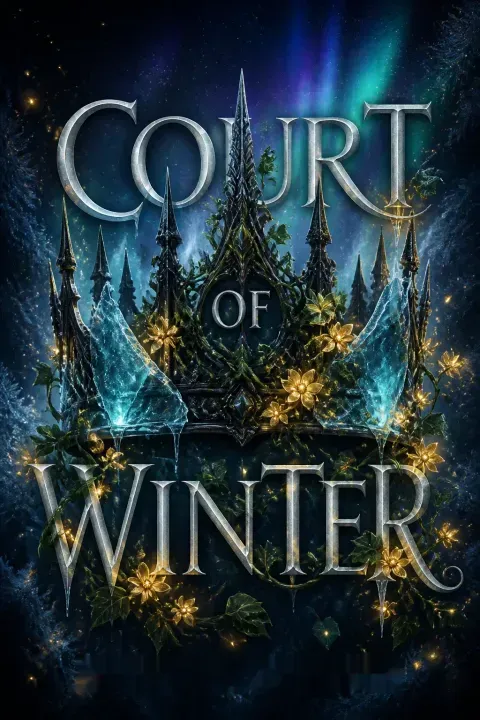
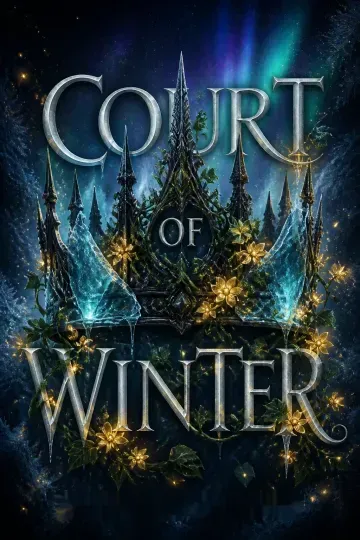
Court of Winter explores the entanglement of love and hatred, agency and captivity, through a female protagonist who learns her perceived weakness is actually world-altering power. Ilara1's journey from a bullied, wingless defective to a lady capable of reversing death mirrors the arc of self-actualization, but Krista Street subverts the typical empowerment narrative by making Ilara1's ascent involuntary. Her magic is not a reward but a burden that strips her of the freedom she craves.
The novel interrogates the nature of evil through Prince Norivun.2 He is the Death Master,2 a murderer of innocents including Ilara1's family, yet he is not a sadist. He operates within a rigid ethical framework where the stability of millions justifies individual sacrifices. His growing tenderness toward Ilara1 challenges her black-and-white morality, forcing her (and the reader) to sit with discomfort: can a monster also be a worthy partner? The book refuses easy answers, leaving Ilara1's attraction to him as a source of shame and confusion.
The political backdrop of a dying continent adds urgency, but also serves as a metaphor for Ilara1's internal state. The orem that sustains life is failing, just as her hope was failing before her powers awakened. Her ability to restore life is not a gift she bestows, but a reflection of who she already was: a woman who nurtured a garden, defended her sister,3 and refused to let Vorl5's abuse extinguish her will. The Rising Queen Trial literalizes the commodification of female power, reducing women to their affinities and wombs. Ilara1's forced participation is a critique of systems that value magical strength over individual autonomy.
Ultimately, "Court of Winter" is a slow-burn enemies-to-lovers romance that uses its fantasy setting to explore trauma, forgiveness, and the long shadow of grief. The cliffhanger ending posits that true freedom is not won by power alone, but by the choices one makes when all options seem poisoned.
Review Summary
Court of Winter received mixed reviews, with an overall rating of 4.12 out of 5. Many readers enjoyed the enemies-to-lovers trope, fae elements, and addictive storyline. However, some criticized the fast-paced romance despite the male lead's problematic actions, including murdering the female protagonist's family. Readers compared it to ACOTAR and praised the magic system and world-building. Critics found the female lead naive and the plot cliché-ridden. Despite polarizing opinions, many readers eagerly anticipated the sequel, finding the book engaging and entertaining.
People Also Read
Characters
Ilara Seary
Wingless fae with hidden powerA 24-year-old Solis fairy born without wings and with pitch-black hair, traits that make her an outcast. She grew up poor, laboring in fields and tending a garden that thrived beyond all reason. Beneath a quiet, resilient exterior, she carries deep grief from the execution of her parents and brother by the crown prince2. Her defining trait is stubborn nurturing: she brings life to dead things, whether plants or hope. Initially passive against her village archon5's abuse, she later discovers she possesses rare and powerful affinities that could save her people, forcing her to confront her hatred for the prince2 and a burgeoning, unwanted attraction.
Prince Norivun
Soul-sucking crown princeThe Death Master of the Solis continent and heir to the Winter Court throne, feared for his ability to extract souls with a thought. He possesses at least six affinities, making him one of the most powerful fae alive. Raised to be a weapon, he executes threats to stability without hesitation, but beneath his icy facade lies capacity for empathy and guilt. He killed Ilara1's family to contain panic about failing crops. His decision to take Ilara1 is initially practical, but he becomes increasingly possessive and tender toward her, seeing in her not just a tool to save the land but a kindred spirit whose power mirrors his own in reverse.
Cailis Seary
Ilara's truth-sensing sisterIlara1's older sister, who shares a close, protective bond with her. She possesses a truth affinity that makes deception impossible in her presence. She is fiercely loyal and hates the prince2 with passion for destroying their family. When Ilara1 is taken, she is devastated and later arrives at the castle, reuniting with Ilara1 and serving as a moral anchor who refuses to forget what was stolen from them.
Nuwin
Mischievous royal brotherThe younger prince of the Winter Court, as handsome as his elder brother2 but far more playful and charming. Unlike Norivun2, he is not burdened by the same weight of duty, allowing him to be the court's favorite rogue. He helps Ilara1 escape the ball and offers her genuine kindness, but his motives are sometimes opaque. He respects his brother2's claim on Ilara1 yet enjoys flirting with danger. His knowledge of secret passages and court secrets makes him an unpredictable ally.
Vorl
Abusive village archonThe archon of Ilara1's village, a brute who has tormented her since childhood. His favorite cruelty is choking her until she nearly loses consciousness, then hiding the bruises with his powerful illusion affinity. He feels entitled to Ilara1's body and becomes enraged when she is taken by the prince2. His reappearance at the court ball triggers the novel's climax. He represents the small, intimate evil of intimate partner violence as opposed to state-sanctioned killing.
Lord Crimsonale
Warmongering territory lordArchon of Osaravee Territory and member of the king10's council. He is ambitious, cruel, and skilled in politics. His fire affinity is rumored to have been used to burn servants. He pushes for an invasion of the Nolus continent as a solution to the Solis food crisis, and he takes a suspicious interest in Ilara1, seeing her as a tool or threat. His son Michas9 serves as his charming agent in court intrigue.
Daiseeum
Ilara's devoted lady's maidA young fae servant assigned to attend Ilara1. Her beauty affinity allows her to style hair and makeup to perfection. She becomes a comforting, constant presence during Ilara1's captivity, providing warmth and gossip.
Haxil
Kind-hearted royal guardOne of Prince Norivun2's four elite guards, recognizable by his round cheeks. He treats Ilara1 with genuine kindness from the start, offering her protection without judgment. His warrior affinity makes him formidable, but he is the gentlest of the prince2's inner circle.
Michas Crimsonale
Flirtatious noble sonHeir to the Crimsonale6 lordship, he dances with Ilara1 at the ball and probes her for information. His charm masks political cunning, but he is less overtly malevolent than his father6.
King Novakin
Power-obsessed sovereignThe eight-hundred-year-old ruler of the Solis continent. He married the queen11 solely for her immense magic to produce powerful heirs. He views fae as assets, including Ilara1 once her power is displayed, and he orchestrates the Rising Queen Trial to strengthen the royal bloodline.
Queen Lissandra
Trapped magical queenNorivun2 and Nuwin4's mother, a fairy with black hair and extraordinary power, forced into a political marriage with the king10. She is largely silent and isolated, a tragic figure whose life warns Ilara1 of what becoming queen might mean.
Drachu
Lochen fae leaderThe ruler of the Glassen Barrier Islands, a Lochen fae who walks on land with fierce pride. He senses Ilara1's power immediately and offers her sanctuary, calling her a treasure. His tense relationship with the prince2 is based on mutual respect and occasional conflict.
Plot Devices
Orem
Sustains life in frozen landThe magical essence that infuses the soil of the Solis continent, enabling plants to grow in an otherwise inhospitable climate. Replenished historically by celestial events, it has mysteriously begun to fade, causing crops to die and threatening mass starvation. Its decline is the central crisis driving the plot.
Ilara's life-giving affinity
Creates orem and restores soulsAn unprecedented magical ability that manifests late in Ilara1. It allows her to generate the orem that the land needs, essentially creating life where there is none. In its most potent form, it can latch onto a departing soul and return it to the body, effectively reversing death. This power is the inverse of Prince Norivun2's death affinity, setting them as cosmic opposites.
Fairy bargain
Magically enforced contractA binding agreement sealed by the realm's magic, invoking the gods as witnesses. Breaking a bargain invites divine punishment. Ilara1 and the prince2 use this to ensure mutual commitment: she will restore the orem, and he will grant her freedom and family access. The bargain marks appear as symbols on their skin.
Rising Queen Trial
Selects the prince's betrothedA ritualistic competition established by King Novakin10, requiring eligible females to vie for the crown prince2's hand. Candidates are chosen based on their number and strength of magical affinities. The trial is a political tool to breed powerful heirs, stripping participants of romantic choice.
Prince's death affinity
Soul extraction and instant deathThe crown prince2's signature power, feared across the continent. With a thought, he can pull the soul from a living being, leaving a husk. This ability earned him the title Death Master2. It is both a weapon of execution and a means of crowd control, but it marks him as a monster to many.
FAQ
Basic Details
What is Court of Winter about?
- Outcast's Harsh Reality: Court of Winter introduces Ilara Seary, a wingless, magicless "defective" fae on the icy Solis continent, struggling to survive with her sister, Cailis, amidst rumors of dying crops and a looming famine. Her unique black hair and lack of wings make her an outcast, often targeted by the cruel village archon, Vorl.
- Abduction by Royalty: Ilara's precarious life is shattered when Prince Norivun, the feared "Death Master" and heir to the Winter Court, unexpectedly arrives in her village and abducts her without explanation, tearing her from her only family.
- Journey to the Unknown: Forced into the prince's custody, Ilara is transported to the opulent but confining Winter Court, where she grapples with fear, anger, and the prince's enigmatic motives, all while unknowingly harboring a hidden power that could save their dying world.
Why should I read Court of Winter?
- Compelling Enemies-to-Lovers Dynamic: Dive into a slow-burn romance where deep-seated hatred and trauma gradually give way to reluctant understanding and undeniable attraction between a powerful prince and his unwilling captive. The complex emotional journey of Ilara and Norivun is central to the narrative.
- Unique Magic System & World-Building: Explore the intricate Solis continent, infused with "orem" magic that sustains life in freezing temperatures, and discover a protagonist with a rare, life-giving affinity that contrasts sharply with the prince's deadly power. The detailed fae society and political intrigue add rich layers.
- Themes of Agency & Redemption: Witness Ilara's powerful journey of self-discovery as she transforms from a powerless victim to a wielder of immense magic, fighting for her freedom and challenging the very system that seeks to control her, while the prince grapples with the burdens of his power and the possibility of redemption.
What is the background of Court of Winter?
- Icy Solis Continent: The story is set on the northernmost continent of the fae lands, characterized by its perpetually cold, icy climate. Life is sustained by "orem," a magical essence replenished by celestial events, which allows crops to grow in freezing temperatures.
- Fae Society & Hierarchy: The Solis fae, with their silvery-white hair, crystalline blue eyes, and wings, live for thousands of years under the rule of King Novakin and the Winter Court. Society is structured with archons governing territories and villages, and power is highly valued, often leading to the marginalization of "defectives" like Ilara.
- Looming Ecological Crisis: A critical background element is the continent's failing "orem" supply, leading to dying crops and the threat of widespread famine. This environmental crisis drives much of the plot, forcing the royal court to seek desperate solutions and setting the stage for Ilara's pivotal role.
What are the most memorable quotes in Court of Winter?
- "I was nothing before this male.": This quote from Chapter 3 encapsulates Ilara's initial profound sense of powerlessness and vulnerability in the face of Prince Norivun's overwhelming presence and authority, highlighting the vast power imbalance at the story's outset.
- "You're coming to accept what you are.": Spoken by Prince Norivun in Chapter 16, this line marks a pivotal moment in Ilara's journey of self-discovery, as he pushes her to acknowledge her burgeoning, extraordinary magical abilities, challenging her long-held belief of being a "defective."
- "I regret a lot of things.": Prince Norivun's admission in Chapter 20, in response to Ilara's direct question about regretting her family's deaths, reveals a deeper, more complex side to the feared "Death Master," hinting at the heavy burden of his duties and the possibility of his redemption.
What writing style, narrative choices, and literary techniques does Krista Street use?
- First-Person Intimacy: The story is told exclusively from Ilara's first-person perspective, immersing readers deeply in her emotional turmoil, fears, and gradual self-discovery, fostering strong empathy for her journey. This narrative choice allows for a raw, unfiltered portrayal of her internal world.
- Slow-Burn & High-Stakes Romance: Street employs a deliberate slow-burn approach to the enemies-to-lovers dynamic, building tension and attraction gradually amidst life-or-death stakes. This choice intensifies the emotional impact of their evolving relationship, making each step towards intimacy feel earned and significant.
- Symbolism and Contrast: The author frequently uses symbolism, such as Ilara's thriving garden representing her hidden power, and the stark contrast between Norivun's "death" affinity and Ilara's "life" affinity. This highlights the core thematic conflict between destruction and renewal, and trauma and healing, enriching the narrative's depth.
Hidden Details & Subtle Connections
What are some minor details that add significant meaning?
- Queen's Hidden Black Hair: The revelation that Queen Lissandra also has black hair, concealed by an illusion ("Her hair is hidden under an illusion to make it appear silver." Ch 15), subtly foreshadows Ilara's true nature and lineage. This detail links Ilara to a pattern of powerful female fae within the royal family who are forced to conceal their true selves, hinting at the constraints of their power and position.
- Prince's Illusion Mask: Norivun's use of an "illusion mask" (Ch 21) that only works on those outside his "Shield" reveals the constant performance and isolation inherent in his role as Crown Prince and Death Master. It signifies that his public persona is a carefully constructed facade, and only those truly close to him (or within his magical field) see his true appearance, emphasizing his burden and loneliness.
- The Bargain Marks: The unique magical marks that appear on Ilara (a "single petal") and Norivun (a "shattering heart") after their bargain is sealed ("A single petal glowing on my skin... A shattering heart shone before it vanished." Ch 16) are highly symbolic. The petal represents Ilara's life-giving, nurturing essence, while the shattering heart hints at Norivun's internal pain, the destructive nature of his power, and the emotional impact of their intertwined destinies.
What are some subtle foreshadowing and callbacks?
- Ilara's Garden's Prosperity: From the very first chapter, Ilara's garden is described as unusually vibrant and thriving despite the harsh climate and dying crops elsewhere ("Around me, my crops shone in a rainbow of colors... Each vegetable, fruit, grain, and plant thrived in the rich soil blessed with orem." Ch 1). This subtly foreshadows her unique life-giving affinity, which is later revealed to be the source of the garden's impossible abundance.
- Queen Lissandra's Limp Wings and Sadness: Ilara's brief glimpse of the Queen with "wings hanging limply"
Fae of Snow & Ice Series


About the Author



Download PDF
Download EPUB
.epub digital book format is ideal for reading ebooks on phones, tablets, and e-readers.








































