

Key Takeaways
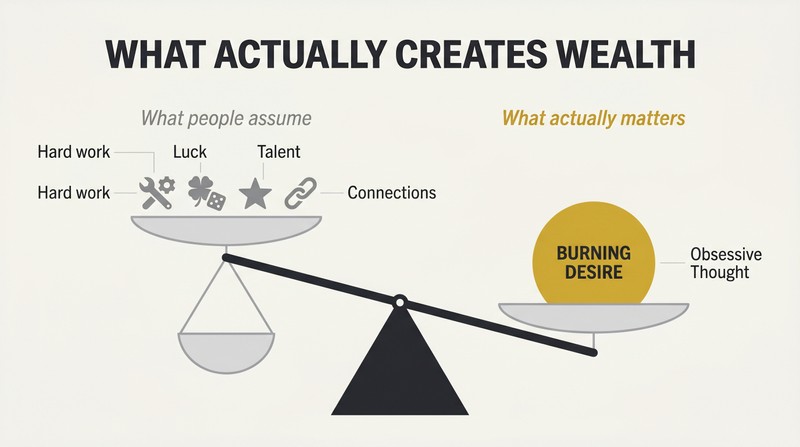
Wealth starts as obsessive thought — not hard work, luck, or talent
A tramp-looking man changed everything. Edwin C. Barnes arrived at Thomas Edison's laboratory by freight train — he couldn't afford a ticket. He had no money, no connections, and no education. But he carried one obsession: to become Edison's business partner. Edison gave him a menial job. Barnes waited five years. When Edison's sales team rejected a new dictating machine, Barnes seized the chance and marketed it brilliantly. Their partnership lasted over 30 years.
Hill spent 25 years analyzing over 500 of America's wealthiest people at Andrew Carnegie's request. The universal finding wasn't talent or capital — it was a single definite thought held with unwavering intensity. What Hill called a Burning Desire, a want so consuming it becomes an obsession that reshapes behavior and attracts opportunity.
Write your exact goal, read it aloud daily, and feel it as done
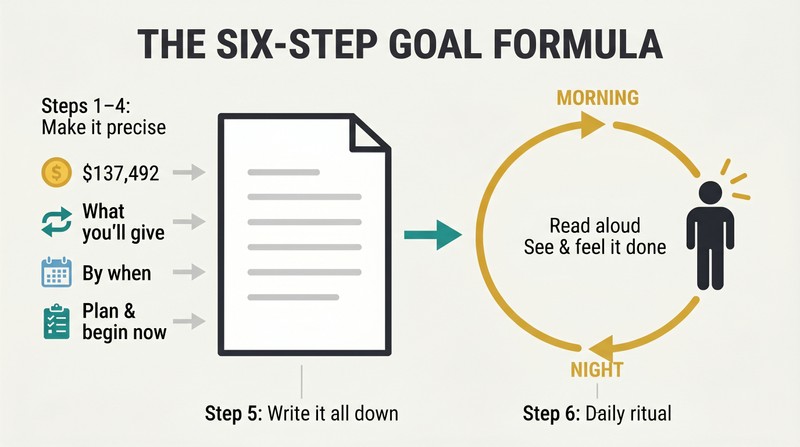
Hill's six-step formula translates vague wanting into concrete action:
1. Fix the exact amount of money you desire
2. Determine what you'll give in return
3. Set a definite deadline
4. Create a plan and begin immediately
5. Write a clear statement covering all the above
6. Read it aloud twice daily — morning and night — while seeing, feeling, and believing you already possess it
The sixth step is where most people balk. Hill insists you must emotionally inhabit the reality of already having the money. This isn't daydreaming — it's systematic reprogramming of the subconscious mind. Carnegie himself endorsed these exact steps as the foundation of his hundred-million-dollar fortune.
Repeat affirmations with emotion until belief becomes automatic
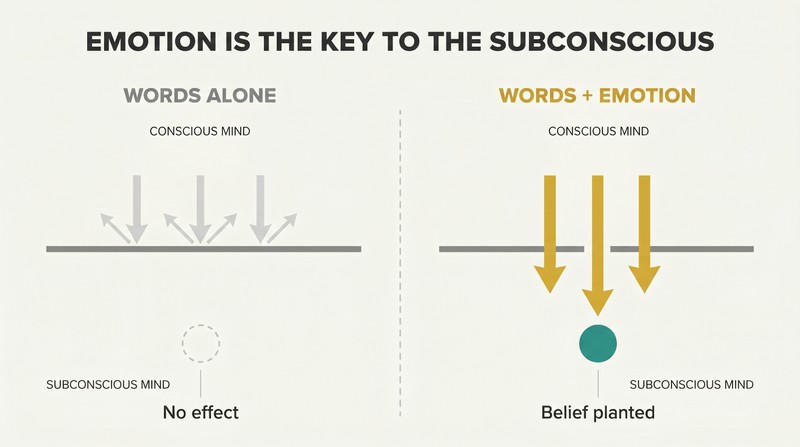
Auto-suggestion is Hill's bridge between conscious intention and subconscious conviction. It's the practice of feeding emotionalized thoughts to your subconscious through spoken repetition. The critical ingredient is emotion — Hill warns that "plain, unemotional words do not influence the subconscious mind." Reading your goal statement without feeling is worthless.
This mechanism works in both directions. A bank official named Joseph Grant embezzled funds, then literally talked himself to death repeating "My God, this will kill me!" Doctors called it "mental suicide." The subconscious makes no moral judgment — it acts on whatever emotionalized instructions it receives. Your job is to ensure those instructions serve you rather than destroy you.
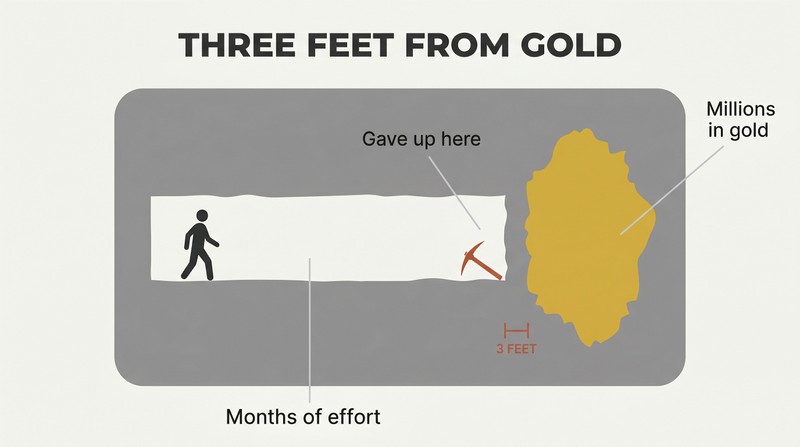
Most people quit three feet from gold — persist past the test
R.U. Darby's uncle struck gold in Colorado, then the vein vanished. They quit and sold their mining equipment as scrap. The junk dealer hired an engineer who found the vein just three feet from where the Darbys stopped drilling — yielding millions. Darby channeled that lesson into life insurance sales, becoming one of fewer than 50 agents selling over a million dollars annually.
Fannie Hurst received 36 rejection slips from The Saturday Evening Post before breaking through. Then Hollywood paid $100,000 for a single novel's movie rights. Hill found the pattern universal: over 500 of America's most successful people reported their greatest breakthroughs came just one step beyond their worst defeat.
Build a Master Mind group — no great fortune was assembled solo
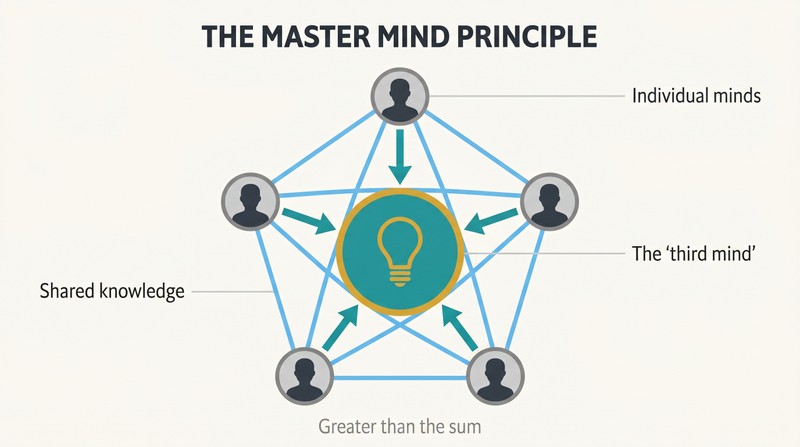
Carnegie's secret weapon wasn't steel expertise — it was his alliance of approximately 50 people whose combined knowledge covered everything he needed. Hill defines the Master Mind as "coordination of knowledge and effort, in a spirit of harmony, between two or more people, for the attainment of a definite purpose." Carnegie attributed his entire fortune to it.
Henry Ford's rapid ascent began not in his factory but through his friendships with Thomas Edison, Harvey Firestone, John Burroughs, and Luther Burbank. Hill observed that Ford overcame poverty, illiteracy, and ignorance by allying himself with great minds. The principle works on two levels: pooled knowledge, and what Hill calls harmonized minds generating ideas none could produce alone.
Decide quickly, revise slowly — the opposite guarantees failure
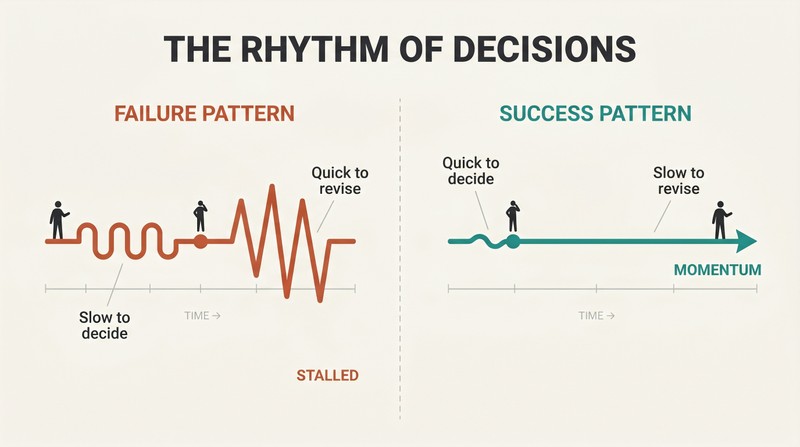
Hill's analysis of 25,000+ failures placed lack of decision near the top of the list. Among several hundred millionaires, the pattern reversed: they decided promptly and changed decisions slowly. Ford stubbornly produced his Model T long past advisors' protests — building a fortune before finally relenting. The key: don't let others' opinions replace your own judgment.
A preacher's 36-hour decision illustrates the power of commitment. Dr. Frank Gunsaulus spent two years vaguely wishing for a million dollars to start a college. One Saturday, he stopped wishing and decided to get the money within a week. He preached "What I Would Do If I Had a Million Dollars." Phillip D. Armour walked up afterward and funded the entire Armour Institute of Technology.
Fear of poverty and criticism destroy more dreams than failure
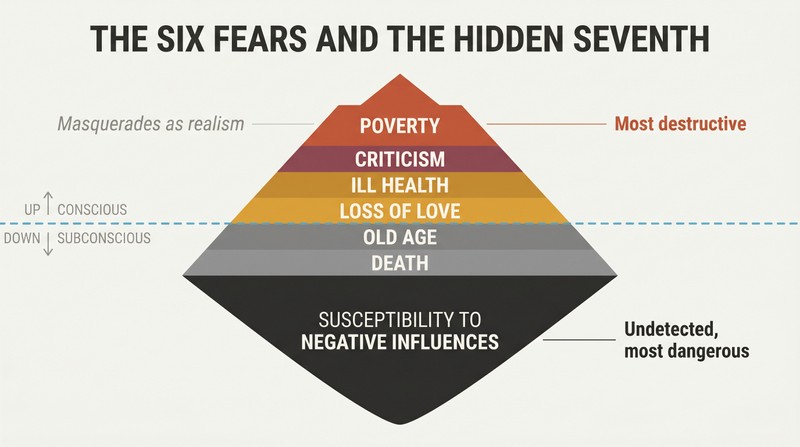
Hill catalogs six basic fears that silently sabotage wealth:
1. Poverty (the most destructive)
2. Criticism
3. Ill health
4. Loss of love
5. Old age
6. Death
Fear of poverty is deadliest because it masquerades as "realism." Its symptoms — indifference, indecision, doubt, worry, over-caution, procrastination — describe most people's default operating system. Fear of criticism is nearly as pervasive, stopping people from setting ambitious goals or starting anything bold. Hill adds a "seventh evil": susceptibility to negative influences from others, which he considers more dangerous than all six fears because it operates undetected in the subconscious.
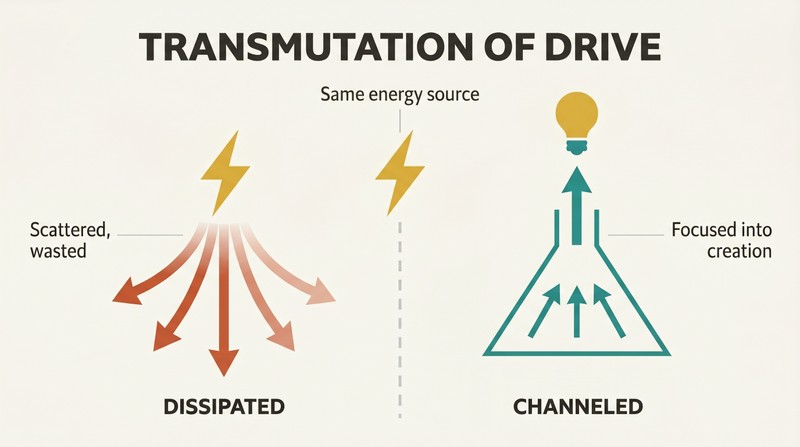
Channel your strongest biological drive into creative work
Hill's most provocative chapter argues that sexual desire is the most powerful human motivator — and that most people waste it through purely physical expression, especially before age 40. Sex Transmutation means consciously redirecting that intense energy into creative, professional, or artistic endeavors. Hill found that virtually every extraordinary achiever was highly sexed and had learned to channel that drive.
His analysis of over 25,000 people showed peak creative and financial achievement rarely occurred before ages 40 – 50, precisely because discovering this redirection takes decades. The same energy that makes someone magnetic in romance — what Hill calls "personal magnetism" — is what makes top salespeople, leaders, and artists irresistible in their fields.
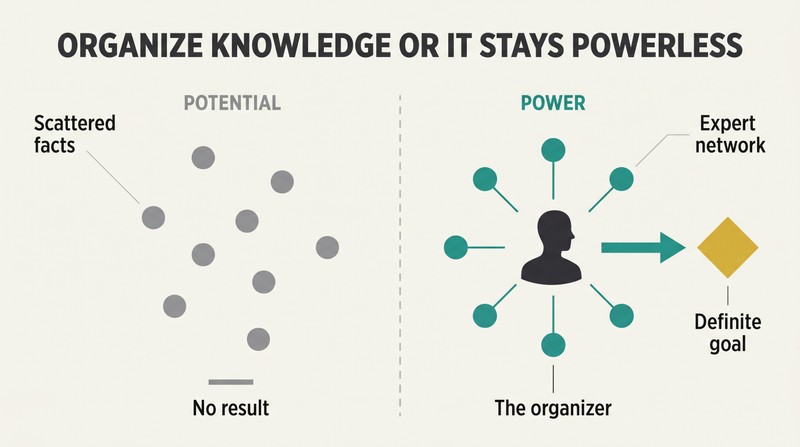
Knowledge is only potential power — organize and apply it
Ford's courtroom masterclass redefined education. When attorneys tried to prove Ford ignorant by quizzing him on history trivia, he pointed out he had "a row of electric push-buttons" on his desk — one press summoned any expert he needed. "Why should I clutter up my mind with general knowledge," he asked, "when I have men around me who can supply any knowledge I require?"
Carnegie similarly knew almost nothing about steel manufacturing yet built the largest steel empire in the world by organizing people who did. Hill redefines education: not accumulating facts, but developing the ability to get whatever you need through your Master Mind group and definite plans. University professors possess vast knowledge yet remain poor because they never organize it toward a definite end.
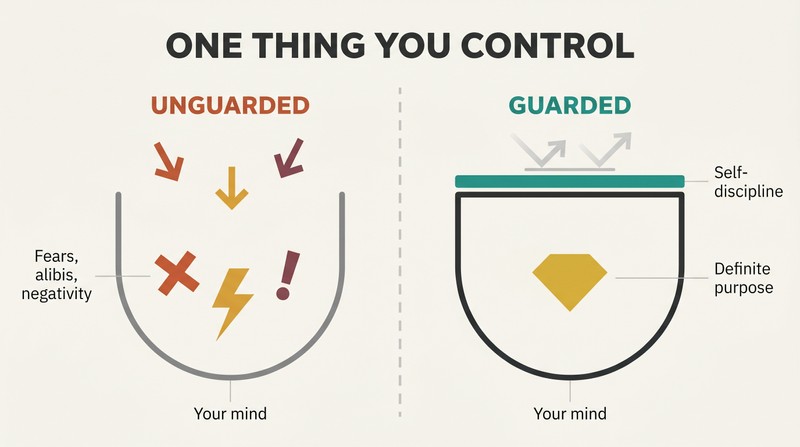
You control exactly one thing: your thoughts. Guard them.
Hill's closing argument is stark. Nature gave every human absolute control over exactly one thing — their own thoughts. This is both our greatest privilege and gravest responsibility. The "seventh basic evil" beyond the six fears is susceptibility to negative influences: relatives who crush ambition, newspapers that spread panic, and inner voices that manufacture elaborate excuses for inaction.
Hill closes with 57 "famous alibis" beginning with "IF" — if I had money, if I had education, if times were better. The last and greatest: "IF I had the courage to see myself as I really am, I would find out what is wrong with me, and correct it." Mind control is the result of self-discipline and habit. You either direct your mind toward a definite purpose, or the world's negativity fills the vacuum for you.
Analysis
Think and Grow Rich is less a book about money than a book about applied psychology wearing Depression-era clothing. Published in 1937, when Americans were psychologically battered by economic collapse, Hill's real product wasn't a wealth formula — it was a systematic antidote to learned helplessness. The 13 principles, stripped of their mystical vocabulary ('Infinite Intelligence,' 'ether vibrations'), describe what modern cognitive behavioral therapy and positive psychology would later validate: beliefs shape behavior, which shapes outcomes.
Hill's most enduring contribution is arguably the Master Mind principle, which anticipates modern research on collective intelligence and social networks. Studies on team dynamics consistently show that communication patterns and collaborative alignment predict performance more reliably than individual talent — confirming Carnegie's intuition from 1908. Today's mastermind groups, advisory boards, and peer accountability circles are direct descendants of Hill's framework.
The book's weaknesses are considerable. Hill presents correlation as causation, wraps sound principles in pseudoscience, and some chapters (the brain as 'broadcasting station') have aged poorly. His gender assumptions in the sex transmutation chapter are cringeworthy by modern standards. And the irony that Hill was essentially broke when he wrote the book is impossible to ignore — though he'd argue that proved the philosophy works when faithfully applied, not merely understood.
Yet the book's resilience — still selling millions of copies 85+ years later — reveals something important about motivation. People don't need scientifically perfect advice; they need emotionally persuasive permission to believe in themselves. Hill's six-step goal-setting process, the emphasis on written declarations, and the insistence on curating your mental environment remain actionable by any standard.
The deepest insight may be the one Hill buries: 'Every failure brings with it the seed of an equivalent advantage.' This isn't toxic positivity — it's a cognitive reframing tool. The person who adopts this lens doesn't just endure setbacks differently; they metabolize them differently. That single belief may be worth more than the other twelve principles combined.
Review Summary
Think and Grow Rich receives mixed reviews, with some praising it as a life-changing self-help classic and others criticizing it as pseudoscience. Supporters appreciate its motivational message and practical advice on success, while critics argue it oversimplifies wealth accumulation and promotes unrealistic expectations. The book's core principles include desire, faith, and persistence. Many readers find value in its emphasis on positive thinking and goal-setting, though some consider its approach outdated or misleading. Despite its controversial nature, the book remains influential in personal development literature.
People Also Read






Glossary
Definite Major Purpose
One's primary, written life goalHill's term for a single, clearly defined chief aim that serves as the organizing principle of a person's life. It must be written down, specific, and emotionally charged. Hill considers the lack of a Definite Major Purpose the leading cause of failure, affecting 98 out of every 100 people he analyzed.
Master Mind
Harmonious alliance of coordinated mindsA group of two or more people who coordinate knowledge and effort in a spirit of harmony toward a definite purpose. Hill claims this alliance creates a 'third mind' beyond any individual's capacity, operating on both economic (pooled knowledge) and psychic (amplified intelligence) levels. Andrew Carnegie attributed his entire fortune to this principle.
Auto-Suggestion
Self-directed subconscious mind programmingHill's term for deliberately influencing the subconscious mind through repeated, emotionalized verbal affirmations. It serves as the communication bridge between the conscious mind (where goals are set) and the subconscious mind (which translates desires into physical reality). Borrowed from French hypnotist Emile Coué and adapted as one of Hill's 13 core principles.
Sex Transmutation
Redirecting sexual energy into creativityThe conscious channeling of sexual desire—which Hill considers the strongest human motivator—into creative, professional, or artistic pursuits rather than purely physical expression. Hill argues this redirection is the unrecognized engine behind most genius and that peak achievement typically begins after age 40, when many people discover it accidentally.
Burning Desire
Obsessive want beyond mere wishingHill's distinction between ordinary wishing and the intense, all-consuming desire that is the starting point of all achievement. A Burning Desire is specific, emotionalized, and backed by willingness to eliminate all retreat. Hill considers it fundamentally different from hope or casual wanting—it is the first of his 13 steps to riches.
Infinite Intelligence
Universal creative force or higher powerHill's term for a higher intelligence or universal power that permeates all matter and energy. Accessible through the subconscious mind and Creative Imagination, it is the purported source of hunches and inspirations. Hill uses the term broadly enough to encompass God, the Tao, or any conception of a guiding universal force.
Creative Imagination
Faculty receiving original hunches and ideasOne of two types of imagination Hill describes (the other being Synthetic Imagination, which rearranges existing ideas into new combinations). Creative Imagination connects the conscious mind to Infinite Intelligence and produces original ideas, hunches, and inspirations. Hill equates its deliberate, sustained use with genius. It also functions as the 'receiving set' of the brain.
Six Basic Fears
Hill's taxonomy of mental enemiesThe six fears Hill identifies as the primary internal obstacles to success: fear of poverty, criticism, ill health, loss of love, old age, and death. He adds a 'seventh evil'—susceptibility to negative influences from others—which he considers more dangerous than the six fears because it operates undetected in the subconscious mind.
Invisible Counselors
Imagined advisory council for self-improvementHill's practice of holding imaginary nightly meetings with historical figures he admired, including Emerson, Lincoln, Edison, and Napoleon. He would address each 'counselor' by name, requesting specific character traits. Used primarily as an auto-suggestion tool for character development, the technique eventually expanded to include over 50 figures and became Hill's method for accessing creative solutions to problems.
FAQ
What's Think and Grow Rich about?
- Philosophy of Success: Think and Grow Rich by Napoleon Hill outlines a philosophy for achieving personal and financial success, based on the experiences of successful individuals.
- Thirteen Principles: The book presents thirteen principles that guide readers in transforming desire into tangible wealth and personal fulfillment.
- Mindset and Action: Hill emphasizes the importance of a positive mental attitude and taking actionable steps towards one's goals, teaching that thoughts can be transformed into reality through focused desire and effort.
Why should I read Think and Grow Rich?
- Timeless Wisdom: The principles outlined in the book are timeless and applicable to anyone seeking success, regardless of their background or current situation.
- Proven Success: Hill's philosophy is based on the analysis of successful individuals, making it a practical guide for improving financial situations or personal lives.
- Self-Improvement: Reading this book can inspire self-reflection and motivate readers to take actionable steps toward their goals, encouraging a mindset shift that can lead to significant personal and financial growth.
What are the key takeaways of Think and Grow Rich?
- Thirteen Principles: The book outlines thirteen principles, including Desire, Faith, and Persistence, which are essential for achieving success.
- Mastermind Alliance: Hill emphasizes the importance of surrounding oneself with a group of like-minded individuals, referred to as a "Mastermind," to provide support and resources.
- Auto-Suggestion: The concept of auto-suggestion involves influencing the subconscious mind through repeated affirmations, helping to solidify beliefs and intentions.
What is the Mastermind principle in Think and Grow Rich?
- Collaboration for Success: The Mastermind principle involves forming a group of individuals who share similar goals and can collaborate to achieve them.
- Support System: Members of a Mastermind group provide emotional and intellectual support, helping each other stay accountable and motivated.
- Diverse Perspectives: By bringing together individuals with different skills and experiences, a Mastermind group can generate innovative ideas and solutions.
How does Think and Grow Rich define desire?
- Starting Point of Achievement: Hill states that "the starting point of all achievement is desire," which must be intense and specific to drive individuals toward their goals.
- Definite Major Purpose: The book encourages readers to define their "Definite Major Purpose," a clear and specific goal that aligns with their deepest desires.
- Transforming Desire into Action: Hill emphasizes that desire must be transformed into actionable plans, involving setting clear goals and taking consistent steps toward achieving them.
What role does faith play in Think and Grow Rich?
- Head Chemist of the Mind: Hill describes faith as the "head chemist of the mind," indicating its crucial role in transforming thoughts into reality.
- Belief in Success: Faith is essential for believing in one's ability to achieve goals, influencing the subconscious mind to manifest those goals.
- Developing Faith: Hill suggests that faith can be developed through auto-suggestion and repeated affirmations, strengthening belief in one's desires.
What is auto-suggestion in Think and Grow Rich?
- Influencing the Subconscious: Auto-suggestion is the process of influencing the subconscious mind through repeated affirmations and self-suggestions.
- Emotionalized Thoughts: Hill emphasizes that thoughts must be mixed with emotion to effectively reach the subconscious, giving them the power to manifest into reality.
- Practical Application: The book provides practical steps for using auto-suggestion, such as writing down specific goals and reading them aloud daily.
What are the major causes of failure according to Think and Grow Rich?
- Lack of Purpose: One primary cause of failure is the absence of a well-defined purpose in life, leading to aimlessness and missed opportunities.
- Procrastination: Hill identifies procrastination as a significant barrier to success, often resulting from fear or indecision.
- Negative Personality Traits: Traits such as negativity, lack of self-discipline, and fear of competition can hinder success, emphasizing the need for a positive mindset.
What is the significance of imagination in Think and Grow Rich?
- Workshop of the Mind: Hill describes imagination as the "workshop of the mind," essential for transforming abstract ideas into concrete realities.
- Two Forms of Imagination: The book distinguishes between synthetic imagination, which rearranges existing ideas, and creative imagination, which generates new ideas.
- Developing Imagination: Hill encourages readers to actively use and develop their imaginative faculties to unlock new opportunities and solutions.
What are the six basic fears mentioned in Think and Grow Rich?
- Fear of Poverty: This fear paralyzes individuals, preventing them from taking necessary risks for success.
- Fear of Criticism: It stifles creativity and self-expression, often resulting in conformity and a lack of individuality.
- Fear of Ill Health: This fear can manifest as hypochondria, leading to unnecessary worry and distraction from goals.
How can I develop persistence as described in Think and Grow Rich?
- Definite Purpose: Establish a clear and specific goal that you are passionate about, as persistence is the sustained effort necessary to induce faith.
- Positive Environment: Surround yourself with supportive individuals who encourage your efforts, reinforcing your commitment to your goals.
- Daily Practice: Make persistence a habit by consistently taking small steps toward your goal, even in the face of obstacles.
What are the best quotes from Think and Grow Rich and what do they mean?
- "Whatever the mind can conceive and believe, it can achieve.": This quote emphasizes the power of belief and visualization in achieving goals, suggesting that success begins with a clear vision and unwavering faith.
- "A quitter never wins—and a winner never quits.": It highlights the importance of persistence in the face of challenges, reminding that success often requires overcoming obstacles.
- "Desire is the starting point of all achievement.": This quote reinforces the idea that strong desire is essential for success, emphasizing the need for a burning desire to take necessary actions.
About the Author
Other books by Napoleon Hill









Download PDF
Download EPUB
.epub digital book format is ideal for reading ebooks on phones, tablets, and e-readers.








































