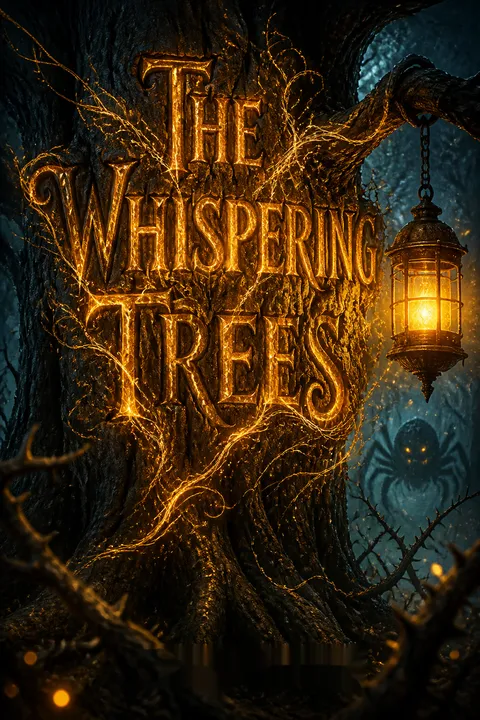

Plot Summary
Night Whispers and Legends
In a small hut, Safi waits anxiously for her father, a Binder, to return from dangerous work. When he finally arrives, battered but alive, she begs for a story—the dark legend of Sordyr, the Forest Demon, and Rygoth, the wexari who once tried to stop him. The tale is a warning and a comfort, a reminder that stories can bind monsters, but also that evil is never far away. Safi confides a vision: a girl with great magic is coming, not to save, but to destroy. The sense of foreboding is palpable, setting the stage for a journey where hope and dread are inseparable, and the line between savior and destroyer is blurred.
Fleeing Into the Thickety
Kara Westfall and her younger brother Taff, hunted by their own village and haunted by the loss of their father, flee into the Thickety—a living, sentient forest ruled by Sordyr. The siblings are pursued by monsters and memories, their only guide the hope that magic can be used for good. Kara, once a witch, now rejects her power, but the forest's dangers force her to reconsider. The air grows thin, the ground moves beneath them, and they are swallowed by a gritchenlock, a monstrous plant. Their escape is desperate, and the forest's rules are cruel. The siblings' bond is their only anchor in a world that wants to consume them.
The Trap of Living Darkness
Trapped in the suffocating darkness of the gritchenlock, Kara's memories of her mother's lessons become their salvation. With Taff's help, they find the hidden seam and escape, tumbling into the forest's strange light. They meet Mary Kettle, a legendary witch with a reputation for evil, who offers help with ambiguous motives. The forest whispers with pain and despair, and Kara's longing for safety is met with the realization that knowledge and trust are their only weapons. The siblings must decide whether to accept Mary's guidance, knowing that every alliance in the Thickety comes with a price.
Mary Kettle's Bargain
Mary Kettle, both feared and needed, leads Kara and Taff deeper into the Thickety. She is unpredictable—sometimes a child, sometimes an old woman—her age shifting with the whims of magic. She teaches Kara about the nature of wexari, witches who can cast without grimoires, and warns of Sordyr's relentless pursuit. The children learn that survival depends on learning, adapting, and sometimes trusting those who have done terrible things. Mary's own quest for redemption is tangled with their fate, and her help is both a gift and a threat. The forest's dangers grow, and the siblings' choices become ever more fraught.
Sordyr's Bridge of Stone
Fleeing Sordyr and his branchwolves, Kara, Taff, and Mary reach a stone bridge—the only sanctuary from the Forest Demon, who cannot cross stone. But Sordyr's power is vast: he transforms Shadowdancer, Kara's beloved horse, into a monster, forcing Kara to choose between her friend and her brother. The siblings barely escape, but the cost is high. Kara's grief and guilt deepen, and the lesson is clear: in the Thickety, every victory is paid for in loss. The bridge becomes a symbol of the boundaries between safety and danger, love and sacrifice.
The Witch's Lantern
Pursued by branchwolves, Kara is forced to confront her own power. Mary's enchanted lantern, a relic of her dark past, saves them, projecting a dragon of light that scatters their enemies. The children glimpse the beauty and horror of true magic—its ability to create and destroy, to protect and to corrupt. Mary's sack of magical toys is both a treasure and a reminder of the souls she sacrificed. Kara's reluctance to use magic is challenged by necessity, and the boundaries between good and evil, tool and weapon, blur further.
Lessons in True Magic
Mary begins to teach Kara the art of wexari magic: building mind-bridges to animals, using memories as the currency of connection. Kara learns that every spell costs her a piece of herself—a memory lost, a part of her identity sacrificed. The lessons are hard, and the price is steep. Taff's intelligence and kindness become his own weapons, and the siblings' relationship deepens. The forest's suffering is revealed as a reflection of Sordyr's corruption, and Kara's growing power is both a hope for salvation and a threat to her soul.
The Price of Power
As Kara's abilities grow, so does her understanding of magic's dangers. Every spell erases a memory, and the temptation to use power for good is shadowed by the risk of becoming a monster. Mary's own history is a warning: her enchanted toys are fueled by the souls of children, and her quest for redemption is haunted by guilt. Kara's struggle is not just against Sordyr, but against the darkness within herself. The line between savior and destroyer becomes ever more tenuous, and the true enemy may be the seductive nature of magic itself.
The Draye'varg Crossing
To escape Sordyr, the group must cross the Draye'varg, a desert of boulders where anything that falls between the stones—blood, hair, even a chip of nail—can become a simulacrum, a soulless copy bent on destroying its creator. The crossing is fraught with danger, and Taff's blood gives rise to a doppelganger that must be destroyed. The lesson is stark: in the Thickety, even the smallest mistake can have monstrous consequences. The journey tests their resourcefulness, courage, and willingness to face the consequences of their actions.
The Simulacra's Hunger
The dangers of the Draye'varg are not just physical but existential. The simulacra, born from lost fragments, are reminders of the past's inescapable grip. The group's survival depends on confronting the monsters they have inadvertently created, and on accepting that some wounds cannot be undone. Mary's confession of her crimes, and her failed attempt at redemption, deepen the story's moral complexity. The past is never truly buried, and the hunger of the simulacra is the hunger of guilt, loss, and the longing for forgiveness.
The Village of Shadows
The group finds a village trapped in perpetual twilight, its inhabitants transformed into darkeaters—shadowy beings who consume the shadows of the living. The notsuns, monstrous flowers, bathe the village in red light, awakening the darkeaters and trapping the children. Kara's refusal to sacrifice animals for her own safety is tested, and the only escape comes through ingenuity and the willingness to accept help. The village is a microcosm of the Thickety's curse: survival bought at the cost of humanity, and the ever-present threat of becoming what one fears.
The Mind-Bridge and the Monster
Kara's training culminates in her ability to build mind-bridges to animals, commanding them not through force but through empathy and shared memory. Yet even this power is double-edged: to save herself and others, she must sometimes compel creatures against their will, risking the very corruption she fears. The battle against the sledgeworm and the rescue of the grettins test her resolve, and the lesson is clear: true mastery is not domination, but understanding and compassion. The cost, however, is always personal.
Imogen's Dream Prison
Kara and Taff are captured by Imogen, a wexari turned monster who imprisons victims in dream worlds where their deepest losses are restored. Kara's perfect life is a lie, and the escape requires the sacrifice of illusion for truth. Imogen's power is revealed as a parasite, feeding on the pain of loss, and Kara's victory comes through understanding the true nature of the monster. The dream prison is a metaphor for the seductive comfort of denial, and the courage required to face reality.
The Spider Beneath the Earth
Sordyr's true prison is revealed: he and Rygoth, the spider wexari, are locked in a centuries-old stalemate beneath the earth, each trapping the other. Kara is sent to free Sordyr, but learns that doing so will unleash a greater evil. Rygoth's web is both a literal and metaphorical trap, and Kara's mind-bridge to the ancient spider tests her empathy and resolve. The choice is stark: save her brother and doom the world, or sacrifice her family for the greater good. The web of sacrifice is inescapable, and every thread is a life.
The Bindery's Secret
In Kala Malta, Kara discovers the secret of the Bindery: the villagers are forced to manufacture grimoires from Fenroot trees, each book a potential weapon of destruction. Sordyr's plan is revealed—not to conquer, but to flood the world with magic, letting chaos and corruption spread naturally. The villagers' complicity is born of fear and necessity, and the machinery of evil is shown to be both mundane and monstrous. Kara's horror is matched by her determination to stop the spread of darkness.
The Venom of Niersook
To defeat Sordyr, Kara and her friends must find the bones of Niersook, the beast created to strip Sordyr of his magic. The journey is a descent into the body of a monster, haunted by the spirits of its own creations. Kara's use of mind-bridges to the dead is a final test of her power and her willingness to risk her soul. The venom is both a weapon and a symbol: the power to unmake what has been made, but only at great cost. The quest is a race against time, and the price of failure is annihilation.
The Battle for Kala Malta
The final confrontation is a maelstrom of magic, monsters, and moral choices. Kara leads the creatures of the Thickety against Sordyr, but the cost is blood and the loss of her own power. Mary Kettle's redemption comes through sacrifice, and the true enemy is revealed: Rygoth, freed at last, is the architect of a new apocalypse. Kara's victory is pyrrhic, and the world is left on the brink of destruction. The battle is not just for survival, but for the soul of magic itself.
The Web of Sacrifice
With Sordyr defeated and Rygoth unleashed, Kara is left powerless, her memories scarred by the price of magic. The Thickety begins to heal, but the wounds are deep. Mary finds a measure of peace, and Taff's faith in his sister is unbroken. Kara's journey is not over: the world is still threatened, and the lessons of sacrifice, compassion, and the dangers of unchecked power remain. The story ends with a whisper of hope—a single rose blooming in the darkness, a promise that even in a world of monsters, redemption is possible.
Analysis
J.A. White's The Whispering Trees is a dark, intricate meditation on the nature of power, memory, and sacrifice, wrapped in the trappings of a fantasy adventure. At its heart, the novel interrogates the cost of magic—not just in the physical dangers it brings, but in the erosion of self, the loss of innocence, and the temptation to use power for good at the risk of becoming what one hates. Kara's journey is emblematic of the struggle to do right in a world where every choice has consequences, and where the line between hero and monster is perilously thin. The story's use of memory as the currency of magic is a brilliant metaphor for the way trauma and responsibility shape identity, and the recurring motif of sacrifice underscores the truth that there are no easy answers. The villains—Sordyr and Rygoth—are not mere monsters, but reflections of the dangers of unchecked ambition and the refusal to accept loss. The book's ending, with its promise of healing and the persistence of hope, is hard-won and deeply moving. In a modern context, The Whispering Trees is a powerful allegory for the dangers of power without empathy, the necessity of confronting one's own darkness, and the enduring possibility of redemption, even in a world of monsters.
Review Summary
The Whispering Trees receives mostly positive reviews (4.18/5 average) for its dark middle-grade fantasy. Readers praise the complex portrayal of magic's corrupting influence, creative monsters (darkeaters, notsuns), and strong character development. The sequel follows Kara and Taff through the dangerous Thickety forest, aided by reformed witch Mary Kettle. Reviewers appreciate the dark atmosphere and moral complexity, though some found the pacing slow or plot confusing. The book ends on a cliffhanger that frustrated some readers. Common praise includes inventive world-building and the sibling relationship, though concerns exist about age-appropriateness given scary content.
People Also Read
Characters
Kara Westfall
Kara is a twelve-year-old girl marked by trauma, loss, and the burden of magical power. As a wexari, she can cast spells without a grimoire, but every use of magic costs her a memory, eroding her sense of self. Her relationship with her brother Taff is her anchor, and her compassion for animals and others is both her strength and her vulnerability. Kara's journey is one of self-discovery, as she struggles to use her power for good without becoming the monster she fears. Her greatest enemy is not Sordyr or Rygoth, but the darkness within herself—the temptation to use power at any cost, and the fear of losing her humanity. Kara's arc is a meditation on sacrifice, empathy, and the price of survival.
Taff Westfall
Taff is Kara's younger brother, a boy of intelligence, curiosity, and unwavering faith in his sister. His quick thinking and resourcefulness often save them, and his kindness is a counterbalance to the violence and fear that surround them. Taff's innocence is tested by the horrors of the Thickety, but he retains a core of hope and decency. His relationship with Kara is central to the story, providing both motivation and emotional depth. Taff's belief in redemption, even for those who have done terrible things, is a source of strength and a challenge to the cynicism of the world around him.
Mary Kettle
Mary is a legendary figure, infamous for enchanting toys with the souls of children. Her age shifts unpredictably, a curse of her own making. Mary's guidance is essential to Kara's survival and training, but her motives are complex—part guilt, part hope for redemption. Her relationship with the siblings evolves from suspicion to genuine affection, and her ultimate sacrifice is a testament to her capacity for change. Mary embodies the dangers of unchecked magic and the possibility of atonement, her story a warning and a promise that even the worst can seek forgiveness.
Sordyr (The Forest Demon)
Sordyr is the ancient ruler of the Thickety, a being of immense power and cruelty, yet himself a victim of Rygoth's curse. His dominion over the forest is absolute, but he is trapped, his roots bound by Rygoth's web. Sordyr's desire to escape and spread chaos is matched by his cunning and patience. He manipulates others—Kara, Mary, the villagers—to achieve his ends, and his understanding of darkness is both literal and psychological. Sordyr is a mirror for Kara, embodying the consequences of surrendering to power and vengeance.
Rygoth
Rygoth is the original wexari, a being of immense magical ability who once sought to remake the world. Trapped beneath the earth in the form of a monstrous spider, she is both jailer and prisoner to Sordyr. Rygoth's intelligence and power are matched by her ruthlessness, and her release signals a new apocalypse. She is a cautionary figure, showing the dangers of ambition unchecked by empathy, and her manipulation of Kara is a final test of the young witch's resolve.
Safi
Safi is a young girl from Kala Malta, gifted with visions of the future and secretly a witch. Her innocence is shadowed by the burden of knowledge, and her friendship with Taff and Kara is both a comfort and a risk. Safi's struggle to control her power, and her temptation to use the grimoire, mirror Kara's own journey. Her visions are warnings, but also sources of hope, and her choices reflect the story's central themes of agency, destiny, and the cost of magic.
Imogen
Imogen was once a healer, now transformed into a creature that imprisons victims in dream worlds and feeds on their sense of loss. Her power is parasitic, and her tragedy is the loss of her own humanity. Imogen's encounter with Kara is a battle of wills and empathy, and her defeat is both a liberation and a warning about the dangers of unchecked longing and the refusal to accept reality.
Shadowdancer
Shadowdancer is Kara's beloved horse, transformed by Sordyr into a monster. Her fate is a microcosm of the story's themes: the corruption of the innocent, the pain of sacrifice, and the hope of redemption. Shadowdancer's return at the end is a sign that healing is possible, even after great loss.
Breem
Breem is Safi's father and a Binder in Kala Malta, forced to serve Sordyr by manufacturing grimoires. His scars are both physical and emotional, and his love for Safi is his guiding principle. Breem's struggle is one of survival and complicity, and his actions reflect the moral ambiguity of those trapped by forces beyond their control.
The One-Eyed Bird (Watcher)
Watcher is a mysterious bird who aids Kara, communicating through colors. Its loyalty is tested, and its suffering is a reflection of the dangers of trust in a world of deception. Watcher's forgiveness of Kara is a quiet moment of grace, a reminder that even in darkness, friendship endures.
Plot Devices
Mind-Bridges and Memory Magic
The central device of the story is the mind-bridge: a magical connection built from memories, allowing Kara to communicate with and control animals. Every use of magic costs a memory, making power a double-edged sword. This device literalizes the theme that every action has a price, and that empathy is both a strength and a vulnerability. The loss of memory is both a practical danger and a metaphor for the erosion of self in the pursuit of power.
The Thickety as Living Antagonist
The Thickety is not just a setting but an active force, shaped by pain, suffering, and the will of Sordyr. Its dangers are both physical and psychological, and its rules are mutable and cruel. The forest's corruption mirrors the characters' struggles with their own darkness, and its healing at the end is a sign of hope.
The Grimoire and the Price of Magic
Grimoires are both sources of power and instruments of corruption, their creation and use central to Sordyr's plan. The Bindery's secret reveals the machinery of evil, and the temptation to use grimoires is a recurring test for Kara and Safi. The device underscores the story's warning about the seductive nature of power and the dangers of using tools without understanding their cost.
Sacrifice and Redemption
The narrative is structured around choices that require sacrifice—of friends, memories, innocence, and even hope. Redemption is possible, but never easy, and always comes at a price. Mary Kettle's arc is the clearest example, but every character is tested by the need to give up something precious for the greater good.
Foreshadowing and Prophecy
Safi's visions, the legends of Sordyr and Rygoth, and the recurring phrase "Remember what it eats" all serve as foreshadowing, guiding the characters and the reader toward the story's central revelations. Prophecy is both a guide and a trap, and the struggle to change fate is a driving force.
Narrative Structure: Interwoven Pasts and Presents
The book's structure mirrors its themes: legends and personal histories are retold, reframed, and reinterpreted. The past is never truly past, and the characters' present choices are shaped by the stories they inherit and the memories they lose. The cyclical nature of history is both a warning and a hope for change.
The Thickety Series
Download PDF
Download EPUB
.epub digital book format is ideal for reading ebooks on phones, tablets, and e-readers.








































