
Key Takeaways
1. The Cognitive Threshold: Humanity's Recurring Obstacle
The point at which a society can no longer “think” its way out of its problems is called the cognitive threshold.
Complexity's relentless march. Civilizations, from the Mayans to the Romans and Khmer, have consistently followed a pattern of ascension and collapse. This pattern is driven by the escalating complexity of social systems, technology, and environmental challenges, which eventually outpaces the human brain's slow biological evolution. This creates an inevitable gap, a "cognitive threshold," where our innate problem-solving abilities become insufficient.
Symptoms of decline. The earliest sign a society is nearing this threshold is widespread gridlock, where leaders and experts become unable to resolve critical, complex problems despite acknowledging their danger. This paralysis leads to dangerous issues being passed unresolved from one generation to the next. As conditions worsen, a second symptom emerges: the substitution of unproven beliefs for verifiable knowledge and facts, as people seek simpler explanations for overwhelming complexity.
Historical lessons. Ancient civilizations, like the Mayans facing drought and civil unrest, often resorted to ritualistic sacrifices when rational solutions failed. They lacked the understanding of this recurring evolutionary obstacle. Today, we face similar intractable problems—climate change, terrorism, global recessions—and often respond with short-term mitigations or by clinging to beliefs, rather than addressing the underlying cognitive limitations that prevent true solutions.
2. Insight: Evolution's Gift for Complexity
All it takes is insight, evolution’s slow correction.
Beyond logic and creativity. The human brain employs three primary methods for problem-solving: analytical left-brain processing, creative right-brain synthesis, and a third, more recently understood, mechanism called "insight." Insight is characterized by sudden, spontaneous "aha!" or "eureka!" moments that provide elegant solutions to highly complex problems, often after traditional methods have failed.
A biological adaptation. Insight is not merely a good idea; it's a distinct cognitive process, an evolutionary response to increasing complexity. Just as bipedalism spurred rapid growth in the frontal cortex millions of years ago to process new sensory and social data, insight is emerging as the brain's specialized tool for navigating today's multilayered challenges. It allows us to "see connections that previously eluded us," cutting through chaos with remarkable efficiency.
Unlocking breakthroughs. Historical breakthroughs, from Wag Dodge's fire shelter to Einstein's theory of relativity, share common traits: the solution arrived unexpectedly, the innovator couldn't retrace the steps, and it carried overwhelming certainty. While insight is still a new area of neuroscience, understanding its nature and the conditions that activate it offers a powerful way to overcome cognitive impasses and prevent the cascade of behaviors leading to societal collapse.
3. Supermemes: The Unseen Barriers to Progress
A supermeme is any belief, thought, or behavior that becomes so pervasive, so stubbornly embedded, that it contaminates or suppresses all other beliefs and behaviors in a society.
The contagion of ideas. Memes are units of cultural transmission—thoughts, feelings, or behaviors—that spread like viruses. Some are factual, some false; some helpful, some harmful. When complexity overwhelms our ability to acquire knowledge, certain memes can become "supermemes": deeply entrenched, unquestioned beliefs that dictate thinking and behavior, often re-establishing a sense of order and meaning in chaotic times.
Suppressing diversity. Supermemes act as powerful filters, allowing only compatible ideas to survive and suppressing diversity of thought. This drive towards singularity, while simplifying complexity, is dangerous because nature thrives on diversity as an insurance policy against environmental changes. When a society becomes uniform in its thinking, it loses its adaptive capacity, making it vulnerable to extinction.
Historical and modern examples:
- Mayan fetishism: Replaced practical solutions to drought with ritualistic sacrifice.
- Medieval Christianity: Suppressed scientific inquiry and alternative thought, leading to the Dark Ages.
- Modern conformity: From beige houses in Mexico to global stock market trends, uniformity spreads rapidly, increasing interdependence and vulnerability to unilateral collapse.
4. Irrational Opposition: The First Supermeme
Irrational opposition occurs when the act of rejecting, criticizing, suppressing, ignoring, misrepresenting, marginalizing, and resisting rational solutions becomes the accepted norm.
The problem with "just say no." When complexity becomes overwhelming, a common human response is to reject all proposed solutions rather than advocate for one. This "irrational opposition" becomes a supermeme, where the act of criticizing or resisting is prioritized over finding a way forward. This behavior, seen in political debates or community resistance to necessary projects, leads to gridlock and paralysis.
A biological defense mechanism. This opposition is rooted in our biology. The brain perceives change as threatening, triggering a "fight or flight" response. Familiar tasks are handled by the basal ganglia, but new, complex challenges overload the frontal cortex, causing discomfort and fear. Rejecting new ideas is an efficient way to reduce cognitive workload and perceived risk, even if it means failing to solve critical problems.
Stifling innovation. When opposition becomes the norm, it actively hinders the very insights needed to break through complexity. Environments characterized by criticism, negativity, and rigidity suppress creativity and innovative thinking. While opposition can sometimes drive change, when it evolves into a supermeme, it creates an insurmountable barrier, preventing even the most effective solutions from being adopted.
5. Personalizing Blame: Obscuring Systemic Problems
When leaders become unable to solve complex, dangerous issues, they begin shifting the responsibility for correcting these threats to individuals.
The blame game. When systemic problems persist, there's a strong tendency to personalize blame, attributing complex failures to individual ineptitude rather than interconnected processes. This supermeme, seen in reactions to the auto industry crisis or AIG bonuses, diverts attention and resources from addressing the deep-seated, multifaceted roots of issues like recession, terrorism, or public health.
Denying systemic reality. Our most pressing problems—obesity, crime, climate change—are systemic, resulting from a tangled web of social institutions, laws, technologies, and biological predispositions. Yet, the "personalization of blame" repackages these as individual failings, implying that personal responsibility alone can solve them. This thinking, often amplified by self-help culture, obscures the true nature of the problem and prevents systemic solutions.
Consequences of misdirection. Blaming individuals, whether political leaders or ordinary citizens, provides a temporary sense of accountability but does nothing to fix the core issues. It can even exacerbate problems by fostering guilt and paralysis. For example, while individual recycling is good, its impact on global waste is negligible compared to industrial waste, yet the focus remains on individual effort, delaying larger, more impactful systemic changes.
6. Counterfeit Correlation: Misdiagnosing Reality
When we can’t separate facts from fiction, we become highly susceptible to misdiagnosing our problems.
Correlation vs. causation. The third supermeme, "counterfeit correlation," arises from accepting mere correlation (two things changing at the same time) as proof of causation. As complexity makes isolating root causes difficult, we lower our standards for proof, leading to misleading conclusions. This phenomenon, dubbed "Clavinism," results in misdiagnosing problems and pursuing ineffective remedies.
Manipulating evidence. Counterfeit correlation is often fueled by "reverse engineering," where facts are selectively amassed to support desired conclusions, or history is revised to fit new narratives. This "spin" makes it nearly impossible to discern empirically proven facts from conjecture, opinion, or popular belief. Examples include:
- Mistaking cell phone use for the cause of teen sleep problems, ignoring other lifestyle factors.
- Erroneously linking Hormone Replacement Therapy to reduced heart disease risk.
- Basing public policy on flawed correlations, like the number of toilets determining water usage.
The democratization of fact. In the digital age, where information is abundant and easily edited (e.g., Wikipedia), facts can be determined by consensus rather than scientific scrutiny. This "democratization of fact" further blurs the line between truth and belief, making societies vulnerable to widespread misinformation and preventing accurate diagnosis of complex problems. Without a firm grip on facts, effective solutions remain elusive.
7. Silo Thinking: Fragmenting Solutions
Silo thinking: compartmentalized thinking and behaviors that prohibit the collaboration needed to address highly complex problems.
Divided we fall. The human brain's natural tendency to reduce complexity into discrete, manageable components leads to "silo thinking." This supermeme manifests as impenetrable corporate divisions, government departments, and academic disciplines that hinder collaboration and information sharing. Instead of cooperation, silos foster undermining, competition, and divisiveness, making already difficult information even more inaccessible.
Impact on critical systems:
- Healthcare: Independent silos (hospitals, doctors, insurance) lead to misdiagnosis, readmissions, and escalating costs, as patient information isn't shared.
- National Security: Lack of collaboration between agencies (CIA, FBI) can lead to critical intelligence failures, as seen in terror attack warnings.
- Disaster Relief: Duplication of efforts and lack of coordination among numerous non-profits during crises (e.g., Haiti earthquake) impede effective aid delivery.
Territorial instincts. Silo thinking is often an extension of ancient territoriality—an instinct to defend resources and status. While once vital for survival, in a complex, interconnected world, this behavior poses more risk than reward. It prevents the convergence of diverse expertise needed for systemic solutions, forcing us to scale "Great Walls of China" to access vital information.
8. Extreme Economics: Profit Over Progress
When economic considerations become the only considerations, we’re on a slippery slope.
The financial bottom line reigns. Extreme economics is the supermeme where business principles like risk/reward and profit/loss become the sole litmus test for valuing everything, from people to public policy. While the pursuit of profit has driven innovation, an overreliance on financial metrics can prevent vital humanitarian solutions from being adopted if they aren't deemed "profitable."
Chimpanzees and currency. Experiments with chimpanzees showed that introducing tokens (money) quickly led to behaviors like prostitution and robbery, as chimps manipulated economics for evolutionary advantage. Similarly, humans are biologically predisposed to accumulate surplus, and money provides the most efficient system for this. This instinct, when unchecked, can lead to an obsession with wealth as an end goal, rather than a means to an end.
Societal consequences:
- Undermining the greater good: Companies destroying unsold goods rather than donating them to avoid impacting future sales.
- Skewed public policy: Legalizing marijuana for tax revenue, only to reconsider when revenue forecasts are disproven.
- Impairing institutions: Universities prioritizing commercially viable research over knowledge for its own sake, driven by funding needs.
- Global conflicts: Western economic doctrine clashing with Middle Eastern religious supermemes, where economic incentives fail against deeply held beliefs.
This supermeme creates a myopia where solutions without clear financial returns are dismissed, limiting humanity's ability to address complex, systemic threats.
9. Overcoming Supermemes: The Path to Rational Action
Destructive beliefs that threaten human progress are man-made and, therefore, not a permanent condition.
Challenging entrenched beliefs. History is replete with examples of individuals who, against immense opposition, triumphed over powerful supermemes. Figures like Galileo and Darwin faced persecution for discoveries that challenged prevailing beliefs. Modern pioneers like Martin Fleischmann and Stanley Pons (cold fusion) or Muhammad Yunus (microlending) also encountered fierce resistance to their groundbreaking ideas.
The power of awareness. The first step to disarming supermemes is awareness. Recognizing how irrational opposition, personalized blame, counterfeit correlations, silo thinking, and extreme economics operate allows us to question these ingrained patterns. As Richard Brodie notes, understanding memetics provides an advantage in preventing manipulation and fostering critical thought.
Muhammad Yunus's triumph: Yunus's Grameen Bank, based on microlending to the poor, successfully combated all five supermemes:
- Opposition: Faced skepticism that the poor would repay loans without collateral.
- Personalized Blame: Rejected the idea that poverty stemmed from character flaws, focusing instead on lack of opportunity.
- Counterfeit Correlation: Disproved the false correlation between lack of assets and loan default with a 97% repayment rate.
- Silo Thinking: Integrated financial goals with community welfare, using "solidarity circles" for group accountability.
- Extreme Economics: Prioritized people over profits, building a stable institution that became self-reliant.
Yunus's success demonstrates that even the most deeply entrenched beliefs can be overcome with persistent, evidence-based action and a willingness to challenge conventional wisdom.
10. Parallel Incrementalism: Tactical Action for Systemic Problems
When the problems we face are systemic, rifle shots don’t work. But Gatling guns do.
Short-term survival, long-term strategy. To navigate the cognitive threshold, humanity needs both short-term tactics and long-term strategies. Short-term mitigations, like conservation or border patrols, buy time but are often confused with permanent cures, leading to a false sense of security and delaying real solutions. They fail because they are often single-focused, remove urgency, and are not sustainable against accelerating complexity.
The power of simultaneous action. "Parallel incrementalism" is a mitigation strategy where multiple, incrementally useful actions are launched simultaneously. This approach is exponentially more effective than serial efforts, especially when problems are too complex to predict which single solution will work. Examples include:
- World War II: The coordinated, multi-front effort by Allied nations, involving every institution and citizen, led to colossal victory.
- Personal crises: When facing home foreclosure, individuals simultaneously cut spending, cash investments, seek refinancing, and look for extra jobs.
Tolerating waste for progress. This approach requires a high tolerance for "waste"—failed efforts, resources, and time—similar to venture capitalists who fund many startups knowing most will fail, but a few successes will yield massive returns. As problems grow more complex, demanding guaranteed success for every solution becomes a barrier to progress, leading to gridlock.
11. Building Better Brains: Cultivating Insight and Cognitive Fitness
The brain can build new circuitry anytime. It’s really remarkable that you can learn new things, new ways of thinking no matter what your background or age.
Beyond the 10% myth. The idea that we only use 10% of our brain is a myth; we use all of it, just not all at once. Neuroscience, with tools like MRI and EEG, now allows us to observe the brain in real-time, revealing its incredible capacity for "plasticity"—the ability to create new neural circuits at any age. This offers a powerful antidote to the cognitive threshold.
Brain fitness technology. Pioneers like Dr. Michael Merzenich are developing "brain fitness" programs (e.g., Neurobics Circuit, Jewel Diver) that act like gyms for the mind. These computer-generated exercises improve:
- Memory, visual and spatial focus
- Reasoning skills, alertness, and reaction speed
- Concentration and stress reduction
Studies show these programs can reverse cognitive decline by a decade or more, even in older adults, and significantly boost academic achievement in children.
Learning to learn. Brain plasticity means we can choose to learn new skills throughout our lives. The brain prioritizes learning based on perceived social advantage. By making learning a habitual state, we continuously load our brains with new "circuits," expanding our "store" of raw material for problem-solving. This is crucial for fostering insight, as "chance favors the prepared mind."
12. Invoking Insight: Nurturing the "Aha!" Moment
Insight—the next important step in human cognition—is antithetical to the methodical, analytical thinking we have relied on for centuries.
The nature of insight. Insight is a spontaneous, cognitively demanding process that activates specific brain regions (aSTG, ACC) to make novel connections and ruthlessly edit extraneous information. It's the brain's "special weapon" against complexity, allowing us to cut through chaos and find elegant, unconventional solutions. While spontaneous, certain conditions can increase its likelihood.
Conditions conducive to insight:
- Optimal Group Size: Small groups (4-9 people) foster better problem-solving and innovation than individuals or large groups, as seen in startups outperforming large corporations.
- Physical Activity: Walking, especially on uneven surfaces, acts as a "brain workout," improving equilibrium, memory, focus, and overall cognitive fitness by stimulating billions of calculations.
- Novelty and Variety: Regularly learning new things, varying routines, and challenging the brain with diverse activities (e.g., using the non-dominant hand) creates new neural circuits.
- Breaks and Relaxation: Stepping away from problems, meditating, or simply resting allows the mind to wander and make new connections, as insight often occurs in relaxed, positive states.
- Eliminating Distractions: The brain actively suppresses internal and external distractions before an insight, creating a "clean slate" for focused wandering.
- Mindful Complexity: Judiciously choosing what complexity to invite into our lives (e.g., streamlining activities, possessions) creates mental space for deliberate thought.
- Diet, Sleep, and Exercise: Adequate protein, antioxidants, Omega-3s, 6-8 hours of sleep, and physical activity are crucial for optimal brain performance and insight generation.
- Unaltered Brain Chemistry: While not fully understood, avoiding artificial mood alteration (e.g., excessive alcohol, certain medications) may allow the brain to evolve naturally without interference.
By consciously creating these conditions, we can give evolution a helping hand, coaxing insight out of the shadows to bridge the gap between escalating complexity and our cognitive capabilities, and ultimately, alter humanity's historical pattern of ascension and collapse.
Review Summary
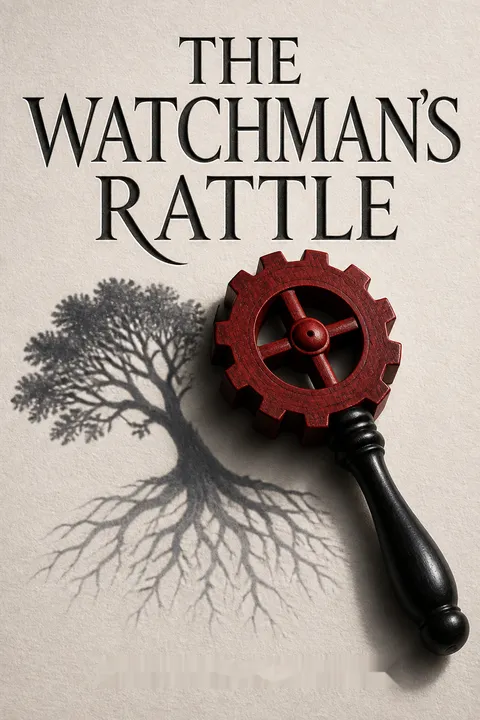
The Watchman's Rattle receives mixed reviews averaging 3.96/5. Supporters praise Costa's analysis of how civilizations collapse when complexity exceeds cognitive capacity, her identification of five "supermemes" (irrational opposition, personalization of blame, counterfeit correlation, silo thinking, extreme economics), and her insights on problem-solving through brain function enhancement. Critics fault her understanding of evolution, oversimplified arguments, lack of nuance, reliance on anecdotes over evidence, narrow Silicon Valley perspective, and the book's self-help tone. Several reviewers appreciate the provocative thesis despite flawed execution, while others find it either transformative or insufficiently rigorous.
People Also Read






Download PDF
Download EPUB
.epub digital book format is ideal for reading ebooks on phones, tablets, and e-readers.








































