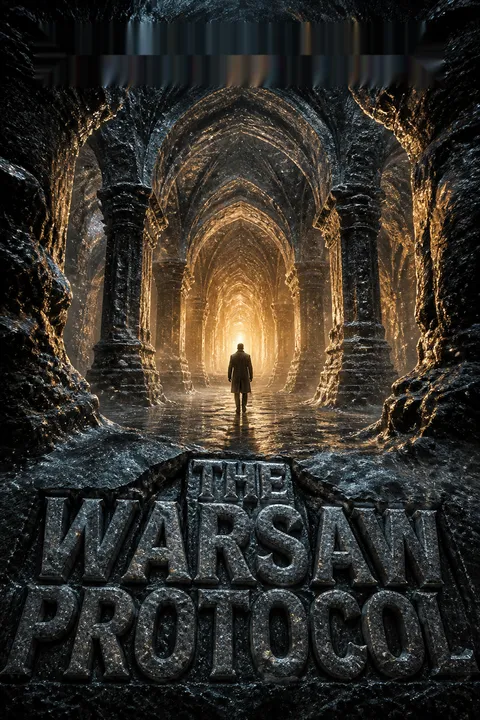

Plot Summary
Night and Fog Shadows
In 1982, under the iron grip of Soviet-backed communism, Poland is a land of fear, surveillance, and brutality. The prologue plunges us into the infamous Mokotów Prison, where Janusz Czajkowski, a young Pole, is forced to witness the torture of a fellow countryman. The experience is a crucible, forging in him both terror and resolve. The regime's cruelty is not just about extracting information—it's about manufacturing fear and compliance. The scene sets the emotional and historical backdrop for the novel: a nation traumatized by occupation, betrayal, and the ever-present threat of violence. The memory of this day, and the words of the Polish national anthem, will haunt Czajkowski and shape the choices he makes decades later, when the ghosts of the past return to threaten his future and the fate of his country.
Relics and Robberies
In present-day Bruges, Belgium, retired American agent Cotton Malone is drawn into a violent heist at the Basilica of the Holy Blood. Three armed men steal a revered Christian relic, using smoke and gunfire to create panic. Malone's instincts propel him into pursuit, leading to a dramatic chase through the city's canals. The theft is not an isolated crime but the latest in a string of mysterious relic disappearances across Europe. Malone's intervention entangles him in a web of international intrigue, as the stolen relics become the currency for a shadowy auction. The chapter establishes Malone's character—restless, principled, and unable to ignore injustice—and signals that the thefts are part of a larger, more sinister plot with global implications.
The Broker's Invitation
Jonty Olivier, a suave and amoral information broker, orchestrates a high-stakes auction. He invites the world's most powerful nations to bid on devastating secrets about Poland's president, Janusz Czajkowski. The price of admission: one of the legendary Arma Christi relics, each recently stolen. Olivier's operation is a masterclass in manipulation, exploiting greed, fear, and the hunger for leverage. The auction is to be held in a remote Slovakian castle, with elaborate precautions to ensure secrecy and security. The chapter introduces the central plot device—a blackmail auction that could topple governments—and the players: spies, mercenaries, and rival brokers, all circling like sharks. The stakes are not just personal but geopolitical, as the fate of Poland and the balance of power in Europe hang in the balance.
Power and Blackmail
President Czajkowski, now a respected leader, is confronted with the specter of his past. Documents have surfaced that could expose him as a communist informant, a revelation that would destroy his career and destabilize Poland. The American administration, led by the brash President Fox and his sycophantic aide Tom Bunch, seeks to use this information to force Poland into accepting U.S. missile deployments—an act that would provoke Russia and threaten European security. Czajkowski is caught between foreign pressure, domestic politics, and his own conscience. The chapter explores the psychology of power, the corrosive effects of blackmail, and the impossible choices faced by those in the crosshairs of history.
The President's Secret
Czajkowski's past as a coerced informant is revealed through a trove of documents kept by his former tormentor, Major Dilecki. The files, now in the hands of blackmailers, detail years of reluctant collaboration, double-dealing, and the moral compromises forced by survival under totalitarianism. The president's marriage is a façade, his closest relationships shaped by secrecy and necessity. As the auction approaches, Czajkowski seeks help from old allies and confronts the architect of the Warsaw Protocol—a clandestine operation that turned informants into double agents, blurring the line between heroism and betrayal. The emotional weight of guilt, shame, and the longing for absolution permeate this chapter, humanizing the political drama.
Alliances and Betrayals
Malone is recruited by his former boss, Stephanie Nelle, to infiltrate the auction and recover the blackmail material. He is joined—and sometimes opposed—by Sonia Draga, a brilliant Polish intelligence operative with her own agenda and a secret romance with Czajkowski. The Russians, led by the ruthless Ivan, are determined to prevent U.S. missiles in Poland at any cost, including murder. Rival broker Eli Reinhardt enters the fray, seeking to outmaneuver Olivier and claim the secrets for himself. Alliances are fluid, trust is scarce, and every player is both hunter and hunted. The chapter is a chessboard of espionage, where personal motives and national interests collide.
The Arma Christi Heists
The thefts of the Arma Christi relics—the True Cross, Holy Blood, Crown of Thorns, and others—are revealed as a coordinated campaign to assemble the "price of admission" for the auction. Each relic is both a symbol of faith and a tool of power, their thefts shrouded in secrecy by governments desperate to avoid scandal. The relics' history, real and legendary, is woven into the narrative, highlighting the enduring allure of sacred objects and the ways they can be exploited for political ends. The chapter explores the intersection of religion, myth, and realpolitik, as ancient symbols become pawns in a modern struggle for dominance.
The Auction's Deadly Game
The auction convenes in a Slovakian castle, with representatives from the U.S., Russia, China, Iran, North Korea, and France. Each brings a stolen relic, each seeks to buy or destroy the evidence against Czajkowski. The bidding escalates to astronomical sums, but the event is a trap: the Russians, with Reinhardt's help, massacre the other bidders, seeking to monopolize the blackmail material. Malone, Sonia, and Czajkowski's fates converge as violence shatters the fragile order. The chapter is a crescendo of suspense, betrayal, and moral reckoning, as the true cost of secrets is paid in blood.
Salt Mine Secrets
The surviving players race to the Wieliczka Salt Mine, where the blackmail documents are hidden beneath layers of history and salt. The mine, a vast underground city, becomes a stage for pursuit, confrontation, and revelation. Malone, Stephanie, Sonia, Ivan, and Reinhardt navigate its darkness, each seeking the prize for their own reasons. The mine is both a literal and symbolic underworld, where the past is preserved, secrets are buried, and the boundaries between right and wrong dissolve. The chapter is a masterclass in tension, as alliances shift and survival depends on wit, courage, and luck.
The Warsaw Protocol Unveiled
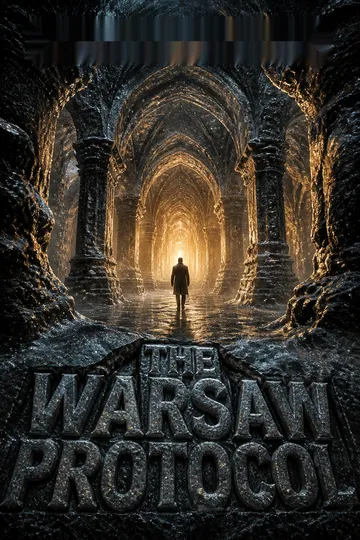
The truth of the Warsaw Protocol emerges: a clandestine operation that used informants to feed false information to the communists, sacrificing some to save many. Czajkowski's role is both damning and redemptive—he was a traitor and a patriot, a victim and a perpetrator. The protocol's architect, now a monk, guards the secret as both a burden and a shield. The chapter interrogates the nature of loyalty, the ethics of resistance, and the impossibility of clean hands in dirty wars. The past cannot be undone, but its meaning can be reclaimed.
Sacrifice and Survival
In a final confrontation in the salt mine, Malone defeats Ivan and Reinhardt, recovering the blackmail documents. Rather than deliver them to the Americans for political gain, he gives them to Czajkowski, choosing principle over expedience. Sonia orchestrates a cover-up, erasing the evidence and protecting Poland's fragile stability. The relics are returned, the dead are buried, and the survivors reckon with what they have done. Czajkowski and Sonia's relationship deepens, while Malone and Stephanie accept the personal costs of their choices. The chapter is a meditation on sacrifice, forgiveness, and the price of survival.
Truth in the Ashes
Czajkowski and his estranged wife Anna burn the last evidence of the Warsaw Protocol, choosing to let the past die so the future can live. He resolves to resist foreign pressure, defend Poland's sovereignty, and seek reelection on his own terms. Malone returns to Copenhagen, changed but unbroken, as Stephanie faces the end of her career with dignity. The novel closes on the themes of memory, identity, and the enduring struggle for freedom. The scars of history remain, but so does the hope that, as the Polish anthem declares, "Poland has not yet perished, so long as we still live."
Analysis
Steve Berry's The Warsaw Protocol is a sophisticated thriller that fuses historical trauma, political intrigue, and personal redemption. At its core, the novel interrogates the legacy of oppression—how the scars of totalitarianism linger in the psyche of individuals and nations, shaping choices long after the regime has fallen. Through the lens of espionage and blackmail, Berry explores the moral ambiguity of resistance: the line between hero and traitor is blurred, and survival often demands compromise. The use of sacred relics as bargaining chips underscores the ways in which faith and myth can be weaponized, while the salt mine serves as a powerful metaphor for the layers of history and guilt that must be excavated to reach the truth. The novel is also a critique of contemporary geopolitics, exposing the cynicism of great powers and the vulnerability of small nations caught in their games. Ultimately, The Warsaw Protocol is a story about agency—the courage to choose principle over expedience, to confront the past without being defined by it, and to reclaim dignity in the face of blackmail. Its lesson is both timely and timeless: freedom is never given, always fought for, and the cost of forgetting is always too high.
Review Summary
The Warsaw Protocol is the 15th Cotton Malone thriller by Steve Berry, featuring the former Justice Department agent caught up in an international conspiracy involving stolen Christian relics, Polish politics, and missile installations. Reviews are mixed, with ratings averaging 4/5. Fans praise Berry's historical research, vivid descriptions of Poland and locations like Wieliczka salt mines, and engaging plot. However, multiple reviewers criticized political bias against President Trump through the character "President Fox," finding it distracting. Some felt this entry lacked the historical depth of earlier books, while others appreciated the Polish history and geopolitical intrigue woven throughout.
People Also Read



Characters
Cotton Malone
Cotton Malone is a retired American intelligence agent, now a rare-book dealer, whose sense of duty and restlessness draw him back into danger. He is principled, resourceful, and haunted by the costs of his profession. Malone's relationships—with his former boss Stephanie Nelle, his lover Cassiopeia, and his adversaries—reveal a man who values loyalty and truth above all. Psychologically, he is driven by a need to make amends for past failures and to protect those who cannot protect themselves. Over the course of the story, Malone evolves from a bystander to a decisive actor, ultimately choosing to do what is right rather than what is expedient, even at personal risk.
Janusz Czajkowski
Czajkowski is the president of Poland, a man shaped by trauma, compromise, and the burden of leadership. His past as a coerced informant is both a source of shame and a testament to survival under tyranny. He is intelligent, pragmatic, and deeply patriotic, but also isolated by secrets and the demands of power. His relationships—with his estranged wife Anna, his lover Sonia, and his old allies—are marked by both affection and distance. Psychologically, Czajkowski is torn between guilt and the desire for redemption, forced to confront the moral ambiguity of resistance. His arc is one of self-acceptance and the reclaiming of agency in the face of blackmail and betrayal.
Sonia Draga
Sonia is a top agent of Polish intelligence, fiercely competent, emotionally guarded, and deeply committed to her country. Her relationship with Czajkowski is both personal and professional, blending love, loyalty, and shared trauma. She is a master of manipulation, able to navigate the shifting alliances of espionage with skill and ruthlessness. Psychologically, Sonia is driven by a need to protect those she loves and to atone for the violence her work requires. Her development is marked by increasing vulnerability and the willingness to risk everything for a future with Czajkowski.
Stephanie Nelle
Stephanie is the head of the Magellan Billet, Malone's former boss and a rare woman in the upper echelons of intelligence. She is calm, wise, and unflinchingly honest, but also weary from years of service. Her relationship with Malone is one of mutual respect and deep trust. Psychologically, Stephanie is defined by her sense of duty and her struggle to adapt to a changing world where loyalty is no longer valued. Her arc is one of graceful exit, accepting the end of her career with dignity and passing the torch to those she has mentored.
Jonty Olivier
Olivier is a cosmopolitan information dealer, charming, cultured, and utterly self-interested. He thrives on secrets, manipulation, and the thrill of the deal. His relationships are transactional, his loyalties for sale. Psychologically, Olivier is driven by a hunger for control and a fear of irrelevance. He is both hunter and prey, ultimately undone by his own machinations. His arc is a cautionary tale about the dangers of playing with fire.
Eli Reinhardt
Reinhardt is a rival broker, cunning, cold, and willing to do whatever it takes to win. He is a master of psychological warfare, exploiting weakness and sowing discord. His relationship with Olivier is one of mutual distrust and competition. Psychologically, Reinhardt is motivated by envy and a desire to prove himself superior. His development is a descent into violence and betrayal, culminating in his own destruction.
Ivan
Ivan is the embodiment of Russian realpolitik: brutal, pragmatic, and loyal only to the interests of the state. He is a killer without remorse, skilled at both violence and manipulation. His relationship with Reinhardt and the other players is transactional, governed by shifting alliances. Psychologically, Ivan is shaped by a lifetime of service to power, his conscience dulled by necessity. His arc is one of relentless pursuit, ending in poetic justice.
Tom Bunch
Bunch is the deputy national security adviser to President Fox, eager to please and out of his depth. He is arrogant, naive, and ultimately expendable. His relationship with Malone and Stephanie is antagonistic, marked by condescension and ignorance. Psychologically, Bunch is driven by a need for approval and a lack of self-awareness. His arc is a cautionary tale about the dangers of hubris and the costs of blind loyalty.
Anna Czajkowski
Anna is the First Lady of Poland, intelligent, poised, and emotionally detached from her husband. Their marriage is a political arrangement, sustained by mutual respect and shared ambition. Anna is resourceful, unafraid to act independently, and ultimately supportive of Czajkowski's survival. Psychologically, she is defined by resilience and adaptability, able to navigate the personal and political with equal skill.
Mirek Hacia
Hacia, once the mastermind of Solidarity's counterintelligence, is now a monk, burdened by the legacy of the Warsaw Protocol. He is enigmatic, principled, and haunted by the costs of resistance. His relationship with Czajkowski is one of mentor and confessor, offering both wisdom and absolution. Psychologically, Hacia is a man seeking peace after a life of necessary evil, his arc a meditation on the limits of redemption.
Plot Devices
The Blackmail Auction
The central plot device is a clandestine auction where nations bid for blackmail material on Poland's president, using stolen religious relics as entry fees. This device weaves together themes of faith, history, and realpolitik, creating a crucible where personal and national interests collide. The auction structure allows for escalating tension, shifting alliances, and the exposure of character under pressure. It also serves as a metaphor for the commodification of truth and the moral ambiguity of espionage.
The Arma Christi Relics
The theft and trafficking of legendary Christian relics provide both a literal and symbolic framework for the story. The relics are objects of veneration, but here they are reduced to bargaining chips in a game of power. Their history and mythos are used to explore the ways in which faith can be manipulated, and how the sacred is often profaned by politics. The relics also serve as a narrative device to connect disparate characters and locations, driving the plot forward.
The Salt Mine as Underworld
The Wieliczka Salt Mine is both a physical setting and a symbolic underworld. Its tunnels and chambers represent the layers of history, memory, and guilt that the characters must navigate. The mine is a place where the past is preserved, secrets are buried, and the boundaries between right and wrong blur. The descent into the mine mirrors the psychological descent of the characters, culminating in confrontation, revelation, and catharsis.
The Warsaw Protocol
The Warsaw Protocol is a plot device that reframes the meaning of collaboration and resistance. By revealing that many informants were actually double agents, the story complicates the binary of hero and traitor. This device allows for deep psychological exploration, challenging the reader to question the nature of loyalty, the ethics of survival, and the possibility of redemption. It also provides a mechanism for both blackmail and absolution, driving the emotional arc of the narrative.
Foreshadowing and Narrative Structure
The novel employs foreshadowing through historical flashbacks, prologues, and the gradual unveiling of secrets. The structure alternates between past and present, personal and political, building suspense and deepening character motivation. The convergence of multiple plotlines—Malone's investigation, Czajkowski's crisis, the auction, and the salt mine chase—creates a sense of inevitability and thematic resonance, culminating in a resolution that is both satisfying and morally complex.
Cotton Malone Series




About the Author
Other books by Steve Berry

Download PDF
Download EPUB
.epub digital book format is ideal for reading ebooks on phones, tablets, and e-readers.








































