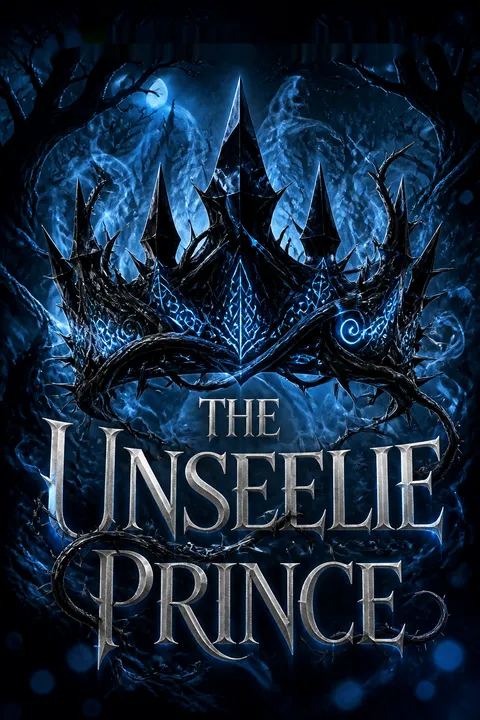

Summary Temporarily Unavailable
This summary is temporarily unavailable and is currently being updated. You can still explore the FAQs and other metadata below.
Plot Summary
Through the Portal's Veil
Ava, desperate and hunted, follows the Unseelie King Valroy through a portal, leaving behind the Web—a prison of possibility and horror. The new world is breathtaking and alien, its forests alive with ancient magic and watchful eyes. Ava's companion Bitty clings to her, both awed and terrified. Valroy, beautiful and monstrous, reveals that Ava's transformation into the Web's vessel is inevitable, regardless of her choices. The Seelie Queen Abigail appears, hinting at tangled family ties and deeper truths. Ava realizes she is a pawn in a centuries-old conflict, her body and soul the prize. The chapter closes with Ava's reluctant acceptance to join Valroy's court, knowing her humanity and life hang in the balance.
The Moonlit Court Unveiled
Led by Valroy, Ava witnesses the Moonlit Court—an impossible palace grown from living trees and obsidian, shifting with the king's will. The court is a parade of inhuman beauty and danger, each fae unique and predatory. Ava is introduced to her attendants: the enigmatic Lysander, the severe Ashta, and the antlered Thornwick. Bitty, terrified, is allowed to stay close. Ava is warned that in the Unseelie Court, power is perception, and she must play the part of a dangerous vessel. Her chambers are luxurious but unsettling, the palace itself alive and listening. As night falls, Ava steels herself for the court's scrutiny, aware that every gesture and word will be tested.
Dream Chains and Nightmares
Ava's sleep is invaded by Serrik, the exile and architect of the Web. Though she has left his domain, their connection persists—he is imprisoned within the entity now growing inside her. Their confrontation is fraught with anger, longing, and manipulation. Serrik offers half-truths and veiled threats, desperate to regain control. Ava, torn between attraction and fury, refuses to be anyone's weapon. The dream ends with Serrik's chilling admission: their fates are entwined, and only her choices can determine the outcome. Ava wakes, shaken, realizing escape from the Web is impossible—its influence is now within her.
Banquet of Masks
Dressed in a revealing gown meant to display her growing tattoos, Ava is paraded before the Unseelie court. The banquet is a spectacle of beauty, cruelty, and predation. Valroy and Abigail play their roles as rivals and lovers, each testing Ava's resolve. The courtiers whisper, plot, and probe for weakness. Lysander becomes her guide and shield, but warns that every kindness in the court is a calculated move. Ava's power is both coveted and feared. The feast is a dance of politics and danger, and Ava must decide whether to play along or rebel. The night ends with her more deeply enmeshed in the court's games.
Revels and Betrayals
The court's revels turn wild, blending beauty and horror. Lysander's flirtation offers Ava a brief respite, but the sense of being watched—by both fae and Serrik—never fades. The night is shattered by the arrival of Nos and Ibin, former friends now revealed as Valroy's spies. Their betrayal is a knife to Ava's heart, compounded by Bitty's complicity. In a surge of power, Ava banishes Nos and Ibin, stunning the court and earning Valroy's grudging respect. The cost is isolation—Ava realizes she can trust no one, and her transformation is accelerating. Alone, she faces the truth that in this world, every ally is a potential enemy.
The Web's True Hunger
Ava's next dream encounter with Serrik is a storm of rage, grief, and desire. Their fight becomes a battle of wills and bodies, culminating in a dangerous, consensual surrender. Serrik's venom erases Ava's resistance, binding her to him in mind and flesh. The experience is both ecstatic and terrifying, blurring the line between love and domination. When Ava wakes, she is haunted by the memory—unsure if her choices were truly her own, or the Web's influence. The tattoos have spread, and her connection to Serrik is deeper than ever. The hunger of the Web is not just for worlds, but for her soul.
Serrik's Dream Dominion
Haunted by the dream's intensity, Ava questions the reality of her feelings for Serrik. The tattoos continue to grow, marking her as the vessel. She seeks answers from Valroy, who confirms that the transformation is inevitable and the bracelet Serrik gave her is only a glamour—a comforting lie. Lysander and Bitty try to support her, but Ava is increasingly isolated by the knowledge that everyone has an agenda. The court's politics become more dangerous, and Ava realizes that her only hope is to seize control of her fate, even as the Web's influence grows.
Poisoned Consent
Ava's struggle for autonomy intensifies. She is courted by Valroy, manipulated by Serrik, and pressured by the court. The Morrigan appears in a vision, offering cryptic guidance and confirming that Ava's fate is her own to choose. The truth is elusive—every answer leads to more questions. Ava's power is both a weapon and a curse, and she is forced to confront the possibility that her choices may doom entire worlds. The chapter ends with Ava determined to uncover the truth, no matter the cost.
The Price of Surrender
Ava's alliances are tested as she seeks out Bayodan and Cruinn, ancient fae who offer a way to kill Serrik. The cost is high—Ava must nearly complete her transformation to wield the power needed. The court's politics reach a fever pitch, and Ava is forced to choose between trusting Valroy, Serrik, or herself. The price of surrender is not just her humanity, but the fate of all realms. As the council meets, Ava realizes that the only way forward is to confront the Web directly and claim her power.
Aftermath and Awakening
Determined to seize control, Ava enlists Lysander and Bitty to help her find a place to confront the Web's consciousness. In a mist-shrouded clearing, she uses the mirror shards and Book to unlock her true nature. The experience is overwhelming—Ava is shown that the Web is not just a prison, but a dream, and that her reality is more fragile than she ever imagined. The boundaries between worlds begin to blur, and Ava is forced to make a choice: surrender to oblivion, or claim her identity as the Weaver.
The Council's Games
Ava's awakening sends shockwaves through the Unseelie court. Valroy, furious and afraid, threatens her allies and demands she undo what she has done. Ava, now fully the Weaver, refuses to be a weapon for either Valroy or Serrik. She reveals the truth to her friends—that many of them are dreams, constructs of the Web, and that only a few are truly real. The court is thrown into chaos as Ava's power destabilizes the boundaries between worlds. The chapter ends with Ava preparing to force a final confrontation between the rival kings.
The Heart of the Maze
Valroy takes Ava to the heart of his power—a dead, weapon-studded tree at the center of the Maze. Here, the ancient entity within him calls to the Web inside Ava. The two powers are siblings, fragments of a greater whole. Valroy reveals that he was created as a vessel, while Ava is becoming one by accident. The heart of the Maze is both a source of power and a vulnerability. Ava realizes that the only way to break the cycle is to confront the Web directly and make her own choice, rather than be used by either king.
The Morrigan's Riddle
In a vision, Ava meets the Morrigan, who confirms that the final choice is Ava's alone. The goddess offers riddles and warnings, hinting that the truth may be too terrible to bear. Ava is shown that the mirror shards are not keys to a prison, but to herself—that she is the vessel, the lock, and the key. The Web is not just a prison, but a dream, and reality is more malleable than she ever believed. The Morrigan warns that Ava may choose oblivion over the truth, but the choice is hers alone.
The Thread Unravels
Armed with the truth, Ava uses the shards and Book to unlock her full power. The revelation is devastating: the Web is a dream, and most of her companions are constructs, not real beings. Serrik is a prisoner of his own making, and Ava's reality is a fiction. In her grief and rage, Ava tears open the boundaries between the Web, Tir n'Aill, and Earth, merging the three worlds in a catastrophic event. The consequences are immediate and dire—realities collide, and chaos reigns.
The Shattering Choice
In the aftermath of the merger, Ava is confronted by Serrik in his true, monstrous form. He confesses his love, but Ava is devastated by the scale of the lie and the loss of her friends' reality. She is offered a final choice: surrender her consciousness to the Web and become pure power, or remain herself and face the pain of existence. Ava chooses to remain, accepting the burden of knowledge and the responsibility for what she has done. The chapter ends with Ava and Serrik as the only true survivors of the Web's dream, facing an uncertain future.
The Dream's Terrible Truth
Ava awakens in a merged world, the boundaries between Earth, Tir n'Aill, and the Web shattered. The landscape is a patchwork of familiar and alien, and the rules of reality are broken. Serrik stands beside her, both liberated and lost. Ava realizes that her choice has consequences for all worlds—humans, fae, and dream-constructs alike. The cost of truth is the loss of innocence, and the burden of power is loneliness. Ava must decide what kind of Weaver she will be in this new reality.
The Worlds Collide
The merged world is chaos—cities twisted, fae and humans forced to coexist, and the Web's constructs struggling for identity. Ava's power is both a blessing and a curse, and she is hunted by those who fear her. Serrik, now free, is both ally and threat. The survivors must navigate a world with no boundaries, where dreams and reality are one. Ava's friends, real and imagined, must find their place in this new order. The war between Valroy and Serrik is inevitable, but Ava is determined to forge a third path.
The Weaver's New Dawn
In the ruins of the old worlds, Ava stands as the Weaver—a being of power, choice, and consequence. She is no longer a pawn, but a player. The future is uncertain, and the cost of her choices is high. But Ava is determined to shape the new reality, to protect those she loves, and to find meaning in a world of dreams. The story ends with Ava and Serrik facing the dawn of a new era, their fates entwined, and the war for the future just beginning.
Analysis
Kathryn Ann Kingsley's The Unseelie Prince (Web of Shadows, Book Two) is a dark, emotionally charged exploration of agency, identity, and the nature of reality. At its core, the novel asks what it means to be real in a world where dreams and manipulation are indistinguishable from truth. Ava's journey from pawn to Weaver is a powerful metaphor for self-actualization in the face of trauma and existential uncertainty. The story's use of unreliable narration, dream-logic, and shifting realities challenges the reader to question the boundaries between self and other, power and vulnerability, love and control. The revelation that most of Ava's companions are dream-constructs is a devastating commentary on loneliness and the human need for connection, even if that connection is illusory. The merging of worlds at the climax is both a literal and symbolic shattering of old paradigms, forcing all characters to confront the consequences of their choices. Ultimately, the novel suggests that agency—the power to choose, even in the face of overwhelming odds—is the only true form of freedom. Ava's refusal to surrender her selfhood, even when offered oblivion, is a testament to the resilience of the human spirit. The book's lessons are clear: reality is what we make of it, power is both a gift and a curse, and the only way forward is through the acceptance of truth, no matter how painful.
Last updated:
Report IssueReview Summary
The Unseelie Prince receives mixed reactions with a 3.76/5 rating. Fans praise the dark, villainous romance featuring cruel fae prince Valroy and witch Abigail, appreciating authentic Unseelie portrayals and Labyrinth-inspired vibes. Supporters enjoy the slow-burn enemies-to-lovers dynamic and rich worldbuilding. Critics cite poor chemistry, inconsistent characterization, repetitive dialogue ("chuckle," "fun"), and Abigail's lack of agency. Common complaints include dubious consent, graphic violence, and underdeveloped plot. Many note the cliffhanger ending. Readers either love the unapologetic villain protagonist or find his constantly-amused demeanor unconvincing. Trigger warnings include sexual assault, violence, and emotional abuse.
People Also Read
Characters
Ava Cole
Ava is a young woman thrust into a cosmic conflict, chosen (or cursed) to become the vessel for the Web—a sentient, reality-warping entity. Her journey is one of survival, self-discovery, and resistance against manipulation. Ava is fiercely independent, sarcastic, and deeply human, even as her body and mind are transformed by eldritch power. Her relationships—with Serrik, Valroy, Bitty, and others—are fraught with betrayal and longing. Psychologically, Ava is marked by trauma, abandonment, and a desperate need for agency. Her greatest fear is losing herself, either to the Web or to the agendas of those who would use her. By the end, Ava claims her identity as the Weaver, choosing selfhood over oblivion and accepting the burden of shaping a new reality.
Serrik (The Exile)
Serrik is the ancient, exiled fae who created the Web as both prison and weapon. Imprisoned in his own dream, he is both victim and villain—driven by vengeance against the fae and a desperate need for connection. Serrik is cold, calculating, and deeply lonely, masking his vulnerability with arrogance and manipulation. His relationship with Ava is complex—he is both her captor and her lover, her teacher and her adversary. Psychologically, Serrik is marked by centuries of isolation, guilt, and a longing for redemption. His love for Ava is genuine but twisted by his inability to trust or relinquish control. In the end, Serrik is forced to confront the consequences of his actions and the reality of his own monstrous nature.
Valroy (Unseelie King)
Valroy is the King of the Unseelie, a vessel for an ancient, destructive entity. He is beautiful, cruel, and endlessly bored—a creature of power who delights in games and manipulation. Valroy's relationship with Ava is adversarial but tinged with respect; he sees her as both threat and potential ally. His love for Abigail, the Seelie Queen, is genuine but complicated by their roles as enemies. Psychologically, Valroy is marked by a sense of inevitability—he was created to be what he is, and he resents both his fate and the limitations of his power. He is both a mirror and a warning for Ava, showing what it means to be shaped by forces beyond one's control.
Bitty
Bitty is a tiny, winged fae who serves as Ava's loyal friend and confidante. She is timid, anxious, and eager to please—a reflection of Ava's need for support and kindness in a hostile world. Bitty's existence is ultimately revealed to be a construct of the Web, a dream given form to help Ava cope with her isolation. Psychologically, Bitty represents Ava's vulnerability and longing for connection. Her loyalty is unwavering, but her fear of abandonment is ever-present. The revelation of her true nature is a devastating blow to both her and Ava, forcing a reckoning with the nature of reality and friendship.
Lysander
Lysander is the Master of Revels in the Unseelie court—a catlike, flirtatious fae who becomes Ava's guide and protector. He is witty, seductive, and seemingly loyal, but his true nature is that of a dream-construct, created to help Ava navigate the court's dangers. Lysander's psychological role is to embody Ava's adaptability and her need for agency in a world of shifting rules. His flirtation is both genuine and a reflection of Ava's desires. The revelation of his unreality is a crisis of identity for both him and Ava, highlighting the blurred line between dream and self.
Abigail (Seelie Queen)
Abigail is the Queen of the Seelie, Valroy's wife and sworn enemy. She is wise, empathetic, and deeply conflicted—torn between love for her husband and duty to her people. Abigail serves as a mentor and warning to Ava, urging her to claim her agency and resist being used as a weapon. Psychologically, Abigail represents the possibility of balance and the cost of power. Her relationship with Valroy is a study in love's endurance amid enmity. She is a mirror for Ava's own struggles with identity and choice.
Nos
Nos is a fae who infiltrates the Web as Valroy's spy, posing as Ava's friend. He is pragmatic, haunted, and ultimately self-serving—willing to betray Ava to secure his own freedom. Nos's psychological role is to embody the theme of survival at any cost, and the pain of betrayal by those we trust. His actions force Ava to confront the reality that in a world of power, loyalty is always conditional.
Ibin
Ibin is Nos's companion, a fae who appears to be a friend but is ultimately revealed as a participant in the web of manipulation. Ibin's existence is ambiguous—possibly a dream-construct, possibly a real soul trapped in the Web. Psychologically, Ibin represents Ava's hope for genuine connection and the pain of discovering that even hope can be manufactured.
Bayodan
Bayodan is an ancient, goat-legged fae who offers Ava a way to kill Serrik. He is wise, cunning, and deeply invested in maintaining balance between realms. Bayodan's psychological role is that of the mentor who offers forbidden knowledge, but at a price. He is both ally and manipulator, embodying the theme that every offer of help comes with strings attached.
Puck
Puck is a chaotic, silver-haired fae who delights in mischief and disruption. He is ancient, unpredictable, and seems to exist outside the rules of any realm. Puck's psychological role is to embody the unpredictability of fate and the necessity of embracing chaos. He is both comic relief and a reminder that not all forces can be controlled or understood.
Plot Devices
The Web as Dream-Prison
The central plot device is the Web—a prison that is not a place, but a dream, a shared reality constructed by Serrik and those trapped within. The Web blurs the line between real and unreal, allowing for constructs (like Bitty and Lysander) to exist as independent beings, yet ultimately reveals their nature as dreams. This device enables the story to explore themes of identity, agency, and the nature of reality. The use of the mirror shards as both literal and metaphorical keys underscores the idea that the true prison is the self, and the only escape is through self-knowledge.
Unreliable Narration and Foreshadowing
The narrative is structured around unreliable narration—every character has an agenda, and every answer is a half-truth. Foreshadowing is used extensively, with repeated hints that reality is not what it seems, and that Ava's companions may not be real. The use of dreams within dreams, visions, and cryptic warnings from the Morrigan and others builds tension and prepares the reader for the final revelation.
Power as Agency and Curse
Ava's transformation into the Weaver is both a source of power and a loss of agency. The plot device of the tattoos spreading as a visible marker of change externalizes her internal struggle. The choice to surrender to oblivion or claim selfhood is the story's central dilemma, and the consequences of power—both for oneself and for the world—are explored through Ava's actions.
Merging of Worlds
The climax is driven by the merging of the Web, Tir n'Aill, and Earth—a literal shattering of boundaries that forces all characters to confront the consequences of their choices. This device allows for the exploration of chaos, the unpredictability of fate, and the necessity of forging new paths in a world without rules.
Maze of Shadows Series
About the Author
Kathryn Ann Kingsley has been a storyteller throughout her career, beginning with scriptwriting for stage performances and Boston tourism. Her passion for romantically dark, fantastical tales was sparked by seeing The Phantom of the Opera in her youth. Beyond writing, she works extensively in video game development, holding positions including Creative Director, Chief of Staff, Design Manager, Executive Producer, and Principal Writer across various industry companies. She's known for crafting villain-centric romance novels. Kingsley shares her antique home with three fluffy animals and her patient, loving husband.
Other books by Kathryn Ann Kingsley
Download PDF
Download EPUB
.epub digital book format is ideal for reading ebooks on phones, tablets, and e-readers.








































