
Summary Temporarily Unavailable
This summary is temporarily unavailable and is currently being updated. You can still explore the FAQs and other metadata below.
Plot Summary
Grief's Frozen Threshold
Hanna Heikkinen arrives in the icy reaches of Lapland, Finland, to bury her estranged but beloved father. The landscape is as bleak and isolating as her sorrow, and she's haunted by regret and the weight of unfinished conversations. The funeral is meant to bring closure, but instead, it opens a door to the uncanny. Hanna's sense of reality is already fragile, and the cold, strange welcome she receives at her father's resort only deepens her unease. The world she enters is one where the boundaries between life and death, memory and magic, are thin as ice. Her grief is the key that unlocks the first of many doors to the unknown.
The Empty Casket Mystery
At the funeral home, Hanna's need for closure compels her to open her father's casket—only to find it empty. This shocking discovery shatters her fragile sense of reality. A mysterious stranger, Rasmus, appears, warning her to flee before it's too late. The people she thought she could trust—Noora and Eero—become menacing, their intentions unclear. Hanna is thrust into a nightmare where nothing is as it seems, and the line between hallucination and supernatural threat blurs. The empty casket is not just a symbol of loss, but a harbinger of a journey into a world where death is not the end, but a beginning.
Shadows in the Snow
Hanna's world unravels as Noora and Eero reveal their true, sinister natures. Rasmus rescues her from their clutches, and together they flee into the snowbound wilderness. The landscape becomes a liminal space, a threshold between the living and the dead. Hanna's trust is tested as she's forced to rely on Rasmus, a stranger with secrets of his own. The snow, once a symbol of purity, now conceals threats and ancient magic. Hanna's journey is no longer about mourning her father, but about survival and the search for truth in a world where every shadow hides a story.
Rasmus' Revelation
In the safety of her father's cottage, Rasmus unveils the hidden world Hanna's father inhabited—a world of shamans, gods, and portals to the Land of the Dead. Hanna learns her father's death was not natural, but a passage into Tuonela, the Finnish underworld, in search of a cure for his cancer. Rasmus, once her father's apprentice, becomes her reluctant guide. Hanna's skepticism is challenged by the evidence of magic and the weight of her own heritage. The revelation is both a burden and a call to adventure: to save her father, she must cross into the realm of death itself.
Crossing the Veil
Hanna faces the ultimate decision: return to the safety of the living world, or risk everything to save her father from Tuonela. Guided by love and guilt, she chooses the latter. Rasmus leads her to a frozen waterfall, the portal between worlds. The journey is fraught with warnings—her father's own message not to follow. Yet Hanna's resolve is unshakable. The crossing is both literal and symbolic: she leaves behind the world she knows, stepping into a land where the rules of life, death, and love are rewritten. The veil parts, and Hanna's true quest begins.
The Ferryman's Deception
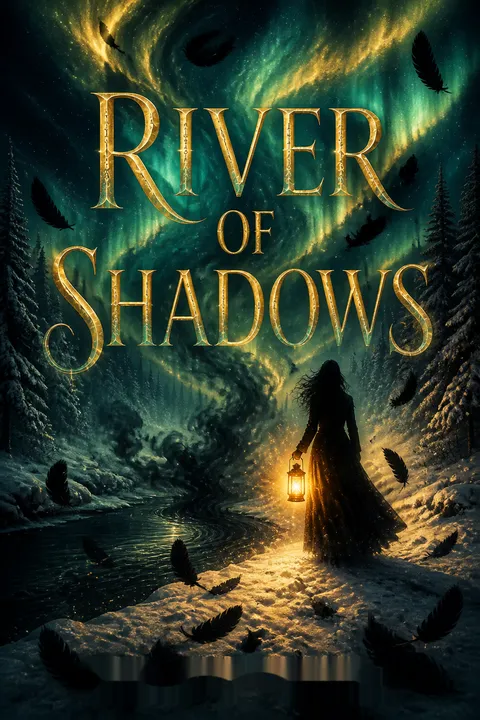
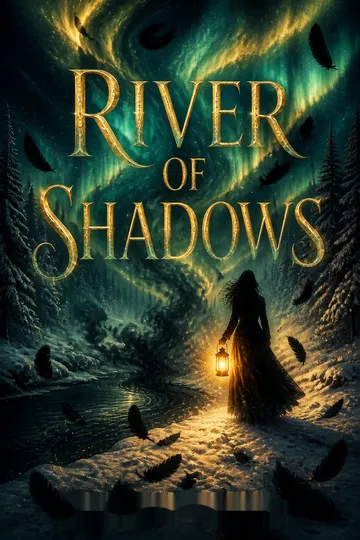
Hanna and Rasmus arrive at the River of Shadows, the threshold to Tuonela, where the dead are ferried to their afterlife. To cross, they must deceive Loviatar, the ferryman and Death's daughter, by pretending to be dead themselves. The journey is surreal and dangerous, filled with talking animals, undead swans, and the ever-present threat of discovery. Hanna's latent powers begin to surface, hinting at a destiny she cannot yet comprehend. The river is not just a passage, but a crucible—testing her courage, her identity, and her willingness to embrace the impossible.
Monsters of the Deep
The journey across Tuonela's Great Inland Sea is a descent into mythic terror. Hanna and Rasmus face the Devouress, a monstrous goddess of the deep, and are saved only by the intervention of Vellamo, the sea goddess, and her mermaids. The battle is both physical and psychological, forcing Hanna to confront her own fears and the limits of her power. The sea is a place of transformation, where Hanna's identity as a mere mortal is challenged. Each victory comes at a cost, and the journey leaves her changed, marked by the magic and violence of the underworld.
Bargains with Death
On the haunted plains of Tuonela, Hanna and Rasmus are captured by Death himself—Tuoni, the god of the underworld. In a moment of terror and sacrifice, Hanna bargains her own freedom for her father's life, offering herself as Death's prisoner. The bargain is both a surrender and an act of defiance, a testament to the power of love and the inevitability of loss. Death is not the monster she expected, but a complex, mercurial being, both cruel and strangely empathetic. The price of the bargain is not just her freedom, but her future, as she becomes entangled in the politics and passions of the gods.
The Daughter of Death
Hanna is taken to Shadow's End, Death's castle at the edge of the world, where she meets Loviatar, Death's formidable daughter. The castle is a place of beauty and menace, filled with gods, deadmaidens, and secrets. Hanna navigates a web of alliances and rivalries, learning that survival depends on wit as much as strength. Loviatar, once an adversary, becomes an unexpected ally, while the castle's denizens reveal their own agendas. Hanna's role shifts from captive to player in a larger game, as she discovers that her presence may fulfill an ancient prophecy.
The Castle of Shadows
Life in Shadow's End is both gilded and grim. Hanna is both pampered and imprisoned, her every move watched by Death and his servants. Yet within the castle's walls, she discovers her own latent power—a magic fueled by love, pain, and defiance. The castle becomes a crucible for transformation, as Hanna learns to wield influence, navigate court intrigue, and challenge Death's authority. The boundaries between captor and captive blur, and Hanna's relationship with Death grows more complex, charged with both danger and desire.
The Game of Power
The relationship between Hanna and Death becomes a game of seduction and strategy, each testing the other's limits. Hanna learns that power in Tuonela is as much about perception as reality, and that love and fear are two sides of the same coin. She forges alliances with unlikely figures—a mermaid in a tank, the head Deadmaiden, even Death's own daughter—each with their own stakes in the coming conflict. The castle is a chessboard, and Hanna must learn to play if she hopes to survive, let alone escape.
The Bride's Dilemma
Death announces his intention to marry Hanna, making her the new Goddess of Death and a symbol of his power. The wedding is both a political maneuver and a fulfillment of prophecy, meant to quell unrest and unite the realm. Hanna is torn between her growing feelings for Death and her longing for freedom and her father. The preparations for the wedding are fraught with tension, as old enemies plot and new dangers emerge. Hanna must decide whether to embrace her role or find a way to escape before the vows are spoken.
The Uprising Begins
On the day of the wedding, the castle is attacked—an uprising led by Rasmus and the forces of the Old Gods. The ceremony is thrown into chaos, and Hanna is forced to choose between her old life and her new one. Loyalties are tested, secrets are revealed, and the true stakes of the prophecy come to light. The uprising is not just a battle for power, but a reckoning with the past, as the sins of gods and mortals alike come due. Hanna's choice will determine not just her own fate, but the fate of Tuonela itself.
The Prophecy's Price
As the uprising rages, Hanna confronts the true meaning of the prophecy that has shaped her journey. To save her father, herself, and perhaps even Death, she must make an impossible choice—one that demands both love and sacrifice. The price of destiny is steep, and Hanna learns that power is never given, only taken. In the crucible of crisis, she discovers the strength to shape her own fate, even as the world around her is remade by violence and magic.
The Library's Secrets
In the heart of Shadow's End lies the Library of the Veils, a repository of all souls and secrets. Hanna is drawn to its forbidden knowledge, tempted by the power to rewrite fate itself. The library is both a sanctuary and a trap, filled with ghosts, living books, and the ever-watchful eyes of Death. Here, Hanna confronts the limits of her own power and the dangers of ambition. The secrets she uncovers will change the course of her journey—and the balance of power in Tuonela.
The Night of Surrender
In the darkness of the castle, Hanna and Death's relationship reaches a turning point. What began as coercion becomes something deeper, as both surrender to desire and vulnerability. The night is a crucible of transformation, where masks are dropped and true selves are revealed. Hanna discovers that love and power are intertwined, and that surrender can be a form of strength. The boundaries between mortal and god, captive and captor, blur in the heat of passion.
The Garden's Sunlight
For a brief moment, sunlight breaks through the perpetual gloom of Tuonela, illuminating the castle's hidden garden. Hanna and Death share a rare peace, a glimpse of happiness that seems almost possible. The garden is a symbol of hope and renewal, a place where love can bloom even in the shadow of death. Yet the peace is fragile, threatened by the forces gathering outside the walls. The sunlight is both a blessing and a warning: happiness in Tuonela is always fleeting.
The Wedding Interrupted
On the day of the wedding, as the prophecy hangs in the balance, chaos erupts. Rasmus returns, leading an assault on the castle and offering Hanna a chance at escape. Torn between love and freedom, duty and desire, Hanna must make a final, fateful choice. The wedding is interrupted, the future uncertain. As she flees into the unknown, Hanna leaves behind not just a castle, but a part of herself. The story ends not with closure, but with the promise of a new beginning—and the shadow of consequences yet to come.
Analysis
River of Shadows is a dark, mythic fantasy that reimagines the descent into the underworld as a journey of grief, love, and self-discovery. Drawing on Finnish mythology, the novel explores the porous boundaries between life and death, mortal and divine, power and vulnerability. At its heart, the story is about the cost of love—the sacrifices we make for those we've lost, and the bargains we strike with forces beyond our control. Hanna's journey is both literal and psychological: her grief becomes a portal to transformation, her love a source of unexpected power. The novel interrogates the nature of agency in a world shaped by prophecy and fate, asking whether we can ever truly escape the roles assigned to us. Through its lush, haunted settings and complex characters, River of Shadows offers a meditation on the ways we are shaped by loss, the allure and danger of power, and the possibility of forging meaning in the shadow of death. The lessons are both timeless and timely: that love is both a gift and a burden, that power is never without cost, and that the journey through darkness is, ultimately, a journey toward selfhood.
Last updated:
Report IssueReview Summary
River of Shadows receives mixed reviews with an overall 3.78/5 rating. Readers praise the unique Finnish mythology, atmospheric world-building, and steamy romance between Hanna and Death (Tuoni). Many appreciate the dark fantasy elements and comparisons to Beauty and the Beast/Hades and Persephone. However, common criticisms include excessive modern pop culture references that break immersion, a protagonist some found juvenile, underdeveloped romance chemistry, lack of plot depth, and rushed pacing. The book ends on a cliffhanger. Most reviewers found it entertaining despite flaws, with particular appreciation for the creative underworld setting and secondary characters.
People Also Read
Characters
Hanna Heikkinen
Hanna is a young woman marked by loss, regret, and a deep well of love for her estranged father. Her journey begins in grief but quickly becomes a quest for truth and agency. Hanna is fiercely loyal, stubborn, and skeptical, yet open to wonder and transformation. Her psychological arc is one of awakening: from passive mourner to active player in a world of gods and magic. She is haunted by guilt and the fear of not belonging, but her love—especially for her father—becomes a source of unexpected power. Hanna's relationships are complex: she is both a daughter and a potential goddess, a captive and a seductress, a pawn and a queen in the making. Her development is a dance between vulnerability and strength, love and sacrifice.
Tuoni (Death)
Tuoni is the enigmatic and mercurial ruler of Tuonela, the Finnish underworld. He is both terrifying and strangely human, capable of great cruelty and unexpected tenderness. Death is burdened by his role, isolated by his power, and haunted by prophecy. His relationship with Hanna is fraught with tension—he is her captor, her lover, her adversary, and perhaps her destiny. Psychologically, Tuoni is a study in contradictions: he craves control but fears vulnerability, wields power but longs for connection. His development is shaped by his interactions with Hanna, which force him to confront his own loneliness, desires, and the possibility of change.
Rasmus
Rasmus is a red-haired shaman, once apprentice to Hanna's father, now her reluctant guide and occasional betrayer. He is resourceful, cunning, and driven by his own ambitions—chiefly, the pursuit of immortality and power. Rasmus is both a savior and a manipulator, his loyalty always in question. He is haunted by his own past and the legacy of his mother, a Lapp Witch. Psychologically, Rasmus is torn between admiration for Hanna's father, envy, and a desire to prove himself. His relationship with Hanna is complex: protector, rival, and potential betrayer. His arc is one of shifting loyalties and the search for meaning in a world of gods.
Loviatar (Lovia)
Loviatar is the daughter of Death, tasked with ferrying souls across the River of Shadows. She is both intimidating and oddly relatable, blending divine power with human quirks. Lovia is fiercely loyal to her family but harbors her own ambitions and resentments. Her relationship with Hanna evolves from adversarial to supportive, as she recognizes a kindred spirit in the mortal girl. Psychologically, Lovia is shaped by her role as both daughter and gatekeeper, torn between duty and desire for freedom. She is a symbol of the blurred lines between life and death, power and vulnerability.
Torben Heikkinen
Hanna's father is the emotional heart of the story, his absence driving Hanna's journey. In life, he was a powerful shaman, a keeper of secrets, and a loving but distant parent. His decision to enter Tuonela in search of a cure for his cancer sets the plot in motion. Torben's legacy is one of love, sacrifice, and the burden of hidden truths. His relationship with Hanna is marked by regret and longing, but also by an unbreakable bond that transcends death. Psychologically, he is a man who chose magic over safety, love over self-preservation.
Noora and Eero
Noora and Eero are initially presented as allies, but quickly reveal themselves as antagonists. Both are powerful shamans with their own agendas, driven by jealousy, ambition, and fear of losing power. They embody the dangers of misplaced trust and the corrupting influence of magic. Psychologically, they are shaped by envy and the desire for control, willing to sacrifice others for their own gain. Their betrayal is a catalyst for Hanna's transformation and the escalation of conflict in Tuonela.
Sarvi
Sarvi is a bat-winged, skeletal unicorn, both terrifying and oddly refined. He serves as Death's loyal steed and occasional confidant, communicating telepathically. Sarvi is a relic of the Old Gods, embodying the violence and beauty of a world before order. His relationship with Hanna is marked by a grudging respect, and he often provides comic relief and wisdom. Psychologically, Sarvi is both predator and philosopher, a bridge between the mortal and divine.
Bell (The Little Mermaid)
Bell is a mermaid shrunken and trapped in a fish tank within Death's castle. She is both a victim and a survivor, her optimism and resilience providing Hanna with guidance and friendship. Bell's own longing for freedom mirrors Hanna's, and her escape becomes a symbol of hope. Psychologically, Bell is shaped by loss and adaptation, her perspective on love and power offering Hanna a different lens through which to view her own predicament.
Kalma
Kalma is Death's right hand, a god of graves and the old ways. He is both a stabilizing force and a reminder of the past, upholding the rituals and hierarchies of Tuonela. Kalma's relationship with Hanna is one of wary respect, and he often serves as a mediator between the mortal and divine. Psychologically, he is conservative, cautious, and deeply invested in the maintenance of order.
Surma
Surma is a skeletal, malevolent being, a personification of killing and the old, chaotic ways. He is both a threat and a symbol of the dangers lurking beneath the surface of Tuonela. Surma's actions catalyze the uprising and force Hanna and Death to confront the fragility of their power. Psychologically, he is driven by resentment, a desire to return to a world where violence reigned.
Plot Devices
The Journey to the Underworld
The narrative follows the classic hero's journey, reimagined as a daughter's descent into the underworld to save her father. Each stage of the journey—crossing the threshold, facing monsters, making bargains, and returning transformed—mirrors both mythic structure and psychological growth. The underworld is not just a place, but a state of mind, where grief, love, and power are tested.
The Bargain with Death
The central plot device is the bargain Hanna makes with Death: her freedom for her father's life. This trade is both literal and symbolic, exploring themes of agency, sacrifice, and the price of love. The bargain sets the stage for Hanna's transformation from victim to player, and for the shifting dynamics of power between mortal and god.
Prophecy and Destiny
The prophecy that a mortal bride will change the fate of Tuonela hangs over the narrative, shaping characters' actions and the unfolding of events. Foreshadowing is woven throughout—messages from the dead, warnings from gods, the humming of magical objects—creating a sense of inevitability and tension. The prophecy is both a trap and a possibility, forcing Hanna and Death to confront the limits of free will.
The Castle as Crucible
Shadow's End, Death's castle, is more than a backdrop—it is a crucible for transformation. The castle's shifting rooms, haunted libraries, and secret gardens mirror Hanna's psychological journey. Confinement becomes a space for awakening, as Hanna learns to wield power, form alliances, and challenge her captor.
The Game of Seduction and Power
The relationship between Hanna and Death is structured as a game—of seduction, strategy, and shifting power. Each uses desire as both weapon and shield, testing boundaries and seeking control. The game is not just about sex, but about survival, agency, and the possibility of love in a world ruled by death.
The Uprising and the Threat of Chaos
The looming uprising, led by the Old Gods and their relics, provides external conflict and raises the stakes for all characters. The threat of chaos—of a return to a world without order or mercy—forces Hanna and Death to confront their own roles in maintaining or disrupting the balance of power.
Underworld Gods Series Series
About the Author
Karina Halle is a New York Times bestselling author and screenwriter who has written over 80 romance novels spanning multiple sub-genres, from spicy romantic comedies to gothic horror and dark fantasy. She was formerly a music and travel journalist. Her notable works include Grave Matter, Blood Orange, and The Royals Next Door. Halle divides her time between Victoria, British Columbia, where she lives in a possibly haunted 120-year-old house, and Los Angeles. She lives with her husband and their dog, Perry. Her diverse catalog ensures she has written happily-ever-afters for virtually every reader preference.
Other books by Karina Halle

Download PDF
Download EPUB
.epub digital book format is ideal for reading ebooks on phones, tablets, and e-readers.








































