
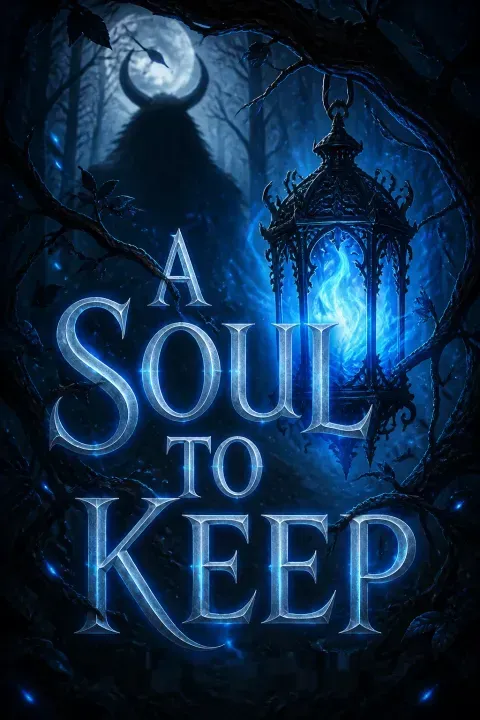


Plot Summary
Chosen for Her Anger
Reia Salvias,1 branded a harbinger of bad omens since a Demon attack killed her family when she was seven, is dressed in a ceremonial white gown by a disdainful Priestess. The village chief, Gilford,7 escorts her to the gates where Orpheus2 waits: a seven-foot Duskwalker with a wolf skull, Impala horns, and two ethereal wolf companions.
Two backup sacrifices, Clove10 and Darren,11 hover nearby, but Orpheus2 dismisses the man11 immediately and recoils from the red-haired woman10's overwhelming fear.
He grips Reia1's throat, demands her name, and, detecting rage rather than terror, pricks her wrist with a claw. A blue ward blazes into being as her blood seals the decade-long protection. He announces his choice, then steers her out of the only home she has known, toward the Veil.
This opening establishes transactional horror: a community trades a pariah for safety, cloaking cruelty in ritual. Orpheus's choice based on anger rather than fear immediately subverts expectations. Reia's defiance signals she will not be passive prey, while Orpheus's careful observation reveals an intelligence beneath the monster's skull. The blood ward introduces the story's central motif of binding through sacrifice, foreshadowing the deeper soul-trade to come.
A Laugh in the Jaws
Orpheus2 carries Reia1 through the snowy forest, her bare feet freezing until she curls in his arms. When she says his name softly, asking for the answer to a question, the moment is shattered by an arrow through his shoulder. Two Demonslayers ambush them, one seizing Reia1 with a blade to her throat.
Pain and rage morph Orpheus2 into a nightmare: dog-like legs, exposed rib bones, fish-sail fins, eyes blazing crimson. He butchers the first attacker, then lunges for the second who flees. Reia1 runs, then stops, remembering he hunts prey.
He tackles her, jaws widening around her skull. Instead of screaming, she laughs, a broken, hysterical giggle. The sound startles him. He sniffs her, licks her neck, and calms, explaining he tasted elderberries and roses rather than blood. She bandages his wounds with strips of her dress.
This sequence crystallizes the core tension: Orpheus is both protector and predator, his monstrous form a bodily expression of pain and hunger. Reia's laugh, a coping mechanism born of a lifetime of trauma, breaks the chase instinct by presenting something unpredictable. Her later act of bandaging him even after he nearly consumed her demonstrates an empathy that will define their relationship. The Demonslayers, supposedly humanity's champions, use her as bait, blurring the line between human and monster.
The Cabin Sanctuary
After a harrowing journey through the Veil, Orpheus2 carries Reia1 into a log cabin filled with candles, furs, and strange trinkets. He immediately carves a salt circle for protection and hangs fresh dill-and-bone charms.
Then he fills a wooden tub with steaming water conjured from his blood and explains she must let him wash her with a magical oil, twice daily, to hide her human scent from Demons. Though she resists at first, he warns that only prey squirms and threatens his control. Once clean, he kneels and places a silver diadem on her forehead, a teardrop sapphire dangling against her skin.
The circlet, he explains, will burn any Demon that touches it. For the first time, he seems not a monster but a caretaker, and Reia,1 exhausted, falls asleep in the room where other sacrificed humans once marked days on the walls before dying.
The cabin functions as both cage and cocoon. The washing ritual, while invasive, establishes a daily intimacy that will slowly erode Reia's defenses; it is a violation that becomes a vow. The salt circle and amulet reveal Orpheus's meticulous commitment to her survival, contrasting with the village's casual cruelty. The marked days on the wall serve as a silent memento mori, reminding readers and Reia that her fate hinges on something intangible: whether she can maintain the curiosity and courage that first caught Orpheus's attention.
Gloves Off
Days into her captivity, Reia1 asks Orpheus2 to bathe her without his gloves so the scent-cloaking spell lasts longer. He hesitates, then reveals dark-grey hands with protruding white knuckle bones. When he oil-slicked fingertips touch her bare skin for the first time, he is enraptured by her softness and she by the tingling scrape of his claws.
His ministrations grow slower, more attentive. That night, he wakes her, sniffing a strange scent he cannot name: her arousal. She lies still as he parts her thighs and swipes his long purple tongue between her folds, circling her clit until she shatters.
He pushes his tongue inside and inadvertently breaks her hymen; the taste of blood flares his hunger, but he regains control. Reia,1 horrified by her body's betrayal yet unable to deny the pleasure, begins to panic. Before dawn, she flees.
This threshold moment transforms their dynamic from captive-and-captor to something mutual and deeply confusing for Reia. Her desire is authentic but terrifying because it represents a surrender she never chose. Orpheus's awe at her physical response reveals his own loneliness and hunger for connection beyond flesh. The broken hymen, far from a crude plot device, literalizes the irreversible change in their bond: something inside her has been claimed whether she willed it or not, and that paradox drives her desperate escape.
Web of Sorrows
While Orpheus2 fetches water, Reia1 takes a dagger and bolts through the Veil. Her flight ends when sticky webbing ensnares her ankle. A towering arachnid Demon scuttles forward, its human torso twisted backward, multiple red eyes gleaming.
It does not kill immediately; instead, it projects images of her dead mother, father, and baby brother Caleb, contorting their faces to accuse her of bringing the Demons that slaughtered them. The Demon's power reaches into her deepest guilt, and Reia1 sobs. Orpheus,2 having tracked her scent, crashes through the trees in his monstrous form and grapples with the creature.
The Demon taunts him with memories of every human he has lost, but he rips her in two. Weakened by a venomous spine to his side, he collapses on the edge of unconsciousness, rasping at Reia1 to get inside the salt circle. She drags his massive body inch by inch as lesser Demons close in, fighting them off with his own sword until she gets him inside.
The Arachnid of Sorrows externalizes Reia's survivor guilt, showing how trauma warps memory into weapon. Orpheus's battle is both physical and psychological; the Demon's taunts about his past failures expose his own vulnerability. Crucially, Reia's rescue role inverts the damsel paradigm: she becomes the protector, slashing at enemies while hauling his dead weight. This act cements her agency and teaches Orpheus that she will not abandon him even when escape is possible, a revelation that begins to heal his centuries of rejection.
The Vigil
Orpheus2 lies in a venom-induced coma for two days. Demons claw at the cabin walls, hissing promises to tear her flesh. Reia,1 remembering how his cloak masked her scent, drags herself into his bed and burrows under his massive body. The Demons cannot smell her there, but they still torment her, scratching at the boarded window.
She changes the protection charms, retrieves water, and gorges on fruit from the garden. When he finally stirs, she is clutching his sword, dark circles under her eyes.
He wakes to find her small form pressed against his chest, and the realization that she chose to stay with him even when she could have fled or died sends a shock through his lonely heart. He nuzzles her, and they talk about her family's death; he tells her she is not a harbinger, that Demons simply could not smell her fear that night. Her tears dry as she hugs him.
This sequence transforms the cabin from prison to shared sanctuary. Reia's practical resourcefulness, hanging new talismans and burning bloodied cloth, demonstrates a survivor's competence. Orpheus's physical helplessness forces emotional vulnerability: for the first time, he cannot protect, only be protected. When he wakes and she does not recoil, something fundamental shifts. His explanation about fear and Demons dismantles the identity she was forced to wear since childhood, offering a new origin story not of curse but of simple, accidental survival.
Blood and Tenderness
Reia1's first period in the Veil triggers a crisis. The scent of blood sends Orpheus2 into a shuddering frenzy; he claws at his own back, banishes himself from the cabin, and patrols the barrier for three days. Reia,1 cramping and miserable, watches through the window as he suffers.
On the final night, he creeps into her room, eyes blazing red, jaws parting over her throat. Instead of fighting, she wraps her arms around his neck, strokes his fur, and asks him to keep his hand on her aching stomach.
Her calm, she discovers, dampens his hunger. They lie together, her fingers tracing his spine, and he confesses that her touch quiets the beast. When she asks him to undress so she can feel his skin directly, she discovers the seam where his cock is hidden and begins to explore.
The menstruation conflict literalizes the monstrous feminine: a natural bodily function becomes a lethal catalyst. Yet the resolution relies on a radical act of trust. Reia does not hide her blood; she embraces the predator it provokes, betting on the bond they have built. Orpheus's confession that her touch quiets his hunger introduces the core mechanism of their relationship: connection as antidote to destruction. Her later exploration of his alien body shifts power decisively, making her the curious investigator rather than the frightened specimen.
Unsheathing the Monster
Lying in the dark, Reia1 unbuttons his shirt and traces the fur, bone, and fins covering his torso. When she presses against his groin, she finds nothing where a human man's penis would be, only a seam. Orpheus,2 voice strained, explains his cock is hidden inside for protection.
As she strokes the seam, his shaft extrudes: thick, purple, spiraling, with four writhing tentacles around the base. He trembles, warning her of his fragile control. She wraps both hands around the girth, marveling at its texture, the frills and grooves. He begins to thrust into her grip, tentacles latching onto her arms.
When she squeezes harder near the swollen head, he warns her, then loses himself, his tongue shooting into her mouth as he spills across her stomach in thick, hot ropes. Afterward, he nuzzles her, and she asks about his past lovers; he mentions only one, long ago.
This scene performs a crucial narrative function: it takes the monstrous body and renders it not only desirable but vulnerable. Orpheus's anatomy, while alien, responds to touch with desperate need; the tentacles that could seem horrific instead cling for comfort. Reia's active curiosity, undimmed by his otherness, confirms her acceptance. Her later flicker of jealousy about his past lover plants the first seed of possessiveness, an emotion that will later explode when she meets Katerina. The act is not just sexual but existential: she has claimed a part of him no other human ever willingly touched.
The Fool Mavka
A second Duskwalker,3 with a fox skull and forking antlers, arrives at the cabin. He is gangly, wears only tattered shorts, and speaks in halting sentences. He has come for salt to protect his cave from a serpent Demon, but upon seeing Reia,1 he becomes fascinated.
She does not smell of fear, she trains with a sword, and she willingly stays with Orpheus.2 He asks Reia1 to give him a name, then pleads for advice on how to find and keep his own human. Orpheus2 is jealous and territorial, but Reia1 insists they help. While they talk, a winged Demon swoops down and grabs Reia.1
The fox-skulled Mavka3 fights it off, sustaining severe injuries. He collapses, then rabidly attacks the barrier trying to reach her before collapsing. Reia1 stays with him while he heals, teaching him about personal boundaries when he keeps trying to touch her face.
The nameless Mavka functions as a mirror: he is Orpheus before centuries of heartbreak taught him caution. His childlike ignorance about consent, names, and human emotions highlights how much Orpheus has learned, while also earning Reia's gruff sympathy. Her role expands from companion to teacher, a position that reinforces her power within the Duskwalker world. The flying Demon attack proves that her safety depends on more than one protector, and Orpheus's eventual agreement to take the Mavka to the Demon village represents a reluctant acceptance of community, forced by Reia's ethical insistence.
Veiled Among Demons
Orpheus,2 Reia1 (disguised in a deer skull and his cloak), and the Mavka3 travel for four days to a hidden city where intelligent Demons live much like humans. The village, shielded from sun by twisted trees, bustles with shops, food stalls, tailors, and musicians.
They visit Snush,8 a Demon clothier who outfits the Mavka3 with proper clothes. At a food stall, Orpheus2 stops Reia1 from eating pastries made of human meat, guiding her instead to vegetable-filled pockets. In a bookshop, a cat-eared Demon9 fawns over Reia1 when he realizes she is human, begging to see her expressions.
Following white feathers dropped by the Witch Owl,6 she finds three books: a sword-fighting manual, a children's tale collection marked at 'Beauty and the Beast,' and a bestiary. They return laden with fabric, cooking supplies, and materials for the Mavka3 to build his own cabin.
The Demon village sequence radically expands the world-building, revealing that humanity is not unique in its capacity for civilization, art, and cruelty. Demons are not uniformly evil; they are consumers of humanity in both literal and cultural senses, assimilating human craft even as they devour human flesh. The Witch Owl's intervention, guiding Reia to specific books, hints at a larger design. The cat bookshop Demon, with his earnest desire to understand human expressions, becomes a sympathetic figure, complicating any simple binary of monster versus human.
Katerina's Ghost
After their return, Reia1 asks Orpheus2 about the woman who used to live in the cabin.4 He confesses: nearly two hundred years ago, he hunted a remote house and found a woman named Katerina4 who showed no fear. She stayed with him for five years, demanding gifts, clothing, and a trip to the Demon village, but never smiled at him, never touched him willingly.
She told him she was not ready to give her soul. When the Demon King Jabez5 offered her escape, she took it, screaming that she had always hated Orpheus2 and every moment with him. Orpheus2's voice cracks as he recounts how she shattered his hope.
Reia,1 furious on his behalf, immediately begins destroying the old talismans Katerina4 had made, replacing them with her own. She tells Orpheus2 she will never leave him, and that night, she initiates their first full sexual union, asking him to fill her completely.
Katerina's story is the psychological wound that explains Orpheus's hesitance. Her prolonged emotional abuse, masked as survival, left scars deeper than any physical battle. Reia's response, immediate and possessive, is not jealousy but restorative anger: she literally replaces Katerina's remnants with her own creations. Their first full sex, following this confession, becomes an act of reclamation. Reia chooses him fully knowing his past, transforming what Katerina used as a cage into a shared home. The moment marks Reia's transition from reluctant guest to active partner.
The Demon King's Gambit
While Orpheus2 fetches water, a shirtless, gold-draped figure appears in the yard. Jabez,5 the Demon King, grins with pointed teeth and horns, stepping through the salt circle that should bar ill intent. He claims Reia1 is a prisoner and offers her freedom if she comes with him, but she sees through the ruse: he wants to use her to destroy Orpheus.2
When she refuses and runs, he teleports beside her, burns his hand tearing off the protection amulet, and whisks her to his castle. There, a beautiful black-haired woman in a red gown greets her warmly.
She introduces herself as Katerina,4 still alive after two centuries thanks to Jabez5's magic. Katerina4 spins a tale of shared victimhood, claiming she wants to help Reia1 escape the monster2 who ruined them both. Reia,1 hiding her true feelings, plays along while noting the dagger in Katerina4's sleeve and the guards outside her door.
Jabez's entrance as a seductive, muscled figure contrasts sharply with Orpheus's skeletal form, setting up a false binary of desirable versus monstrous. Katerina's resurrection transforms her from tragic memory to active threat, and her performance of sisterly solidarity is a masterful manipulation that preys on what she assumes is Reia's hatred of Orpheus. Reia's decision to feign agreement rather than rage demonstrates her growth as a strategist. The scene also reveals Jabez's motivation: he does not merely hate Mavka, he wants to eradicate them because they refuse to join his army against the Elves.
Steel Through the Heart
Orpheus2 sprints for an entire day and night, arriving at the castle in his monstrous form. Katerina4 meets him in the throne room, pretending she wants him back, claiming Reia1 willingly stayed with Jabez.5 When Orpheus2 turns away to search for Reia,1 Katerina4 raises a dagger aimed at his skull.
Reia,1 freed by biting Jabez5's hand and punching his seam, tackles Katerina.4 After a vicious struggle, Reia1 plunges her sword through Katerina4's chest. Jabez,5 enraged, throws the dropped dagger. It sinks between Reia1's shoulder blades.
Orpheus2 catches her as she crumples, a protective shield flaring around them from her spilling blood. Jabez5 removes the castle's cloaking aroma so Orpheus2 will be driven mad by the scent and consume her corpse, but all Orpheus2 feels is grief. Reia,1 dying, cups his snout and whispers that she wants to give him her soul.
This climax reconfigures the love triangle into a moral tableau. Katerina's murder attempt on Orpheus reveals her hatred as a choice, not mere survival; her death at Reia's hands is poetic justice delivered by the woman who chose what Katerina rejected. The shield conjured from Reia's blood without Orpheus's intent suggests that their bond has already taken on magical properties deeper than any ward. Her dying request to give her soul transforms the ultimate sacrifice from tragedy to active gift, reversing the earlier blood ward where her blood was taken without consent.
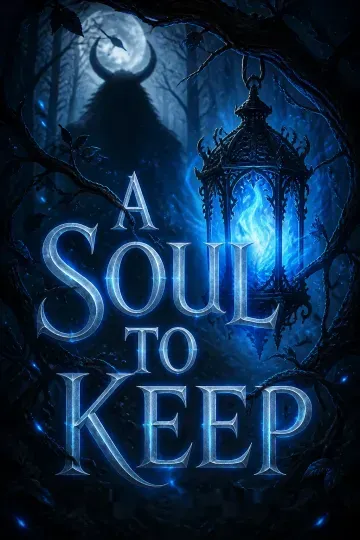
A Soul to Keep
As Reia1's life fades, a warm glow rises from her chest. Her soul appears, a tiny fiery woman kneeling in her cupped palms, reaching toward Orpheus.2 He opens his jaws and swallows it. Her body disintegrates into ash in his arms. Orpheus,2 believing he has failed, rages against Jabez5 until the Demon King5 teleports him away.
Back at the empty cabin, Orpheus2 searches frantically for Reia,1 then sprints into the forest, a single bell jingling from his horn. Her ghost materializes, floating above him. She cannot touch him, cannot make him hear her clearly.
Finally, she wills herself solid and lands on the ground. He whirls, and she cups his snout, telling him she is a Phantom now, bound to him. His eyes, which had been leaking glowing tears, brighten. She explains: just as his wounds heal in a day, she will reappear by his side within a day of any death.
The soul-eating, presented as monstrous consumption, is in fact the ultimate act of keeping: he takes her into himself where she can never be lost. Her transformation into a Phantom resolves the central tension of mortality that haunted their bond. The single bell, a remnant of the gift she made him, becomes an auditory symbol of incomplete wholeness until she returns to make it a pair. Her inability to touch him as a ghost literalizes the emotional distance they have overcome, and her reclaiming of physical form is an assertion that their love can bridge even death.
The Witch Owl's Truth
The morning after their reunion, Reia1 finds a white feather on the windowsill. Outside, the Witch Owl,6 in her human form, a dark-skinned woman cloaked in feathers, waits in a tree. She reveals that eons ago, she was a human who gave her soul to the void, a spirit of darkness, mating with it to birth the Duskwalkers.
Orpheus2 is her son. When Reia1 asks about the children's book, the Witch Owl6 laughs: the 'Beauty and the Beast' tale was her way of showing Reia1 that love can bloom across monstrous difference. She warns that as a Phantom, Reia1 can now conceive with Orpheus.2
Horrified, Reia1 realizes she has already had unprotected sex. The Witch Owl6 tells her Orpheus2 can learn a spell to seal her womb. Reia,1 relieved later when her period arrives, confronts Orpheus,2 who immediately sets to learning the spell, not wanting to lose the intimacy she might deny him otherwise.
The Witch Owl's revelation retroactively explains the entire story's cosmology. Orpheus's loneliness was not random but inherited, a product of a mother who could guide but not embrace. The Phantom pregnancy reveal adds a new dimension of bodily autonomy for Reia, who must now negotiate the consequences of her immortality. The Witch Owl's use of 'Beauty and the Beast' as parable acknowledges the fairy-tale structure of the romance while grounding it in an origin story that is far stranger and more tragic than the sanitized version.
The Promise of Forever
Weeks later, Orpheus2 takes Reia1 to the surface to hunt. She sits in a sunny meadow while he fails to catch deer, his bells now a matched pair. She has decided to wait the remaining nine years of the village's protection ward before asking him to cast it around their cabin instead, so they can travel without their home being destroyed.
When she mentions wanting revenge on Chad, the man who tormented her as a child, Orpheus2 turns toward her old village without hesitation. They discuss feeding him to the fox-skulled Mavka3 so he can gain more humanity.
Reia1 reflects that she is no longer human but something else, a Phantom bride1 bound to a soul-eating Duskwalker.2 She does not mind. The world is vast, and they have forever to explore it together, returning always to the candle-lit cabin where she first learned to laugh in the jaws of a monster.2
The ending inverts the opening's claustrophobia. Where Reia was once a prisoner of the village, she now returns as an agent of judgment, with a lover who is eager to enact her justice. The ten-year waiting period becomes a marker of patience rather than imprisonment, a choice to preserve their home rather than abandon it. The shift from 'harbinger of bad omens' to Phantom bride completes Reia's arc: she has become exactly what the village feared, a creature of death and darkness, but on her own terms and for her own love. The matched bells on Orpheus's horns sing a quiet duet, the sound of two solitary beings who chose to ring together.
Analysis
A Soul to Keep operates on a deceptively simple premise: a woman is sacrificed to a monster,2 and they fall in love. But Reyne uses this frame to interrogate deeper questions about consent, otherness, and the anatomy of belonging. Reia1's journey from outcast to Phantom bride1 is not about being tamed or rescued; it is about discovering that the very qualities her human community punished, her lack of fear, her stubborn anger, her capacity to laugh in the face of death, are precisely what make her suited to a life beyond human limitation. The novel repeatedly inverts the expected power dynamics. Orpheus,2 for all his physical might, is emotionally the weaker party, so desperate for affection that he builds houses, gardens, and entire ritual systems to court beings who mostly despise him. Reia,1 the sacrificial lamb, becomes the protector, the teacher, the one who refuses to let him wallow in self-pity. The erotic scenes function as more than titillation; they are negotiations of trust where Orpheus2's alien body is gradually revealed and accepted, each new discovery a step toward mutual vulnerability. The secondary characters enrich the thematic tapestry: Katerina4 is the path not taken, a woman who could not see past the monster to the man, while the fox-skulled Mavka3 represents the raw potential of Duskwalkers before heartbreak teaches them caution. The Witch Owl6's maternal design suggests a cosmic order that is neither benevolent nor malevolent but invested in the survival of her strange children. At its core, the novel argues that love is a choice made again and again, a soul willingly given rather than taken, and that freedom is not the absence of cages but the ability to choose which ones to call home.
Review Summary
A Soul to Keep is a divisive monster romance novel with high steam levels. Many readers praise the sweet relationship between the human Reia and the monster Orpheus, along with the creative worldbuilding. Critics cite issues with pacing, writing quality, and length. The book features explicit sexual content and some problematic elements. Fans of The Ancient Magus' Bride may enjoy it. Overall, reviews are mixed, with some readers loving the unique monster romance and others finding it poorly executed or too long.
People Also Read


Characters
Reia Salvias
The Outcast BrideA 26-year-old human woman with straight blonde hair, pale skin, and forestry-green eyes. Orphaned at seven when Demons slaughtered her family while she hid silently in a corner, Reia was branded a harbinger of bad omens by her village and forced to live alone, shunned and abused. Her defining trait is a stubborn, defiant courage that borders on recklessness; she laughs when terrified, swings a sword against monsters, and refuses to cower. Beneath her prickly exterior lies a deep well of loneliness that Orpheus2's steady kindness slowly fills. She is practical, curious, and fiercely loyal, qualities that transform her from a sacrificial victim into a Phantom bride who actively chooses her monstrous partner2. Her journey traces an arc from helpless prisoner to powerful, immortal agent who reshapes her own mythology.
Orpheus
The Lonely DuskwalkerA seven-foot-tall Duskwalker with a polished wolf skull, spiraling Impala antelope horns, glowing blue orbs for eyes, and a body covered in dark-grey skin, wolf-and-deer fur, protruding bones, and fish-like sail fins. He wears black clothing that hides his inhuman form. Created from the union of the Witch Owl6 (a Phantom) and the void, he is a soul-eater who has craved human flesh and companionship for centuries. Over 180 years, he took nineteen human offerings, each of whom either died, fled, or was stolen, leaving him increasingly desperate and lonely. His desires are dual: he hungers for flesh and connection simultaneously. Beneath his fearsome exterior, he is gentle, attentive, deeply romantic, and almost comically anxious about his human's comfort. He learns to cook, builds furniture, and makes charms, all in hopes of earning a soul that will stay. His arc moves from possessive predator to devoted partner who learns to trust and be trusted.
The Fox-Skulled Mavka
The Foolish BrotherA less-developed Duskwalker with a fox skull and forking deer antlers, standing taller than Orpheus2 but far less articulate. He lives in a cave, wears stolen human pants tied with rope, and has never visited the Demon village. His mind is childlike: he does not understand names, personal boundaries, or why Reia1's laughter is strange. He repeatedly asks to touch her face and must be taught that 'no' means no. Despite his simplicity, he shows genuine courage when he fights a winged Demon to save Reia1, and he feels shame when he later attacks her in a pain-fueled rage. His desire for a human companion of his own mirrors Orpheus2's early loneliness, and Reia1's advocacy for him forces Orpheus2 to overcome his possessiveness. His journey culminates in being gifted tools and knowledge to build a cabin and seek his own bride.
Katerina
The Bitter BetrayerA voluptuous human woman with black hair, blue eyes, and a face full of freckles who lived with Orpheus2 for five years nearly two centuries ago. She presented herself as a compliant companion, accepting his gifts, his shelter, and his body, but secretly despised him as a monster2. When the Demon King Jabez5 offered her escape, she left Orpheus2 with cruel words, claiming she had always hated him. Kept alive by Jabez5's magic, she has spent two hundred years nursing her bitterness, amused by Orpheus2's continued suffering. She is vain, manipulative, and pathologically self-centered, mistaking her own lack of courage for victimhood. Her attempt to murder Orpheus2 with a dagger to his skull reveals that her hatred has calcified into a desire for his destruction, and her death at Reia1's hands serves as both justice and closure for the trauma she inflicted.
Jabez
The Hybrid Demon KingA tall, heavily muscled being with tanned skin, pointed Elf ears, curling horns, blue-white hair, and sweeping black markings across his body. He is the product of a Demon assaulting an Elf, and he fled his home world by creating a portal that brought Demons to Earth. He built the Veil as a sanctuary and rules from a stone castle, surrounded by servant Demons. His motivation is twofold: he despises Mavka for refusing to join his army against the Elves who hunted him, and he enjoys tormenting Orpheus2 by stealing his human offerings. Despite his cruelty, he shows genuine, if possessive, attachment to Katerina4. He can teleport, conjure barriers, and manipulate illusions. His defeat is not a death but a tactical retreat after Reia1's transformation leaves her beyond his reach.
The Witch Owl
The Guiding MotherAn ancient Phantom who was once a human woman but gave her soul to the void, becoming a shape-shifter who can appear as a dark-skinned human in a white feather cloak or a large white owl. She is the mother of all Duskwalkers, having mated with the void spirit to birth them. She watches over her sons from a distance, leaving gifts like the protection amulet and intervening when they are in danger. Her motives are maternal but cryptic; she speaks in riddles and leaves clues rather than direct help. She guided Reia1 to the bookshop, where three specific books prepared her for her eventual role as Orpheus2's bride. She can see the future in fragments and acts to steer events toward outcomes that benefit her children, but she does not force or control.
Gilford
The Village ChiefThe pragmatic, weathered chief of Reia1's village who orchestrates her sacrifice. He is not cruel for cruelty's sake but is willing to trade one ostracized life for a decade of protection. He respects the Duskwalker2's power and fears offending him.
Snush
The Demon TailorA tall Demon clothier in the Demon village who wears a pinstriped coat and mouse-like horns. He has tailored clothes for Orpheus2 for decades and is cheerfully mercenary, delighted by the crystal shards Orpheus2 trades. He is one of the first friendly Demons Reia1 meets.
The Cat Bookshop Demon
The Bookish CreatureA small, feline Demon with whiskers, a tail, and cat ears who runs a bookshop in the Demon village. He adores human books and is giddy to meet a living human, asking Reia1 to show him expressions like smiles, pouts, and winks. He is harmless, curious, and represents the potential for Demons to appreciate humanity beyond consumption.
Clove
The Willing SacrificeA red-haired young woman from Reia1's village who volunteers as a backup sacrifice out of curiosity about the Veil. She is beautiful and initially eager, but her fear becomes overwhelming when Orpheus2 approaches her, leading him to reject her in favor of Reia1.
Darren
The Noble VolunteerAn 18-year-old man with black curly hair, one of the backup sacrifices. He volunteered to protect his six siblings. He is one of the villagers who threw food at Reia1 from a distance, and she holds a grudge against him. Orpheus2 refuses him, stating he does not want another male.
Plot Devices
The Protection Amulet
Burns Demons on contactA silver diadem circlet with diamond crystals and a dangling sapphire teardrop, left by the Witch Owl6 eons ago with a note instructing Orpheus2 to give it to his human offerings. When worn, it causes weak Demons to recoil in agony if they attempt to touch the wearer, and even strong Demons experience burning pain. It does not prevent physical strikes or claws, but it offers a crucial layer of defense. Jabez5 tears it from Reia1's head before abducting her, knowing it would hinder his ability to control her. Its eventual return to Reia1 symbolizes the restoration of her protected status.
The Scent-Cloaking Oil
Hides human scent from DemonsA magical oil that Orpheus2 applies to Reia1's skin during daily baths. It must be administered by his own hands to activate the spell, which masks her human smell from other Demons in the Veil. The ritual is both practical and intimate, becoming the vector through which their physical relationship develops. Without it, Demons swarm the cabin, as demonstrated during her period and after the rainstorm. The oil's effectiveness fades within a day, necessitating the twice-daily baths that structure their daily routine. Orpheus2's blood sacrifice to conjure the bathwater hints at the larger magic system of exchange.
The Salt Circle and Charms
Wards that repel DemonsA circle of salt carved into the ground around the cabin, combined with hanging bundles of dill, red berries, jingle bells, and small animal bones, creates a magical barrier that prevents Demons from entering. The charms require maintenance as their organic materials wither; humans can craft them as well, which Reia1 learns to do. The barrier does not stop beings who mean no genuine harm, as shown when the fox-skulled Mavka3 steps through it. Disrupting the salt line, even by dragging a body across it, breaks the ward. The fragility of these protections emphasizes the constant danger of the Veil and Reia1's reliance on Orpheus2's knowledge.
Soul-Giving and Phantom Rebirth
Binds human and Duskwalker eternallyThe central supernatural mechanism of the series: a human can willingly give their soul to a Duskwalker, who consumes it. This act transforms the human into a Phantom, an immortal spirit being who can shift between physical and incorporeal forms and is anchored to the Duskwalker. The soul, once eaten, satisfies the Duskwalker's eternal hunger permanently. The human's body regenerates after death within a day, reappearing near their Duskwalker. The Witch Owl6, herself a Phantom, describes this as walking on the cusp of life and death. This transformation also makes the human capable of bearing Duskwalker children, a fact the Witch Owl6 warns Reia1 about.
The Witch Owl's Books
Foreshadowed training and parableDuring the visit to the Demon village bookshop, the Witch Owl6 leaves white feathers that guide Reia1 to three specific books: a sword-fighting manual, a bestiary of mythical creatures, and a children's story collection with a feather marking 'Beauty and the Beast.' The fighting manual allows Reia1 to train independently and improve enough to defeat Katerina4. The bestiary broadens her understanding of the supernatural world, preparing her to accept truths like Elves and Phantoms. The fairy tale serves as a thematic mirror to her relationship with Orpheus2, the Witch Owl6's way of reassuring her that love across difference is possible and that she is writing her own version of the story.
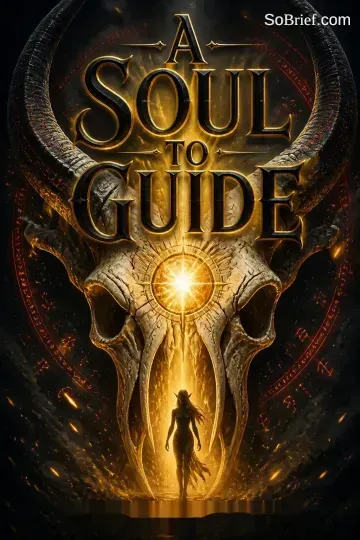
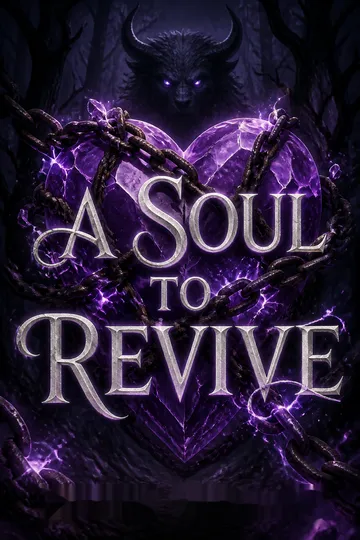
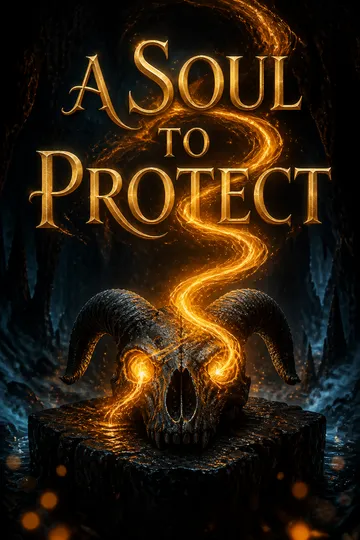
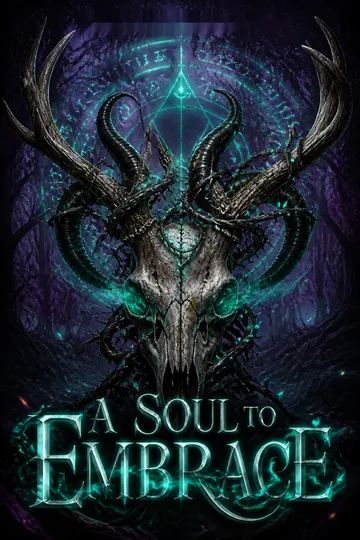
Duskwalker Brides Series
About the Author

Download PDF
Download EPUB
.epub digital book format is ideal for reading ebooks on phones, tablets, and e-readers.








































