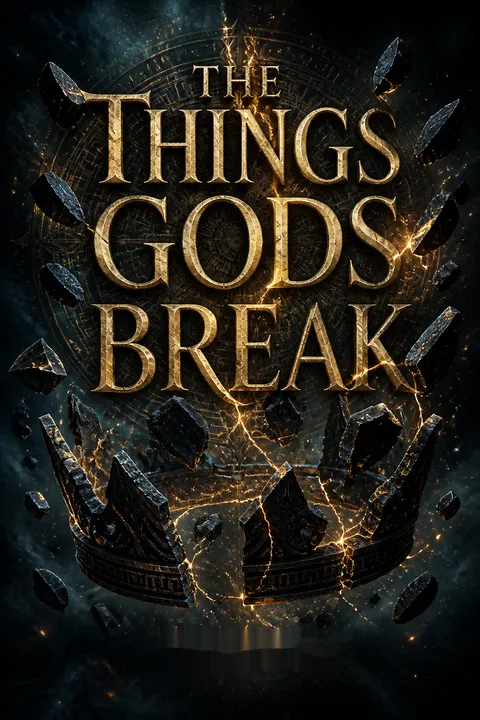

Plot Summary
Gates of Tartarus Open
Lyra Keres, newly crowned Queen of the Underworld, and her friend Boone are violently pulled through the gates of Tartarus by Cronos, King of the Titans. Separated from Hades, Lyra's lover and the new King of the Gods, she faces the terror of being trapped in the gods' most infamous prison. Cronos, both menacing and strangely paternal, claims Lyra is destined to free the Titans. The gates slam shut, cutting Lyra off from Hades and hope. The air is thick with dread, and the only way forward is through a series of deadly "Locks"—magical trials that have kept the Titans imprisoned for millennia. Lyra's journey begins with fear, loss, and the weight of impossible expectations.
Broken Time, Broken Hearts
As Lyra falls into the abyss, she's swept through cracks in time—moments from her own past and Hades' history. Each time she's pulled into a different era, she witnesses pivotal events: Hades' childhood, the trauma of the gods' war, and her own abandonment. These time fractures are both a torment and a puzzle, revealing that Cronos' attempts to escape Tartarus have broken time itself. Lyra's heart aches with every vision, especially as she sees Hades' pain and her own role in shaping his fate. The emotional toll is immense, and the sense of being unmoored in time deepens her desperation to return home.
The Labyrinth's First Lock
The first Lock, created by Hestia, goddess of hearth and home, is a trial of desire and sacrifice. Stripped of her powers, Lyra is thrust into an illusion of the life she always wanted: loving parents, freedom from her curse, and a future with Boone as her partner. The temptation is overwhelming, but the cost is forgetting her true self and Hades. With pain and clarity, Lyra chooses to break the illusion, sacrificing her deepest wish to reclaim her reality. The Lock is unsealed, but the emotional wounds linger, and the monsters of Tartarus—both literal and psychological—close in.
Illusions of Home
Lyra's next trial is a cruel echo of her childhood: a home she never truly had, parents who never loved her, and the seductive promise of belonging. The Lock's magic forces her to confront the lies she's told herself and the pain of abandonment. Boone, caught in his own illusion, is nearly lost to the fantasy. Together, they shatter the Lock's hold, but not before Lyra is hunted by Nightmares—monsters that prey on her memories and fears. The cost of survival is the loss of innocence and the realization that home is not a place, but the people she chooses.
Nightmares and Revelations
Escaping the Lock, Lyra and Boone are confronted by the Nightmares and the Titans themselves. The Titans, once feared as monsters, reveal their humanity, their grief, and their hope for freedom. Rhea, Cronos' wife, becomes an unexpected ally, sheltering Lyra and Boone and sharing the prophecy that Lyra is their only hope. The Pandemonium—an invisible, rage-inducing force—haunts the tunnels, and the threat of losing oneself to madness is ever-present. Lyra's trust is tested, and the lines between enemy and friend blur as she learns the Titans' true story.
Titans' Bargain
Lyra strikes a deal with the Titans: she will attempt to unseal the remaining Locks in exchange for their oath not to harm the world if freed. The Titans, desperate and weary, agree, but the path forward is fraught with danger and deception. Training for the next Locks is grueling, and the emotional stakes rise as Lyra and Boone confront their own limitations and the possibility of failure. The Titans' history—of love, betrayal, and loss—unfolds, deepening Lyra's empathy and sense of responsibility. The bargain is sealed, but the cost of freedom grows heavier.
Monsters in the Dark
Each new Lock is a test of body and spirit: chariot races against Hades' hell horses, battles with zombies, and the relentless threat of the Pandemonium. Boone and Lyra rely on each other, their partnership forged in adversity. The Locks strip them of their powers, forcing them to rely on wit, courage, and trust. The emotional toll mounts as they witness the suffering of others—Titans driven mad, friends lost to illusions, and the ever-present fear of death. The monsters of Tartarus are not just creatures, but the shadows of regret, guilt, and longing.
Time's Cruel Lessons
As Lyra is swept through more cracks in time, she learns the devastating truth: the gods' war was built on a lie, the Titans were glamoured—magically deceived—into being seen as monsters, and the prophecy that she would free them is itself a manipulation. Lyra's own curse, her unlovability, is revealed to be a self-fulfilling loop, and Boone's presence is not fate, but the result of choices made by those seeking to control the future. The lessons of time are harsh: destiny is not fixed, and the cost of freedom is sacrifice.
The Locks Unsealed
One by one, the Locks fall: Demeter's test of kindness, Poseidon's trial of endurance, Hera's deadly gauntlet of monsters, and Zeus' elemental chaos. Each victory is hard-won, often at the price of pain, death, and time resets. The final Lock, Aphrodite's, demands the ultimate sacrifice: Cronos gives his life so Lyra can escape. The Titans are freed, but at a terrible cost. The gates of Tartarus swing open, and the world trembles as ancient powers are unleashed. Lyra inherits Cronos' power over time, becoming the new goddess of time.
Sacrifice and Salvation
Cronos' sacrifice is both heartbreaking and redemptive. He gives Lyra the power to heal time's fractures, trusting her to do what he could not. Lyra, now the goddess of time, must use her new abilities to repair the damage wrought by the gods' lies and the Titans' imprisonment. The emotional weight of inheritance, loss, and responsibility threatens to crush her, but Rhea's love and the memory of Cronos' faith give her strength. The Titans mourn, but hope flickers as Lyra prepares to face the world outside Tartarus.
The World Unravels
As the Titans emerge, the gods of death and the Underworld—Anubis, Hel, Hermes, and others—arrive to stop them. Hades, believing Lyra lost, unleashes his full power, burning Olympus and threatening to destroy the world. The gods and Titans clash in a battle of unimaginable scale, and the glamours that have blinded the gods for millennia are finally stripped away by Lyra's new power. The truth is revealed, but not before lives are lost and the world teeters on the brink of ruin. Lyra's love for Hades becomes the key to salvation.
Love in the Ashes
Lyra reaches Hades at his most broken, chained to his throne and consumed by grief and rage. Through love, honesty, and the power of time, she breaks through his fury and brings him back from the edge. Their reunion is both passionate and tender, a hard-won victory over fate and despair. Together, they face the consequences of their choices, the pain of loss, and the hope of a new beginning. Love, in the ashes of destruction, becomes the force that heals and redeems.
The Goddess of Time
With Cronos' power, Lyra undertakes the impossible: she freezes time, rewinds the world, and undoes the worst of the destruction. She saves lives, restores Tartarus, and gives the Titans a chance at freedom without unleashing chaos. The act nearly destroys her, but with Rhea's help, she endures. Lyra's new role as the goddess of time is both a gift and a burden, and she must navigate the dangers of power, memory, and the expectations of gods and mortals alike. The world is changed, but the future is unwritten.
The Price of Freedom
The gods of death judge Hades for his actions, stripping him of his immortality and power. Lyra, now Queen of the Underworld and goddess of time, must lead in his stead, sharing the burden with Persephone. The Titans retreat, their freedom bittersweet, and the world is left to reckon with the truth of its history. Sacrifice, love, and the courage to face the unknown define the new era. Lyra and Hades, mortal and immortal, must find a way to be together in a world forever changed.
The Glamour's Undoing
With the glamours removed, the gods and Titans must confront the reality of their past: the Titans were never monsters, but victims of deception. The true villain remains hidden, manipulating events from the shadows. Lyra's power exposes the depth of the lies, but the work of healing is only beginning. Trust must be rebuilt, alliances forged, and the wounds of millennia tended. The cost of truth is high, but the possibility of a better future emerges.
The End of Prophecy
The prophecy that bound Lyra and Boone, that promised the Titans' freedom, is revealed as a glamour—a lie designed to control and mislead. Lyra learns that destiny is not fixed, and that the power to shape the future lies in choice, sacrifice, and love. The end of prophecy is both liberation and uncertainty, and the path forward is uncharted. The world stands at a crossroads, and Lyra, as the new goddess of time, must lead with wisdom, courage, and hope.
Hades Unbound
Hades, stripped of his power but not his love, and Lyra, transformed by her journey, face the future together. The Underworld has new rulers, the Titans are free, and the world is forever changed. The bonds of love, friendship, and family—tested by time and trial—endure. The true villain remains at large, but the heroes are no longer bound by fate. The story ends with the promise of new adventures, new challenges, and the enduring power of love.
A New Fate Forged
In the aftermath, Lyra, Hades, Boone, Persephone, and the Titans must forge a new path. The world is free from the old lies, but new dangers and mysteries await. The villain who glamoured the gods remains hidden, watching and waiting. Lyra's journey is far from over, but she faces the future with strength, wisdom, and the love of those she has chosen as her family. The cycle of suffering is broken, and a new fate—one shaped by choice, not prophecy—begins.
Analysis
A modern myth of trauma, agency, and the rewriting of fateThe Things Gods Break is a sweeping, emotionally charged reimagining of Greek myth, blending epic fantasy, romance, and psychological drama. At its heart, the novel is about the cost of survival in a world built on lies—the lies we inherit, the ones we tell ourselves, and the ones we must break to be free. Lyra's journey from cursed mortal to goddess of time is a metaphor for reclaiming agency: she is not the passive subject of prophecy, but the author of her own story. The narrative interrogates the dangers of fate, the seduction of false comfort, and the necessity of sacrifice. Love—messy, hard-won, and fiercely chosen—is both the wound and the cure. The book's structure, with its fractured chronology and recursive trials, mirrors the psychological experience of trauma and healing: progress is not linear, and the past must be confronted again and again. The ultimate lesson is that freedom is not given, but forged; that the future is unwritten; and that the courage to choose, to love, and to hope is the greatest power of all. In a world where the gods themselves are broken, it is the things we break—and the things we mend—that define us.
Review Summary
The Things Gods Break receives mixed reviews averaging 4.29/5 stars. Readers praise the time travel concept, complex plot, and emotional depth, with many loving how it recontextualizes the first book. The romance between Lyra and Hades resonates strongly. However, common criticisms include excessive length, confusing timelines, repetitive trials, too much internal dialogue, and modern references like TikTok breaking immersion. Some readers felt frustrated by Lyra's character regression and the time travel trope itself. Most agree the book is action-packed and engaging despite its flaws, ending on a cliffhanger that leaves readers eager for book three.
People Also Read
Characters
Lyra Keres
Lyra is the heart of the story—a mortal cursed by Zeus to be unlovable, who survives the Crucible Games, becomes Queen of the Underworld, and is ultimately transformed into the goddess of time. Her journey is one of trauma, resilience, and self-discovery. Haunted by abandonment and the weight of impossible expectations, Lyra is fiercely loyal, stubborn, and compassionate. Her love for Hades is both her strength and her vulnerability. Through trials, illusions, and time's cruel lessons, she learns that destiny is not fixed and that true power lies in choice and sacrifice. Her relationships—with Hades, Boone, the Titans, and Persephone—are complex, marked by trust, betrayal, and hard-won love. Lyra's arc is one of forging her own fate, breaking cycles of suffering, and embracing the burden and gift of time.
Hades
Hades is the god of death, King of the Underworld, and later King of the Gods. He is marked by trauma—his childhood, the betrayal of his family, and the burden of prophecy. Hades is both terrifying and tender, capable of immense rage and deep love. His relationship with Lyra is the emotional core of the novel: passionate, fraught with misunderstanding, and ultimately redemptive. Hades' struggle is with fate—fearing he will become the monster prophesied, yet longing for love and peace. His journey is one of learning to trust, to let go of control, and to accept that love can heal even the deepest wounds. Stripped of his power, Hades must find new meaning and hope in mortality and partnership.
Boone
Boone is Lyra's oldest friend and partner, a master thief who becomes a god. He is pragmatic, fiercely protective, and often the voice of reason. Boone's arc is one of self-worth—moving from the shadows of others' expectations to claiming his own agency. His relationship with Lyra is deep and platonic, marked by trust, banter, and shared trauma. Boone's connection to Persephone is a source of both pain and hope, and his actions—especially in the past—reveal a capacity for sacrifice and love. Boone's presence grounds Lyra, and his choices shape the fate of all.
Cronos
Cronos is both antagonist and ally—a figure of immense power, regret, and love. Imprisoned for millennia, he is driven by the hope of freedom and the pain of loss. Cronos' relationship with Lyra evolves from manipulative to paternal, and his ultimate sacrifice—giving his life and power to her—redeems his past and secures the future. Cronos embodies the themes of time, legacy, and the cost of power. His love for Rhea and his children is genuine, and his death is both a tragedy and a gift.
Rhea
Rhea is the emotional anchor of the Titans—a figure of wisdom, patience, and quiet power. Her love for her children and for Cronos is unwavering, and her support of Lyra is both maternal and strategic. Rhea's grief is profound, but she endures, guiding others through loss and change. She represents the possibility of healing, forgiveness, and new beginnings. Rhea's presence is a reminder that strength can be gentle, and that hope survives even in the darkest places.
Persephone
Persephone, goddess of spring and former Queen of the Underworld, is both a symbol of hope and a victim of manipulation. Her optimism, kindness, and resilience are tested by imprisonment and glamour. Persephone's friendship with Lyra is hard-won, built on honesty and shared struggle. Her relationship with Boone is a source of healing for both. Persephone's arc is one of reclaiming agency, confronting the truth, and choosing her own path. She is both a mirror and a foil to Lyra, embodying the power of renewal and the pain of loss.
Iapetus
Iapetus is the embodiment of endurance and skepticism. His gruff exterior hides a deep loyalty to his family and a capacity for growth. Iapetus' journey is one of learning to trust, to forgive, and to fight for something greater than himself. His interactions with Lyra and Boone are often abrasive, but his actions reveal a willingness to sacrifice and protect. Iapetus represents the struggle to overcome bitterness and the possibility of redemption.
Phoebe
Phoebe is haunted by visions and the burden of prophecy. Her belief in Lyra and Boone as saviors is revealed to be a glamour—a manipulation that shatters her faith and forces her to confront the limits of destiny. Phoebe's arc is one of disillusionment and renewal, as she learns to trust in choice rather than fate. Her relationship with Koios and her grief for lost family deepen her humanity.
Mnemosyne
Mnemosyne is the guardian of memory, both a source of wisdom and a reminder of pain. Her power to share memories is both a gift and a curse, forcing Lyra to confront the full weight of her past lives and choices. Mnemosyne's role is that of guide, teacher, and witness. She embodies the importance of remembering, learning, and letting go.
The True Villain (The Deceiver)
The true antagonist remains in the shadows—a being who glamoured the gods, orchestrated the Titans' imprisonment, and continues to manipulate events. Their identity is hinted at but not revealed, embodying the dangers of unchecked power, deception, and the abuse of fate. The Deceiver's presence is a constant threat, a reminder that the battle for freedom and truth is never truly over.
Plot Devices
The Locks and Labyrinth
The Locks are magical trials, each created by a different god or goddess, designed to test and break those who attempt escape. Each Lock strips the characters of their powers, forcing them to confront their deepest fears, desires, and regrets. The Labyrinth is not a maze of walls, but a maze of choices, illusions, and time. The structure of the Locks provides both a narrative framework and a psychological crucible, driving character growth and revealing hidden truths.
Broken Time and Time Travel
Cronos' attempts to escape Tartarus have shattered time, creating cracks that pull Lyra and others into pivotal moments of the past. These time jumps are both torment and opportunity, allowing characters to witness, influence, and learn from history. The device of broken time blurs the line between fate and choice, revealing that the future is shaped by the courage to confront the past. Time resets, paradoxes, and the inheritance of Cronos' power are central to the plot's resolution.
Glamours and Illusions
The glamours—magical illusions cast over gods and mortals—are the root of the story's central conflict. They create false memories, false prophecies, and false enemies, driving the gods to imprison the Titans and shaping Lyra's own sense of self. The unraveling of these glamours is both a literal and metaphorical unveiling of truth, forcing characters to confront the reality behind the stories they've been told. The power to see and remove glamours becomes Lyra's unique gift and responsibility.
Sacrifice and Prophecy
The prophecy that Lyra will free the Titans is revealed to be a glamour—a manipulation designed to control and mislead. True freedom requires sacrifice: Cronos' death, Lyra's suffering, and the willingness to let go of false hope. The story interrogates the nature of fate, the dangers of prophecy, and the power of choice. Sacrifice is not just loss, but the forging of new bonds and the possibility of redemption.
Love as Salvation
The love between Lyra and Hades is the emotional core of the novel, a force that endures through time, trial, and trauma. Their relationship is tested by lies, loss, and the threat of apocalypse, but ultimately becomes the key to healing both personal and cosmic wounds. Love is not a passive reward, but an active choice—a source of strength, vulnerability, and transformation. The story's resolution is not the end of suffering, but the beginning of a new, self-forged fate.
The Crucible Series
About the Author
Download PDF
Download EPUB
.epub digital book format is ideal for reading ebooks on phones, tablets, and e-readers.








































