


Plot Summary
Prologue
A dead god speaks first. Unir,17 father of Samkiel,2 narrates from beyond the grave — he felt his son die, felt Dianna1 threaten to tear worlds apart, and slipped past Death's9 gates with a mission no one asked for.
Then the story proper begins in a lakeside town where Umemri, King of the Otherworld,18 arrives with an insectoid army searching for his murdered mate. A terrified townsman confesses that Samkiel2 killed the creature. Umemri18 unearths the grave, cradles the delicate head of his beloved, and executes the man who told him everything.
As king and army sink back through the earth, a bird made of midnight feathers — Death9 itself — lands where the body fell and takes the shape of a man wreathed in darkness. Every thread of this story begins here, with grief and the lengths it drives the powerful toward.
Oblivion Stirs Beneath His Skin
Samkiel2 wakes mid-nightmare screaming, Oblivion pouring from his hands in tendrils of world-eating darkness. The dream was Nismera4 holding Dianna,1 turning her to ash. The ceiling cracks, walls rip away, and a hurricane spawns outside.
Dianna1 shakes him awake and kisses him until the storm retreats — she is the only grounding force his power responds to. In the weeks that follow, Samkiel2 and Dianna1 build a sanctuary city along the mountains near their palace, offering refuge to those Nismera4 abandoned. They visit every remaining lord and lady across seven realms, begging for alliance.
Every single one refuses. Lord Iver of Shorerock mocks Dianna1 publicly and pledges loyalty to Nismera.4 They return home to a growing city but zero political allies, isolation settling across Samkiel's2 shoulders like a second weight.
The First Monster Claims Her
Gathrriel,16 the first Ig'Morruthen who ever lived, has been haunting Dianna's1 dreams for weeks. When Samkiel2 leaves her sleeping to prepare a birthday surprise, Gathrriel16 strikes. He floods her soulless body, warping it into his own massive armored form, then stalks toward their city to feed.
Reggie7 — the fate who serves as Dianna's1 closest confidant — stands between the possessed beast and the sleeping town. He cannot fight Gathrriel,16 so he provokes him into setting the forest ablaze, creating a beacon fire for Samkiel.2
When Samkiel2 arrives at full speed, Gathrriel16 flees from the approaching power, his grip on Dianna1 dissolving. She collapses into Samkiel's2 arms, frost-bitten and shaking. One thing becomes terrifyingly clear: Dianna's1 missing soul left a vacancy that ancient spirits can fill.
Kaden Returns for Blood
Death9 resurrects Kaden3 from Oblivion's void and sends him hunting for Isaiah,5 who starves in Samkiel's2 dungeon. Kaden3 arrives at the palace while Samkiel2 and Dianna1 are away, catching Cameron6 and young Miska8 — the last Jade City healer they've adopted — alone.
He takes Miska8 hostage, daring Cameron6 to intervene. Isaiah,5 starved beyond reason, tears into Cameron's6 throat the moment he is freed. They vanish with the child into the night. When Cameron,6 his throat a ravaged mess, staggers into Dianna1 and Samkiel's2 room days later, the news lands like a detonation.
Kaden3 is alive. Miska8 is gone. The protective fury Dianna1 feels mirrors the agony of losing her sister Gabby — another person she loved placed in the hands of the man who destroyed her world. They abandon every other mission and begin the hunt.
Three Deaths, One Tether
In the hidden trade city of Whitcliff, Samkiel2 finally catches up with Kaden3 and Isaiah5 at a small eatery. He drives an Oblivion blade into Kaden's3 chest, and the man crumbles to ash. Isaiah5 dies simultaneously, dropping mid-charge.
Then Dianna1 clutches her sternum, her eyes going wide — she, too, disintegrates. The bond connecting their hearts snaps, and Samkiel2 falls to his knees before her remains. Death9 appears wearing Samkiel's2 own face, explaining his design: he has tied all three lives together. Kill one, all die.
Death9 demands they cooperate to find a witch carrying a dangerous medallion, or Dianna's1 death becomes permanent. Samkiel2 has no leverage. Death9 restores all three, and the man who would raze the universe for his wife must now protect the brothers he despises to keep her breathing.
The Lie Beneath Her Palace
Following cryptic hints from Death,9 Kaden3 breaks into Nismera's4 forbidden wing. Among love letters and hidden documents, he finds a royal decree proving Unir17 was absent on the day he supposedly locked Kaden3 and Isaiah5 in the prison realm Yejedin.
The imprisonment they blamed on their father was Nismera's4 orchestration from the start — she used a trickster god to impersonate Unir.17 When she catches Kaden3 with the evidence, every mask drops. She confesses that she never loved either brother, used them as expendable weapons, and tried to have them killed as children.
The fight is savage. She impales Kaden3 and nearly takes his head before Isaiah5 crashes through the wall in full Ig'Morruthen form. They battle her across the palace and into the sky, but Nismera4 escapes. Both brothers fall from the clouds, bleeding and broken.
Miska Heals Her Kidnappers
Miska8 escapes Nismera's4 palace alone, stabbing guards with a stolen knife and climbing down a makeshift rope of knotted bedsheets. In the forest, she witnesses two massive Ig'Morruthens crash from the sky, trailing blood. A bird of midnight feathers watches from a branch, seeming to urge her toward them.
Every survival instinct tells her to run, but her healer's nature won't allow her to abandon the wounded — even these particular monsters. She drags Kaden3 and Isaiah5 to a ruined cabin, salves their burns, and bandages their wounds for days.
She overhears their argument about Nismera's4 betrayal, their father's abandonment, their raw confusion about what to believe anymore. She recognizes their cruelty was forged in the same furnace as her own suffering — and chooses mercy over hatred.
Dianna Burns the Ghost Alive
Unir's17 ghost rips Dianna1 away from Samkiel2 by removing her wedding ring, severing their connection. He wants to interrogate Gathrriel16 through her — a catastrophic miscalculation. The ancient spirit seizes control again, warping her body into a monstrous form and incinerating a town.
Samkiel2 tracks her through the wreckage, where Gathrriel16 has already beaten him bloody and drained his blood. When Gathrriel16 raises his claws for the killing blow, Dianna1 fights from within, freezing his arm. Samkiel2 whispers a final goodbye through their bond, accepting death rather than harming her body.
Something inside Dianna1 ignites. The light she inherited from her celestial mother erupts in fire hotter than Gathrriel's16 own. She burns his spirit from her body and collapses into Samkiel's2 arms. In a final dream, the dying Gathrriel16 tells her to find his chalice and learn the truth the gods buried.
Four Brothers Face the Otherworld
Kaden3 snaps Samkiel's2 and Dianna's1 necks to smuggle them into the Otherworld undetected — a plan that nearly gets him killed when they wake. Inside, Dianna1 meets Prince Eryx, a charming bone collector who reveals that civil war reduced seven Otherworld princes to three, with Umemri18 crowned king.
When Samkiel2 forces his way in despite Isaiah's5 attempts to hold him back, the four stand before the Otherworld court. Umemri18 demands Samkiel's2 head for killing his murrak wife. But when Samkiel2 summons an Oblivion blade without any ring, the princes recoil.
None are willing to provoke what they just witnessed. Eryx, honoring an old debt to Kaden,3 slips them a quiet clue: the medallion travels with a witch named Camilla,10 likely heading to the trading city of Goldpass alongside Vincent,11 Nismera's4 former second.
Goldpass Shatters Into War
At the trading city of Goldpass, Dianna1 confronts Camilla10 — the witch who remade Nismera's4 forbidden medallion — and her protector Vincent.11 The fight is savage, but Nismera's4 armada arrives before anyone can claim victory, warships filling the sky with sonic weapons that bring gods and monsters to their knees.
Isaiah5 seizes the chaos to board a warship and rescue Imogen, a captive member of Samkiel's2 lost Hand. Kaden3 raids enemy intelligence. Dianna1 chases retreating ships in Ig'Morruthen form but is blasted from the sky by energy cannons; Kaden3 catches her falling body.
Through the smoke, they watch helplessly as a beam of light lifts Samkiel's2 unconscious form into the enemy fleet. Elsewhere, Camilla10 — her severed hands magically regrown — surrenders the medallion to save Vincent's11 life. Both prizes now belong to the enemy.
Dianna Ignites the Sky
Samkiel2 endures days of obsessive seduction from Milani,14 the queen who commands Nismera's4 aerial fleet and his ex-lover. She uses Kaden's3 memory-erasing dagger on him — a blade designed to strip his love for Dianna1 — but it fails utterly. Dianna1 is imprinted on his soul deeper than memory can reach.
Dianna1 infiltrates the warship disguised as a guard, reunites with Samkiel,2 and they craft a plan together. She spends days nicking gas lines throughout the fleet while Cameron,6 Kaden,3 and Isaiah5 position themselves aboard multiple ships.
When the moment arrives, Dianna1 confronts Milani,14 reveals the ruse, and snaps her fingers. Gas ignites across warships simultaneously in a cascading chain of explosions. The Ig'Morruthens tear the remaining craft apart. Nismera's4 aerial dominance is shattered in minutes.
The God Inside The Eye
Away from the main conflict, Nismera's4 most dangerous weapon is political. Blayne,13 the God of the Hunt at Arcelia, is secretly her lover and double agent within The Eye — the rebel gods' stronghold.
He feeds her intelligence while manipulating Xavier,12 the only Hand member the gods have recovered, showing him fabricated evidence that Cameron's6 friendship was born from guilt over Xavier's12 sister's death. Xavier12 is devastated. Meanwhile, Nismera4 visits Arcelia openly, offering the gods an alliance against Samkiel2 and Dianna.1
She frames Ig'Morruthens as the true existential threat, warning of hybrid offspring wielding both Oblivion and shapeshifting power. Most gods stay silent, tacitly receptive to her fear-mongering. Xavier12 watches in horror as Nismera4 draws battle lines with words alone, turning those who should be allies into potential executioners.
Gathrriel's Blood Reveals All
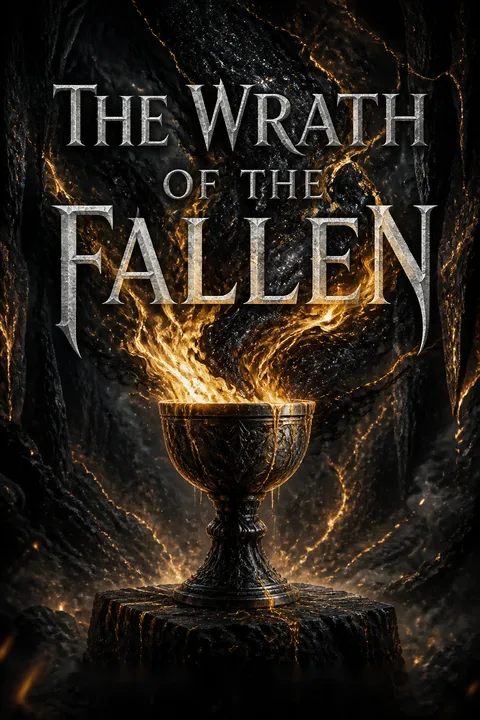
Samkiel2 and Dianna1 locate Gathrriel's16 hidden cavern on a volcanic wasteland. She enters alone — the cave admits only the worthy — and finds the chalice on its pedestal. She drinks the ancient blood and is plunged into visions spanning centuries.
She lives Gathrriel16 and Vvive's forbidden love, watches gods slaughter his pregnant mate and unborn child because they feared what mixed-blood offspring could become. In the final vision, she sees Unir17 holding a silver-haired newborn: Nismera,4 crafted from Ig'Morruthen blood as a weapon against the Primordials.
Before Dianna1 can process any of it, a figure she believes is Samkiel2 appears — but it is Nismera4 in disguise. A blade plunges into her gut. Umemri18 emerges from the shadows behind them. The King of the Otherworld and the tyrant queen have formed an alliance, and Dianna1 is their prisoner.
Reggie Falls to Mortal Death
Days of torture in Nismera's4 dungeon. Dianna1 is beaten and cut, chained alongside Reggie,7 Unir's17 trapped ghost, and two maddened fates. Nismera4 reveals the full scope of her treachery — she poisoned Samkiel's2 mother during her pregnancy, orchestrated everything, and feels no remorse.
When the remaining lords and ladies arrive for a demonstration of power, Nismera4 raises her medallion-powered spear. Dianna1 begs to be taken instead, but Nismera4 turns the weapon on Reggie.7 The fate who defied cosmic law by loving Dianna1 — who grew a mortal heart through that forbidden attachment — is killed in a single blazing strike.
His ashes settle between them. Dianna1 screams for Death,9 bargaining for resurrection, but learns she has nothing left to trade. Her soul is already gone. That night, weeping among his remains, she forges a blade from her own Ig'Morruthen bone.
The Execution Reverses
Nismera4 parades Dianna1 through her golden city in a spiked cage — a carnival of cruelty attended by cheering thousands. People spit, throw food, and curse the name of the would-be queen. Samkiel2 watches from the crowd, disguised alongside Cameron,6 Kaden,3 Isaiah,5 and Faye's15 shadow assassins.
When guards drag Dianna1 onto the execution stage and Nismera4 demands she kneel before the rightful heir, Dianna1 headbutts her instead, frees herself from silk bonds, and produces the forsaken blade she forged in the dungeon.
She rams it through Nismera's4 eye socket until it exits the back of her skull. The ballroom erupts. Smoke bombs flood the room as assassins materialize from every shadow. Samkiel2 reaches Dianna,1 strips away her cursed chains, and feeds her his blood as war engulfs the palace around them.
Ash Where Love Once Stood
Nismera4 will not die. Samkiel2 buries her in lightning, reducing her to ash — and she reforms whole, smiling. The medallion-powered spear catches Samkiel's2 side, opening a deep wound. As they stumble toward escape, Nismera4 aims the spear at Samkiel's2 unprotected back, power building to a killing blast.
Dianna1 sees the golden light surge. She turns and shoves Samkiel2 away, stepping into the beam herself. It strikes her full force. She meets his eyes — terror and love waging war across his perfect, bloodied features — and sends one final thought through their bond.
Her body turns to floating ash. In Samkiel's2 palms, all that remains of his world fits in a handful of dust. What follows is not rage but silence — pure, cold-blooded, murderous silence.
The World Ender Earns His Name
Oblivion crawls over Samkiel's2 silver armor, burning it black. The sky cracks open. Tornadoes laced with annihilating darkness descend upon the city, consuming buildings, soldiers, and fleeing civilians without discrimination. Nismera4 escapes, laughing, because she has finally made him the monster she always claimed he was.
Cameron6 tackles Samkiel,2 screaming that innocents are dying in his wake. Before he can process the devastation he has caused, the gods of The Eye descend from the sky — Kryella, Blayne,13 and others — and overpower him. Cursed cuffs and a collar sever his connection to his power.
Xavier12 stands among them but will not meet his eyes. Kaden3 and Isaiah5 feel Dianna's1 death through the bond and crumble to ash simultaneously. The World Ender is dragged toward Arcelia in chains, and the prophecy his father named him for has finally come true.
Gabby Answers the Door
Dianna's1 body reconstructs itself in blinding pain — nerve to bone, muscle to skin. She opens her eyes to a small apartment with a colorful rug, stacked magazines, and the scent of cookies. Birds sing outside. Cars honk on the street below.
She is on Onuna, in the human world, in a place that shouldn't still exist. A key turns in the lock, and her sister Gabby walks in carrying groceries, baffled by Dianna's1 armor and desperate embrace. The bangs Gabby wears tell Dianna1 exactly when she is — not in the afterlife, but somehow thrown backward in time.
Before she can process the impossibility, a crash erupts from down the hall. Kaden3 and Isaiah5 stumble out of the destroyed closet, bloodied and bewildered. The three of them are stranded together in a time that no longer belongs to any of them.
Analysis
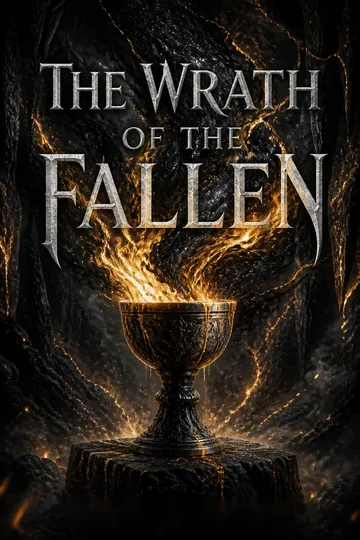
The Wrath of the Fallen interrogates a question most fantasies avoid: what happens when the hero's greatest strength is also the force that could unmake everything? Samkiel2 doesn't merely carry a dangerous weapon — he IS the weapon, Oblivion woven into his DNA and suppressed by a father17 who feared the gods would destroy his son if they discovered the truth. The novel argues that concealment, however well-intentioned, is itself a form of violence. Unir's17 compulsive secrecy — hiding his children's natures, their siblings' existence, even Oblivion itself — creates the very catastrophes he sought to prevent. Every antagonist in this story exists because someone chose secrecy over honesty.
The book's most radical proposition is that love operates not as weakness but as infrastructure. Death9 explicitly weaponizes Samkiel's2 devotion, yet the narrative insists this vulnerability is what makes civilization possible. Samkiel2 builds cities, brokers peace, and restrains Oblivion because he has something worth protecting. Without Dianna,1 that restraint vanishes instantly, and the prophecy of the World Ender fulfills itself. Love and destruction are not opposites here but the same force directed differently — a dam holds the river or the river drowns the valley.
Nicole constructs a deliberate parallel between Dianna1 and Nismera4 — both crafted from Ig'Morruthen blood, both denied something fundamental at birth, both wielding enormous power. The divergence is entirely environmental: Dianna,1 despite unspeakable trauma, was loved by Gabby, then by Samkiel.2 Nismera,4 created as a weapon rather than a child, was handed power without emotional sustenance. The book suggests cruelty is not innate but cultivated through deprivation, making Unir's17 deepest sin not the creation of powerful children but the failure to love all of them equally. Even Kaden's3 arc reinforces this: stripped of everything by Oblivion and rebuilt, he retains only love for Isaiah5 and love for Dianna1 — suggesting these emotions predate even identity, surviving what annihilation cannot touch.
Review Summary
The Wrath of the Fallen receives overwhelmingly positive reviews, with readers praising its complex world-building, character development, and intense plot twists. Many consider it the best in the Gods & Monsters series so far. Fans love the relationship between Dianna and Samkiel, the found family aspects, and the multiple POVs. The book's ending leaves readers emotional and eagerly anticipating the next installment. Some critics note the length and repetition in earlier books, but overall, reviewers are captivated by the series' intricate storytelling and emotional impact.
People Also Read
Characters
Dianna
Ig'Morruthen queen of flameAn Ig'Morruthen shapeshifter and Samkiel's2 wife, born celestial but transformed by Kaden3 a thousand years ago. Her defining trait is an aggressive, all-consuming love that manifests as both profound tenderness and devastating violence. Having lost her sister Gabby to Kaden's3 cruelty, she carries grief like a second skin — sometimes dormant, sometimes erupting into world-scorching rage. Missing her soul, sacrificed in a previous crisis, she is uniquely vulnerable to spiritual possession. Beneath her sarcasm and fire lies a woman terrified of being insufficient and replaced, shaped by a millennium of manipulation. Her relationship with Samkiel2 represents her first experience of love without conditions, and she guards it with the ferocity of someone who knows exactly what it costs to lose everything.
Samkiel
The World Ender, god kingThe fallen god king of Rashearim, son of Unir17, and the most powerful being in the known realms. Extraordinarily strong yet haunted by nightmares and an uncontrollable force called Oblivion that lives beneath his skin. His core conflict is the tension between his genuine desire for peace and the annihilating darkness he was born to carry. He is earnest, protective to the point of irrationality when Dianna1 is threatened, and burdened by failures he blames on himself. His father's deceptions — hidden siblings, suppressed powers, rewritten history — left deep fractures in his identity. He compensates through tireless acts of service and devotion. With Dianna1, he found the only anchor strong enough to tame what lives inside him, making her both his greatest strength and the vulnerability any enemy could exploit.
Kaden
Resurrected brother, former villainOnce the primary villain in Dianna's1 life — her captor, manipulator, and her sister's killer — a man shaped entirely by abandonment. Locked away in a prison realm as a child and raised by a sister4 who treated him as a weapon, his cruelty was learned behavior rather than innate nature. His love for Dianna1, though genuine, has always manifested as possession and control rather than care. His unshakeable loyalty to his brother Isaiah5 is perhaps his most authentic trait — the one relationship where he gives more than he takes. Beneath his armor of ruthlessness lies a man desperate for family and terrified of vulnerability, who learned to weaponize love because he was never taught to simply offer it.
Nismera
Tyrant queen of the realmsSelf-proclaimed ruler of the realms, Samkiel's2 older sister, and the book's primary antagonist. She possesses an insatiable hunger for power that functions almost as a biological compulsion. A master manipulator who spent centuries positioning chess pieces — co-opting armies and royals — while wearing the mask of a caring family member. Brilliantly strategic and devastatingly powerful in combat, she appears entirely incapable of genuine emotional connection. Her ultimate ambition extends far beyond the borders of the known realms to inter-dimensional conquest. What makes her truly dangerous is not raw strength but patience and political acumen: she builds empires of fear while smiling warmly at those she intends to destroy, and she has been playing this game longer than anyone suspects.
Isaiah
Blood general, Kaden's brotherKaden's3 younger brother and fellow Ig'Morruthen, fiercely loyal yet more emotionally vulnerable than he lets on. He craves family and love — desires that have been exploited throughout his life. His unnamed devotion to Imogen, a captive warrior who cannot speak or respond, reveals a capacity for tenderness at odds with his reputation as a blood general. His sharp tongue masks deep wounds.
Cameron
Best friend turned Ig'MorruthenSamkiel's2 closest friend and a celestial turned Ig'Morruthen, masking deep grief with relentless humor and protective bravado. He steps into a guardian role for both Samkiel2 and Dianna1 when they cannot protect each other. His desperate, unspoken love for Xavier12 — a missing Hand member — drives him to search tirelessly despite every dead end. He uses laughter as both shield and sword.
Reggie
Fate turned father figureA fate — a cosmic entity meant to observe, never intervene — who broke cosmic law by helping Dianna1 when she was a child. His love for her has evolved from duty to something deeply paternal, a forbidden attachment that fates are never meant to develop. Gentle, dry-witted, and fiercely protective, he serves as Dianna's1 anchor of wisdom and comfort amid chaos, the steady hand that grounds her volatile nature.
Miska
Last Jade City healerThe last surviving Jade City healer, an eleven-year-old with pointed ears and pink skin who has endured more cruelty than most adults. Rescued by Dianna1 and Samkiel2, she blooms under their protection, developing fierce loyalty and quiet courage. Despite her youth, she possesses a healer's moral clarity — an instinct to mend wounds regardless of who bears them — that drives her most consequential choices.
Death
Cosmic puppet masterA cosmic entity who collects the dead but cannot kill. He wears the faces of those most meaningful to his targets, manipulating through fear and emotional leverage. He appears as a bird of midnight feathers or assumes the forms of the living and dead alike. His true goals remain opaque, but he seems driven by a need to maintain balance against forces that threaten the fabric of existence itself.
Camilla
Guilt-ridden witch on the runA powerful witch who rebuilt Nismera's4 forbidden medallion under duress, not understanding its true cataclysmic purpose. Guilt-ridden and resourceful, she fled with the device alongside Vincent11. Her growing magical abilities surprise even her, but her defining characteristic is personal loyalty — she will sacrifice the fate of worlds for the man she loves without hesitation.
Vincent
Nismera's cursed former secondNismera's4 former second-in-command, bound to her will by a curse that strips his agency when he hears her voice. His love for Camilla10 is his first genuine act of rebellion, driving his desperate bid for freedom.
Xavier
Lost Hand member, vulnerable pawnA member of Samkiel's2 Hand, rescued from Nismera's4 mind control and brought to The Eye's base at Arcelia. Traumatized by captivity and the loss of his free will, he struggles with waking nightmares and survivor's guilt. His emotional vulnerability and desperate need for connection make him a target for those who would use his pain as a weapon against the family he still loves.
Blayne
God of the Hunt, spyGod of the Hunt at Arcelia, outwardly charming and strategically minded. His persistent attention toward Xavier12 and his careful positioning among the other gods conceal motivations that run far deeper than alliance or friendship.
Milani
Armada queen, obsessive exQueen of Trugarum and commander of Nismera's4 armada. Samkiel's2 obsessive former lover who built her fleet of warships using knowledge he carelessly shared during their brief past affair.
Faye
Queen of the Shadow AssassinsLeader of Sumaril's shadow assassins, pledging her blades not to kings but to the queen who spared her brother's life — Dianna1. She commands an army that moves through darkness itself.
Gathrriel
First Ig'Morruthen, vengeful ghostThe original Ig'Morruthen, trapped between life and death for millennia. His grief over his murdered mate Vvive consumes him utterly, driving him to seek possession of Dianna's1 soulless body for revenge against gods long dead.
Unir
Samkiel's dead, lying fatherSamkiel's2 deceased father, now a ghost who slipped past Death's9 gates. His lifelong pattern of concealing uncomfortable truths — about his children's natures, their origins, and Oblivion itself — shaped every tragedy his family endures.
Umemri
Otherworld king seeking vengeanceKing of the Otherworld, a towering insectoid monarch consumed by grief over his murdered murrak wife. His alliance with Nismera4 stems from shared hatred of Samkiel2 and a mutual desire to see the god king suffer.
Plot Devices
The Medallion
Opens doorways between realmsOriginally crafted by ancient Primordials to travel between dimensions, the medallion was destroyed by Unir17 and rebuilt by Camilla10 under Nismera's4 coercion. It can tear open the barrier between realms, granting access to territories ruled by beings called Sovereigns — powers beyond even gods. Nismera4 intends to use it for inter-dimensional conquest. When Camilla10 has a prophetic vision of what lies beyond the veil, she flees with the device, sparking a realm-wide chase. The medallion drives the plot as multiple factions hunt it, and its recovery by Nismera's4 forces raises the stakes from a regional power struggle to a potentially cosmic one. Its fragments are ultimately integrated into Nismera's4 death spear, creating a weapon of terrifying capability.
Oblivion
World-ending destructive powerNot a weapon Samkiel2 wields but a power he IS — born into his blood and concealed by his father17 through a containment ring and memory suppression since childhood. It manifests as tendrils of consuming darkness that reduce everything they touch to ash. It responds instinctively to threats against Dianna1, rising when she is endangered and retreating at her touch. Without the containment ring, which crumbled after being misused, Samkiel2 struggles to control the force within him. The revelation that it is inherent rather than acquired reframes his entire identity — from protector to potential destroyer. It operates as both his greatest weapon and deepest vulnerability, the literal embodiment of the prophecy that named him World Ender.
The Death Bond
Enforces cooperation via shared mortalityAfter Samkiel2 kills Kaden3 with Oblivion, Death9 intervenes by binding Dianna's1 life to both Kaden's3 and Isaiah's5. If any of the three dies, all three perish permanently. This forced tether transforms mortal enemies into reluctant allies, creating the book's central structural tension: Samkiel2 cannot eliminate the brothers who terrorized his wife without killing her in the process. The bond also creates an unwanted psychic link — Dianna1 senses Kaden's3 and Isaiah's5 emotions, and they hear her thoughts. Death9 designed this mechanism specifically to exploit Samkiel's2 absolute devotion to Dianna1, making the most powerful being in the realms entirely controllable through the one person he cannot live without.
Gathrriel's Chalice
Transfers ancient memories and powerA goblet containing the blood of Gathrriel16, the first Ig'Morruthen, hidden deep within a volcanic cavern accessible only to the worthy. The blood acts as both a power source and a memory vessel. When consumed, it floods the drinker with visions of the true past — the history that gods rewrote. Through the chalice, the drinker witnesses centuries of concealed events: forbidden love, politically motivated murder, and the origins of beings whose true nature has been buried beneath mythology. The chalice functions as a truth bomb, demolishing sanitized history and revealing the cyclical pattern of fear-driven violence that underlies every major conflict in the story.
The Forsaken Blade
Weapon forged from living boneA blade crafted from Ig'Morruthen bone, capable of wounding beings that conventional weapons cannot scratch. When Dianna1 is imprisoned and stripped of every weapon and advantage, she crafts one from her own arm — an act of agonizing self-mutilation that transforms her physical body into a weapon when all others have been taken. The blade represents Dianna's1 absolute refusal to be rendered helpless. It demonstrates that she cannot truly be disarmed, because her body itself is a weapon, and it serves as the instrument of her most dramatic act of defiance against the woman who took everything from her4.
Gods & Monsters Series Series
About the Author
Other books by Amber V. Nicole


Download PDF
Download EPUB
.epub digital book format is ideal for reading ebooks on phones, tablets, and e-readers.








































