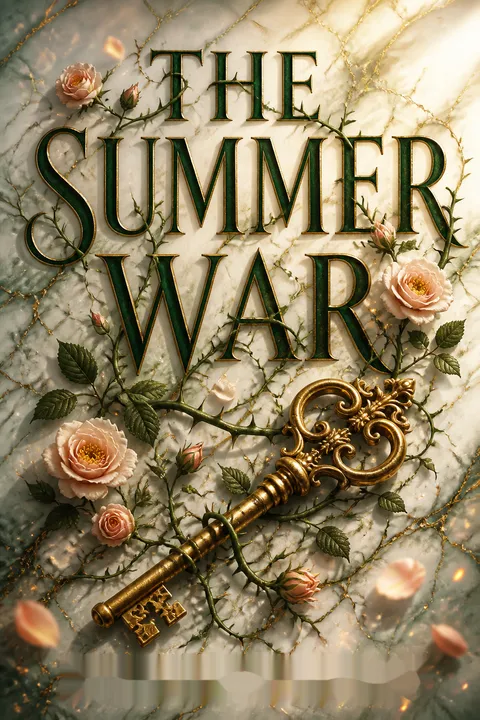

Plot Summary
Sibling Bonds and Rivalries
Celia, a twelve-year-old girl of noble blood, idolizes her older brother Argent, the family's golden heir and celebrated knight. Their bond is deep, forged through years of shared play and mutual affection, while their middle brother Roric is largely ignored, a product of a less prestigious union. Celia's world revolves around Argent, who promises to always protect her, and she clings to his presence as a source of joy and security. Their father, Grand Duke Veris, is a calculating, ambitious man whose approval is hard-won, and whose love is reserved for those who further his plans. The family's dynamics are shaped by favoritism, neglect, and the looming shadow of past wars, setting the stage for the emotional upheavals to come.
The Heir's Secret and Exile
When Argent returns from the summer games, he confronts his father about a traumatic childhood memory: witnessing the brutal punishment of two men for loving each other, and realizing he shares their forbidden desires. The revelation of Argent's sexuality, and his father's cold lesson in shame, leaves Argent scarred and fearful. He confesses to Celia that he can no longer stay, renouncing his name and inheritance to spare his family disgrace. Celia, devastated by his departure and feeling abandoned, lashes out in anger and pain, cursing him in a moment of heartbreak. This curse, born of love and resentment, will have far-reaching consequences, binding their fates in ways neither can foresee.
The Curse of a Sister
In the aftermath of Argent's departure, Celia's grief and rage manifest in a curse she doesn't realize has real power. Descended from the legendary Witch-Queen Selina, Celia's bloodline carries the potential for sorcery, though it has lain dormant for generations. Her curse—wishing Argent a life of hollow glory and lovelessness—unleashes her latent magic, marked by the onset of her first blood. The household is thrown into chaos as her power erupts, shattering swords and terrifying the servants. Celia is left reeling, both from the loss of her beloved brother and the dawning realization that she has inherited a dangerous, uncontrollable gift.
The Fox's Rise to Power
Celia's father, Veris the Fox, rose from obscurity through cunning, ruthlessness, and a talent for turning the tide of the endless summer war. He outwitted the immortal summerlings with trickery and unconventional tactics, earning both their grudging respect and the adoration of Prosper's people. Through calculated marriages, strategic alliances, and relentless ambition, Veris consolidates power, always seeking to secure his family's future. Yet his machinations are driven less by love than by a need for control, and his children are pawns in his grand design. The legacy of the summer war, and the uneasy peace that follows, are inextricably linked to his actions.
The Summer War's Origins
The summer war began with a broken alliance and a tragic misunderstanding. The immortal summerlings, once friends and trading partners to Prosper, are driven to war when their princess, Eislaing, takes her own life after being spurned by King Sherdan. Her brother, Prince Elithyon, vows vengeance, and the two realms are locked in a cycle of violence, fueled by pride and the inability to let go of old wounds. The war is marked by magical boundaries, seasonal rhythms, and the inability of mortals to truly invade the Summer Lands. Only through Veris's cunning does Prosper gain the upper hand, but the peace that follows is fragile and built on unresolved grief.
Schemes, Prophecies, and Alliances
Veris's ascent is guided by prophecy and political calculation. Marriages are arranged, heirs are positioned, and every move is made with an eye toward consolidating power. The prophecy of a sorceress in the bloodline looms over the family, and when Celia's magic awakens, she becomes a valuable asset in her father's eyes. Yet the cost of these schemes is high: love is sacrificed for ambition, and the children are left to navigate the emotional fallout. The king's own fears and prophecies drive him to make dangerous bargains, setting the stage for betrayal and the renewal of old conflicts.
The Sorceress Awakens
Celia's emergence as a sorceress transforms her from pawn to player. Her newfound power is both a blessing and a burden, offering protection but also making her a target. The king demands her hand for his son, Prince Gorthan, seeking to bind her magic to the royal line. Celia, still reeling from loss and guilt, is thrust into a world of courtly intrigue and peril. She forms an unexpected bond with Roric, her neglected brother, as they work together to manage the estates and navigate the treacherous waters of succession. The siblings' alliance becomes a source of strength, even as the threat of betrayal looms.
New Bonds, Old Wounds
In the absence of Argent and the emotional withdrawal of their father, Celia and Roric forge a tentative but genuine connection. Roric, long overlooked and undervalued, reveals his own wounds and longing for care. Through shared work, stories, and small acts of kindness, the siblings begin to heal each other. Celia learns to care for Roric as her mother once wished, and Roric, in turn, becomes her ally and confidant. Their bond is a quiet act of rebellion against the legacy of neglect and ambition that has shaped their family, and it offers both hope and a new sense of purpose.
The King's Deceitful Bargain
The king's demand for Celia's immediate marriage to Gorthan is a ruse, masking a deeper plot. As Celia and Roric prepare for the journey to the Green Bridge, they sense that something is amiss. The peace between Prosper and the Summer Lands is a fragile illusion, and the king's true intentions are shrouded in secrecy. When Celia is led to her wedding, she discovers too late that she is to be given not to Gorthan, but to Prince Elithyon of the Summer Lands, as part of a secret bargain to maintain the peace. Betrayed by those she trusted, Celia is swept into a new captivity.
The Wedding That Wasn't
Celia's wedding becomes a trap, binding her to Elithyon in a cruel echo of the past. The ceremony is a mockery, and she is stripped of agency, her sorcery sealed by a magical ring. Elithyon, consumed by grief and vengeance for his sister, vows never to love Celia, condemning her to a life of isolation and humiliation. The cycle of pain and retribution is repeated, and Celia finds herself a prisoner in a foreign land, her fate entwined with the unresolved sorrows of both realms. The echoes of Eislaing's tragedy reverberate, threatening to claim another victim.
Prisoner in the Summer Lands
Imprisoned in a tower, Celia confronts the full weight of her curse and the consequences of her family's history. She is powerless, isolated, and tormented by the knowledge that her suffering is the price of peace. Yet even in captivity, she refuses to surrender to despair. She clings to memories of love and the promise she made to care for others, finding strength in her connection to Roric and the hope that Argent might return. The beauty and cruelty of the Summer Lands mirror her own inner turmoil, and she begins to search for a way to break the cycle of vengeance.
The Knight's Impossible Challenge
Argent, transformed by his years in the Summer Lands, arrives to challenge Elithyon for Celia's freedom. He faces an endless gauntlet of summer knights, each duel a test of skill, endurance, and the limits of love. The court is captivated by his valor, and even Elithyon is moved by the spectacle. Yet the challenge is a trap: Argent's curse binds him to a path of glory without fulfillment, and each victory brings him closer to death. Celia watches in agony, torn between hope and guilt, knowing that her curse is the true enemy.
The Power of Stories
Roric, disguised as a song-spinner, enters the Summer Lands and uses the power of stories to sway the court. His clever, subversive tales expose the futility of vengeance and the cost of pride, planting seeds of doubt in the hearts of the summerlings. Through humor and empathy, Roric bridges the divide between mortal and immortal, reminding all present of the value of ordinary lives and the possibility of forgiveness. His stories become a catalyst for change, offering a path out of the cycle of violence and retribution.
Oaths, Snares, and Sacrifice
Elithyon is ensnared by conflicting oaths, forced to choose between honor and compassion. Roric's clever manipulation of promises creates a paradox that threatens to destroy both Argent and Elithyon. The curse that binds Argent is mirrored by the oaths that bind Elithyon, and both are trapped by the demands of pride and duty. In a moment of crisis, Celia seizes the opportunity to break free, aided by the legendary shaihul. The resolution requires sacrifice, humility, and the willingness to let go of vengeance in favor of love.
Breaking the Curse
Celia's escape from the tower, orchestrated with the help of her brothers and the shaihul, breaks the curse's hold. She refuses to perpetuate the cycle of violence, choosing instead to care for Roric, Argent, and even Elithyon. The power of her promise—to care—proves stronger than the magic of resentment and pride. Elithyon, confronted with the truth of his own actions and the futility of vengeance, relinquishes his claim. The curse is lifted, and the possibility of peace is restored. Celia's act of compassion becomes the turning point that heals old wounds.
The Last Battle and Coronation
Veris exposes the king's treachery, rallying the people of Prosper and forcing the abdication of the royal family. Celia is crowned queen, her authority secured not by force but by the will of the people and the legitimacy of her sorcery. The old order is swept away, and a new era begins, founded on justice, compassion, and the lessons of the past. The final battle is not one of swords, but of truth and reconciliation, as the wounds of war are acknowledged and the foundations of peace are laid.
Peace Forged in Love
With the war ended and the curse broken, Celia forges a new alliance between Prosper and the Summer Lands. Argent and Elithyon, freed from the burdens of pride and vengeance, are united in love, sealing the peace between their peoples. Roric, once overlooked, finds his place as a valued brother and advisor. Celia, now queen, rules with wisdom and empathy, determined to care for her people and prevent the mistakes of the past. The story ends not with triumph or tragedy, but with the promise of a better future, built on the hard-won lessons of love, forgiveness, and the courage to change.
Analysis
Naomi Novik's The Summer War is a masterful exploration of the cycles of trauma, pride, and forgiveness that shape both individuals and nations. At its core, the novel interrogates the costs of vengeance and the courage required to break free from inherited patterns of pain. Through the intertwined fates of Celia, Argent, and Roric, Novik examines the ways in which love, resentment, and the longing for recognition can both wound and heal. The story's use of curses, oaths, and storytelling as plot devices highlights the power of words to bind or liberate, and the necessity of empathy in overcoming division. The contrast between the mortal and immortal realms serves as a meditation on the nature of change, memory, and the possibility of redemption. Ultimately, The Summer War offers a hopeful vision: that even the deepest wounds can be healed, and that peace—whether between siblings or nations—can be forged through acts of care, humility, and the willingness to write new stories.
Review Summary
The Summer War is a captivating novella by Naomi Novik that blends fairy tale elements with complex themes of family, love, and war. Readers praise Novik's ability to craft a rich, immersive world in a short format, though some wish it were longer. The story follows Celia, a young sorceress navigating political intrigue and magical conflicts. Many reviewers appreciate the focus on sibling relationships and the clever plot twists. While some find the pacing uneven, most agree it's an enchanting read that showcases Novik's talent for atmospheric fantasy storytelling.
People Also Read



Characters
Celia
Celia is the emotional heart of the story—a girl whose fierce love for her brother Argent shapes her destiny and the fate of two realms. Initially defined by her longing for affection and her place as the overlooked daughter, Celia's journey is one of painful growth. Her impulsive curse, born of heartbreak, unleashes her latent sorcery and sets the central conflict in motion. As she navigates betrayal, captivity, and the burden of power, Celia evolves from a passive pawn to an active agent of change. Her relationships with Argent and Roric are transformative, teaching her the value of care, honesty, and forgiveness. Ultimately, Celia's willingness to break the cycle of vengeance and choose compassion over pride is what saves her family and her kingdom.
Argent
Argent is the beloved eldest son, a paragon of knighthood and the focus of Celia's adoration. Beneath his heroic exterior lies deep trauma: his father's lesson in shame over his sexuality leaves him emotionally scarred and desperate for acceptance. Argent's journey is marked by sacrifice—he gives up his name, inheritance, and home to live authentically, but is cursed to seek glory without love. His return to rescue Celia is both an act of love and a tragic fulfillment of his curse. Argent's struggle is one of identity, self-worth, and the search for belonging. His eventual union with Elithyon, made possible by the breaking of the curse, represents the healing of old wounds and the possibility of true happiness.
Roric
Roric, the middle child, is dismissed by his family and overshadowed by his siblings. His early life is marked by neglect and a longing for recognition. Through his bond with Celia, Roric discovers his own worth and agency. His talent for storytelling and empathy becomes a powerful tool, enabling him to bridge divides and influence the course of events. Roric's clever manipulation of oaths and his willingness to care, even when it is difficult, are crucial to breaking the cycle of vengeance. His character arc is one of quiet resilience, self-discovery, and the transformative power of being seen and valued.
Veris the Fox
Veris is a self-made man, rising from obscurity through cunning, ruthlessness, and an unyielding drive for power. He is a master of manipulation, using his children as pieces in his grand design. While he is capable of affection, his love is conditional and often subordinated to ambition. Veris's inability to understand the emotional needs of his children leads to unintended harm, particularly in his relationship with Argent. His eventual recognition of his mistakes and his role in securing Celia's throne mark a late but meaningful shift from self-interest to genuine care for his family.
Elithyon
Elithyon is the immortal prince of the Summer Lands, driven by grief for his sister and an unrelenting need for vengeance. His world is shaped by pride, beauty, and the inability to let go of the past. Elithyon's interactions with Celia and Argent force him to confront the futility of his quest for retribution. Trapped by his own oaths and the expectations of his people, he is both a villain and a victim. His eventual willingness to relinquish vengeance and embrace love is a testament to the possibility of change, even for the seemingly unchangeable.
King Morthimer
King Morthimer is a calculating ruler, motivated by fear of losing power and the prophecies that haunt his reign. His willingness to sacrifice Celia for the sake of peace reveals his moral bankruptcy and the dangers of leadership driven by self-preservation. Morthimer's actions set the central conflict in motion, and his eventual downfall is a necessary reckoning for the harm he has caused.
Prince Gorthan
Gorthan, the king's son, is a figure caught between duty and conscience. Though outwardly courteous and cautious, he is complicit in the betrayal of Celia, choosing obedience over resistance. His inability to defy his father or protect Celia marks him as a tragic figure, emblematic of the failures of the old order. Gorthan's role is a cautionary one, illustrating the cost of passivity and the importance of moral courage.
Eislaing
Eislaing, the summerling princess whose death sparks the war, is a haunting presence throughout the story. Her tragedy is the result of pride, misunderstanding, and the inability to reconcile mortal and immortal values. Eislaing's fate serves as a warning against the dangers of unchecked emotion and the destructive power of unresolved grief. Her story is mirrored in Celia's, and her memory shapes the actions of Elithyon and the course of the war.
The Shaihul, Alimathisa
Alimathisa, the shaihul, is a mythical creature whose appearance signals moments of transformation and possibility. Serving as both a symbol of hope and a literal means of escape, the shaihul embodies the unpredictable magic of the Summer Lands. Its intervention at key moments underscores the importance of courage, resourcefulness, and the willingness to seek help from unexpected sources.
Unter
Unter, the family's steward, is a background figure whose steady presence provides continuity and support. He is a silent witness to the family's triumphs and tragedies, offering practical assistance and quiet loyalty. Unter's role, though understated, is essential to the functioning of the household and the survival of its members during times of crisis.
Plot Devices
Cycles of Vengeance and Forgiveness
The narrative is structured around cycles—of war, vengeance, and emotional wounds passed from one generation to the next. The summer war itself is a literal and symbolic repetition of unresolved grief, with each side seeking retribution for past wrongs. The curse that Celia places on Argent is another cycle, binding him to a path of glory without love. The story's resolution hinges on the characters' ability to recognize these patterns and choose forgiveness over retribution. Foreshadowing is used throughout, with prophecies and echoes of past tragedies hinting at the dangers of repeating old mistakes. The breaking of oaths and curses, and the willingness to care for others, serve as the means by which the cycle is finally ended.
The Power of Storytelling
Storytelling is both a literal and metaphorical device in the novel. Roric's tales are used to influence the court, expose truths, and foster empathy. The stories characters tell themselves—about their worth, their destiny, and their place in the world—shape their actions and relationships. The narrative itself is self-aware, drawing attention to the ways in which stories can trap or liberate, wound or heal. The use of song-spinners, legends, and the retelling of past events underscores the importance of narrative in shaping reality.
Oaths, Promises, and Curses
Oaths and promises are central to the plot, serving as both constraints and opportunities. Characters are bound by their words, whether through magical curses, formal vows, or personal commitments. The tension between honor and compassion is explored through the consequences of keeping or breaking these bonds. The resolution of the story depends on the clever manipulation of oaths and the willingness to reinterpret their meaning in the service of love and justice.
Duality of Mortal and Immortal
The novel juxtaposes the mortal world, defined by change, growth, and the passage of time, with the immortal Summer Lands, where pride and memory are unchanging. This duality is reflected in the characters' struggles: mortals must learn to let go and move forward, while immortals are trapped by their inability to forget. The blending of these worlds, and the forging of new alliances, represents the possibility of reconciliation and the creation of a future that honors both memory and change.
About the Author





Download PDF
Download EPUB
.epub digital book format is ideal for reading ebooks on phones, tablets, and e-readers.








































