


Plot Summary
Prologue
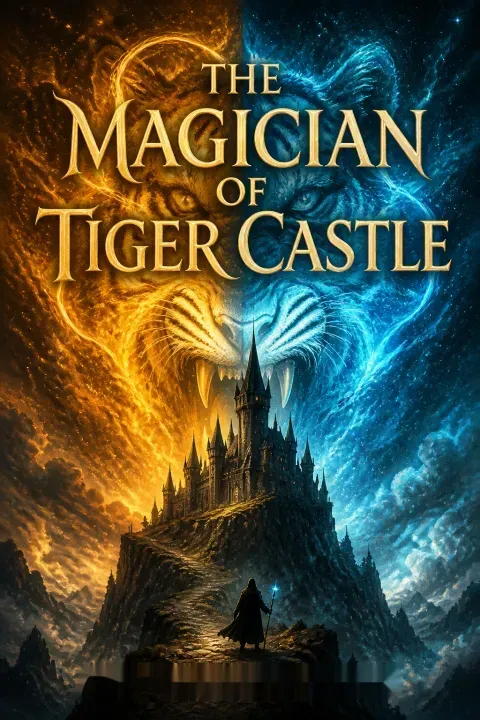
Anatole1 sits at an outdoor café in a medieval village, dressed in jeans and a hoodie like any American tourist. The turrets of Tiger Castle rise against the red morning sky. He breaks off a piece of almond croissant and slips it into the front pouch of his hoodie.
His hands are bruised from tripping on the cobblestones, which remain authentically uneven five centuries later. Yesterday he toured the castle. The guide told tales of the Whispering King,4 a treacherous queen,5 and a murdered princess,2 but never mentioned the great magician Anatole.1
He saw the enormous glass elephant still intact despite countless conquests. The guide pointed out a secret passage but forbade entry, citing danger. Anatole1 smiled at that. His senses of taste and smell, once exquisitely acute, have faded so severely that only bitter, strong flavors like espresso can reach him now.
The prologue establishes the central dislocation of Anatole's existence: he has survived his own historical erasure. The objects he once knew (the glass elephant, the secret passages) persist as tourist curiosities while his name has vanished from all records. The café setting creates temporal vertigo: a sixteenth-century magician drinking twenty-first-century cappuccino on medieval cobblestones. His diminished senses function as quiet tragedy, a man who once discerned twenty-four distinct shades of yellow now reduced to only the harshest stimuli. The unseen creature in his hoodie pouch hints at a lifelong companion, establishing the elegiac tone of a very long life approaching its final reflections.
A Princess in Revolt
The kingdom of Esquaveta verges on bankruptcy and cannot survive without its alliance with Oxatania. The arranged marriage between sixteen-year-old Princess Tullia2 and the much older Prince Dalrympl,4 planned since she was three, is the realm's last hope.
Six weeks before the ceremony, Tullia2 announces she refuses to marry the prince.4 She has fallen in love with Pito,3 a seventeen-year-old apprentice scribe, after months of reading forbidden Italian love poetry together in the castle library. King Sandro7 imprisons Pito3 in the dungeon and orders Anatole,1 the court magician, to administer poppy tears to ensure Tullia2's drugged compliance.
Anatole,1 who has known Tullia2 since childhood and loves her like a daughter, proposes an alternative: a memory potion that will erase all recollection of Pito3 from her mind. The king7 agrees to let him experiment on the prisoner3 first.
This inciting incident crystallizes the book's central conflict between individual desire and political necessity. Tullia's rebellion is not merely romantic: by reading Utopia with Pito, she has encountered ideas of equality that threaten the feudal order. Anatole's intervention contains a painful irony. He proposes to violate her mind (erasing her memories) to save her from a worse violation (opium addiction), positioning himself as both protector and perpetrator. The dungeon becomes the story's moral laboratory, where experiments on a condemned man will determine whether love can be surgically removed without destroying the self. The poppy tears represent brute force; the memory potion, for all its ethical complexity, represents a more humane alternative.
Tears in the Darkness
Anatole1 visits Pito3's cell each morning, bringing goblets of experimental potions and pots of rare tea. He needs Pito3's heartfelt tear as a personal identifier for the memory potion, but first he must determine whether Pito3 truly loves Tullia.2 When he asks, Pito3 answers that he could not possibly love a princess.2
Anatole1 nearly abandons the project, until he mentions Tullia2's mismatched eyes: how her blue one sparkles and her brown one resembles a dark, mysterious cavern. Pito3's guarded composure cracks. He does love her. Anatole1 captures a single tear.
The experiments proceed through multiple iterations: one makes Pito3 giggle and ask about Anatole's first love,10 another causes his voice to regress to a childish squeak, a third makes him recite erotic Italian poetry before instantly forgetting the words. Harwell,8 the seemingly deaf executioner, sits beside them throughout, silent and blank-faced.
The dungeon becomes an unlikely confessional, its darkness liberating both men from the roles they play above ground. Pito's initial denial of love reveals his internalized class constraints: a scribe cannot love a princess, so he has walled off even the possibility. Anatole's description of Tullia's eyes breaches that wall because it captures her asymmetry, the very 'defect' that makes her human rather than a royal symbol. The friendship that develops between magician and prisoner, executioner quietly included, creates the emotional foundation for every risk Anatole will later take. The potion's side effects (giggling, poetry recitation, vocal regression) serve as involuntary truth-telling, releasing what Pito's disciplined mind has suppressed.
Babette's Lace
When Pito,3 under a potion's disinhibiting influence, asks if Anatole1 has ever been in love, the magician extinguishes both candles and tells the story in total darkness. As a teenager, Anatole1 loved a fifteen-year-old lace maker named Babette.10 They walked together to the monthly market, where she sold her intricate handiwork.
There, a young nobleman with stringy blond hair and a jutting chin4 forced her to clean his muddy boots with her delicate lace. When she refused, his companions held her down and he slashed her arm with his sword. Anatole,1 hiding behind a hat stall, did nothing.
He later treated her wound with bread mold soup, and she recovered. She laughed, threw a ladle at him, and declared she would do the cooking when they married. But Anatole1 stopped the treatment too soon. The infection returned and killed her. He has carried the guilt ever since.
The Babette story recontextualizes the entire narrative. Anatole's compulsion to save Pito is not abstract heroism but a decades-late attempt to correct his defining failure. The nobleman with the jutting chin, unnamed here, will later be recognized as Dalrympl, transforming the political plot into a revenge tragedy. The bread mold soup (penicillin, centuries before Fleming) establishes Anatole as a genuine medical pioneer dismissed as mere hocus-pocus. Most devastating is the detail that Babette survived the initial wound and died only because he stopped treatment too soon: his greatest guilt lies not in cowardice during the attack, but in failing to finish what he started. This pattern of incomplete rescue will haunt every subsequent choice he makes.
Who Is Tullia?
Queen Corinna5 and the regent Dittierri,6 growing impatient, order Anatole1 to abandon the experiments and begin the poppy regimen immediately. Defeated, Anatole1 descends to the dungeon one last time. He tells Pito3 the experiments are over. Pito,3 playing Six Men's Morris with Harwell,8 offers quiet sympathy: a waste of Anatole1's talent, like having Michelangelo paint a barn.
Then, as Anatole1 mentions he must give Tullia2 poppy tears that morning, Pito3 asks with genuine confusion who Tullia2 is. The potion has worked. Anatole1 races up the stone stairs, nearly faints from overheating, and resolves to defy the queen.5
He replicates the exact formula for Tullia,2 adding Pito3's single heartfelt tear. She drinks the goblet, recoiling at the unfamiliar taste. When King Sandro7 later questions her, she cannot understand why anyone would doubt she intends to marry Prince Dalrympl.4 The king7 declares Anatole1 the greatest magician in all the land.
The potion's success is both triumph and tragedy. Pito's forgetting is complete and irreversible, reducing the great love that nearly toppled a kingdom to a blank space in two minds. The chess metaphor that Pito uses earlier ('trading a castle for a pawn') foreshadows what Tullia has lost: her emotional autonomy traded for political stability. Anatole's near-fainting on the stairs literalizes the cost of his victory: his body cannot sustain the intensity of his own success. The king's proclamation, recorded in the royal record, marks the apex of Anatole's career, yet it is built on a deception he can never reveal. He has saved both Tullia and the kingdom, but only by becoming the very thing Queen Corinna once proposed: someone who violated the princess's mind for the state's benefit.
The Blue Death Ruse
At the wedding banquet, Anatole1 sees Prince Dalrympl4's face clearly for the first time and recognizes the jutting chin and cold blue eyes. It is the nobleman who attacked Babette.10 His stomach turns. He watches Tullia2 charm the prince,4 touching his sleeve and laughing, completely unaware she once loved another man.
When Pito3 is brought in for execution, his face blotched with blue welts from a harmless potion Anatole1 gave him that morning, Anatole1 must act. He lights a corpse flower smoke packet and shouts that the prisoner3 has the Blue Death. The banquet hall erupts in panic.
Through the smoke, Harwell8 raises his axe, but brings it down on Pito3's chains instead of his neck. Anatole1 and Pito3 gather meat scraps and bones, stuff them into Pito3's old clothes drenched in blood, and Anatole1 drags the bundle to the moat wall. He throws it to the tiger below.
The banquet sequence fuses the book's three plot threads: the memory potion's success (Tullia's cheerful obliviousness), the Babette revenge arc (the face recognition), and the rescue operation (the plague ruse). Anatole's courage here is hard-won, the first time he has acted boldly since failing Babette. The method of escape is pure theatrical genius: corpse flower petals create a smell of death that overrides all rationality, while the blue welts (harmless dye from blueberries and butterfly pea petals) provide visual 'evidence' of plague. Harwell's choice to cut the chains rather than the neck is the first hint that the executioner is more than he appears. The meat-bundle disposal, grimly practical, means Pito is officially dead and therefore free.
The Handshake of Revenge
Hidden in Anatole1's workshop, Pito3 helps create a potion to ruin Dalrympl4 permanently. It will change his voice to a childlike squeak. But first, Anatole1 must deliver an itch-causing unction made from Amazonian spitting spider venom. Pito3 recalls a ritual from ancient Greek texts: a handshake, used to confirm mutual trust.
Tullia,2 unaware Pito3 is alive and assisting, agrees to help postpone the wedding. She wears a glove filled with the unction to the magistrate's office and, when Dalrympl4 fails to understand the unfamiliar gesture, runs her gloved fingers gently down his cheek.
That night, the prince4 appears at Anatole1's workshop, his face bloody and swollen from scratching. Anatole1 applies leeches, then gives him a goblet containing the antidote mixed with the voice-changing potion. Dalrympl4 demands it, and witnesses hear Anatole1's protests that the potion is untested. The king7 notes his objections are duly recorded.
The handshake scene is a small masterwork of comic revenge. Pito, the classical scholar, weaponizes antiquarian knowledge: a gesture of trust becomes a delivery system for biological torment. Tullia's improvisation (the cheek caress when the handshake fails) demonstrates her theatrical genius, the same skill that made her a convincing opium addict. Anatole's performance of reluctance serves as legal armor: he loudly protests so no one can later claim he acted maliciously. The leeches are pure spite, a private punishment for Babette that serves no medical purpose. The entire sequence depends on Dalrympl's arrogance: he demands the potion because he cannot imagine a mere magician would dare harm him, and because he trusts his own magician's worthless approval of the 'authentic' obedience potion Anatole pretended to prepare.
The Squeaking Prince
At the cathedral, Tullia2 recites her vows of eternal love and subservience with theatrical perfection. Dalrympl4 steps forward in his dazzling gold uniform and repeats his vows, but his voice emerges as a high-pitched, breathlessly excited squeak, like a five-year-old girl. Laughter erupts from the congregation.
The bishop tries to smooth over the moment, but Dalrympl4 shrieks that he does not get nervous, confirming the absurdity. Questions about his anatomy and manhood echo from the crowd. A fight breaks out between Esquavetians and Oxatanians, spreading through the packed cathedral like fire.
Anatole,1 trying to escape, is knocked unconscious. When he wakes, the floor is littered with bodies, including the pretty blond Oxatanian woman who sat beside him at the banquet. He staggers outside to find the festival pavilions burning. Soldiers and civilians lie dead in the streets. The wedding of the century has ignited a war.
The cathedral scene transforms personal revenge into geopolitical catastrophe, making literal the book's recurring warning about unintended consequences. Dalrympl's voice, meant only to humiliate and postpone, becomes the spark that burns two kingdoms. The setting is cruelly perfect: a thirteenth-century cathedral designed for perfect acoustics now amplifies the prince's squeaking voice to every corner, ensuring maximum humiliation. The riot that follows is not merely mob violence but the eruption of long-suppressed ethnic hatred between Esquavetians and Oxatanians, each side using the chaos to settle old scores. Anatole's unconsciousness during the worst of it underscores his powerlessness: he set events in motion but cannot control them. The dead Oxatanian woman personalizes the cost, a face he remembers from the banquet now permanently stilled.
Under Siege
Anatole1 returns to a castle under siege. Oxatanian forces surround the walls, cannons are en route, and Dalrympl4 makes two demands. First, Tullia2 must give herself to him willingly and gratefully, for everyone to witness. Second, Anatole1 must be fed to the tiger.
The Oxatanian ambassador commissions an obedience potion, and Anatole1 pretends to comply, using rose thorns and Dalrympl4's sweat as a personal identifier. Tullia2 agrees to fake-drink it, planning instead to kill Dalrympl4 with her jeweled knife on their wedding night. But when she visits the workshop, she discovers Pito3 alive inside, cleaning up after his months as a hidden fugitive. She is furious at Anatole1's deception.
Before the confrontation can resolve, her handmaiden Marta11 bursts in, sees Pito,3 and screams. Tullia2 drags Pito3 into the secret passageways she has known since childhood. Guards ransack the workshop. Queen Corinna5 arrives, holding a jagged shard from the broken potion pot, which pricks her finger as she threatens Anatole.1
The siege sequence compresses all the story's tensions into a pressure cooker. Tullia's discovery that Pito lives shatters her trust in Anatole at the moment she most needs to trust someone. Her plan to murder Dalrympl reveals her capacity for ruthlessness, a quality her parents never recognized. Marta's scream is the random variable that no potion can control: the panicked handmaiden who accidentally collapses the entire conspiracy. Queen Corinna's pricked finger seems trivial but carries dark weight: a tiny wound from a potion-soaked shard, delivered to the woman who will soon murder her husband and marry his killer. The secret passageways, Tullia's childhood playground, become the story's literal escape route, a physical manifestation of the hidden knowledge that the powerful overlook.
Harwell Speaks
Harwell8 appears at the workshop archway, holding a cudgel. Anatole1 expects arrest or death. But Harwell8 grunts a command to follow, steps over the unconscious guards he has just disabled, and leads Anatole1 to a wall sconce. He pulls down the iron arm, and a gap opens in the wall beneath it.
Anatole1 wriggles through into a narrow passage. Before the wall seals shut, Harwell8 smiles and admits he can hear too. Inside the tunnel network, Anatole1 crawls, climbs steep notches carved into stone, and eventually finds Tullia2 and Pito3 in a hidden room filled with knightly armor. Tullia2 discovered these passages as a lonely child.
The three don armor, and Tullia2 leads them through the wall and out a high window. They climb down the exterior using knobs and footholds designed by the castle's original architect. Refugees watch as three knights circle the castle, cross the lowered bridge, and march directly into the Oxatanian encampment.
Harwell's revelation recasts the entire dungeon sequence. Every silent moment, every shared game of Six Men's Morris, every cup of tea poured for the executioner now reads differently: not the blankness of a brute but the watchfulness of a spy who chose, in the end, loyalty to his prisoners over loyalty to his king. The secret passages literalize what the book has been arguing all along: beneath every official structure runs a hidden network of knowledge, resistance, and escape. Tullia's childhood exploration of these tunnels, dismissed by adults as girlish fantasy, becomes the salvation of all three fugitives. The climb down the castle exterior, credited to the skill of anonymous medieval stonecutters, quietly honors the laborers history forgets, the same way Anatole's contributions to medicine have been erased.
Sanctuary on Mount Clovis
Disguised as the monk Galen and his children Ippolita and Marcus, the three fugitives are taken in by Capuchin monks returning to their mountain monastery. Winter snows isolate the community. A bear rampage has devastated the monastery: wine barrels toppled, goats scattered, and a rare fifth-century St. Augustine manuscript shredded when a bear tried to eat the sheepskin pages.
Anatole1 treats frostbite with tree fungus and wax, and a mauled monk with bread mold poultices. Tullia,2 disguised as a boy, works with the goats, her mismatched eyes hidden beneath her hood.
Pito3 undertakes the painstaking restoration of the manuscript, working from scattered shreds and filling gaps through what the abbot13 calls divine inspiration. For months, the rhythms of prayer, labor, and simple meals create an unexpected peace. Then a merchant named Bruno arrives with news: King Sandro7 is dead, and Queen Corinna5 has remarried a king who only whispers.4
The monastery interlude functions as both refuge and crucible. Stripped of titles, the three former fugitives discover who they are without the castle's hierarchies. Tullia, the princess who once declared love is only for peasants, finds contentment shoveling goat manure. Pito, the condemned scribe, becomes the monastery's most valued asset, his work treated as a form of prayer. Anatole's medical skills, honed through esoteric potions, find their simplest and most dignified expression: treating frostbite, healing a mauled monk. The abbot's philosophy that transcendental power flows from mundane routine offers an alternative to Anatole's frantic genius. But Bruno's news cracks the sanctuary open: the outside world has darkened, and the Whispering King is Dalrympl himself, now married to Tullia's mother and hunting for the runaway princess.
The Western Trail
Tullia2 and Anatole1 leave for Torteluga while Pito3 chooses to remain with his manuscript. On the treacherous western trail, Tullia2 alternates between fury at Pito3's abandonment and a desperate hope he will follow. A bear blocks their path.
Anatole1 rolls their only cheese wheel toward it; the bear swats it over the cliff edge and bounds after it. Tullia2 declares Anatole1 enchanted the cheese. Later, bandits ambush them. Tullia2 kills two with her jeweled knife while Anatole1 takes an axe blow to the chest, stopped by the hardened trencher bread beneath his robe.
Just as the remaining bandits prepare to rush them, Pito3 appears, twisting a rope around the axe-man's neck. He followed after all. When Tullia2 demands to know why he changed his mind, he jokes that she is a pain in the donkey. But his eyes never leave her face.
The western trail is the book's most compressed hero's journey: a mythic landscape of bears and bandits where each character's essential nature reveals itself under pressure. Tullia's knife work is brutal and efficient, the princess who always claimed she could protect herself proving it in blood. Anatole's enchanted cheese wheel, a moment of comic luck that Tullia mythologizes into magic, speaks to how legends are born from happenstance reframed as miracle. The axe blow stopped by trencher bread is pure physical comedy that also carries symbolic weight: the humble food of monks and peasants literally saves a life. Pito's return, explained with a vulgar joke rather than a declaration of love, captures their relationship's emotional grammar: affection disguised as insult, commitment hidden beneath deflection.
Ruby Potatoes and Capture
In Torteluga, the three devour charred potatoes bought with a ruby pried from Tullia2's knife. By chance, they encounter Captain Mario Cuvio,9 the great explorer, drunk and wrapped in an orange veil at an inn called the Hummingbird. Recognizing Tullia2's mismatched eyes, Cuvio9 agrees to take them on his final expedition to America.
Pito3 must win a chess game against the captain9 to secure his passage. At the market, Anatole1 shops for tea, dried peppers for scurvy, and ginger for seasickness. He cannot resist lingering at a tea vendor's stall, sniffing each variety. A hand seizes his hood.
Three young men drag him forward, and Dittierri6 steps through the crowd in a white fur coat, arresting Anatole1 for the abduction and murder of Princess Tullia.2 The innkeeper of the Hummingbird witnesses the capture but, true to her establishment's motto, does not chirp. Anatole1 is bound and thrown into a carriage, beginning the three-day journey back to the castle and the tigers.
Torteluga is the hinge between freedom and captivity, a city of sensory overload where every pleasure carries a hidden cost. The roasted potatoes, bought with a ruby worth a fortune, represent the unsustainable extravagance of their flight: they are spending capital that cannot be replenished. Cuvio appears as a deus ex machina, but his drunkenness and the chess condition remind us that luck in this world is always contingent. Anatole's capture at the tea stall is the book's most devastating irony: his greatest gift, his exquisite sensory discernment, is what dooms him. He could not walk past the tea without stopping, and in that pause Dittierri's men closed in. The innkeeper's silence honors an unspoken code among those who live in the margins, but it also ensures Anatole faces his fate alone.
The Whispering King's Revenge
Anatole1 is bathed, dressed in his favorite blue silk shirt, and escorted to dine with Dalrympl4 and Queen Corinna5 in a chamber drowning in gold. Dalrympl4 never speaks above a whisper, relaying everything through the queen.5
Over courses of smoked eel, goose, and goat leg, Anatole1's terror slowly transforms into recklessness. He reveals he knows about Babette10's lace, the boots, the sword slash. He admits the voice potion was deliberate, not an accident of physiology. When a golden urn of 'Oxatania's finest tea' is poured, Anatole1 drinks and recognizes it as reconstituted swamp water.
Dalrympl4's giggling voice explains: Oxatanian mathematicians deciphered Anatole1's logbook. They replicated the Luigi potion. Both king4 and magician1 have drunk it. Dalrympl4 will rule for ten thousand years, and Anatole1 will live chained in the dungeon below him forever.
Anatole1 is dragged down the stone stairs, manacled to the wall, and left in absolute darkness. On the first night, a familiar creature crawls onto his chest and nestles into the axe-cut slit in his robe. Luigi15 has found him.
The dinner scene is structured as a slow poisoning of hope. Each course tightens the dramatic screw: Dalrympl's refusal to speak directly (the 'Whispering King'), the obscene gold-plated opulence that mocks Oxatanian austerity, and finally the swamp water tea that reveals the true depth of Anatole's defeat. His logbook, the repository of his genius, has been weaponized against him. The Luigi potion, his greatest creation, becomes his eternal prison. Dalrympl's immortality is the ultimate unintended consequence, a fitting punishment from a man who understood only revenge. Yet Anatole's final defiance (admitting his crimes to Dalrympl's face) achieves what the memory potion could not: it lets him die (metaphorically) with his self intact. Luigi's arrival in the darkness is the smallest possible grace note, a mouse-sized redemption that proves companionship can survive any dungeon.
Emergence After Ninety-Two Years
Dalrympl4's immortality lasts only fourteen years. Believing himself invincible, he climbs a ladder into the tiger moat to impress a girl who laughed at his advances, armed only with his saber. The tiger proves the more persuasive arguer. Anatole1 remains in the dungeon through nine conquests of the castle, passed from one occupying force to another like old furniture too heavy to move.
He becomes a legend: a holy man whose mumbled Latin blessings draw pilgrims. An English duke eventually coaxes him out around 1615, and the duke and duchess patiently nurse him back to coherence over fifteen years before being killed in yet another siege.
Anatole1 wanders Europe, then sails to America in 1703. In Philadelphia, he meets a family whose youngest daughter, no older than six, points a stick-sword at his throat and demands to know his position on slavery. Her brown eye holds concern and curiosity. Her blue eye flashes defiance. Anatole1 weeps.
The emergence sequence spans centuries in a few paragraphs, a deliberate narrative compression that mirrors Anatole's disorientation. Dalrympl's death by tiger is the book's most satisfying closed loop: the man who fed so many to the beasts dies believing his magical invincibility would protect him, a victim of his own stupidity rather than anyone's revenge. The nine conquests reduce history to a revolving door of violence, each new flag planted briefly before the next invasion. The Philadelphia girl with mismatched eyes answers the book's central open question: did Pito and Tullia survive? The handshake ritual, the Utopian ideals, the intelligence and defiance passed down through generations all suggest they did. Anatole's tears are the first he has shed in decades, not of grief but of recognition. The story he thought had ended in a Torteluga market continues in the eyes of strangers.
Epilogue
Back at the café, Anatole1 takes a last sip of cappuccino. He reflects on his centuries of survival: the remote cabin on Canada's eastern shore, the six acres of gardens, the two cats he refuses to name because he must remain detached and objective. He still dabbles in potions but only for amusement.
He finally created a formula to change eye color, five centuries too late, now that tinted contact lenses make the magic redundant. He has had two romantic relationships in four hundred years, both ended by memory potions so the women could forget him and move on.
For the personal identifier, he only has to think of the girl in Philadelphia. Tears of joy are also heartfelt. He tears off a final piece of croissant and places it in his hoodie pouch, feeding his little friend and lifelong companion.15 He is an observer of this world, not a participant, and that is enough.
The epilogue is a meditation on chosen solitude. Anatole's immortality, initially a punishment, has become a kind of monastic vocation: he tends his garden, maintains emotional detachment, and watches the world change without him. The eye-color potion, perfected too late, encapsulates his relationship to progress: he is always ahead of his time in understanding, always behind in recognition. The memory potion's final use (erasing himself from the lives of women who loved him) inverts its original purpose: once used to erase Pito from Tullia's mind for political necessity, it now serves as an act of mercy, freeing others from an impossible relationship. The Philadelphia girl remains his polestar across centuries, proof that Tullia and Pito's story continued without him. The croissant slipped to Luigi closes the frame: the smallest creature received the greatest gift (immortality) and gave the greatest gift in return (unbroken companionship).
Analysis
The Magician of Tiger Castle is ultimately a story about the ethics of intervention and the weight of unintended consequences. Anatole1's brilliance as a magician lies in his meticulous methodology: every potion is recorded, iterated, and refined through careful observation. Yet his character flaw is not incompetence but a persistent failure to anticipate how his creations will ripple beyond their intended targets. The memory potion saves the kingdom but violates Tullia2's mind. The voice potion humiliates Dalrympl4 but ignites a massacre. The Luigi potion, his greatest achievement, becomes the instrument of his eternal imprisonment. The book suggests that tampering with the natural order, whether through love potions, memory erasure, or immortality, invariably produces consequences that dwarf the original intention.
The novel also functions as a sly revisionist history of the Renaissance, positioning the era's forgotten practitioners (folk healers, midwives, 'magicians') as the true pioneers of what would later be called science. Anatole1's bread mold soup predates Fleming's penicillin by four centuries. His vitamin-C-rich dried peppers for scurvy anticipate modern nutritional science. The printing press, triangular sails, and gunpowder are name-dropped as the era's recognized innovations, but the book quietly insists that a bald, clumsy magician dissecting beetles in a cluttered workshop contributed just as much to human knowledge, even if history awarded the credit to others.
At its emotional core, the book is a meditation on chosen solitude. Anatole1's immortality isolates him from every meaningful relationship. He learns to end romances with the same memory potion that once erased Pito3 from Tullia2's mind, deciding that forgetting him is kinder than loving him. His only constant companion is a mouse.15 Yet the Philadelphia epiphany, the girl with mismatched eyes who threatens to slash his wicked throat if he is a slaveholder, offers a kind of resolution. Tullia2 and Pito3's story continued. Their ideas about equality, transmitted through descendants who became Quakers, shaped a new world. Anatole1 saved them, and though he can never rejoin them, he can sit in a café five centuries later, feed a piece of croissant to Luigi,15 and know that his tamperings, for all their unintended consequences, helped bend the arc of history toward something resembling Utopia.
Review Summary
People Also Read



Characters
Anatole
Immortal court magician and physicianCourt magician of Esquaveta, forty years old, completely hairless from a failed experiment to limit perspiration. His inability to sweat makes physical exertion dangerous, often causing dizziness and fainting. He possesses an extraordinary sense of smell and taste, able to distinguish twenty-four distinct shades of yellow in urine samples for medical diagnosis. Though brilliant with potions derived from plants, bugs, and animal parts, he is physically clumsy and emotionally scarred by guilt over the death of his first love, Babette10, whom he failed to protect and then failed to save. He approaches magic as rigorous science, meticulously recording experiments in a logbook of cryptic symbols. Beneath his self-deprecation and defensive boasts lies genuine compassion, especially for Princess Tullia2, whom he has known since she was three and loves like a daughter. His greatest creations emerge when intuition and methodology converge, but his tamperings often produce unintended consequences that ripple outward for centuries.
Princess Tullia
Asymmetrical princess with mismatched eyesSixteen-year-old princess of Esquaveta, born with her left eye brown and contemplative, her right eye blue and sparkling with determination. Betrothed since age three to the much older Prince Dalrympl4, she has always understood marriage as political alliance, not romance. She spent her childhood visiting Anatole1's workshop, playing with his mice, and drinking tea of galingale and turmeric. Fiercely intelligent and willful, she can be haughty and manipulative but is also capable of great courage and self-sacrifice. She loves Pito3, the apprentice scribe, after months of reading forbidden Italian love poetry and Utopia together in the library. Her relationship with her parents is cold and formal; Anatole1 is her true father figure. Trained by her position to hide genuine feelings behind a princess's performance of duty, she is a skilled actress who understands power as a series of calculated gestures.
Pito
Self-taught scribe and philosopherSeventeen-year-old apprentice scribe of humble origins, sent away by his parents at age seven to work for a master scribe. Entirely self-taught in reading Latin and ancient Greek, possessing a prodigious memory and a philosophical mind shaped by Marcus Aurelius and other classical thinkers. He has a soulful, suffering-poet look with a hint of goofiness in his smile. Calm, self-possessed, and emotionally restrained, he meets his impending execution with the belief that while he cannot control his fate, he can control how he meets it. His feelings for Tullia2 are genuine but carefully suppressed because the social order makes a scribe's love for a princess2 unthinkable. He is the smartest, most capable person Anatole1 has ever known, whether deciphering ancient manuscripts, dissecting Amazonian spiders for potion ingredients, or inventing the modern handshake from fragmentary Greek descriptions.
Prince Dalrympl
Cruel Oxatanian prince and antagonistPrince of Oxatania, significantly older than his teenaged bride-to-be, with stringy blond hair and a protruding jaw. Cruel, arrogant, and entitled, he demands obedience and devotion rather than love. As a young nobleman, he forced a lace maker named Babette10 to clean his boots with her delicate handiwork, then slashed her arm with his sword when she refused. This act, witnessed by a young Anatole1, sets the entire revenge plot in motion. Raised in the austere, utilitarian culture of Oxatania, he despises Esquavetian refinement as softness. His sense of manhood is fragile and easily threatened, making him dangerously unpredictable when humiliated. He brings his own magician, Gthrdr, whose incompetence he fails to recognize. His obsession with proving his virility after his voice is ruined drives him toward increasingly reckless acts of violence and self-display.
Queen Corinna
Ambitious queen and Tullia's motherTullia2's mother, cold and ambitious, with startling green eyes and a crescent-shaped scar on her cheek from a pet sable that clawed her. She abhors all things ordinary, including Anatole1 after he failed to respond to her advances years earlier. More concerned with power than motherhood, she treats Tullia2 as a political asset. She is a survivor who adapts to whoever holds the throne, her loyalty shifting with the political winds. Her preference for the exotic and unusual masks a ruthlessness that will prove fatal to those who underestimate her.
Dittierri
Manipulative regent of the kingThe king's regent, with a long face, pointed chin, and thin outline of a beard like an unfinished sketch. He has resented Anatole1 ever since the magician saved King Sandro7 from the strangling sickness eighteen years earlier, insisting the king would have recovered anyway. Manipulative and cunning, he twists words and circumstances to undermine rivals, particularly Anatole1. His loyalty ultimately lies with Queen Corinna5, whom he serves as both advisor and co-conspirator. He finds a kind of grim satisfaction in delivering bad news.
King Sandro
Pragmatic king of EsquavetaKing of Esquaveta and Tullia2's father, a pragmatic ruler desperate to save his bankrupt kingdom through the Oxatanian alliance. He owes his life to Anatole1, who cured his strangling sickness with bread mold soup. Though he can show moments of warmth toward the magician1 and toward Tullia2, he treats his daughter primarily as a political tool. He employs a network of spies throughout the castle, including the seemingly deaf executioner Harwell8, ensuring he knows far more than he reveals about the secrets whispered within his walls.
Harwell
Executioner and secret spyThe enormous keeper of the dungeon and executioner, seemingly deaf and mute. He performs his brutal duties with a blank, unreadable expression, never acknowledging speech or sound. His silent presence accompanies Anatole1's daily visits to Pito3's cell, where he sits beside them, plays Six Men's Morris, and drinks tea poured into a dented tin cup. Beneath the performance of deafness lies a keen intelligence and a capacity for loyalty that will surprise everyone. His reasons for helping the prisoners emerge only slowly, and his fate after the escape remains one of the story's lingering mysteries.
Mario Cuvio
Great explorer and loyal friendThe great Esquavetian explorer, a man of appetites and genuine curiosity about the world. Unlike other explorers who conquered and enslaved indigenous peoples, he respected them and brought back botanical samples for Anatole1, including the Florida swamp ingredients that created the Luigi potion. Boastful yet good-hearted, he appears in Torteluga drunk and wrapped in an orange veil, but his loyalty to friends is unwavering. He agrees to take the fugitives on his final expedition to America, recognizing Tullia2's mismatched eyes immediately despite her disguise.
Babette
Anatole's first love, a lace makerAnatole1's first love, a fifteen-year-old lace maker with delicate but strong fingers and a warm, teasing laugh. She sold her intricate handiwork at the monthly market and returned Anatole1's shy affection with openness and humor. When a young nobleman4 forced her to clean his boots with her delicate lace and she refused, he slashed her arm. Anatole1 saved her with a bread mold poultice, and she recovered enough to joke and plan their future. But he stopped the treatment too soon. The infection returned and killed her. Her death shaped everything Anatole1 became afterward.
Marta
Tullia's anxious handmaidenPrincess Tullia2's handmaiden, fiercely protective but easily panicked and physically stronger than Anatole1. Her accidental discovery of Pito3 hiding in the workshop triggers the cascade of events that forces the fugitives to flee the castle. She has endured Tullia2's dramatic episodes for years and is perpetually exhausted by them.
Voltharo
Aging royal scribeThe elderly royal scribe whose trembling hands and cramps have made his work increasingly difficult. Threatened by Pito3's superior talent, he likely started the rumors that led to Pito3's imprisonment, seeing the younger scribe as his replacement. He records the king7's decrees even when his shaking hand makes the words illegible.
Father Bartolomé
Abbot of the mountain monasteryAbbot of the Capuchin monastery on Mount Clovis. He believes transcendental power flows from mundane routine: ten daily prayer services, simple meals, steady work. He sees the arrival of Anatole1, Tullia2, and Pito3 as a miracle placed by heaven to restore the bear-damaged monastery, though he quietly plans to send Tullia2 to a nunnery when spring arrives.
Mortamus
Cheerful young monkA young Capuchin monk with a round red face and a cheery smile, less than four months into his vocation. He chatters endlessly to Anatole1 during the winter journey, shares his beloved pickled cabbage, and suffers frostbitten feet when soldiers steal his boots. His pink, fleshy toes become a running concern for Anatole1's medical attention.
Luigi
Anatole's immortal laboratory mouseAnatole1's laboratory mouse, named by a young Princess Tullia2. Fed an experimental potion created from Florida swamp ingredients, he has lived to seven years old (far beyond the normal two-to-three-year mouse lifespan) and shows no decline in strength, agility, stamina, or memory. He navigates an elaborate obstacle course of tubes, tunnels, and mazes, and receives a kiss on the nose from Tullia2 whenever she visits.
Plot Devices
The Memory Potion
Erases specific memories using tearsCreated from an even number of daisy petals, eel scales, dog vomit slime mold, African moon moth wings, apricot, and other ingredients suspended over a precisely arranged array of candles whose replacement schedule creates gentle temperature fluctuations that mimic breathing. The crucial component is a heartfelt tear from the person to be forgotten, serving as a personal identifier that targets only memories associated with that individual. Unlike crude amnesia potions, this one removes specific recollections like a surgeon's blade while leaving other memories intact. It was tested through multiple iterations on Pito3, with side effects ranging from childlike giggling to compulsive poetry recitation, before achieving the final successful formula. The potion cannot be discussed with the subject beforehand, as foreknowledge would create a protective mental barrier around the targeted memories.
The Luigi Potion
Stops the aging process entirelyCrafted from ingredients collected by Captain Cuvio9 from snake-infested Florida swamps: nuts, reeds, dried dragonflies, alligator organs, snake venom, and other components learned from native doctors who used swamp water to treat age-related ailments. The potion halts physical aging without conferring invulnerability. Luigi15, a mouse who normally lives two to three years, was seven years old and showed no decline in any measurable faculty. Anatole1 kept the formula in a tin marked 'L' in his root cellar and recorded the methodology in his logbook using cryptic symbols. After the castle fell under Dalrympl4's control, Oxatanian mathematicians and linguists successfully deciphered these symbols and replicated the potion. Dalrympl4 and Queen Corinna5 drank it, believing themselves immortal. Anatole1 was force-fed it as well, condemning him to potentially eternal imprisonment.
The Voice-Changing Potion
Permanently alters vocal pitch to childlike squeakDesigned as an act of revenge against Dalrympl4 for his cruelty to Babette10. The potion used shark scales instead of eel scales and sunflowers instead of daisies, greatly enhanced in potency. It was administered through deception: the antidote to a maddening itch (caused by an unction derived from Amazonian spitting spider venom, lungs, and sucking stomach) was mixed with the voice-altering potion. Oxtail cartilage in the unction delayed the itch's onset so Dalrympl4 would not associate the cure with its cause. Anatole1 loudly protested giving the untested antidote, ensuring witnesses heard his objections were 'duly noted' in the royal record. The voice change was permanent, intended to postpone the wedding indefinitely through the prince's humiliation, but its consequences far exceeded Anatole1's intentions.
The Handshake Ritual
Ancient custom used to deliver unctionA gesture described in ancient Greek texts that Pito3 had copied during his apprenticeship, originally used to confirm mutual trust and cooperation between parties. Pito3 and Anatole1 experimented with different grips, durations, and arm movements before settling on a firm clasp with a brief up-and-down motion. Tullia2, wearing a long silk glove filled with the itch-causing unction, was meant to shake Dalrympl4's hand after signing the marriage documents before the magistrate. When the prince failed to understand the unfamiliar gesture, she adapted by running her gloved fingers slowly down his cheek instead, successfully transferring the unction. The ritual later appears in Quaker communities in America, suggesting Pito3 and Tullia2 transmitted their knowledge across generations in the New World.
The Jeweled Knife
Weapon, currency, and symbol of agencyA birthday gift from Prince Dalrympl4 to the twelve-year-old Princess Tullia2, intended as a lavish token of the alliance between kingdoms. The silver-and-gold handle is embedded with three large gemstones (ruby, emerald, onyx) surrounded by circles of smaller contrasting gems. Tullia2 initially planned to drive it between her breasts after Pito3's execution rather than live as Dalrympl4's wife. Later, she intended to use it to kill Dalrympl4 on their wedding night. During their flight, Pito3 pried out individual gems to buy Capuchin robes, food, passage, and supplies: a ruby for an indulgence, an emerald for a room at the Hummingbird, smaller stones for roasted potatoes. The knife embodied the paradox of Tullia2's position: a gift from her oppressor that became her primary means of liberation.
About the Author
Other books by Louis Sachar

Download PDF
Download EPUB
.epub digital book format is ideal for reading ebooks on phones, tablets, and e-readers.








































