
Plot Summary
Arrival at the Haunted Estate
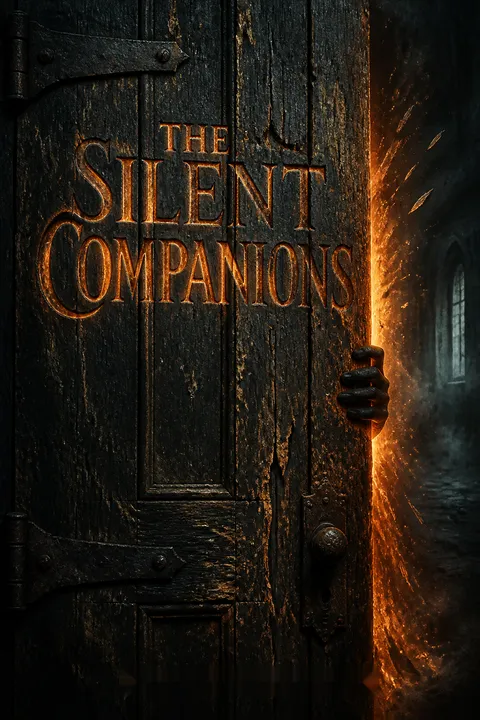
Elsie Bainbridge, newly widowed and pregnant, travels with her cousin-in-law Sarah to her late husband's ancestral home, The Bridge. The journey is bleak, marked by mud, mist, and a sense of foreboding. The estate itself is decayed, shrouded in neglect and local superstition. Elsie's arrival is met with a cold welcome from both the staff and the villagers, who seem to avoid the house out of fear. The oppressive atmosphere and the presence of her husband's coffin in the Great Hall set the tone for a story steeped in grief, unease, and the sense that something is deeply wrong within the walls of The Bridge.
Widowhood and Unwelcome Inheritance
Elsie learns that her late husband, Rupert, has left her everything—The Bridge, the London house, and his share in the match factory. This sudden inheritance breeds suspicion, especially from her brother Jolyon, who fears scandal and whispers of murder. Elsie is left to manage the crumbling estate, her pregnancy, and the household, all while feeling the weight of the villagers' and servants' judgment. The house's history of tragedy and death, combined with her outsider status, deepens her sense of alienation and vulnerability, setting the stage for the psychological and supernatural horrors to come.
The Village's Silent Fear
Elsie's attempts to connect with the villagers are met with fear and avoidance. The staff reveal that no one from the village will work at The Bridge, citing old stories of skeletons, witchcraft, and tragic accidents. The housekeeper, Mrs Holt, and the maids, Mabel and Helen, are all outsiders, taken from the workhouse. The villagers' superstitions are rooted in the estate's dark past, including tales of a witch and unexplained deaths. This pervasive fear isolates Elsie further, as she becomes increasingly aware that the house is not just neglected, but actively shunned by the world outside.
The Locked Garret Mystery
Strange noises—hissing, scratching, and sawing—disturb Elsie at night, emanating from the locked garret on the top floor. The servants claim the door has been sealed for years, yet the sounds persist, unsettling everyone. When Elsie and Sarah finally gain access, they discover a trove of old books, diaries, and, most disturbingly, life-sized painted wooden figures—"silent companions." The garret's contents hint at a hidden history, and the companions' uncanny resemblance to family members, including Elsie herself, deepens the sense of dread. The garret becomes a focal point for the house's mysteries and the supernatural events that follow.
The Painted Wooden Companions
The discovery of the silent companions—wooden, life-sized, and eerily lifelike—marks a turning point. One resembles a young girl, another a gypsy boy, and more appear as the days pass, each with unsettlingly familiar features. The companions seem to move of their own accord, appearing in new places, their painted eyes following the living. Servants and residents alike are unnerved, and accidents begin to happen. The companions' presence blurs the line between the animate and inanimate, feeding Elsie's growing terror and the suspicion that the house itself is alive with malice.
Echoes from the Past
Interwoven with Elsie's narrative are excerpts from the 17th-century diary of Anne Bainbridge, an ancestor who lived at The Bridge during the reign of Charles I. Anne's story reveals her struggles with motherhood, ambition, and the supernatural, including her use of herbal remedies and her daughter Hetta's muteness. Anne's purchase of the silent companions from a mysterious shop and the subsequent tragedies that befall her family mirror the horrors Elsie faces. The past bleeds into the present, suggesting that the house's evil is cyclical, rooted in old sins and unresolved trauma.
The Unraveling of Sanity
Elsie's grip on reality weakens as the companions multiply and the house's atmosphere grows more oppressive. She experiences vivid hallucinations, loses time, and becomes increasingly paranoid. The servants are terrified, and accidents escalate—animals mutilated, servants injured or killed, and Elsie's own pregnancy ending in tragedy. The companions' movements and the writing that appears in dust and on windows suggest a supernatural intelligence at work. Elsie's isolation is complete, as even her few allies begin to doubt her sanity, and she herself questions what is real.
The Diary of Anne Bainbridge
Anne's diary, discovered in the garret, becomes a key to understanding the house's curse. Anne confesses to using forbidden herbal magic to conceive her daughter Hetta, who is born mute and strange. The silent companions, purchased to impress the visiting King and Queen, become vessels for something evil, especially after a series of deaths and tragedies—including the murder of a gypsy boy and the poisoning of servants. Anne's guilt and fear culminate in her killing Hetta, believing her daughter to be the source of the evil. The diary reveals that the companions absorbed Hetta's blood, binding the curse to the house.
The Poisoned Legacy
The horrors of The Bridge are shown to be the result of generational trauma and a legacy of guilt, abuse, and supernatural interference. Anne's actions, both magical and maternal, set in motion a cycle of violence and madness that ensnares her descendants. Elsie's own family history—her father's abuse, her mother's madness, and her own complicity in their deaths—mirrors Anne's confessions. The companions become symbols of this poisoned legacy, their presence a constant reminder that the past cannot be buried, and that the sins of the mothers are visited upon the daughters.
The House Awakens
As the companions' influence grows, the house itself seems to awaken, orchestrating a series of increasingly violent and inexplicable events. Fires break out, servants die in grotesque ways, and Elsie's brother Jolyon is killed in a manner that implicates her. The companions appear to move at will, their numbers growing, their faces shifting to resemble the living and the dead. The house becomes a trap, its doors and windows sealing Elsie inside as it seeks to claim her as it has so many before. The supernatural vengeance unleashed is both personal and ancestral, targeting Elsie's deepest fears and regrets.
Splinters and Sacrifice
Elsie's baby is stillborn, its body riddled with splinters, a grotesque echo of the companions' wooden forms. The deaths of servants and loved ones mount, each accompanied by signs of the companions' involvement—splinters, blood, and the ever-present hiss. Elsie is left alone, physically and emotionally shattered, forced to confront the reality that survival comes at the cost of everything she loves. The house's curse demands sacrifice, and Elsie's attempts to break free only deepen her guilt and isolation. The line between victim and perpetrator blurs, as Elsie wonders if she, too, is complicit in the evil that haunts The Bridge.
Fire and Ruin
In a final act of desperation, Elsie sets fire to The Bridge, hoping to destroy the companions and end the cycle of horror. The fire consumes the house, and Elsie barely escapes with her life, her body and mind scarred beyond recognition. The destruction of the house is both literal and symbolic—a purging of the past, but also a loss of identity and home. The companions are not found in the ruins, suggesting that the evil may not be so easily destroyed. Elsie is left with nothing but her trauma, her guilt, and the uncertain hope that the nightmare is over.
The Asylum's Cold Embrace
Elsie is committed to St Joseph's Hospital, accused of murder and arson. She is mute, traumatized, and haunted by memories that blur the line between reality and delusion. Dr Shepherd, her psychiatrist, encourages her to write her story, hoping to uncover the truth behind the accusations. The narrative becomes a battle for Elsie's sanity and her soul, as she confronts the possibility that she is either a victim of supernatural evil or a madwoman responsible for unspeakable crimes. The asylum is both a refuge and a prison, mirroring the claustrophobia of The Bridge.
The Testimony of Sarah
Sarah, the only other survivor and potential witness, is sought to corroborate Elsie's story and prove her innocence. For a time, hope flickers that Sarah's testimony will save Elsie from execution or lifelong confinement. However, when Sarah finally appears, she betrays Elsie, claiming that Elsie was the true murderer and that the companions were figments of her madness. This betrayal is devastating, stripping Elsie of her last ally and confirming the world's view of her as a dangerous lunatic. The possibility of justice or redemption slips away, replaced by the certainty of punishment and isolation.
The Final Betrayal
In the asylum, Elsie realizes that Sarah's betrayal is not just personal but supernatural. The woman who testifies against her is not truly Sarah, but a vessel for the same evil that haunted The Bridge—a reincarnation of Hetta, Anne's cursed daughter. The cycle of horror is revealed to be unbroken, with the companions' influence extending beyond the house and into the lives of the living. Elsie's identity is shattered, her story dismissed as madness, and her fate sealed by forces she cannot fight. The final betrayal is not just of trust, but of reality itself.
The Cycle Continues
The story ends with the suggestion that the evil of The Bridge, embodied in the silent companions and the legacy of Anne and Hetta, is not destroyed but merely transformed. The companions are never found, and the supernatural force that animated them finds new hosts and new victims. Elsie's story, written in the asylum, is both a confession and a warning—a testament to the enduring power of trauma, guilt, and the supernatural. The cycle of horror is unbroken, and the past continues to haunt the present, waiting for the next victim to arrive.
Analysis
A gothic meditation on trauma, inheritance, and the limits of reasonThe Silent Companions is a masterful reimagining of the haunted house genre, using the conventions of Victorian and Jacobean gothic to explore the enduring power of trauma and the impossibility of escaping the past. Through its dual timelines, unreliable narration, and supernatural plot devices, the novel interrogates the ways in which women's suffering is dismissed, pathologized, or punished. The companions themselves are a brilliant metaphor for the persistence of memory and guilt—silent witnesses to crimes that cannot be confessed or forgiven. The story's refusal to offer easy answers—leaving open the question of whether the horror is supernatural or psychological—forces the reader to confront the ambiguity at the heart of all ghost stories: is evil something we inherit, something we create, or something that finds us when we are most vulnerable? In the end, The Silent Companions is a chilling reminder that the past is never truly dead, and that the most terrifying ghosts are those we carry within ourselves.
Review Summary
The Silent Companions is praised as an outstanding gothic horror novel featuring multiple timelines spanning the 1600s to 1860s. Readers applaud its atmospheric, creepy setting centered on a haunted estate called The Bridge, where widow Elsie Bainbridge encounters mysterious wooden figures. The book effectively builds dread through discovered diaries, family secrets, and supernatural elements. Most reviewers found it genuinely frightening with an excellent, surprising ending, though some felt it relied too heavily on dialogue and found the pacing slow. The wooden companions themselves proved memorably unsettling for most readers.
People Also Read


Characters
Elsie Bainbridge
Elsie is the central figure, a woman marked by trauma, loss, and a legacy of abuse. Recently widowed and pregnant, she inherits The Bridge and is thrust into a world of suspicion, isolation, and supernatural terror. Her psychological unraveling is both a product of her environment and her own haunted past—her father's abuse, her mother's madness, and her own complicity in their deaths. Elsie's relationship with her brother Jolyon is complex, blending maternal protectiveness with guilt and dependence. As the companions' influence grows, Elsie's grip on reality weakens, and she becomes both victim and possible perpetrator. Her journey through grief, madness, and betrayal is the emotional core of the novel, culminating in her confinement and the ultimate question of her sanity and innocence.
Sarah Bainbridge
Sarah is Rupert's cousin and Elsie's companion at The Bridge. Initially portrayed as meek, awkward, and eager to please, Sarah's role shifts throughout the story. She is both confidante and foil to Elsie, sharing in the house's mysteries and horrors. Her fascination with the past, spiritualism, and the companions makes her susceptible to the house's influence. In the end, Sarah's testimony seals Elsie's fate, revealing her as either a self-preserving survivor or a vessel for the supernatural evil that haunts the Bainbridge line. Her final transformation—suggesting she is possessed by Hetta's spirit—blurs the line between victim and antagonist, and her betrayal is the story's most devastating emotional blow.
Jolyon Livingstone
Jolyon is Elsie's much younger brother, her only remaining family and emotional anchor. Raised by Elsie after their parents' deaths, Jolyon is both dependent on and resentful of his sister. His pragmatic, business-minded approach contrasts with Elsie's emotional turmoil. Jolyon's suspicion of Elsie's inheritance and his eventual decision to have her committed reflect the limits of his understanding and compassion. His death—violent and inexplicable—serves as the final rupture in Elsie's world, leaving her utterly alone and sealing her fate as a pariah and a madwoman.
Mrs Holt
Mrs Holt is the long-serving housekeeper at The Bridge, a figure of stability and tradition. Her own secrets—bearing a child by Rupert's father and raising Helen as her daughter—mirror the hidden histories of the Bainbridge family. Mrs Holt's loyalty to the house and her grief over the deaths of her daughter and the other servants drive her to despair and ultimately suicide. She represents the cost of generational trauma and the collateral damage of the house's curse, her fate intertwined with Elsie's and the estate's.
Mabel
Mabel is a young, rough-edged maid from the workhouse, untrained and superstitious. Her fear of the companions and her outsider status make her both a witness to and a victim of the house's horrors. Accused of theft and blamed for the supernatural events, Mabel's suicide is a direct result of the toxic atmosphere at The Bridge. Her death is a turning point, highlighting the destructive power of suspicion, isolation, and the inability to distinguish between natural and supernatural evil.
Helen
Helen, Mrs Holt's daughter, is another workhouse maid drawn into the house's web of tragedy. Her attempts to make sense of the companions and the writing that appears in the dust mark her as both sensitive and vulnerable. Helen's gruesome death—impaled by the stag's head—underscores the house's escalating violence and the futility of trying to escape its influence. Her secret parentage and her fate reinforce the theme of hidden sins and their consequences.
Rupert Bainbridge
Rupert's death sets the story in motion, and his presence lingers as both a memory and a mystery. His decision to leave everything to Elsie, his interest in the companions, and his own unexplained death (with splinters on his body) suggest he, too, was a victim of the house's curse. Rupert's legacy is both material and supernatural, and his absence haunts Elsie as she struggles to survive in the world he left behind.
Anne Bainbridge
Anne's 17th-century diary provides the historical backbone of the novel, revealing the origins of the companions and the house's evil. Her ambition, use of herbal magic, and desperate love for her daughter Hetta set in motion the tragedies that follow. Anne's guilt, her murder of Hetta, and her execution as a witch establish the cycle of trauma and supernatural vengeance that ensnares her descendants. She is both a cautionary figure and a tragic mother, her story echoing through the generations.
Hetta
Hetta, Anne's daughter, is born mute and strange, the product of forbidden magic. Her friendship with the gypsy boy, her obsession with the companions, and her eventual murder by her mother mark her as both innocent and monstrous. Hetta's blood, absorbed by the companions, binds her spirit to the house, and her reappearance in the present—possessing Sarah—suggests that the cycle of horror is unbroken. Hetta is the embodiment of the story's central question: is evil inherited, created, or summoned?
Dr Shepherd
Dr Shepherd is Elsie's psychiatrist at St Joseph's Hospital, tasked with determining her sanity and fate. His approach is rational, compassionate, and modern, but ultimately inadequate to the supernatural reality of Elsie's experience. His theories about repression, double consciousness, and hysteria reflect the limitations of Victorian psychiatry. Dr Shepherd's inability to save Elsie or to recognize the true nature of the evil at work underscores the story's bleak view of reason in the face of the inexplicable.
Plot Devices
Dual Timelines and Unreliable Narration
The novel employs a dual timeline structure, alternating between Elsie's 19th-century narrative, Anne's 17th-century diary, and Elsie's present-day confinement in the asylum. This structure allows for the gradual revelation of secrets, the mirroring of events across generations, and the blurring of reality and delusion. Elsie's unreliable narration—compounded by trauma, drug use, and supernatural interference—forces the reader to question what is real and what is imagined. The use of diaries, letters, and testimony as plot devices deepens the sense of uncertainty and the theme of history repeating itself.
The Silent Companions as Supernatural Catalysts
The silent companions—life-sized, painted wooden figures—are the central supernatural device. Their uncanny realism, ability to move, and resemblance to family members make them both objects of fear and symbols of the house's haunted history. The companions serve as vessels for the spirits of the dead, particularly Hetta, and as conduits for the house's curse. Their presence escalates the horror, driving characters to madness, violence, and death. The companions' indestructibility and ability to possess the living suggest that evil is both persistent and adaptable.
Generational Trauma and the Cycle of Guilt
The story's central plot device is the idea that trauma, guilt, and evil are inherited, passed down through generations like a curse. Anne's use of magic, her murder of Hetta, and the companions' absorption of her blood set in motion a cycle that ensnares Elsie and her contemporaries. The repetition of events—murders, suicides, betrayals—reinforces the sense that the characters are trapped by forces beyond their control. The inability to break the cycle, despite acts of sacrifice and destruction, is the novel's most chilling message.
Asylum Framing and the Question of Sanity
The framing of Elsie's story within the asylum, and the use of Dr Shepherd's psychiatric theories, serve as both a rational explanation for the events and a means of dismissing the supernatural. The ambiguity of Elsie's sanity—her muteness, her unreliable memory, and the conflicting testimonies—forces the reader to question whether the horror is real or imagined. The asylum becomes a metaphor for the limits of reason and the dangers of dismissing women's experiences as hysteria or madness.
Betrayal and the Unreliability of Testimony
The novel's climax hinges on the testimony of Sarah, whose betrayal of Elsie is both personal and supernatural. The unreliability of testimony—whether in diaries, letters, or spoken word—reflects the story's central concern with the elusiveness of truth. The final revelation that Sarah is possessed by Hetta's spirit suggests that even the most trusted voices can be corrupted, and that evil can wear any face.

Download PDF
Download EPUB
.epub digital book format is ideal for reading ebooks on phones, tablets, and e-readers.








































