
Plot Summary
Universe's Absurd Beginnings
The story opens with a cosmic joke: the universe is created, making many beings angry and confused. Various species invent wild theories about its origin, including the Jatravartids' belief in a sneezing god. The real story, however, is that hyperintelligent beings built Deep Thought, a computer to find the Answer to Life, the Universe, and Everything. After millions of years, Deep Thought reveals the answer is "forty-two," but the actual Question is unknown. Earth itself is a supercomputer designed to find this Question, but is destroyed by bureaucratic Vogons before it can finish. Two humans, Arthur Dent and Trillian, survive, along with Ford Prefect and Zaphod Beeblebrox, setting the stage for a journey through cosmic absurdity.
Vogon Threat Approaches
As the Heart of Gold spaceship drifts through space, the Vogons—ugly, bureaucratic, and cruel—close in, determined to finish their job of erasing Earth and its survivors. Captain Prostetnic Vogon Jeltz, motivated by money and malice, is hired by a consortium of psychiatrists who fear the discovery of the Ultimate Question would ruin their profession. The Vogons prepare to attack, indifferent to the ship's revolutionary Improbability Drive or the fate of its crew. Meanwhile, Zaphod, Ford, Arthur, and Trillian are preoccupied with their own squabbles and the ship's malfunctioning systems, unaware of the imminent danger.
Tea, Improbability, and Doom
Arthur's desperate attempt to get a proper cup of tea from the ship's Nutri-Matic machine inadvertently jams the Heart of Gold's computer, rendering the ship powerless just as the Vogons attack. The crew's frustration mounts as the force field weakens under relentless fire. Zaphod, in a moment of panic and inspiration, proposes a séance to contact his great-grandfather for help. The absurdity of their predicament—facing annihilation because of a tea-related computer crisis—underscores the book's theme of cosmic randomness and the futility of seeking order in chaos.
Seance with the Dead
In the midst of chaos, Zaphod leads a séance to contact his ancestor, Zaphod Beeblebrox the Fourth. The ghost berates Zaphod for his irresponsibility but ultimately intervenes, pausing time and giving cryptic advice: Zaphod must find the true ruler of the universe. With a flash, the ghost triggers the Improbability Drive, causing the Heart of Gold to vanish from the Vogons' sights. The crew is scattered—Zaphod and Marvin disappear, leaving Arthur, Ford, and Trillian bewildered and alone on the ship, with only a perfect cup of tea as a clue.
Zaphod's Sudden Disappearance
Zaphod finds himself in the opulent, shallow city of Ursa Minor Beta, home to the offices of The Hitchhiker's Guide to the Galaxy. Disoriented, he realizes he's been sent here by his own subconscious, manipulated by hidden motives implanted in his brain. He seeks out Zarniwoop, a mysterious figure rumored to know the secrets behind the galaxy's power structures. Meanwhile, Marvin the Paranoid Android reappears, as depressed as ever, and together they navigate the Guide's absurd bureaucracy, existential elevators, and a sudden attack by Frogstar Fighters.
The Guide's Glittering Heart
Zaphod and Marvin's quest for Zarniwoop is interrupted by a bombing raid from Frogstar Fighters, sent to capture Zaphod for reasons he doesn't understand. The Guide's building is besieged, and Zaphod is rescued by Roosta, a towel-carrying conspirator. As Marvin distracts a Frogstar battle tank with his existential misery, Zaphod and Roosta escape to Zarniwoop's office. The building is ripped from the planet and carried through space, bound for the dreaded Frogstar World B, home of the Total Perspective Vortex—a device said to annihilate the soul.
Bombs, Bureaucrats, and Elevators
Zaphod learns he is to be subjected to the Total Perspective Vortex, a machine that shows its victim their true insignificance in the universe. Roosta, having fulfilled his mysterious mission, vanishes, leaving Zaphod and Marvin to face the horrors of Frogstar World B alone. Guided by the disembodied voice of Gargravarr, the Vortex's custodian, Zaphod is forced to confront the infinite, while Marvin's sardonic commentary provides bleak comic relief. The Vortex, built to settle a domestic argument, is the ultimate instrument of existential despair.
Frogstar's Total Perspective Vortex
Zaphod enters the Vortex, expecting annihilation, but emerges unscathed and even more egotistical. The Vortex, designed to show one's utter insignificance, instead confirms to Zaphod that he is, in fact, the most important being in the universe—at least in the artificial universe created for him by Zarniwoop. This cosmic joke highlights the absurdity of seeking meaning in a meaningless universe. Zaphod's escape leads him to a derelict starliner, where he finally meets Zarniwoop, who reveals the convoluted plot to find the true ruler of the universe.
Zaphod Faces the Infinite
Zarniwoop explains that Zaphod's entire ordeal has taken place in a synthetic universe, constructed to protect the secret of the ruler's location. The Heart of Gold, miniaturized in Zaphod's pocket, is restored to full size, and the crew is reunited. Zarniwoop insists they must use the ship's Improbability Drive to reach the ruler's world, but Zaphod, exhausted by manipulation, rebels. The ship, now under Zarniwoop's control, is swept away to its next improbable destination, as the crew's sense of agency is further eroded by cosmic forces beyond their comprehension.
The Restaurant at the End
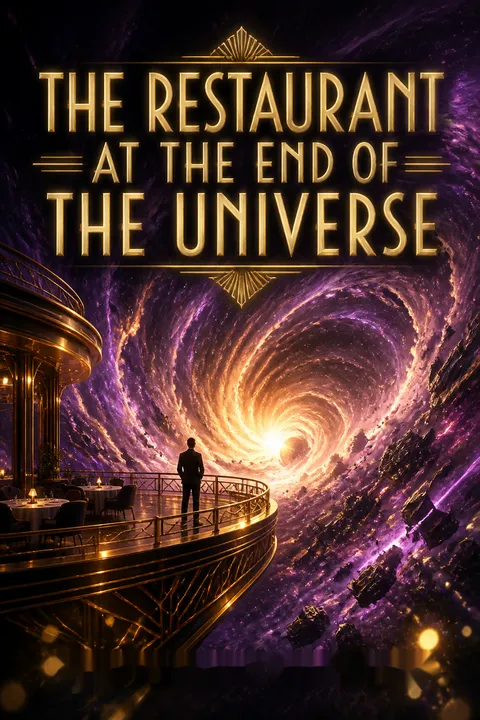
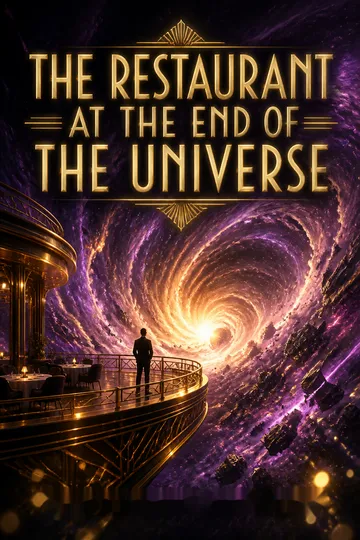
The Heart of Gold, following Zaphod's impulsive command for food, arrives at Milliways—a luxurious restaurant built on a time bubble at the literal end of the universe. The crew, dazed and disoriented, are greeted by a green-suited waiter and ushered into a world of decadent excess, where guests dine while watching the universe's final moments. The absurdity of dining at the apocalypse, surrounded by celebrities, deities, and rock stars, underscores the book's satirical take on consumerism and existential dread.
Dining at Apocalypse
At Milliways, the crew encounters Max Quordlepleen, the flamboyant host, and Hotblack Desiato, a rock star spending a year dead for tax reasons. They are served by a talking cow bred to want to be eaten, and witness the universe's destruction as entertainment. The restaurant's guests, oblivious to the cosmic horror outside, focus on trivialities—menus, drinks, and social status. The crew's attempts to make sense of their journey are drowned out by spectacle, noise, and the relentless march of time, culminating in a desperate escape from Disaster Area's deadly stunt ship.
Disaster Area's Deadly Encore
Stealing Hotblack Desiato's black stunt ship, the crew finds themselves on a collision course with a sun as part of a rock concert's finale. With no escape pods and the autopilot locked, they discover a malfunctioning teleport system. Marvin, left behind, operates the device, sending the others to an unknown destination as the ship plunges into the sun, triggering a planetary transformation. The event, both catastrophic and creative, is a final flourish of cosmic absurdity, blending destruction and renewal in a universe governed by chance.
The Golgafrincham Exodus
Arthur, Ford, and the others materialize aboard a massive ark filled with frozen telephone sanitizers, hairdressers, and other "middlemen" from the planet Golgafrincham. The ship's captain, oblivious and perpetually bathing, reveals that their planet rid itself of its useless third by inventing a fake apocalypse and sending them into space. The ark crash-lands on a primitive, unspoiled Earth, dooming the native hominids to extinction and ensuring that humanity's ancestors are, in fact, the most feckless and bureaucratic beings in the galaxy.
The Useless Arrive on Earth
The Golgafrinchans, oblivious to their own uselessness, set about recreating their society—holding endless committee meetings, inventing fiscal policy based on leaves, and declaring war on empty continents. Ford and Arthur, appalled, realize that these are the true ancestors of modern humanity. Attempts to teach the native hominids language and games fail, as the natives die out, replaced by the oblivious newcomers. The book's satire of bureaucracy, marketing, and managerial culture reaches its peak as the Golgafrinchans' absurd priorities shape the future of Earth.
The True Rulers of the Universe
Meanwhile, Zaphod, Trillian, and Zarniwoop reach the world of the true ruler of the universe—a reclusive, solipsistic man in a shack by the sea, who refuses to believe in anything he cannot directly perceive. He doubts the existence of the universe, other people, and even his own cat, ruling only his own immediate sensations. Zarniwoop's attempts to extract decisions or meaning are met with philosophical shrugs. The ruler's radical skepticism is the book's final answer to the search for cosmic authority: there is none.
The Ultimate Question's Failure
On prehistoric Earth, Arthur and Ford attempt to recover the Ultimate Question by drawing Scrabble letters at random, hoping Arthur's brainwaves will reveal it. The result—"What do you get if you multiply six by nine?"—is nonsensical, as six times nine is not forty-two. The failure is both comic and tragic: the destruction of the original Earth and the arrival of the Golgafrinchans have corrupted the program, making the search for meaning forever futile. The universe's greatest joke is that there is no answer, only absurdity.
Laughter at the End
As the sun shines and life continues, Arthur and Ford laugh at the cosmic joke. The Golgafrinchans remain oblivious, obsessed with their own trivialities. Arthur discards the Hitchhiker's Guide, choosing to live in the moment rather than seek answers that will never come. The story ends with a sense of acceptance: in a universe governed by chance, bureaucracy, and cosmic indifference, the only sane response is laughter, friendship, and the refusal to take anything—including the search for meaning—too seriously.
Analysis
Douglas Adams' The Restaurant at the End of the Universe is a masterwork of comic science fiction and philosophical satire, using the trappings of space opera to explore the absurdity of existence, the futility of seeking ultimate answers, and the dangers of bureaucracy and certainty. The novel's structure—episodic, nonlinear, and driven by the Infinite Improbability Drive—mirrors its themes: life is unpredictable, meaning is elusive, and attempts to impose order are both tragic and hilarious. The characters' journeys, from the destruction of Earth to the end of the universe and back to its prehistoric beginnings, expose the arbitrariness of history and the contingency of identity. The book's central joke—that the answer to life is "forty-two," but the question is lost—serves as a critique of both scientific reductionism and spiritual longing. In a world where the true ruler is a solipsist and the ancestors of humanity are telephone sanitizers, the only sane response is laughter, friendship, and a refusal to take anything too seriously. Adams' lesson is clear: in the face of cosmic indifference, meaning is something we create for ourselves, moment by moment, with wit, kindness, and a willingness to embrace the absurd.
Review Summary
The Restaurant at the End of the Universe receives mostly positive reviews, with readers praising its humor, creativity, and thought-provoking ideas. Many find it even better than the first book, appreciating the expanded universe and clever concepts like the titular restaurant. Some critics note a lack of plot cohesion, but most enjoy the witty dialogue and absurd situations. Fans particularly love the memorable characters and quotable lines. While a few readers find it less engaging than the first book, most consider it a worthy sequel in Adams' iconic series.
People Also Read
Characters
Arthur Dent
Arthur is the bewildered, tea-loving Englishman whose home and planet are destroyed, thrusting him into a universe that defies logic and comfort. His persistent longing for normalcy—especially a proper cup of tea—serves as both comic relief and a symbol of his struggle to find meaning in absurdity. Arthur's relationships with Ford, Trillian, and Zaphod are marked by confusion and exasperation, but also a growing resilience. Psychologically, Arthur embodies the existential human: lost, searching, and ultimately forced to accept the universe's indifference. His attempts to teach language and games to prehistoric hominids reflect a desperate hope for order, but his journey ends in laughter and resignation.
Ford Prefect
Ford is a researcher for The Hitchhiker's Guide to the Galaxy, posing as an out-of-place human. His wit, adaptability, and irreverence make him both a mentor and a foil to Arthur. Ford's psychological defense is detachment—he copes with chaos by embracing it, finding humor in disaster and absurdity in bureaucracy. His relationship with Arthur is both protective and mocking, highlighting the contrast between cosmic perspective and human parochialism. Ford's attempts to make sense of the Golgafrinchans' society reveal his own limits, as even he is appalled by their incompetence.
Zaphod Beeblebrox
Zaphod is the two-headed, three-armed ex-President of the Galaxy, driven by impulse, charm, and a profound lack of self-awareness. His actions are often motivated by subconscious programming, making him both a puppet and a rebel. Zaphod's quest for the ruler of the universe is both a search for meaning and an escape from responsibility. Psychologically, he is fragmented—literally and figuratively—struggling with hidden motives and a fear of insignificance. His encounters with bureaucracy, ancestors, and the Vortex reinforce his role as the universe's ultimate anti-hero.
Trillian (Tricia McMillan)
Trillian is the only other human survivor of Earth, intelligent, resourceful, and often the voice of reason among the crew's chaos. Her relationship with Zaphod is ambiguous—part companion, part skeptic. Trillian's psychological resilience allows her to adapt to the universe's absurdities, but she remains emotionally distant, observing the others' antics with a mixture of amusement and frustration. Her interactions with Arthur reveal a shared sense of loss and alienation, but also a pragmatic acceptance of their new reality.
Marvin the Paranoid Android
Marvin is a robot with a brain the size of a planet and a personality programmed for misery. His relentless pessimism and sarcasm provide both comic relief and a dark counterpoint to the crew's adventures. Marvin's intelligence is wasted on menial tasks, fueling his existential despair. Psychologically, he represents the futility of intellect in a universe that values neither logic nor emotion. His interactions with the crew are marked by resentment and resignation, but his actions—such as saving them from danger—reveal a reluctant loyalty.
Zarniwoop
Zarniwoop is a shadowy figure within the Guide's bureaucracy, orchestrating much of the plot's cosmic manipulation. He is obsessed with finding the true ruler of the universe, retreating into artificial realities to protect his secrets. Zarniwoop's psychological profile is that of the ultimate bureaucrat: detached, calculating, and convinced of his own importance. His interactions with Zaphod and the crew are marked by condescension and frustration, as his quest for control is continually undermined by the universe's inherent unpredictability.
Prostetnic Vogon Jeltz
The Vogon captain embodies the worst of bureaucratic evil: cruel, unimaginative, and obsessed with completing his orders, no matter how pointless. His destruction of Earth is motivated less by necessity than by a love of procedure and a hatred of deviation. Psychologically, Jeltz is a study in the banality of evil—his lack of imagination and empathy make him both comic and terrifying. His relationship with his crew and superiors is transactional, driven by bribery and self-interest.
Roosta
Roosta is a minor but pivotal character, aiding Zaphod's escape from the Guide's offices and delivering cryptic advice. His obsession with his towel—a symbol of preparedness in the Hitchhiker's universe—reflects his pragmatic, if eccentric, approach to survival. Roosta's psychological role is that of the messenger, facilitating the plot's transitions and embodying the Guide's ethos of adaptability and resourcefulness.
Gargravarr
Gargravarr is the ethereal guardian of the Total Perspective Vortex, separated from his own body by legal dispute. His philosophical musings on existence, identity, and the futility of knowledge provide a darkly comic backdrop to Zaphod's ordeal. Psychologically, Gargravarr represents the ultimate detachment—a mind divorced from reality, clinging to routine and ritual in the face of cosmic meaninglessness.
The Ruler of the Universe
The ruler is a reclusive, skeptical man who refuses to believe in anything beyond his immediate perceptions. His radical doubt and refusal to make decisions render him immune to manipulation and power. Psychologically, he is the embodiment of philosophical skepticism, undermining the very concept of authority and meaning. His interactions with Zarniwoop and the crew expose the absurdity of seeking ultimate answers in a universe that offers only uncertainty.
Plot Devices
Infinite Improbability Drive
The Infinite Improbability Drive is the Heart of Gold's propulsion system, capable of transporting the ship anywhere in space and time by exploiting the laws of probability. Its use results in wildly unpredictable outcomes—characters are scattered, realities are altered, and causality is upended. The Drive is both a plot device and a metaphor for the universe's randomness, allowing the narrative to leap between settings and genres without explanation. It embodies the book's central theme: that meaning and order are illusions in a cosmos governed by chance.
Bureaucracy and Satire
The book's universe is dominated by bureaucratic systems—Vogons, psychiatrists, Guide editors, and Golgafrinchan committees—whose rules and procedures are both arbitrary and destructive. Bureaucracy serves as both a source of humor and a vehicle for social satire, exposing the futility of seeking meaning or justice in systems designed to perpetuate themselves. The endless meetings, forms, and regulations mirror the characters' existential struggles, reinforcing the sense that the universe is indifferent to human concerns.
Artificial Realities and Meta-Narrative
The use of artificial universes, time bubbles, and simulated environments blurs the line between reality and fiction. Characters are manipulated by hidden forces—subconscious programming, cosmic conspiracies, and narrative necessity—undermining their sense of agency. The book's meta-narrative structure, with frequent asides from the Guide and self-referential jokes, invites readers to question the nature of storytelling and the possibility of meaning in a constructed world.
The Total Perspective Vortex
The Vortex is a device that shows its victim their true place in the universe, usually resulting in madness or annihilation. It serves as both a literal and metaphorical confrontation with the void, forcing characters (and readers) to confront the absurdity of existence. Zaphod's survival—by virtue of being in a universe designed for him—parodies the human tendency to see oneself as the center of reality, even in the face of overwhelming evidence to the contrary.
Foreshadowing and Circularity
The narrative is filled with foreshadowing, callbacks, and circular logic—characters encounter the consequences of their actions before they understand their causes, and the search for the Ultimate Question is doomed by the very structure of the universe. The book's ending, with the nonsensical Question and the laughter that follows, reinforces the idea that meaning is always deferred, always just out of reach.
The Hitchhiker’s Guide to the Galaxy Series
About the Author
Other books by Douglas Adams

Download PDF
Download EPUB
.epub digital book format is ideal for reading ebooks on phones, tablets, and e-readers.








































